Ohio Gardeners Are Replacing Pachysandra With This Overlooked Native Fern
Pachysandra has had a good run. For decades it has been the default answer to shady Ohio beds, the plant that gets recommended when nothing else seems to work.
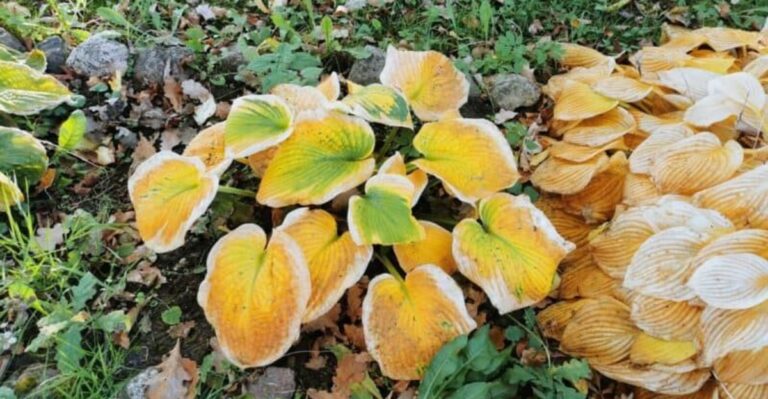
But a shift is happening in yards across the state. Gardeners who have lived with pachysandra long enough are starting to notice its limitations, the aggressive spread, and the way it looks like a green carpet that forgot to have a personality.
And they are replacing it with something that was growing in Ohio woodlands long before anyone thought to put it in a garden bed.
It stays green through January. It handles the dry, root-choked shade under big maples and oaks without complaint. It looks genuinely beautiful in winter when everything else has given up.
Does it sound too good? It is not. It is just a native plant doing exactly what it evolved to do, in exactly the conditions Ohio throws at it.
Meet Christmas Fern First
Not every native plant gets a clever name with a good story behind it.
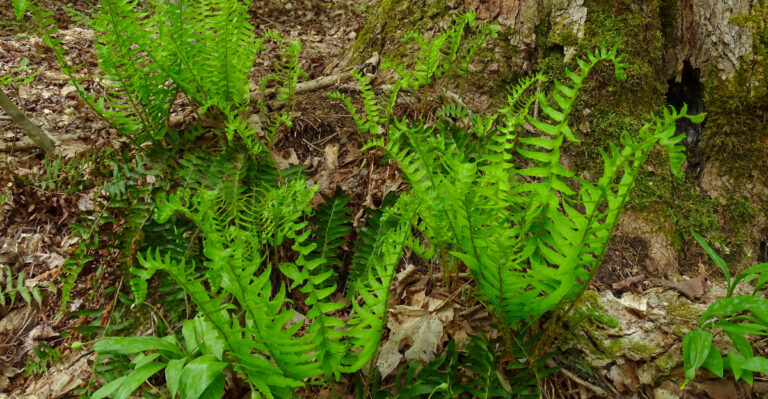
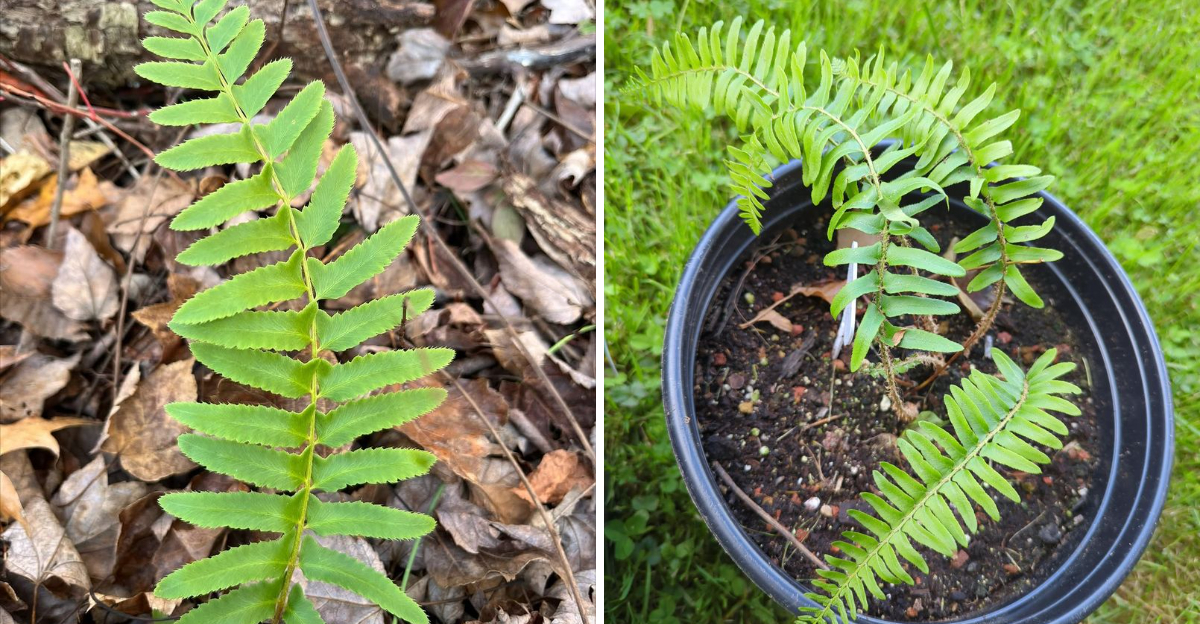
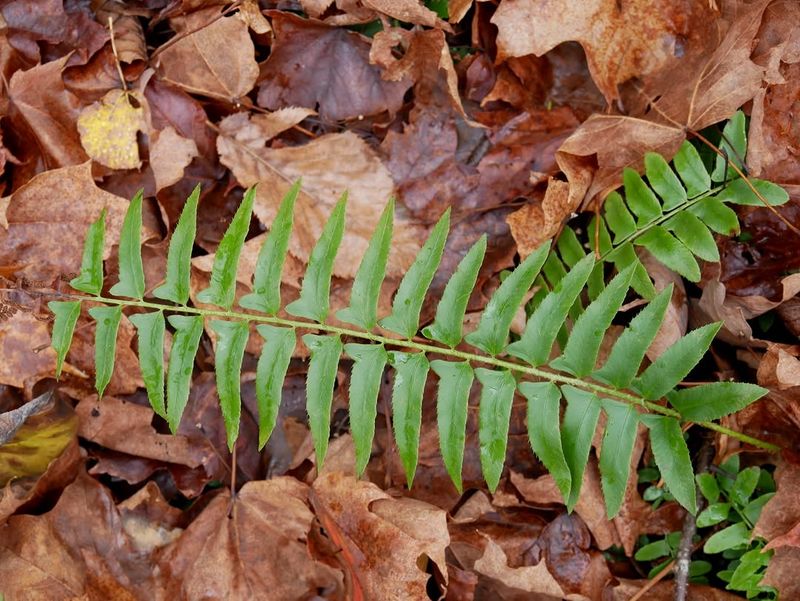
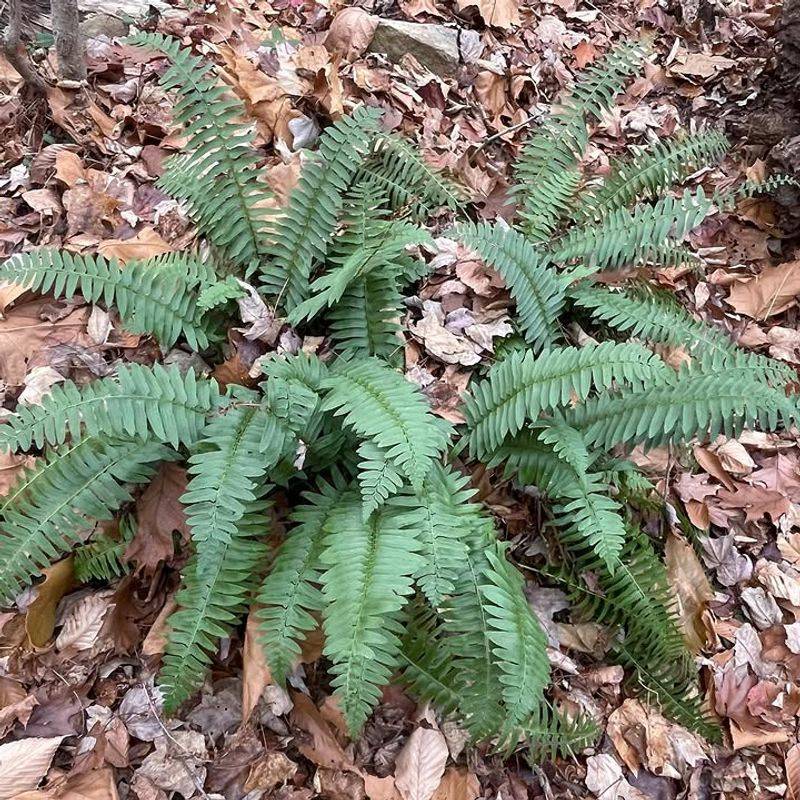
Christmas fern, known scientifically as Polystichum acrostichoides, earned its name because the individual leaflets, called pinnae, are shaped like tiny Christmas stockings.
That small detail made it easy for early American settlers to identify the plant during the holiday season, when its dark green fronds were one of the only green things visible in a snow-covered woodland.
This fern is native across the eastern United States, including all of Ohio. It grows naturally in ravines, on wooded hillsides, and along shady creek banks from Lake Erie south to the Ohio River.
It is one of the most adaptable native ferns in the region, thriving in conditions that challenge most other plants without requiring any special treatment from the gardener.
The fronds grow in a graceful, arching vase shape, typically reaching 18 to 24 inches tall at maturity. Each frond is made up of 20 to 35 pairs of dark, glossy pinnae that feel slightly leathery to the touch.
That texture is not just attractive. It actually helps the plant hold moisture and resist damage from cold temperatures.
Gardeners who have grown both pachysandra and Christmas fern often say the fern simply looks more alive, more layered, and more like something that genuinely belongs in an Ohio yard.
Which, to be fair, it does. Pachysandra is from Japan. Christmas fern has been here for considerably longer and has the root system to prove it.
It Covers Dry Shade Without Taking Over
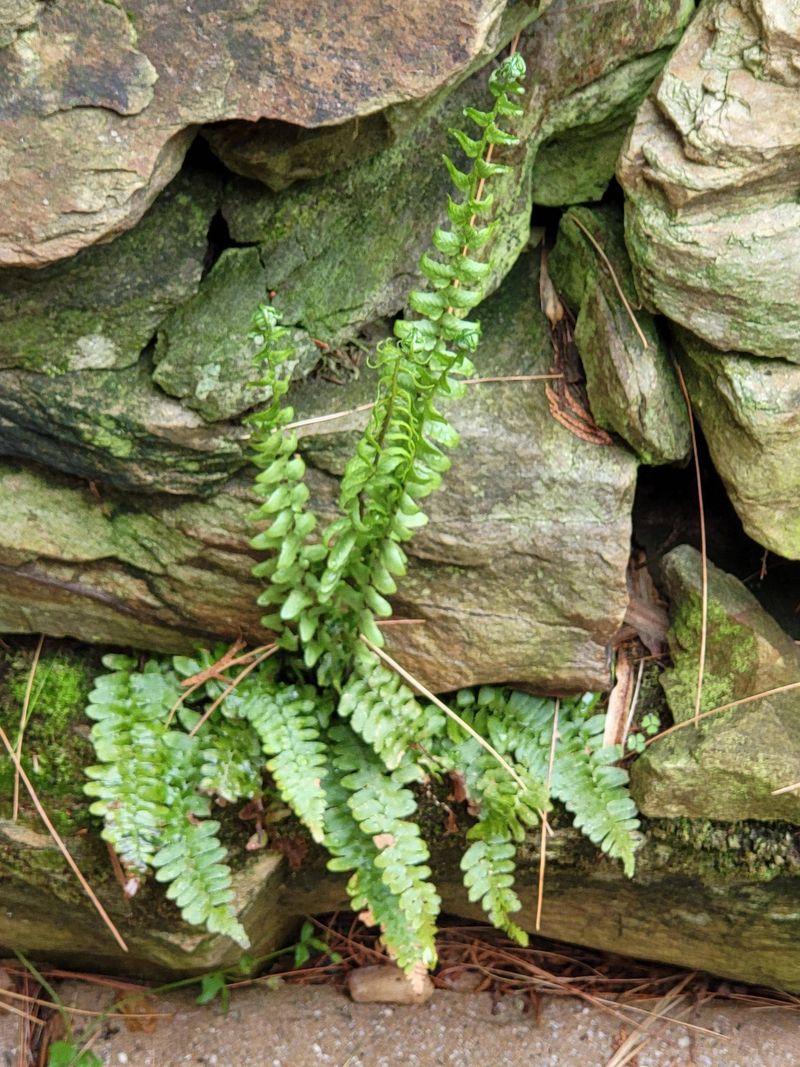
Dry shade is the problem that stumps many Ohio gardeners.
The area under a big oak or maple gets almost no rain because the canopy catches most of it, and the roots soak up whatever reaches the soil.
Pachysandra handles that situation reasonably well, but it spreads aggressively through underground runners and can become a monoculture that crowds out everything else you might want to grow nearby.
Christmas fern takes a completely different approach. It grows in slow, tidy clumps that expand gradually from the center without sending out runners.
Your Ohio Garden Changes Every Week. Your Plan Should Too.
Gardening in Ohio changes quickly throughout the season. Every Friday you’ll receive a simple weekly plan showing exactly what to plant, prune, fertilize, harvest, and protect so you never miss the right timing.
One clump planted today will look like a slightly larger, fuller version of itself in three years, not a mat that has quietly swallowed half the garden bed while you were not paying attention.
Shade tolerance in Christmas fern is genuinely impressive.
It performs well in full shade and partial shade, including the deep, dry shade found under Norway spruces and large maples where almost nothing else survives.
Once established, which typically takes one full growing season with regular watering, it becomes remarkably self-sufficient.
Gardeners who have struggled for years to keep anything alive under their big trees often describe planting Christmas fern as the moment their shady problem area finally started looking like an intentional garden space. That is a meaningful shift for a plant that asks so little in return.
Evergreen Fronds Keep Winter Beds Polished
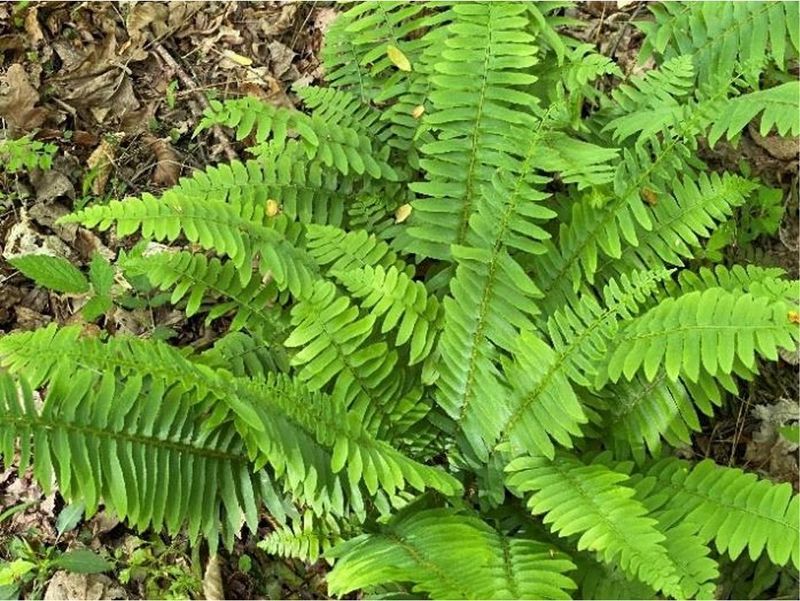
Walk through most Ohio yards in January and you will see a lot of brown.
Perennials have gone dormant, annuals are long gone, and even many shrubs look bare and a little defeated.
That is exactly when Christmas fern earns its place in the landscape. The fronds stay green through the entire winter, lying flat against the ground when heavy snow or frost arrives and lifting back up when temperatures moderate.
That flat-to-the-ground winter posture is not a sign of stress. It is an adaptation that protects the fronds from freeze damage by staying below the coldest air layer near the soil surface.
Come late February or early March, the old fronds perk back up, looking dark and glossy until the new fiddleheads emerge in spring.
The timing creates a seamless seasonal transition that most groundcovers simply cannot match.
Pachysandra does stay green in winter, but it offers a flat, uniform texture that reads as a green carpet and nothing more.
Christmas fern brings actual structure to a winter bed. The arching fronds create shadow lines and depth that make a garden look considered and designed even when nothing else is growing.
Pair it with the seedheads of native grasses or the red berries of winterberry holly and the winter bed becomes genuinely attractive rather than just adequately green.
Ohio gardeners who prioritize four-season interest consistently rank Christmas fern among their most valuable plants for exactly this reason, and January is when it makes its strongest argument.
Shady Paths Look Softer With Clumps
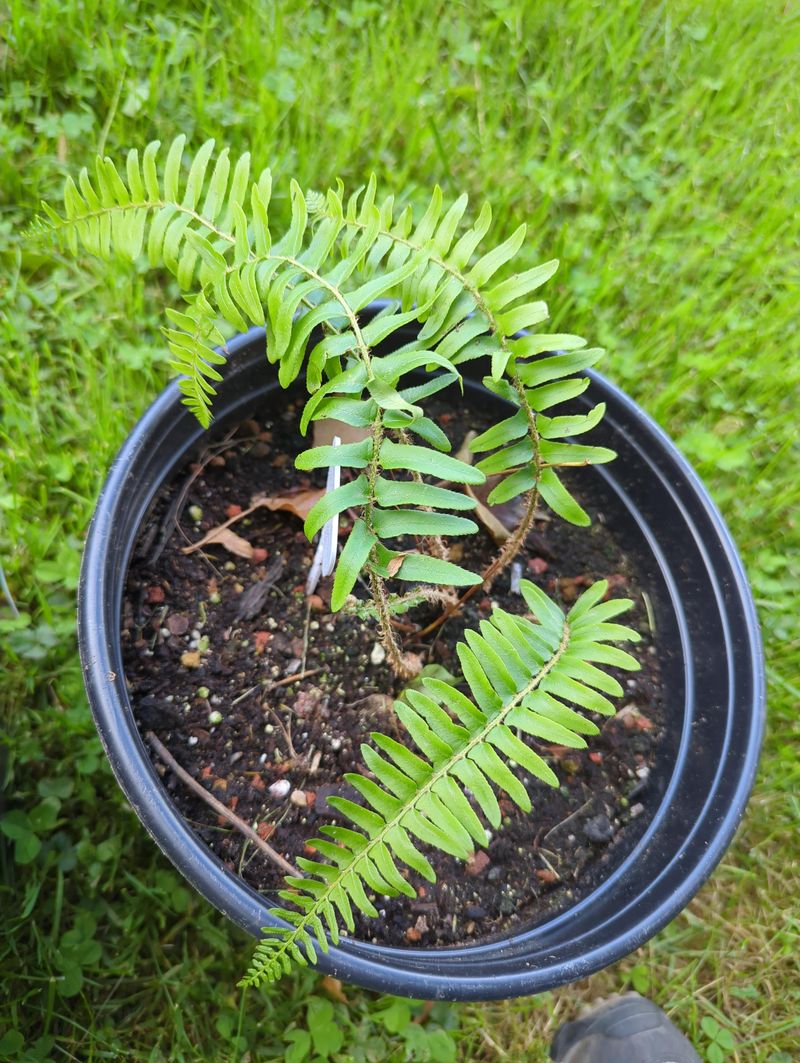
Straight lines and hard edges can feel a little stiff in a woodland-style garden.
One of the most effective ways to soften a shady path or walkway is to line it with repeated clumps of the same plant, spaced evenly but allowed to arch naturally into the walking space. Christmas fern is almost perfect for this job.
Plant clumps every 18 to 24 inches along a shady path and the effect builds quickly.
The arching fronds lean gently toward the walkway without blocking it, creating a sense of moving through a green corridor even in a modest suburban backyard.
The repetition of the same plant at a consistent spacing gives the design a calm, intentional rhythm that feels both natural and purposeful at the same time.
This technique works especially well along the shady side of a house, under a canopy of mature trees, or along the edge of a woodland garden bed.
Christmas fern clumps also look excellent paired with smooth river stones or natural flagstone, where the contrast between soft organic fronds and hard stone adds visual interest without requiring a lot of additional plants.
Ohio landscape designers who work with native plants use this exact approach to transition between a lawn area and a more naturalistic planting.
The fern provides enough visual mass to read clearly from a distance while remaining delicate and textured up close, giving the path a layered, inviting quality that a flat carpet of pachysandra simply never manages to achieve.
Mature Trees Give It The Right Setting
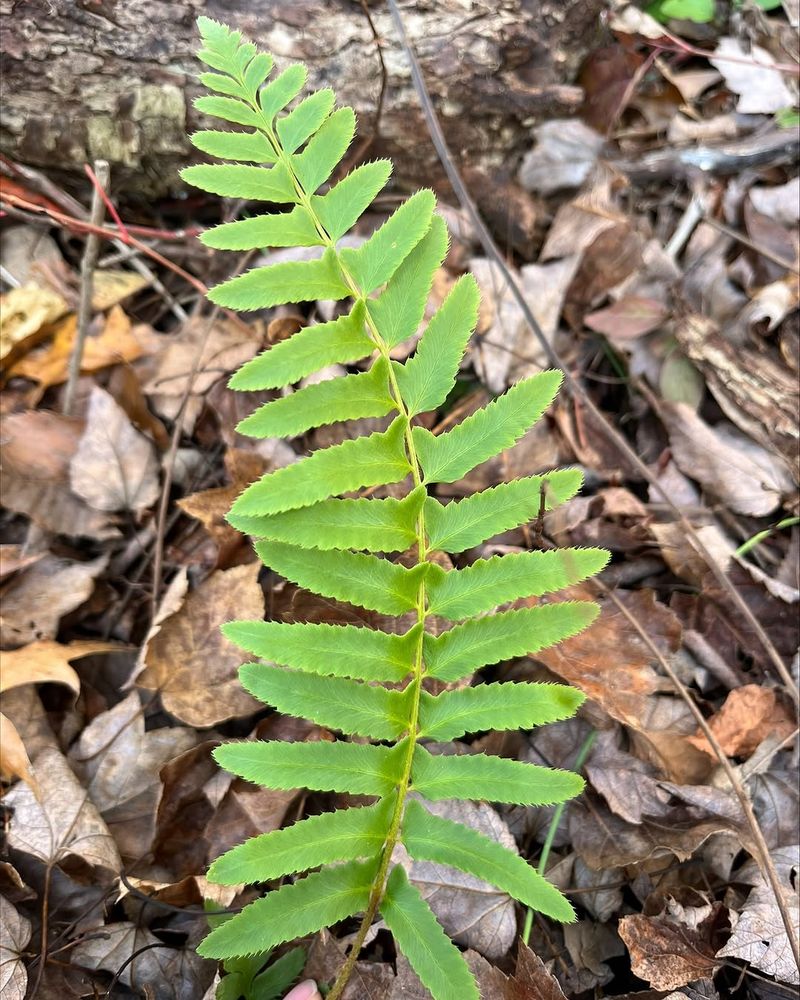
Big trees create big challenges for the plants growing beneath them.
Root competition, deep shade, and a thick layer of fallen leaves every autumn combine to make life difficult for most groundcovers.
Pachysandra manages those conditions but often looks pale and stretched under very dense canopies. Christmas fern looks like it was born for exactly that environment, because it genuinely was.
In the wild, Christmas fern grows most vigorously at the base of large trees, on north-facing slopes, and along shaded ravine edges where leaf litter accumulates naturally.
That leaf litter is not a problem for this fern. The fronds push right through it in spring, and the decomposing leaves improve the soil over time by adding organic matter and maintaining the slightly acidic pH that Christmas fern prefers.
Planting it under oaks, maples, or beeches mimics its natural habitat so closely that the plant establishes with very little fuss.
Spacing plants 18 to 24 inches apart when using Christmas fern as a groundcover under trees allows enough room for mature clumps to develop their full, arching shape without crowding each other.
Avoid planting too close to surface roots, which can make digging difficult. A small pocket of amended soil with added compost gives each transplant a strong start.
After the first season, the trees and the ferns settle into a comfortable, mutually supportive relationship that looks effortless. For the fern, at least, that is because it genuinely is.
Slow Spreading Keeps It Neat
Anyone who has spent a Saturday afternoon pulling pachysandra out of a bed where it wandered into the wrong spot knows exactly why slow spreading matters.
Pachysandra spreads by underground stems called stolons, and once it gets going in a direction you did not plan for, redirecting it takes real effort and more than a little frustration. Christmas fern has no such ambitions.
Each plant grows as a single crown that expands gradually outward over many years.
There are no underground runners, no rooting stems, and no seedlings appearing in unexpected places three beds away.
A clump planted in one spot will stay in that spot, getting slowly fuller and more impressive with each passing year but never making unilateral decisions about where it wants to live next.
That controlled growth habit is a significant advantage for gardeners who want a low-maintenance shade bed that does not require constant editing.
You plant it, water it through the first season, and then mostly leave it alone. Occasional removal of old or tattered fronds in late winter before the new fiddleheads emerge keeps the plant looking sharp without demanding much time.
Some gardeners cut all the old fronds to the ground in late February and let the fresh spring growth take over completely. The plant responds well to either approach.
For Ohio gardeners who want a shade groundcover that respects boundaries and behaves itself year after year, the slow, clumping nature of Christmas fern is genuinely one of its most appealing qualities.
A plant that stays where you put it is a plant worth celebrating.
Foamflower And Sedges Complete The Look
A single plant, no matter how attractive, rarely makes a complete garden.
Christmas fern works best surrounded by companions that share its preference for shade, moisture-retaining soil, and a naturalistic planting style.
Two of the best partners in an Ohio shade bed are foamflower and native sedges, and together the three create something considerably greater than the sum of their parts.
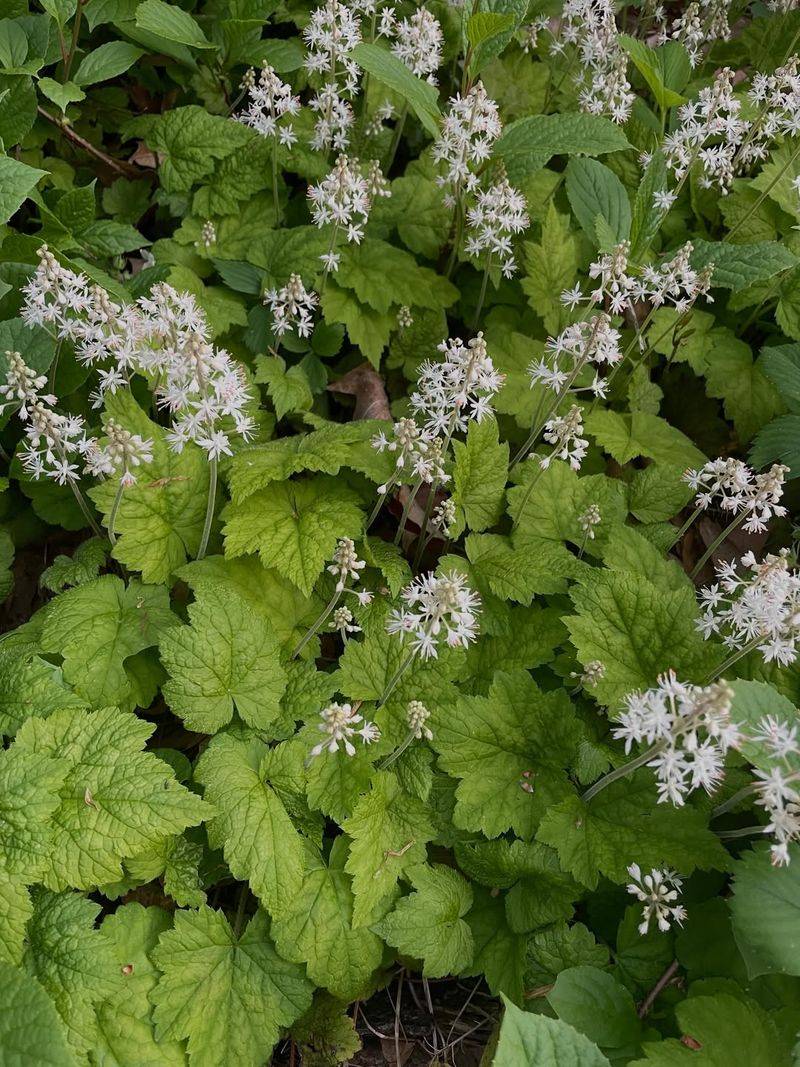
Foamflower, Tiarella cordifolia, blooms in spring with delicate white flower spikes that hover just above the fern fronds like small fireworks going off at exactly the right moment.
After the blooms fade, the foamflower leaves stay attractive through the season, adding a different leaf texture that contrasts nicely with the bold, upright fronds of the Christmas fern.
Both plants are native to Ohio woodlands and share almost identical soil and moisture preferences.
Pennsylvania sedge, Carex pensylvanica, fills in the lower layer with fine-textured, arching green blades that stay semi-evergreen through Ohio winters.
It spreads slowly by rhizomes to form a soft, meadow-like base beneath the taller fern clumps.
The combination of Christmas fern, foamflower, and Pennsylvania sedge creates a three-layer planting that looks intentionally designed and ecologically rich without requiring constant maintenance.
Native pollinators and songbirds benefit from this kind of layered structure as well. Gardeners who have made this combination a centerpiece of their shade beds often report it draws more compliments than any other part of the yard.