These 8 Plants Thrive Where Oregon Summers Get Hotter
Oregon summers are not as mild as they used to feel in many gardens. Hotter afternoons can leave some plants looking worn out long before the season is over.
That is why more gardeners are paying attention to plants that can handle heat without constant fuss. The right choices do more than survive a warm stretch.
They keep beds looking full, colorful, and cared for when thirstier plants start to struggle. This matters most in sunny borders, curb strips, and open yards where heat builds fast.
Strong roots and smart placement can make a big difference too. Once these plants settle in, they can help the garden feel less fragile through summer.
Choose the right heat-ready plants, and those warmer Oregon days become easier to manage.
1. Oregon Sunshine Glows Through Dry Heat
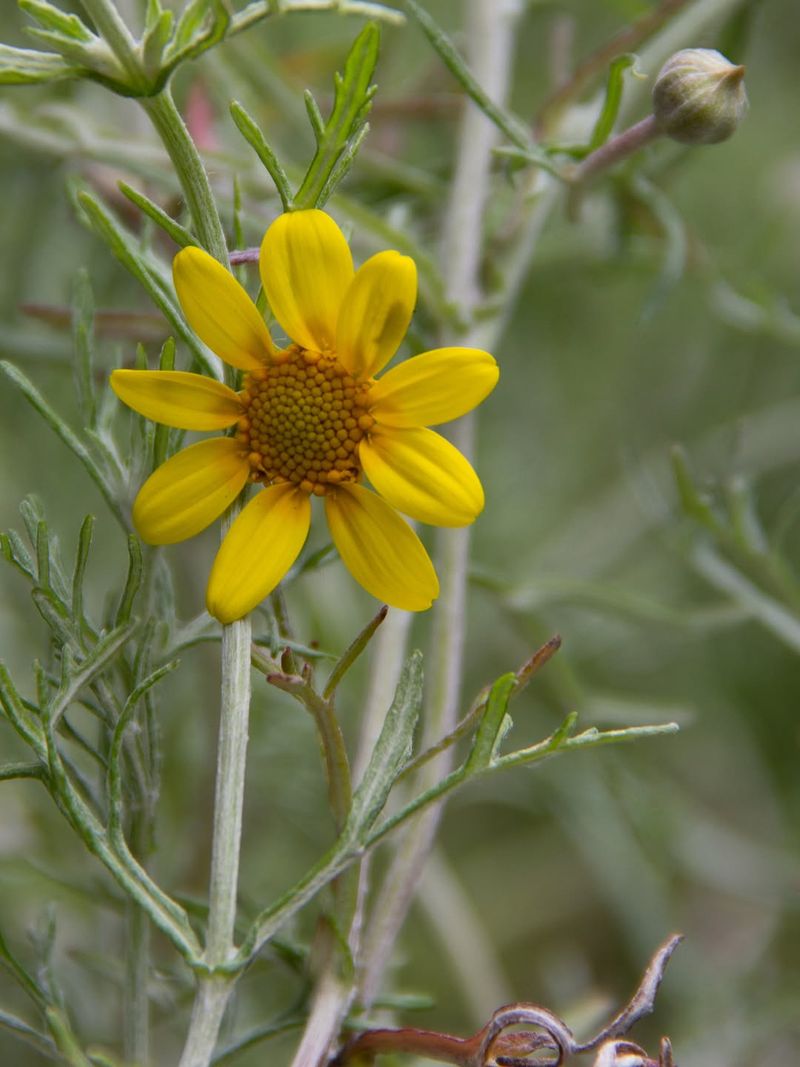
Bright yellow flowers that look like tiny suns cover this cheerful native wildflower all summer long. Oregon Sunshine, also known as woolly sunflower or Eriophyllum lanatum, is one of the most reliable bloomers you can plant in a hot, dry spot.
It handles drought like a champ once it settles in, and it rarely needs extra water after the first season.
The silvery-gray leaves are covered in soft, woolly fuzz that helps the plant hold onto moisture during hot spells. That fuzzy coating reflects some sunlight and keeps the plant from overheating, which is a clever trick nature built right in.
You will often see this plant growing wild on rocky slopes and open hillsides throughout Oregon.
In a garden setting, it works beautifully along pathways, in rock gardens, or at the front of a sunny border. It grows about one to two feet tall and spreads out to form a low, tidy mound.
Bees and butterflies visit the flowers constantly, making it a pollinator magnet from late spring through midsummer. Pair it with other drought-tolerant natives like blue-eyed grass or penstemon for a low-maintenance display.
Plant it in well-drained soil and give it full sun, and it will reward you with color year after year without much fuss at all.
2. California Lilac Thrives In Lean Soil
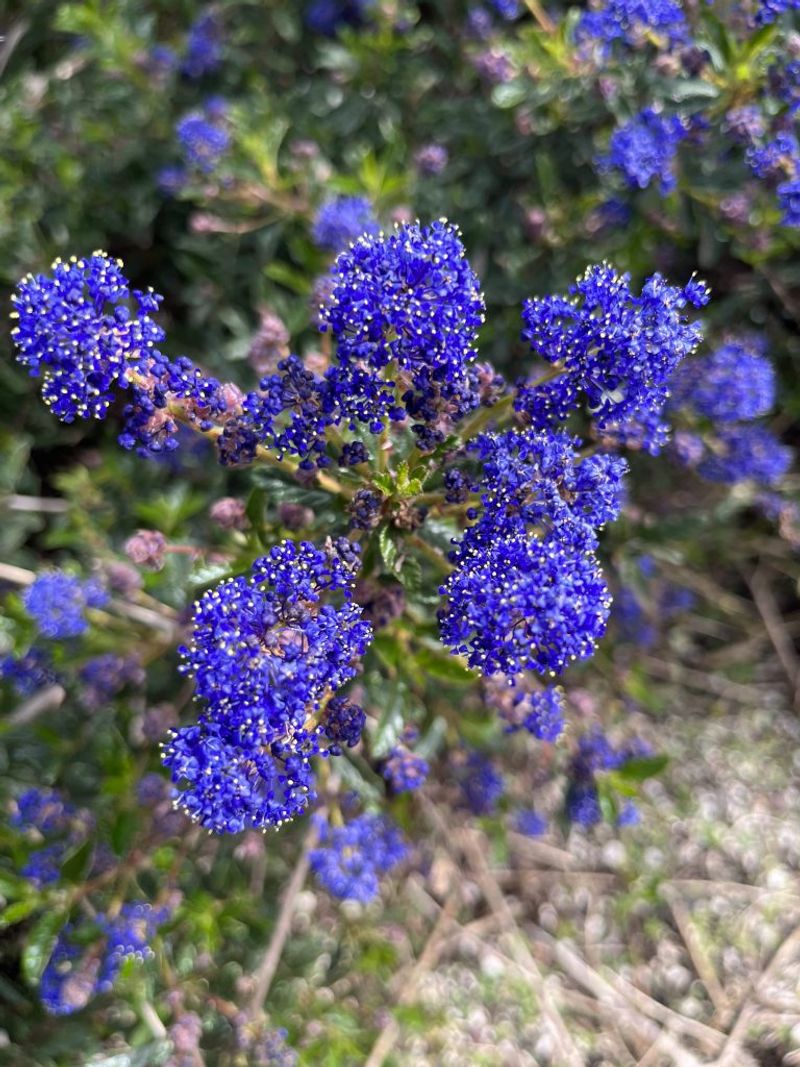
Few shrubs put on a show quite like California Lilac when it bursts into bloom. The clusters of tiny blue or purple flowers are so dense that they can cover the entire plant, making it look like a cloud of color floating in the yard.
And the best part? It loves poor, dry soil that would make most plants miserable.
Ceanothus, its botanical name, is native to California and the western United States. It has adapted over thousands of years to survive hot, dry summers with little to no rainfall.
Once established, it rarely needs irrigation, which makes it a smart choice for water-conscious gardeners in warmer regions.
There are many varieties available, ranging from low-growing ground covers about one foot tall to large upright shrubs reaching eight feet or more. Most bloom in spring, but some varieties continue into early summer.
The flowers attract bees in huge numbers, so planting one near a vegetable garden can actually help with pollination. California Lilac prefers full sun and excellent drainage.
Your Oregon Garden Changes Every Week. Your Plan Should Too.
Gardening in Oregon changes quickly throughout the season. Every Friday you’ll receive a simple weekly plan showing exactly what to plant, prune, fertilize, harvest, and protect so you never miss the right timing.
It does not like soggy roots, especially in winter. Avoid planting it in clay-heavy soil without amending the drainage first.
Prune lightly after flowering to keep it tidy, but avoid heavy cuts into old wood. With minimal care, this shrub delivers maximum visual impact season after season.
3. Pacific Wax Myrtle Handles Hot, Exposed Yards
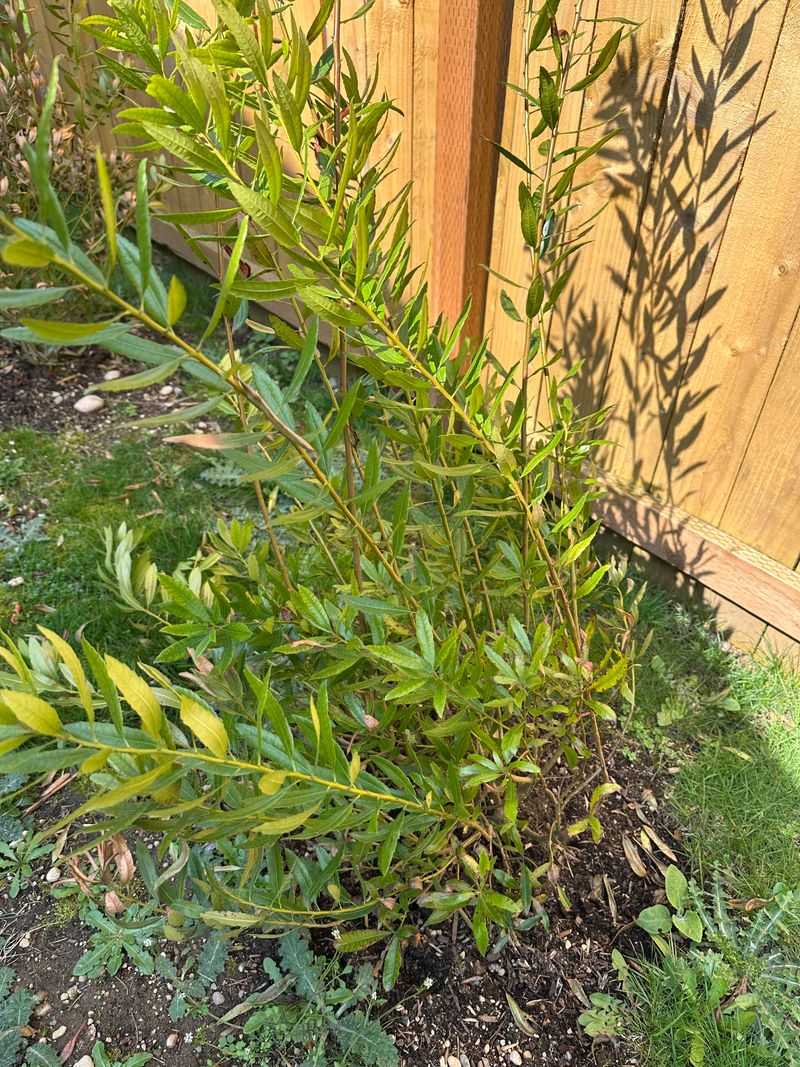
Some plants are built tough, and Pacific Wax Myrtle is one of them. This sturdy evergreen shrub can take full sun, dry soil, salty coastal winds, and summer heat without skipping a beat.
It stays green all year, which gives your yard structure and privacy even during the bleakest months of winter.
Morella californica, its scientific name, grows naturally along the coast and in inland valleys throughout the western United States. It can reach fifteen to twenty feet tall if left unpruned, making it excellent for screening, hedging, or windbreaks.
You can also prune it into a smaller, more compact form if space is limited in your yard.
The leaves have a pleasant, waxy texture and release a mild, spicy scent when brushed. Small, waxy berries appear in fall and attract birds like yellow-rumped warblers, which love to feast on them during migration season.
That bird activity adds another layer of life and interest to your garden. Pacific Wax Myrtle is not picky about soil, tolerating everything from sandy loam to clay as long as drainage is reasonable.
It does best in full to partial sun. Water it regularly during its first summer to help it establish, and then step back and let it do its thing.
After that, it is surprisingly self-sufficient and rarely needs attention beyond occasional shaping.
4. Rockrose Handles Heat Near Pavement
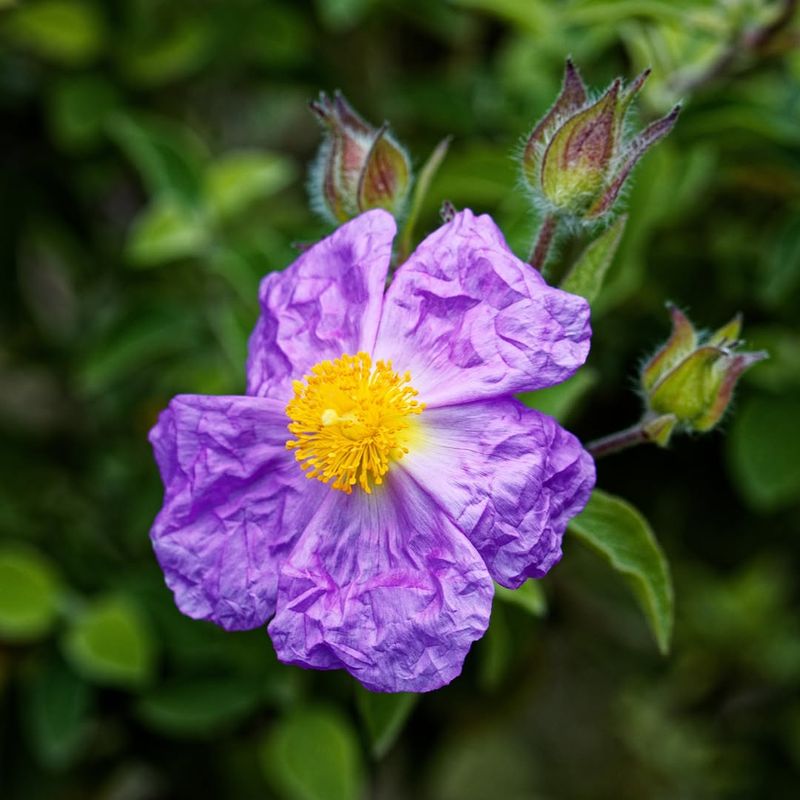
Pavement reflects heat like a frying pan on a summer afternoon, and most plants placed nearby suffer for it. Rockrose, however, thrives in exactly those conditions.
Native to the Mediterranean region, this flowering shrub was practically designed for hot, reflected heat, poor soil, and long dry spells between waterings.
Cistus, the genus name, produces papery flowers that look delicate but are actually quite tough. The blooms come in shades of white, pink, and magenta, often with a dark blotch at the base of each petal.
They open fresh each morning and drop by afternoon, but new flowers replace them daily throughout late spring and early summer, keeping the show going for weeks.
The plants grow two to five feet tall depending on the variety, and they spread into a rounded, bushy shape that fills in gaps nicely.
They handle drought well once established and actually perform better in lean soil than in rich, amended beds.
Too much fertilizer or water can make them floppy and weak. Full sun and excellent drainage are the two main things they need.
Plant them along driveways, near south-facing walls, or in any spot where heat bounces off hard surfaces. They are rarely bothered by pests or diseases, which makes them incredibly easy to maintain.
A light shaping after bloom keeps them looking neat without much effort from you.
5. Lavender Wants Sun And Sharp Drainage
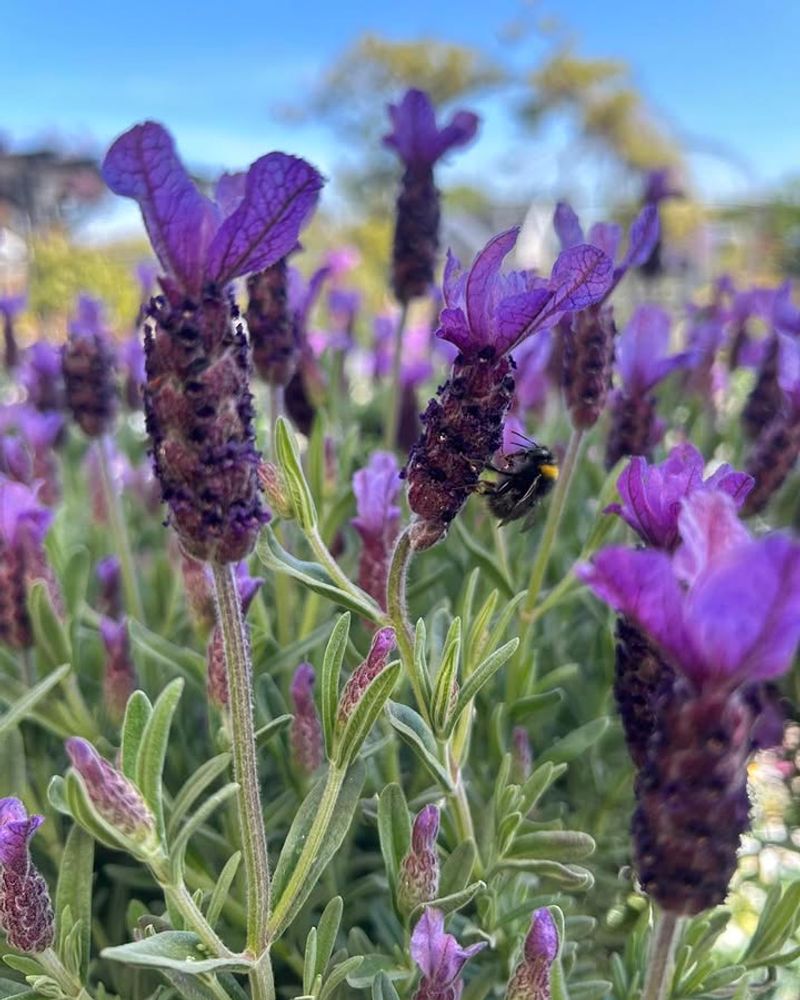
There is something almost magical about a lavender plant swaying in a summer breeze, releasing that unmistakable calming scent. But beyond its beauty and fragrance, lavender is a serious heat warrior.
It comes from the dry hillsides of the Mediterranean, where summer rain is rare and the sun beats down relentlessly for months.
The secret to growing lavender successfully is drainage. It absolutely cannot sit in wet soil, especially in winter.
Oregon’s rainy winters can be a challenge, but planting lavender in raised beds, on slopes, or in gravelly soil solves that problem quickly. Once drainage is handled, lavender is one of the easiest plants you can grow in a hot, sunny spot.
English lavender varieties like Hidcote and Munstead are among the most cold-hardy and compact choices for northern regions.
Spanish and French lavenders bring more dramatic flower shapes but are slightly less tolerant of cold winters.
All varieties bloom best with at least six to eight hours of direct sun each day. Bees go absolutely wild for lavender flowers, and butterflies are frequent visitors too.
Harvest the flower stems just as the buds begin to open and hang them upside down to dry. Dried lavender bundles last for months and keep that beautiful scent around long after summer ends.
Trim plants back by about one-third after flowering to encourage fresh growth and a tidy shape.
6. Sulfur Buckwheat Blooms In Harsh Sun
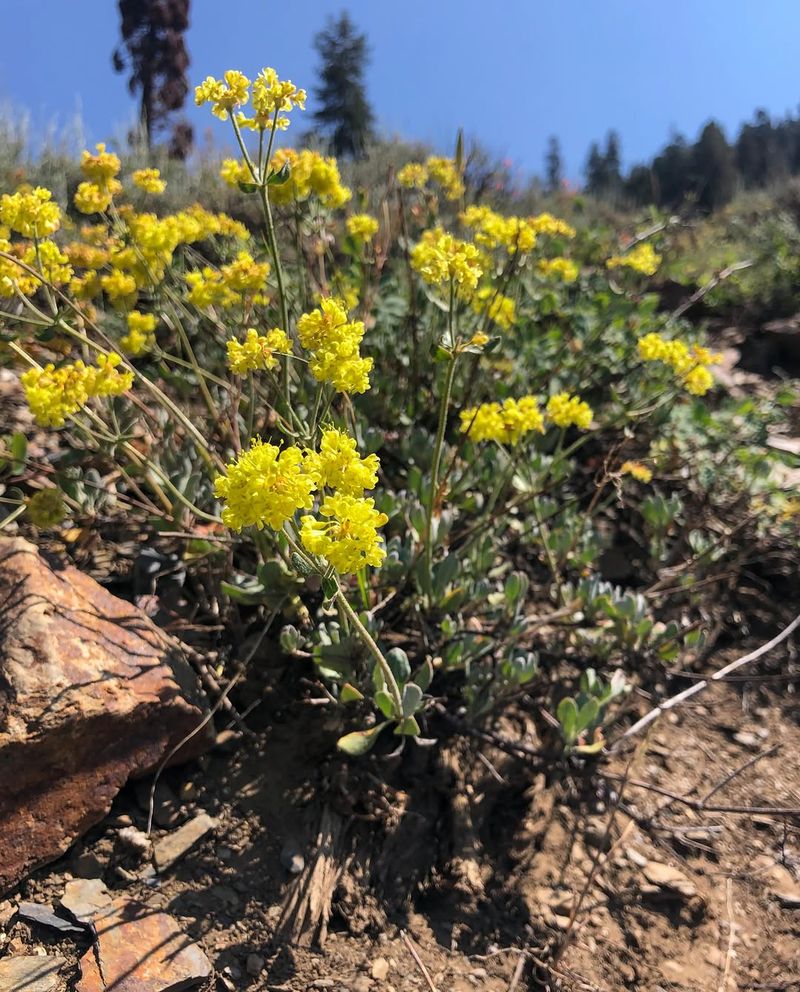
Rocky hillsides, gravel beds, and sun-scorched slopes are where sulfur buckwheat feels completely at home.
This tough little native wildflower is one of the most underused plants in western gardens, and that is a shame because it delivers real beauty in the harshest conditions.
The cheerful clusters of yellow flowers brighten up any dry spot from late spring through summer.
Eriogonum umbellatum, its scientific name, is native to the mountain foothills and high desert regions of Oregon and neighboring areas. It grows low and wide, usually reaching about one foot tall and spreading two to three feet across.
That spreading habit makes it excellent as a ground cover on sunny slopes where erosion can be a problem after rainy winters.
The flowers age from bright yellow to rusty orange as the season progresses, adding a second wave of warm color to the garden. Pollinators love it.
Butterflies in particular are strongly attracted to the nectar-rich flowers, and certain butterfly species use buckwheat as a host plant for their caterpillars. Plant it in full sun with excellent drainage and lean, rocky soil.
Avoid amending the soil with compost or fertilizer, as rich soil makes the plant sprawl and weaken.
Once established, it needs almost no supplemental water and can handle extended dry periods with ease.
It is a true set-it-and-forget-it plant for the hot, sunny parts of your yard.
7. Red-Hot Poker Brings Firework Color
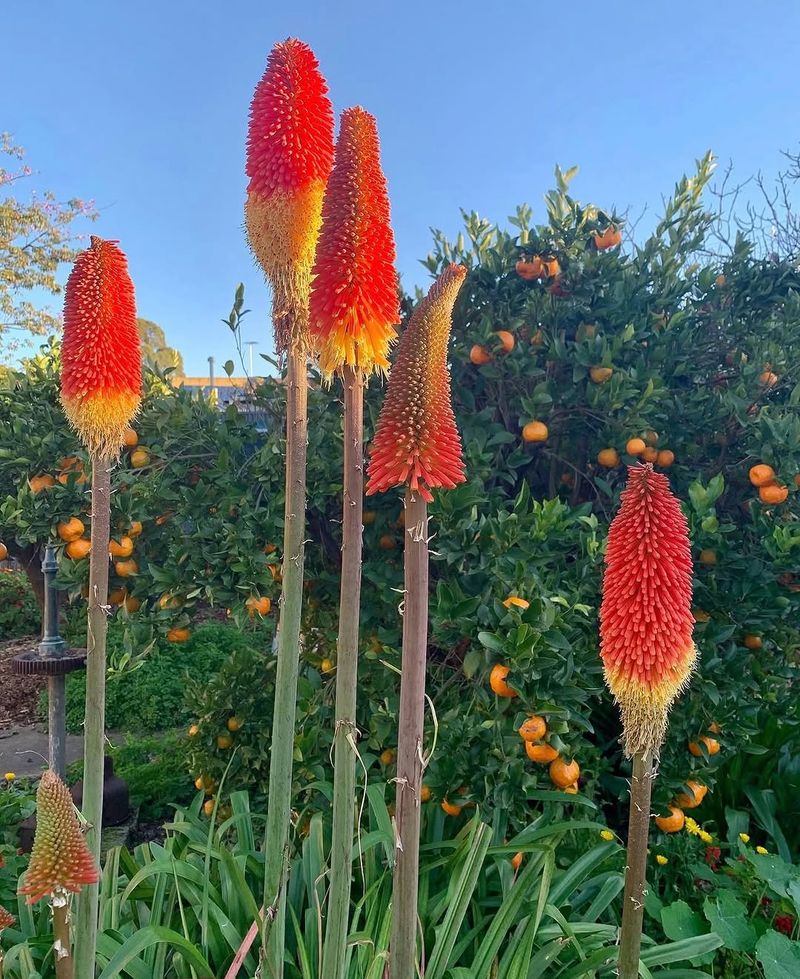
Bold, dramatic, and impossible to ignore, red-hot poker plants command attention the moment they bloom.
The tall flower spikes shoot up from a clump of grassy leaves and open into torches of orange, red, and yellow that look like they are on fire.
Hummingbirds spot them from a distance and zoom straight in for a drink.
Kniphofia, the botanical name, comes from southern Africa, where hot summers and dry conditions are the norm. That origin story explains why it handles Oregon’s increasingly hot summers so well.
It is not bothered by heat waves, and it does not need much water once it has had a chance to settle into the ground after planting.
Most varieties bloom in early to midsummer, but some keep producing new flower spikes well into fall. The plants form clumps that grow two to four feet tall, depending on the variety.
Smaller, more compact types work well in mixed borders, while the larger varieties make a striking focal point on their own. Plant red-hot poker in full sun with well-drained soil for the best performance.
It can handle some clay soil as long as it does not stay waterlogged through winter. Divide the clumps every three to four years to keep them vigorous and blooming well.
The foliage stays green and attractive even when the plant is not in bloom, which makes it a reliable year-round presence in the garden.
8. Blue Oat Grass Cools Down Hot Borders
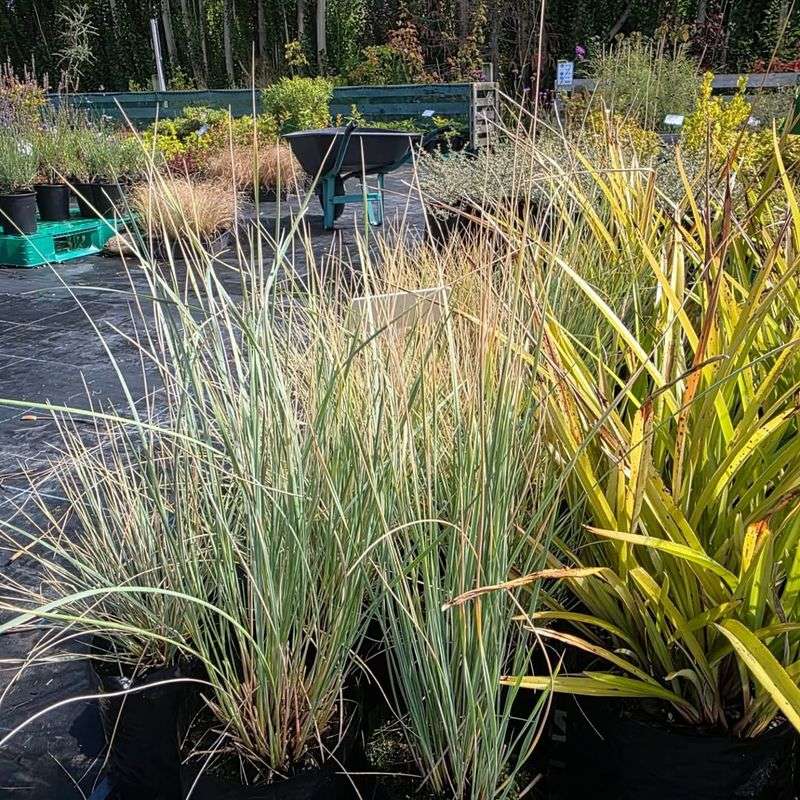
Not every plant in a hot, dry garden needs to shout with color. Sometimes the most striking element is something cool, calm, and architectural.
Blue oat grass does exactly that with its intense steel-blue foliage that seems almost too vivid to be real. The color holds all summer long, even during the hottest stretches of weather.
Helictotrichon sempervirens is a European native that has adapted beautifully to dry, sunny conditions. It forms a tidy, upright mound of narrow, arching leaves that reach about two feet tall.
In late spring, tall seed heads rise above the foliage on slender stems, catching the light and swaying gently in the breeze. Those seed heads dry to a warm golden color and remain attractive through most of the summer.
The blue color of the leaves creates a natural cooling effect visually, which is a welcome contrast in a border full of hot reds, oranges, and yellows.
It pairs wonderfully with lavender, rockrose, and red-hot poker for a cohesive, drought-tolerant planting that looks intentional and polished.
Blue oat grass needs full sun and good drainage to perform at its best. It does not like shade or soggy soil, and it struggles in humid climates.
Oregon’s dry summers suit it perfectly. Comb out any brown leaves in early spring before new growth begins.
Divide the clumps every few years to refresh the plant and maintain that vivid blue color in the foliage.