Do These Things The Moment You See Japanese Beetles On Ohio Plants
Japanese beetles do not ease you in. One day the plants look fine.
The next there is a cluster of them working through foliage with a focus that feels almost personal. Wait another day and the damage has multiplied in ways that make you wish you had moved faster.
Speed matters with Japanese beetles more than with almost any other Ohio garden pest. They signal to each other.
More arrive where others are already feeding, and a small situation becomes a serious one faster than most gardeners expect the first time they deal with it. The moment you spot them is the moment that counts.
Not tomorrow, not after the weekend. Right now, with whatever you have available.
What you do in that first window determines how bad the season gets. Ohio gardeners who have been through this before know the response has to be immediate and it has to be the right one.
1. Knock Japanese Beetles Into Soapy Water Early
A few metallic green beetles on a rose can turn into a bigger chewing crew if the plant goes unchecked for days. Hand removal is one of the most practical first steps a home gardener can take.
It requires no special equipment and no chemicals.
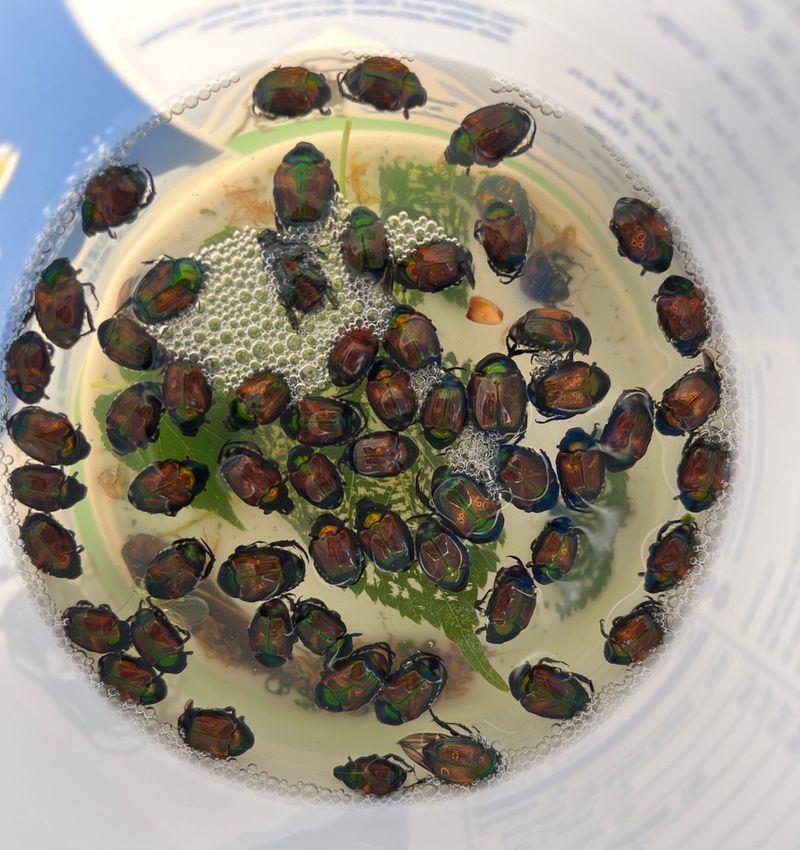
Fill a bucket or wide container with water and a few drops of dish soap. Hold it under the infested branch or stem, then gently tap or shake the plant.
Beetles often drop straight down when disturbed, landing right in the soapy water below.
Early morning is the best time to do this. Beetles are slower and less active in cooler temperatures, which makes them easier to catch before they fly off.
Aim to check plants every one to two days during active beetle season.
This method works best on smaller plants or sections of a larger plant. It will not remove every beetle, and it will not stop new ones from arriving.
But regular early-day checks with a soapy-water container can reduce the number of feeding beetles on your most valued plants.
Consistency is what makes this approach work. A single removal session rarely solves the problem on its own.
Making it part of a short daily routine during peak beetle weeks gives home gardeners a real, low-risk advantage without harming helpful insects nearby.
2. Check Roses Grapes And Linden Leaves First
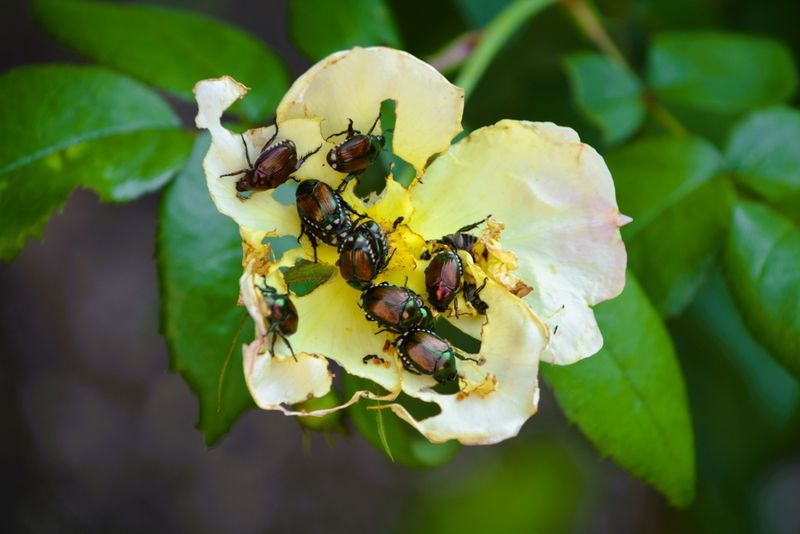
Roses in full bloom are practically a welcome sign for Japanese beetles. These insects have a long list of preferred host plants, and some of the most commonly targeted ones in local gardens include roses, grapes, and linden trees.
When beetles arrive, start your inspection on these plants first. Check the upper surfaces of leaves, the edges of flower petals, and any new or tender growth near the top of the plant.
Beetles tend to cluster in sunny, exposed spots rather than shaded lower growth.
Grape leaves often show feeding damage quickly because beetles skeletonize the tissue between the leaf veins. The leaf ends up looking lace-like and papery.
Your Ohio Garden Changes Every Week. Your Plan Should Too.
Gardening in Ohio changes quickly throughout the season. Every Friday you’ll receive a simple weekly plan showing exactly what to plant, prune, fertilize, harvest, and protect so you never miss the right timing.
Linden trees can lose large sections of their canopy during heavy beetle years.
Roses face a different kind of damage. Beetles chew directly into flower petals and buds, ruining blooms before they fully open.
A rose that looked healthy in the morning can look ragged by afternoon if a cluster of beetles settles in.
Keep in mind that Japanese beetles feed on over 300 plant species. Roses, grapes, and lindens are common starting points for inspection, but they are not the only plants at risk.
Crabapple, hibiscus, birch, and many vegetable plants can also attract feeding beetles. Checking your whole yard matters, not just the obvious targets.
3. Remove Beetles Before They Signal More To Gather
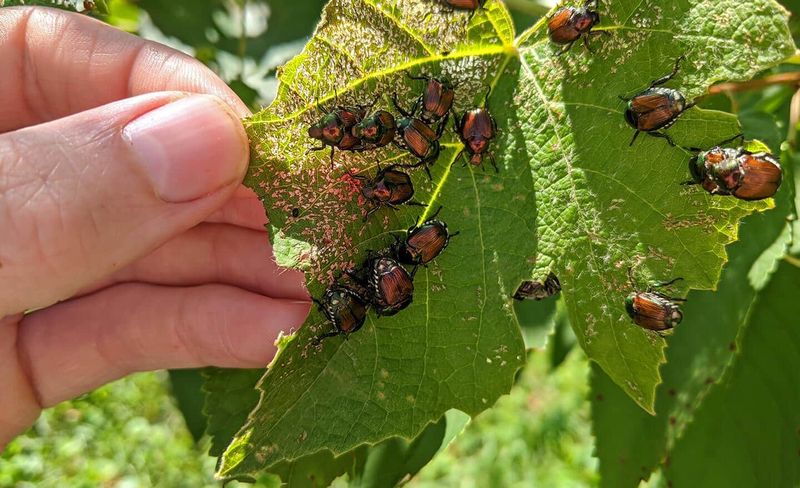
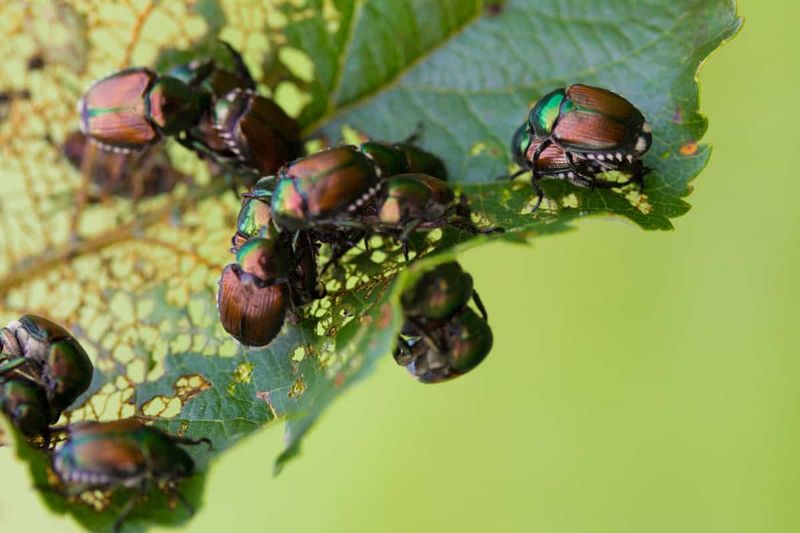
Spotting a cluster of beetles on a single branch is not just a sign of current feeding. It can also be a signal that more beetles may follow.
Japanese beetles release compounds as they feed that can attract additional beetles to the same plant.
This clustering behavior is part of why early removal matters. Leaving a group of beetles undisturbed for several days allows more time for feeding damage to build and more time for the group to grow.
Acting early, even if imperfectly, tends to produce better results than waiting.
You do not need to remove every single beetle to make a difference. Reducing the number of beetles on a plant, especially early in an infestation, can lower the feeding pressure on that plant.
It also disrupts the clustering pattern before it gets out of hand.
The most practical approach is to remove beetles as soon as you spot a group forming. Use the soapy-water method, or simply pick them off by hand if you prefer.
Wearing gloves makes the task easier and more comfortable for most gardeners.
Avoid crushing beetles directly on the plant. Some gardeners believe that crushing releases compounds that attract more beetles, though research on this is not fully settled.
Dropping them into soapy water is a cleaner and more reliable removal method for most home garden situations.
4. Skip Beetle Traps Near Your Favorite Plants
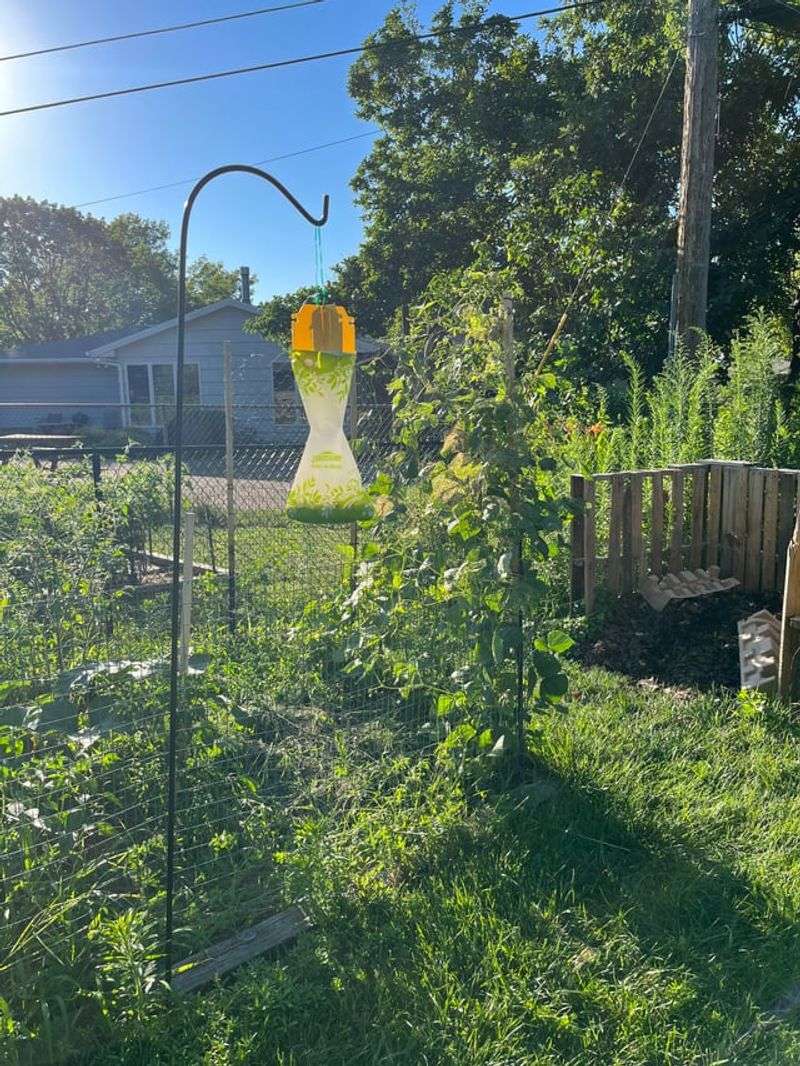
Beetle traps are widely sold at garden centers, and many home gardeners reach for them as a first response. The traps use floral and sex-based attractants to lure beetles in.
They can catch a large number of beetles, which makes them feel effective.
The problem is placement. Research from university extension programs includes work referenced by Ohio State University Extension.
It suggests that traps can attract more beetles to the area than they actually catch. A trap placed near roses, vegetables, or fruit plants may increase beetle activity right where you least want it.
If you choose to use a trap, place it well away from your valued plants. Some extension sources recommend positioning traps at least 30 feet from any plants you want to protect.
The goal is to draw beetles away from the garden, not toward it.
Traps are not always a bad choice. In some situations, they can help reduce overall beetle numbers in a yard.
But trap placement is everything. A poorly placed trap can make a beetle problem worse rather than better.
Before using any trap product, read the label carefully and check current guidance from your local extension office. Extension educators in this state can offer up-to-date recommendations based on local beetle pressure and seasonal conditions.
A quick call or visit to the OSU Extension website can save a lot of frustration during peak beetle weeks.
5. Protect Flower Buds Before Feeding Damage Spreads
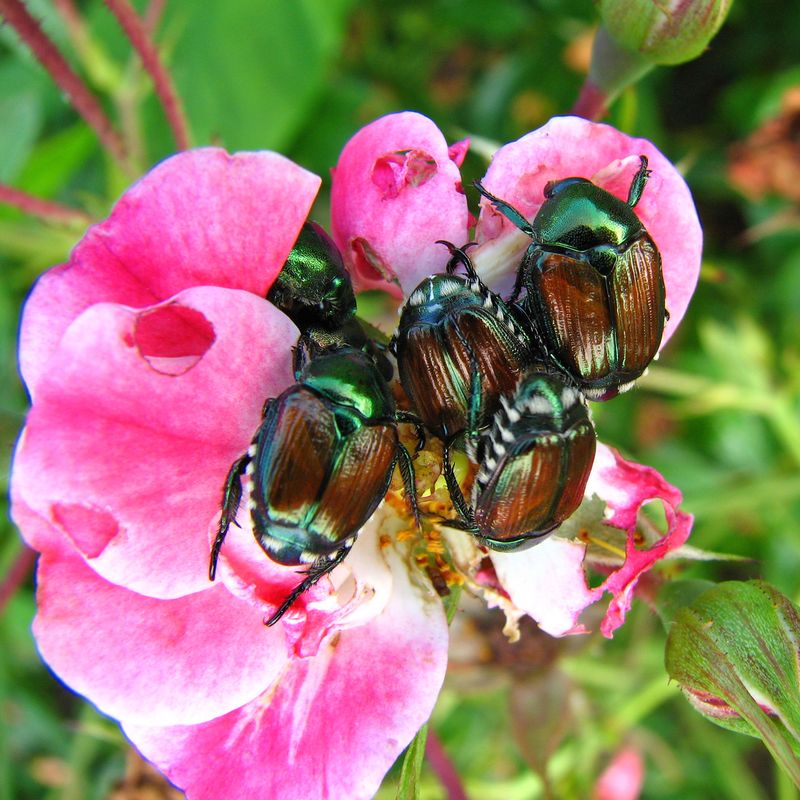
An open rose bloom on a warm July morning can attract beetles fast. Flowers and buds are some of the most vulnerable parts of a plant during Japanese beetle season.
Beetles chew directly into petals and tender bud tissue, often ruining blooms within hours of arrival.
Checking high-value flowering plants when buds begin to open is a smart habit. Roses, hibiscus, and flowering crabapple are especially worth watching during peak beetle weeks.
Catching beetles before they settle into a bud can save a bloom that would otherwise be lost.
For plants with a lot of buds opening at once, focus your inspection on the most exposed and sun-facing growth. Beetles prefer sunny, warm spots on a plant.
Shaded or interior growth tends to see less feeding activity than the outer canopy.
Some gardeners choose to use a row cover or fine mesh fabric to physically protect individual plants or sections of a plant during the worst weeks of beetle season. This approach works best on smaller plants.
It is not practical for large shrubs or trees.
Keeping plants healthy before beetle season also helps. A stressed or weakened plant may be less able to recover from feeding damage than a well-watered, well-fed one.
Healthy growth does not repel beetles, but it does give the plant a better chance of bouncing back after the feeding pressure eases up in late summer.
6. Avoid Spraying Every Insect In The Garden
Reaching for a broad-spectrum spray the moment you spot a beetle is a common reaction, but it often causes unintended problems.
Many insecticides do not distinguish between Japanese beetles and the bees, wasps, and beneficial insects working in the same garden.
Pollinators like bumblebees and honeybees are especially at risk from certain insecticide applications. Spraying open flowers or blooming plants with a broad-spectrum product can reduce the number of pollinators visiting your garden for weeks after treatment.
That affects fruit set and overall garden health.
A better approach is to identify the pest, assess the actual damage level, and decide whether treatment is truly needed. Light feeding on a large, healthy shrub may not require any intervention.
Targeted removal by hand may be enough for many situations.
If you decide a product is necessary, look for options labeled for Japanese beetles that have lower impact on beneficial insects. Apply in the evening when bee activity is lower.
Avoid spraying open flowers entirely. Always follow the current label directions exactly.
OSU Extension and other university-based integrated pest management resources offer guidance on choosing products that are less harmful to non-target insects.
Checking those resources before purchasing or applying anything gives you a much clearer picture of what is actually needed.
Spraying less and targeting more is almost always the smarter path for a healthy backyard garden in this state.
7. Watch For Skeletonized Leaves On Sunny Plants
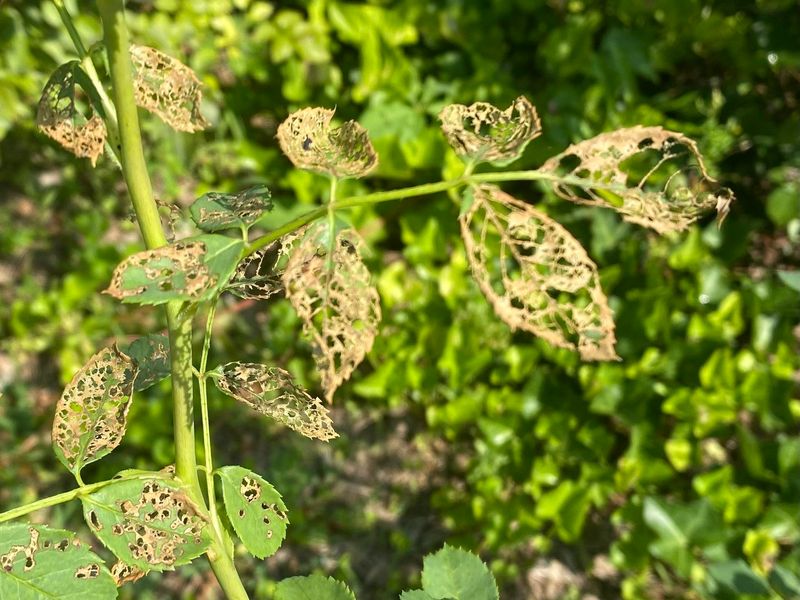
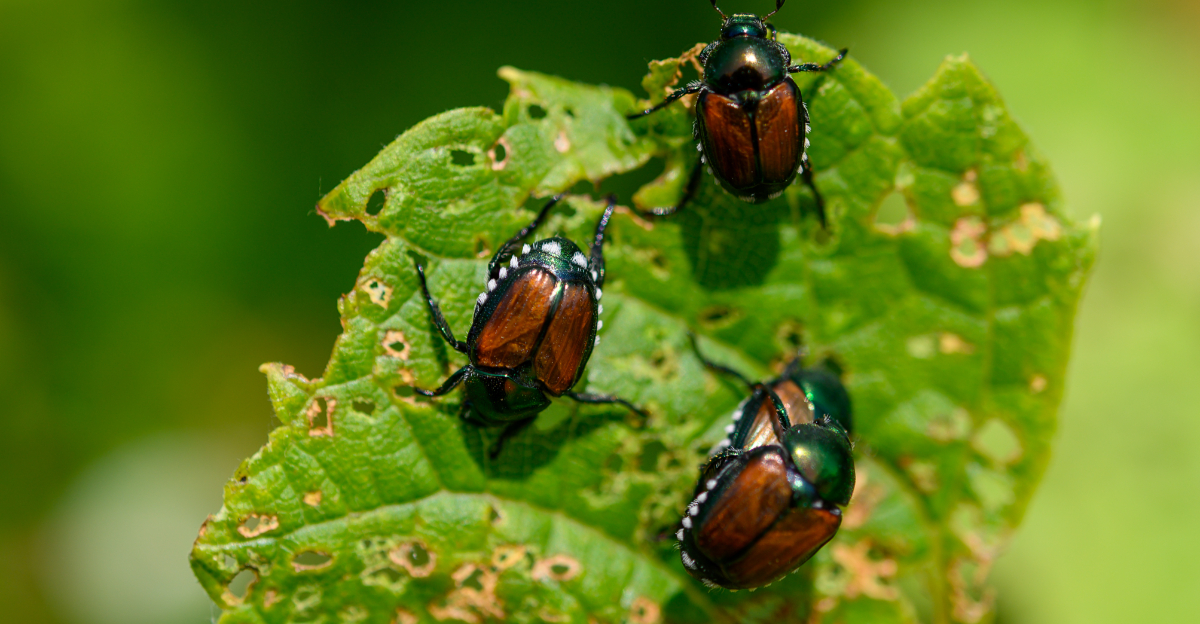
A leaf that looks like a piece of lace is one of the clearest signs that Japanese beetles have been feeding. These insects chew the soft tissue between the veins but leave the veins themselves mostly intact.
The result is a skeletonized leaf that looks almost see-through in the sunlight.
This type of damage is easiest to spot on the upper, outer leaves of a plant. Sunny, exposed growth tends to attract more beetle activity than shaded interior leaves.
Walking the Ohio garden on a bright afternoon and checking the tops of shrubs and vines can reveal feeding damage that is easy to miss from a distance.
Not every chewed or damaged leaf comes from Japanese beetles. Other insects, caterpillars, and even slugs can leave similar-looking damage.
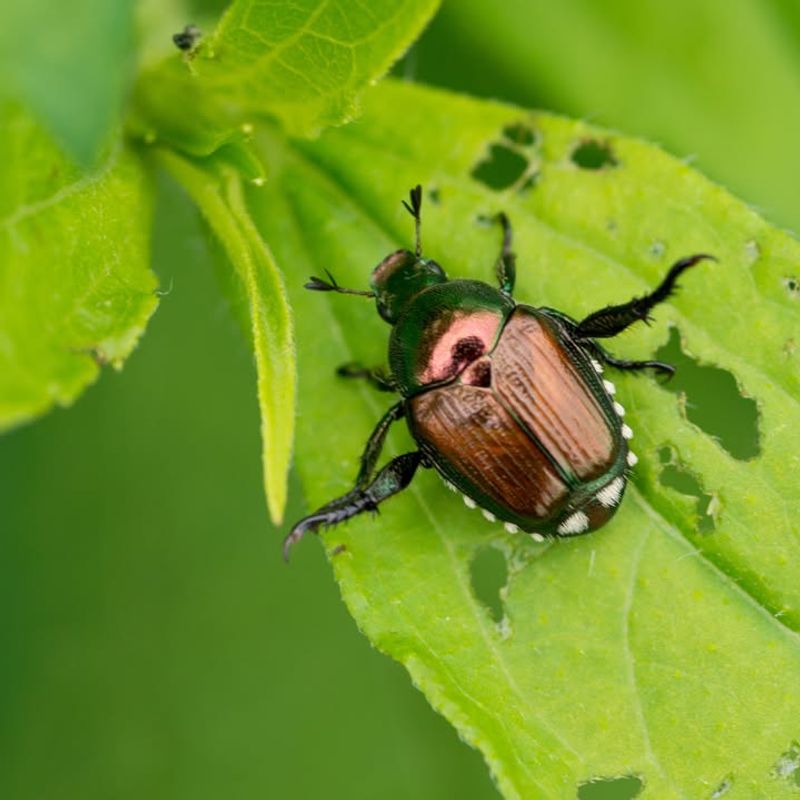
Look for the beetles themselves to confirm the source. Adult Japanese beetles are about half an inch long, with a metallic green body and copper-brown wing covers.
They often feed in groups.
Catching the skeletonized-leaf pattern early helps you respond before the damage spreads further. A plant that loses a large portion of its leaves to beetle feeding can struggle to recover, especially during hot, dry summer stretches common in this state.
Checking plants with a quick visual scan every day or two during beetle season takes only a few minutes. That small habit makes it much easier to catch new feeding damage before a cluster of beetles gets fully established on a plant.
8. Keep Checking Daily While Beetles Are Active
Managing Japanese beetles is not a one-time task. It is a short daily routine that runs through the peak of their active season.
In most parts of Ohio, adult beetles are most active from late June through August, with the heaviest pressure usually falling in July.
Daily checks do not need to take long. A five to ten minute walk through the garden, focusing on the plants you care most about, is often enough to catch new beetle activity before it gets out of hand.
Bring a soapy-water container and remove any beetles you find on the spot.
Pay attention to which plants are attracting the most beetles each day. Beetle pressure can shift as plants finish blooming or as feeding damage makes one spot less appealing.
Staying observant helps you adjust your focus as the season moves along.
Some weeks will be worse than others. A stretch of hot, sunny weather often brings more beetle activity than cooler, cloudy periods.
Knowing that the season has a natural end point can help you stay patient and steady rather than frustrated.
By mid-August, adult beetle activity typically slows in most areas of this state. Feeding pressure eases, and plants that held on through the worst weeks often recover with good care.
The gardeners who come out ahead are usually the ones who stayed consistent, checked often, and acted early rather than waiting for things to get out of hand.