What It Really Means When Mud Daubers Start Showing Up On Your North Carolina Walls And Eaves
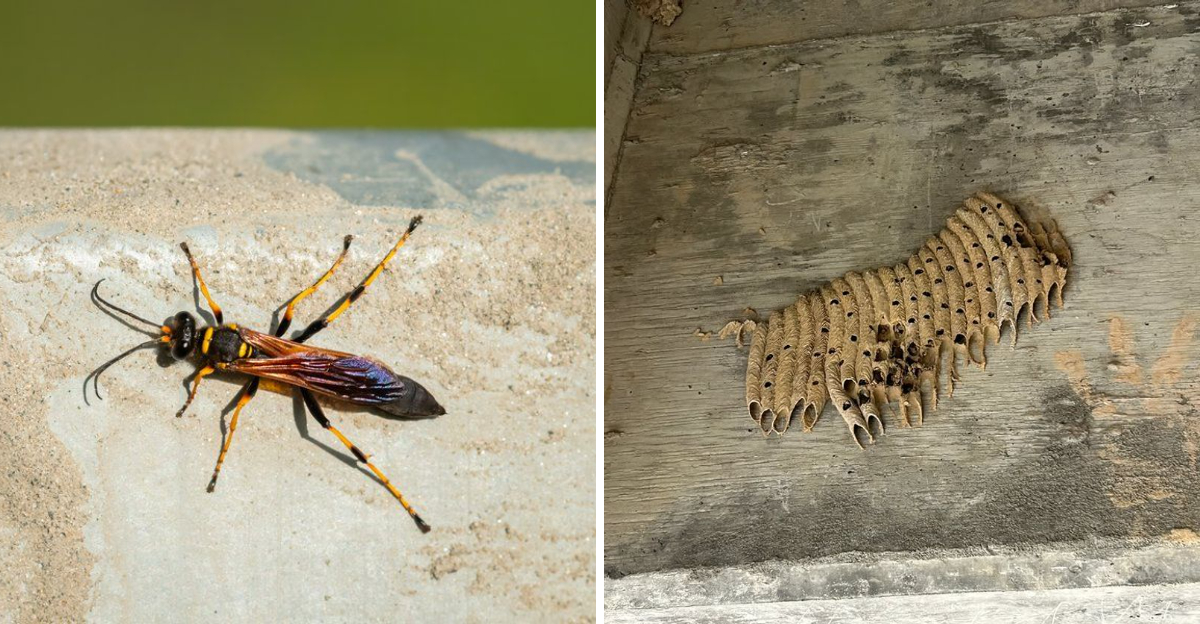
Finding mysterious mud tubes stuck to your porch ceiling or garage wall is one of those moments where you stop, stare, and genuinely have no idea what you are dealing with.
Good news: it is probably mud daubers, and they are a lot less dramatic than they look.
North Carolina’s warm, humid summers create perfect conditions for these slender solitary wasps, which build compact little nursery nests out of wet clay and mud from nearby soil.
They show up on eaves, covered patios, sheds, and walls throughout the state, quietly filling their sealed mud tubes with spiders rather than forming a large defensive colony like yellowjackets or hornets do.
Honestly, once you understand what mud daubers are actually up to, the whole situation goes from mildly alarming to kind of fascinating pretty quickly.
1. Mud Daubers Are Building Nursery Nests
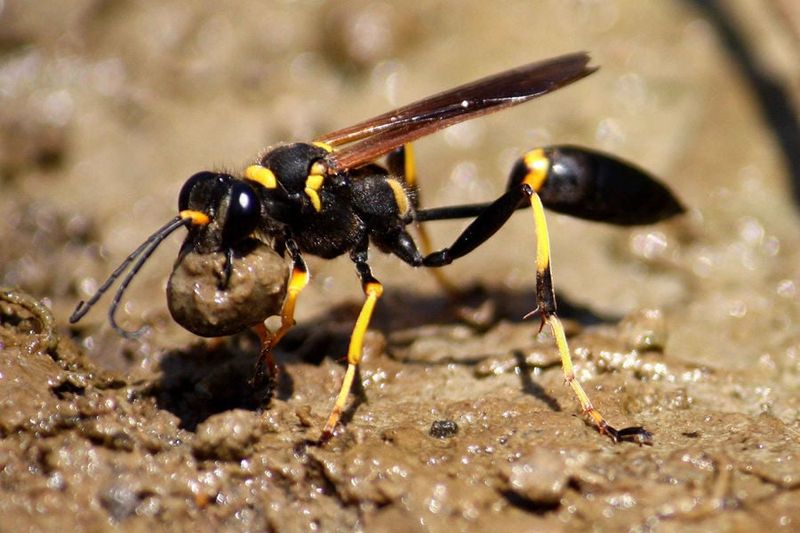
Those small mud tubes on your porch ceiling are not random clumps of dirt that blew in through the wind. A mud dauber wasp built them on purpose, shaping each tube into a sealed nursery cell where she lays a single egg.
The process is methodical, quiet, and surprisingly organized for something that looks a little rough on the outside.
Each mud cell gets packed with paralyzed spiders before the egg is laid and the entrance is sealed. When the egg hatches, the larva feeds on the spiders stored inside the cell.
By the time the young wasp fully develops, it chews through the mud wall and emerges as an adult ready to repeat the cycle.
North Carolina homeowners often notice these nests in late spring and summer, which lines up with peak wasp activity in the region. The nests may look like small cylinders or a cluster of tubes depending on the species.
Organ pipe mud daubers build long vertical tubes, while other species build rounder, lumpier clusters that resemble a small ball of dried clay.
Knowing that each nest is essentially a nursery rather than a hive helps put the situation in perspective. There is no queen, no large workforce, and no territory being guarded.
The female mud dauber is simply trying to give her offspring a safe, sheltered place to develop before the next season arrives.
2. Protected Eaves Make Good Nesting Spots
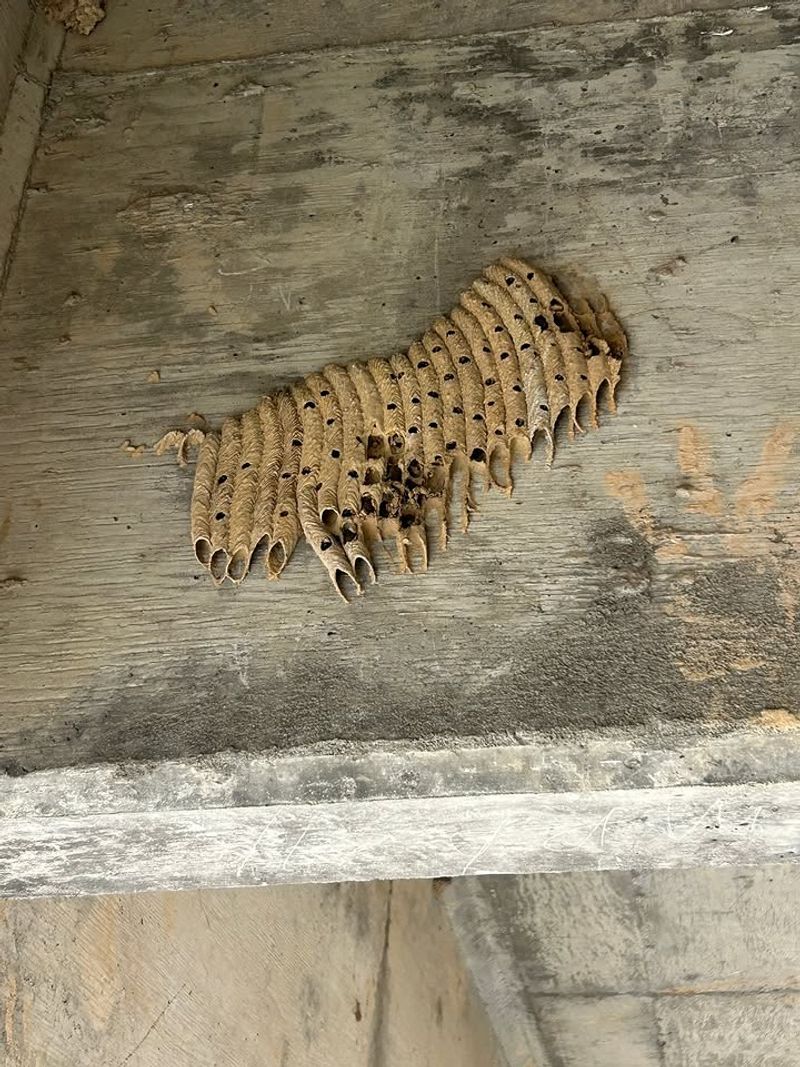
Eave shadows and covered overhangs offer exactly the kind of shelter a mud dauber is looking for when she scouts for a nesting location.
Rain is the biggest threat to a mud nest because moisture can soften the clay and cause the tubes to crumble before the eggs inside have a chance to develop.
A roof overhang or porch soffit blocks most of the rain while still allowing the wasp to come and go freely.
In North Carolina, where summer storms can roll in quickly, sheltered spots under eaves are prime real estate for mud daubers. Garages with open doors, covered carports, and screened porches also attract nesting activity for similar reasons.
The wasps are not drawn to the structure itself so much as they are drawn to the protection it offers from the elements.
Your North Carolina Garden Changes Every Week. Your Plan Should Too.
Gardening in North Carolina changes quickly throughout the season. Every Friday you’ll receive a simple weekly plan showing exactly what to plant, prune, fertilize, harvest, and protect so you never miss the right timing.
Walls that face away from prevailing winds are also common nesting sites. A sheltered corner where two walls meet, especially one that gets some warmth from afternoon sun, can be especially appealing.
The combination of warmth, dryness, and minimal disturbance makes these spots hard for a mud dauber to pass up.
Homeowners who regularly find nests in the same spot year after year are not necessarily dealing with the same wasp returning.
New females often choose locations that look structurally ideal, and a spot that worked once tends to check all the right boxes for future nesters as well.
3. Nearby Mud Gives Them Building Material
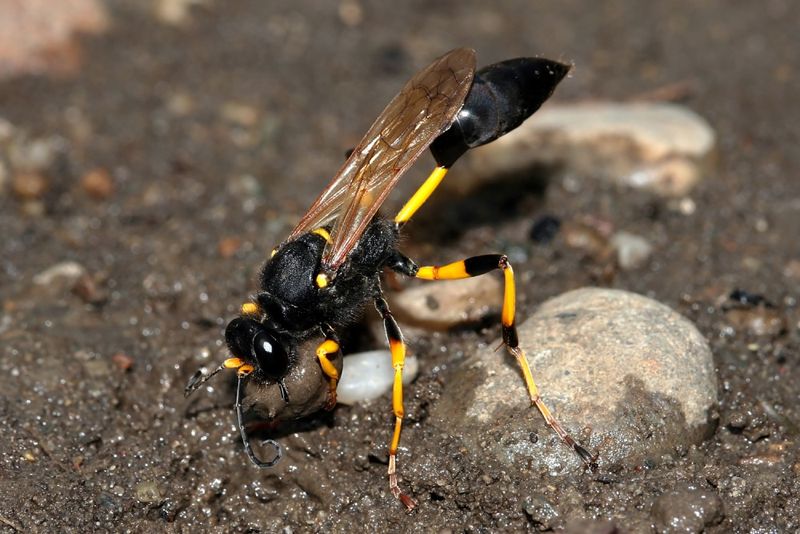
Finding a nest on your wall often means there is a reliable source of wet mud somewhere close by. Mud daubers are efficient builders, but they need moist, workable soil to roll into small balls and carry back to the nest site.
Without accessible mud, they will move on and look elsewhere.
North Carolina has no shortage of clay-heavy soil, especially in the Piedmont region where red clay sits close to the surface in many yards.
A low spot in the garden that stays damp after rain, a leaky outdoor spigot, or a section of bare soil near a downspout can all serve as a mud source.
Even a small, consistently wet patch of ground is enough to keep a mud dauber supplied throughout the nesting season.
Birdbaths, garden ponds, and rain puddles near the foundation can also contribute to mud availability. The wasp does not need a large water feature, just enough moisture to soften the surrounding soil.
She collects the mud in small loads, shapes it quickly, and flies it back to the nest in a matter of minutes.
If mud daubers keep returning to the same walls each year, it may be worth checking for persistently damp soil nearby.
Fixing a dripping hose bib, improving drainage in a low garden bed, or covering bare soil with mulch can reduce the building material available and may make the area less attractive for nesting over time.
4. Spiders Around The House May Be Drawing Them In
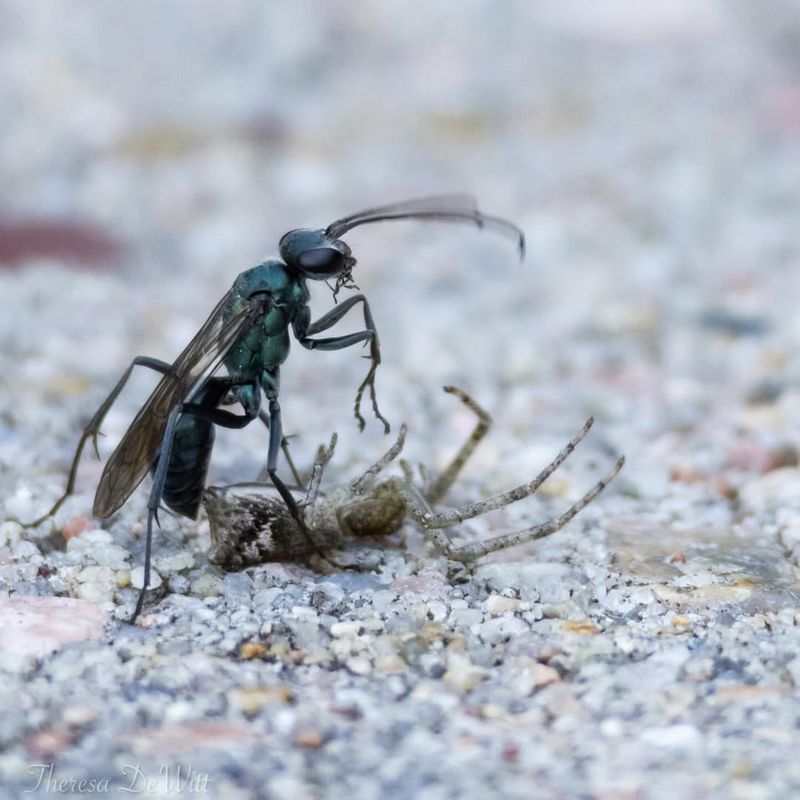
Spiders are not just something mud daubers happen to grab along the way. They are the entire food source for the developing larvae inside each mud cell.
A female mud dauber actively hunts spiders, paralyzes them with a sting, and then tucks them into the sealed nest as a fresh food supply for her young.
A yard or home exterior with a healthy spider population is essentially a well-stocked pantry from a mud dauber’s perspective. Orb weavers, crab spiders, and various other species found around North Carolina homes are all known prey.
Window frames, porch corners, garden shrubs, and exterior light fixtures where spiders tend to build webs are often close to where mud daubers are hunting.
This is one reason why mud daubers tend to show up more around homes with dense landscaping, leaf litter near the foundation, or lots of insects that attract spiders in the first place.
The wasp is following the food chain, and if spiders are abundant, the nesting conditions become more favorable overall.
From a garden ecology standpoint, mud daubers actually help manage spider populations around the home.
Whether that feels like a benefit depends on how you feel about spiders, but it is worth knowing that the wasp is doing some natural pest work as part of her nesting routine.
Noticing more mud daubers may simply mean your yard has a thriving insect community this season.
5. The Nests May Look Messier Than They Are
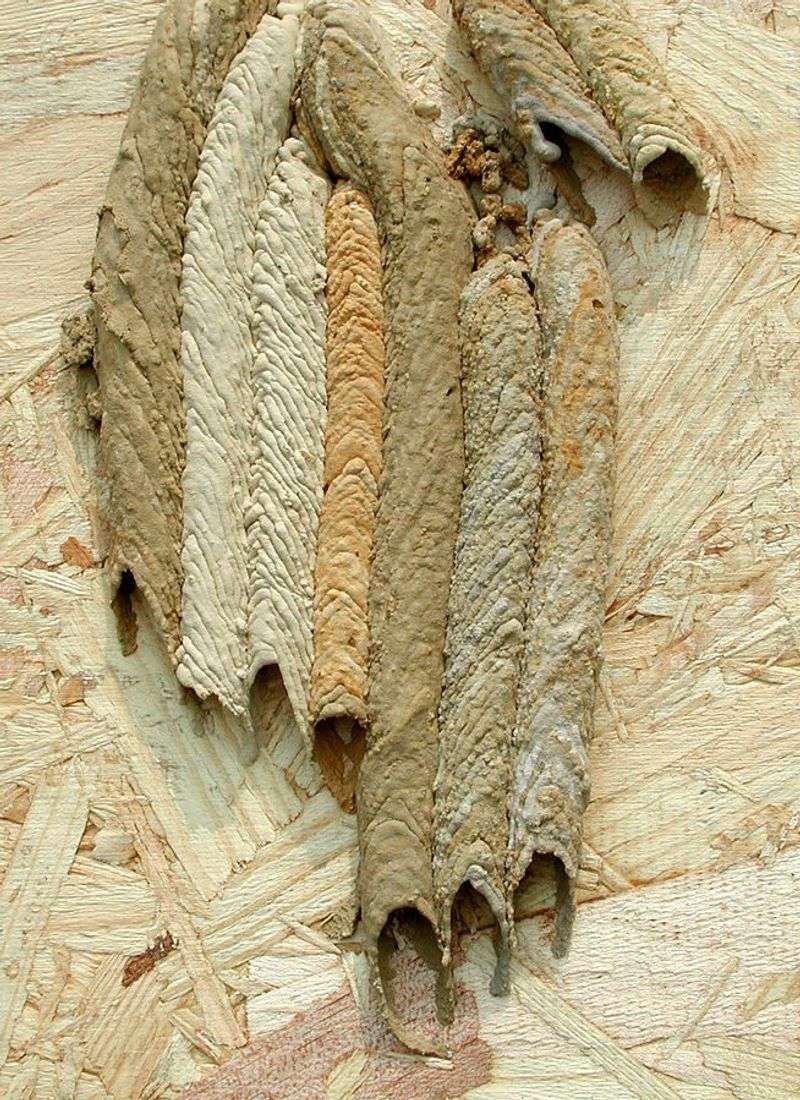
Stumbling across a lumpy cluster of dried mud tubes on a freshly painted wall can feel like more of a problem than it actually is.
The nests tend to look rough and unfinished, sometimes stained with dirt streaks or surrounded by small mud drips that dried on the surface below.
That appearance can make the situation seem worse than it is at first glance.
Structurally, mud dauber nests do not damage wood, brick, stucco, or painted surfaces in the way that carpenter bees or wood-boring insects can. The mud adheres to the surface but does not penetrate it.
Once a nest is empty and dry, it can typically be scraped off without leaving behind anything more serious than a faint stain or discoloration on lighter-colored surfaces.
Older nests that have been through a few rain cycles may already be partially crumbling on their own.
Abandoned tubes sometimes show exit holes where the adult wasps already chewed their way out, which is a good sign that the nest has completed its cycle and is no longer active.
Checking for exit holes can help you figure out whether a nest is still in use or already finished.
In North Carolina’s warm climate, nests can build up on a wall over multiple seasons if the spot stays sheltered and undisturbed.
What looks like a large, alarming mass may actually be several seasons of individual nests stacked near each other rather than one enormous active structure.
6. Most Mud Daubers Are Not Looking For Trouble
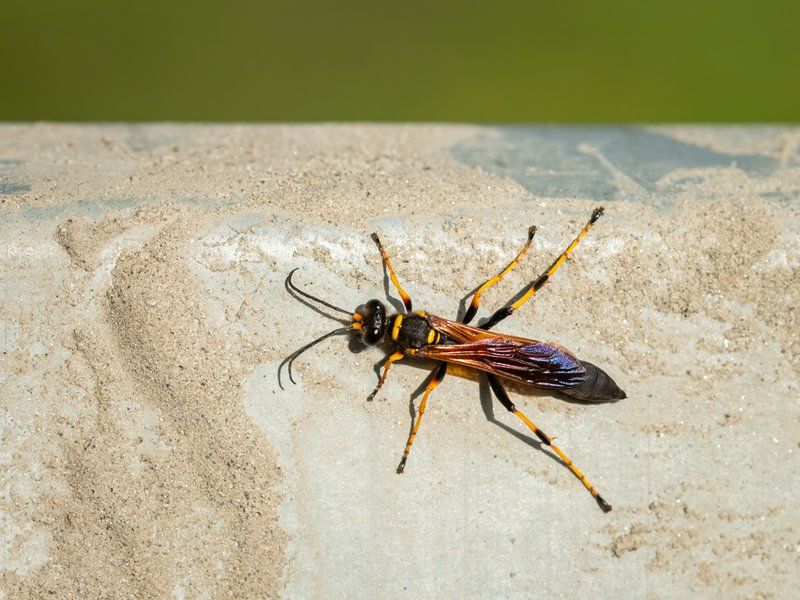
Watching a mud dauber zip past your head while you are sitting on the porch can feel alarming, but these wasps are generally focused on their own work rather than on the people nearby.
Unlike yellowjackets or paper wasps, mud daubers are solitary and do not maintain a colony that needs defending.
That difference in social structure changes how they behave around humans significantly.
A female mud dauber is typically carrying mud, hunting spiders, or inspecting potential nest sites when she is flying around the exterior of your home. She is not patrolling a territory or protecting workers.
Without a colony to defend, she has much less reason to sting unless she is directly handled or trapped against skin.
That said, caution is still a reasonable approach. Anyone with a known sting allergy should treat any wasp with care, and grabbing or swatting at a mud dauber can prompt a defensive response.
Children and pets near active nests in high-traffic areas should be watched, not because mud daubers are aggressive by nature, but because any wasp can sting if it feels cornered.
North Carolina residents who give mud daubers a little space usually find that the wasps go about their business without incident.
Observing them from a comfortable distance can actually be interesting, since their mud-gathering and nest-building behavior is fairly easy to watch once you know what you are looking at and are not feeling anxious about it.
7. Solitary Wasps Do Not Guard Big Colonies
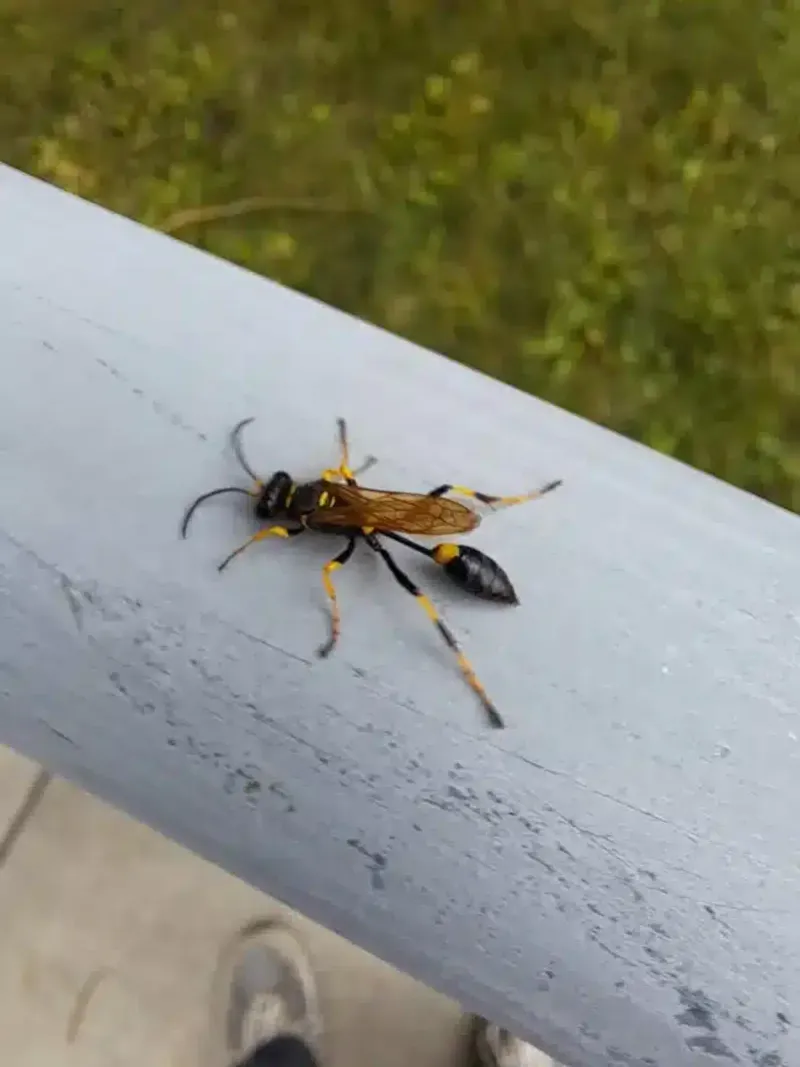
One of the most reassuring things about mud daubers is something most people do not realize until they look it up: there is no colony behind them.
Social wasps like yellowjackets and hornets live in large groups with thousands of workers ready to respond when the nest feels threatened.
Mud daubers operate on an entirely different model.
Each female mud dauber works alone. She builds her own nest, provisions it with spiders, lays her eggs, and seals the cells without any help from other wasps.
There is no queen giving instructions, no guards posted at the entrance, and no swarm waiting to respond if the nest is disturbed. That solitary lifestyle is a fundamental part of what makes mud daubers far less confrontational than their social wasp relatives.
In North Carolina, this distinction matters when homeowners are trying to decide how urgently to respond to a nest. A paper wasp nest with dozens of workers clinging to it near a back door is a different situation than a sealed mud tube on a garage rafter.
The risks involved and the level of urgency are genuinely different between those two scenarios.
Recognizing solitary wasp behavior can also help with identification. If you see only one or two wasps visiting a nest and no clustering or guard behavior, there is a reasonable chance you are looking at a mud dauber rather than a more defensive social species.
Getting a clear look at the nest shape and the wasp’s slender build can help confirm it.
8. Removal Is Usually A Cleanup Choice, Not An Emergency
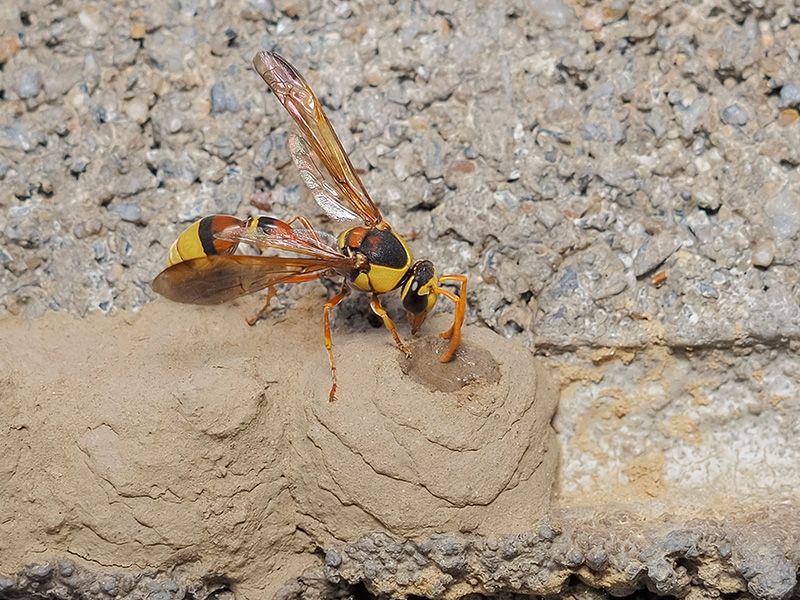
Scraping a mud dauber nest off your eave is a reasonable thing to do, but it rarely needs to be treated as an urgent pest emergency. Once a nest is fully sealed and the adult wasp has moved on, the main reason to remove it is cosmetic.
Dried mud tubes on a white porch ceiling or a painted garage wall are not exactly a selling point, and most homeowners prefer to remove them simply to keep the exterior looking tidy.
For nests that appear active, with a wasp still coming and going, waiting until cooler evening hours before removing the nest can reduce the chance of startling the female during her work.
A stiff brush or putty knife works well for scraping dried nests off smooth surfaces.
Wearing gloves and safety glasses is a practical precaution during removal, especially if the nest is above head height.
In North Carolina, mud dauber season winds down as temperatures drop in fall, and many nests are already abandoned by the time homeowners decide to deal with them.
Checking for exit holes, which appear as small round openings where adult wasps have already emerged, can help confirm that a nest is no longer in use before you remove it.
Preventing future nests is mostly about reducing the conditions that attract them.
Improving drainage near the foundation, addressing spider populations around exterior lights, and sealing gaps in soffits or siding can all make a home’s exterior a little less appealing as a nesting destination next season.