This Underrated North Carolina Native Grass Helps Make Yard Edges Less Tick-Friendly
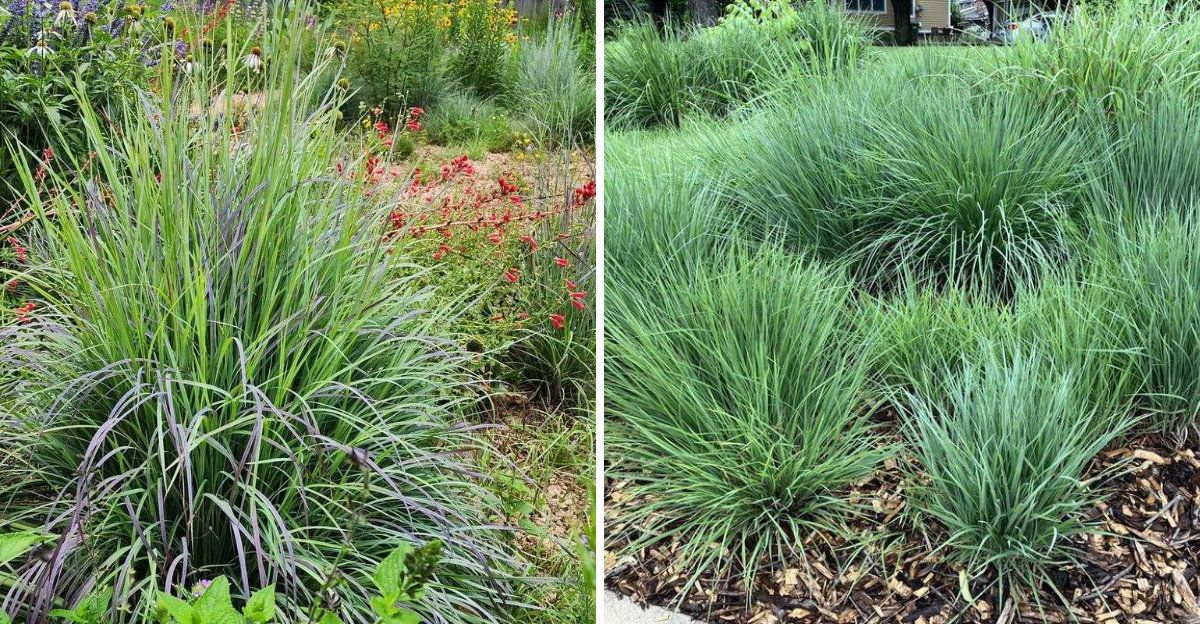
Most tick conversations in North Carolina focus on what to spray and when to check. Fewer of them focus on what the yard itself is doing to make ticks comfortable in the first place.
Ticks are not random. They concentrate in specific kinds of environments: humid, shaded, brushy edges with leaf litter and dense low vegetation. They wait there for a passing host.
If the border between your lawn and the woods looks exactly like that description, it is functioning as a tick waiting area, and the plants you chose for that edge are part of the reason.
One native North Carolina grass changes the character of that border in a useful direction. It thrives in the dry, open conditions ticks find inhospitable.
It grows in upright clumps that allow airflow instead of trapping humidity. It stays where it is planted and looks attractive doing it, which is a combination that most pest-deterrent strategies do not manage.
It does not solve a tick problem by itself. What it does is give you a practical starting point for redesigning the yard edge into something that works for you rather than against you. Sound useful?
Start With Little Bluestem First
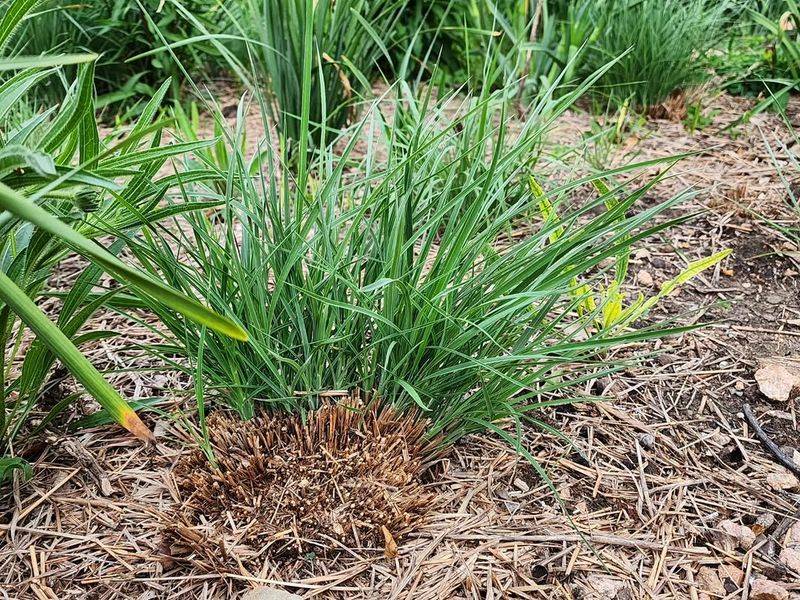
Walk the edges of a sunny North Carolina meadow or roadside in late summer and you will probably find little bluestem without knowing its name.
This native warm-season grass, known scientifically as Schizachyrium scoparium, has been growing across the Piedmont, Sandhills, and coastal plain for centuries.
It is genuinely well-adapted to the dry, thin soils that line most suburban yard borders, which is why it performs well in the exact spots other plants give up on.
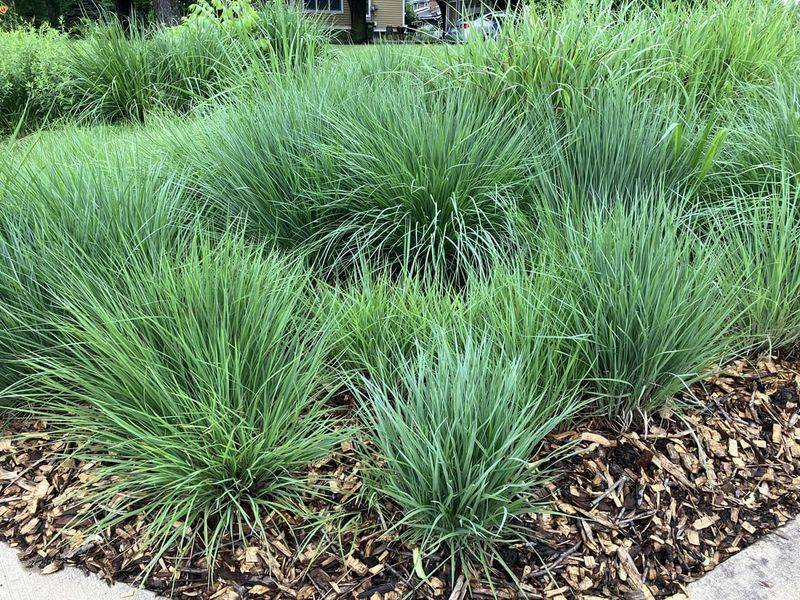
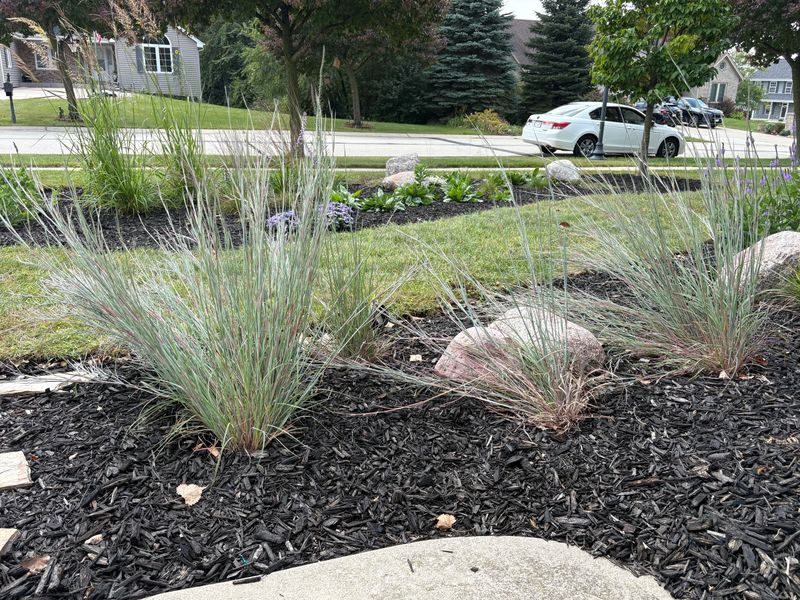
Little bluestem grows in tight, upright clumps reaching two to four feet tall. The stems start blue-green in spring and shift to a warm copper-red by fall, which makes it a genuinely attractive plant rather than a purely functional one.
It is not a groundcover and it is not a spreading grass that migrates into the lawn. It stays where it is planted, which is a quality worth appreciating in a border plant.
From a tick-habitat standpoint, little bluestem’s preferences align well with what discourages ticks. It thrives in full sun and handles dry conditions without complaint.
Ticks prefer the opposite: cool, moist, shaded environments with leaf litter and dense vegetation. A border planted with little bluestem naturally tends toward conditions that ticks find less appealing.
Little bluestem is available at native plant nurseries across North Carolina. It needs little fertilizer, handles summer heat well, and supports native pollinators throughout the season.
Starting a tick-smart border redesign here gives you a low-maintenance, ecologically grounded foundation that fits the region’s natural landscape rather than working against it.
A grass that has been succeeding in North Carolina conditions for centuries without any help from anyone is probably a reasonable starting point for a border that needs to be reliable and low-effort.
Little bluestem has been training for this job for a long time.
Sunny Dry Edges Make Ticks Less Comfortable
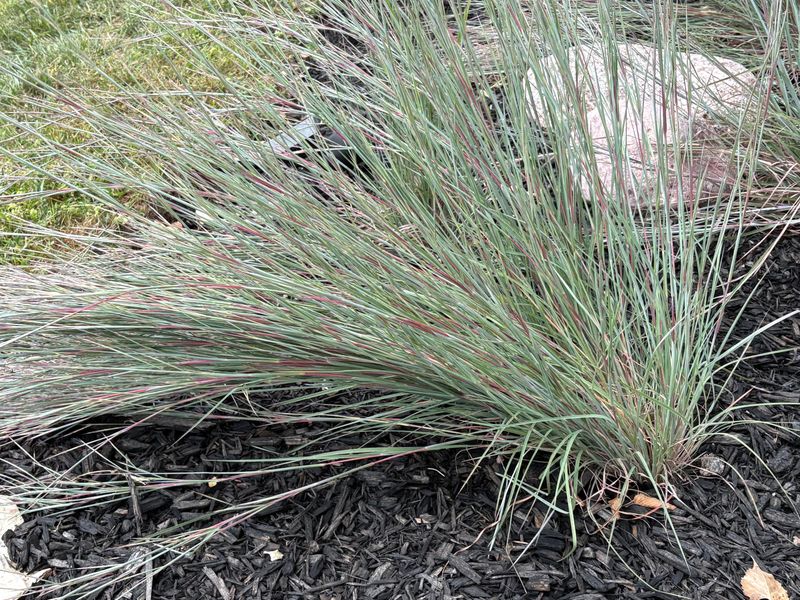
A yard edge baking in afternoon sun with dry soil and upright grass clumps open to the breeze is not a welcoming environment for ticks.
Your North Carolina Garden Changes Every Week. Your Plan Should Too.
Gardening in North Carolina changes quickly throughout the season. Every Friday you’ll receive a simple weekly plan showing exactly what to plant, prune, fertilize, harvest, and protect so you never miss the right timing.
Black-legged ticks, the species most associated with Lyme disease in North Carolina, need relative humidity above roughly 80 percent to stay active and survive.
When an edge dries out consistently in the sun, ticks have a significantly harder time maintaining the moisture they need to function.
Little bluestem is built for exactly these conditions. It evolved in dry, open habitats and performs best where other plants flag or fail.
Planting it along a south or west-facing yard edge puts it in its preferred environment while simultaneously creating a microclimate that ticks find difficult.
That alignment of plant preference and pest deterrence is useful and relatively rare in landscaping decisions.
The most tick-heavy zones in a typical yard are the transition areas between mowed lawn and brushy or wooded edges.
These spots tend to be shaded and hold moisture from accumulated leaf litter and dense plant growth. Shifting that edge toward open, sunny, and dry changes the functional character of the border without requiring major construction or clearing.
Trimming low-hanging branches along the border to allow more sunlight to reach the ground is a meaningful first step that costs nothing.
Adding little bluestem into that newly sunlit strip moves the edge further toward open meadow habitat and away from the shaded, humid conditions that make tick populations comfortable.
Small changes in light and moisture accumulate into real habitat differences.
Sun and dryness are the simplest tools available for making a yard edge less tick-friendly. Little bluestem delivers both as a byproduct of simply growing in its natural preferred conditions.
That is a good example of a plant and a goal pointing in exactly the same direction.
Open Clumps Keep Borders Airier
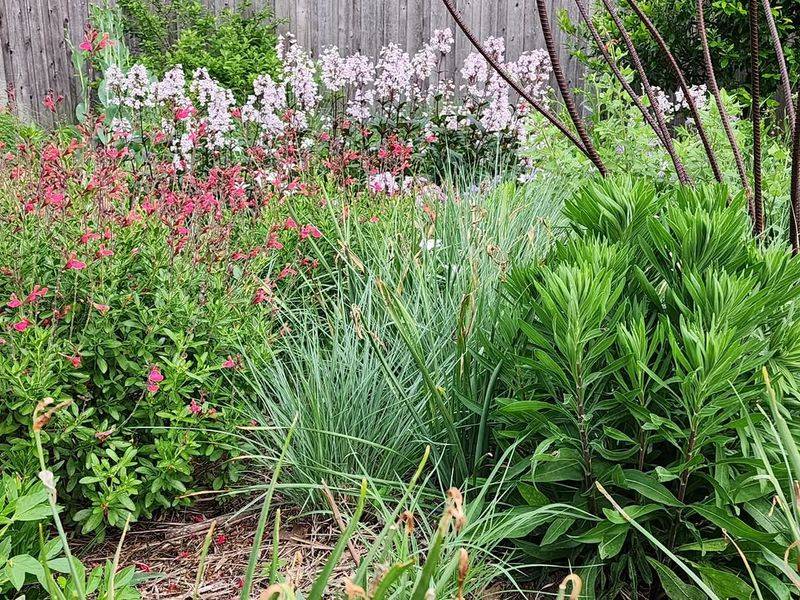
How a grass grows matters as much as which grass it is.
Little bluestem forms individual upright clumps with visible space between them rather than spreading into dense, matted coverage.
That growth structure is not incidental. It directly affects the humidity level at ground level, which is the layer of the border where ticks actually live and operate.
Dense, tangled vegetation traps humidity close to the soil surface. It acts like a sponge, holding moisture after rain and morning dew and maintaining the sheltered microclimate that ticks need to stay active between host encounters.
A border full of overgrown ornamental grasses or spreading groundcovers can hold that moisture for hours or days longer than an open planting would.
Little bluestem’s upright clumps allow air to circulate freely through the planting. Wind moves through the border, the soil surface dries faster after rain, and the ground-level humidity that ticks depend on dissipates more quickly.
The shift is not dramatic enough to be visible, but it is functionally meaningful at the scale where ticks are making their decisions about where to wait.
Spacing clumps 18 to 24 inches apart at planting keeps the border looking intentional and full without closing off the airflow between plants.
As the plants mature, the spacing creates a border that is attractive and structured without becoming the kind of dense, humid thicket that functions as tick cover. That combination is harder to achieve than it looks with most ornamental plantings.
The difference between a border that dries out quickly and one that stays moist at ground level is largely a function of how the plants are structured.
Little bluestem’s clump habit creates an edge that leans toward the drier, airier end of that spectrum by default. That is the direction worth leaning.
Short Buffer Zones Reduce Brushy Hiding Spots
A yard without a managed transition between the lawn and the tree line is offering ticks a commute-free setup.
Brushy, overgrown edges are where ticks perch on vegetation and wait for a passing host, and an unmanaged border between the mowed area and the woods is exactly the kind of habitat that makes that behavior possible and easy.
A defined, maintained buffer changes that dynamic in a practical way.
Little bluestem fits naturally into a buffer strip between the lawn and the wooded border. Planted in a defined zone, it creates a visible, maintained transition that is both attractive and functionally different from the brushy alternative.
Because it grows as an upright clumper rather than a spreading colonizer, it holds its position in the buffer without migrating into the lawn or into the tree line. It stays where it belongs, which makes the buffer easier to maintain.
Keeping the buffer strip weeded and clear of encroaching undergrowth is the maintenance task that keeps this strategy working.
Brush that creeps back from the tree line should be trimmed back regularly, especially through spring and summer when tick activity is highest in North Carolina.
A planted buffer that gets ignored gradually reverts to the unmanaged edge it replaced.
The goal is not a sterile, monoculture strip. The goal is a cleaner, drier, more structured transition that replaces messy brush with something intentional.
Little bluestem gives that buffer a visual anchor that looks designed rather than neglected.
Homeowners who add even a narrow managed strip where there was previously just uncontrolled growth are often surprised how much the character of the border changes in a single season.
A managed buffer works because it removes the type of edge habitat ticks prefer and replaces it with something structurally different.
The width of the buffer matters less than the consistent maintenance that keeps it from reverting. Little bluestem planted in a maintained strip is genuinely different from the brushy edge it replaces, and ticks respond to that difference.
Leaf Litter Cleanup Makes The Border Work
The best native grass planted along a yard edge still underperforms if a thick layer of old leaves sits on top of it all season.
Leaf litter is one of the most significant tick shelters in any residential yard.
It holds moisture, blocks sunlight from reaching the soil surface, and provides the cool, damp, sheltered conditions that ticks use to survive through dry or cold stretches between host encounters.
Leaf litter management is one of the most consistently practical tick-reduction strategies available to North Carolina homeowners, and it is one of the most frequently skipped.
Raking or blowing leaves away from the border, especially in fall and early spring, removes the protective layer ticks depend on.
The plant border works better once that layer is cleared because the soil surface can actually dry out the way little bluestem is designed to support.
Little bluestem actually makes leaf cleanup easier than most spreading groundcovers do.
Because it grows in upright clumps with space between them, leaves tend to rest on top of the clumps or blow through the gaps rather than packing densely into the base of the planting.
A pass with a leaf blower or a rake in fall clears the border without a major effort.
Timing the cleanup for early spring, before tick activity ramps up in North Carolina, removes the shelter ticks have been using through winter.
Combining that seasonal task with the little bluestem border creates a simple two-part habit that keeps the edge functioning the way it was intended.
Consistency over a season or two produces results that a single thorough cleanup never quite achieves.
The grass sets up the right conditions. The leaf cleanup maintains them. Both parts are necessary, and neither part is complicated.
A border that gets both consistently is a border that works. One without the other is just a partial strategy.
Wood Chips Beside It Create A Better Break
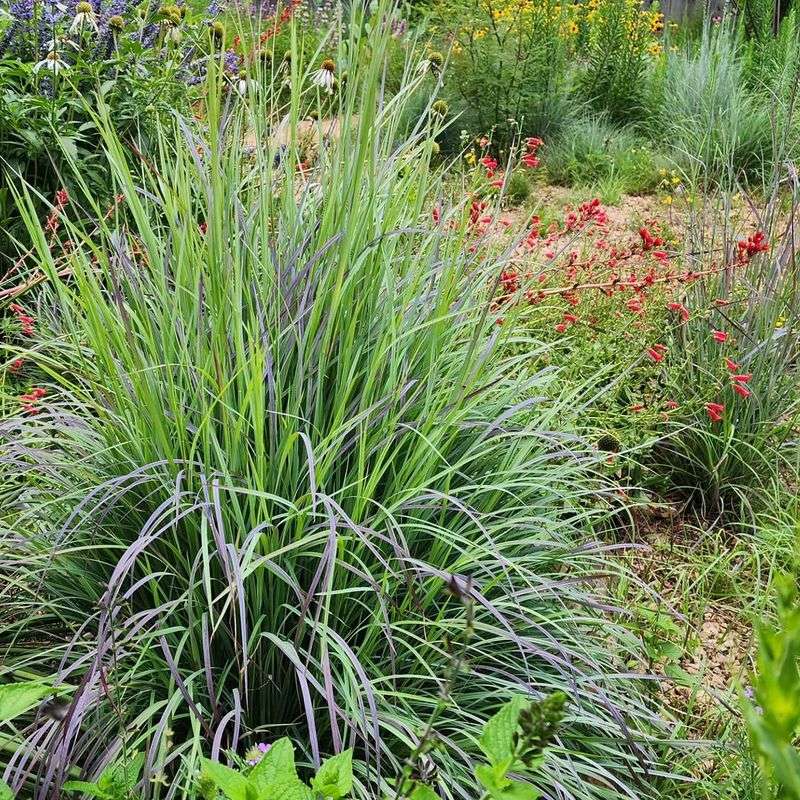
Dry wood chips spread along the base of a little bluestem border add something the grass alone cannot: a physical surface that ticks are reluctant to cross.
Research cited in CDC tick guidance found that a three-foot wide barrier of wood chips or gravel between lawn and wooded areas can meaningfully reduce tick movement into yard spaces. That finding is worth taking seriously in a North Carolina border design.
Black-legged ticks move by crawling, and they avoid dry, open, sun-exposed surfaces. A well-maintained wood chip strip is not the kind of terrain they navigate comfortably.
It is not impenetrable, but it adds a meaningful layer of friction between the tick habitat in the adjacent woods and the areas where people and pets spend time. Friction is the goal, not a complete barrier.
Pairing wood chips with little bluestem makes practical sense because both elements function best in similar conditions.
Little bluestem thrives in sunny, well-drained spots, and wood chips reinforce the dry, open character of the border.
Together they communicate the same habitat message: this edge is not humid, sheltered, or hospitable for moisture-dependent pests.
Refresh the wood chip layer every one to two years. As chips break down, they hold more moisture and become less effective as a barrier.
A fresh layer maintains the dry, loose surface character that makes the strip worth having. It is a manageable annual task that keeps the border functioning at the level it was designed for, rather than gradually reverting toward the conditions it replaced.
Wood chips plus little bluestem is a reinforcing combination.
Each element supports what the other is trying to accomplish. A border that is both structurally open and physically dry at ground level is more consistently hostile to tick comfort than either component achieves on its own.
That is the kind of layered design that holds up over multiple seasons without requiring constant intervention.