The North Carolina Weeds That Take Over In June And How To Stop Them Before They Spread
June is when certain weeds stop being a minor annoyance and start becoming a genuine problem.
The combination of warm soil, longer days, and reliable moisture creates near-perfect conditions for a handful of aggressive species that can go from a few scattered plants to a full-scale takeover in a matter of weeks.
North Carolina has its own particular lineup of June troublemakers, and they’re not all created equal.
Some are easy to pull early and nearly impossible to manage once they’ve set seed. Others spread underground in ways that make surface removal almost pointless without the right approach.
Getting ahead of them now, before that seed dispersal happens, is the whole game. A week of inaction at the wrong moment in June can translate into months of extra work across the rest of the growing season.
1. Yellow Nutsedge
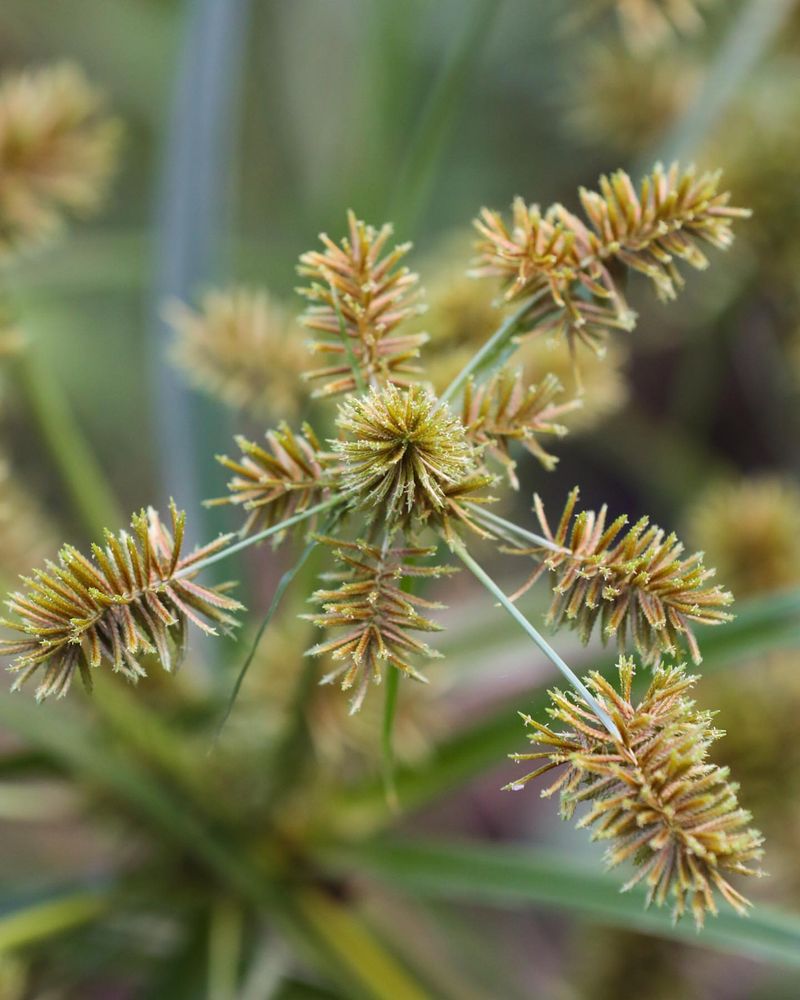
Warm, moist North Carolina soil creates perfect conditions for yellow nutsedge to explode across lawns and garden beds during June.
This persistent weed looks like grass at first glance, but its triangular stems and rapid growth quickly give it away.
What makes nutsedge particularly frustrating is its underground network of small, nutlike tubers that store energy and produce new shoots throughout the summer.
Each plant can generate hundreds of tubers that survive winter and sprout the following year, making single-season control nearly impossible.
The tubers sit several inches below the soil surface, safely protected from surface treatments and shallow cultivation.
Even when you pull visible plants, those hidden tubers remain ready to send up fresh shoots within days.
Repeated control efforts become necessary because no single approach eliminates every tuber at once.
Hand-pulling works for small patches if you remove plants before they form new tubers, typically within three weeks of emergence.
Mulching garden beds with several inches of organic material helps suppress new shoots by blocking sunlight.
Selective herbicides labeled for nutsedge provide another option for lawn areas, though multiple applications spaced weeks apart usually prove necessary. Improving drainage in wet spots reduces the moist conditions this weed prefers.
Staying vigilant throughout summer and removing new growth promptly prevents tuber production and gradually exhausts the underground reserves over multiple seasons.
2. Spotted Spurge
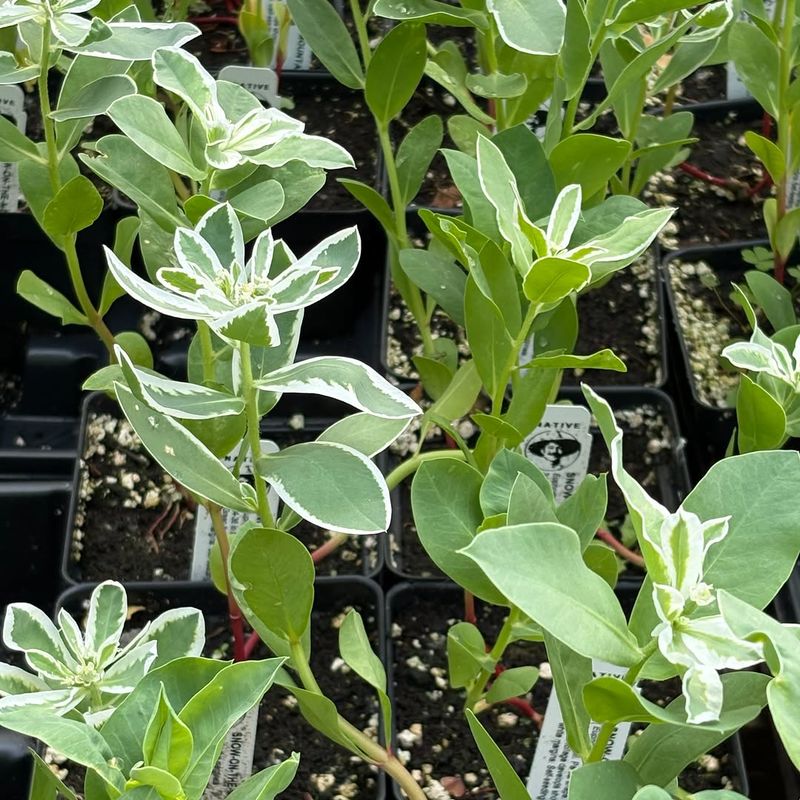
Hot, dry conditions along North Carolina garden edges, sidewalk cracks, and thin lawn patches create ideal habitat for spotted spurge to flourish.
This low-growing annual forms dense mats that can spread several feet across during a single growing season.
The plant’s small oval leaves often display a dark purple spot in the center, making identification straightforward once you know what to look for.
Breaking a stem releases milky white sap that can irritate skin, so wearing gloves during removal makes good sense.
Each mature plant produces tiny seed capsules that literally explode when ripe, flinging seeds several feet in every direction.
A single plant can scatter thousands of seeds across your property, ensuring next year’s invasion starts even stronger.
Young plants pull easily from soil, especially after rain softens the ground and loosens their shallow taproots.
Your North Carolina Garden Changes Every Week. Your Plan Should Too.
Gardening in North Carolina changes quickly throughout the season. Every Friday you’ll receive a simple weekly plan showing exactly what to plant, prune, fertilize, harvest, and protect so you never miss the right timing.
Catching spurge early, before it flowers and sets seed, prevents the explosive seed dispersal that makes this weed so persistent.
Mulching bare soil in garden beds eliminates the exposed ground this weed loves to colonize.
Maintaining thick, healthy turf through proper watering and fertilization helps grass outcompete spurge in lawn areas.
Pre-emergent herbicides applied in early spring prevent seeds from germinating, though they must go down before soil temperatures reach the point where spurge typically sprouts.
Hand-weeding remains the most effective approach for small infestations, particularly when you can remove plants before they reach the flowering stage.
3. Virginia Buttonweed
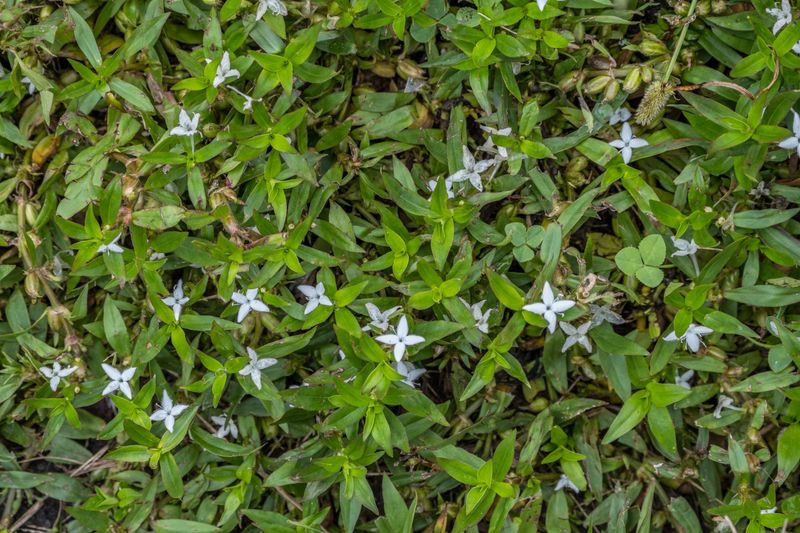
Moist North Carolina lawns and low-lying areas where water collects provide perfect growing conditions for Virginia buttonweed to establish and spread.
This perennial weed features opposite leaves and small white flowers that appear charming until you realize how aggressively the plant colonizes turf.
Creeping stems root at every node where they touch soil, allowing a single plant to expand into a substantial patch within weeks.
The rooting behavior makes Virginia buttonweed particularly difficult to control once established, as each rooted section becomes an independent plant.
Pulling stems often breaks them into pieces, and any fragment left behind with roots attached continues growing.
The plant thrives in compacted, poorly drained soil where grass struggles to compete effectively.
Early patch control prevents small infestations from becoming major lawn problems that require extensive renovation.
Improving soil drainage through aeration and addressing low spots helps grass gain the upper hand over this moisture-loving weed.
Raising mowing height allows grass to shade the soil surface, making conditions less favorable for buttonweed establishment.
Spot-treating small patches with appropriate herbicides works best when plants are actively growing during warm weather.
Multiple applications often prove necessary because the extensive root system allows plants to recover from initial treatments.
Hand-removal becomes practical only for very small infestations where you can carefully extract all rooted stem sections.
Maintaining healthy, dense turf through proper fertilization and watering creates the competitive environment grass needs to resist buttonweed invasion naturally.
4. Japanese Stiltgrass
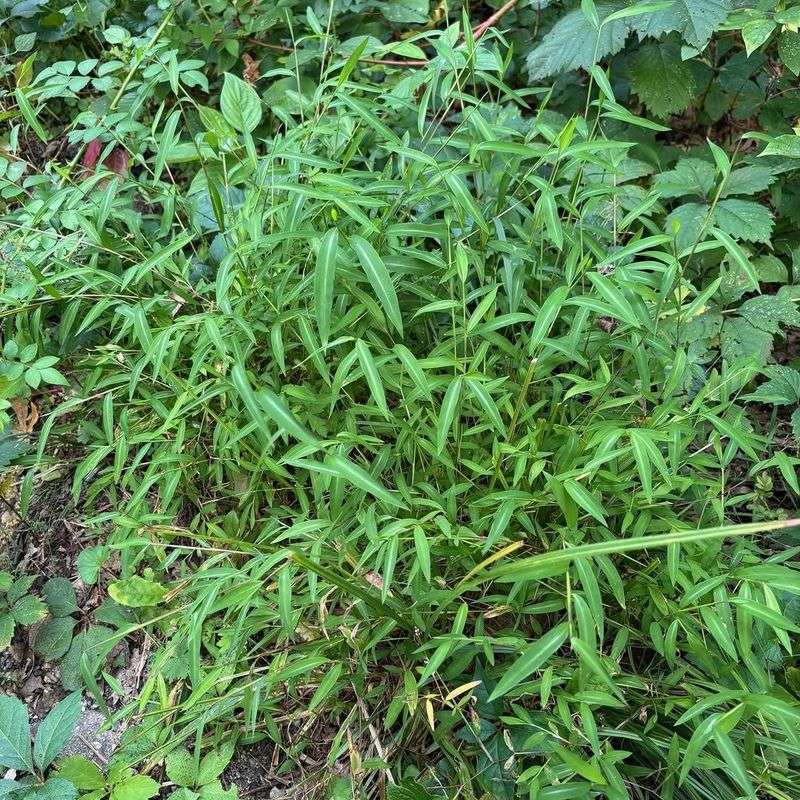
Shady North Carolina edges, woodland borders, and areas beneath trees become overrun with Japanese stiltgrass during June as this invasive annual grass reaches its peak growth.
The distinctive pale stripe down the center of each leaf blade helps identify this aggressive spreader that can form dense stands excluding all other vegetation.
Unlike most grasses, stiltgrass thrives in shade where typical turf grasses struggle, giving it a significant competitive advantage in many landscape situations.
Each plant produces hundreds of seeds that remain viable in soil for several years, building a persistent seed bank that ensures future infestations.
Seeds spread easily on shoes, equipment, and animal fur, allowing this weed to colonize new areas rapidly.
Mowing at the wrong time can actually help distribute seeds across your entire property. Pulling or mowing before seed set in late summer prevents the seed rain that perpetuates infestations year after year.
Hand-pulling works well when soil is moist, as the shallow roots release easily without breaking.
The annual life cycle means plants that never set seed contribute nothing to next year’s population.
Timing control efforts before mid-August ensures you remove plants before seeds mature and scatter.
Mulching shaded garden beds with several inches of organic material suppresses seedling emergence by blocking light.
Pre-emergent herbicides applied in early spring prevent seeds from germinating, though coverage must be thorough since seeds sprout throughout the growing season.
Establishing shade-tolerant ground covers creates competition that helps resist stiltgrass invasion in wooded areas.
5. Doveweed
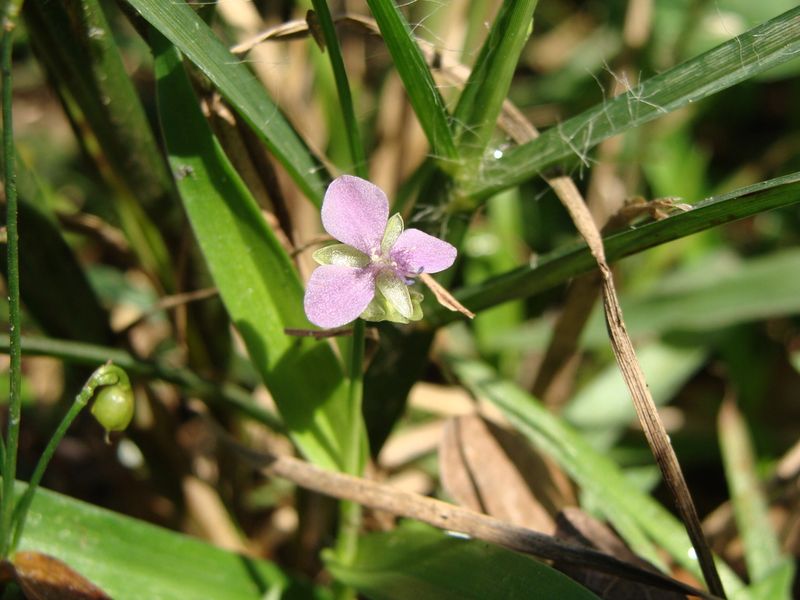
Wet, compacted North Carolina lawns during summer become prime real estate for doveweed, a tropical-looking annual that spreads quickly once established.
The succulent stems and alternate leaves give this weed a distinctive appearance that stands out against typical turf grasses.
Small white flowers appear throughout summer, producing seeds that ensure next year’s infestation starts strong.
Compacted soil with poor drainage creates exactly the conditions doveweed loves while simultaneously stressing lawn grasses.
The plant thrives where water stands after rain or irrigation, taking advantage of the oxygen-poor conditions that weaken grass roots.
Shallow roots allow doveweed to establish quickly in thin turf areas where competition is minimal.
Improving drainage through core aeration helps address the underlying conditions that favor doveweed over desirable grasses.
Breaking up compacted soil allows water to percolate downward instead of pooling on the surface.
Filling low spots that collect water eliminates the wet microsites where doveweed gains its foothold.
Removing early patches before they expand and set seed prevents small problems from becoming major lawn renovation projects.
Hand-pulling works effectively since the shallow roots release easily, especially from moist soil.
Maintaining proper mowing height and avoiding scalping helps grass compete more effectively for space and resources.
Post-emergent herbicides labeled for doveweed provide chemical control options for larger infestations, though improving soil conditions remains critical for long-term success.
Overseeding thin areas with appropriate grass varieties fills bare spots before doveweed can colonize them.
Reducing irrigation frequency while increasing application depth encourages deeper grass roots while making surface conditions less favorable for this water-loving weed.
6. Poison Ivy
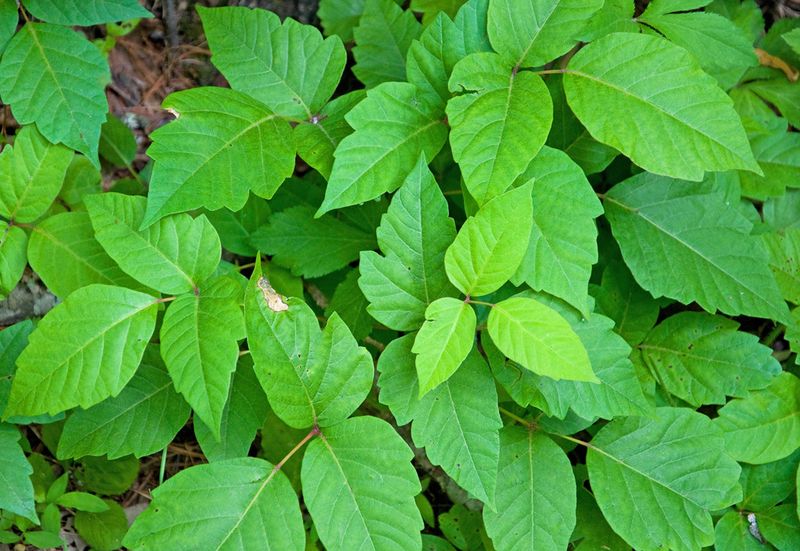
June brings vigorous growth to poison ivy along North Carolina fences, garden beds, and woodland edges as this native vine takes full advantage of warm weather and ample moisture.
Birds spread the white berries throughout neighborhoods, depositing seeds in unexpected places where new plants establish before property owners notice.
The characteristic three-leaflet compound leaves should trigger immediate recognition and careful response.
Climbing vines develop aerial roots that attach to trees, fences, and building walls, allowing plants to reach impressive heights over time.
Ground-running forms spread horizontally through landscape beds and lawn edges, rooting at nodes and forming expanding colonies.
The urushiol oil that causes allergic reactions exists in all plant parts year-round, making safe removal critical regardless of season.
Safe removal matters most before vines mature into woody stems that become progressively harder to manage.
Young plants pull more easily than established specimens, though proper protection remains essential during any removal work.
Wearing long sleeves, pants, and disposable gloves prevents skin contact with the allergenic oil.
Cutting vines at ground level and treating cut stems with appropriate herbicide prevents regrowth from established root systems.
Never burn poison ivy, as inhaling smoke containing urushiol oil can cause severe respiratory reactions. Bagging plant material and disposing of it with regular trash keeps the oil contained.
Systemic herbicides absorbed through leaves provide effective control when applied during active growth, though multiple applications may prove necessary for large, established plants.
Waiting until fall when plants translocate nutrients to roots improves herbicide effectiveness.
Creating physical barriers like landscape fabric topped with mulch prevents new seedlings from establishing in cleared areas.
7. Horseweed
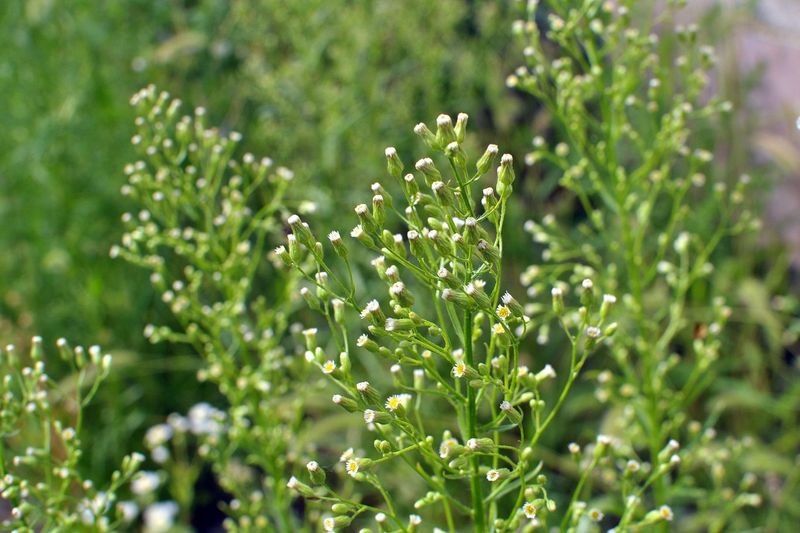
Disturbed North Carolina soil provides perfect germination sites for horseweed, an annual weed that grows rapidly from spring through summer.
Construction sites, tilled garden areas, and bare spots in lawns become colonized quickly once seeds land and sprout.
The narrow leaves arranged spirally around upright stems give young plants a distinctive appearance that helps with early identification.
Rapid growth allows horseweed to reach several feet tall by midsummer if left unchecked, developing tough, woody stems that resist hand-pulling.
Each mature plant produces thousands of tiny seeds equipped with fluffy white hairs that catch wind and travel remarkable distances.
A single plant can spread its offspring across entire neighborhoods when conditions favor seed dispersal.
Pulling while small, before stems become woody and roots grow deep, provides the easiest and most effective control method. Young plants come out of soil with minimal effort, especially after rain softens the ground.
Catching horseweed in the rosette stage, before the central stem begins elongating, ensures removal requires the least effort.
Mulching disturbed soil prevents seeds from making the soil contact they need for germination.
Covering bare ground with several inches of organic mulch or establishing quick-growing cover crops eliminates the exposed soil this weed requires.
Pre-emergent herbicides applied to bare ground in early spring prevent seed germination. Mowing or cutting plants before flowering prevents seed production, though stems often resprout from the base if roots remain intact.
Post-emergent herbicides work most effectively on young, actively growing plants before stems become woody.
Minimizing soil disturbance reduces the bare ground conditions that favor horseweed establishment in the first place.
8. Florida Betony
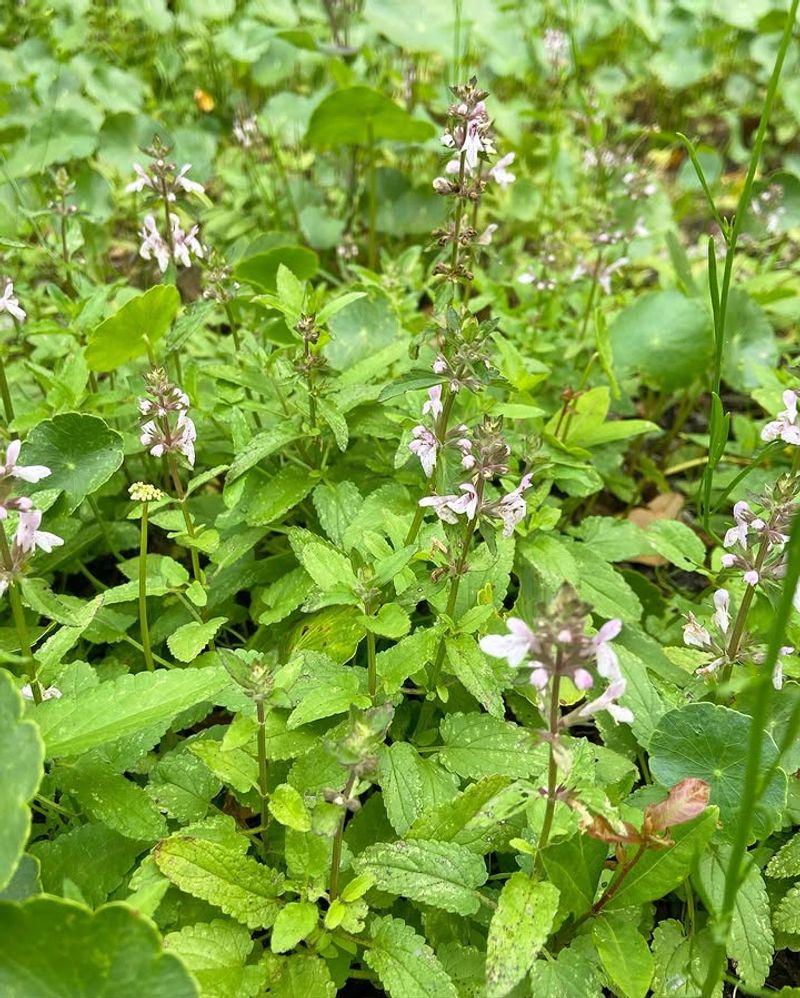
Underground tubers that resemble small white rattlesnake rattles give Florida betony its nickname and its persistence in North Carolina beds and lawns.
This perennial weed spreads through both seeds and the underground tubers that form along creeping rhizomes.
Square stems and opposite leaves arranged in pairs identify this member of the mint family, though it lacks the pleasant fragrance of culinary mints.
Each tuber can produce multiple new shoots, and breaking tubers during removal often leaves fragments that regenerate into new plants.
The underground storage organs allow Florida betony to survive unfavorable conditions and emerge vigorously when growing conditions improve.
Shallow cultivation often makes infestations worse by chopping tubers into pieces that each become new plants.
Repeated removal proves necessary because eliminating every tuber in a single effort remains nearly impossible for established infestations.
Pulling visible growth weakens plants by preventing photosynthesis and forcing them to use stored energy reserves. Consistency matters more than perfection when managing this persistent weed.
Digging carefully to remove as many tubers as possible reduces the population more effectively than surface pulling alone.
Working when soil is moist makes extraction easier and increases the chances of removing intact tuber chains.
Monitoring treated areas and promptly removing new shoots prevents surviving tubers from rebuilding their energy reserves.
Mulching garden beds heavily after removal suppresses new shoot emergence by blocking light.
Systemic herbicides absorbed through leaves and translocated to roots and tubers provide chemical control options, though multiple applications often prove necessary.
Establishing dense ground covers or maintaining thick turf helps resist betony invasion by eliminating the space and resources this weed needs to establish.
9. Wild Violet
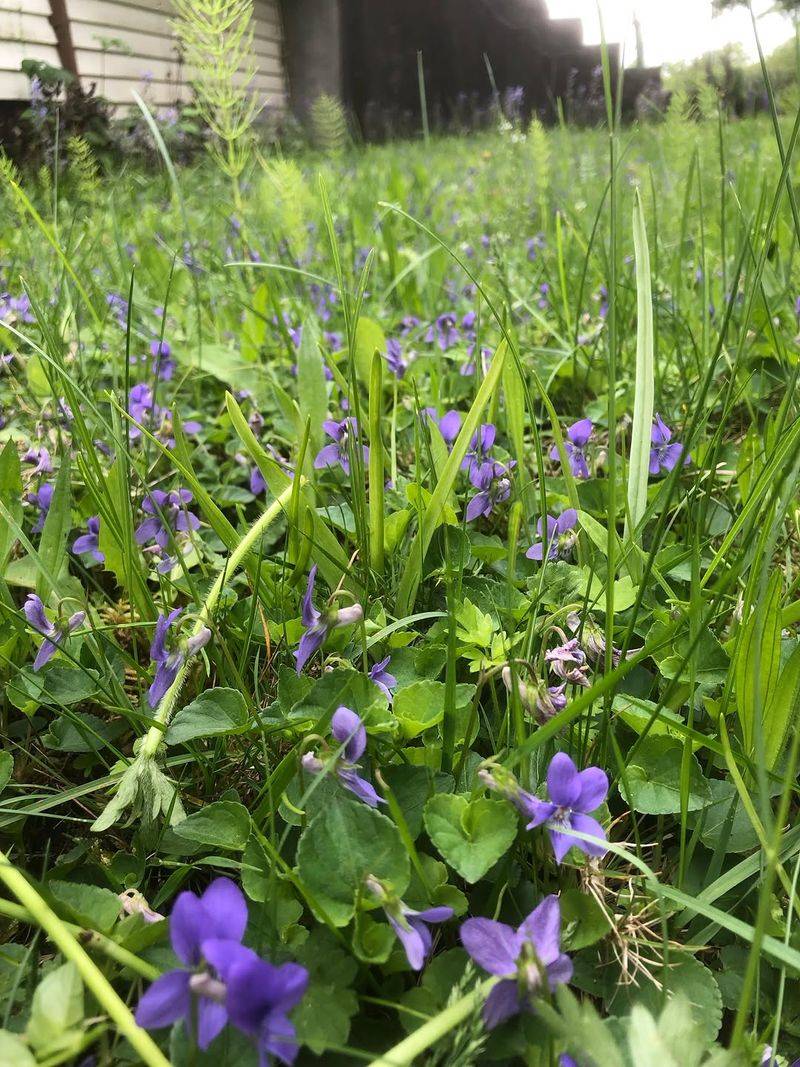
Heart-shaped leaves and cheerful purple flowers make wild violet seem charming until you realize how aggressively it spreads through North Carolina lawns and shade beds.
Thick rhizomes and taproots create a robust underground system that resists casual removal efforts.
Both seeds and vegetative spread from roots allow this perennial to expand steadily year after year.
Seeds form in two ways, with showy spring flowers producing one type and inconspicuous summer flowers creating explosive capsules that fling seeds several feet.
The dual seed production strategy ensures population growth regardless of pollinator activity.
Underground roots spread horizontally, sending up new shoots that form expanding colonies over time.
Deciding whether to manage wild violet or keep it in low-conflict areas depends on your landscape goals and tolerance for informal plantings.
Some gardeners appreciate the early spring flowers and use violets as ground cover in shaded areas where grass struggles.
Others prefer uniform turf and find the clumping growth habit and resistance to mowing objectionable.
Hand-digging removes plants most effectively when you extract the entire root system, including the thick taproot that stores energy.
Working after rain softens soil and makes root extraction easier with less breakage. Leaving root fragments behind often results in regrowth from the remaining pieces.
Broadleaf herbicides provide chemical control options for lawn infestations, though violets show more resistance than many common weeds, often requiring repeat applications.
Fall treatments when plants are actively storing energy in roots tend to work more effectively than spring applications.
Improving lawn density through overseeding and proper care helps turf compete more effectively with violets in sun-exposed areas.