Privacy Plants That Thrive In Oregon’s Wet Winters And Dry Summers
Picking privacy plants for an Oregon garden sounds straightforward until the first wet winter arrives and half the hedge looks like it is reconsidering its life choices.
Oregon’s seasonal swings are no joke.
The same yard that sits under weeks of steady rain from November through March can turn surprisingly dry and unforgiving by August, and plants that looked completely happy in spring can struggle badly if they were never a good match for the site in the first place.
The Pacific Northwest has a generous climate in many ways, but it rewards gardeners who pay attention to drainage, sun exposure, and regional conditions before they plant.
Get those details right and a privacy screen here can look genuinely spectacular year round. Get them wrong and you are replacing things by year three.
1. Pacific Wax Myrtle Handles Wet And Dry
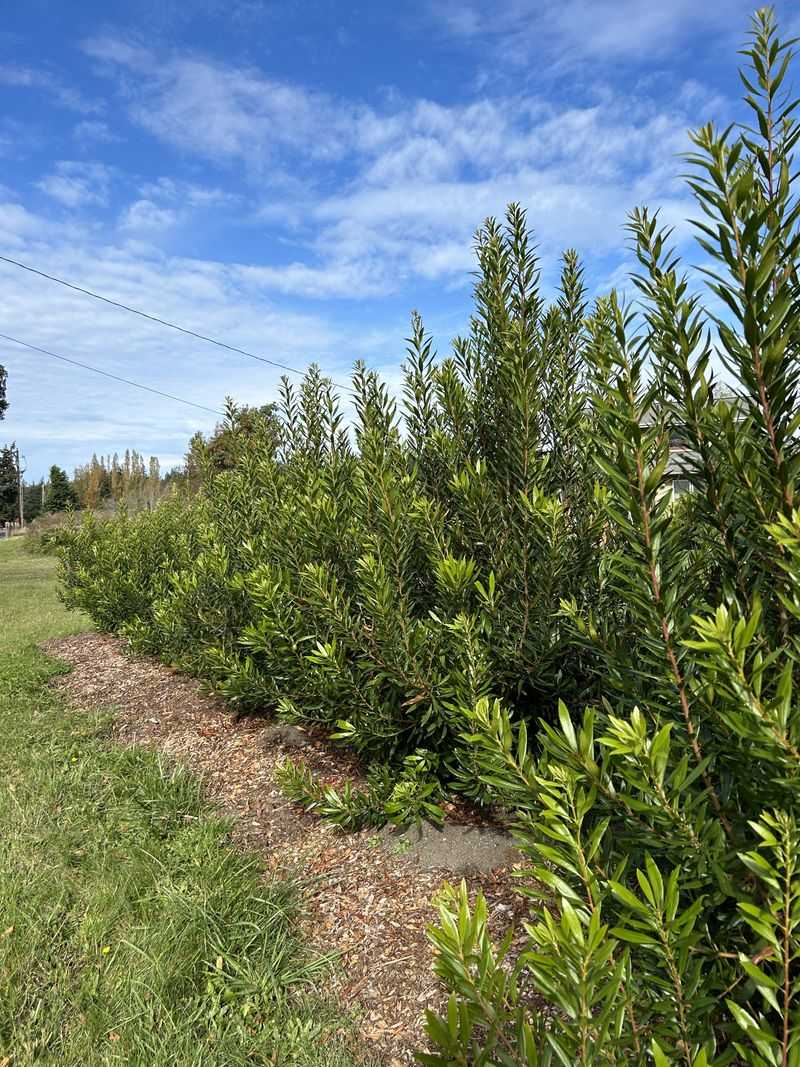
Few shrubs in the Pacific Northwest can handle the seasonal whiplash that Oregon delivers quite like Pacific wax myrtle.
Standing in waterlogged winter soil one month and baking under a dry summer sun the next, this evergreen native keeps its foliage and its composure through both extremes.
That kind of resilience is hard to find in a single plant.
Pacific wax myrtle grows into a large, dense shrub or small multi-stemmed tree, often reaching 10 to 15 feet or more when given room to spread. Its aromatic, glossy leaves stay on year-round, making it a reliable visual screen in every season.
In western Oregon gardens where winter rain is heavy and summer moisture disappears fast, it fits naturally into fence lines, property edges, and layered plantings.
Give it a spot with full sun to part shade and reasonable drainage, though it can tolerate brief wet periods better than most. Establishment watering during the first dry season helps it develop deep roots before it faces summer stress.
Once settled in, Pacific wax myrtle rewards patience with a thick, handsome screen that needs little fussing.
2. Evergreen Huckleberry Makes A Slow Green Screen
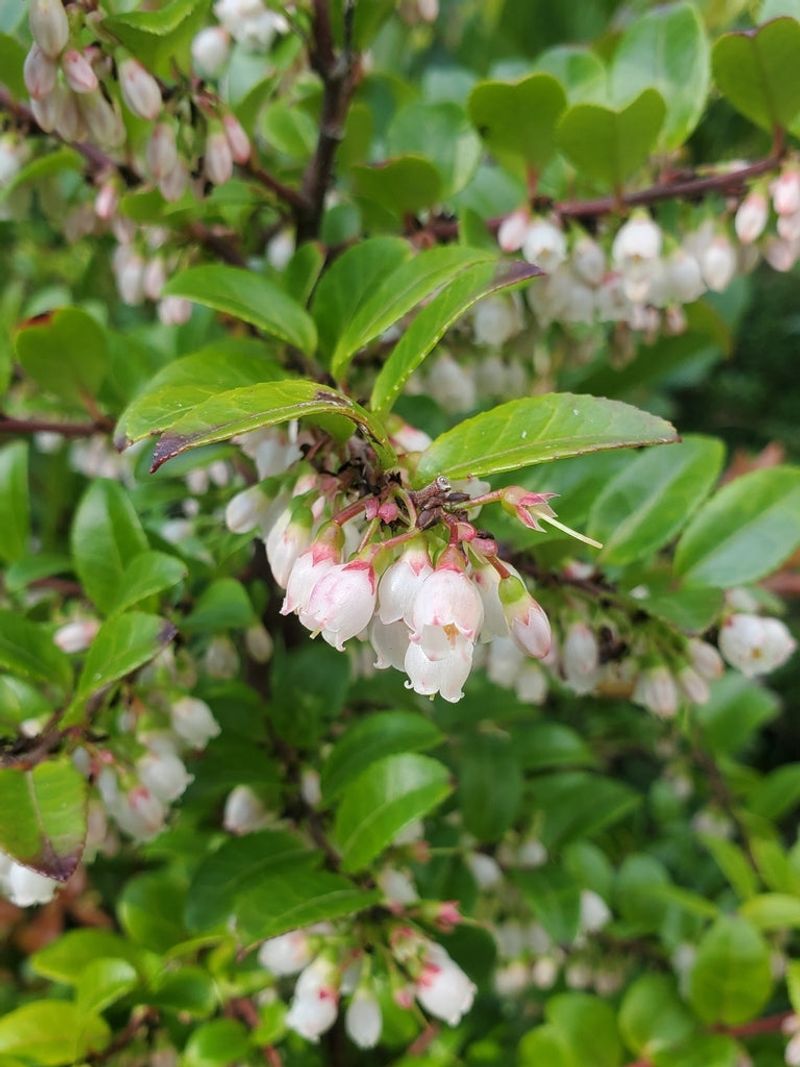
Slow and steady describes evergreen huckleberry well, and Oregon gardeners who appreciate understated native plants tend to love it for exactly that reason.
It will not shoot up overnight to block a neighbor’s view, but over several years it builds a tidy, dense screen of small, glossy leaves that stays green through winter and summer alike.
Evergreen huckleberry thrives in mild and coastal-influenced Oregon gardens where the climate stays relatively moderate. It prefers acidic, well-drained soil and does best with some afternoon shade in warmer inland sites.
Heavy clay that holds winter water can stress the roots, so good drainage matters more than people sometimes expect with this plant.
Mature shrubs typically reach six to eight feet in height, making them a solid choice for a mid-scale privacy screen along a side yard, fence line, or woodland edge.
The small pinkish flowers in spring and dark blue-black berries in late summer add seasonal interest beyond just foliage.
Birds appreciate the berries, which gives the planting an extra layer of life. Plan for a longer establishment window and keep irrigation consistent through the first couple of dry summers.
Your Oregon Garden Changes Every Week. Your Plan Should Too.
Gardening in Oregon changes quickly throughout the season. Every Friday you’ll receive a simple weekly plan showing exactly what to plant, prune, fertilize, harvest, and protect so you never miss the right timing.
3. Tall Oregon Grape Adds Spiny Evergreen Privacy
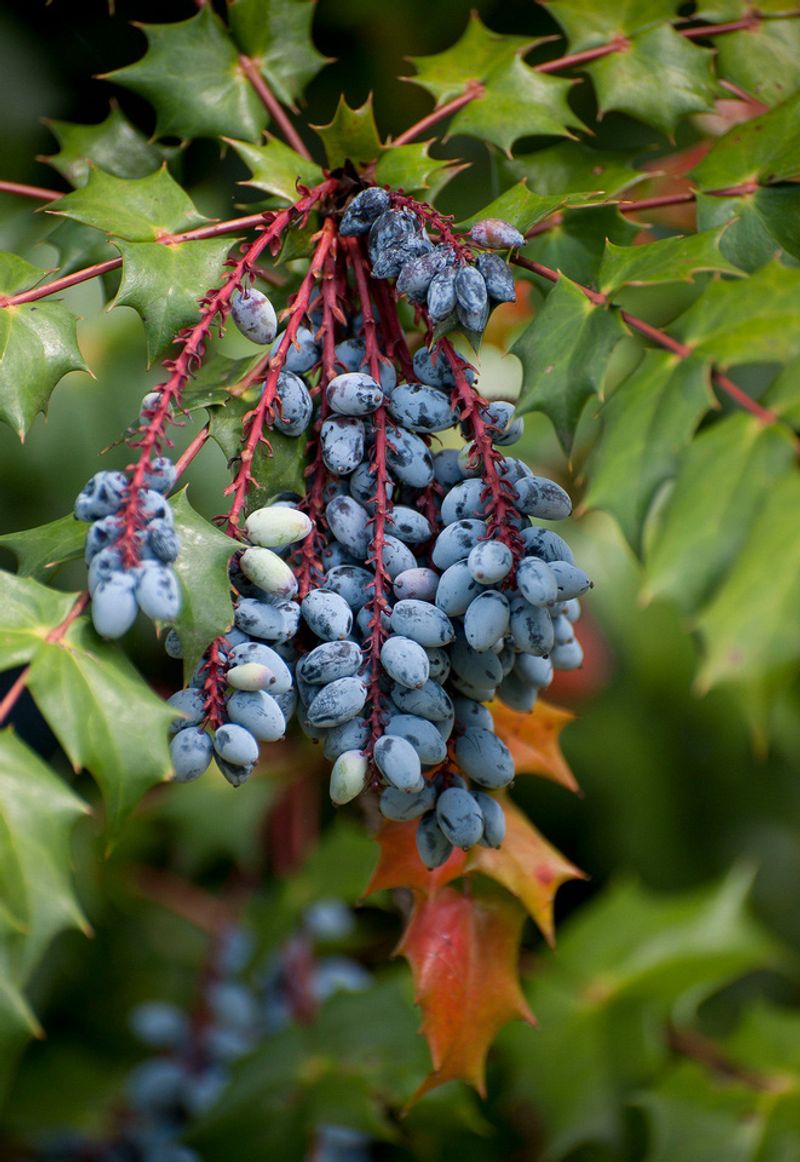
Walking past a mature stand of tall Oregon grape, you notice the spiny compound leaves before anything else.
Those sharp leaflets do more than look dramatic: they create a physical barrier that most people and animals think twice about pushing through, which makes this native shrub a natural fit for layered or informal privacy plantings.
Tall Oregon grape is not a replacement for a solid six-foot evergreen wall. It typically tops out around five to six feet and works best as part of a layered screen or a shorter border rather than a standalone tall hedge.
The bold, leathery foliage stays evergreen through winters, and the clusters of bright yellow flowers in late winter or early spring add welcome color during gray months.
Blue-purple berries follow the flowers and attract birds, giving the planting seasonal rhythm beyond just green coverage. It adapts well to sun or part shade and handles dry summer conditions reasonably well once established.
Wet, poorly drained winter soil can cause problems, so avoid planting it in low spots where water collects.
For slopes, woodland edges, and mixed native borders in Oregon, tall Oregon grape earns its place with dependable structure and low maintenance.
4. California Lilac ‘Victoria’ Screens Sunny Dry Spots
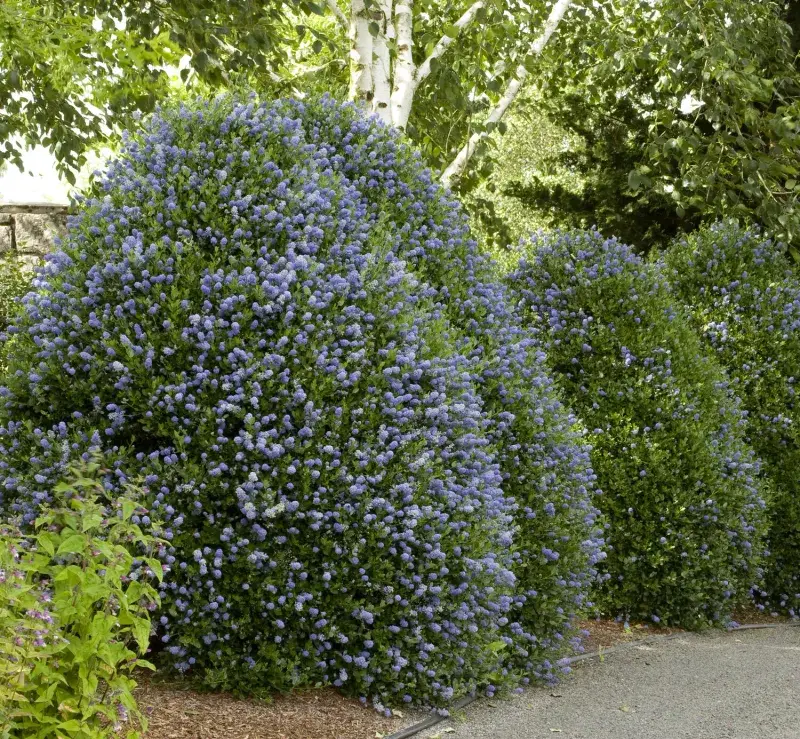
A fence line that bakes in afternoon sun and dries out fast by June is exactly where California lilac ‘Victoria’ earns its reputation.
This evergreen Ceanothus produces a flush of deep blue-purple flowers in late spring that stops people mid-stride, and its dense, dark green foliage keeps the screen looking solid through the rest of the year.
In Oregon, siting matters enormously with this plant. It wants full sun, sharp drainage, and a spot where winter soil does not stay soggy for extended periods.
Low areas with heavy clay or poor drainage can lead to root problems, especially during wet winters. A raised bed, a south-facing slope, or a well-amended border with good water movement gives it the conditions it needs to thrive.
Mature plants can reach six to eight feet tall and spread generously, making them a solid screening option for sunny dry spots along patios, fence lines, or property edges.
Pruning lightly after bloom helps maintain a tighter shape without removing too much new growth.
Establishment watering through the first dry summer is important, but once rooted in, ‘Victoria’ handles Oregon’s dry season with minimal irrigation and rewards the right site with years of reliable evergreen cover.
5. Red-Flowering Currant Brings Seasonal Privacy
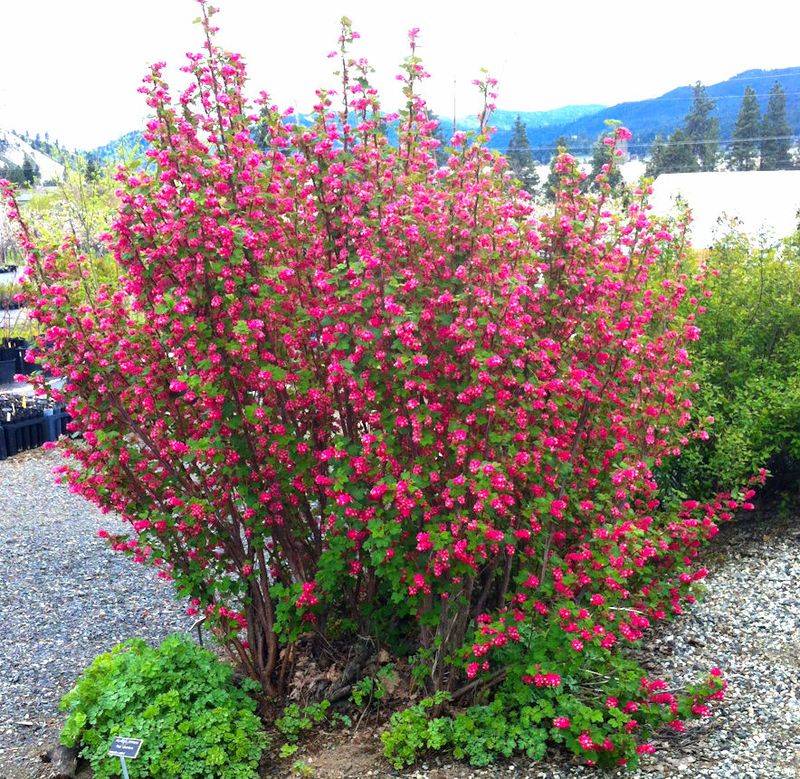
Spring in Oregon has a way of making red-flowering currant look like the most exciting shrub in the yard.
Those dangling clusters of deep pink to red flowers appear early in the season, often while neighboring plants are still waking up, and they draw hummingbirds in fast.
It is one of the first signs of life after a long wet winter.
Homeowners looking for year-round evergreen screening will want to pair red-flowering currant with other plants, because it is deciduous. By late fall, the leaves drop and the screen opens up considerably.
That said, its summer foliage is lush and dense enough to provide meaningful seasonal privacy from spring through early autumn, especially when planted in a layered border with evergreen companions.
Red-flowering currant is adaptable and grows well in sun or part shade, handling Oregon’s wet winters and dry summers with reasonable ease once established. It typically reaches five to eight feet tall and spreads at a similar width.
Dry, rocky slopes and woodland edges are both comfortable homes for this shrub. Establishment watering through the first summer helps it develop strong roots before facing seasonal drought.
As part of a mixed native screen, it brings seasonal color, wildlife value, and reliable summer structure to Oregon gardens.
6. Oceanspray Creates A Loose Native Screen
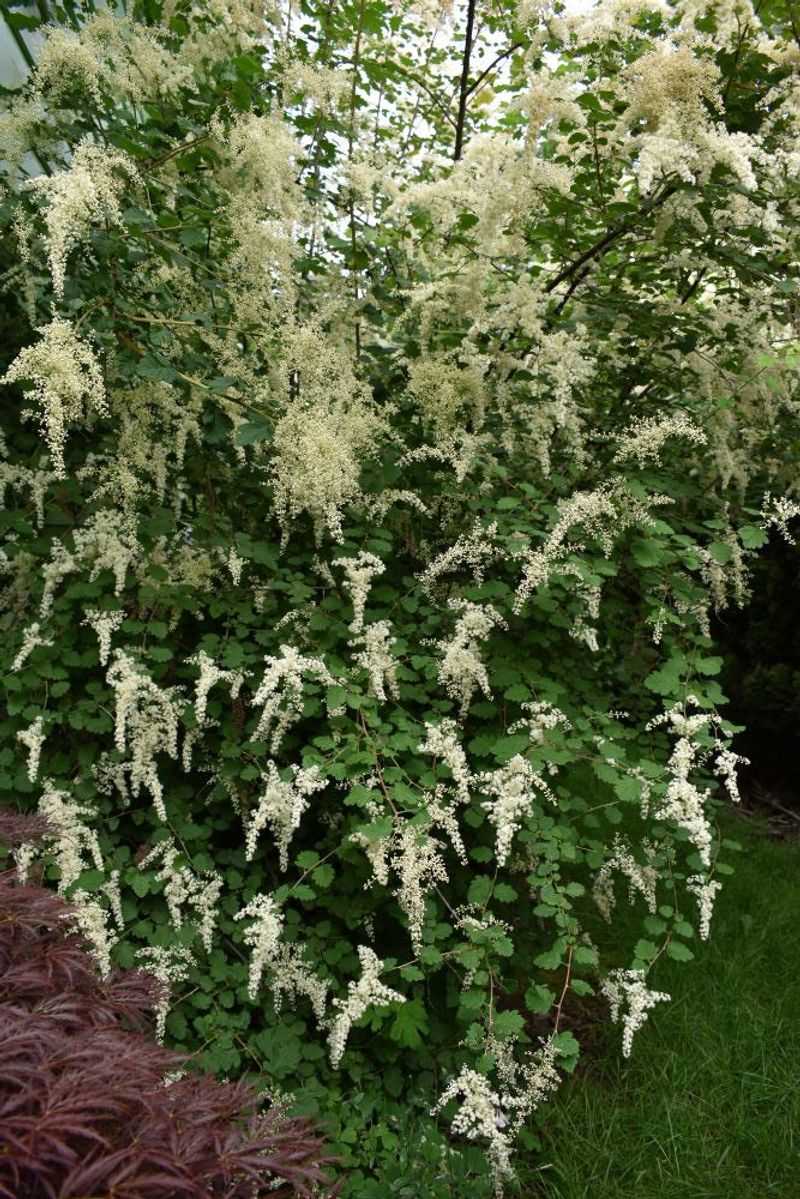
Dry slopes and woodland edges in Oregon often have a shrub that most people cannot immediately name but find themselves drawn to in summer. Oceanspray is that shrub.
Its arching branches carry dense clusters of creamy white flowers in early to midsummer, and the dried flower heads that follow add soft texture through the rest of the season.
Calling oceanspray a formal hedge would miss the point. It grows in a loose, arching form that suits naturalistic landscapes, informal property edges, and layered native plantings far better than clipped lines.
If you want a tight, manicured screen, this is not the plant for that job. If you want something that looks like it belongs in the Oregon landscape, oceanspray fits beautifully.
It is deciduous, so winter screening is limited, but the dense summer growth provides solid seasonal cover for slopes, side yards, and mixed borders.
Oceanspray handles dry summer conditions well once established and grows in a range of soils including rocky or gravelly sites with good drainage.
It can reach six to twelve feet depending on conditions and site. Pairing it with evergreen natives in a layered planting gives you both the natural character of oceanspray and the year-round coverage that evergreen plants provide.
7. Native Silk Tassel Adds Evergreen Structure
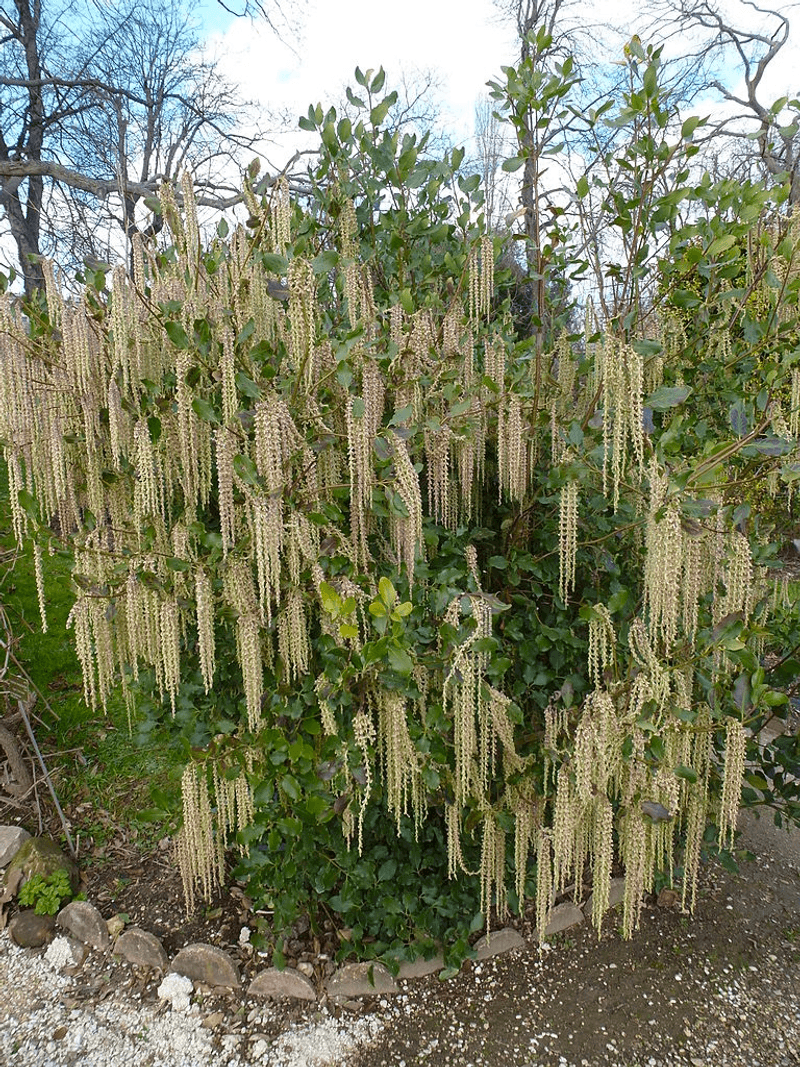
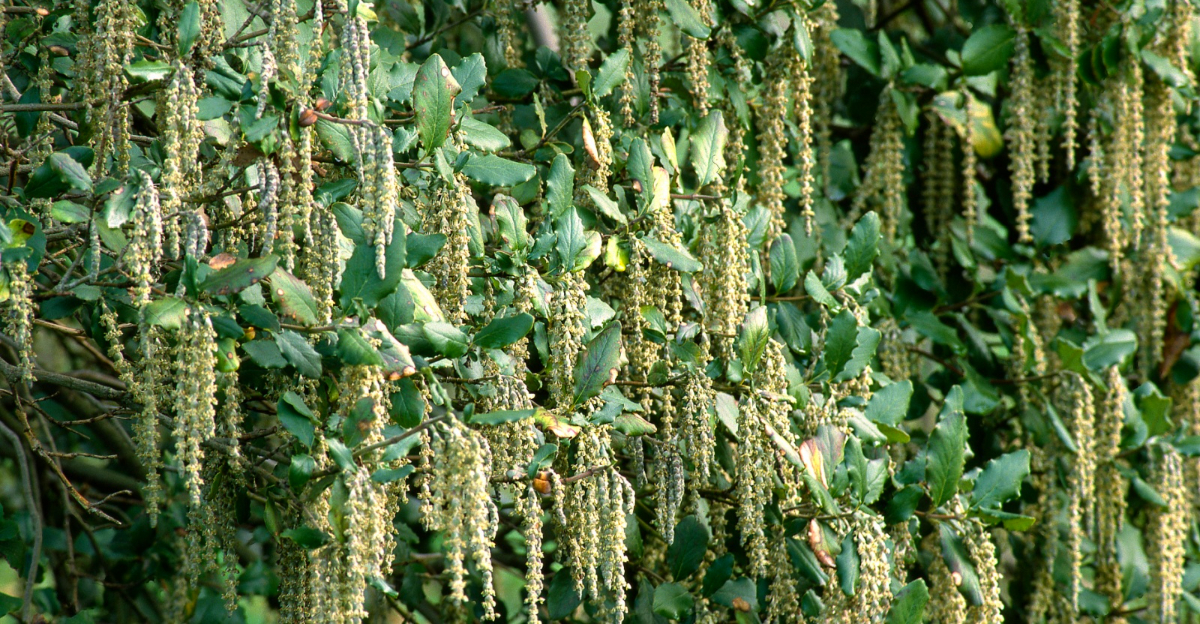
Winter catkins on a native silk tassel are one of those garden details that make visitors stop and ask what that plant is.
Long, silvery-gray tassels hang from the branches during the coldest months of the year, turning an otherwise quiet corner of the garden into something worth looking at when almost nothing else is blooming.
Native silk tassel brings genuine evergreen structure to sheltered Oregon gardens with good drainage.
It is not the toughest plant on this list for cold inland sites or heavy wet soils, and homeowners in colder parts of Oregon should check local suitability carefully before planting.
In milder western Oregon locations and coastal-influenced gardens, it tends to perform well when given a sheltered spot out of harsh winter wind.
Mature plants can reach ten feet or more in the right conditions, forming a dense evergreen screen with leathery, wavy-edged leaves that hold through both wet winters and dry summers.
Full sun to part shade suits it well, and sharp drainage is a firm requirement.
Soggy winter soil is one of the fastest ways to run into trouble with this shrub. Given the right site, native silk tassel rewards gardeners with unusual winter interest, solid year-round foliage, and a quietly distinctive character that few other privacy plants can match.
8. Manzanita Screens Dry Well-Drained Sites
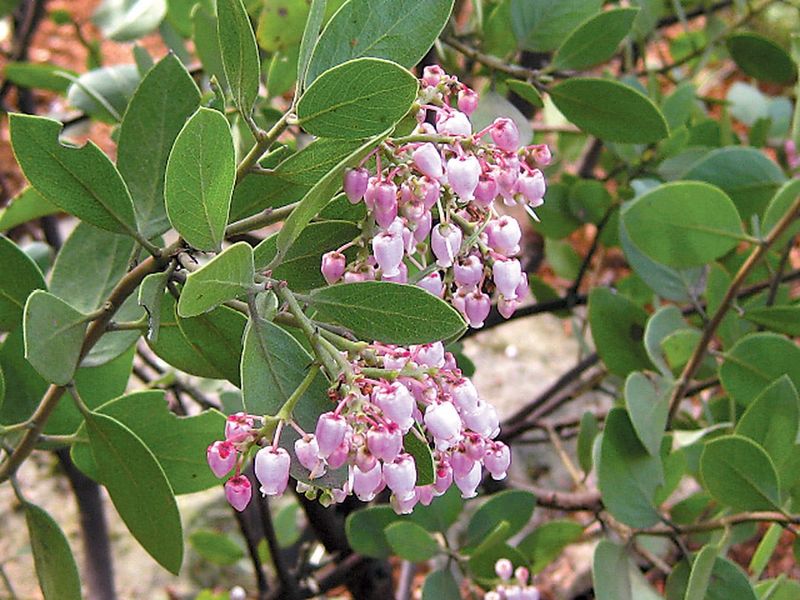
Smooth red-brown bark and small, stiff evergreen leaves give manzanita a sculptural quality that most privacy plants simply do not have.
On a sunny, dry Oregon slope where other shrubs struggle by August, a well-sited manzanita can look genuinely handsome while doing the work of a screen.
That combination of ornamental appeal and drought resilience makes it worth serious consideration for the right spot.
The right spot is the key phrase here. Manzanita needs sharp drainage and a sunny, open position.
Wet winter soil is one of the most common reasons manzanitas decline in Oregon gardens, and planting them in low spots or heavy clay without amendment often leads to root problems.
Raised beds, south-facing slopes, and gravelly well-drained borders are where they thrive.
Several species and cultivars are available, ranging in height from low-spreading groundcover types to upright shrubs reaching six feet or more.
For privacy screening purposes, look for upright-growing selections that will build height and density over time.
Establishment watering during the first dry season helps new plants develop roots before summer stress sets in.
Once established in a suitable dry site, manzanita handles Oregon summers with very little supplemental water and provides year-round evergreen cover with real visual character.
9. Strawberry Tree Gives Year-Round Cover
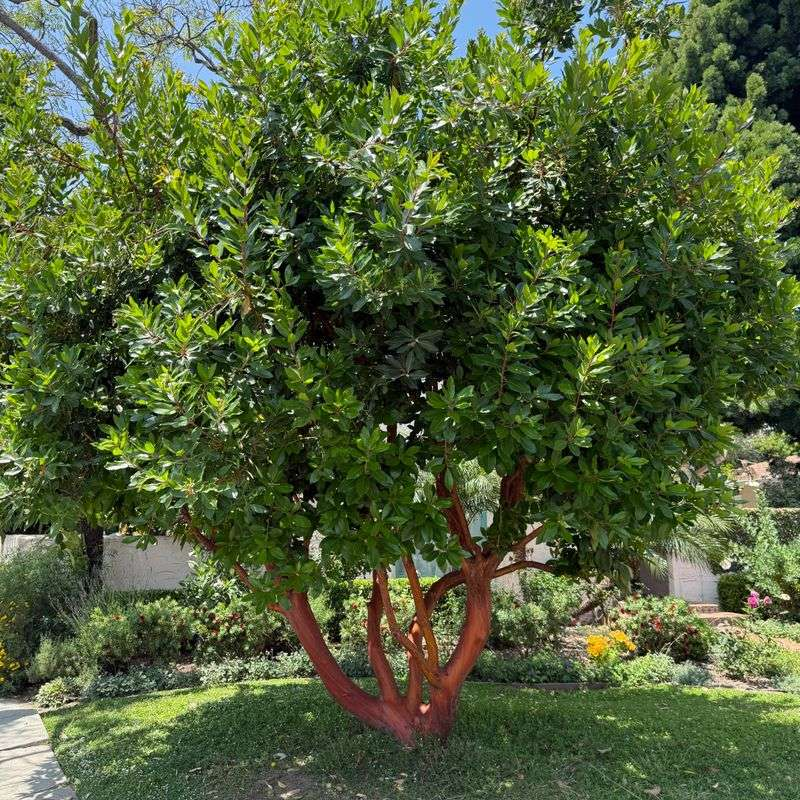
Glossy leaves, clusters of small white flowers, and round red fruits that look like tiny strawberries all appearing on the same plant at the same time in autumn: that is the strawberry tree doing what it does best.
It is not an Oregon native, but in mild, well-drained gardens across western Oregon it has established itself as a reliable source of year-round evergreen cover with genuine ornamental character.
Strawberry tree grows at a moderate pace and can reach fifteen to thirty feet at full maturity, though it responds well to pruning and can be kept shorter for a more managed screen.
It works best in gardens where there is enough space for the plant to develop naturally without constant cutting back.
Narrow fence strips or tight foundation beds are not ideal placements for a plant of this potential size.
Sharp drainage and a sheltered position help it handle Oregon winters comfortably. Soggy soil during the rainy season can stress the roots, so planting on a gentle slope or in a raised area with good water movement makes a real difference.
Establishment watering through the first dry summer is important. Once rooted in, strawberry tree handles Oregon’s summer dry period well and delivers attractive foliage, flowers, and fruit through multiple seasons.
10. Western Red Cedar Screens Roomy Property Edges
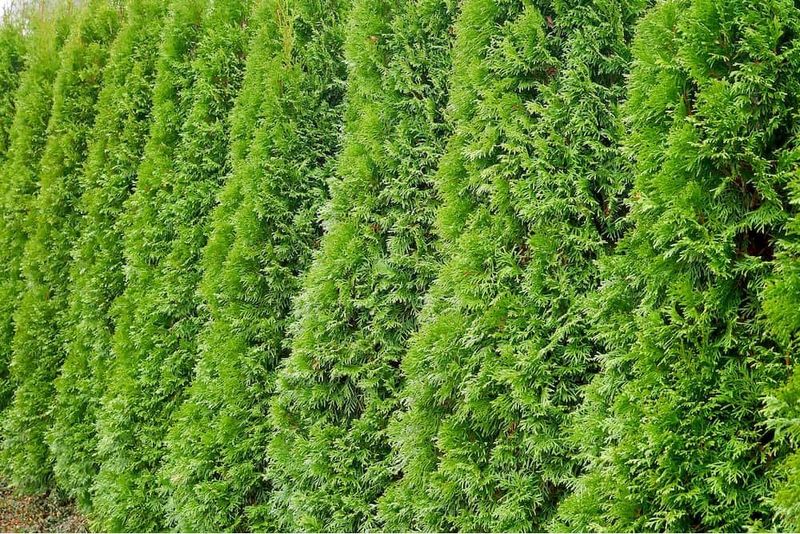
Property edges with room to spare are where western red cedar genuinely comes into its own.
This is a large tree by any measure, and homeowners who plant it along a narrow fence strip or close to a foundation often find themselves managing a situation that outgrew the original plan within a decade.
Given space, though, few plants create a more impressive or more effective screen in the Pacific Northwest.
Western red cedar is native to Oregon and well adapted to the regional climate, handling wet winters with ease and managing summer dry periods reasonably well once its roots are established in suitable soil.
It grows best with reliable moisture and does not perform as well in hot, dry, exposed sites without supplemental irrigation through the establishment period.
In western Oregon where winter rain is plentiful, it settles in and grows steadily.
Mature trees can reach significant heights and widths, making them a better fit for windbreaks, large layered plantings, and roomy property lines than for tight urban lots.
Spacing plants appropriately from the start prevents overcrowding and allows each tree to develop the dense, layered foliage that makes western red cedar such an effective visual screen.
Its rich green color and graceful form make it one of Oregon’s most recognizable and beloved native conifers.