The Best Time For Michigan Gardeners To Divide Daylilies For Bigger Clumps Next Summer
Daylilies are forgiving plants in many ways, but dividing them at the wrong time in Michigan produces noticeably smaller, slower clumps the following summer compared to divisions made during the right window.
Most gardeners divide whenever the mood strikes or when the bed looks overcrowded, without connecting timing to outcome.
Michigan’s growing season adds a layer of specificity to this decision that general dividing advice rarely accounts for.
A division made at the right moment has enough growing season remaining to establish a strong root system before the ground freezes.
One made too late or during the wrong conditions spends that same period just trying to survive rather than building toward next summer’s display.
1. Late Summer After Bloom Is The Best Window
Most Michigan gardeners do not realize that the weeks right after the big bloom show wraps up are actually prime time for dividing daylilies.
Once the flowers have mostly finished for the season, the plant shifts its energy away from blooming and starts focusing on root development. That is exactly the window you want to take advantage of.
Many daylily cultivars finish their main bloom period anywhere from mid-July through late August, depending on the variety you grow. Earlier blooming types give you a longer runway to divide before cold weather sets in.
Later bloomers still leave enough time, but you will want to move quickly once the flowers fade.
The reason late summer works so well is simple. Soil is still warm, which encourages roots to grow and anchor into their new spot before the ground freezes.
A division planted in August or early September in Michigan has roughly six to ten weeks of root-growing weather ahead of it. That head start makes a noticeable difference come next summer.
Gardeners who wait too long into fall risk planting divisions that never get a chance to settle properly. The roots need time to spread out and grip the soil before temperatures drop hard.
Aim to finish late summer divisions by mid-September at the latest if you want the best results in Michigan’s climate. Earlier is always better when it comes to giving those roots a solid foundation for a strong, full comeback next year.
2. Early Spring Is The Other Excellent Choice
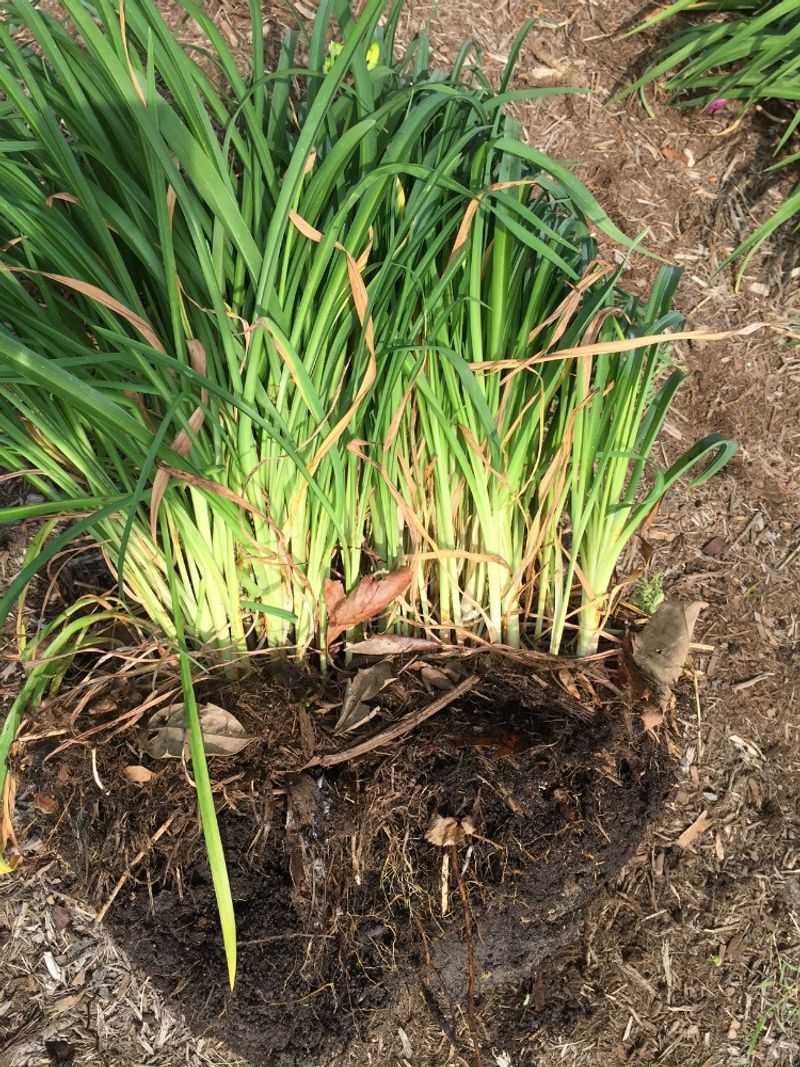
Not everyone can divide daylilies in late summer, and that is perfectly fine. Early spring is a fantastic second option that works really well for Michigan gardeners who missed the post-bloom window or simply prefer working in cooler weather.
When spring rolls around and the soil thaws, daylilies start pushing up fresh fans of green growth.
At that early stage, the foliage is short and manageable, which makes it much easier to see the crown, separate the clumps cleanly, and replant everything neatly.
You are not wrestling with tall, floppy leaves or trying to work around a full canopy of growth.
Cooler spring temperatures also reduce stress on the divided plants. Roots tend to establish more comfortably when the air is mild and the soil holds moisture well.
Your Michigan Garden Changes Every Week. Your Plan Should Too.
Gardening in Michigan changes quickly throughout the season. Every Friday you’ll receive a simple weekly plan showing exactly what to plant, prune, fertilize, harvest, and protect so you never miss the right timing.
Compare that to a hot, dry stretch in late August, and you can see why spring division is sometimes the smarter call depending on your specific yard and local conditions.
Spring division is especially worth considering if your summers tend to run hot and dry in your part of Michigan. Dividing in August during a heat wave without consistent rain can put a lot of pressure on freshly separated plants.
Spring sidesteps that challenge entirely. The one trade-off is that spring-divided plants might bloom a little lighter in their first summer, but by the following year they will be full, vigorous, and ready to put on a genuinely impressive show worth the wait.
3. Do Not Divide While Plants Are Still Blooming Heavily
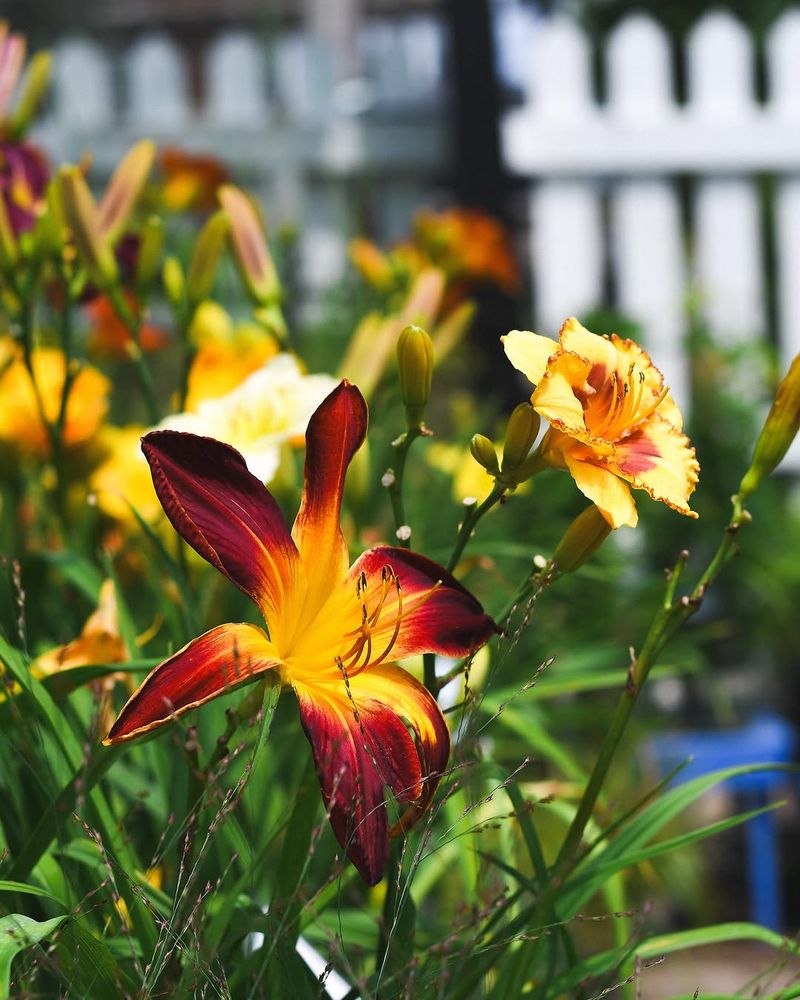
Watching a daylily clump in full bloom is one of the real joys of summer gardening. Rows of colorful flowers opening fresh every single morning is a sight worth savoring.
So before anything else, enjoy the show. Digging into a plant while it is putting all its energy into blooming is not the right move.
When daylilies are actively flowering, they are running at full speed. Nutrients and moisture are being directed straight into flower production.
Interrupting that process by digging, separating, and replanting the clump puts the plant in a tough spot.
It has to suddenly manage transplant stress and recovery at the same time it is trying to bloom, and that combination rarely ends well for either the flowers or the roots.
Divided clumps that are pulled apart mid-bloom often look rough for the rest of the season. Flowers may drop early, buds might not open fully, and the foliage can look stressed and ragged.
The clump may recover, but it will not look its best, and neither will your garden during what should be peak season.
The smarter approach is patience. Watch the bloom period wind down naturally, enjoy every last flower, and then reach for your digging fork.
Once the majority of scapes have finished and the clump is no longer actively pushing new buds, that is your green light to start dividing. Your plants will handle the process far better, and your garden will look great right up until you start the work.
4. Use Bigger Divisions For A Fuller Look Next Summer
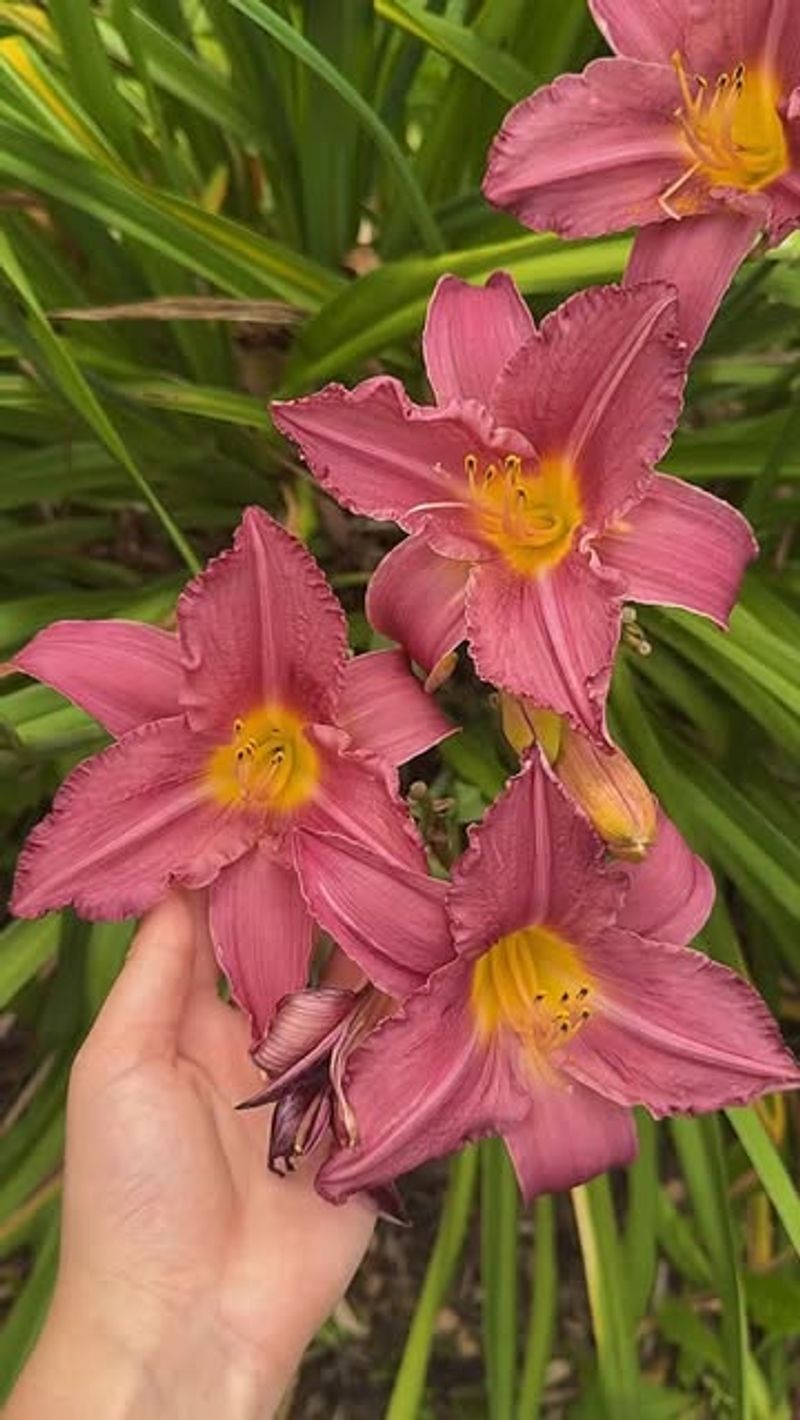
Here is something that surprises a lot of gardeners the first time they divide daylilies.
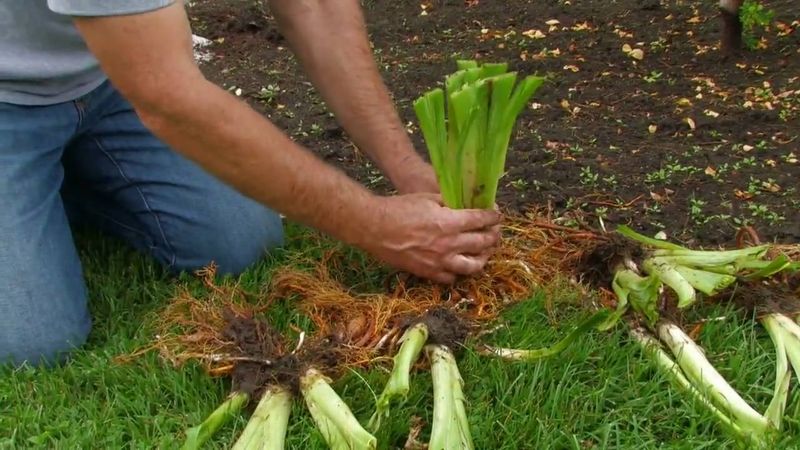
Bigger pieces bounce back faster and look fuller much sooner than the tiny single-fan divisions that are tempting to make when you want to stretch your plants as far as possible across the yard.
A division with three to five fans already has a solid root system and multiple growing points working together. Plant that in good soil, keep it watered, and it will establish quickly and likely bloom the very next summer with decent coverage.
It may not look enormous right away, but it will fill in noticeably faster than a one-fan sliver pulled from the edge of the clump. Single-fan divisions are not useless. They will grow.
In fact, given two or three seasons, a healthy single fan can develop into a respectable clump. The issue is the timeline.
If your goal is bigger, fuller clumps next summer specifically, small divisions simply need more time to get there. Patience is required when going the small-division route.
A practical middle ground is to save a few single fans for spots where you have room to wait, and use the larger multi-fan divisions for the spots where you want impact sooner. That way you get the best of both approaches without wasting any plant material.
Healthy daylilies are tough and generous, so even the smallest divisions will eventually reward you with flowers as long as you give them good conditions and a little extra time to settle in.
5. Cut Foliage Back Before Late Summer Division
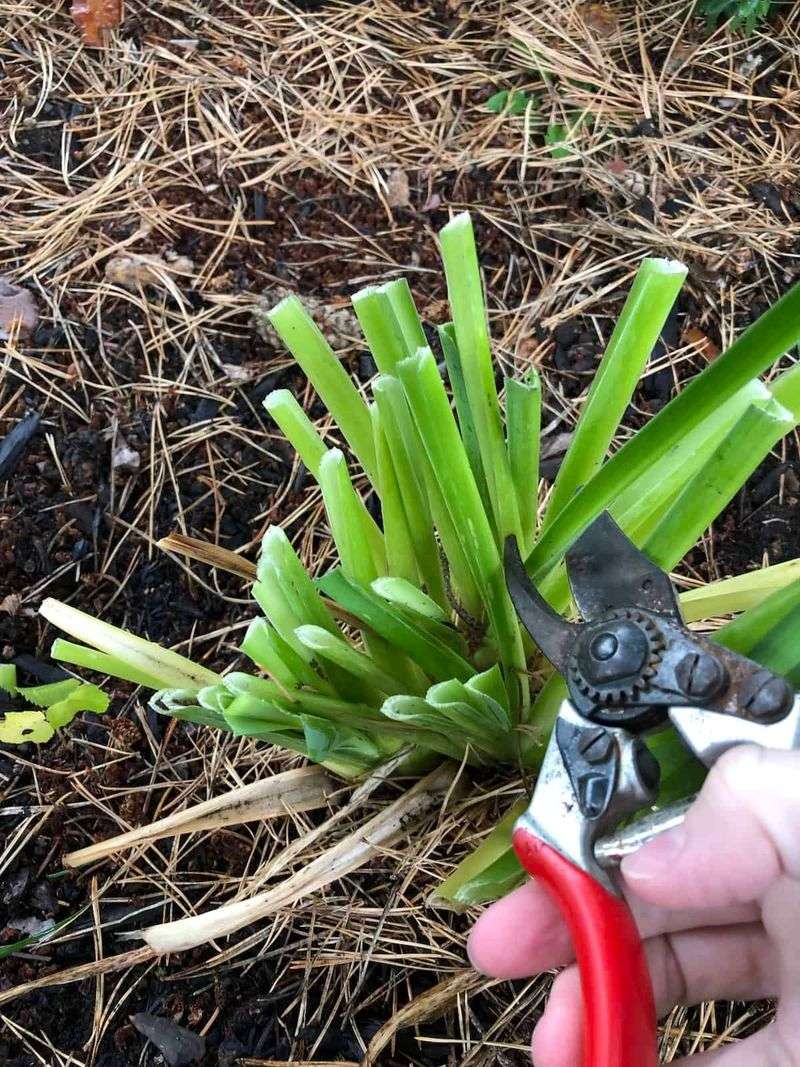
One of the most practical tips for making late summer daylily division easier is also one of the most overlooked. Cutting the foliage back before you start digging makes the whole process cleaner, faster, and much less frustrating.
Long, floppy leaves get in the way of nearly every step.
Trim the foliage down to roughly six to eight inches above the crown before you reach for the digging fork. At that height, you can clearly see where the crown sits, how the fans are arranged, and where the best natural separation points are.
Working with shorter leaves also means you are not constantly pushing a tangle of greenery out of your face while trying to separate a heavy, root-bound clump.
Shorter foliage also reduces the amount of moisture the plant needs to maintain while its roots are getting reestablished.
A freshly divided plant with a full head of tall leaves is trying to keep all that foliage hydrated while its root system is temporarily disrupted.
Cutting the leaves back takes pressure off the plant and lets it focus on root recovery instead.
Some gardeners worry that trimming the leaves will stress the plant, but daylilies are genuinely tough. They handle a foliage trim without complaint, especially during a seasonal division when the plant is already winding down from its bloom period.
Think of it as giving the plant a tidy haircut before a big move. It helps everything go more smoothly and sets the division up for a much cleaner, more successful start in its new spot.
6. Replant Right Away At The Same Depth
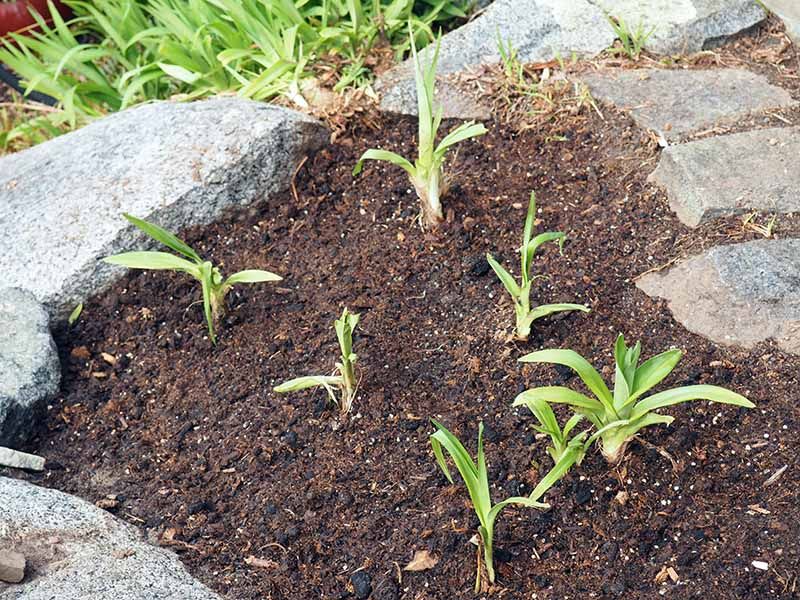
Speed matters once you have lifted and separated a daylily clump. Roots that sit exposed to air and sun for too long begin to dry out, and a dried-out root system is a stressed root system.
The goal is to get those divisions back into the ground as quickly as possible after separating them.
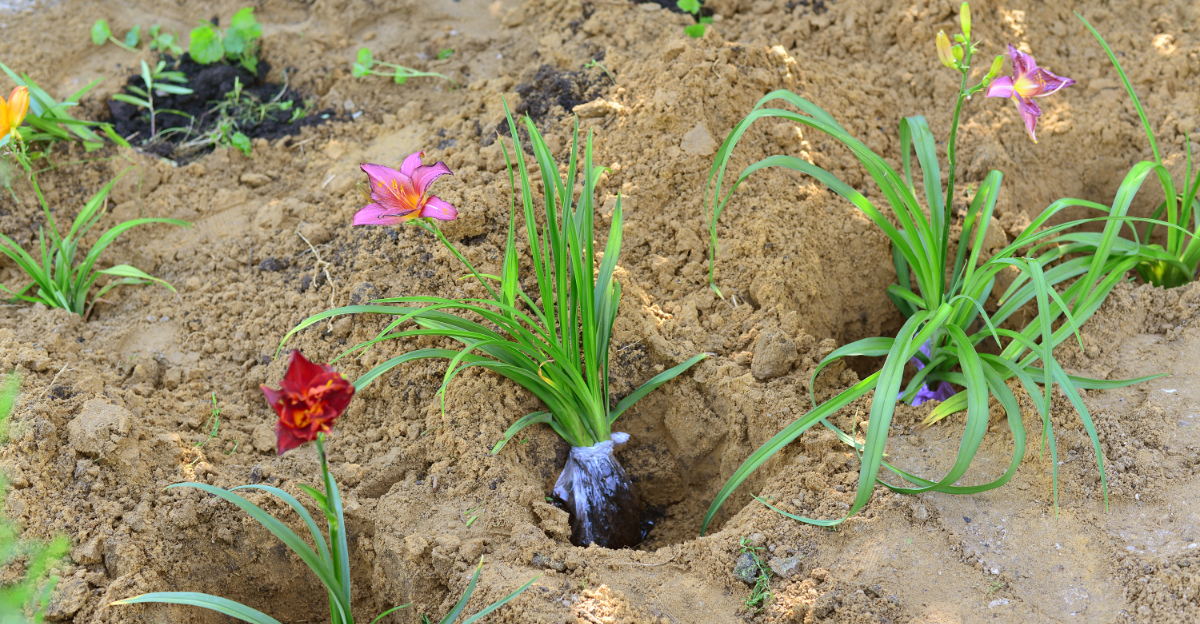
Depth is one of the most important things to get right when replanting. The crown of the daylily, which is the thick, compact area where the fans meet the roots, should sit just about one inch below the soil surface.
That is roughly the same depth the original plant was growing at. Too deep and the plant can struggle to push through the soil and bloom properly. Too shallow and the roots may dry out or heave in winter frost.
After placing the division at the correct depth, firm the soil gently around the roots with your hands. You want good contact between the roots and the surrounding soil, with no large air pockets underneath the crown.
Air pockets can leave roots hanging in empty space, which slows establishment significantly.
Water the newly planted division thoroughly right after firming the soil. A deep, slow drink right at planting time helps settle the soil further and signals to the roots that conditions are favorable for growth.
Michigan late summers can swing between rainy spells and dry stretches, so do not assume rainfall alone will handle the job. Check the soil around new divisions regularly and water whenever it starts to feel dry an inch or so below the surface.
7. Keep Soil Moist After Dividing
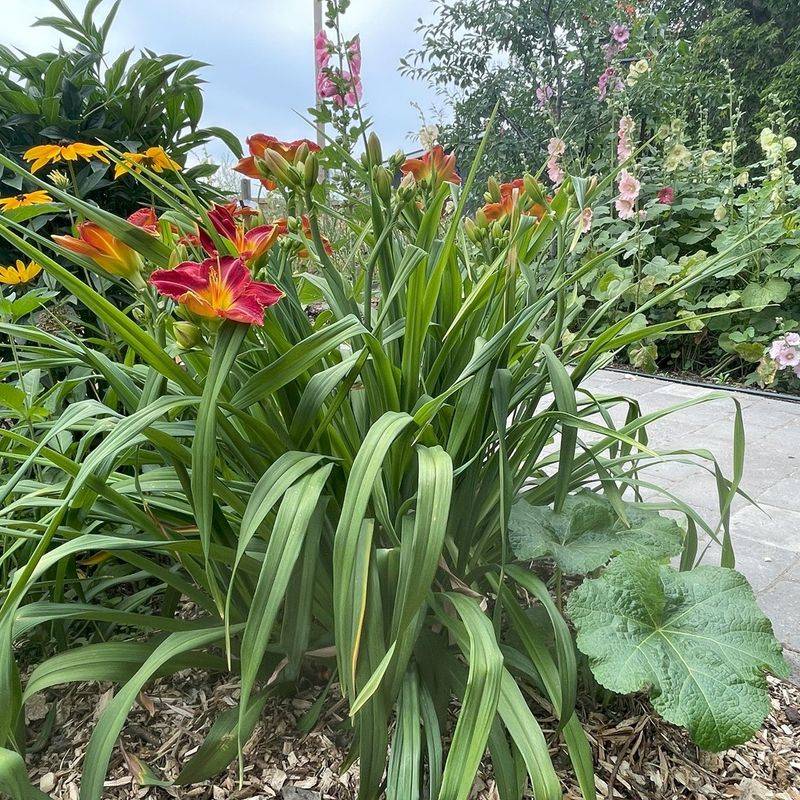
Watering after division is not optional. It is one of the most important things you can do to help a newly divided daylily get back on its feet quickly.
Roots that are actively trying to reestablish need consistent moisture to grow into the surrounding soil, and without it, recovery slows down considerably.
The sweet spot is evenly moist soil. You want the soil around new divisions to feel damp when you push your finger an inch or two into the ground, but not soggy or waterlogged.
Roots need oxygen as well as water, and soil that stays too wet for too long can cause problems just as quickly as soil that dries out completely.
Late summer in Michigan can be unpredictable. Some years bring regular rain right through August and September, which takes a lot of the watering work off your hands.
Other years run dry and hot, and divided plants can stress quickly without your attention. Check soil moisture every couple of days rather than assuming the weather is handling it.
A layer of mulch spread around newly planted divisions can be a real asset during this period.
Two to three inches of shredded bark or straw mulch helps the soil hold onto moisture between waterings, moderates soil temperature, and reduces competition from weeds.
Just keep the mulch from piling up directly against the crown of the plant. Once the roots are well established and new foliage is actively growing, the plants become much more self-sufficient and need less hand-holding from you.
8. Divide Only When The Clump Needs It
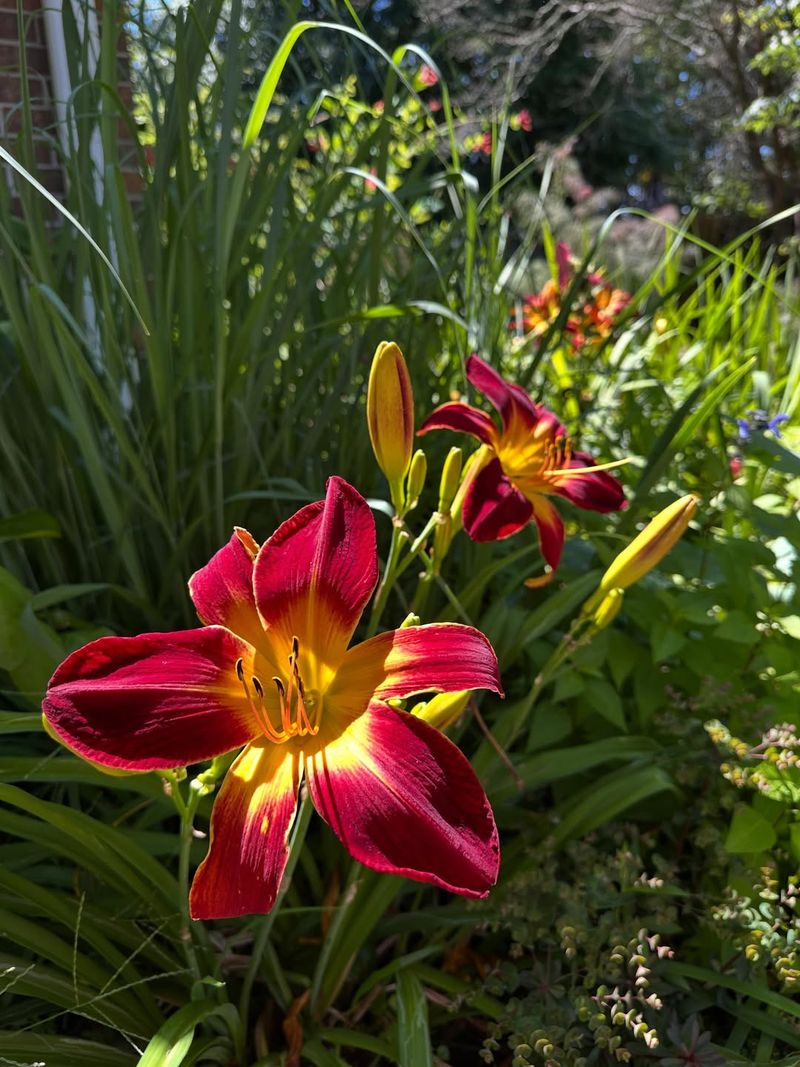
Daylilies are not high-maintenance plants, and they do not need to be dug up and divided every single year. In fact, most healthy clumps are perfectly happy being left alone for several years at a stretch.
Knowing when a clump actually needs dividing saves you work and keeps your plants from being unnecessarily disturbed.
A few reliable signals tell you when it is time. Flowering starts to slow down noticeably even though the plant has good soil, sun, and water.
The center of the clump starts to look thin or less vigorous while the outer edges remain lush. The clump has grown so large and crowded that individual fans are packed tightly together with little room to breathe.
Any of these signs means division is overdue and the plant will genuinely benefit from being split up.
Many experienced Michigan gardeners divide their daylilies every three to five years as a general rhythm. Some varieties stay vigorous longer and can go six or seven years without needing attention.
Others spread quickly and benefit from more frequent division. Watching your specific plants over time is the best guide.
When you do decide a clump is ready, the rule is straightforward. Divide after the main bloom period wraps up in late summer, or wait and tackle it in early spring before the foliage gets tall.
Either window works well in Michigan. After dividing, give the new clumps consistent watering and a little time to rebuild.
Follow that simple approach and your daylilies will reward you with bigger, more beautiful clumps every single summer going forward.