The Ohio Annual That Outperforms Petunias In Every Category
Petunias are the default Ohio annual. They are everywhere, they are familiar, and garden centers bank on the fact that most shoppers reach for them without much deliberation.
That loyalty is not really about performance. It is about habit.
There is an annual that outperforms petunias in bloom count, heat tolerance, disease resistance, and staying power through an Ohio summer. It does not need trimming.
It does not get that leggy, tired look that petunias develop by August. And it keeps producing color from spring through the first hard frost without asking much in return.
Most gardeners have seen it without knowing its name, or passed it on the shelf in favor of something more familiar. That oversight costs a season of better color every single year.
Petunias have had a long run as Ohio’s go-to annual. This one has been quietly making the case for a change.
1. Choose Calibrachoa For A Fuller Hanging Basket Look
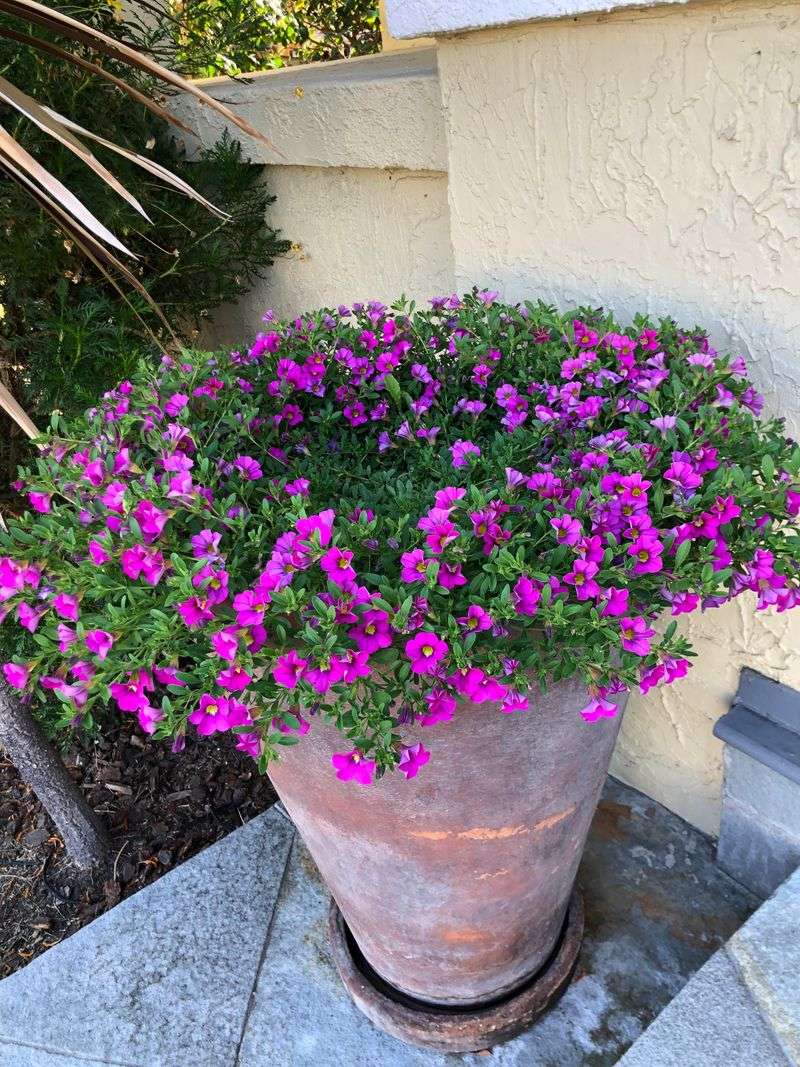
A porch basket looks more finished when the flowers spill over the rim instead of sitting in a stiff mound. Calibrachoa earns that look naturally.
Its stems trail outward and downward, creating a rounded, full shape that fills a basket from the inside out.
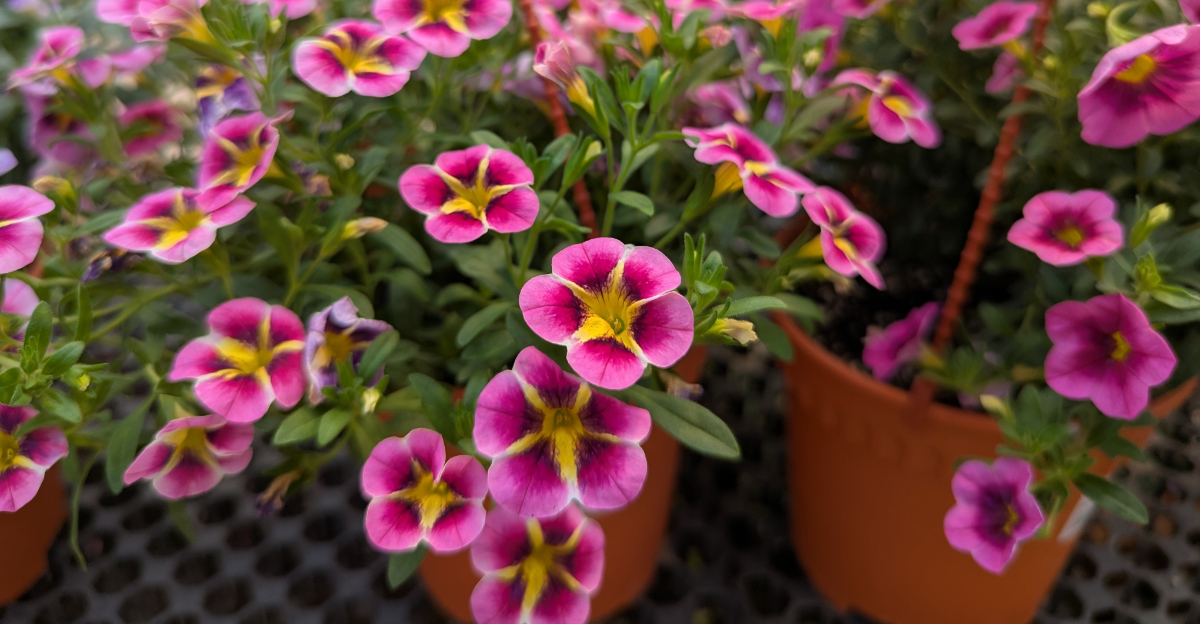
Petunias do the same job in many gardens, and no one should dismiss them. But calibrachoa produces smaller, bell-shaped flowers in very high numbers.
That dense bloom coverage gives baskets a layered, textured appearance that many gardeners find more visually satisfying than larger, open petunia blooms.
The flowers on calibrachoa are roughly the size of a nickel. That smaller scale means more blooms fit across each stem without overcrowding.
The effect is a bloom-heavy basket that looks like it took serious effort, even when the plant is doing most of the work on its own.
For Ohio porch planters, window boxes, and container edges, this trailing petunia-like annual performs consistently through summer when it gets the right care. Sun, drainage, and steady feeding matter most.
Start with a quality hanging basket, a well-draining potting mix, and a sunny spot. Calibrachoa will reward that setup with color from late spring through fall in most parts of this state.
2. Let Million Bells Spill Over The Basket Edges
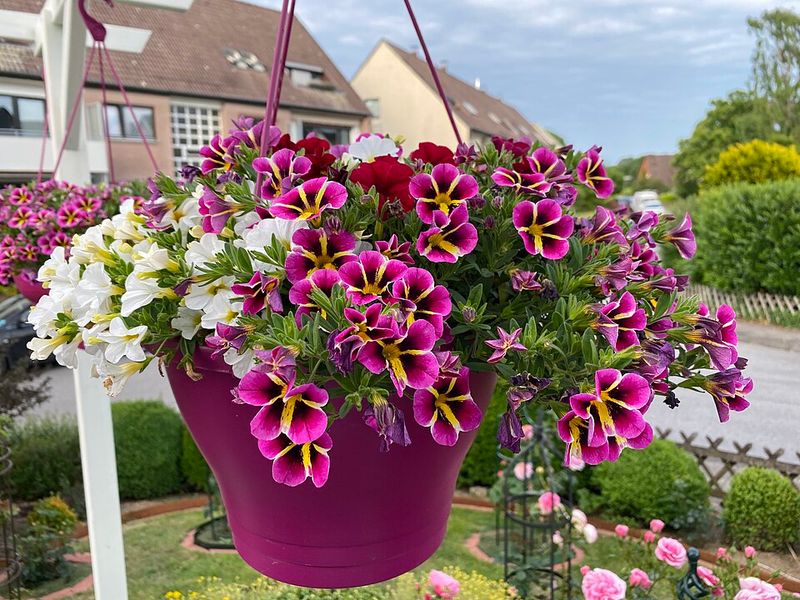
Trailing stems are one of the most useful things a container plant can offer. When stems spill over the rim of a basket or window box, they soften the hard edge of the pot and make the whole display feel more relaxed and natural.
Calibrachoa does this without any training or encouragement.
Stems can reach 12 to 18 inches or more as the season progresses. That length gives them room to cascade down the sides of a basket, drape over a porch rail, or hang from a window box in long, flower-covered arcs.
The trailing habit is one reason calibrachoa feels like a natural swap for petunias in many summer container displays.
Window boxes especially benefit from this growth style. A row of calibrachoa along the front edge of a box can produce a curtain of small blooms that softens the look of a front porch or deck railing.
Your Ohio Garden Changes Every Week. Your Plan Should Too.
Gardening in Ohio changes quickly throughout the season. Every Friday you’ll receive a simple weekly plan showing exactly what to plant, prune, fertilize, harvest, and protect so you never miss the right timing.
The effect works even better when the center of the box holds an upright plant for height contrast.
Petunias trail too, and wave varieties do it well. But calibrachoa stems tend to stay more uniform in their spread.
That consistency makes it easier to predict how a basket or box will look by midsummer, which helps when planning a porch display for a specific occasion or event.
3. Give It Full Sun For The Heaviest Bloom Show
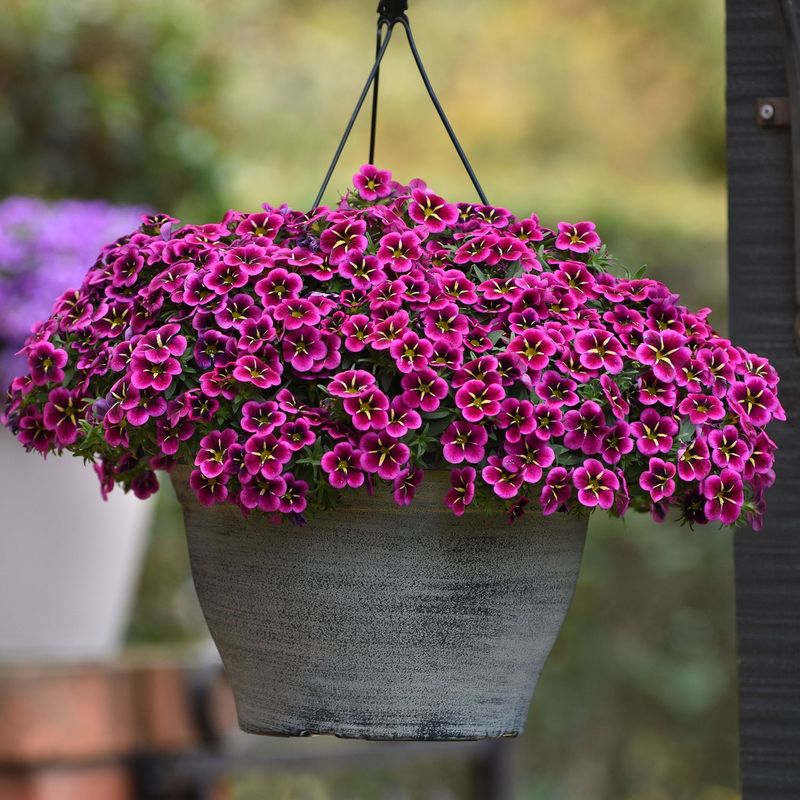
Strong, direct sun is what pushes calibrachoa into its best performance. Most varieties bloom most heavily with at least six hours of direct sun each day.
Porches with southern or western exposure tend to produce the most flower-covered baskets through the summer season.
Partial shade locations can still support calibrachoa, but bloom production usually drops off noticeably. Stems may stretch toward available light, and the plant can look looser and less full than it would in a brighter spot.
Deep shade is not a good fit for this plant at all.
Hot, sunny patios do create one extra responsibility. Containers in full sun dry out faster than containers in partial shade.
A basket sitting in direct afternoon sun on a concrete patio may need water every day during peak summer heat. That is not a problem with the plant itself.
It is just a reality of container gardening in warm weather.
Checking soil moisture regularly in full-sun spots keeps the plant from going through stress cycles. Repeated dry-out periods can slow bloom production and cause stem tips to look tired.
Consistent moisture, combined with strong sun and regular feeding, gives calibrachoa the full-sun display it is capable of producing. A sunny porch with good air circulation is close to an ideal setup for this bloom-heavy annual.
4. Use Fast-Draining Mix To Keep Roots From Staying Wet
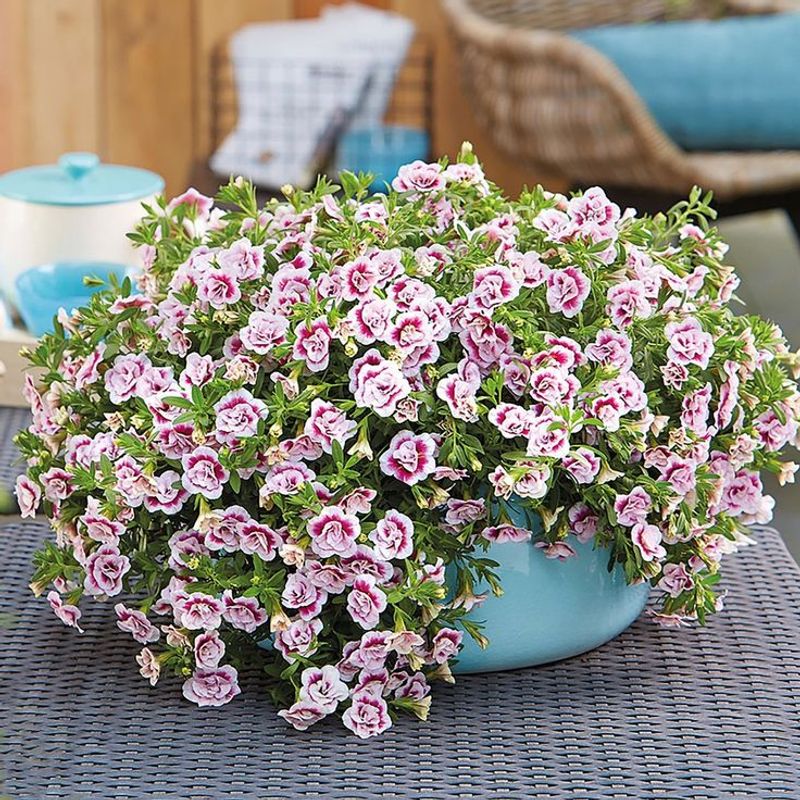
Soggy roots are the most common reason a calibrachoa basket struggles. This plant needs a potting mix that drains quickly and does not hold excess moisture around the roots.
Standard garden soil from the yard is too heavy for any hanging basket, and it is especially problematic for calibrachoa.
A quality container mix designed for baskets and pots works well. Some gardeners add a small amount of perlite to improve drainage further, especially in baskets that will sit in full sun where the mix tends to compress over time.
The goal is a mix that stays moist but never waterlogged after a thorough watering.
Drainage holes are non-negotiable. A basket or container without holes at the bottom traps water with nowhere to go.
Roots sitting in standing water will struggle quickly, and the plant may show yellowing leaves or wilting even when the surface of the mix looks wet. That combination of symptoms often signals a drainage problem rather than a watering problem.
Choosing the right container matters too. Hanging baskets with open wire frames and coco liner drain very freely and tend to work well for calibrachoa.
Solid plastic baskets hold moisture longer, which can be useful in very hot, dry weather but requires more careful watering in cooler or cloudy periods. Matching the container type to the local climate and sun exposure makes a real difference in root health.
5. Feed Lightly And Often To Keep Flowers Coming
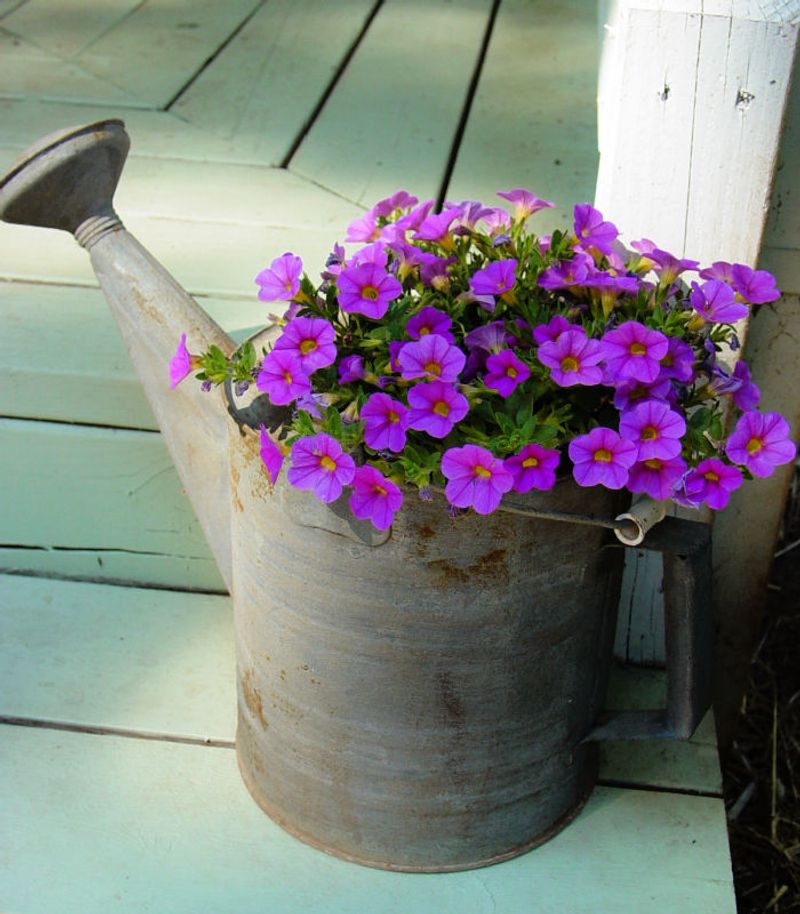
Heavy-blooming basket plants burn through nutrients faster than most gardeners expect. Every time a basket is watered thoroughly, some of the soluble nutrients in the mix wash out through the drainage holes.
Over a full summer, that adds up to a significant loss of available nutrition for the roots.
Calibrachoa responds well to a regular, light feeding schedule. A balanced water-soluble fertilizer applied every one to two weeks during the growing season keeps the plant supplied.
That support helps it maintain steady bloom production. Following label directions carefully is important.
More fertilizer does not mean more flowers.
Over-feeding with high doses of fertilizer can stress roots and push the plant toward excessive foliage at the expense of blooms. Under-feeding shows up as pale leaves, reduced flowering, and stems that look tired earlier in the season than they should.
The goal is steady, moderate nutrition throughout the season rather than occasional heavy applications.
Some gardeners use a slow-release granular fertilizer at planting time as a base layer and then supplement with liquid feeding every couple of weeks. That combination can work well for baskets in full sun that need consistent support.
Whatever feeding method you choose, consistency matters more than the specific product. A calibrachoa basket that gets regular, moderate nutrition will keep producing flowers far longer than one that gets fed only when it starts to look stressed.
6. Trim Spent Flowers To Keep The Basket Looking Fresh
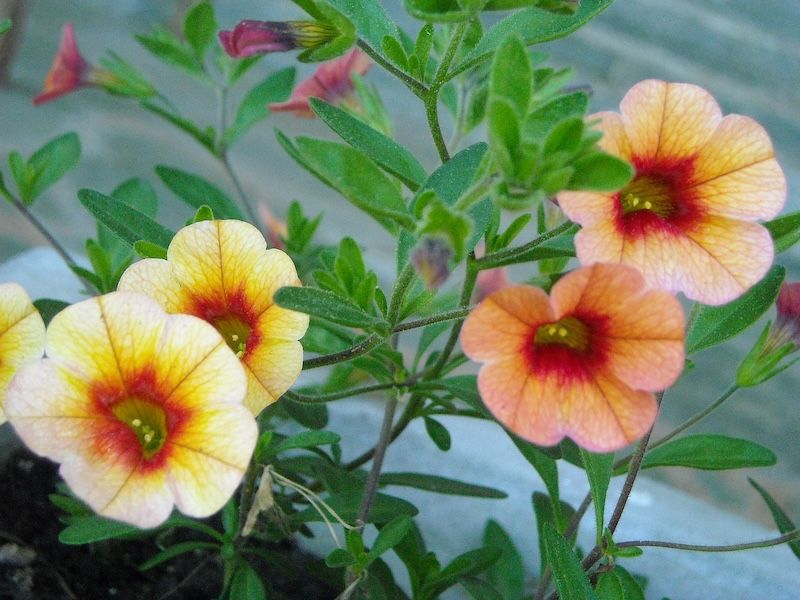
One practical advantage calibrachoa has over many petunias is that the small flowers tend to drop on their own more cleanly than large petunia blooms. Petunias can leave sticky, spent tubes clinging to stems that need to be pinched off by hand.
Calibrachoa flowers are smaller and often fall away without leaving much mess behind.
That does not mean the basket never needs attention. Light trimming and removing tired growth can refresh the overall look, especially after a stretch of hot, dry weather or uneven watering.
Stems that have grown long without producing many new buds can be trimmed back to encourage fresh growth from lower on the stem.
Trimming should be moderate and selective. Cutting back a few tired stems rather than shearing the whole basket allows the plant to keep blooming while recovering.
Removing faded or yellowing leaves as they appear keeps the basket looking neat and prevents any buildup of decaying plant material that could affect the mix.
A light grooming session every couple of weeks is usually enough when combined with consistent watering and feeding. That routine keeps a calibrachoa basket looking well-maintained through most of the summer.
Many petunia varieties require more frequent individual trimming. Compared with that, calibrachoa offers a practical advantage for gardeners who want a tidy basket without spending much time on flower-by-flower cleanup.
7. Water Before The Basket Gets Bone Dry
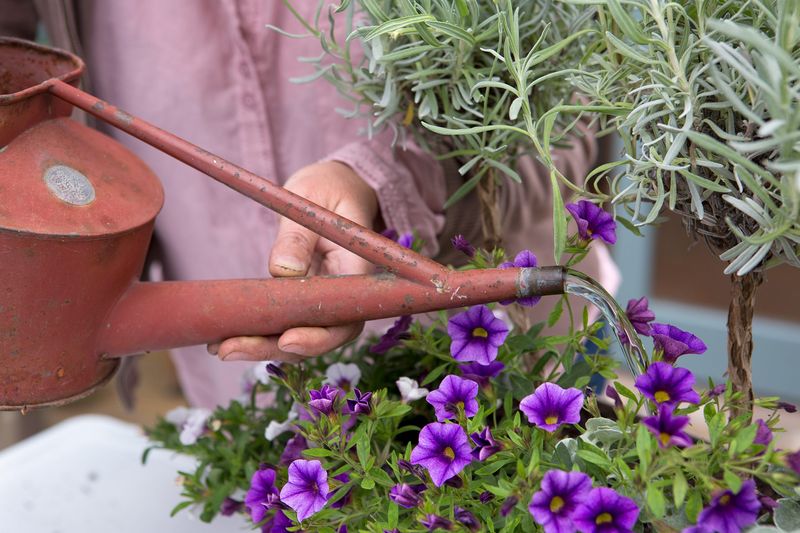
A thirsty hanging basket gives clear signals when it needs water. The potting mix pulls away from the sides of the container, and the plant may look slightly wilted in the afternoon.
The basket also feels noticeably lighter than usual when lifted. Calibrachoa handles brief dry periods better than some annuals, but repeated stress from drying out too much will slow bloom production over time.
Checking moisture daily during hot summer weather is a practical habit for any basket gardener. Pushing a finger an inch into the mix gives a quick read on whether the roots are still working with adequate moisture or whether water is needed right away.
Baskets in full sun and wind can dry out within 24 hours during peak summer heat.
Watering deeply until water runs freely from the drainage holes is the right approach. A light surface watering that only dampens the top layer of mix does not reach the deeper roots where most of the plant’s water uptake happens.
Deep, thorough watering followed by a dry-down period before the next watering is healthier for roots than frequent shallow applications.
The mix should stay consistently moist but never feel waterlogged. Roots sitting in standing water will struggle just as much as roots that are allowed to go completely dry.
Finding that middle ground is the most important daily habit for keeping a calibrachoa basket performing well through a full Ohio summer.
8. Trim Lightly When Summer Growth Starts Looking Tired
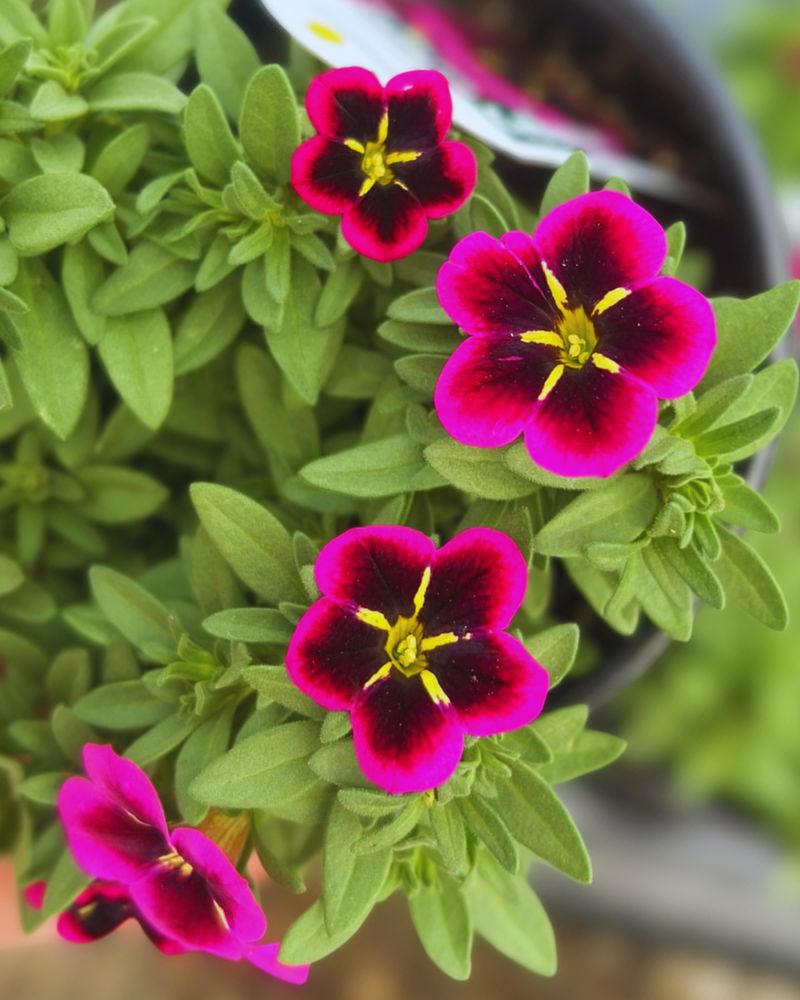
By midsummer, many hanging baskets start showing their age. Stems get longer without producing as many new buds.
The center of the basket can look sparse while the outer edges trail far. Heat, wind, and uneven watering all contribute to that tired, stretched-out look that shows up in July and August.
A light trim can help reset the plant and encourage fresh growth from lower on the stems. Cutting back the longest, most stretched stems by one-third gives the plant a chance to push out new side shoots closer to the base.
Those new shoots tend to bloom more vigorously than the older, elongated stem tips.
Timing matters with a summer trim. Trimming during an extreme heat stretch, especially without following up with water and steady feeding, puts extra stress on a plant that is already working hard.
A moderate trim during a mild stretch of weather, followed by a deep watering and a dose of liquid fertilizer, gives the plant the best chance to bounce back quickly.
Calibrachoa does not need the kind of hard cutback that some summer annuals require to refresh. Moderate, selective trimming is usually enough to tidy the basket and encourage continued blooming through late summer and into early fall.
Ohio often has warm weather well into September, which gives a well-maintained basket plenty of time to finish the season with strong color.