The Native Ohio Shrub To Grow Instead Of Privet For Fast Privacy
Privet sells privacy fast and that is about the best thing that can be said for it in an Ohio yard. It grows quickly, fills in densely, and then keeps going in directions nobody agreed to.
Neighboring properties, natural areas, fence lines two lots over. Privet does not respect boundaries and our natural areas have the receipts to prove it.
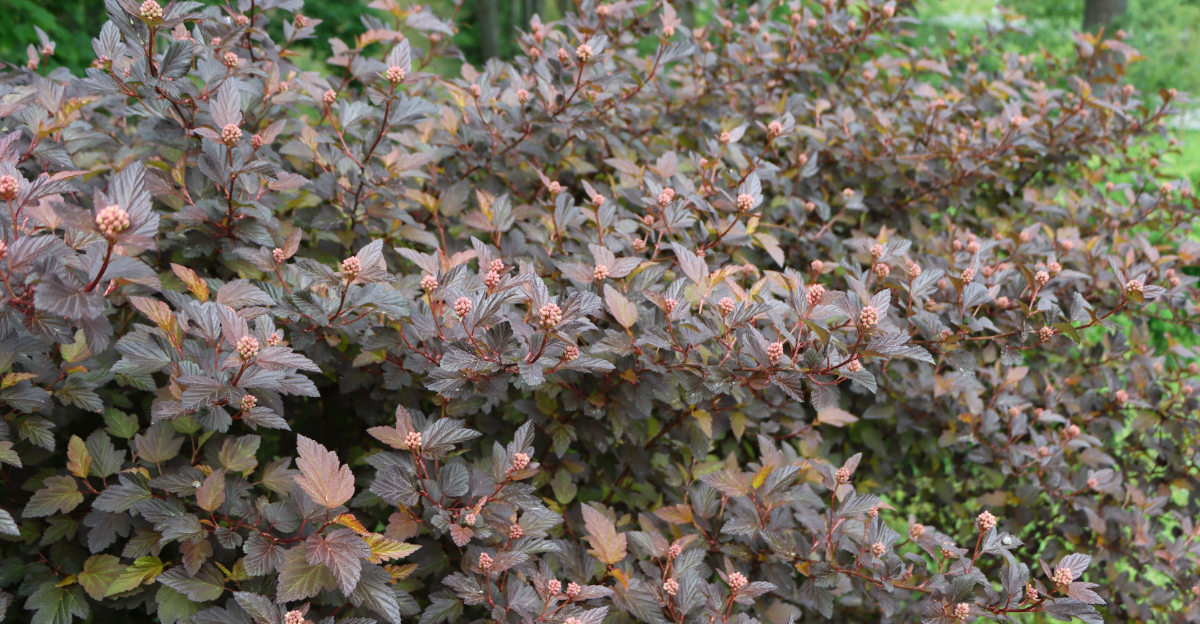
Fast privacy does not have to come with those consequences. Ohio has a native shrub that grows with real purpose and fills a screening role without the invasive spread.
It brings something privet never could to the landscape it grows in. Wildlife value, seasonal interest, foliage that earns a second look, and a toughness that holds up through Ohio winters without complaint.
It checks every practical box privet checks and adds several that privet cannot touch. The case for making the switch is straightforward once you see what this native actually does.
1. Choose Ninebark When Privet Feels Too Risky
A fast hedge should solve the privacy problem without creating a bigger one along the fence. Privet has been widely planted across home landscapes for generations.
However, several privet species, especially Japanese privet and European privet, are considered invasive in many parts of the eastern United States.
They spread by seed into woodland edges, stream banks, and natural areas where they can crowd out native plants.
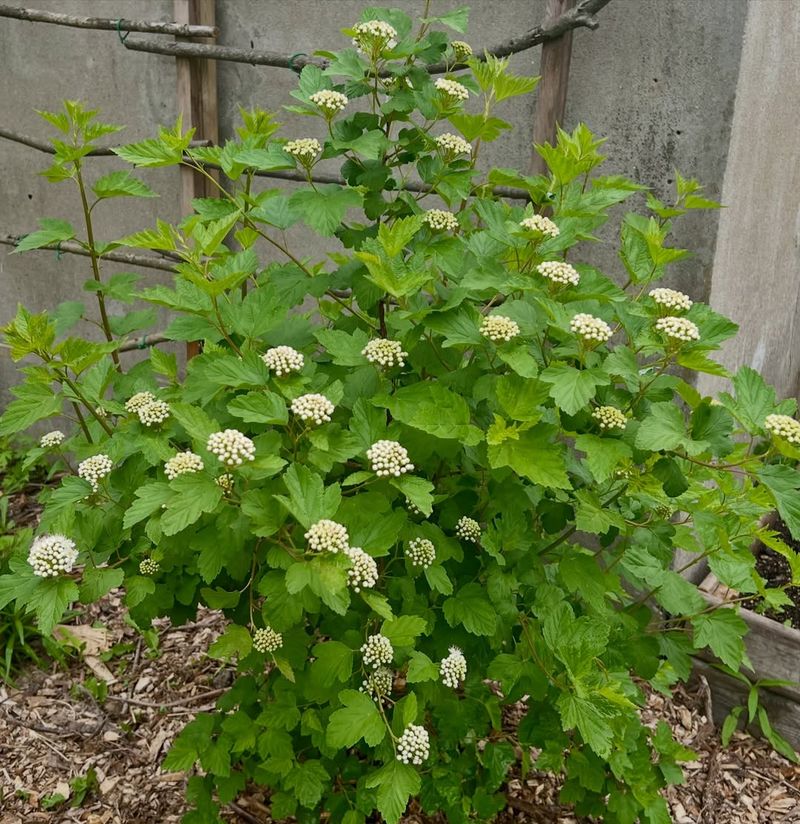
Ninebark does not carry that risk. Physocarpus opulifolius is native to this region and is listed as a native species in Ohio by the USDA PLANTS Database and recognized by ODNR.
It fills in along a fence line without spreading aggressively into natural areas nearby.
For gardeners who want fast coverage but feel uneasy about planting another potentially invasive hedge, ninebark is a practical swap. It grows at a moderate to fast rate and can reach eight to ten feet tall and wide at maturity, depending on the cultivar and site conditions.
That is enough height and spread to create real visual privacy along a property line. The plant earns its place in the yard without borrowing trouble from neighboring wild spaces.
2. Plant It Where Fast Screening Matters Most
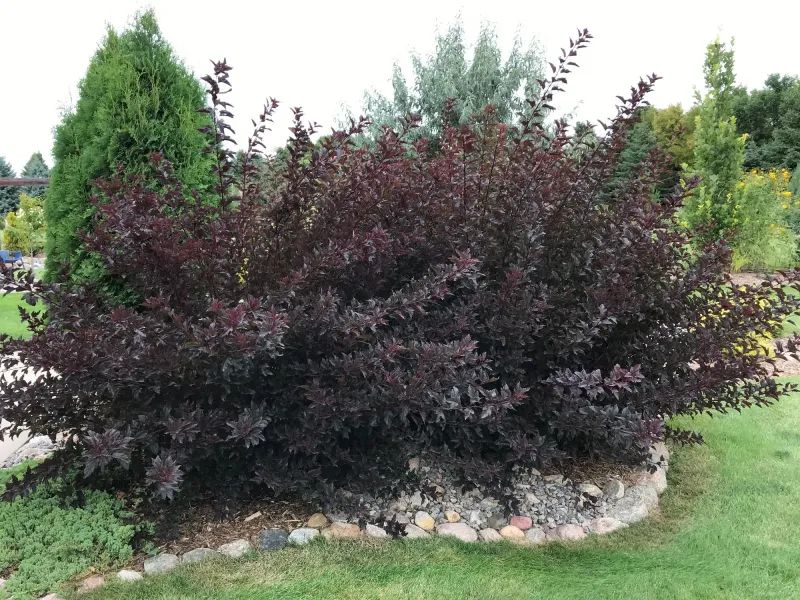
A bare patio or exposed side yard is one of the most frustrating spots in any home landscape. You need coverage, and you need it to fill in without waiting a decade.
Ninebark responds well to good placement. Putting it in the right spot from the start makes a real difference in how quickly it forms a useful screen.
Along property lines, ninebark can be planted in a staggered row to let arching stems overlap and fill visual gaps within two to three growing seasons.
It also works well beside driveways, along fence lines, and in front of utility areas where quick coverage matters most.
Patios and outdoor seating areas benefit from ninebark planted on the side with the most exposure.
Placement near structures or paved surfaces should account for the plant’s mature width. Ninebark can spread six to ten feet wide depending on the selection, so giving it room from the start avoids problems later.
Your Ohio Garden Changes Every Week. Your Plan Should Too.
Gardening in Ohio changes quickly throughout the season. Every Friday you’ll receive a simple weekly plan showing exactly what to plant, prune, fertilize, harvest, and protect so you never miss the right timing.
Planting too close to a fence or wall can crowd the shrub and reduce airflow. Choose spots with at least partial sun and decent drainage, and the shrub will reward you with fast, full growth right where the coverage is needed most.
3. Let Arching Stems Fill Gaps Along Property Lines
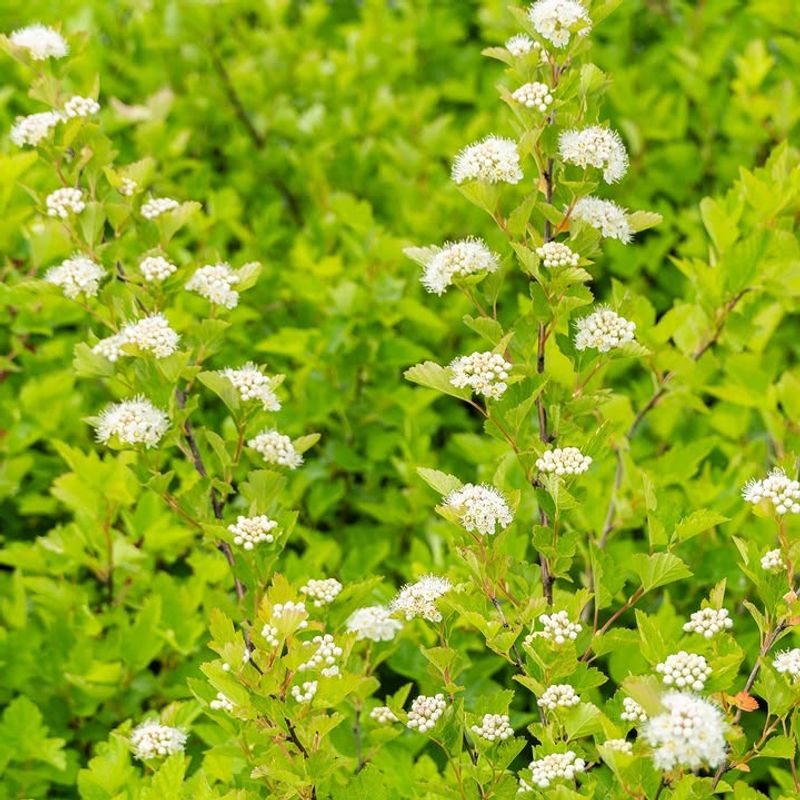
Rigid, flat hedges look tidy in catalogs but can feel stiff and hollow in real yards. Ninebark grows differently.
Its stems arch outward and upward in a natural fountain shape, which means the shrub fills horizontal space as it grows taller.
That arching habit is actually useful for screening because the stems layer over each other and close visual gaps without needing to be sheared into a wall.
Along a property line, a row of ninebark plants will knit together over time as their outer stems overlap. This creates a layered, natural-looking screen that blocks sightlines from neighboring yards and streets.
The effect is less formal than a clipped privet hedge but more visually interesting and more forgiving if one plant grows faster than another.
The key is giving the shrub enough room to reach its natural width. Cramming plants too close together forces them to compete and can actually slow the screening process.
A well-spaced row of ninebark plants, set about five to six feet apart in most situations, will arch and fill toward each other at a pace that creates solid coverage. The result is a hedge that looks like it belongs in the yard rather than one that was forced into shape.
4. Give Ninebark Sun For The Thickest Growth
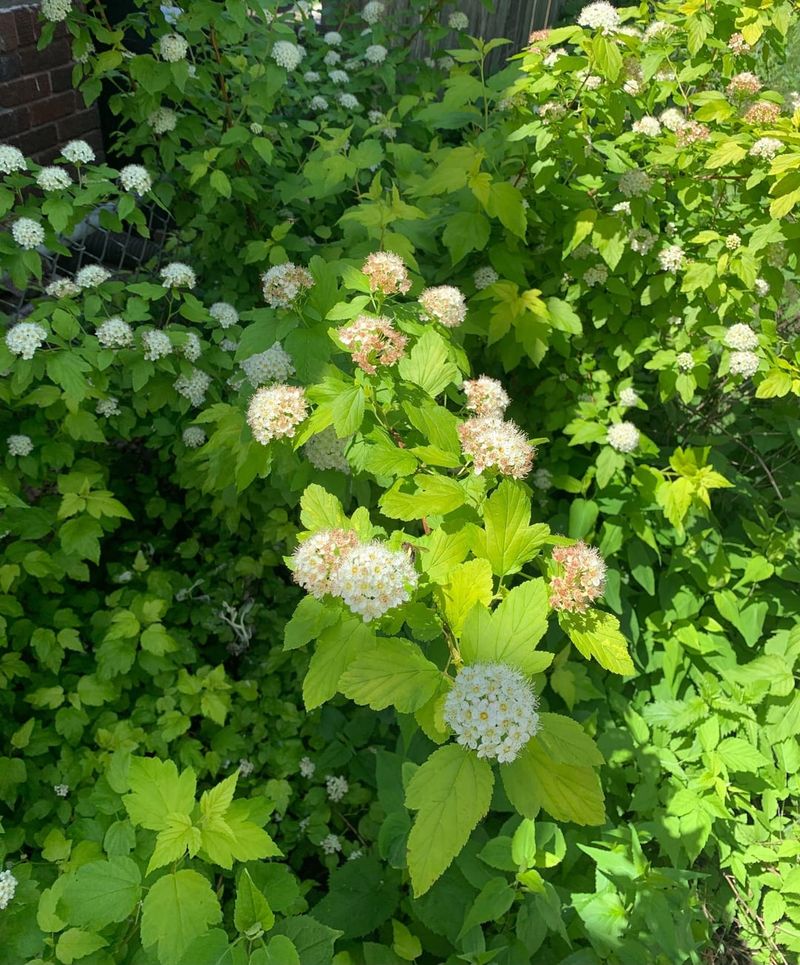
Sun makes a real difference in how dense a ninebark hedge grows. The shrub tolerates partial shade, and it will survive in shadier spots.
However, full sun produces the thickest branching, the best bloom, and the most reliable screening growth. Ohio gardeners who plant ninebark along a south- or west-facing fence will usually see faster fill-in than those planting on a shaded north side.
In partial shade, ninebark tends to grow a bit looser and taller as it reaches for light. That open habit can reduce the screening value along a property line.
If your privacy bed gets four to six hours of direct sun, ninebark will still perform reasonably well. Below that, the hedge may need more time to fill in or may never reach the density you want.
Full sun in this state also tends to bring out better foliage color in dark-leaved cultivars like Diabolo or Summer Wine.
The straight species, Physocarpus opulifolius, holds its green color well in sun and still offers solid screening value without relying on cultivar drama.
For the thickest, most privacy-ready growth, pick the sunniest open spot along your property line and let the shrub work with the light it gets.
5. Use Pruning To Shape A Fuller Privacy Screen
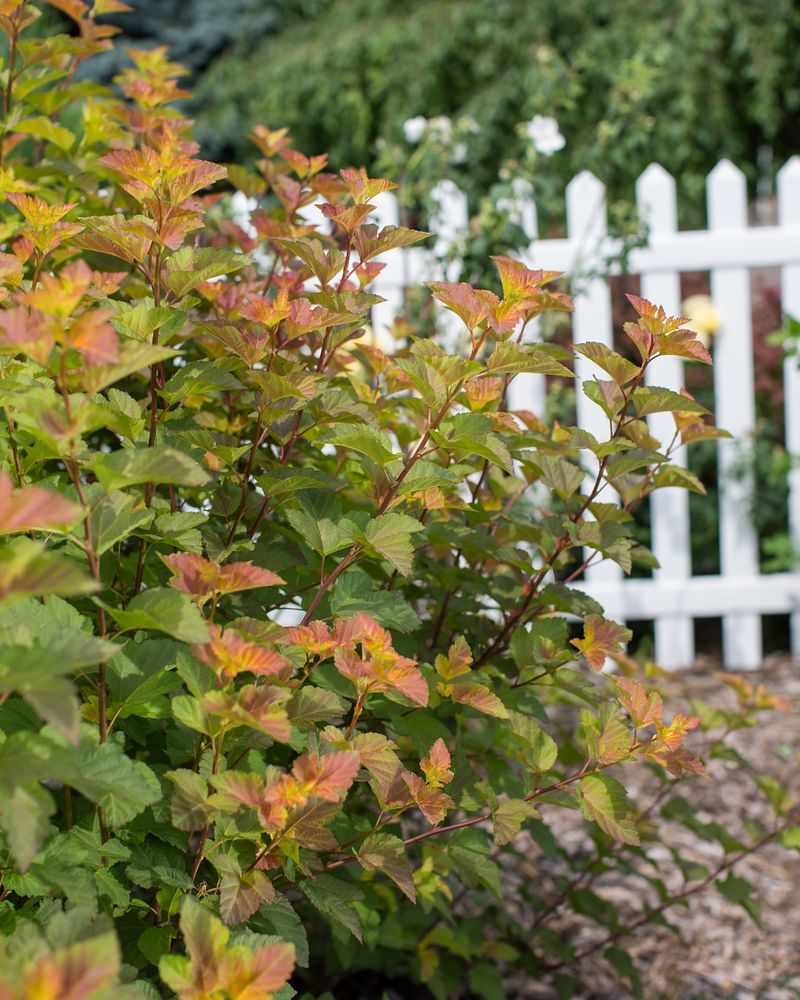
An overgrown, leggy shrub along the back fence is not doing its job as a privacy screen. Pruning ninebark thoughtfully keeps the plant full from the base to the top, which is exactly what a screening hedge needs.
The good news is that ninebark responds well to pruning and can bounce back with vigorous new growth after a good trim.
The best time to prune ninebark for shape is right after it finishes blooming in late spring or early summer. Pruning at that point removes the spent flower clusters and encourages a flush of new branching without cutting off next year’s blooms too early.
Avoid heavy pruning in late summer or fall, which can push tender new growth that may not harden off before cold weather arrives.
Selective pruning removes older woody stems from the base every few years and keeps the interior of the shrub open. It also prevents the lifeless-center tangle that makes older hedges look hollow.
Shearing the entire plant into a tight box is not the best approach for ninebark. It tends to produce a thin outer shell with bare wood inside.
Instead, work with the natural arching form and remove what is blocking the base from filling in. That approach builds a fuller, more durable privacy screen over time.
6. Expect Flowers, Bark, And Fall Texture Beyond Privacy
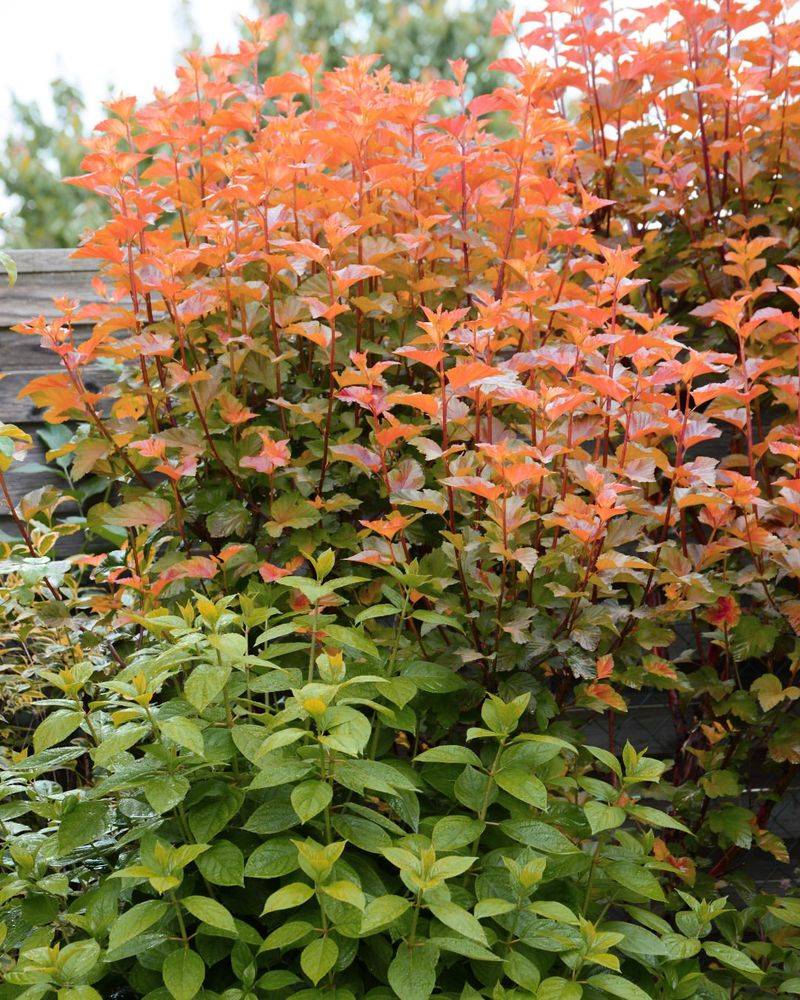
A plain green wall along the Ohio property line does its job, but it does not do much else. Ninebark brings more to the yard across the full calendar year.
In late spring, it produces clusters of small white to pale pink flowers that appear along the stem tips. Those flower clusters attract native bees and other pollinators, giving the hedge a working role in the garden beyond just blocking views.
After the flowers fade, papery reddish seed capsules develop and hang on the stems into fall. They add color and texture during a season when most shrubs are winding down.
The foliage on the straight species turns warm tones in autumn before dropping, giving the hedge one more moment of seasonal interest before winter sets in.
The peeling bark is one of ninebark’s most distinctive features. As stems mature, the outer bark peels back in thin layers to reveal cinnamon and tan inner bark beneath.
This textured bark shows up clearly in winter when the leaves are gone, giving the hedge a structural quality that a clipped privet hedge simply cannot match.
For gardeners who want a privacy screen that earns its space in every season, ninebark delivers visual interest well beyond what a single-purpose hedge ever could.
7. Space Plants For A Hedge That Can Actually Breathe
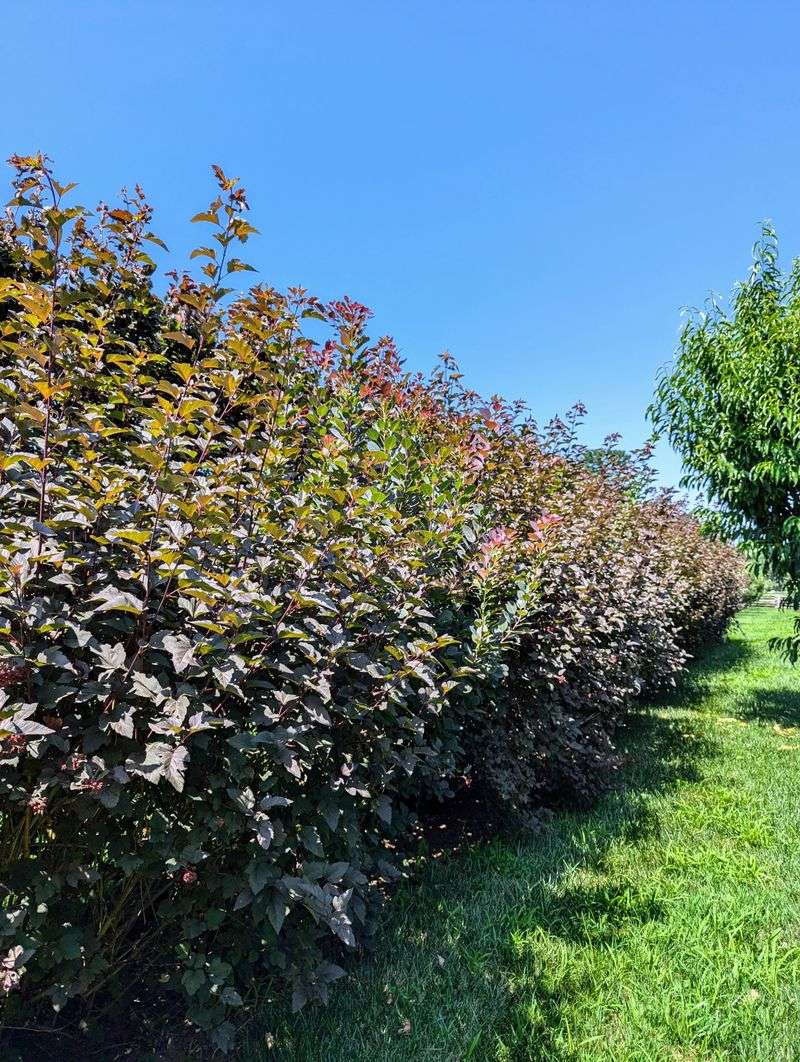
Planting shrubs too close together feels like a shortcut to faster privacy, but it usually creates more problems than it solves. When ninebark plants are crammed into a tight row, they compete for water, nutrients, and light.
The result is often weak, uneven growth in the middle of the hedge and crowded stems that trap moisture and create conditions for fungal issues like powdery mildew.
For most home landscapes, spacing ninebark plants five to six feet apart in a single row gives each shrub enough room. That allows each plant to develop its natural width without fighting its neighbors.
If you want a denser screen faster, a staggered double row can work well. Set the rows about four feet apart and offset the plants so they fill toward each other from two angles.
Giving each plant room also makes long-term maintenance much easier. You can get in between plants to prune older stems from the base, check for pest issues, and remove any crossing branches that might cause damage over time.
A well-spaced hedge is also easier to renovate if one plant needs to be replaced. Tight spacing locks you in and makes every future task harder.
Start with good spacing and the hedge will reward you with healthier, more even growth from the first season forward.
8. Pick Native Screening Over Another Invasive Hedge
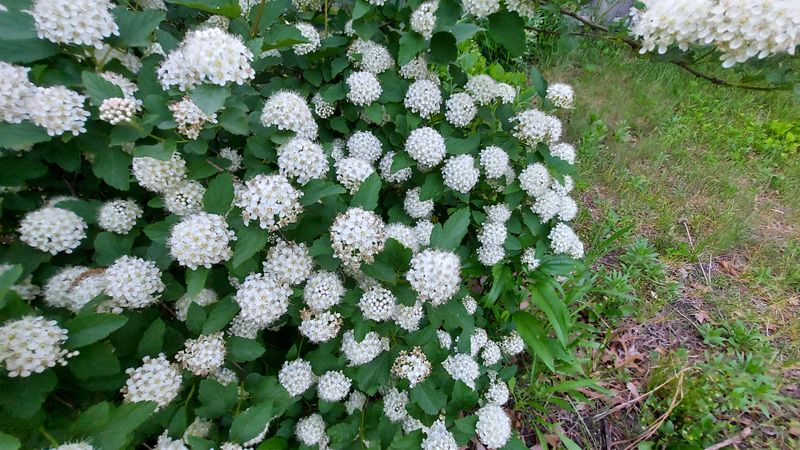
A property line that needs screening deserves a shrub that works with the landscape rather than against it. Ninebark fits that role in a way that privet simply cannot in many regional yards.
It screens, it fills in at a useful pace, it blooms, and it supports native bees and birds without spreading into wild areas. That combination is hard to beat for a home gardener who wants coverage and something more.
Privet may still be sold at some garden centers, and it is not always labeled with a warning. But gardeners who have seen it escape into a woodland edge or naturalized area know the cleanup is not worth the quick hedge.
Ninebark stays where it is planted. It does not produce seeds that travel aggressively into natural areas, and it does not take over stream banks or forest understories.
Choosing ninebark over privet is not about being cautious for its own sake. It is about getting a screening shrub that does its job well and fits more naturally into the regional landscape.
The peeling bark, the spring flowers, the fall seed clusters, and the wildlife value all come as part of the package. Swap the privet, give ninebark the right spot and some room to grow, and the privacy screen will take care of itself across many seasons.