10 Easy Flowers Ohio Gardeners Can Grow Around Trees
Ever feel like you’re trying to solve a puzzle with missing pieces when planting under your favorite Ohio trees?
Between the dense shade, thirsty roots, and soil that stays stubbornly dry, many of us just give up and settle for a boring patch of mulch.
In yards across the Buckeye State, especially those with mature oaks, maples, and elms, these tricky areas are where grass often struggles to survive.
But what if those shaded spots could actually be the highlight of your landscape?
By picking the right flowers that don’t mind a little competition, you can turn that bare ground into a lush, eye-catching corner that finally feels like a vibrant part of your garden.
1. Hostas Fill Shady Spaces With Lush Growth
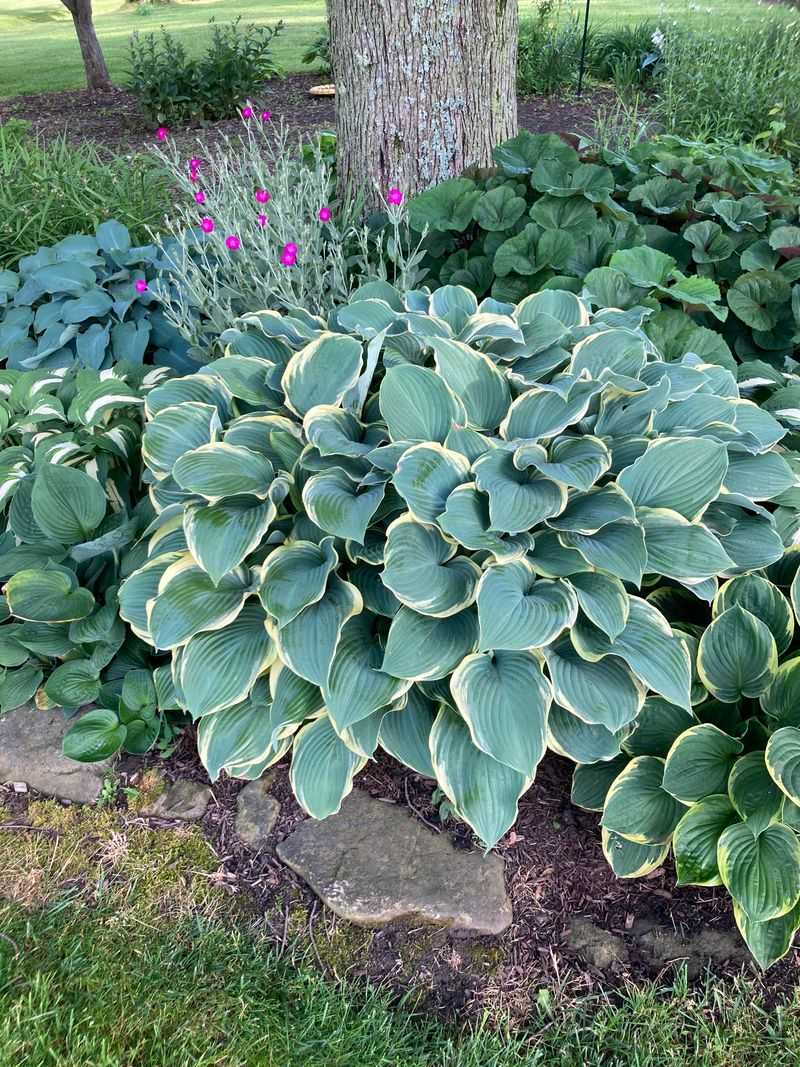
Walk through almost any Ohio neighborhood in summer and you will likely spot hostas thriving in spots where nothing else seems to grow. These leafy perennials have earned their reputation as reliable workhorses of the shade garden, and for good reason.
Their wide, textured leaves come in shades of deep green, blue-green, gold, and variegated combinations that can brighten even the darkest corner under a dense canopy.
Hostas handle root competition surprisingly well, making them one of the most forgiving choices for planting beneath mature trees. When getting started, use a trowel rather than a large shovel to avoid cutting through major roots.
Planting in the gaps between roots, even in smaller pockets of soil, gives hostas enough room to establish themselves.
Ohio summers can bring dry spells, so watering hostas during extended heat helps keep the foliage looking its best. A layer of organic mulch around each plant holds moisture and keeps the soil cooler.
Spacing hostas about 18 to 36 inches apart depending on the variety gives them room to spread naturally over time. Once established, they need very little attention and return reliably each spring with fresh, full growth.
2. Coral Bells Add Color Even In Partial Shade
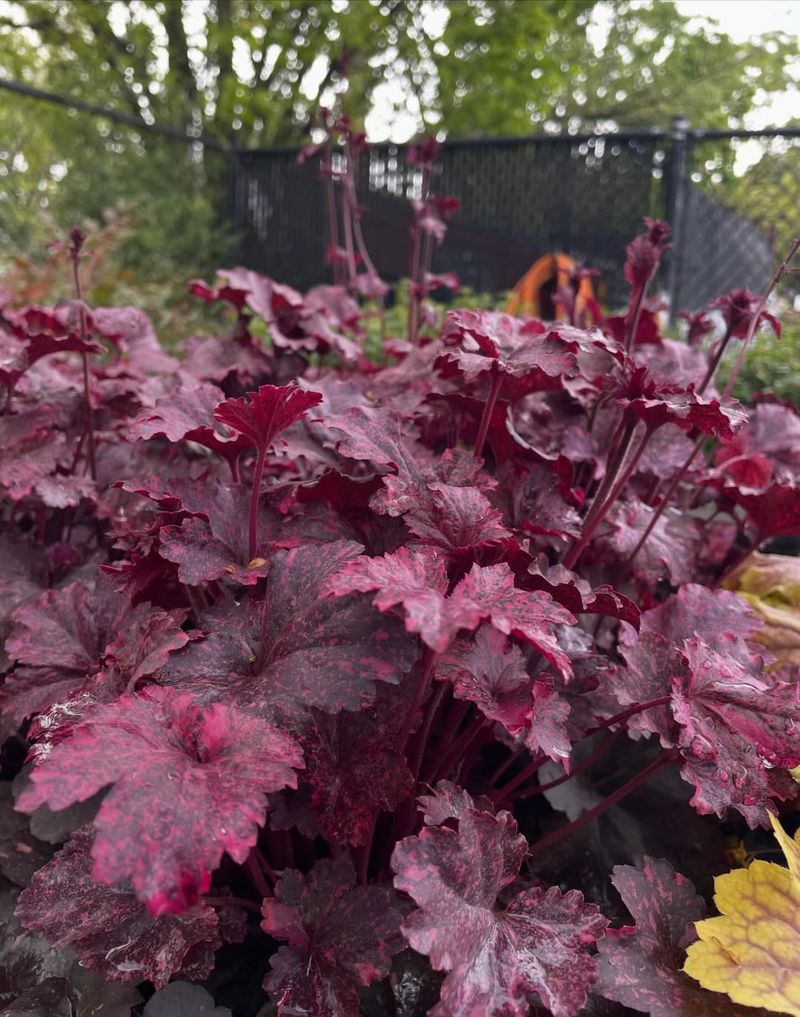
Few plants offer the year-round visual interest that coral bells bring to a shaded garden bed.
Known botanically as Heuchera, these compact perennials are grown as much for their striking foliage as for their dainty flower spikes that rise above the leaves in late spring and early summer.
Colors range from deep burgundy and chocolate to lime green and silver, giving Ohio gardeners plenty of options to mix and match.
Coral bells handle partial shade well, which makes them well-suited for spots that receive a few hours of filtered light beneath a tree canopy.
They prefer well-drained soil, so if your Ohio yard has heavy clay, mixing in some compost before planting can make a noticeable difference.
Plant them about 12 to 18 inches apart to allow air circulation and room for the clumps to fill in gradually.
Watering consistently during the first growing season helps coral bells establish strong roots. After that, they tend to manage with natural rainfall during most Ohio springs and falls.
Dividing the clumps every three to four years keeps them vigorous and prevents the crowns from heaving out of the soil over winter. Hummingbirds are occasionally drawn to the slender flower spikes, which is a nice bonus.
Your Ohio Garden Changes Every Week. Your Plan Should Too.
Gardening in Ohio changes quickly throughout the season. Every Friday you’ll receive a simple weekly plan showing exactly what to plant, prune, fertilize, harvest, and protect so you never miss the right timing.
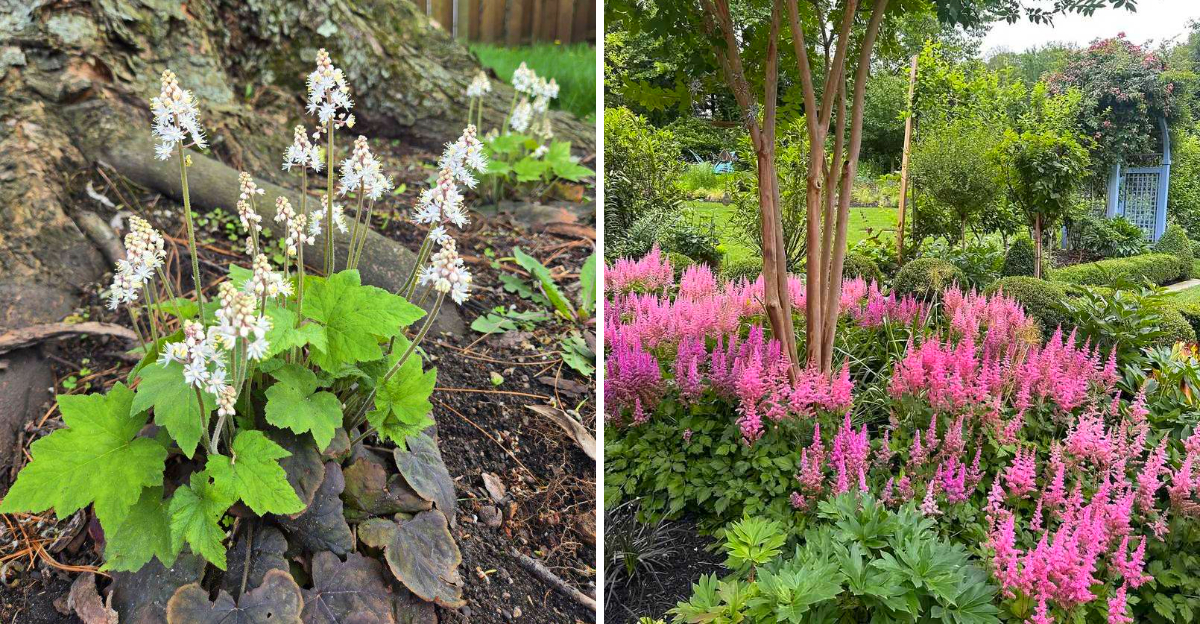
3. Astilbe Brings Soft Blooms To Moist Areas
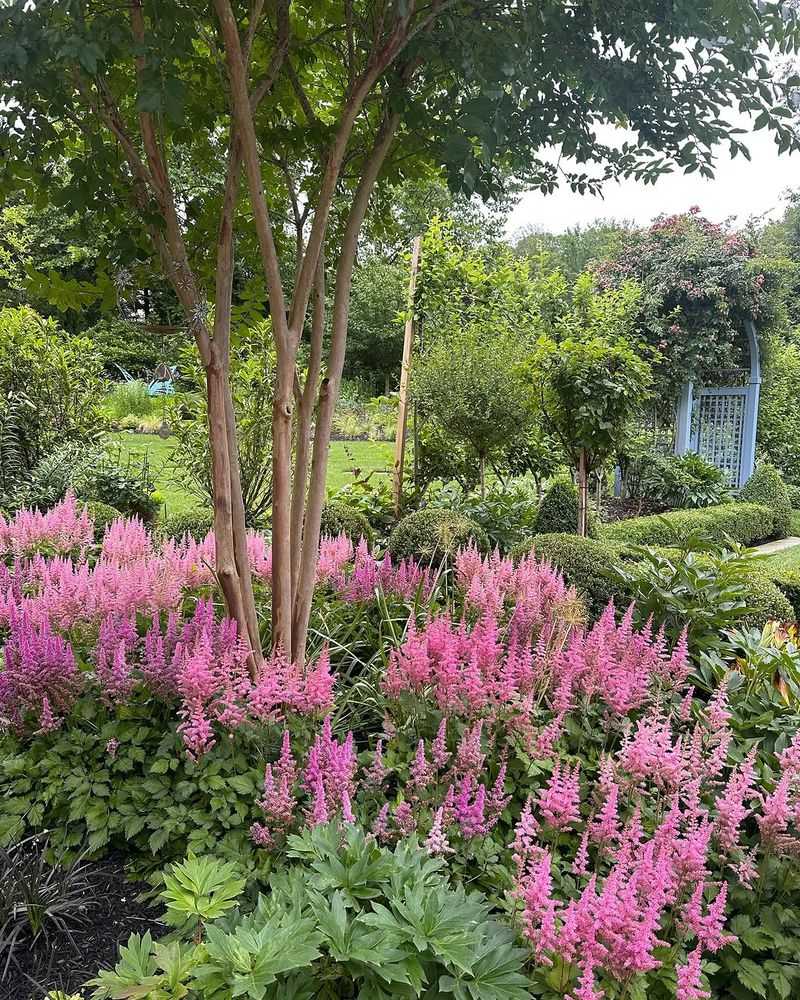
Shaded spots near downspouts, low areas of the yard, or ground that stays moist after rain are often difficult to plant successfully – but astilbe genuinely thrives in those conditions.
Its feathery plumes in shades of white, pink, red, and lavender rise above fern-like foliage and create a soft, almost romantic look that feels right at home in a woodland-style Ohio garden.
Astilbe grows best in partial to full shade and needs consistent moisture to perform well.
Under trees where soil tends to dry out quickly, adding compost to the planting area and mulching generously around each plant helps retain the moisture astilbe depends on.
Planting near trees that allow some filtered light to reach the ground gives the best results, though some varieties manage in deeper shade with reduced blooming.
In Ohio, astilbe typically blooms from late June through August depending on the variety, with earlier and later types available for extending the season.
Spacing plants about 18 to 24 inches apart allows the clumps to fill in without crowding.
The dried flower heads hold their shape through fall and even into winter, adding texture to the garden long after the blooming season wraps up. Dividing clumps every few years keeps growth strong.
4. Bleeding Heart Lights Up Early Spring Shade
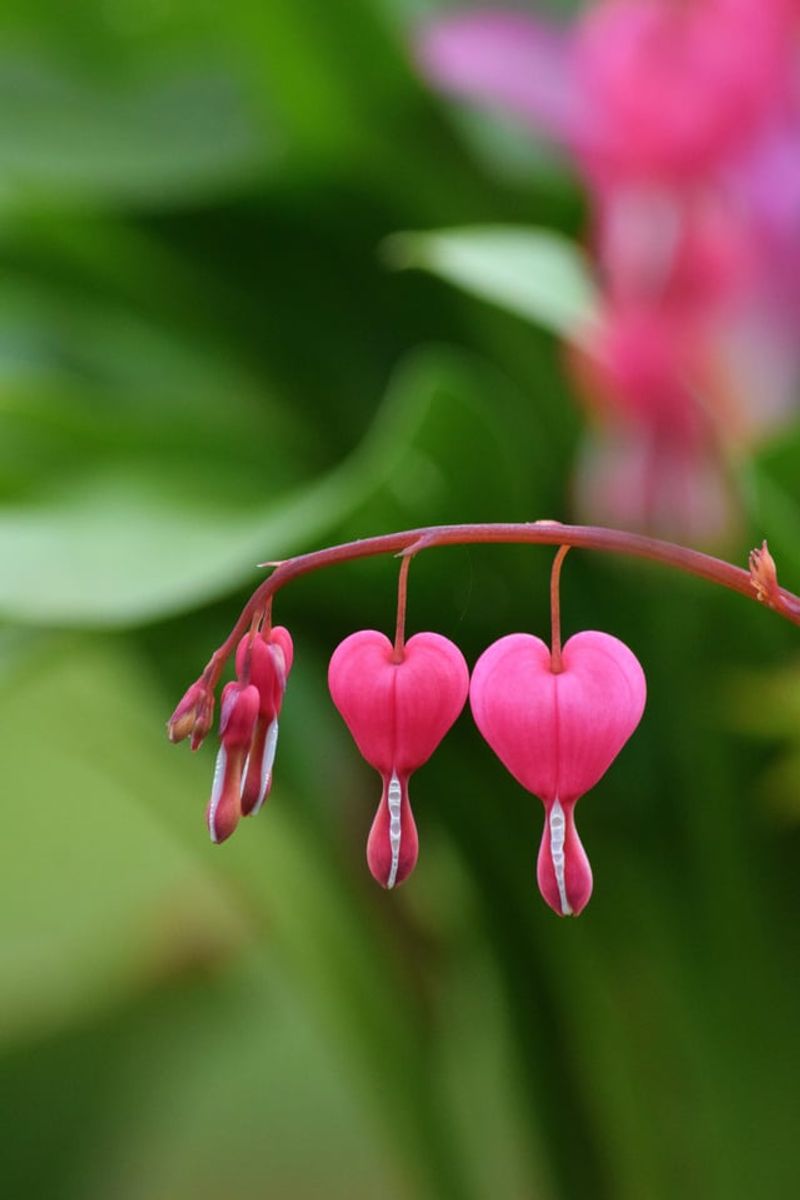
One of the most charming sights in an Ohio garden each spring is bleeding heart coming into bloom before most other shade plants have even pushed through the soil.
The arching stems hung with rows of heart-shaped pink or white flowers appear almost too delicate to be real, yet this plant is a tough, dependable perennial that returns faithfully year after year.
Bleeding heart thrives in partial to full shade and prefers moist, humus-rich soil – conditions that can be mimicked under trees by working compost into the planting area before putting plants in the ground.
It performs especially well beneath deciduous trees in Ohio, where it gets enough early spring sunlight before the tree canopy fills in, then settles into comfortable shade as temperatures rise.
One thing worth knowing is that bleeding heart goes dormant in summer after blooming, leaving a gap in the garden. Planting hostas, ferns, or astilbe nearby fills in those spaces naturally once the foliage fades.
Spacing bleeding heart plants about 18 to 24 inches apart gives each clump room to develop fully.
The classic variety can reach two feet tall, while dwarf types stay more compact and work nicely along the edges of shaded beds beneath smaller trees.
5. Columbine Thrives In Light Shade And Dry Spots
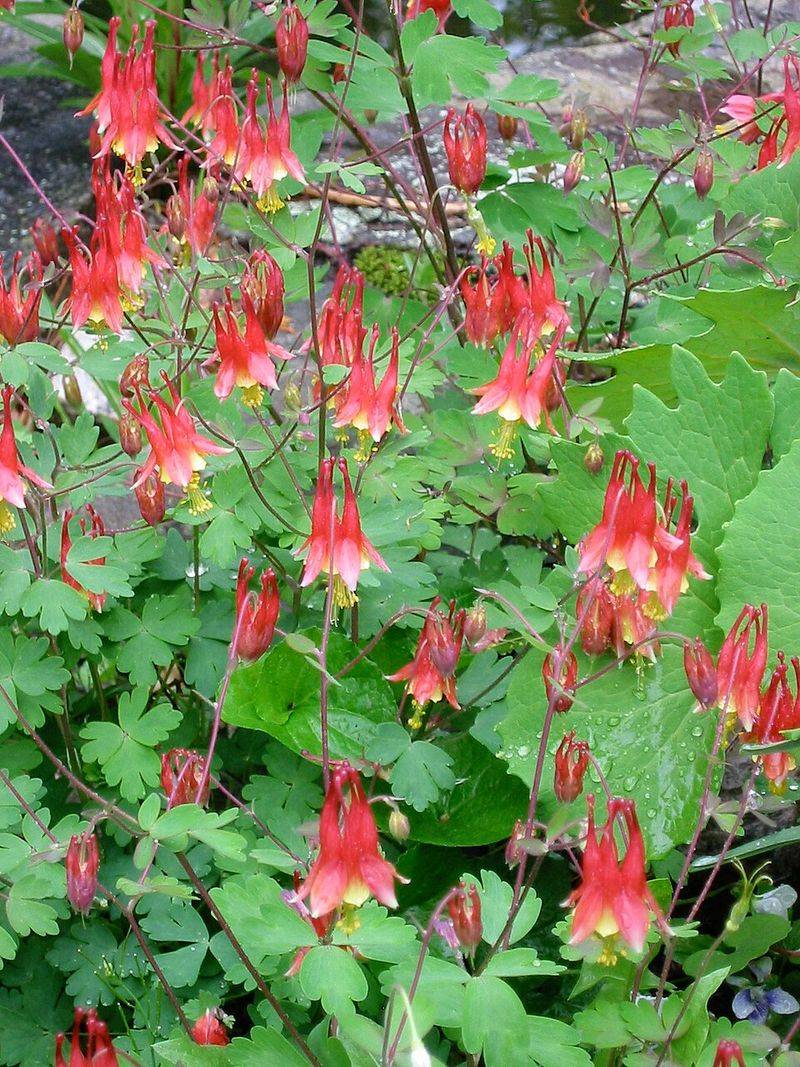
Dry soil under trees is one of the most common complaints Ohio gardeners have about planting beneath mature specimens, and columbine is one of the few flowering plants that handles those conditions without much fuss.
The native species, Aquilegia canadensis, produces elegant red and yellow spurred flowers that attract hummingbirds and early-season pollinators while tolerating the lean, dry conditions that tree roots create.
Columbine grows well in light to partial shade, making it a strong candidate for spots that receive dappled sunlight filtering through a tree canopy for part of the day.
It is not demanding about soil quality, which is actually an advantage when planting under trees where adding large amounts of soil or amendments can be tricky without disturbing roots.
Scattering seed or transplanting small plants in fall or early spring gives the best results.
One of the most appealing traits of columbine is its willingness to self-seed, gradually spreading and filling in gaps around the planting area over several seasons.
Spacing transplants about 12 to 18 inches apart gives each plant enough room while leaving space for self-seeded seedlings to establish.
In Ohio, columbine typically blooms from April through June, providing color during a time when the shade garden is just waking up for the season.
6. Wild Geranium Fits Naturally Under Tree Canopies
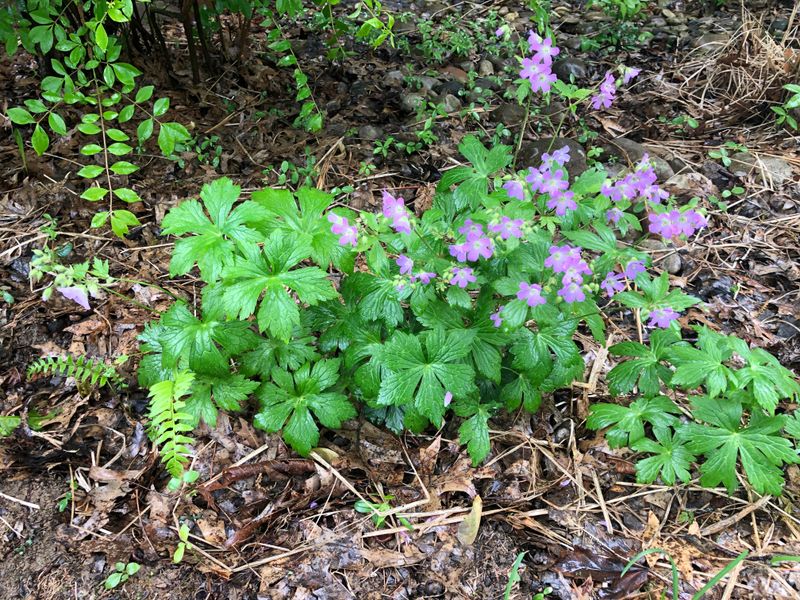
There is something wonderfully unforced about the way wild geranium settles into a shaded yard, as though it has always belonged there.
Geranium maculatum is a native Ohio wildflower that grows naturally in woodland edges and forest floors, which means it is already adapted to exactly the kind of conditions found beneath mature trees in home landscapes.
The lavender-pink flowers appear in late April and May, adding soft color to spots that can feel dull during the early part of the gardening season.
Wild geranium handles a range of light conditions from partial sun to fairly deep shade, and it adapts to both moist and moderately dry soils – a flexibility that makes it especially useful under trees where moisture levels can vary depending on rainfall and root competition.
Planting wild geranium in groups of three or more creates a fuller, more natural-looking drift rather than isolated plants scattered through the bed.
Space individual plants about 12 to 18 inches apart and water regularly during the first season to help them establish.
Once rooted in, wild geranium is quite self-sufficient in Ohio conditions. The foliage often develops reddish tones in fall before fading, adding a subtle seasonal color change that extends its visual interest well beyond the spring blooming period.
7. Foamflower Spreads Gently In Woodland Conditions
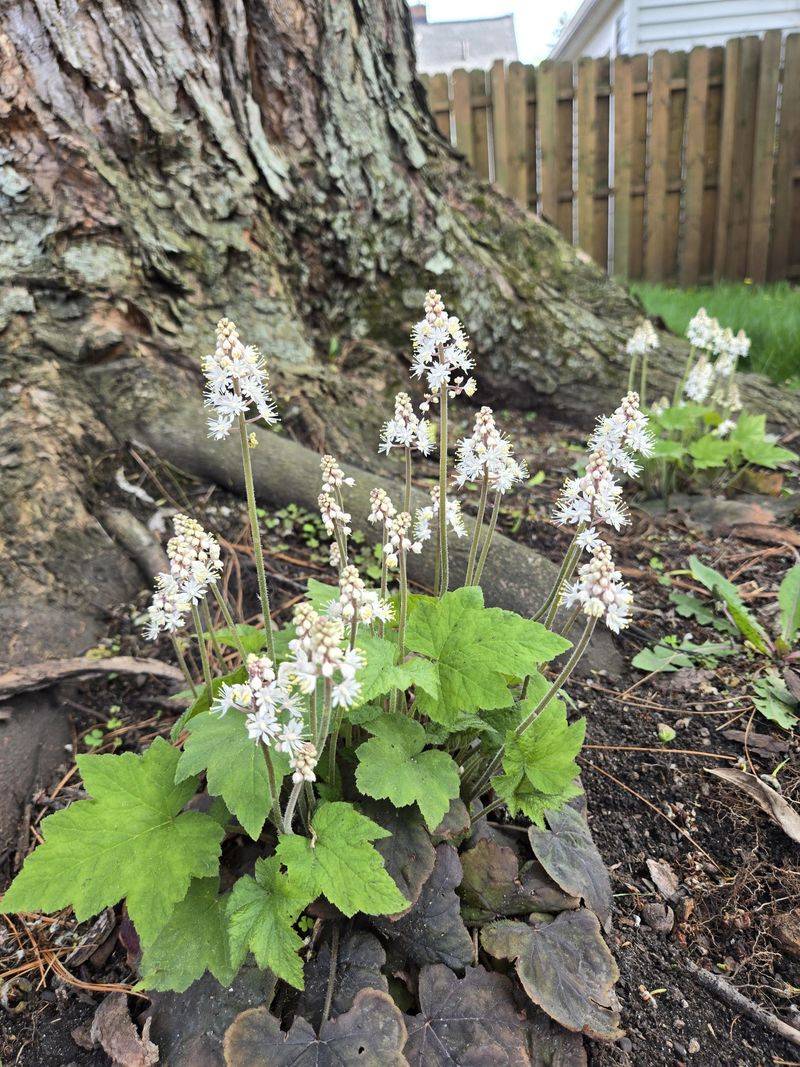
Tucked into the shaded corners of a yard, foamflower has a quiet, understated appeal that grows on you over time.
Tiarella cordifolia is a native perennial that spreads gradually by runners to form a low, attractive groundcover beneath trees, and its frothy white flower spikes in spring give it a soft, woodland charm that feels right at home in Ohio landscapes designed to mimic natural forest edges.
Foamflower thrives in partial to full shade and prefers moist, well-drained soil with plenty of organic matter.
Under trees where soil tends to be dry and compacted, working compost into the planting area before getting started gives foamflower the organic-rich environment it grows best in.
Mulching after planting helps hold moisture and keeps the shallow roots comfortable through Ohio’s variable summer weather.
Unlike more aggressive groundcovers, foamflower spreads at a moderate pace that is easy to manage.
It typically reaches about six to twelve inches in height, making it a low-profile option that works well at the front of a shaded bed or along a pathway beneath trees.
Spacing transplants about 12 inches apart gives runners room to spread and knit together over two to three seasons. The attractive lobed foliage, which sometimes develops bronze or reddish markings, looks appealing well beyond the spring bloom period.
8. Woodland Phlox Adds Early Spring Color
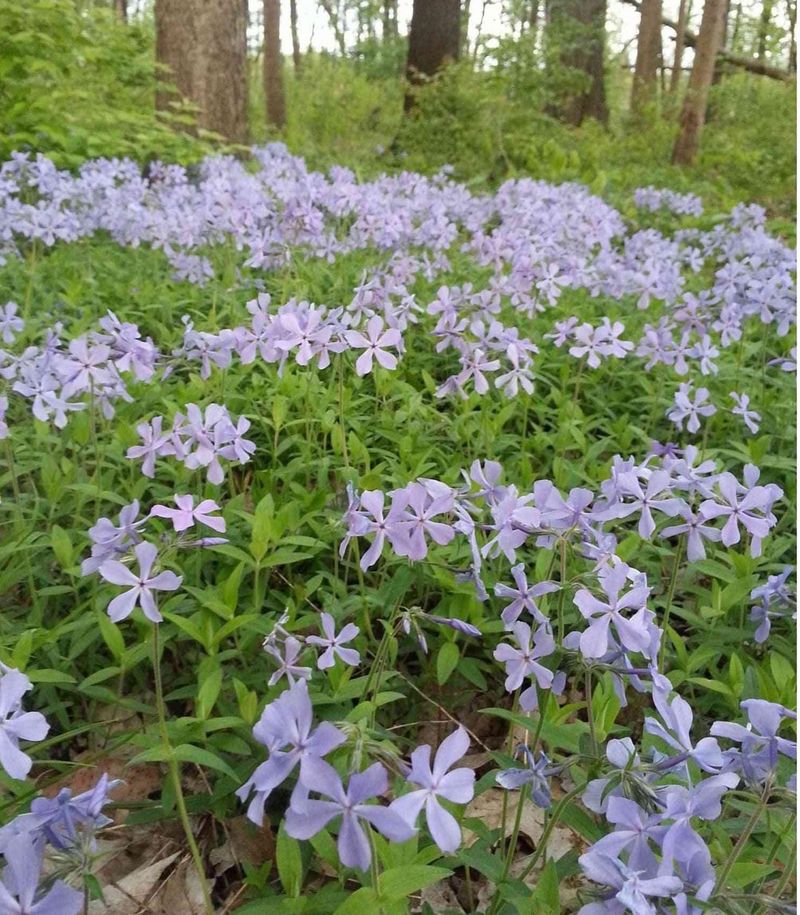
Before many Ohio trees have fully leafed out, woodland phlox puts on a cheerful show of lavender-blue or white flowers that covers the ground in a soft haze of color.
Phlox divaricata is a native wildflower that blooms in April and May, timing its display perfectly to take advantage of the extra light that filters through bare branches in early spring before the canopy fills in overhead.
Woodland phlox grows well in partial to light shade and prefers moist, organically rich soil.
It forms a low spreading mat of semi-evergreen foliage that stays attractive even when the plant is not in bloom, providing ground-level texture in shaded beds throughout most of the year.
The fragrant flowers are a bonus that makes this plant especially enjoyable when it is planted near a walkway or patio where the scent can be appreciated up close.
Spacing plants about 12 to 18 inches apart gives woodland phlox room to spread and fill in naturally over a few seasons.
It pairs nicely with bleeding heart, wild geranium, and hostas in a layered shade garden design.
Watering during dry spells in the first season helps establish strong roots. Once settled in, woodland phlox requires minimal care in Ohio conditions and tends to slowly expand into tidy, flower-covered clumps each spring.
9. Jacob’s Ladder Handles Shade With Ease
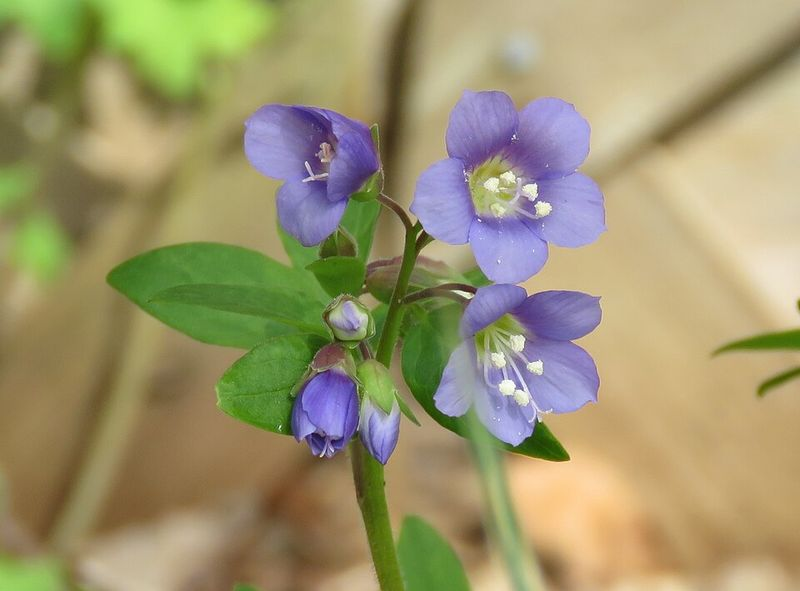
Named for the way its paired leaflets climb the stem like the rungs of a ladder, Jacob’s ladder is one of those plants that earns admiration for both its looks and its low-maintenance nature.
Polemonium reptans is a native Ohio wildflower that produces clusters of nodding blue-purple flowers in spring while maintaining some of the most finely textured, attractive foliage in the shade garden throughout the growing season.
Jacob’s ladder grows well in partial to full shade and handles the dry, root-filled soil conditions under trees better than many other flowering perennials.
It is not a demanding plant when it comes to soil quality, though it does appreciate some moisture during the heat of Ohio summers.
Adding a layer of mulch around established plants helps moderate soil temperature and retain moisture during dry stretches.
Plants typically reach 12 to 18 inches in height, making them a mid-sized option that works well in the middle or front of a shaded bed.
Spacing transplants about 12 to 18 inches apart gives each plant room to develop its naturally mounded shape.
Jacob’s ladder tends to self-seed modestly, gradually increasing the size of the planting without becoming invasive. The fine, ferny foliage remains a visual asset long after the spring flowers have finished for the season.
10. Virginia Bluebells Shine Before Trees Leaf Out
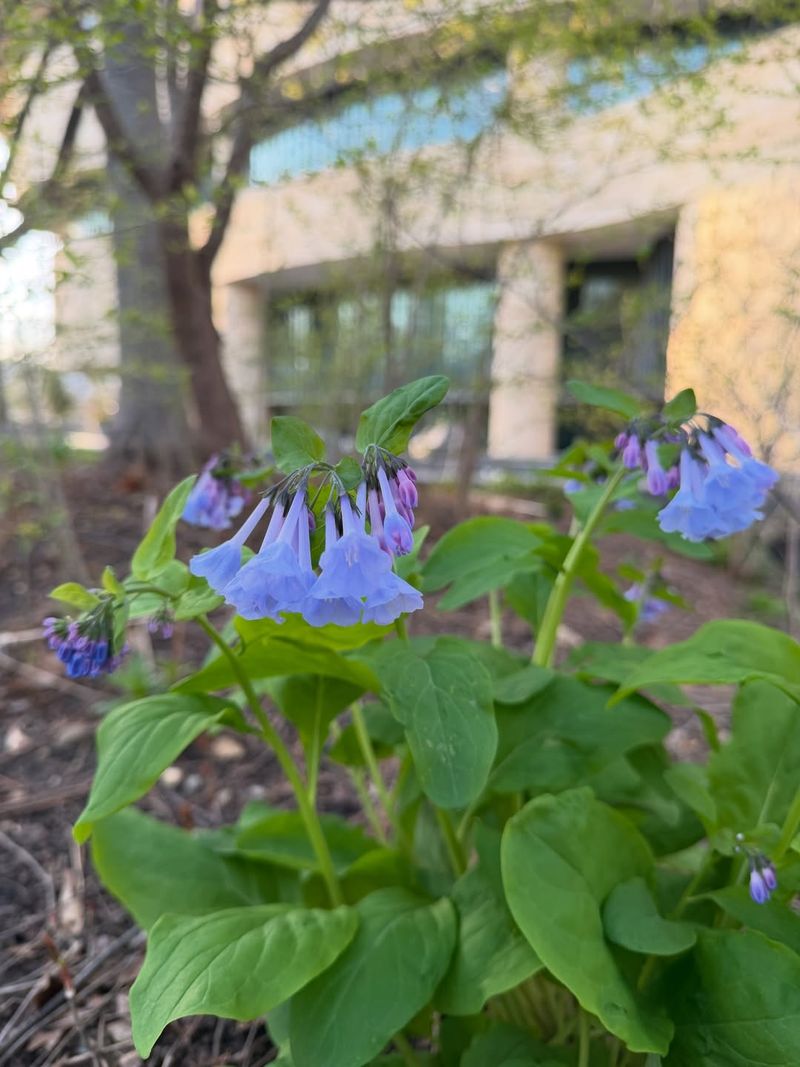
Catching Virginia bluebells in full bloom on a mild Ohio morning in April is one of those garden moments that is genuinely hard to forget.
The clusters of sky-blue, trumpet-shaped flowers appear on arching stems above smooth blue-green foliage, creating a soft, cool-toned display that feels almost luminous in the low spring light filtering through bare tree branches.
Mertensia virginica is a native spring ephemeral, which means it emerges early, blooms quickly, and then goes dormant by early summer as the tree canopy fills in overhead.
This timing actually works in its favor under deciduous trees in Ohio, where it gets the sunlight it needs in spring before retreating below ground for the rest of the year.
Planting alongside hostas or ferns ensures that the space it leaves behind gets filled in naturally.
Virginia bluebells prefer moist, humus-rich soil and partial shade, so working compost into the planting area before getting started is a worthwhile step.
Spacing plants or bulbs about 12 inches apart allows them to gradually naturalize into loose drifts over several seasons.
They grow best when left undisturbed once established, so choosing a permanent spot before planting is a good idea.
The combination of easy care and stunning spring color makes Virginia bluebells one of the most rewarding choices for shaded Ohio yards.