What Happens To Regular Garden Soil In Oregon Pots By Late Summer
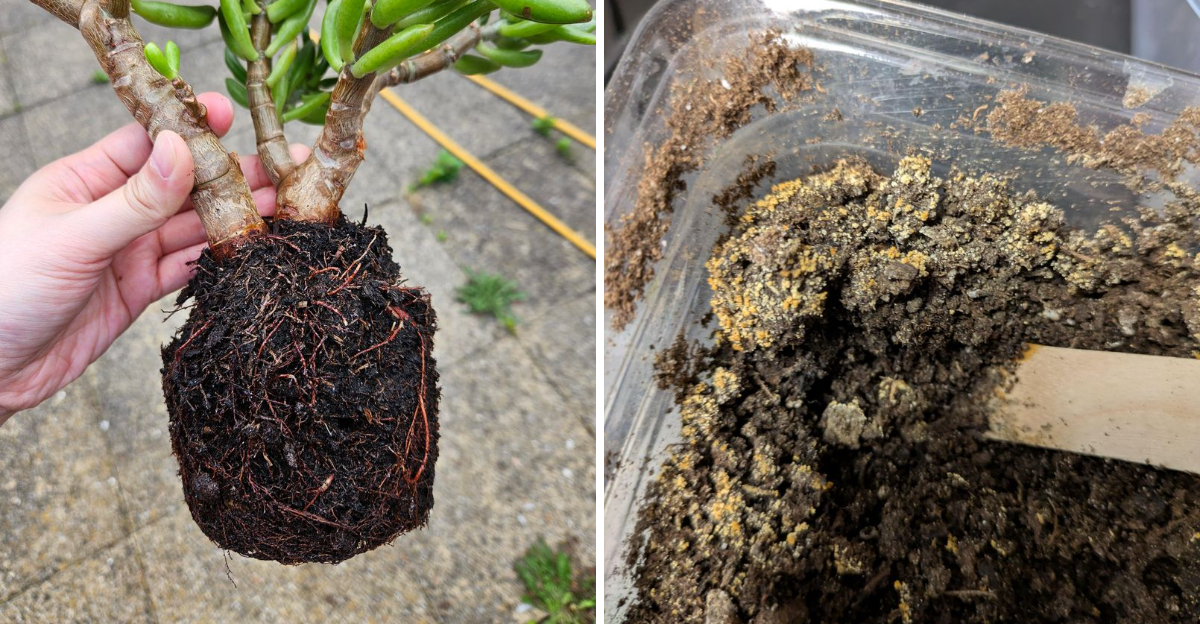
Spring planting went well. The soil looked good. The pot was manageable, the plants were thriving, and the whole container setup seemed like a reasonable decision.
Then August arrived.
The pot weighs forty pounds more than it should. The surface has crusted over. Water sits on top for a while before grudgingly soaking in. The plants look like they are barely keeping it together despite regular watering, and you cannot figure out why.
The answer is almost always the same thing. Garden soil does not behave the same way inside a container as it does in the ground.
The confined space changes everything about how that soil moves, drains, holds air, and supports roots. Oregon’s dry summer stretch accelerates the process and makes every problem worse faster.
None of this is obvious from the outside of the pot. It all happens underground, quietly, over weeks. By the time the plants show it, the soil has already been failing them for a while.
So, what is actually happening in there?
1. It Compacts Into A Dense Brick
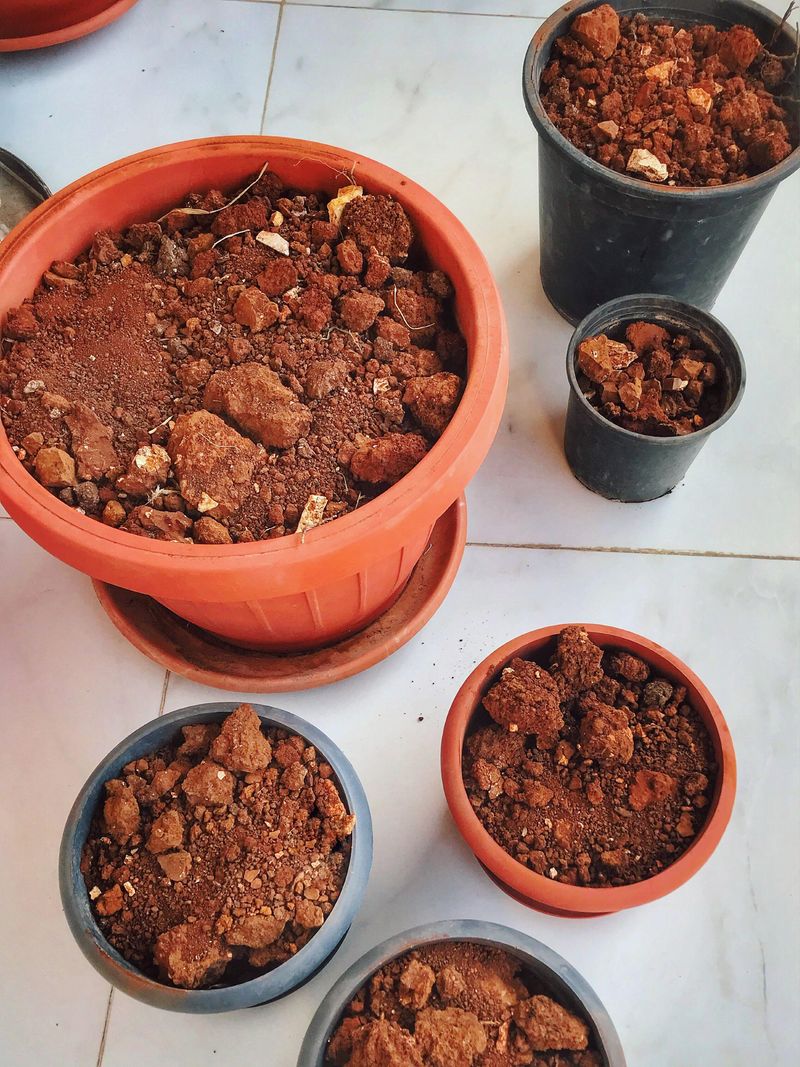
Pick up a pot of regular garden soil in August and you feel it immediately. The container is heavier than it should be and unnaturally solid, like someone poured concrete in there instead of dirt.
That is not your imagination, and it is not a fluke. It is what happens to garden soil when it spends several months in a confined space getting watered repeatedly.
Garden soil works beautifully in a wide open bed because it has room to move, breathe, and support a network of air pockets that roots depend on.
Inside a pot, those air pockets have nowhere to go. Every watering cycle pushes particles closer together. Gravity helps finish the job.
Over weeks and months, the soil collapses inward and forms a dense, compacted mass that gets tighter every time you water.
Roots hit this compacted material and have nowhere to go. They circle the pot, slow down, or stop extending entirely. Water struggles to move through at a normal pace.
You start to see pooling on the surface before the water finally pushes through, which is the soil’s way of telling you it has stopped functioning the way it is supposed to.
The frustrating part is that this process is gradual. By the time the plants look stressed, the soil has already been compacted for weeks.
Breaking up the surface with a chopstick or fork helps for a day or two. But garden soil will always recompact in a container. It was not engineered for this environment, and the physics work against it every time it gets watered.
Garden soil in a pot is essentially doing something it was never designed to do. It works great in the ground. In a container, it spends the whole season turning into something closer to a brick.
Next spring, start with something that was actually built for the job. Your back will also notice the difference.
2. Drainage Slows After Repeated Watering
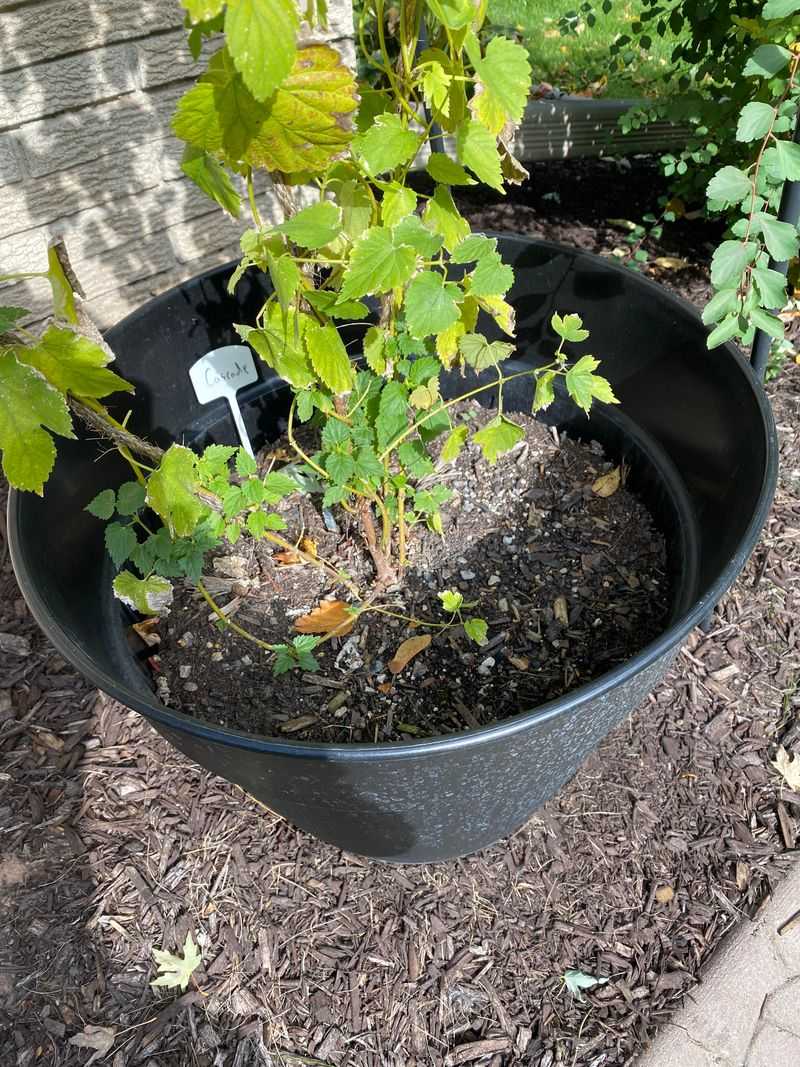
Standing over a pot with a hose, watching water sit on the surface and barely move, is a specific kind of gardening frustration.
Your Oregon Garden Changes Every Week. Your Plan Should Too.
Gardening in Oregon changes quickly throughout the season. Every Friday you’ll receive a simple weekly plan showing exactly what to plant, prune, fertilize, harvest, and protect so you never miss the right timing.
You keep watering, assuming the soil must still be dry. It is not dry. It is dense and has lost the internal structure that allows water to move through it at a useful rate.
Regular garden soil contains clay, silt, and sand particles that drain reasonably well in a garden bed because water can spread outward and move through multiple soil layers beneath.
In a container, water has only one exit: the drainage holes at the bottom. When soil compacts, the internal pathways that water needs to reach those holes close off, and movement slows to a trickle.
Oregon summers run dry and warm from July into September, which means watering frequency increases at exactly the time each cycle is making the drainage problem worse.
More watering, more compression, slower drainage. Roots end up sitting in waterlogged zones even when the soil surface appears dry, which is a confusing situation that leads to both overwatering and underwatering happening simultaneously in the same pot.
The drainage issue is not a minor inconvenience. Roots in poorly draining soil lose access to oxygen, and the root zone becomes a wet, unhealthy environment that compounds the compaction problem over time.
A potting mix with perlite or bark keeps pathways open across the entire season, giving water a clear route through the container and out the drainage holes where it belongs.
Poor drainage in a container is a structural problem, not a watering schedule problem. Adjusting how often or how much you water does not fix compacted soil.
Only starting with the right material prevents the problem from developing in the first place. The drainage holes at the bottom of the pot are only useful if the soil above them lets water reach them.
3. Roots Get Less Air In The Pot
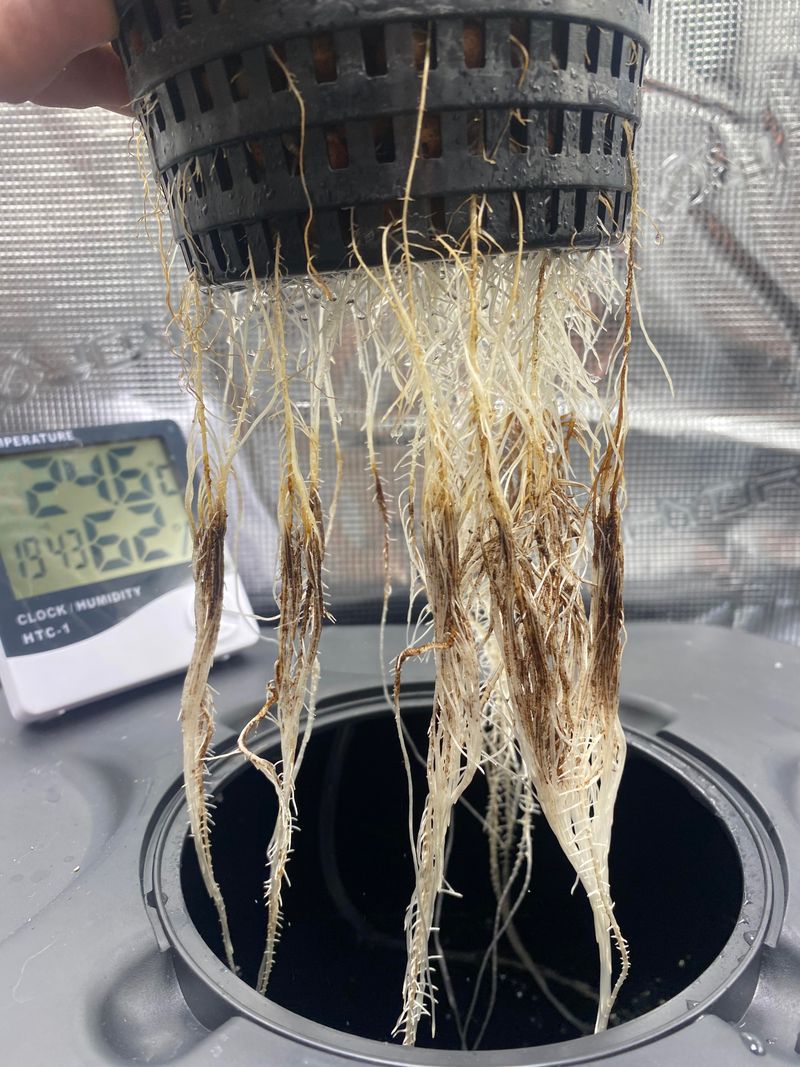
Roots need oxygen. This is one of those plant biology facts that sounds obvious but gets ignored constantly in practice, especially when the thing blocking oxygen access is invisible at the bottom of a pot.
Every root tip requires a steady oxygen supply to absorb water and nutrients efficiently. When soil pore space disappears, the oxygen supply goes with it, and everything the plant is trying to do underground gets harder.
Healthy growing media should hold around 10 to 20 percent air-filled pore space even after watering. Regular garden soil in a container can drop well below that threshold by midsummer as particles pack together and air is squeezed out.
The root zone becomes a low-oxygen environment, and roots start to suffocate in slow motion without any obvious external signal at first.
The plant keeps pulling whatever oxygen it can from remaining air pockets, which masks the problem for a while. Then growth slows. Leaves start to yellow. New shoots stop appearing.
The plant redirects energy from growth to basic survival in a low-oxygen root zone, and it looks like a watering or heat problem from the outside when it is actually a soil structure problem underground.
Oregon gardeners growing tomatoes, peppers, or herbs in containers often blame August heat or inconsistent watering when plants stall.
Compacted, airless soil is frequently the actual cause. Loosening the surface helps briefly. A top dressing of coarse perlite improves gas exchange near the surface.
But a potting mix engineered to hold air space across months of watering is the only solution that works from the first day of the season through the last.
Roots that can breathe absorb nutrients efficiently. Roots that cannot breathe spend their resources on survival instead of growth.
The difference between those two situations is almost entirely determined by what went into the pot in spring. Choose accordingly and the whole summer goes differently.
4. Wet Soil Makes Containers Too Heavy
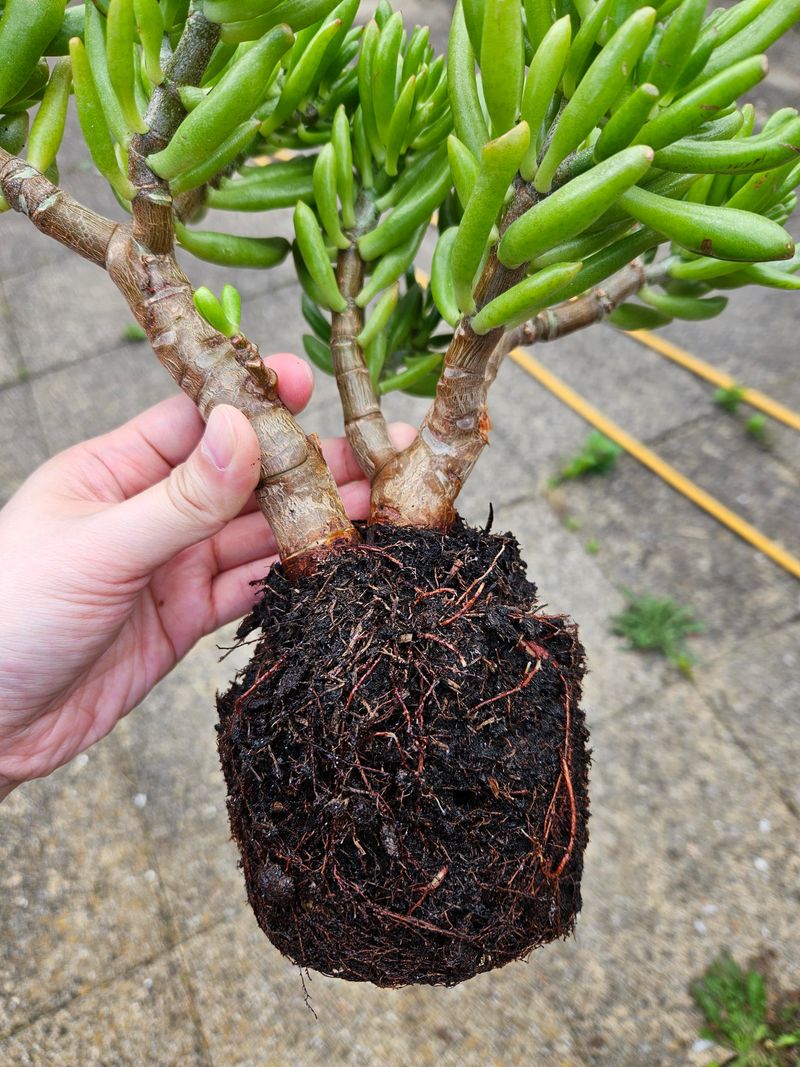
Reaching down to slide a pot into a shadier spot on a hot August afternoon should not feel like rearranging furniture.
But regular garden soil holds a remarkable amount of water weight, and a container that seemed manageable in spring becomes anchored to the deck by midsummer through nothing more mysterious than physics and repeated watering.
A single cubic foot of saturated garden soil can reach close to 100 pounds. A medium-sized pot holding even half that volume becomes a serious lifting challenge when the soil is waterlogged.
Oregon’s dry summer heat means watering frequency is high, which keeps the soil consistently heavy through the months when you most want to adjust container placement for afternoon shade or changing sun angles.
The weight problem has practical consequences beyond the back strain. Heavy containers are harder to bring indoors before early fall rain arrives.
They put concentrated stress on deck boards and patios that may not have been designed for sustained point loading.
Wooden decks in particular can show damage over time from pots that sit in one spot and stay heavy through the wet season.
Weight also provides misleading moisture information with compacted soil. The difference between a saturated pot and a dry pot of garden soil is smaller than you expect, because water moves unevenly through dense material.
Some zones stay wet while others dry out completely, making it nearly impossible to judge actual moisture needs from pot weight alone. A quality potting mix drains faster, dries more evenly, and stays significantly lighter through the whole season.
The pot that required two people to move in August could have been a one-person task all season with the right starting material.
A lighter container is also a healthier container, and easier to give exactly the conditions it needs when conditions change. The physics favor the potting mix every time.
5. Dry Soil Pulls Away From The Edges
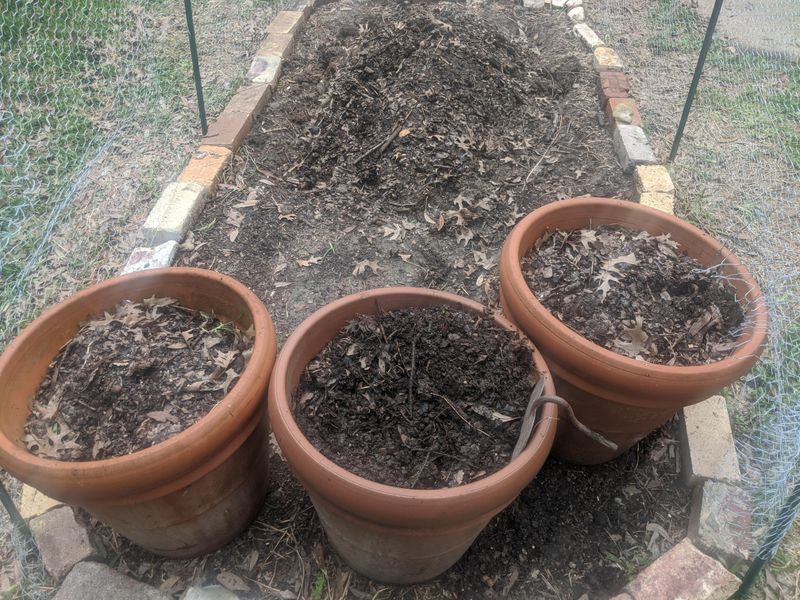
Look closely at the inside edge of a container on a dry Oregon afternoon in late summer and there is often a visible gap between the soil and the pot wall.
That gap looks minor. It is not. It is evidence that the soil has shrunk, and it is about to direct every drop of water you apply straight down the sides and out the drainage holes before any of it reaches the root zone at the center.
Regular garden soil shrinks as it dries. The organic matter contracts, clay particles pull inward, and the whole mass separates from the container walls.
When water hits a pot with this kind of gap, it follows the path of least resistance: down the open space at the edges, out the holes at the bottom, and gone.
The center of the root ball stays dry while you watch water exit the pot and assume the job is done.
This is one of the ways garden soil fails in containers, because it produces a completely plausible-looking result.
Water goes in, water comes out the bottom, plant stays stressed. The logical conclusion is to water more, which does not solve a drainage-gap problem and wastes water on every cycle.
Setting a shrunken pot in a shallow tray of water and letting it rehydrate from the bottom up is the short-term fix. It forces water into the dry center rather than down the edges.
Long term, a potting mix containing coir or peat holds its shape better across dry periods, stays in contact with the pot walls, and distributes moisture evenly from top to bottom rather than channeling it around the root ball.
The gap between soil and pot wall is the container equivalent of a bypass surgery gone wrong: all the flow is going around the organ that needed it.
The center of the root ball is sitting there completely dry while water speeds past it on the edges. A mix that does not shrink this way fixes the problem before it starts.
6. A Crust Forms On The Surface
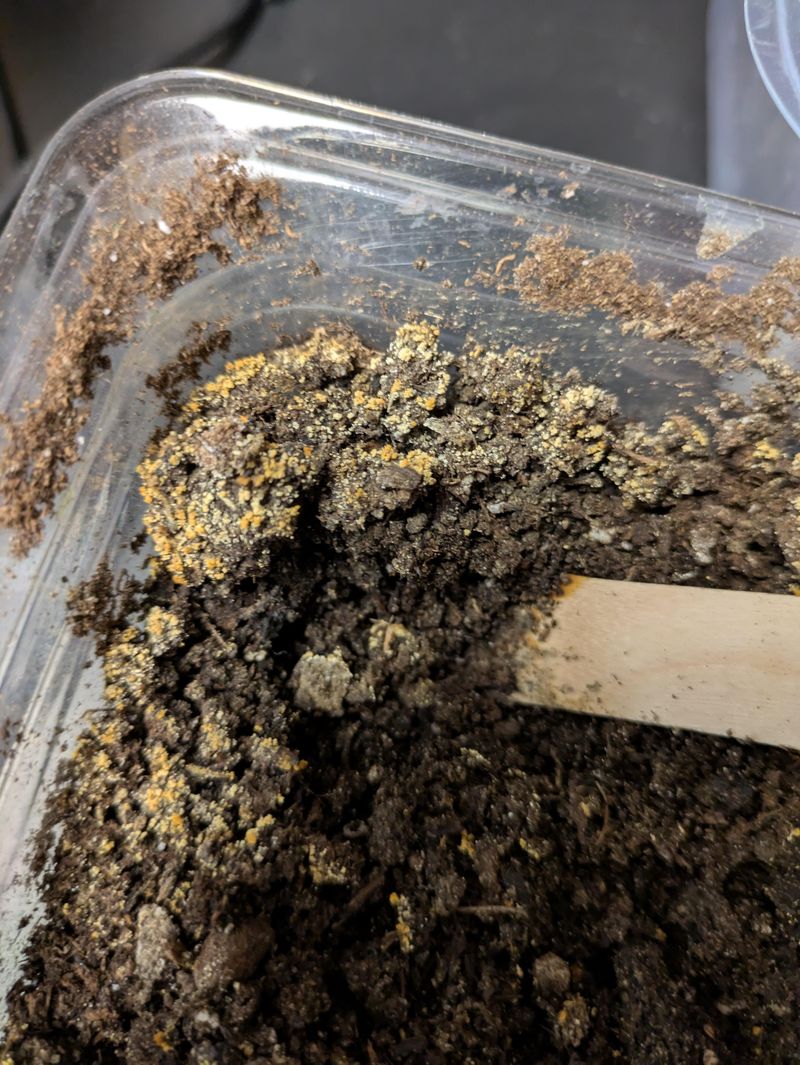
Tap the top of a container that has been sitting in Oregon summer sun for a few months and it sounds almost hollow.
The surface has hardened into a thin, sealed crust that repels water rather than absorbing it.
This is one of the most visible signs that regular garden soil has broken down inside a container, and it creates a watering problem that compounds every day it goes unaddressed.
The crust forms when fine soil particles get carried to the surface by repeated watering cycles and then bake dry in the heat.
As water evaporates, those particles bond into a thin, nearly waterproof layer. Sunlight and warm temperatures accelerate the process.
By August in Oregon, many containers have a surface that sheds water like a sealed sidewalk rather than absorbing it like growing media.
Watering becomes a guessing game. You pour water on the surface, it beads or runs off, you water longer to compensate, and still the moisture does not penetrate the way it should.
Scratching the surface with a chopstick or finger helps briefly before the crust reforms, usually within a day or two of the next watering.
The crust also blocks air exchange at the soil surface, adding to the root oxygen problem already developing deeper in the pot.
Some gardeners add a thin layer of coarse sand or fine gravel on top to prevent crusting, which reduces the problem. But the actual fix is using a potting mix that does not contain the fine mineral particles responsible for forming that seal in the first place.
Good potting mixes stay loose, open, and receptive to water all season without needing a chopstick intervention every few days.
A container surface that needs to be manually broken up every other day is not a gardening routine. It is a symptom that the soil inside is doing something it was not designed for.
The crust is the soil’s way of asking to be replaced, and it is asking politely compared to what the roots are dealing with below it.
7. Nutrients Move Unevenly Through Dense Soil
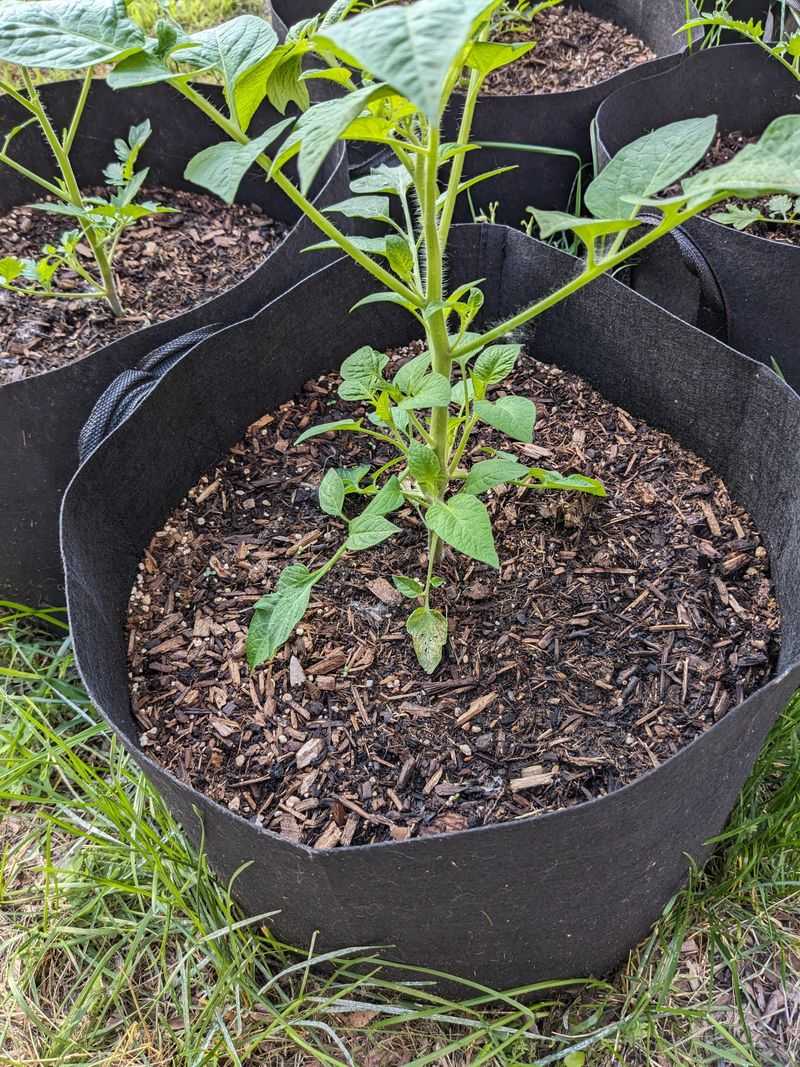
Fertilizing a container plant seems like a simple operation. Apply the product, water it in, nutrients spread through the soil to the roots. That is how it works in healthy growing media.
In compacted garden soil inside a pot, nutrients do not travel smoothly. They concentrate in wet channels, bypass dry zones, and sometimes get flushed straight out the drainage holes before roots have time to absorb them.
Dense, compacted soil has uneven texture throughout. Some areas are packed tightly while others retain small air pockets.
When fertilizer-laced water moves through this material, it follows existing pathways. Roots in areas the water skips over never receive the nutrients applied.
The plant shows signs of deficiency even with a consistent feeding schedule, because the feeding schedule and the soil structure are working at cross purposes.
Overfeeding often follows because the plant still looks hungry. More fertilizer into poorly draining soil leads to salt accumulation, visible as white crusty deposits on the outside of clay pots, which creates a new problem on top of the original one.
The root zone becomes saltier, which makes it harder for roots to take up water through osmosis, and now the plant is simultaneously overfed and underhydrated.
The solution is not more fertilizer or a different fertilizer schedule.
A well-draining potting mix allows nutrients to move evenly through the root zone, reaching all parts of the container and giving every root fair access to the food the plant needs.
The salt cycle stops. The deficiency symptoms stop. And the gardener stops buying more fertilizer to fix a problem that was never about nutrition in the first place.
Compacted soil makes fertilizer into an expensive guessing game where some roots get too much, some get nothing, and the excess eventually comes back as salt damage.
A good potting mix makes fertilizing work the way it is supposed to: evenly, efficiently, and without accumulating problems that require a second amendment to address.
One fix for two problems is always the better deal.