7 Tick-Eating Birds Pennsylvania Gardeners Should Know How To Attract
Something is living in your yard right now, and it is not paying rent.
Ticks in Pennsylvania are not just a nuisance. They are a genuine health concern, and once the warm months hit, they are everywhere.
Many people reach for chemical sprays and call it a day. But there is a more interesting option hiding in the trees, the shrub borders, and the leaf litter at the edge of your property.
Pennsylvania has a lineup of birds that forage through exactly the kind of habitat where ticks thrive. They are not exterminators. They are just hungry, and their appetite works in your favor. The catch?
You have to give them a reason to show up. A few smart changes to your yard can turn it into the kind of place these birds actually want to be. Seven of them, to be specific.
Ready to meet your new pest management crew?
1. Wild Turkeys Forage Through Leafy Edges
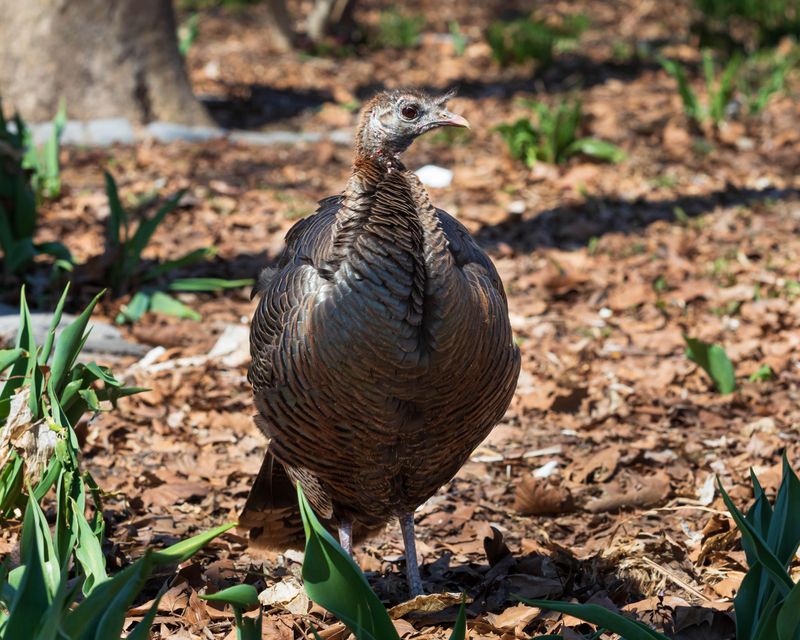
A quiet morning at the edge of your yard. The leaf litter shifts, something large moves through the shadows under the oaks, and then you see it. A wild turkey doing exactly what it does best.
Wild turkeys are serious foragers. They move steadily through leafy edges, using their strong feet to kick up leaves and expose whatever is hiding underneath.
Insects, seeds, berries, acorns, and small invertebrates are all fair game. Ticks moving through ground-level vegetation end up as part of that meal. Turkeys are not specifically hunting them. They just eat what they find, and they find a lot.
To bring wild turkeys to your Pennsylvania property, you need space and the right kind of edge. These birds prefer areas where lawn meets woodland or shrubby cover.
A yard that backs up to a tree line or has a brushy border is ideal. Leaving fallen leaves under trees instead of raking them bare gives turkeys a reason to stop and explore instead of moving on.
Native oaks are a major draw because acorns are a staple food. Berry-producing shrubs like native viburnums also help.
Skip pesticides in foraging areas, since chemical treatments reduce the insect prey turkeys depend on. One more thing: do not feed them directly.
Hand-fed turkeys lose their natural foraging instincts and start showing up on your porch like they own the place. Let the habitat do the work, and the turkeys will show up and handle the rest. No tip required.
2. American Robins Work Open Lawn Areas
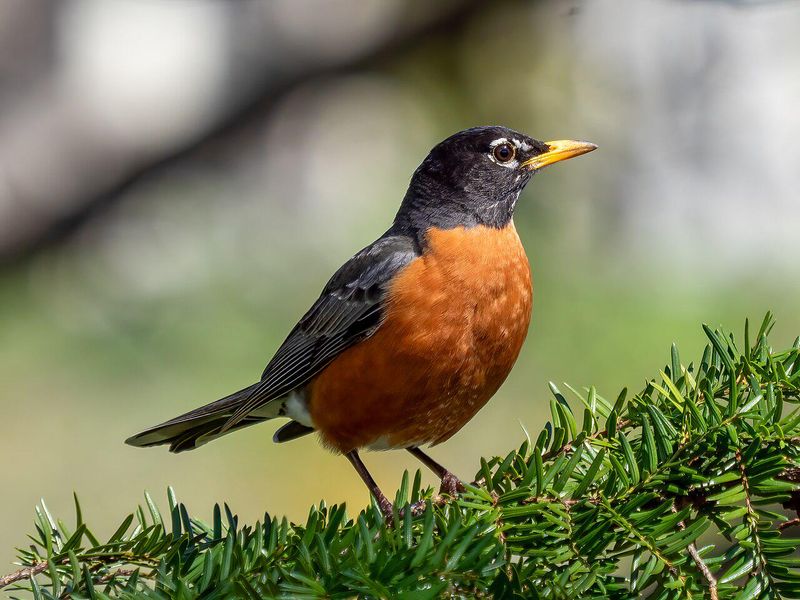
Most people have watched a robin on a dewy morning lawn without realizing just how methodical the whole operation is. A few hops, a pause, a head tilt, and then a quick stab into the soil. It looks casual. It is absolutely not.
American robins are one of the most common backyard birds in Pennsylvania, which means attracting them rarely requires dramatic landscaping changes.
Their foraging style involves scanning the ground and probing into soil, turf, and low vegetation. Earthworms are the main target, but soft-bodied insects near the soil surface make the list too.
Your Pennsylvania Garden Changes Every Week. Your Plan Should Too.
Gardening in Pennsylvania changes quickly throughout the season. Every Friday you’ll receive a simple weekly plan showing exactly what to plant, prune, fertilize, harvest, and protect so you never miss the right timing.
Ticks that wander into open lawn areas get picked up during this process.
Keeping some lawn mowed short encourages robins to forage there, since they prefer visibility while hunting.
A yard that is all short turf with no trees or shrubs nearby, however, does not hold their interest for long. Mixing open lawn with native trees and berry-producing shrubs like serviceberry or dogwood gives robins food options across multiple seasons and a reason to keep coming back.
Robins also need water, and they are not subtle about visiting a good birdbath. A shallow bath placed at ground level or slightly elevated attracts them reliably.
Clean it every few days to keep the water fresh. Skip the broad-spectrum insecticides on your lawn, since those reduce the soil invertebrate populations robins depend on.
A healthy, chemical-light lawn supports robins far better than a perfectly manicured but biologically empty one. Turns out the birds agree with the organic crowd on this one.
3. Eastern Bluebirds Hunt Low Insects
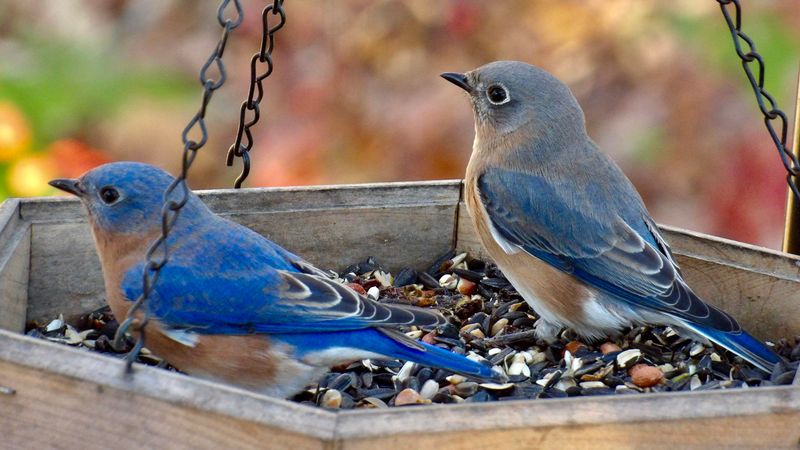
A flash of brilliant blue drops from a fence post to the grass below, faster than you expected, and is back on the perch before you fully registered what happened.
Eastern bluebirds hunt like they have somewhere to be, and they are very good at it.
Bluebirds are aerial hunters that scan from elevated perches and swoop down to snatch insects at or near the ground. Their style is precise and fast, covering a lot of ground in a short time.
During spring and summer they hunt beetles, caterpillars, grasshoppers, and other low-moving insects. Ticks crawling across open ground or through short grass fall within striking range.
Attracting bluebirds requires two things above almost everything else: open habitat and nest boxes. Bluebirds cannot excavate their own cavities, so they depend entirely on boxes placed on poles in open areas with short grass nearby.
Mount boxes on smooth metal poles with predator baffles. Face the entrance hole east or southeast if you can manage it.
Space multiple boxes at least 100 yards apart and monitor them weekly during nesting season to check for house sparrow activity. Sparrows will take over a box fast if you are not watching.
Native plants like dogwood, holly, and native viburnums provide winter berries when insects disappear. Bluebirds reward a little setup effort with years of reliable visits, and the color payoff alone is worth every minute spent installing that nest box.
Some birds look like they were designed to be stared at. Bluebirds are one of them.
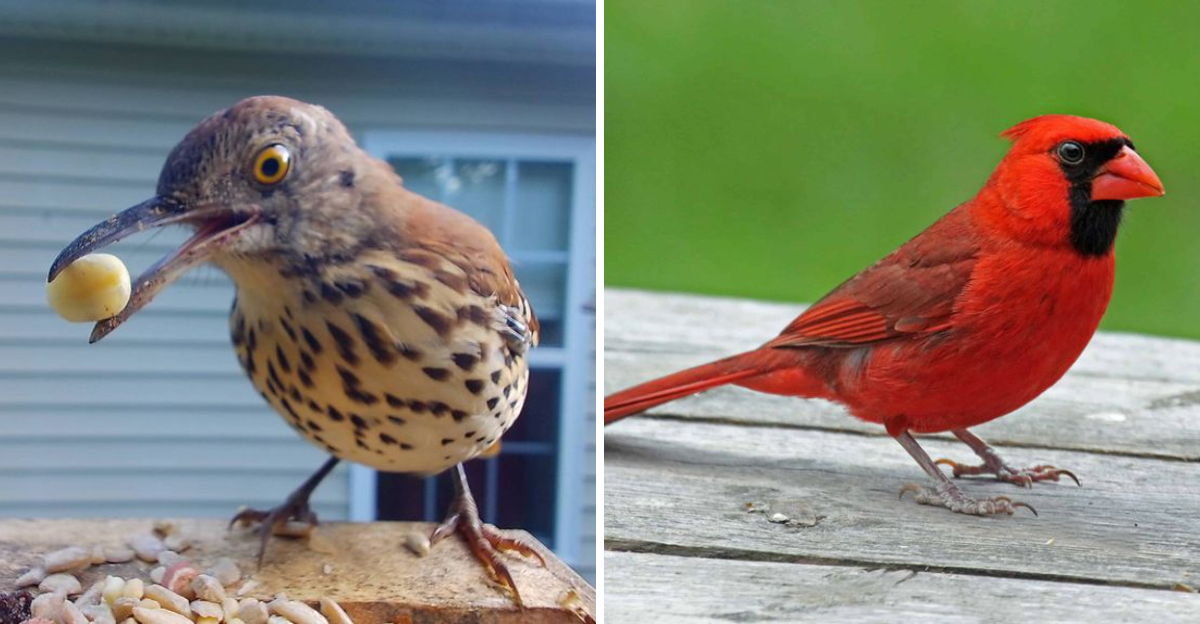
4. Brown Thrashers Scratch Through Leaf Litter
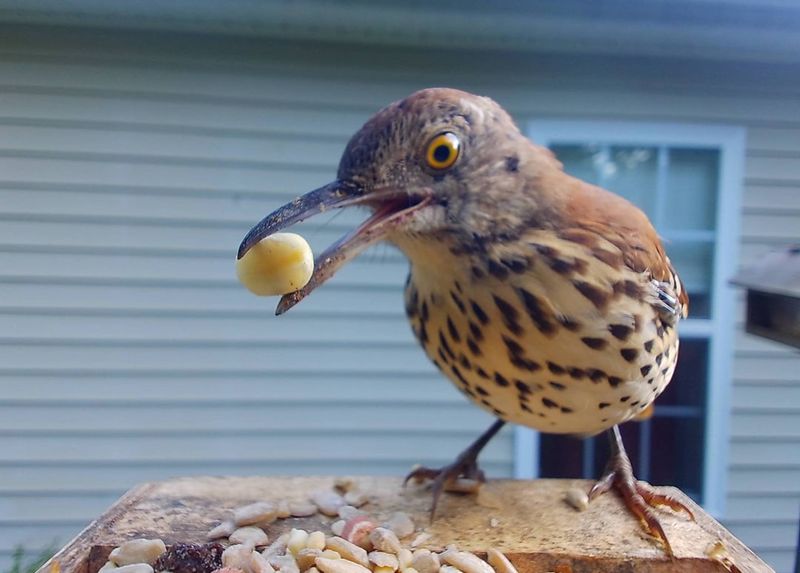
ou will hear a brown thrasher before you see one. A loud, deliberate rustling from inside a shrub border, more energetic than wind and more focused than a squirrel. The thrasher is working the leaf litter, and it means business.
Brown thrashers are ground foragers with real technique.
They use a side-to-side sweeping motion with their long, curved bill to move debris and expose insects, spiders, beetles, and other small creatures hiding below.
Ticks resting in leaf litter near shrub edges land squarely in the path of a thrasher on a foraging run. They cover a surprising amount of ground using this method.
Attracting brown thrashers means thinking in layers. A dense shrub border with accumulated leaf litter underneath is the ideal setup.
Native shrubs like spicebush, native viburnums, and elderberry provide both cover and food. Leave the leaves where they fall under these shrubs instead of cleaning everything out each season. That untidy look is not a flaw. It is the whole point.
Thrashers tend to stay close to cover and will flush quickly if a yard feels too open or exposed. A water source nearby, like a ground-level birdbath or a shallow dish tucked near the shrub edge, encourages them to linger.
Put the leaf blower away when it comes to your shrub beds. The messy, layered habitat you might be tempted to tidy up is exactly what makes this bird decide your yard is worth staying in. Embrace the mess. The thrasher will thank you.
5. Gray Catbirds Search Dense Shrubs
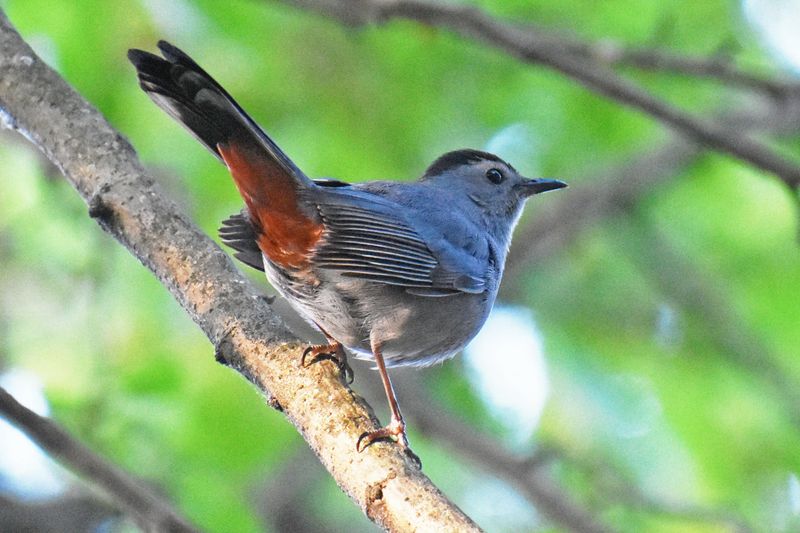
Gray catbirds have a reputation for being bold and a little loud, and that reputation is completely deserved.
Named for a mewing call that sounds remarkably like a cat, they are confident foragers that move through dense shrubs with speed and zero hesitation.
Catbirds eat both insects and berries, which makes them flexible across the growing season. During summer they pick insects from foliage and the ground beneath shrubs.
Ticks hiding in low vegetation near shrub bases get encountered during this foraging activity. In late summer and fall, catbirds shift heavily toward berries to fuel up for migration, so a well-planted shrub border keeps them coming back through multiple seasons.
Attracting catbirds means leaning into a slightly wilder yard aesthetic. They love thick shrub layers with multiple native species growing close together.
Spicebush, native viburnums, dogwood, and elderberry are excellent choices. Leave some areas of the shrub border intentionally dense and untrimmed. Catbirds nest low in thick vegetation and need that cover to feel secure enough to stay.
A water feature near the shrub edge is a reliable draw. Catbirds visit birdbaths regularly during hot weather and are not shy about it.
One more fun fact about these birds: they actively remove brown-headed cowbird eggs from their nests, making them genuinely clever neighbors.
Reduce pesticide use in shrub areas to keep the insect populations healthy. A yard that feeds and shelters catbirds well might just be treated to a private mewing concert every morning. Some people find that charming. Others learn to find it charming.
6. Eastern Towhees Kick Through Ground Cover
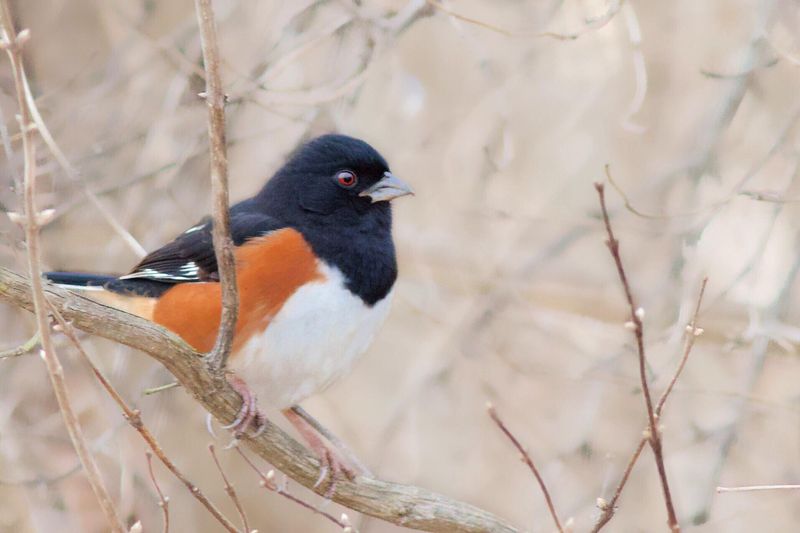
If you have ever heard a sudden, explosive rustling from the leaf litter near a brushy thicket and found nothing but scattered leaves when you looked, a towhee was almost certainly the one responsible. These birds have a move.
Eastern towhees use a distinctive two-footed backward hop-scratch that sends leaves flying in both directions simultaneously.
They spend most of their time on or very near the ground, working through thick leaf litter, brush piles, and tangled ground cover with real determination.
Insects, seeds, berries, and small invertebrates all end up in the mix. Ticks moving through leaf litter and ground cover are exactly the kind of prey that this energetic scratching uncovers.
Brushy habitat is non-negotiable for towhees. They nest on or very close to the ground in areas with dense shrubs, fallen branches, and thick leaf litter.
A yard with a brushy corner, a shrub border with accumulated debris, or a deliberately messy edge near a fence or tree line is the kind of place towhees genuinely want to be.
Native low-growing shrubs like native blueberry, spicebush, and shrubby St. John’s wort help create the right structure. Leaving brush piles in out-of-the-way corners adds both cover and foraging habitat.
Towhees rarely visit feeders directly, but they will pick up spilled millet from the ground beneath one. Their bold rufous, black, and white coloring makes spotting one a highlight of any backyard birding session.
Not bad for a bird whose main job is kicking leaves around all day.
7. Northern Cardinals Pick Insects Near Shrubs
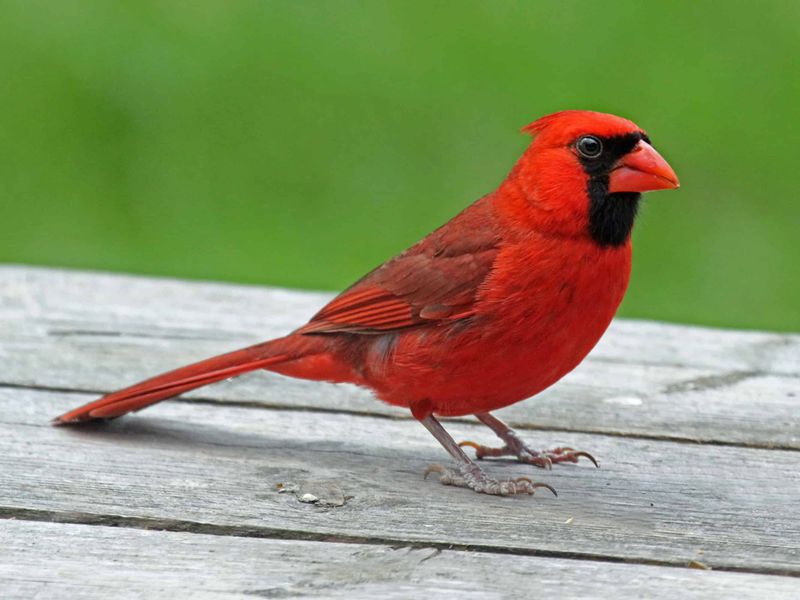
Everyone knows cardinals as seed eaters, and for much of the year that is accurate.
But during spring and summer, cardinals shift significantly toward insects, especially when they are raising young.
Nestlings need protein, and parent cardinals spend long hours hunting through shrubs, low branches, and the ground beneath dense cover to deliver it.
Cardinals forage by hopping along branches and picking insects from foliage, bark crevices, and the ground below.
They are not aggressive scratchers like towhees or thrashers, but they work through shrub edges methodically and cover real ground.
Ticks resting on low vegetation or moving through shrub bases can get picked up during this activity, particularly during the busy nesting season when feeding pressure is highest.
Creating good cardinal habitat means layering your plantings. Cardinals love shrubs that offer both cover and food in the same place.
Native viburnums, native roses, dogwood, and spicebush all fit that description. Dense evergreen shrubs like native hollies provide year-round cover and winter berries that cardinals visit reliably when other food sources dry up.
Cardinals are also comfortable at feeders offering sunflower seeds. Place feeders near shrub cover rather than in the middle of open space, since cardinals prefer to have an escape route close by.
Add a nearby water source and the habitat is essentially complete. Female cardinals, with their warm brown and rosy tones, are just as worth watching as the brilliant red males.
Both genders sing, which means a well-set-up cardinal yard is also a yard with a genuinely good soundtrack all four seasons. That is not a bad deal for a few native shrubs and a birdbath.