7 Butterfly-Friendly Michigan Perennials That Bring Color And Movement All Season
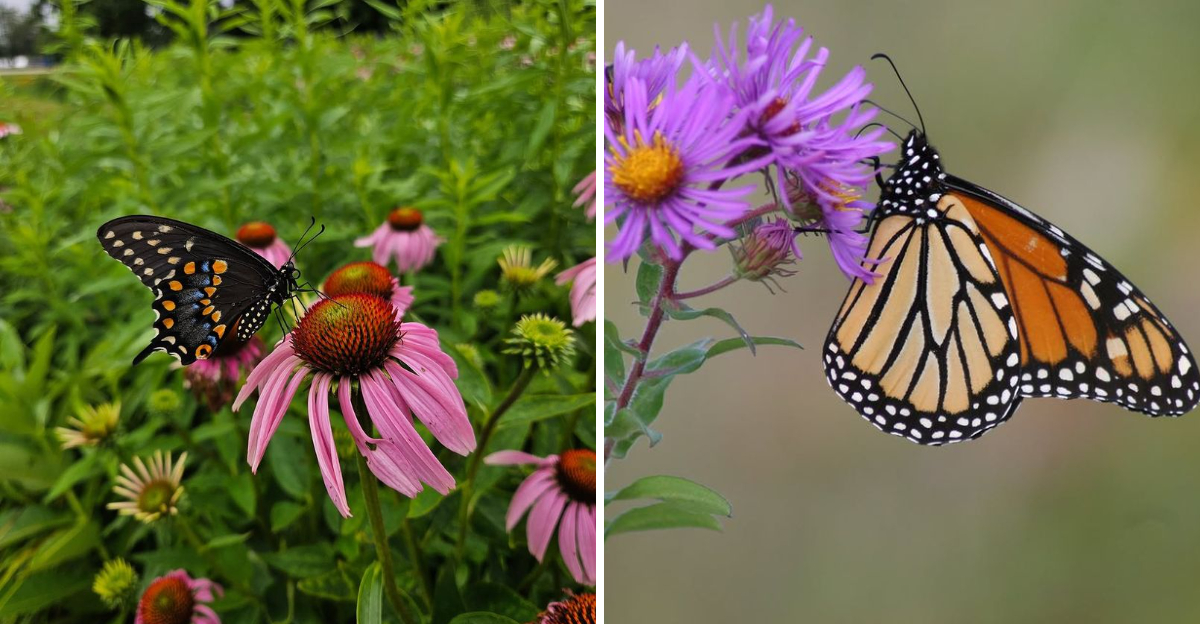
You planted the flowers. You did the work. And somehow, the butterflies still treat your garden like a rest stop they blow past on the highway. Sound familiar?
Michigan summers have real potential for a yard that flutters from June all the way to October, but most garden plans run out of nectar by August and leave late-season visitors with nothing.
The fix is not complicated. It just requires knowing which plants actually carry the whole season instead of burning bright for three weeks and disappearing.
Seven perennials do this job better than anything else in a Michigan garden. They are tough, they come back every year, and they work from the moment monarchs start moving through until the first frost shuts everything down.
No special soil required. No master gardener certification needed. Just the right plants in the right spots, and your yard becomes a place butterflies genuinely want to stay.
1. Butterfly Weed Brings Monarch Traffic
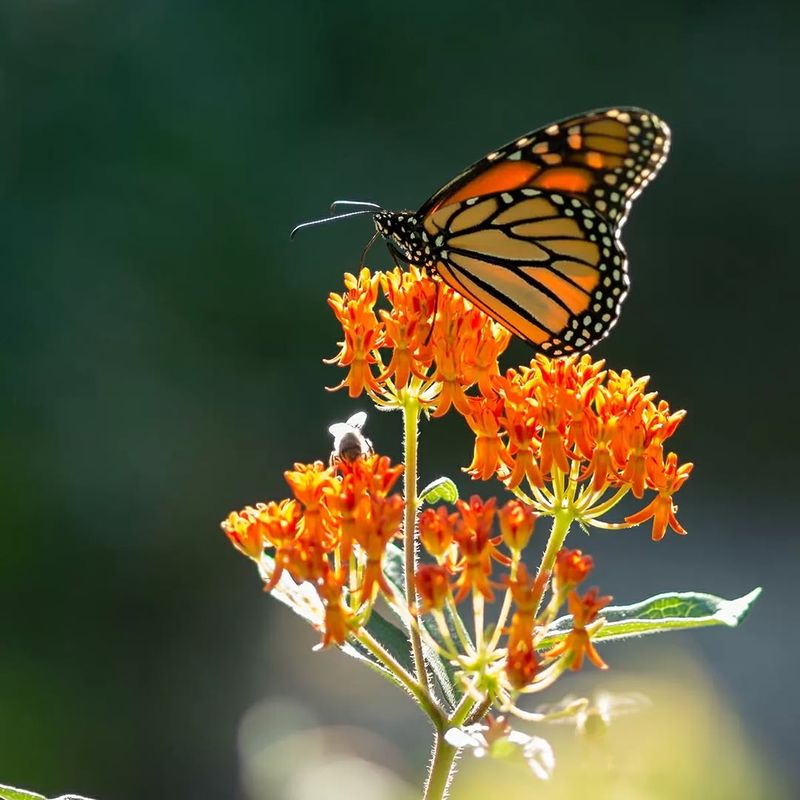
That patch of blazing orange in a sunny border is not just pretty. It is one of the most strategically important plants a Michigan gardener can grow, and monarchs know it before you even finish planting.
Butterfly weed, known scientifically as Asclepias tuberosa, is both a nectar plant and a host plant. Monarchs do not just stop by for a quick drink.
They lay eggs on the leaves, the caterpillars feed on the foliage, and the whole life cycle plays out right there in your border. It is a full-service monarch operation.
Swallowtails, fritillaries, and skippers also visit regularly, so the traffic does not stop with one species.
Blooms appear from late June through August, giving you several weeks of that signature orange. The flowers cluster in flat-topped bunches that are easy for butterflies to land on, which matters more than most gardeners realize.
Plant it in groups of three or more for maximum visual impact and to give monarchs a reliable landing zone they can find from a distance.
Butterfly weed thrives in dry, well-drained soil and full sun, which makes it a smart pick for spots where other plants have given up.
One practical note worth remembering: it emerges late in spring, so mark its location to avoid disturbing it before it shows up.
Once established, it is drought-tolerant, long-lived, and returns faithfully each year without asking much in return. Low maintenance and high drama is a combination worth making room for.
2. Swamp Milkweed Supports Moist Garden Spots
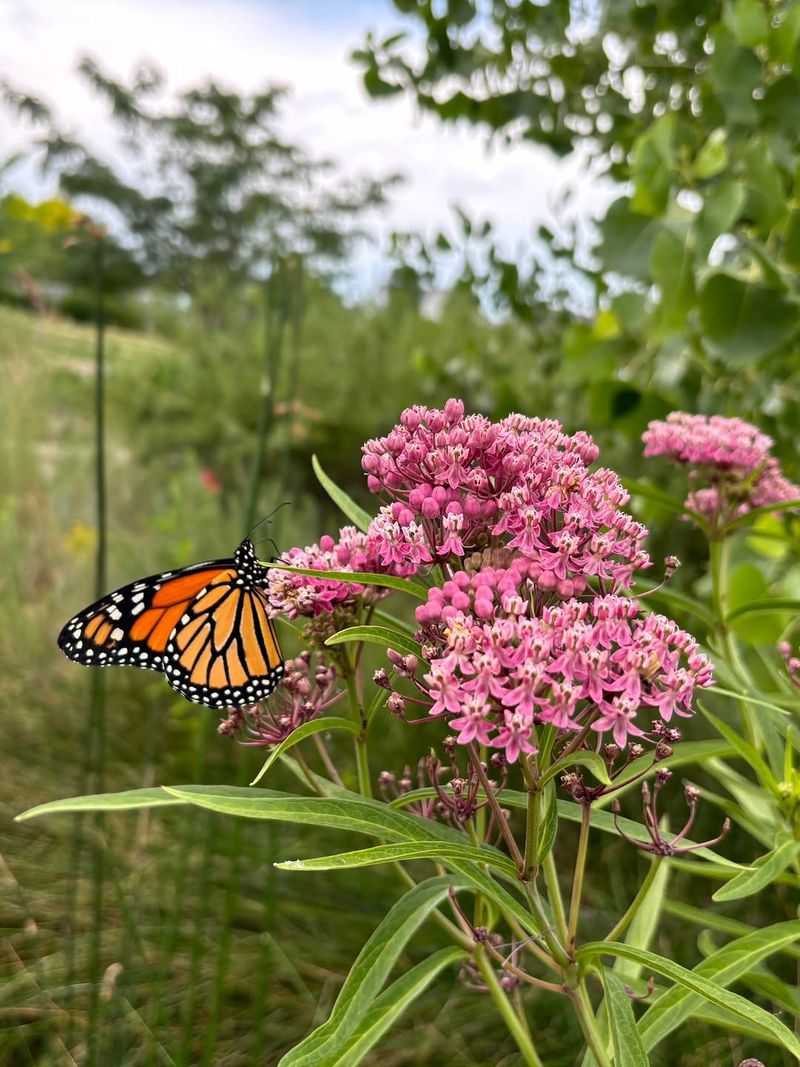
Not every Michigan yard is dry and sun-baked, and not every plant wants to be.
Low spots, rain gardens, and areas near downspouts that stay damp after a storm are not problem areas. They are opportunities, and swamp milkweed was practically designed for them.
Asclepias incarnata naturally grows along stream banks and wet meadows across Michigan. Soggy soil is not a stress condition for this plant. It is home turf.
The blooms are a warm rosy pink that open from mid-July into August, sitting in rounded clusters on stems that reach four to five feet. That height adds a soft, airy vertical element to a garden that might otherwise stay low and dense.
Your Michigan Garden Changes Every Week. Your Plan Should Too.
Gardening in Michigan changes quickly throughout the season. Every Friday you’ll receive a simple weekly plan showing exactly what to plant, prune, fertilize, harvest, and protect so you never miss the right timing.
Like butterfly weed, this species is both a monarch host plant and a nectar source. It pulls double duty in a pollinator-friendly yard without asking for anything extra.
Monarchs are the stars, but swallowtails, great spangled fritillaries, and numerous bee species work the flowers throughout the day too. A single well-placed clump can stay busy from morning to evening on a warm July afternoon.
Plant swamp milkweed in full to partial sun alongside other moisture-loving perennials like Joe Pye weed or cardinal flower for a layered, pollinator-rich border that makes use of the spots most gardeners try to drain or pave over.
Cut stems back in late fall after the seed pods have opened and released their fluffy seeds. New growth returns reliably each spring, and clumps gradually expand to fill the space. Wet corner officially redeemed.
3. Purple Coneflower Keeps Summer Color Going
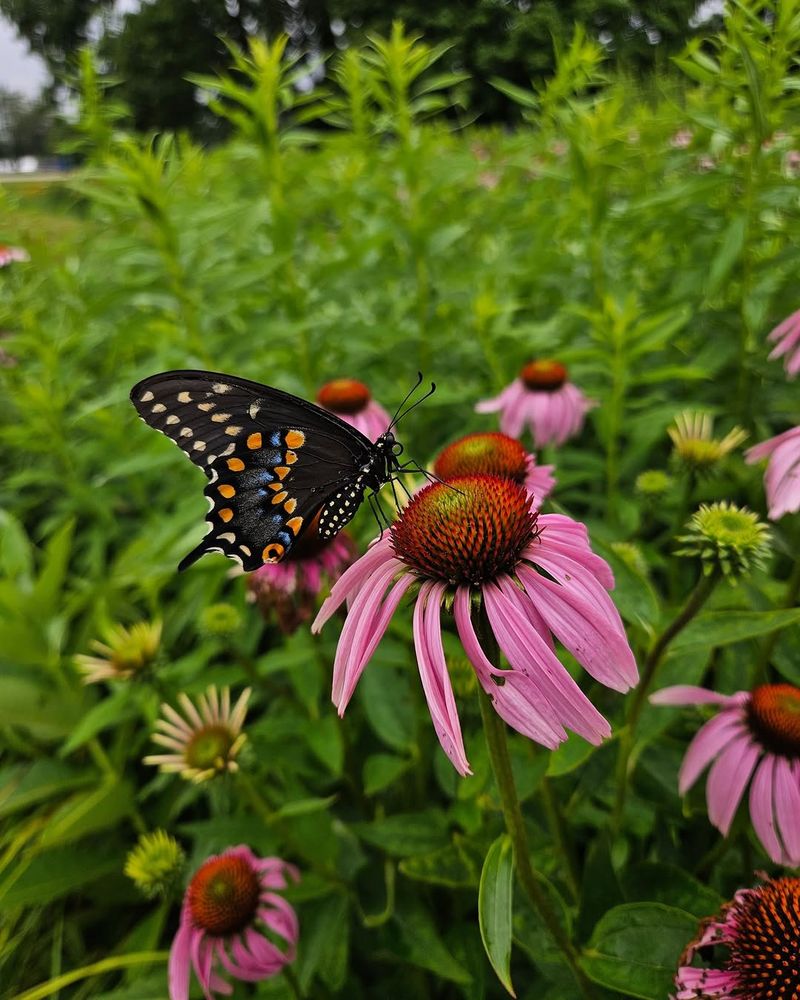
Walk through almost any Michigan native plant garden in July and purple coneflower is almost certainly there, holding court in the summer heat while everything around it starts to look a little tired.
Echinacea purpurea is a workhorse, and it knows it.
The cheerful daisy-like flowers with their spiky orange-brown centers bloom from late June through September and refuse to quit even when temperatures climb.
Swallowtails, painted ladies, fritillaries, and skippers all visit regularly. The open, flat petals give butterflies easy access to nectar, which is a detail that sounds small but actually determines how many species show up and how long they stay.
What makes coneflower especially valuable is how its usefulness extends past bloom. As summer winds down and the petals fade, the seed heads stay on the plant and become a food source for goldfinches and other birds.
You get butterfly traffic through September and bird activity through winter, all from one plant that largely takes care of itself.
Purple coneflower thrives in full sun and average to slightly dry soil, which makes it adaptable to most Michigan garden conditions.
It tolerates clay, handles drought once established, and spreads slowly by self-seeding to fill gaps over time. Plant it in groups and resist the urge to cut everything back in fall.
Leaving the seed heads standing through winter adds structure to the garden during the quieter months and gives you a head start on new plants come spring. Doing less has rarely looked this good.
4. Wild Bergamot Draws Busy Wings
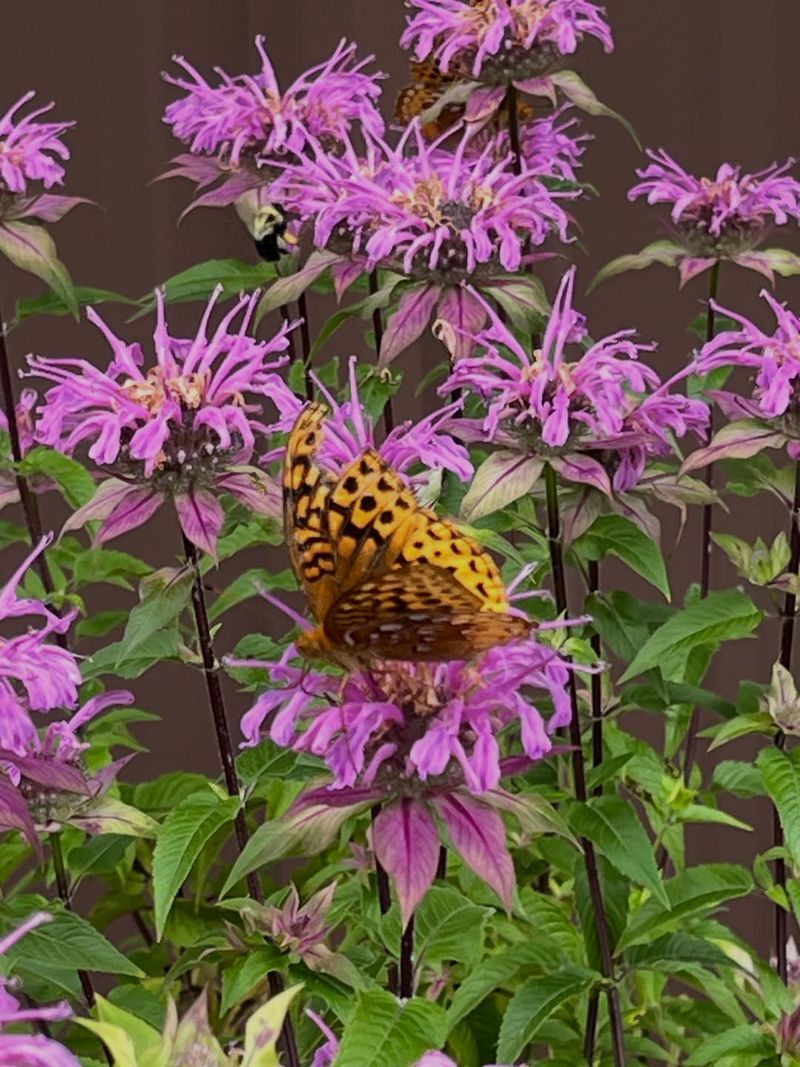
There is a moment in mid-July when wild bergamot opens its ragged lavender blooms and the whole garden shifts.
Monarda fistulosa releases a light herbal fragrance that carries on a warm breeze and practically signals every passing butterfly within range. The tubular florets are perfectly shaped for long-tongued pollinators, and they take full advantage.
Wild bergamot is not the same as the cultivated bee balm varieties sold at big-box garden centers. The native species is leaner, more drought-tolerant, and far more attractive to native pollinators.
It blooms from July into August and reaches two to four feet tall, creating a soft, airy mid-border presence.
Skippers, swallowtails, and fritillaries visit constantly during peak bloom, often working the same cluster of flowers for an extended stretch on warm afternoons.
One of the best things about wild bergamot is how low-maintenance it turns out to be. Plant it in full sun and average to dry soil, and it largely handles itself.
It spreads gradually by rhizomes to form loose colonies, which can be divided every few years to keep it tidy and to share plants with neighbors who will inevitably ask where you got it.
Pairing wild bergamot with purple coneflower and butterfly weed creates a mid-summer trio that covers the full color range from orange to purple to lavender and keeps nectar available for weeks without any extra effort from you.
Some plants earn their keep quietly. Wild bergamot earns its keep loudly, fragrantly, and with a crowd of wings to back it up.
5. Blazing Star Sends Up Nectar Spikes
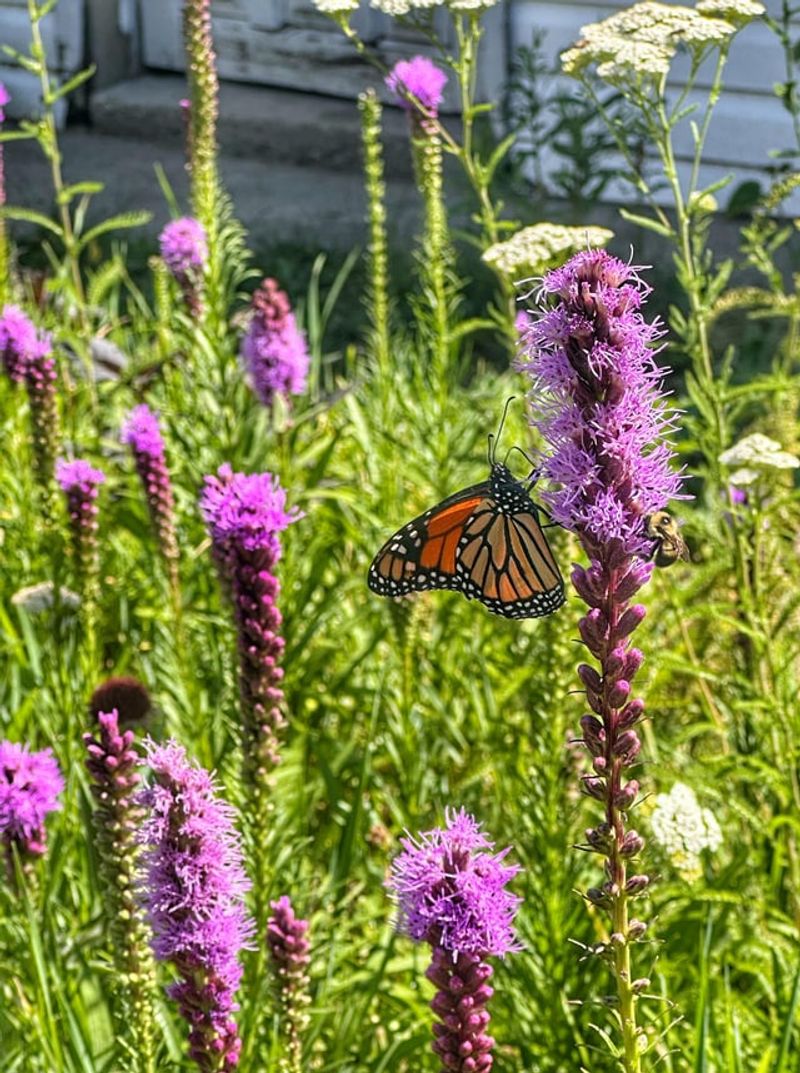
Most flowers open from the bottom of a stem upward. Blazing star does it the other way around, starting at the tip and slowly working toward the ground over several weeks.
That small quirk keeps fresh nectar available longer than most summer perennials, and butterflies seem to figure this out faster than most gardeners do.
Liatris spicata sends up upright purple spikes that can reach three to four feet tall, adding strong vertical interest to a garden that might otherwise stay low and mounded.
It blooms from late July through August in Michigan, filling a crucial nectar window when some earlier bloomers are already winding down.
Monarchs are especially drawn to it, and swallowtails, painted ladies, and skippers show up in impressive numbers on warm afternoons when the spikes are at peak.
Liatris grows from a corm, which means it needs well-drained soil to avoid rotting in wet winters. Full sun is ideal, though it handles light afternoon shade without much complaint.
Once established, it is reliably drought-tolerant and comes back every year without fuss. Plant it toward the back or middle of a border where its narrow form can stand out without blocking shorter plants in front.
Grouping five or more corms together creates a bold vertical sweep of purple that is genuinely hard to ignore from across the yard.
Leave the seed heads in place after bloom for goldfinches, which harvest the small seeds through fall and into early winter.
A plant that feeds butterflies in August and birds in November is not just earning its keep. It is overachieving.
6. Joe Pye Weed Adds Tall Late Nectar
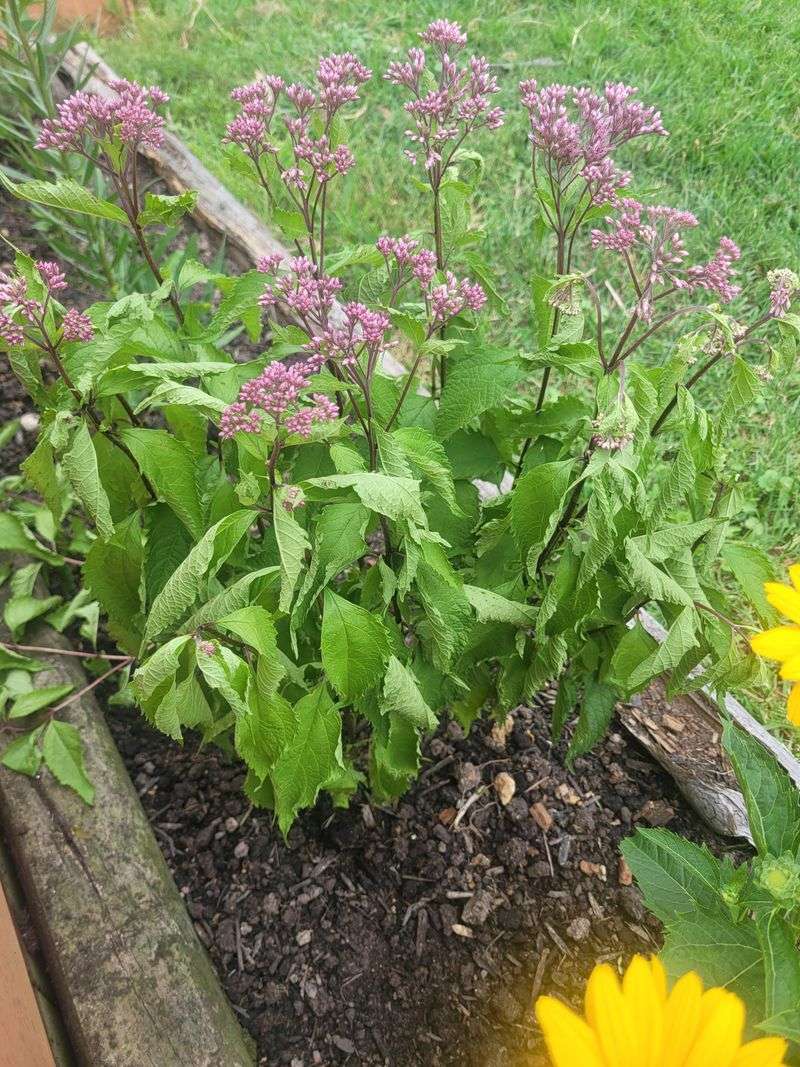
Late August has a way of making gardens look a little exhausted. Early bloomers have faded, the heat has done its work, and the whole yard starts to feel like it is winding down before fall even officially starts.
Joe Pye weed refuses to accept that storyline.
Eutrochium purpureum waits until midsummer to build momentum and then bursts into bloom in August with massive, domed clusters of mauve-pink flowers that butterflies cannot resist.
Mature plants reach five to seven feet tall in moist, fertile soil, creating a dramatic back-of-border presence that gives the garden a sense of abundance when everything else is slowing down.
The large flower heads act like a landing beacon for monarchs, swallowtails, and fritillaries during their late-summer feeding frenzy before migration begins.
Joe Pye weed naturally grows in moist woodland edges and stream banks across Michigan, so it performs best in consistently moist to average soil with full to partial sun.
It pairs well with swamp milkweed and New England aster for a late-season pollinator corner that stays active well into September. This is the plant that carries your garden through the gap between summer and fall without skipping a beat.
Cut plants back by one-third in early June to keep them from flopping and to slightly delay bloom for extended fall interest. Division every three to four years keeps clumps vigorous.
For a plant that tops six feet and feeds monarchs for weeks, it asks remarkably little. Some plants make you work for results. Joe Pye weed just makes you stand back and watch.
7. New England Aster Carries Fall Visitors
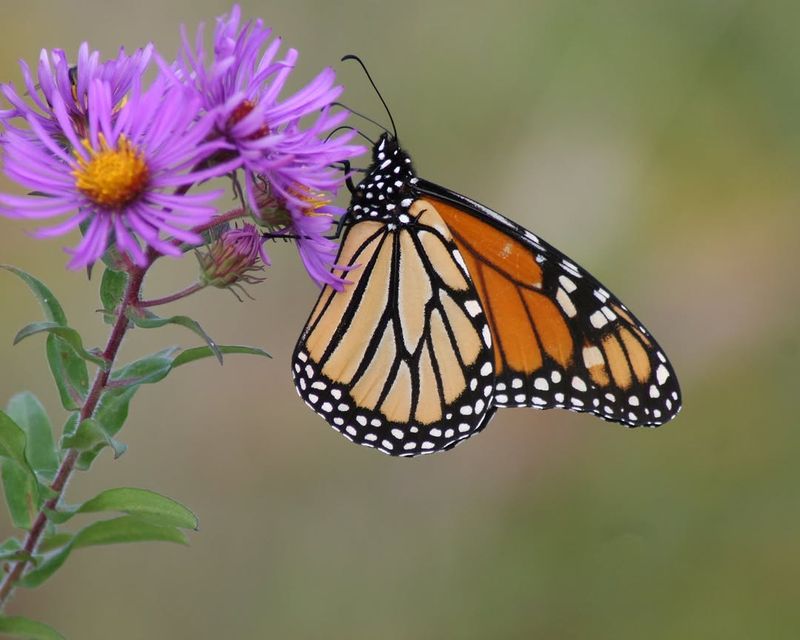
When September arrives and most summer perennials are packing it in, New England aster is just getting warmed up.
Symphyotrichum novae-angliae explodes into violet-purple, pink, or magenta blooms right when migrating monarchs need nectar most urgently. Timing is everything in butterfly gardening, and this plant has it completely figured out.
New England aster blooms from late August through October in Michigan, making it the anchor of any fall pollinator garden.
The flowers are small individually but produced in such abundance that entire plants seem to glow with color from across the yard.
Monarchs fuel up on aster nectar before their long journey south. Painted ladies, sulphurs, and skippers visit heavily during the fall flight season too. On a warm September morning, a mature clump of New England aster can be genuinely spectacular.
This native aster grows vigorously in full sun and average to moist soil, reaching three to six feet tall depending on the variety.
Pinching stems back by half in late May or early June keeps plants more compact and encourages bushier growth with more blooms.
Michigan native plant nurseries carry several excellent cultivars in deep purple and rosy pink, and all of them attract butterflies equally well.
Plant New England aster alongside Joe Pye weed and blazing star to create a late-summer-to-fall sequence that keeps your garden active until the first hard frost.
Try placing at least one patch near a sunny, sheltered spot where butterflies can warm their wings on cool September mornings before taking flight.
Leaving seed heads in place through winter feeds birds and adds quiet texture to the garden. The season ends, but the garden never really stops working.