8 Georgia Native Plants That Need Less Water Once Summer Heat Settles In
Georgia summers arrive with a particular kind of confidence. The heat settles in hard, the rain becomes unpredictable, and keeping a garden looking good can start to feel like a second job.
Here is what many gardeners figure out only after dragging a hose across the yard too many times: some plants do not need that hose at all.
Native plants have spent thousands of years solving the exact problem Georgia summers create. Deep root systems, tough foliage, and survival strategies that garden-center imports simply cannot replicate.
Once established, many of these plants handle the hottest, driest months without any help from you.
The plants on this list are not just survivors. They bring genuine color, texture, and wildlife activity to a Georgia garden while asking very little in return.
Summer gardening is about to get a lot less exhausting, ready?
1. Plant Butterfly Weed In Sunny Beds
Butterfly weed has one of the most misleading names in the plant world. It sounds like a nuisance.
It is actually one of the most valuable plants a sunny Georgia bed can have, and once established, it handles drought conditions that leave other plants struggling by noon.
Asclepias tuberosa grows a deep taproot that reaches far into the soil, pulling moisture even when the surface is completely parched.
That root system is also why placement matters: it does not respond well to being moved once it has settled in.
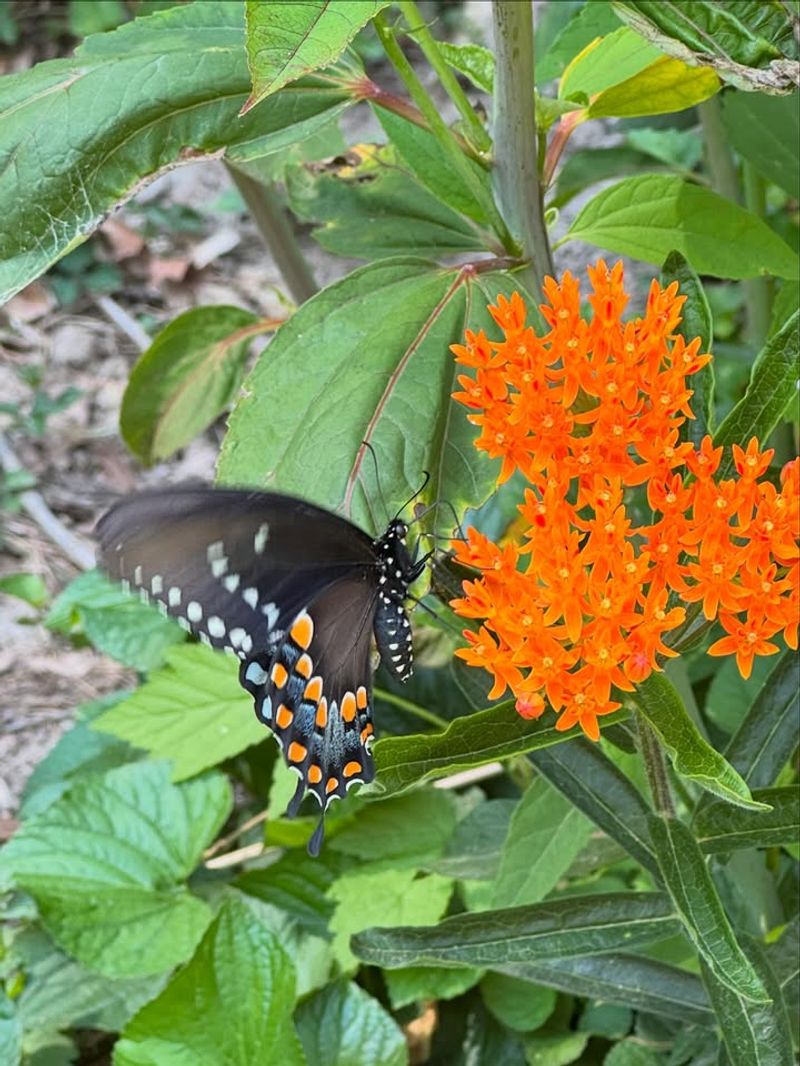
Give it full sun and well-drained soil, and it delivers brilliant orange blooms from late spring through midsummer without supplemental watering once it hits its stride.
Pollinators respond to butterfly weed with real enthusiasm. Monarch butterflies depend on milkweed species as a host plant for their caterpillars.
Bees, swallowtails, and fritillaries also show up in impressive numbers. The garden stays active with movement and color through the hottest weeks of summer.
One detail worth knowing upfront: butterfly weed is one of the last perennials to emerge in spring. The spot can look bare for weeks while other plants are already growing.
Mark the location and wait. Once it appears, growth is fast and the blooms arrive reliably year after year with zero extra water required from that point forward.
2. Use Black-Eyed Susan For Tough Color
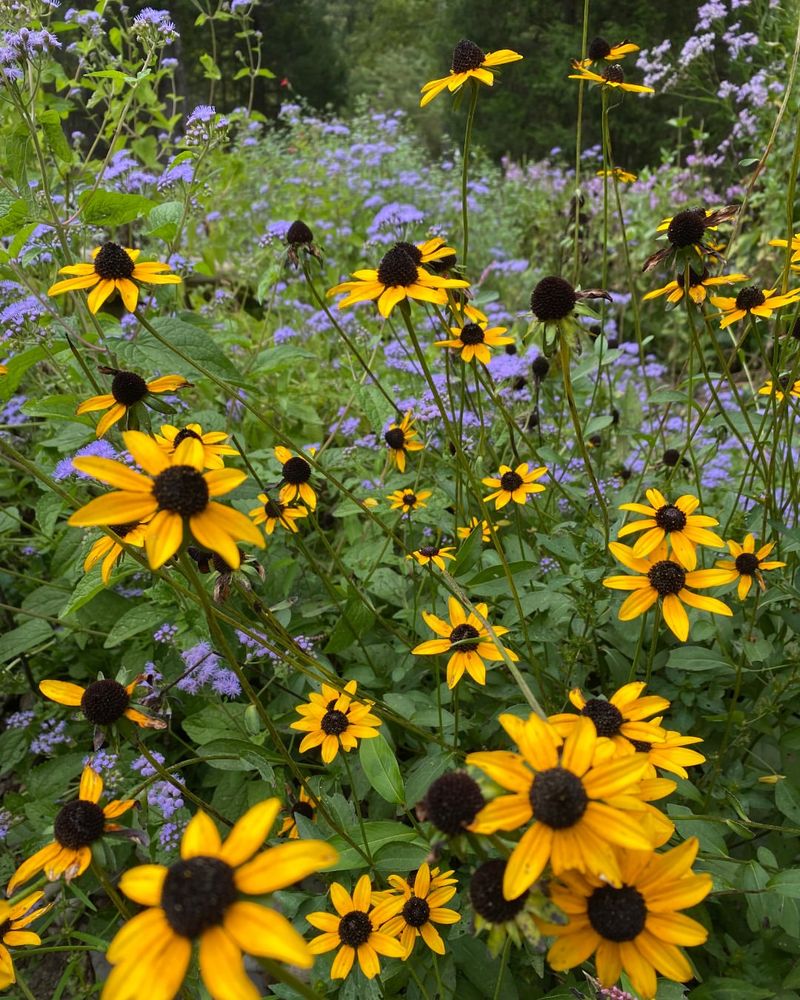
Few plants punch above their weight quite like black-eyed Susan.
Those bold yellow petals with dark chocolate centers have a cheerful, almost stubborn energy that perfectly suits a Georgia summer. Hot days, dry spells, relentless sun: black-eyed Susan does not register any of it as a problem.
Rudbeckia hirta is a Georgia native that blooms from midsummer through early fall, filling the gap when many spring flowers have already faded and the garden needs something to carry the season forward.
It thrives in full sun, handles poor dry soils without complaint, and rarely needs supplemental watering once established. During dry stretches that stress other plants visibly, this one keeps going.
Planting in masses creates the biggest visual impact. A drift of black-eyed Susans along a fence line or at the edge of a sunny border looks effortlessly natural and generously colorful at the same time.
Your Georgia Garden Changes Every Week. Your Plan Should Too.
Gardening in Georgia changes quickly throughout the season. Every Friday you’ll receive a simple weekly plan showing exactly what to plant, prune, fertilize, harvest, and protect so you never miss the right timing.
Resist cutting the seed heads back too early because birds work through them reliably into fall and beyond.
Black-eyed Susan pairs well with little bluestem grass or purple coneflower for a layered, low-maintenance planting that looks both intentional and wild.
It self-seeds modestly, meaning new plants appear nearby each year without any effort. That is a free garden bonus, not a management problem.
For any sunny Georgia bed that needs reliable summer color without a watering schedule attached to it, this native consistently delivers.
3. Grow Purple Coneflower For Pollinators
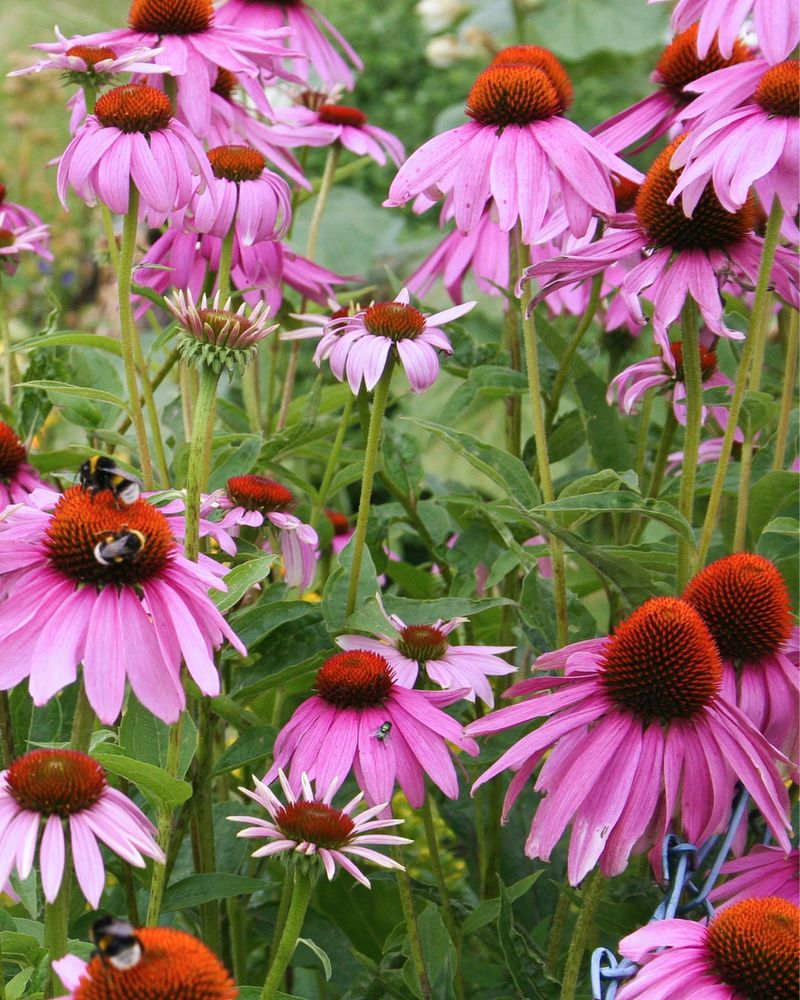
Ask Georgia gardeners what their most reliable summer native is, and purple coneflower comes up consistently.
Echinacea purpurea has built a reputation over decades for good reason. It is tough, beautiful, pollinator-friendly, and genuinely unbothered by summer drought once it has been in the ground through a full growing season.
The rosy-pink petals surrounding that spiky bronze cone are instantly recognizable and endlessly appealing across a garden.
Blooms arrive in early summer and continue for weeks. As individual flowers fade, the seed cones remain on the plant well into winter, providing food for goldfinches and other seed-eating birds during lean months when other sources are scarce.
From a water standpoint, purple coneflower is an overachiever. Its root system runs deep, anchoring the plant and seeking moisture well below the soil surface.
Established coneflowers handle dry summer conditions across most of Georgia with little to no supplemental irrigation once roots are firmly set in place.
Full sun to light shade with average to dry, well-drained soil covers most planting situations. It is not demanding about soil fertility, which makes it ideal for areas of the yard that are harder to manage consistently.
Dividing clumps every three to four years keeps plants vigorous. It also self-seeds reliably, so the original planting can slowly expand into a full colony of color and wildlife activity with almost no involvement from the gardener.
4. Try False Indigo For Deep Roots
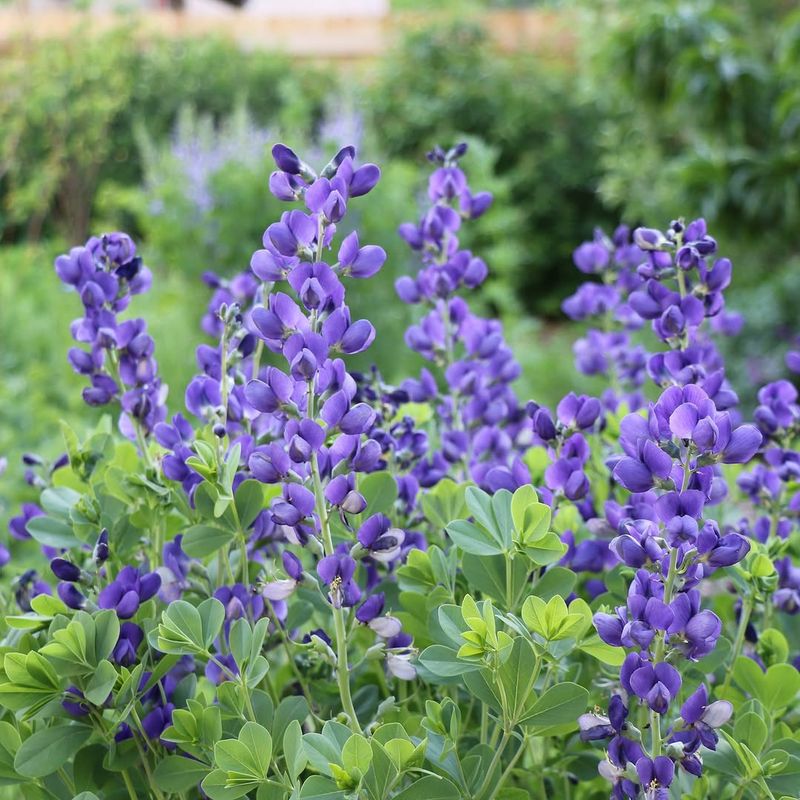
There is something almost architectural about false indigo.
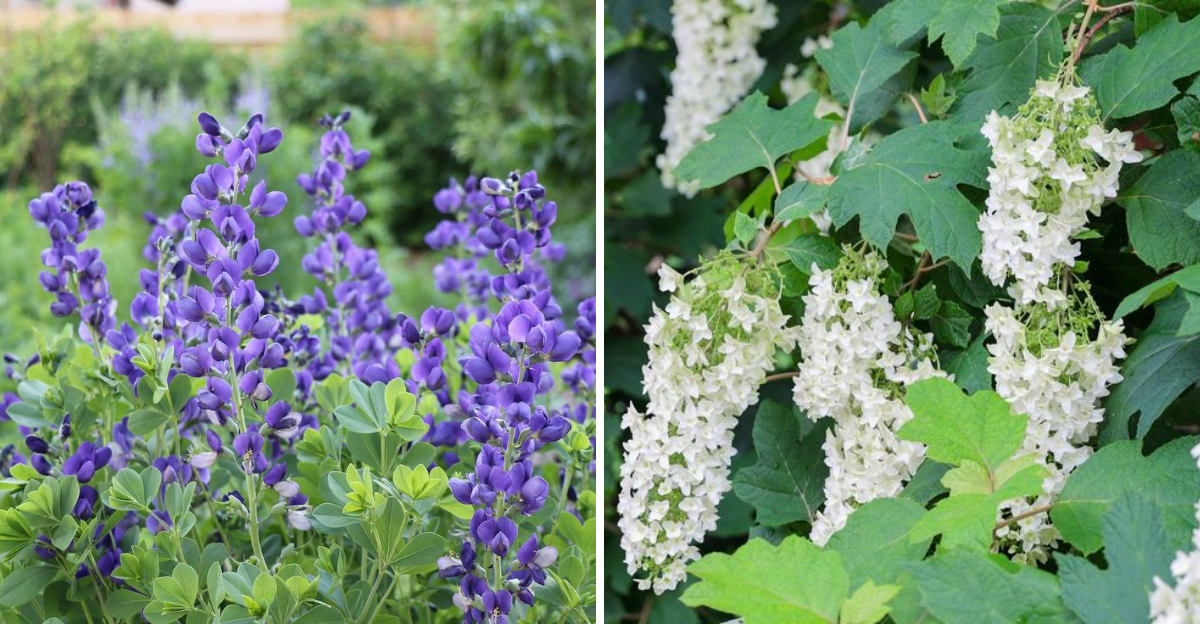
Baptisia australis grows into a large, shrub-like mound of blue-green foliage topped with tall spikes of deep purple-blue flowers in spring. It looks like a considered design choice in any landscape, yet it asks for almost nothing once it finds its place in the yard.
The secret to its drought tolerance is entirely underground. False indigo develops one of the deepest, most extensive root systems of any native perennial in the Southeast.
Those roots reach several feet into the soil, accessing moisture reserves that surface-rooted plants never reach. Once established, usually after two to three growing seasons, false indigo handles Georgia summer heat and dry spells with genuine composure.
The honest trade-off is that establishment takes patience. The first couple of years require consistent watering to help roots develop properly.
After that, the plant manages itself through the hottest and driest months without intervention. That is a long-term investment with a clear and reliable payoff.
Beyond drought tolerance, false indigo supports bumblebees and other native pollinators reliably. After blooming, it forms interesting inflated seed pods that rattle in the breeze and add texture to the late-season garden.
The foliage stays attractive all summer. Plant it where a bold, structural native presence is needed, and it will anchor that spot for decades without asking for extra water.
5. Add Little Bluestem For Dry Texture
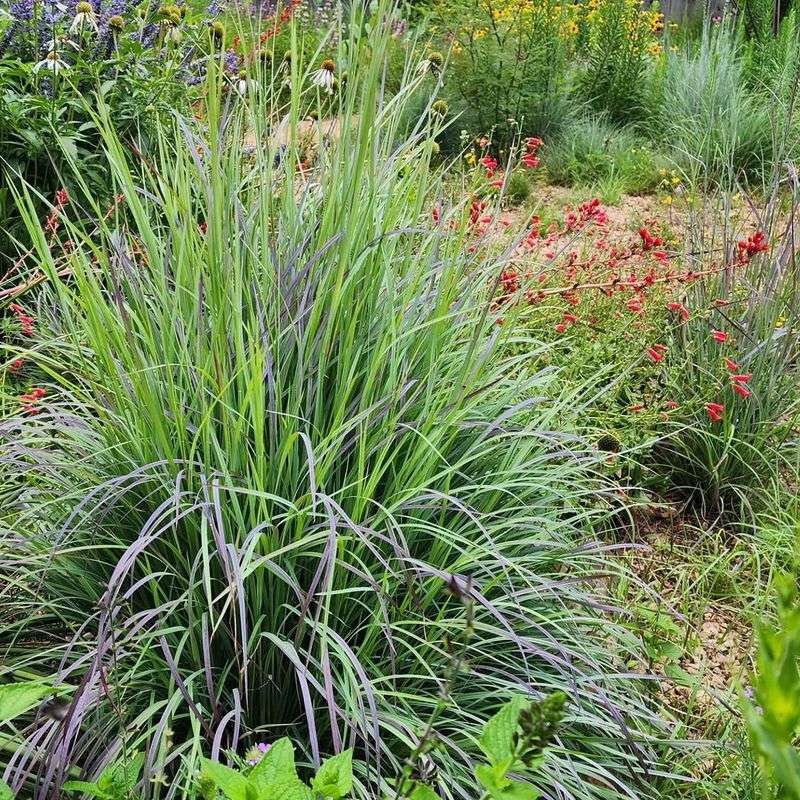
Not every garden standout blooms. Little bluestem proves that texture and movement are just as compelling as any flower when done well.
This native grass starts the season with upright blue-green blades that catch light beautifully, then transforms into a mix of copper, rust, and burgundy as fall arrives.
It is a plant that rewards sustained attention across every month it is in the ground.
Schizachyrium scoparium is built for dry, sunny spots. It thrives in poor, sandy, or rocky soils where other plants give up.
Rich, moist soils actually cause it to flop and lose the upright form that makes it valuable. Little bluestem genuinely prefers lean conditions, which makes it a natural fit for hot, dry slopes or areas where irrigation is impractical or unavailable.
Once established, this grass needs virtually no supplemental water during summer. Its deep fibrous root system finds soil moisture efficiently, and narrow blades reduce water loss through transpiration.
Thousands of years of adapting to southeastern conditions produced a plant that has genuinely figured out how to thrive with what Georgia summers provide.
Use little bluestem in drifts along a sunny border or mixed with native wildflowers like black-eyed Susan and butterfly weed for a naturalistic planting that looks both effortless and considered.
Feathery seed heads that appear in fall add softness and movement, and birds visit regularly through winter to feed on the seeds. Cut plants back to a few inches in late winter to encourage fresh, vigorous growth each spring.
6. Plant Muhly Grass For Airy Movement
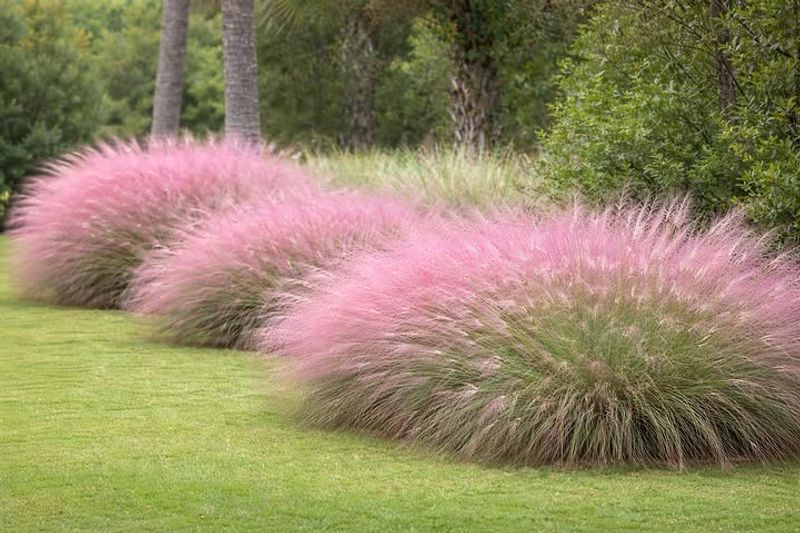
Every garden deserves a moment of pure visual surprise, and muhly grass delivers one every single fall without fail.
When Muhlenbergia capillaris sends up massive clouds of rosy-pink gossamer flower plumes in September and October, the effect stops people mid-step.
It looks like a soft pink fog has settled into the garden, and nothing else in a Georgia landscape creates quite that impression.
Muhly grass is not just a dramatic fall performer. It is a tough, water-smart native that handles Georgia heat and drought reliably once established.
Through summer, the plant maintains attractive blue-green foliage without needing regular irrigation. Its root system accesses soil moisture efficiently even during extended dry periods that stress less-adapted plants visibly.
Full sun and well-drained soil create the best conditions. It performs in lean, dry soils and does not need fertilizer.
Too much fertility can actually reduce the dramatic flowering display that makes this plant so popular in Georgia landscapes. Let the soil stay on the dry side through summer and the fall reward is spectacular.
Muhly grass is genuinely low-maintenance once established. Cut it back in late winter and it bounces back full and fresh each spring without further encouragement.
Mass plantings along driveways, sunny slopes, or open borders create a visual impact that is difficult to match with any other native. For ornamental drama combined with real drought tolerance, this one earns its place in any Georgia landscape without argument.
7. Use Blazing Star For Summer Spikes
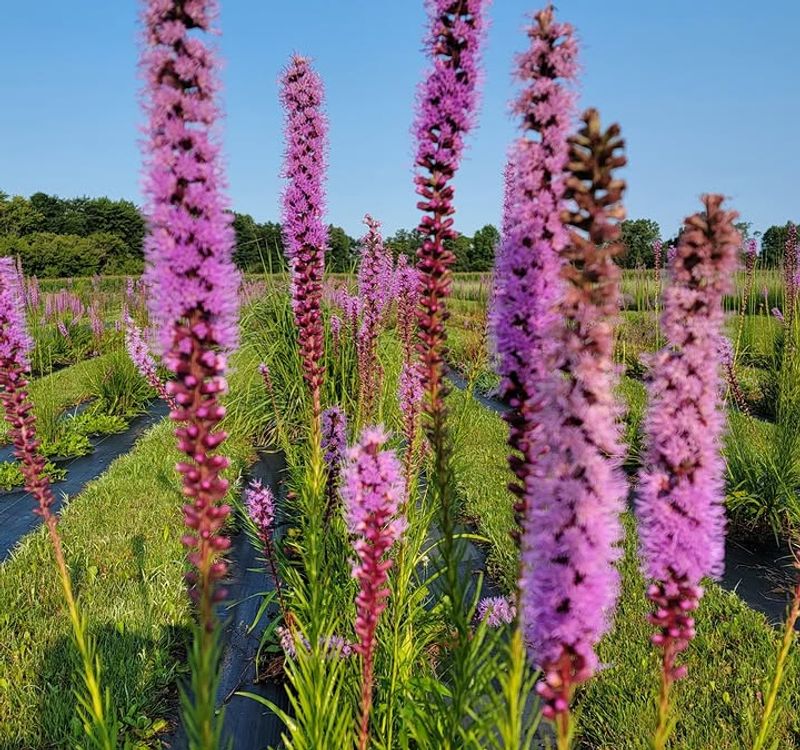
Vertical interest is one of the harder things to achieve in a summer garden, and blazing star provides it without any effort from the gardener.
Liatris spicata sends up tall, wand-like spikes covered in bright magenta-purple flowers that bloom from top to bottom rather than bottom to top, the opposite pattern of most flowering plants.
That unusual sequence gives it a distinctive presence that stands out in any planting.
Blazing star is native to the eastern United States, including Georgia, and genuinely adapted to regional summer conditions. Full sun and well-drained to dry soil are the requirements.
Once established, it handles summer drought without supplemental watering, making it a practical addition to beds that do not receive regular irrigation. Poor, sandy soils suit it well.
Monarchs, swallowtails, bumblebees, and hummingbirds all visit the spikes during bloom season.
A few clumps in a garden can meaningfully support local pollinator populations during the critical midsummer period when many other flowers have already finished.
That ecological contribution adds real value beyond the visual appeal.
After flowers fade, seed heads persist on the stalks and attract goldfinches and other small birds through fall and into winter.
Blazing star grows from a corm and multiplies slowly underground, forming larger clumps over time.
It pairs naturally with black-eyed Susan and little bluestem for a summer native combination that is colorful, wildlife-friendly, and completely self-sufficient once established in Georgia soil.
8. Grow Oakleaf Hydrangea In Part Shade
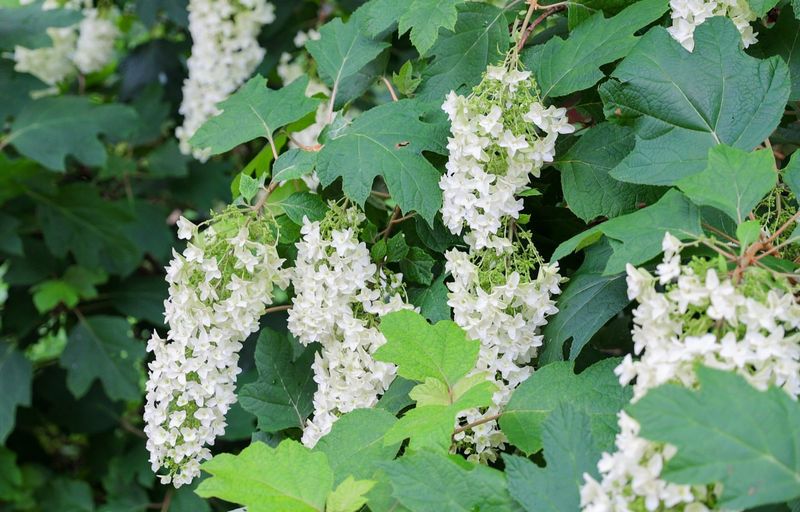
Shade gardeners in Georgia sometimes feel excluded from the native plant conversation, but oakleaf hydrangea changes that entirely.
Hydrangea quercifolia is a native shrub built for the dappled shade and part-sun conditions found under Georgia pines and hardwoods.
It is one of the most ornamentally versatile natives in the entire Southeast, delivering genuine interest across all four seasons without demanding much in return.
In early summer, oakleaf hydrangea produces large cone-shaped white flower clusters that age slowly to parchment and dusty rose as the season progresses.
The distinctive oak-shaped leaves are bold and attractive throughout summer. Fall foliage turns burgundy, orange, and red.
Through winter, peeling cinnamon-colored bark adds texture and warmth to bare garden beds. Few shrubs, native or otherwise, offer that range of seasonal value in a single planting.
Once established after one to two growing seasons, oakleaf hydrangea shows solid drought tolerance for a woodland shrub.
Its root system runs wide and deep enough to access moisture in shaded soil without consistent supplemental watering through summer.
Dry shade is one of the most challenging gardening situations in Georgia, and this native handles it reliably.
Part shade to full shade with moist, well-drained, organically rich soil covers the ideal planting conditions. Amending clay soil with compost before planting improves drainage significantly.
It grows four to six feet tall and wide, sometimes larger, so giving it room to spread naturally produces the best results.
Native bees visit the flowers and the dense structure provides excellent bird shelter year-round. For shaded spots where summer water is limited, oakleaf hydrangea is a genuinely outstanding long-term solution.