California Garden Container Mistakes That Cause Root Rot Before Symptoms Show
Something is going wrong underground in your garden containers right now, and the plants have no way to warn you yet.
Root rot is patient. By the time leaves yellow or stems go soft, the damage has been building for weeks underground while everything above the soil line still looks perfectly fine.
California gardeners face a particular challenge here because the warm climate, intense sun, and unpredictable rainfall make container care feel straightforward when it is actually full of hidden traps.
A pot that looks healthy from the outside can be quietly suffocating roots below the soil line without a single visible clue.
Most root rot problems trace back to common, completely fixable mistakes that happen long before any symptoms appear.
Understanding what creates soggy, oxygen-starved roots means stopping the problem before it starts rather than diagnosing it after the damage is already done.
Seven mistakes cause the majority of container root rot in California gardens, and some of them are probably already happening in your yard right now.
1. Using Pots Without Drainage Holes
Many people pick a pot because it looks right. The color suits the patio, the size feels appropriate, and the price works.
A beautiful pot with no drainage hole is essentially a slow-motion problem waiting to develop, and it starts the moment water goes in.
Water needs somewhere to go after it enters a container. When it cannot escape through the bottom, it collects in the lower layers of soil and stays there.
That trapped water pushes out the oxygen that roots need to function.
Roots sitting in waterlogged soil quickly become vulnerable to fungal pathogens like Phytophthora and Pythium, which are the primary organisms behind root rot in garden containers.
California summers push this problem further. Many gardeners water frequently to keep plants alive in the heat, and every extra drop goes straight to the bottom of a sealed pot with nowhere to go.
The top layer of soil dries out fast and creates a convincing impression that the plant needs more water, while the roots below are already sitting in saturated conditions that have been building for days.
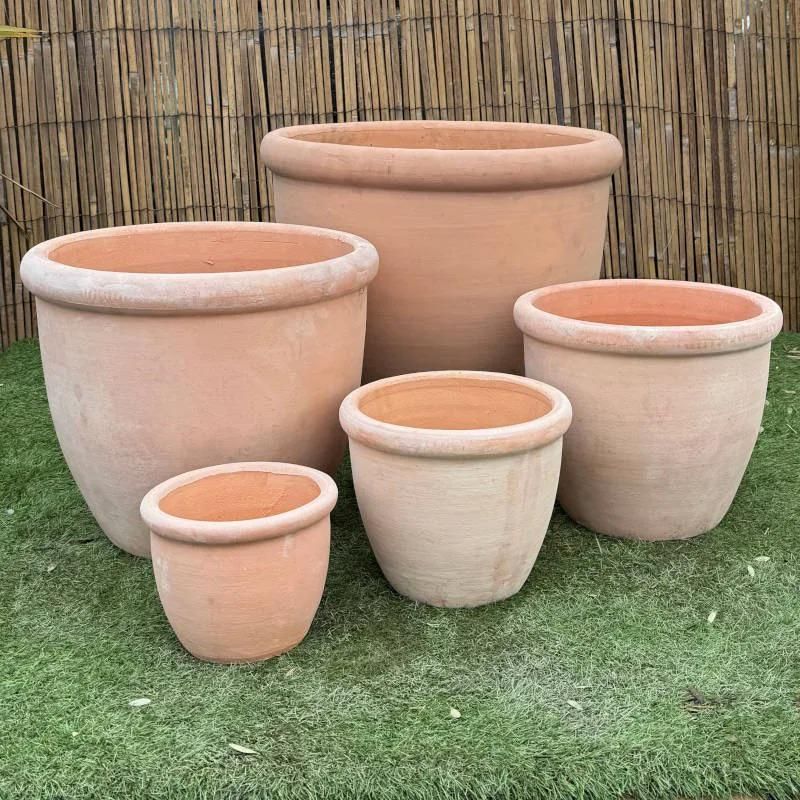
The fix requires no special skill. Always choose containers with at least one drainage hole, and larger pots benefit from multiple holes spaced across the base.
For decorative pots that have no holes, use them as outer sleeves and place a properly draining nursery pot inside. Plastic and wood containers can have holes added with a standard drill bit.
Terracotta and ceramic containers work with a masonry bit and steady pressure. The look stays intact. The roots get the airflow they need.
No drainage means no healthy root system, regardless of how well everything else is managed.
2. Letting Saucers Hold Water
This mistake feels responsible, which is exactly what makes it so common.
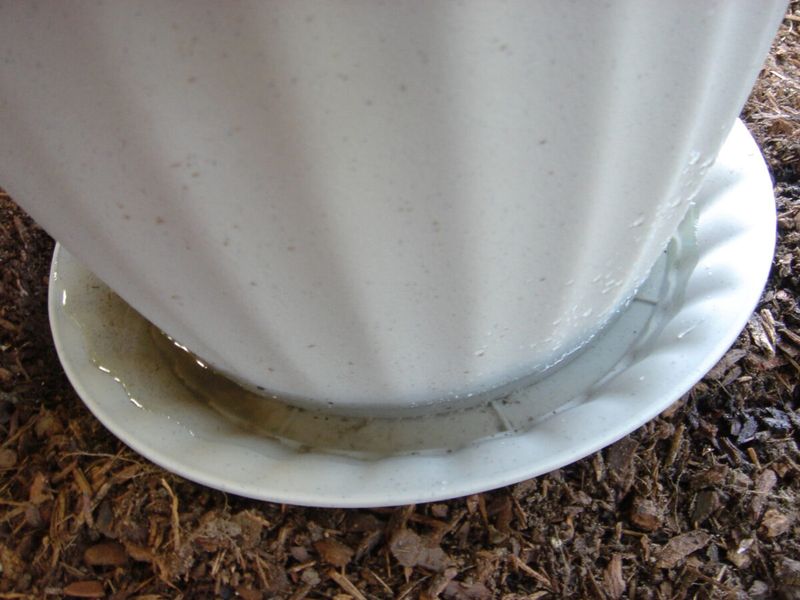
Saucers under outdoor pots protect patio surfaces, catch runoff, and keep things tidy. The problem develops when those saucers never get emptied after watering or rain.
Standing water in a saucer acts like a wick, pulling moisture back up into the soil through the drainage holes at the base of the pot.
Your California Garden Changes Every Week. Your Plan Should Too.
Gardening in California changes quickly throughout the season. Every Friday you’ll receive a simple weekly plan showing exactly what to plant, prune, fertilize, harvest, and protect so you never miss the right timing.
The bottom layer of potting mix stays consistently wet, and roots near the base never get the chance to dry out between waterings.
Chronic root zone saturation builds quietly over days and weeks while the plant above looks completely undisturbed.
California gardens add another layer of complexity to this. Coastal areas with morning fog and inland valleys with seasonal rain can leave saucers partially full for extended periods without any help from a garden hose.
A light overnight drizzle keeps a saucer topped off long enough to maintain the saturated conditions that favor root rot development.
The solution is not abandoning saucers entirely. Checking them after every watering session and after any rainfall, then emptying whatever has collected, breaks the cycle.
Elevating pots on pot feet or small risers creates a gap that allows saucers to drain more freely and permits airflow under the container base.
Pot feet are inexpensive, available at most California nurseries, and make a genuinely meaningful difference in how the container breathes between waterings.
The saucer catches what needs catching. The gap prevents it from becoming a problem.
3. Reusing Compact Old Potting Mix
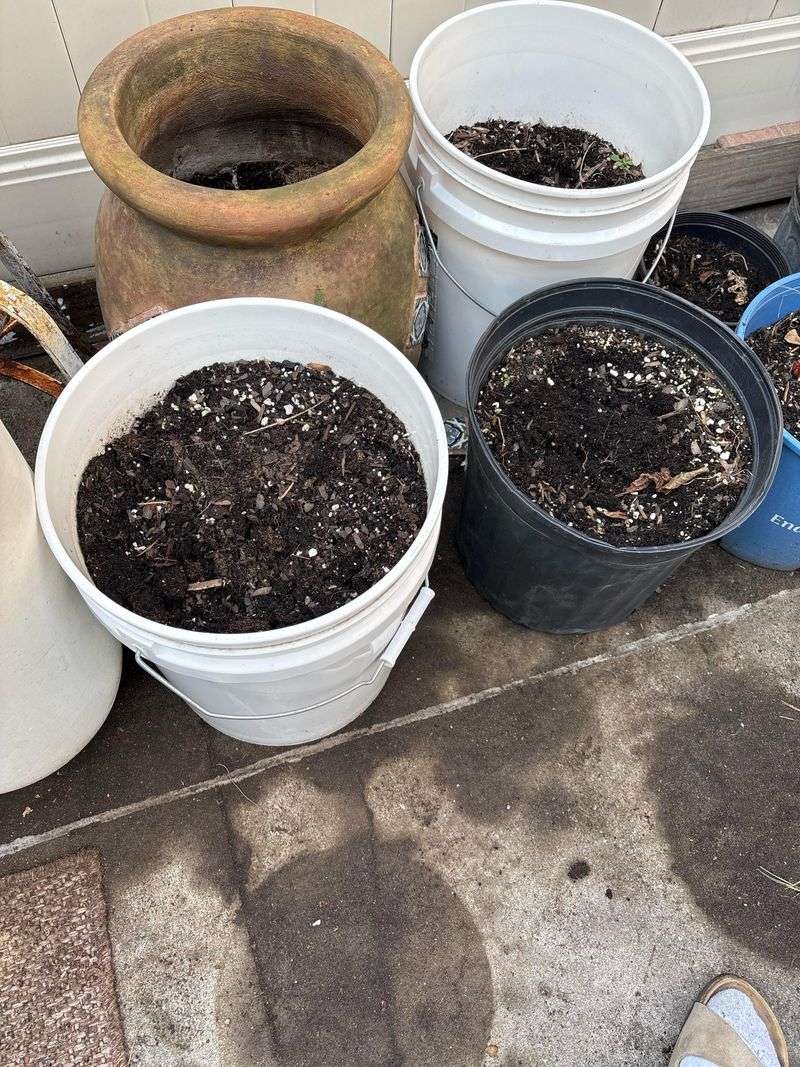
Old potting mix has a history, and it is not usually a flattering one.
After one growing season, the organic components in commercial potting mix begin breaking down. The open, airy texture that made it effective for drainage collapses into a denser, more compacted structure that water moves through unevenly at best.
Reusing that mix in a new season means starting plants in compromised soil from the first day. The pore spaces that once allowed air and water to move freely through the root zone are reduced or gone.
Water tends to channel down the sides of the pot rather than distributing evenly across the root ball, and the base of the container stays wet while the middle stays dry.
That uneven moisture distribution creates exactly the kind of environment where root rot pathogens establish and spread.
Replacing potting mix every one to two seasons is the practical standard for most outdoor containers.
In California’s warm climate where plants may grow nearly year-round and containers see heavy use across multiple seasons, annual replacement makes even more sense as a baseline habit.
Fresh potting mix is not a significant expense compared to replacing plants that were lost to avoidable root damage.
Look for mixes specifically labeled for containers or patio plants rather than general garden soil, and check that the ingredient list includes perlite, bark, or coir to maintain drainage structure over time.
Partially used mix from a previous season can be refreshed by blending in twenty-five to thirty percent new perlite to reopen the texture.
Starting fresh is almost always the better choice, and roots establish faster and more reliably in a mix that has not already been compacted by a previous season of watering.
4. Watering By Calendar Instead Of Soil
Monday, Wednesday, Friday. It sounds like a sensible watering routine, and for many gardeners it becomes completely automatic over time.
The problem is that plants do not follow a calendar, and soil moisture does not either.
Temperature, humidity, wind speed, pot size, plant type, and sunlight exposure all influence how quickly soil dries out in an outdoor container.
A hot Santa Ana wind event in Southern California can dry out a medium-sized pot in a single afternoon. A cool, foggy week along the coast can leave that same pot perfectly moist for four or five days with no additional water needed.
A fixed watering schedule ignores every one of those variables completely and applies water regardless of what the soil actually needs.
Overwatering is one of the leading causes of root rot in container plants.
The fungi responsible, including Phytophthora and Fusarium species, thrive in continuously moist soil where roots have no opportunity to access oxygen between waterings.
Roots that stay wet too long become soft and gradually lose their ability to absorb nutrients, and this process is well underway before any visible symptoms appear above the soil line.
The better approach requires almost no extra time. Pushing a finger about an inch into the potting mix before reaching for the hose tells you what the soil actually needs at that moment.
For most outdoor container plants, watering makes sense when the top inch feels dry to the touch. Succulents and drought-tolerant California natives may need you to check two inches deep before adding water.
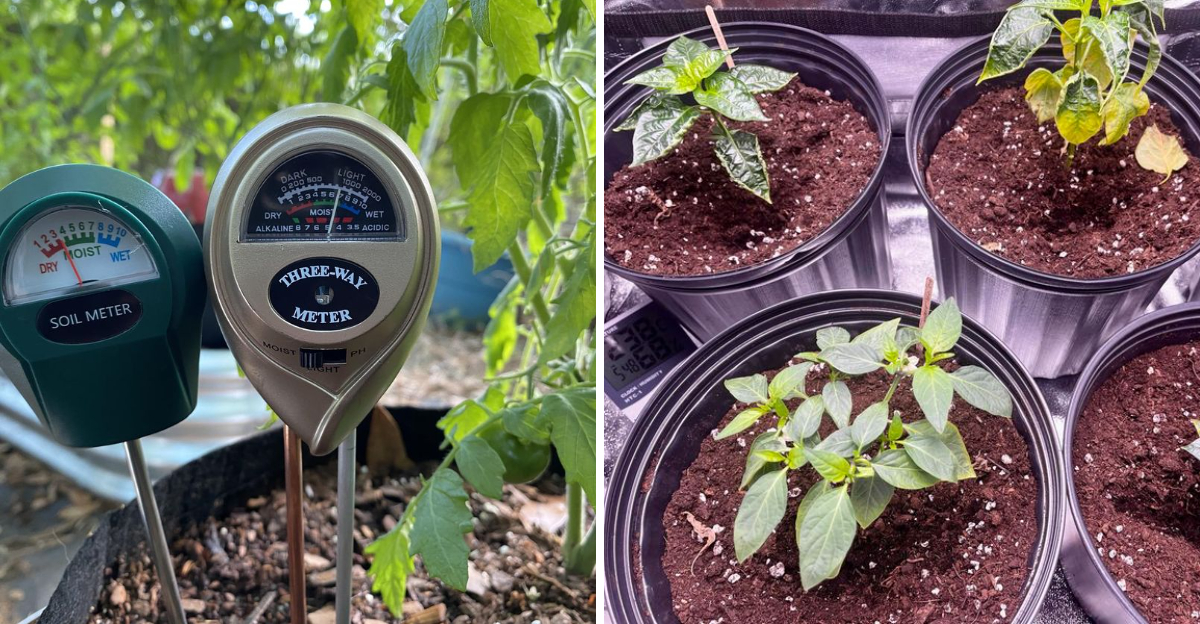
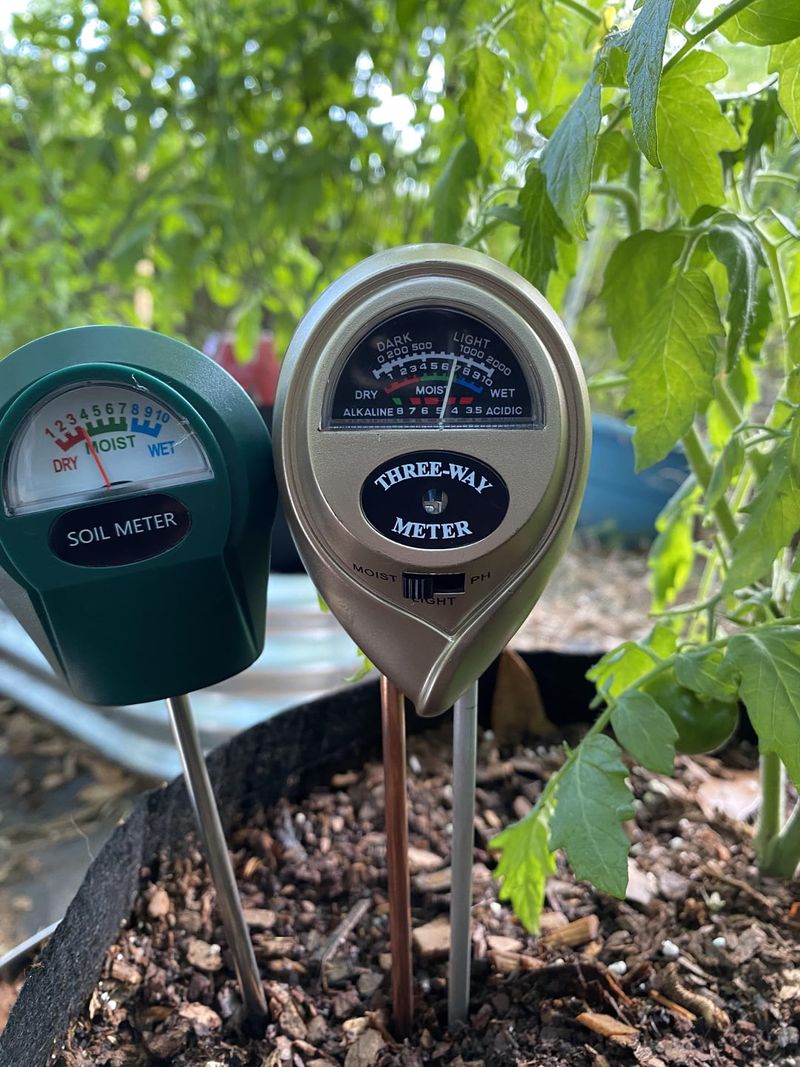
A basic moisture meter from any garden center removes the guesswork entirely and costs very little. The plant guides the watering. The calendar does not.
5. Planting Too Deep In Containers
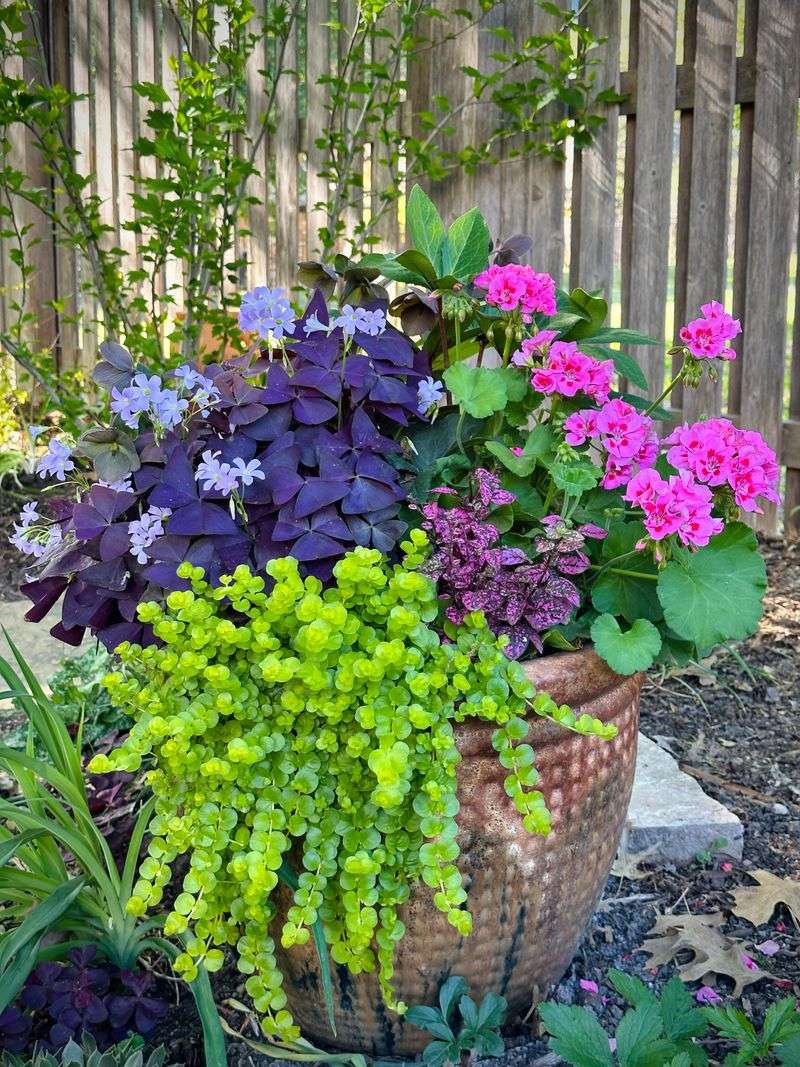
Depth receives less attention than most other container decisions, but it produces some of the most consequential early problems for newly planted containers.
Burying a plant’s crown below the soil surface creates a situation that begins immediately but typically does not show any visible symptoms for weeks.
The crown is the transition point where the stem meets the root system. When it sits below the soil line, moisture from watering and rainfall collects right against the base of the stem consistently.
Stems lack the protective structure that roots have developed for contact with soil, making them highly susceptible to fungal rot at that junction.
The crown begins softening and breaking down while the plant above continues looking completely normal. By the time wilting or yellowing appears, the crown may already be beyond recovery.
Planting at the same depth the plant was growing in its nursery container is the reliable standard for most ornamentals and vegetables.
The crown should sit at or just slightly above the final soil level after settling.
Tomatoes grown in containers are a common exception, as they can develop roots along buried stems under specific conditions, but most other plants benefit from keeping the crown clear of the soil surface.
When repotting, adding potting mix to the bottom of the container first raises the root ball to the correct height rather than pressing the plant deeper into existing mix to compensate for the difference.
That small adjustment at planting time consistently prevents problems that would otherwise take weeks to diagnose and months to recover from.
6. Packing Roots Into Oversized Pots
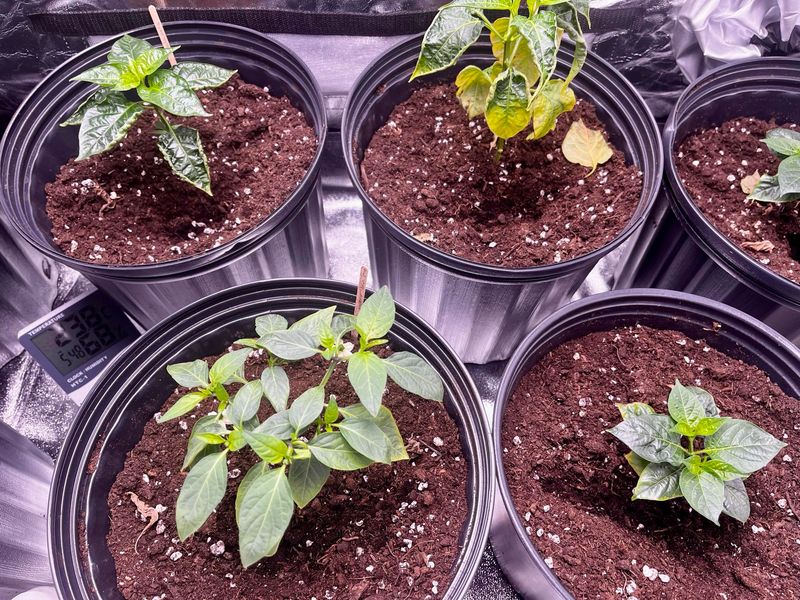
More space feels like a generous thing to give a plant. More room for roots, more soil holding nutrients, more volume to support growth.
That reasoning works in an open garden bed. In containers, pairing a small plant with a significantly oversized pot creates conditions that favor root rot before the plant has any chance to establish.
A small plant with a limited root system cannot absorb moisture from all the extra potting mix surrounding it.
The outer portions of the container stay wet for extended periods because no roots are drawing from those zones.
Consistently damp, unoccupied soil becomes favorable territory for Pythium and other water mold pathogens that establish in the wet outer edges and gradually work inward toward the root ball.
The plant shows no signs of stress while this is happening, which is part of what makes oversized containers such a consistent problem.
Matching pot size to root ball size and stepping up gradually as plants grow is the practical approach.
A container no more than two inches wider in diameter than the current root system works well for most ornamentals.
Vigorous growers like tomatoes and squash can handle four to six inches of additional space. Beyond that, the unused soil becomes a liability rather than a resource.
For gardeners who want larger decorative containers without the oversized soil problem, placing a smaller nursery pot inside a larger outer container and filling the gap with gravel reduces the volume of active potting mix.
The roots stay in appropriately sized soil. The container looks exactly as intended. Matching the pot to the plant rather than the other way around keeps moisture levels manageable throughout the entire growing season.
7. Choosing Heavy Soil For Garden Containers
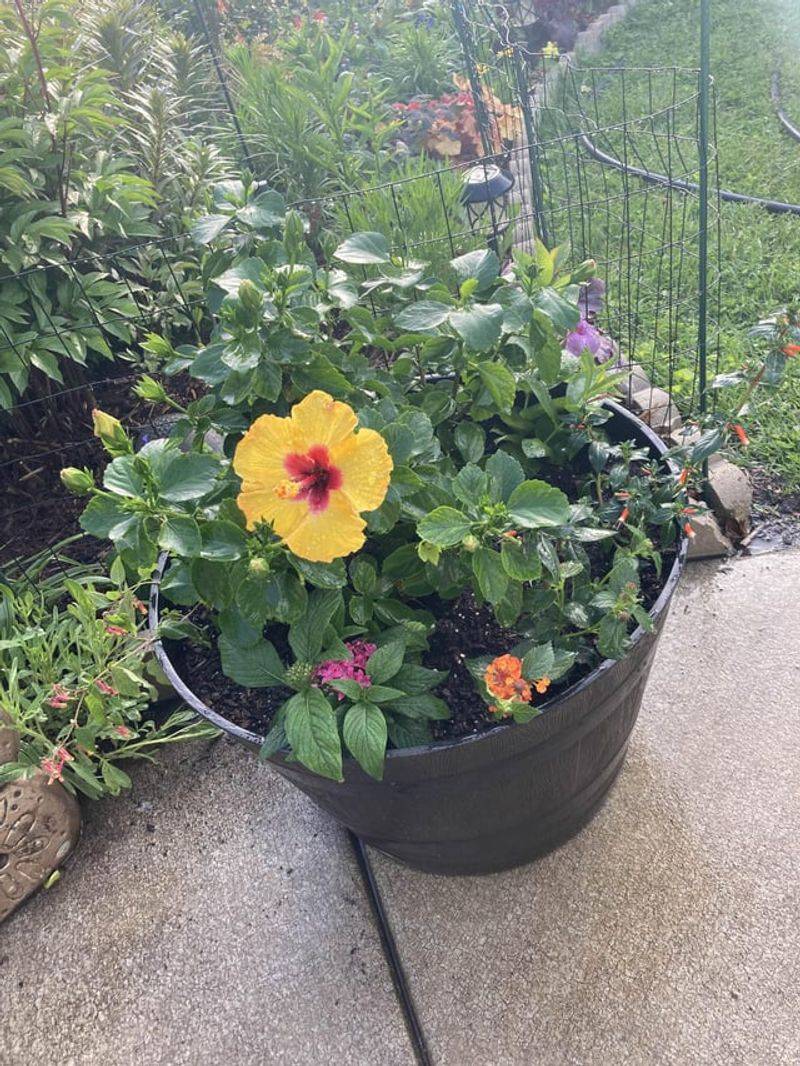
Yard soil grows plants in the ground reliably and costs nothing to collect. Scooping it into a container feels practical, resourceful, and sensible.
What works in an open garden bed behaves very differently once it is confined inside a pot, and the difference becomes apparent within the first few waterings.
In the ground, gravity, earthworms, root systems, and natural soil structure all work together to move water downward and keep air circulating through the root zone.
In a container, that same soil compacts under its own weight, sealing off the pore spaces that roots depend on for oxygen.
Water moves through it slowly and unevenly, pooling at the base and creating low-oxygen zones where root rot pathogens multiply rapidly.
Even well-amended yard soil tends to compact over time in the confined space of a pot and produces the same outcome.
Using native yard soil, heavy garden soil, or commercial mixes labeled as topsoil or general garden soil in outdoor containers consistently leads to drainage problems.
These materials are not engineered for the different physics of container growing, regardless of how well they perform in open beds.
Purpose-made potting mixes are formulated to stay loose and drain well even after repeated watering cycles.
They include materials like perlite, pumice, or coarse bark that maintain structure and keep air moving through the root zone over time.
For California gardens where containers may be watered frequently during long dry months, a lightweight, well-draining mix is the foundation that makes everything else work.
Spending a few extra dollars on the right mix at the start of the season consistently prevents the kind of slow, invisible root damage that costs far more in lost plants before anyone figures out what went wrong.