This Stunning Low Maintenance Arizona Shrub Is Becoming A Popular Alternative To Lantana
Lantana is a solid plant and it has absolutely earned its place in Arizona landscapes.
But if you’ve ever stood in front of a scraggly, heat-fried lantana in a particularly brutal spot and thought “there has to be something better for this location,” you are not alone.
A growing number of Arizona homeowners are making a quiet switch, and the plant they’re landing on is Texas sage.
Also known as Texas ranger or purple sage, this shrub is having a real moment in desert yards right now, and honestly it’s not hard to see why.
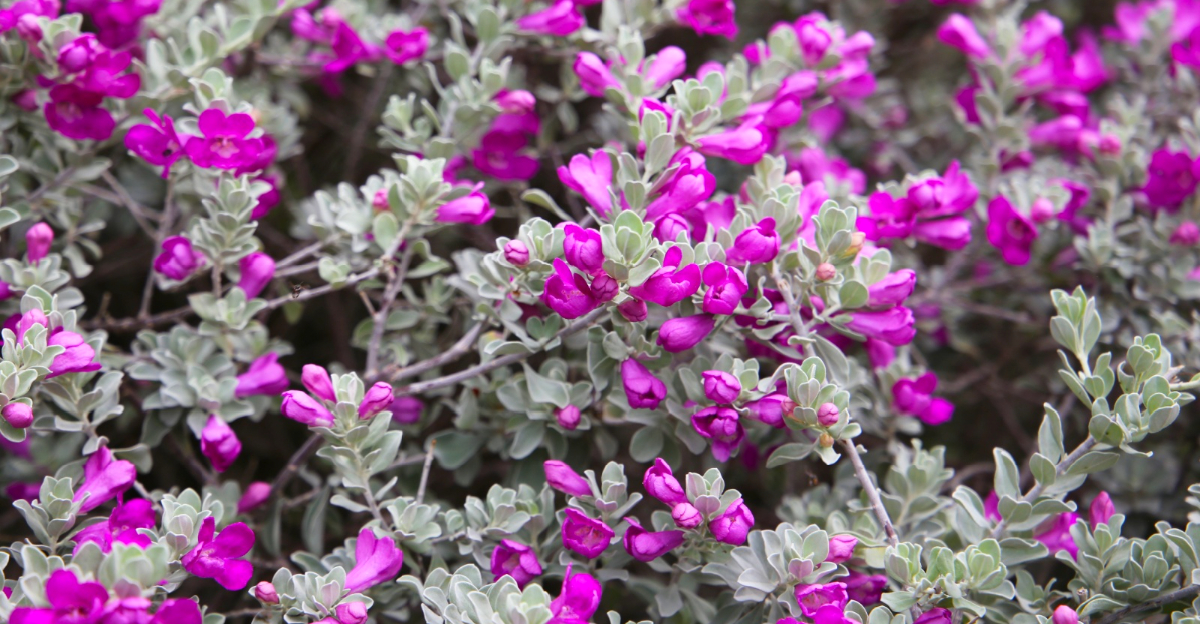
Silvery leaves that look great even when it’s not blooming, bold purple flowers that tend to show up right around monsoon season like they planned it that way, and water needs that are genuinely impressively low.
It’s the kind of plant that makes you wonder why you didn’t try it sooner.
1. Texas Sage Brings Bold Color Without Lantana
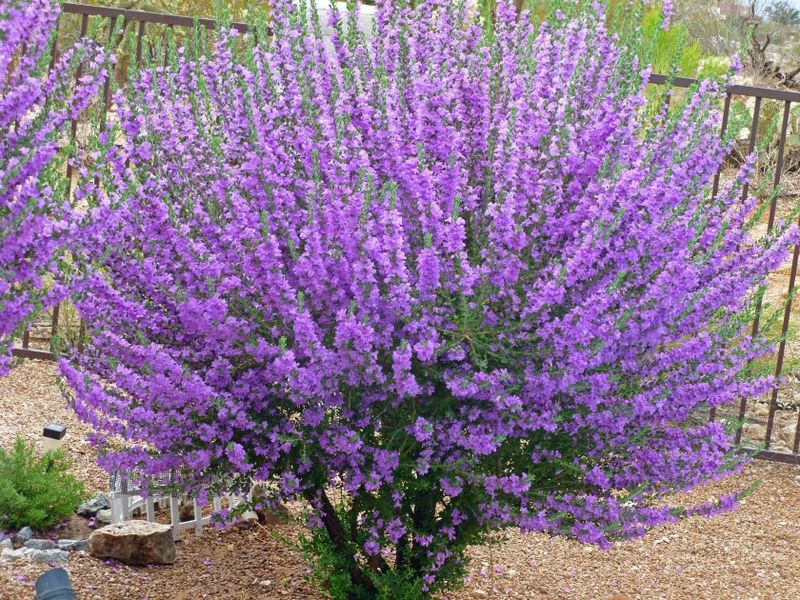
Walking past a front yard in Arizona during bloom season and spotting a shrub covered in bright purple flowers is a moment that stops most people in their tracks.
That shrub is often Texas sage, and it delivers a color punch that rivals lantana without some of the headaches that come with it.
Lantana is a reliable bloomer, but it tends to sprawl low and wide, sometimes requiring frequent trimming to stay within its intended space in a landscape bed.
Texas sage grows more upright and woody, giving it a cleaner structure that works well along driveways, fences, and entry paths where you want a shrub with presence rather than a low spreading mat of color.
The blooms are typically lavender to deep purple, though some varieties lean toward pink or magenta, offering a range of options depending on the look you want.
One thing worth knowing upfront is that Texas sage is not a one-for-one swap for lantana. The two plants play different roles in a yard.
Lantana tends to fill low horizontal spaces, while Texas sage takes up more vertical room and reads more clearly as a traditional shrub.
For Arizona homeowners who want bold seasonal color with less fuss, though, Texas sage is well worth considering as a centerpiece or accent in a low-water planting bed.
2. Monsoon Humidity Triggers Its Showy Blooms
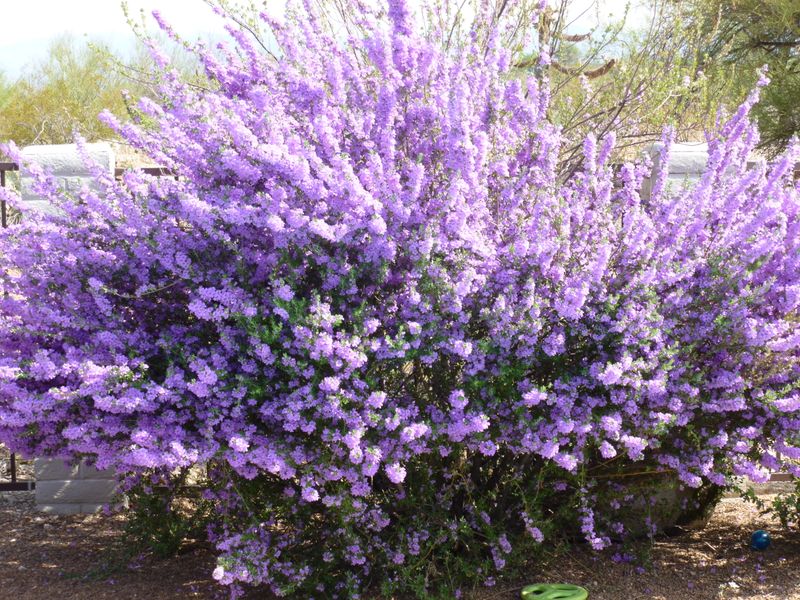
One of the most surprising things about Texas sage is how it responds to summer humidity. In Arizona, the monsoon season brings a dramatic shift in the air, and Texas sage seems to sense it almost immediately.
Many gardeners notice that the shrub can go from looking quiet and silvery to absolutely covered in purple blooms within a day or two of a good monsoon storm rolling through.
This bloom response is tied to changes in humidity and rainfall rather than just temperature.
Because Arizona summers are typically hot and dry before the monsoon arrives, the sudden increase in moisture in the air acts almost like a signal that triggers the plant to flower.
Your Arizona Garden Changes Every Week. Your Plan Should Too.
Gardening in Arizona changes quickly throughout the season. Every Friday you’ll receive a simple weekly plan showing exactly what to plant, prune, fertilize, harvest, and protect so you never miss the right timing.
Some homeowners describe watching the buds appear practically overnight after a humid monsoon evening, which makes the plant feel a little magical during the summer months.
Bloom timing can also be influenced by irrigation, overall soil moisture, and how recently the shrub was pruned. Plants that receive a deep watering just before or during the monsoon season often respond with heavier bloom flushes.
While the monsoon is the most reliable trigger in Arizona, Texas sage may also bloom in spring or fall depending on weather conditions and how the plant is managed through the growing season.
Expecting multiple bloom cycles throughout the year is reasonable in most Arizona locations.
3. Silvery Foliage Looks Good Between Flower Flushes
Between bloom cycles, some flowering shrubs look a little rough around the edges, with faded stems or dull foliage that makes the landscape feel flat.
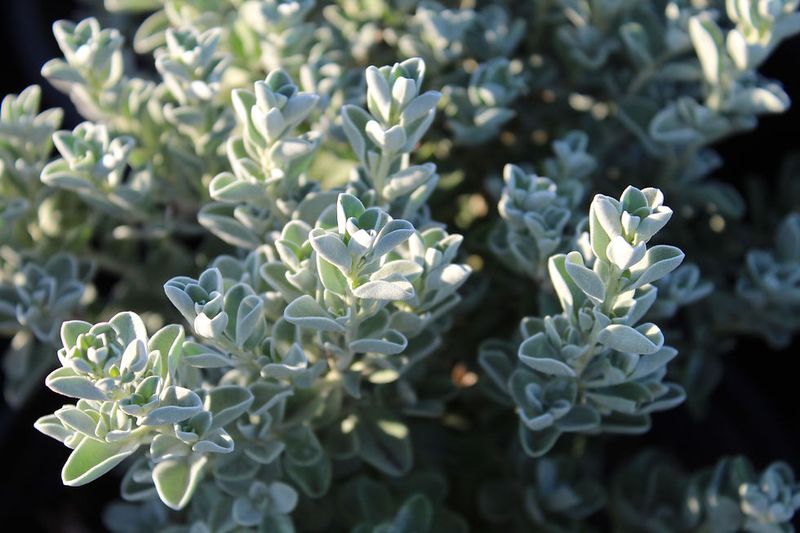
Texas sage sidesteps that problem with soft, silvery gray-green leaves that hold their good looks even when the plant is not in flower.
The foliage has a subtle texture and a muted color that pairs naturally with gravel mulch, sandy desert soil, and the warm tones of stucco walls common across Arizona neighborhoods.
That silvery quality comes from tiny hairs on the leaf surface, which help the plant reflect sunlight and reduce moisture loss in hot, arid conditions.
As a bonus, the foliage creates a soft visual contrast against darker green plants or bolder desert specimens like agave or prickly pear.
In a front yard or patio bed, this contrast can make the whole planting feel more intentional and layered without requiring extra effort.
For Arizona homeowners who want a shrub that earns its place in the landscape even during quieter months, the foliage alone makes Texas sage worth planting.
Lantana, by comparison, can look a bit weedy or overgrown when it is not actively blooming and has not been recently trimmed.
Texas sage maintains a tidier, more composed appearance through most of the year, which matters when curb appeal is a priority in a neighborhood where yards are visible from the street.
4. Low Water Needs Make It Fit Arizona Yards
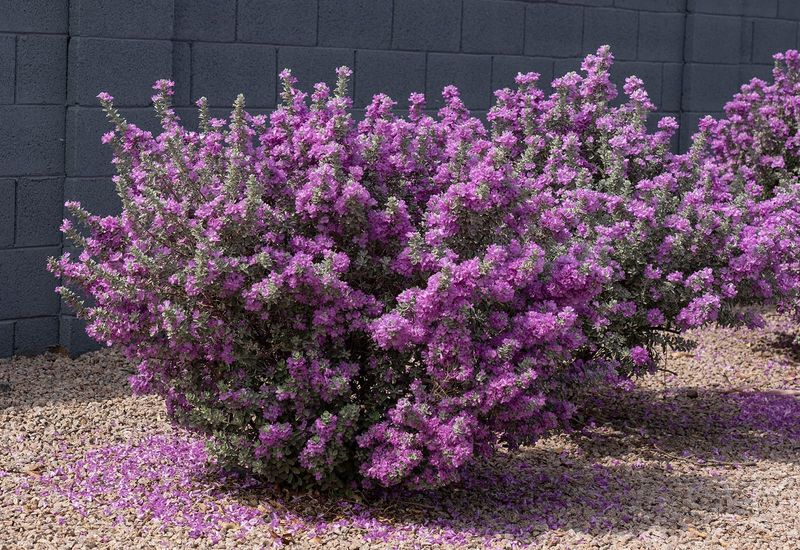
Water efficiency is one of the biggest factors Arizona homeowners weigh when choosing plants for their yards.
With water costs rising and restrictions becoming more common in many Arizona communities, there is growing pressure to replace thirsty plants with ones that can handle long dry stretches without looking stressed.
Texas sage fits that requirement well, performing reliably on deep, infrequent watering once it has settled in after the first growing season.
During establishment, which typically takes one to two growing seasons, the plant benefits from regular watering to help it develop a strong root system.
After that, most established Texas sage shrubs in Arizona can get by on supplemental irrigation every couple of weeks during the hottest months, with even less during cooler periods.
Rainfall during the monsoon season can sometimes handle a portion of that need on its own.
Overwatering is actually more of a concern than underwatering once the plant is established. Too much moisture, especially in heavy or poorly draining soil, can lead to root stress and a generally unhappy-looking shrub.
Planting in well-draining soil or amended beds and avoiding daily irrigation schedules will keep Texas sage healthier in the long run.
For Arizona yards designed around low-water principles, Texas sage fits right in alongside other desert-adapted plants without requiring a separate irrigation zone or extra attention from the homeowner.
5. Full Sun And Reflected Heat Are Usually No Problem
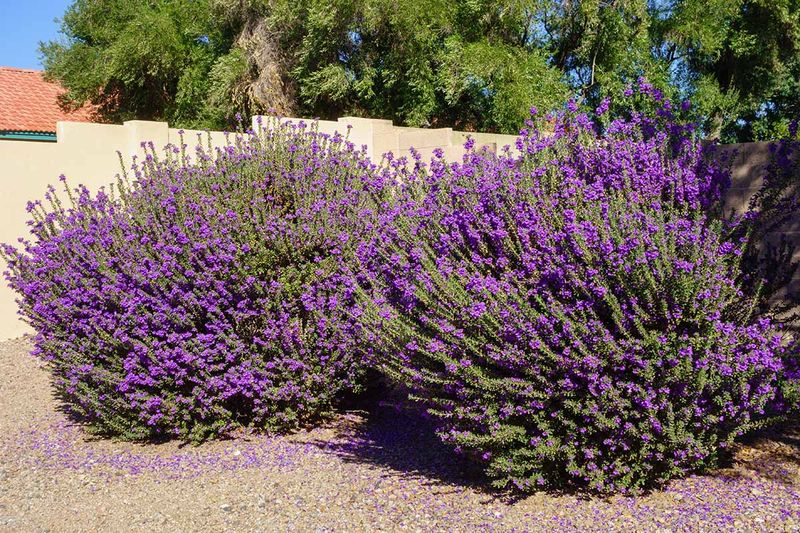
Reflected heat is one of the toughest challenges in Arizona residential landscaping. South and west-facing walls, concrete driveways, paved patios, and block fences can amplify summer temperatures well beyond what is already a scorching baseline.
Many plants that look great in spring begin to struggle once that reflected heat kicks in during July and August, which is exactly when Arizona yards need reliable color the most.
Texas sage handles full sun and reflected heat better than many flowering shrubs commonly used in Arizona landscapes.
It evolved in the dry, rocky regions of the southwestern United States and northern Mexico, where intense sunlight and heat are simply part of life.
That background means it is genuinely adapted to the kind of exposure that causes problems for plants with less desert heritage.
Placing Texas sage along a south-facing wall, near a concrete driveway, or at the edge of a sun-baked patio bed is a reasonable choice for most Arizona yards.
The shrub tends to hold its form and foliage color even in those hotter microclimates, and it may actually bloom more reliably in spots that receive maximum sun exposure.
For homeowners who have struggled to find a flowering shrub that survives those punishing locations, Texas sage offers a genuinely heat-tolerant option that does not require shade cloth or extra protection during the hottest months of the Arizona summer.
6. It Works Better As A Shrub Than A Groundcover
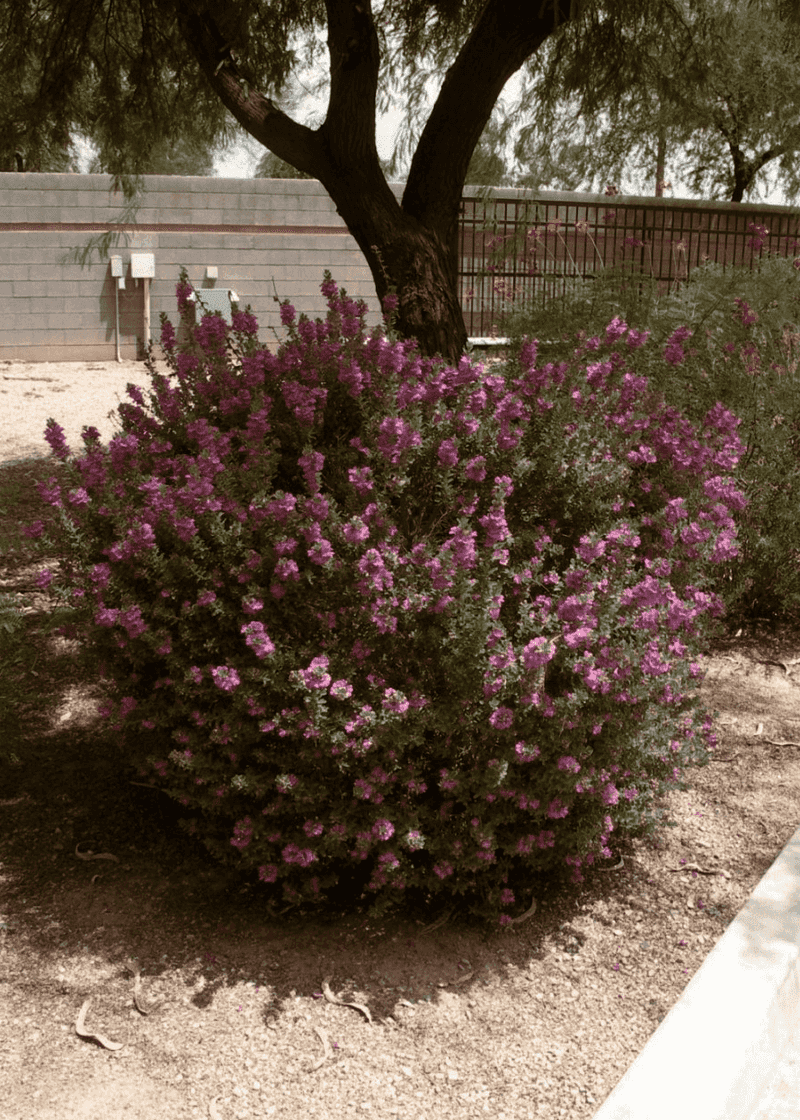
Homeowners who are used to lantana sometimes expect Texas sage to behave the same way, sprawling low and filling in gaps like a groundcover. The reality is quite different.
Texas sage grows as a woody, upright shrub that can reach four to eight feet tall and three to six feet wide depending on the variety, making it a much more substantial plant than lantana in terms of overall structure and presence.
That upright habit makes it better suited to roles where you want a defined shrub rather than a low-spreading filler. Think of it as a foundation plant along a house wall, a soft screen along a fence line, or a focal point at the corner of a patio bed.
In those spots, its height and volume work in its favor, giving the landscape a sense of structure that lantana simply cannot provide at the same scale.
One practical thing to keep in mind is mature size. Because Texas sage can get fairly large over several years, planting it too close to walkways, windows, or other shrubs can create crowding issues down the road.
Giving it enough room to develop naturally without constant cutting back will keep it looking its best.
In Arizona yards where space allows, letting Texas sage grow into its full natural form produces a far more attractive and manageable plant than one that is constantly being cut down to fit a tight spot.
7. Light Pruning Keeps The Shape More Natural
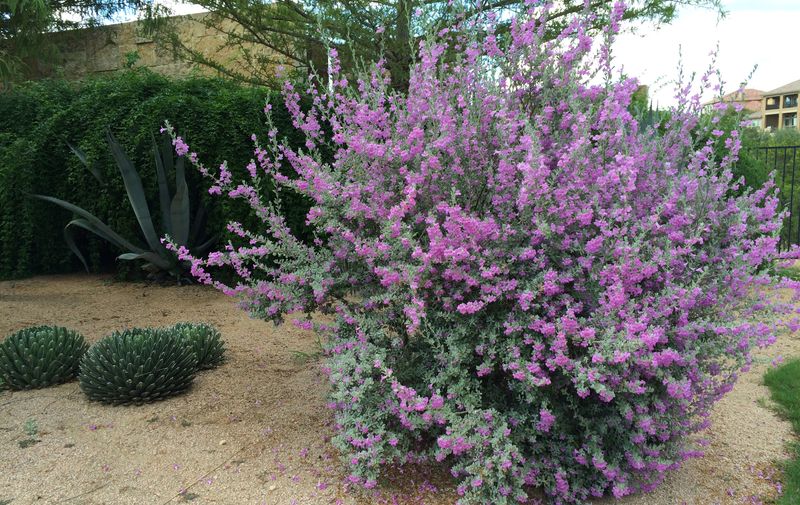
Shearing Texas sage into a tight ball or box shape is one of the more common mistakes made with this plant in Arizona yards. Heavy shearing removes the branch tips where blooms form, which can reduce flowering significantly.
It also forces the plant into an unnatural shape that requires constant maintenance to maintain, turning what should be a low-effort shrub into a regular chore.
A lighter approach works much better. Selectively removing a few longer branches or stems that are crossing, crowding the center, or pushing into a walkway keeps the plant tidy without sacrificing its natural rounded form.
This kind of light selective pruning is best done after a bloom cycle has finished rather than right before one is about to start, so the plant has time to set new buds on fresh growth before the next flush.
In Arizona, many experienced gardeners recommend doing any significant pruning in late winter or early spring before the heat arrives, then leaving the plant alone through the growing season to bloom as it naturally wants to.
Occasional tidying during the year is fine, but letting Texas sage develop its own gently mounded silhouette tends to produce a more attractive plant overall.
The shrub has a naturally graceful shape when it is not forced into geometric forms, and that relaxed, organic look suits the casual style of most Arizona desert landscapes quite well.
8. Several Varieties Offer Different Sizes And Colors
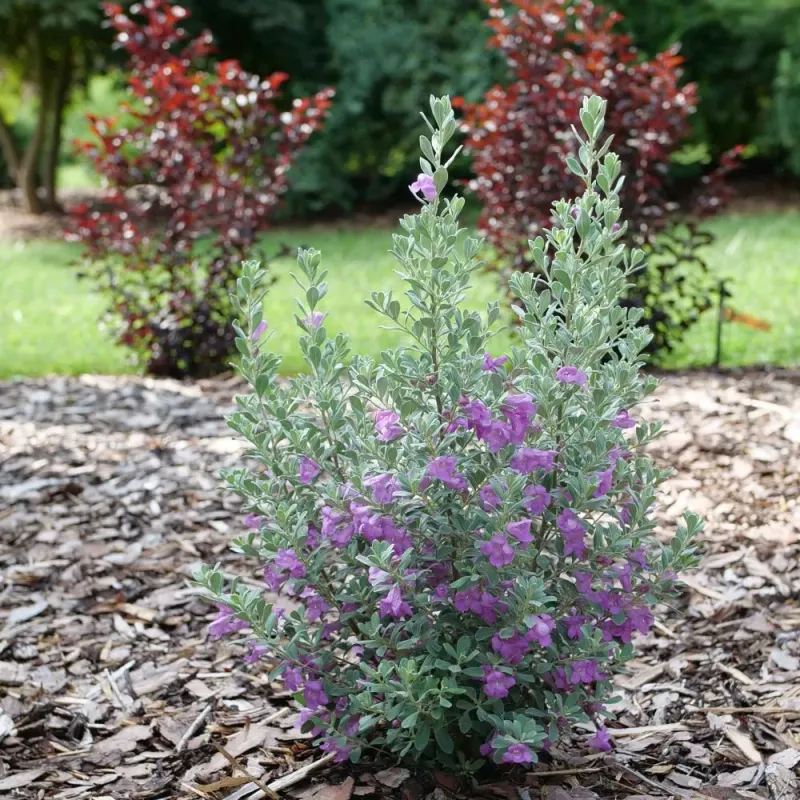
Not all Texas sage shrubs are the same, and that variety is actually one of the reasons the plant is gaining more attention in Arizona landscapes.
Several cultivated varieties have been developed over the years that offer different mature sizes, bloom colors, and foliage tones, giving homeowners more options to match the plant to their specific space and style.
Some varieties stay compact, reaching only three to four feet tall, which makes them easier to fit into smaller beds or along the edges of patios without overwhelming the space. Others grow larger and work well as background shrubs or informal screens.
Bloom color ranges from soft lavender and pale pink to deep violet and magenta, so there is likely a variety that complements whatever color palette is already present in a yard.
When shopping at an Arizona nursery, it helps to ask specifically about the mature size of the variety you are considering rather than assuming all Texas sage plants grow the same way.
Some popular varieties found in Arizona include Leucophyllum frutescens types as well as hybrids that have been selected for more reliable blooming or a more compact form.
Choosing the right variety for the right spot from the beginning reduces the need for heavy pruning later and keeps the plant looking its best with minimal intervention.
A little research at the nursery stage pays off for years in a low-water Arizona yard.