These Fruit Trees Grow Surprisingly Well In Large Containers In Arizona Heat
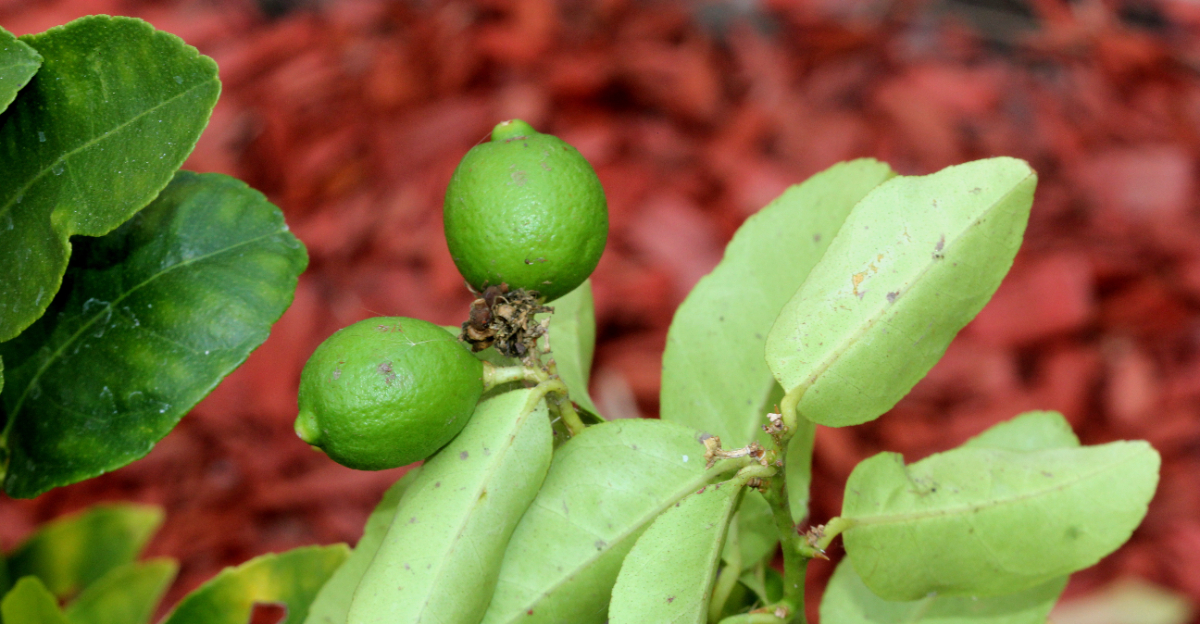
Limited space stops a lot of people from growing fruit trees. A small yard, a patio, or a paved backyard can make it seem like fresh fruit is out of reach.
That is why container gardening has become so appealing. It gives homeowners a way to grow more without needing a large property or a dedicated orchard.
Of course, not every fruit tree is a good candidate for life in a pot. Some quickly outgrow their space, while others struggle to handle the restrictions that come with container growing.
Finding varieties that stay manageable and continue producing well can make all the difference.
Heat adds another challenge. A tree that performs beautifully in mild conditions may react very differently once summer temperatures settle in.
That is especially true in Arizona, where container plants must cope with intense sun and long periods of hot weather.
Fortunately, some fruit trees adapt remarkably well to large containers. With the right choice, it is possible to enjoy healthy growth, attractive foliage, and even a rewarding harvest without needing a large space to make it happen.
1. Fig Trees Produce Reliably In Large Containers
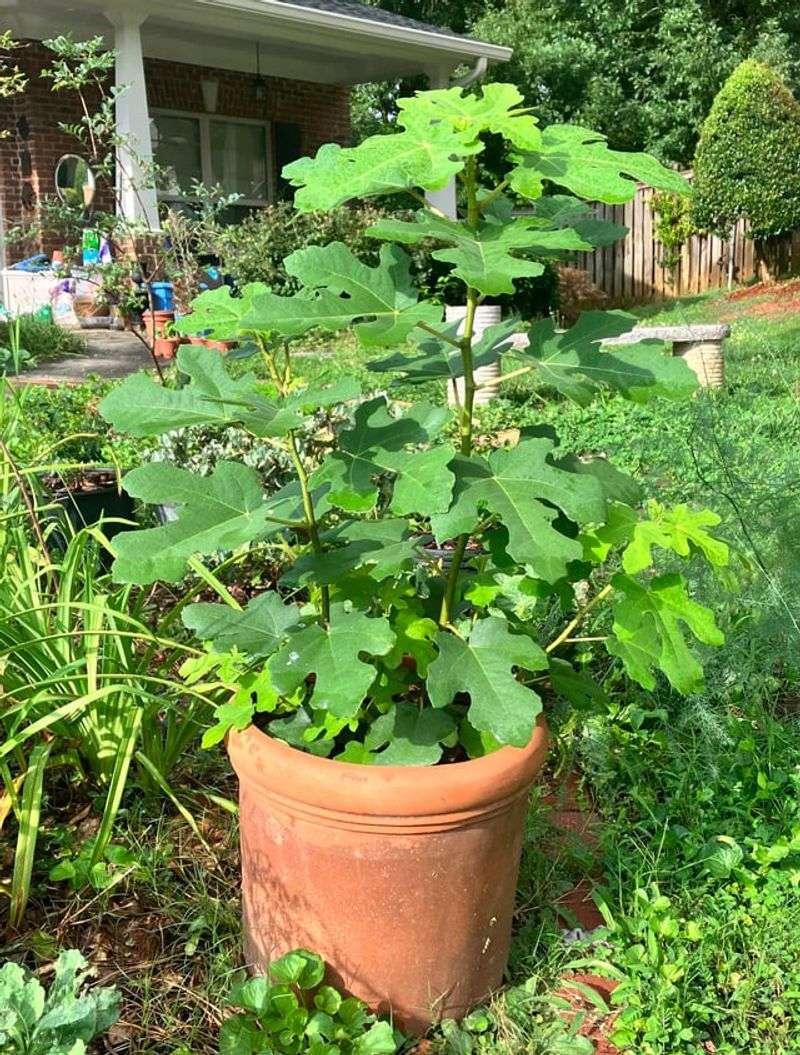
Few fruit trees handle brutal summer heat as calmly as the fig. Native to the Mediterranean, figs evolved in hot, dry conditions that closely mirror what desert gardeners deal with every season.
A large container works well for figs because it limits root spread, which actually encourages faster fruiting. Choose a pot at least 24 inches wide and deep.
Terra cotta breathes well but dries fast, so glazed ceramic or heavy-duty plastic holds moisture longer.
Plant in well-draining potting mix. Add perlite to improve drainage and prevent root rot during monsoon season.
Figs prefer slightly acidic to neutral soil, so avoid mixing in heavy amounts of native caliche-heavy dirt.
Water deeply but let the top inch or two dry out between sessions. Overwatering causes more problems than underwatering with figs.
During peak summer, daily watering may be needed.
Brown Turkey and Black Mission are two varieties that perform consistently in hot climates. Both produce sweet, soft fruit and handle reflected heat from walls and pavement without much fuss.
Feed with a balanced slow-release fertilizer in early spring and again in midsummer. Avoid high-nitrogen formulas late in the season since that pushes leafy growth instead of fruit.
Move the container to a sheltered spot if temps drop below 20 degrees Fahrenheit in winter.
2. Pomegranate Trees Adapt Well To Pot Growing
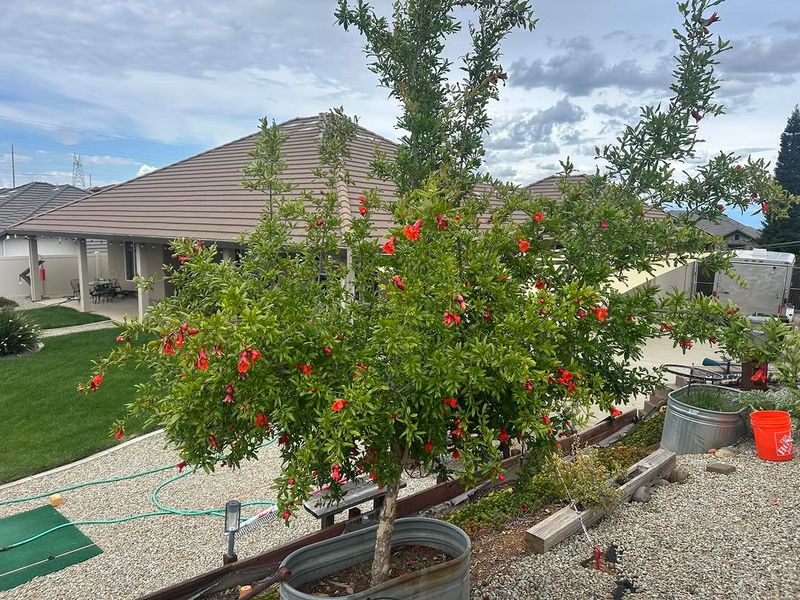
Pomegranates are practically built for desert conditions. They love full sun, tolerate drought better than most fruit trees, and bounce back fast even after neglect during the hottest weeks.
In a container, pomegranates stay more compact than in-ground plants but still produce a solid harvest. Pick a pot at least 20 to 24 inches wide.
Wider is always better since these trees push out a decent root system over time.
Use well-draining potting soil mixed with coarse sand or perlite. Pomegranates hate soggy roots.
Standing water in a pot will cause root problems fast, especially during monsoon rains when moisture builds up quickly.
Your Arizona Garden Changes Every Week. Your Plan Should Too.
Gardening in Arizona changes quickly throughout the season. Every Friday you’ll receive a simple weekly plan showing exactly what to plant, prune, fertilize, harvest, and protect so you never miss the right timing.
Water consistently during the growing season but ease off in fall and winter. Inconsistent watering causes fruit to crack, which is frustrating after months of careful tending.
Keep the schedule steady once fruits start sizing up.
Wonderful is the most popular variety for home growers and performs reliably in hot climates. Parfianka is another solid option with sweeter, softer seeds that many people prefer for fresh eating.
Prune lightly each year to remove crossing branches and open up airflow. Pomegranates bloom on new growth, so light pruning encourages more flowers and better fruit set.
Fertilize in spring with a low-nitrogen formula to support blooming over leafy growth.
3. Meyer Lemon Trees Stay Productive In Containers
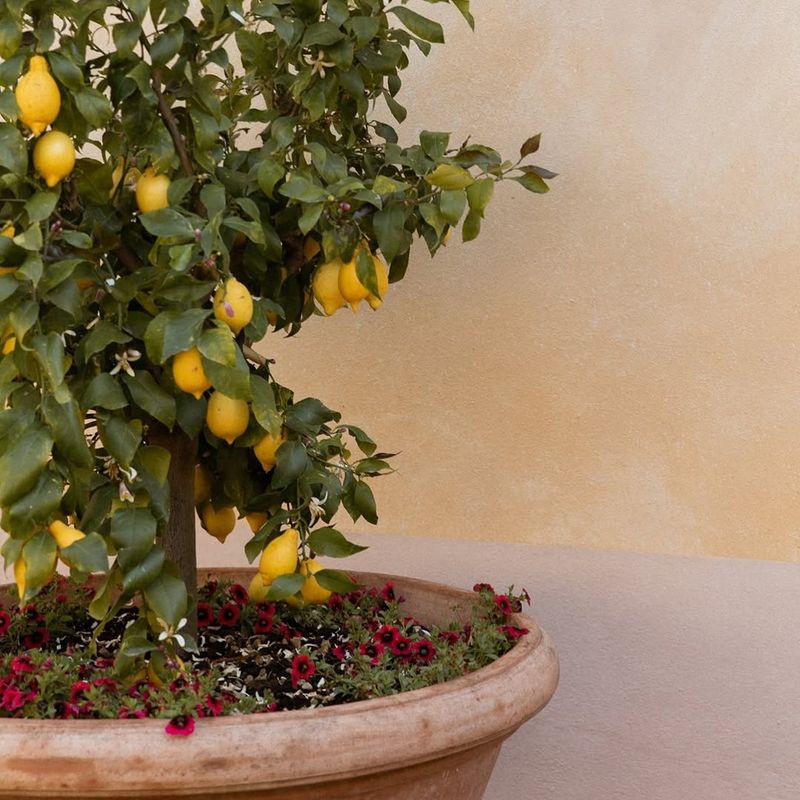
Meyer lemons are a gardener’s reward for putting in consistent care. Fragrant blossoms, glossy leaves, and bright yellow fruit make this one of the most satisfying container trees you can grow in hot climates.
Unlike standard lemons, Meyer lemons are a cross between a lemon and a mandarin orange. That heritage gives the fruit a sweeter, less acidic flavor that works beautifully for both cooking and fresh use.
Container growing suits Meyer lemons well because you can control soil quality precisely. Native desert soil tends to be alkaline and poorly draining, both of which cause problems for citrus.
A pot filled with quality citrus mix sidesteps those issues entirely.
Choose a container at least 15 to 20 gallons in size. Bigger pots hold more moisture and buffer temperature swings better, which matters a lot when summer temps push past 110 degrees Fahrenheit.
Water when the top two inches of soil feel dry. Citrus does not like sitting in wet soil, but it also struggles when allowed to dry out completely.
Consistent moisture produces better fruit and healthier foliage.
Feed every six to eight weeks during the growing season with a citrus-specific fertilizer. Watch for yellowing leaves, which often signals an iron or nitrogen deficiency common in container-grown citrus.
A foliar spray of chelated iron can correct that quickly.
4. Calamondin Orange Trees Remain Compact And Fruiting
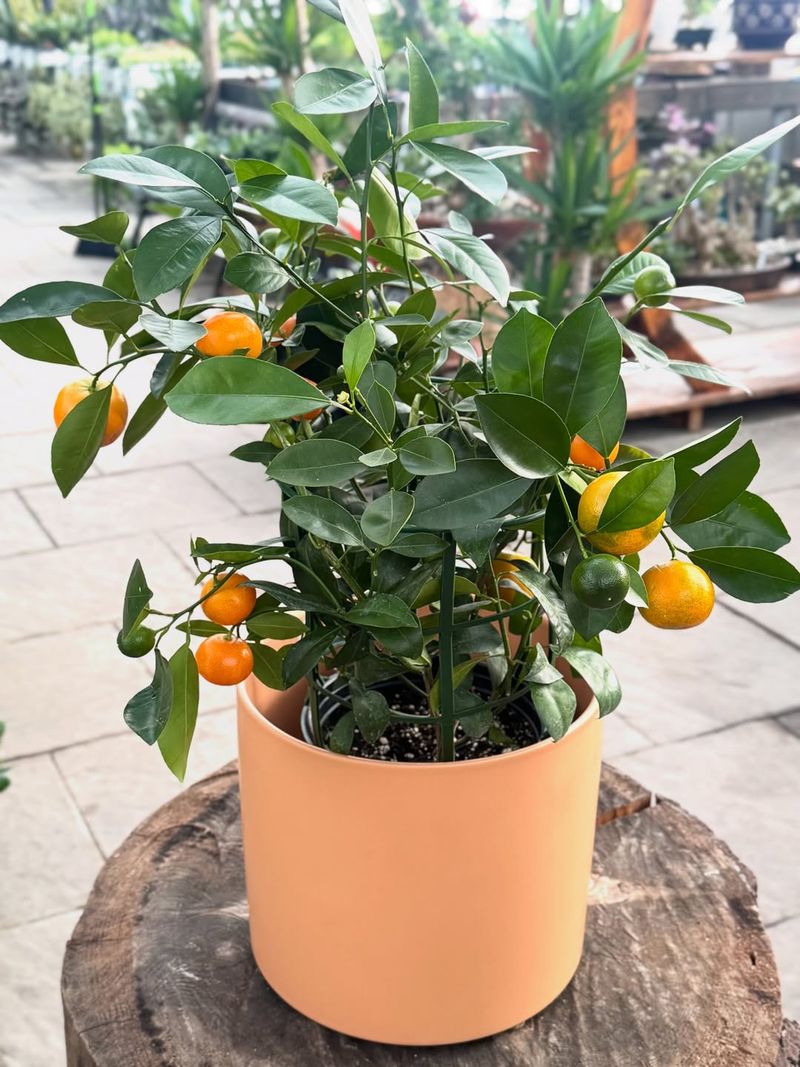
Calamondins might be the most underrated container citrus around. Small, tidy, and almost always loaded with fruit, these trees look like something out of a gardening catalog without requiring catalog-level effort.
Fruit is small, about the size of a large marble, and very tart. It works well for marmalades, juices, and flavoring drinks.
Some people eat them whole like kumquats, rind and all, for a sharp citrus punch.
Container size matters less with calamondins than with other citrus. A 10 to 15 gallon pot works fine for several years before repotting becomes necessary.
That makes them ideal for balconies, small patios, or spots where space is limited.
Well-draining citrus potting mix is the right foundation. Avoid heavy soils that compact over time.
Add perlite if the mix feels dense, especially if you tend to water frequently during the hottest months.
Sun exposure should be generous. Six to eight hours of direct sunlight daily keeps the tree healthy and fruiting consistently.
Partial shade slows fruit production noticeably and can cause leaf drop over time.
Fertilize monthly during spring and summer with a balanced citrus fertilizer. Back off in fall and winter when growth naturally slows.
Calamondins are more cold-tolerant than many citrus varieties, making them a bit more forgiving during cooler desert nights in January and February.
5. Olive Trees Thrive In Hot Dry Conditions
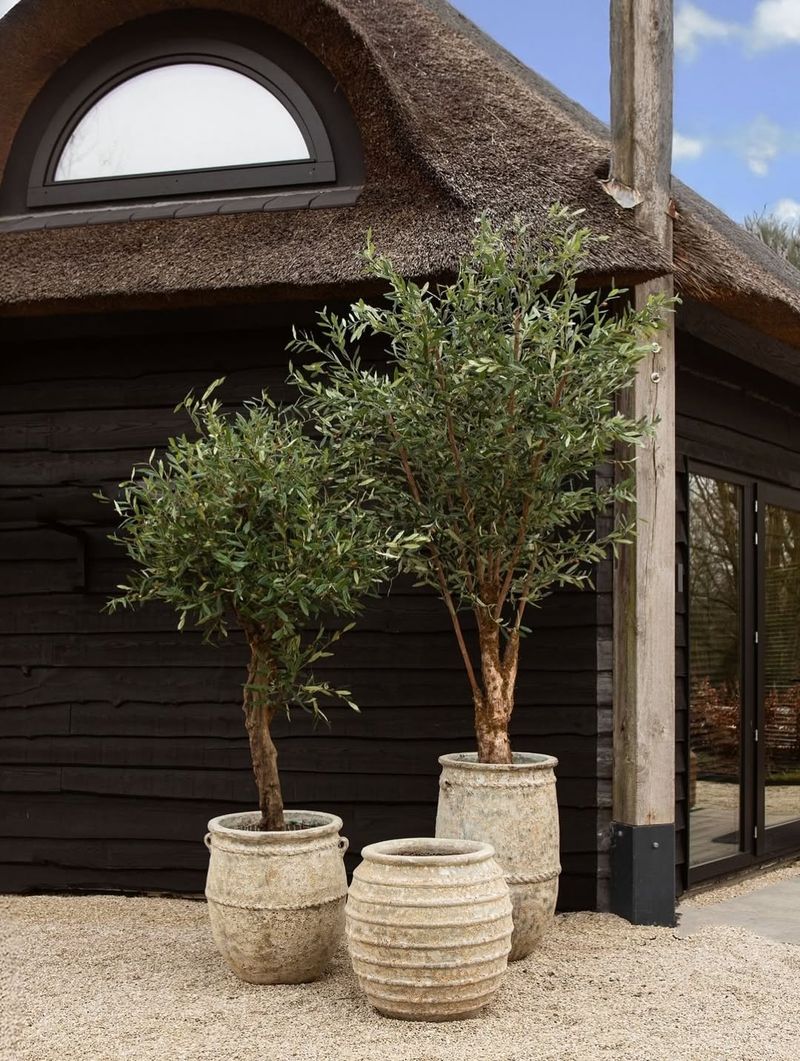
Olive trees were made for heat. Centuries of cultivation across Mediterranean coastlines and dry inland valleys produced a tree that handles sun, poor soil, and limited water with remarkable ease.
Container growing suits olives well because their roots prefer excellent drainage above almost everything else. Soggy soil is the one condition olives genuinely struggle with, and a pot with drainage holes eliminates that risk quickly.
Pick a large, heavy container since olives grow slowly but eventually become sizable. A 25 to 30 gallon pot gives roots enough room to develop without requiring constant repotting every season.
Heavy containers also resist tipping in wind.
Arbequina is the most popular container variety. It stays compact, produces small flavorful olives, and adapts well to patio conditions.
Koroneiki is another smaller variety worth considering if you want a tree that fruits reliably in heat.
Water deeply but infrequently once established. Young trees need more frequent watering during their first season.
After that, pulling back on irrigation encourages deeper root growth and stronger overall structure.
Fertilize once in early spring with a balanced slow-release fertilizer. Olives are not heavy feeders, so overfeeding pushes leafy growth at the expense of fruit.
Minimal pruning keeps the canopy open and allows sunlight to reach fruiting wood throughout the season.
6. Dwarf Peach Trees Grow Well In Large Pots
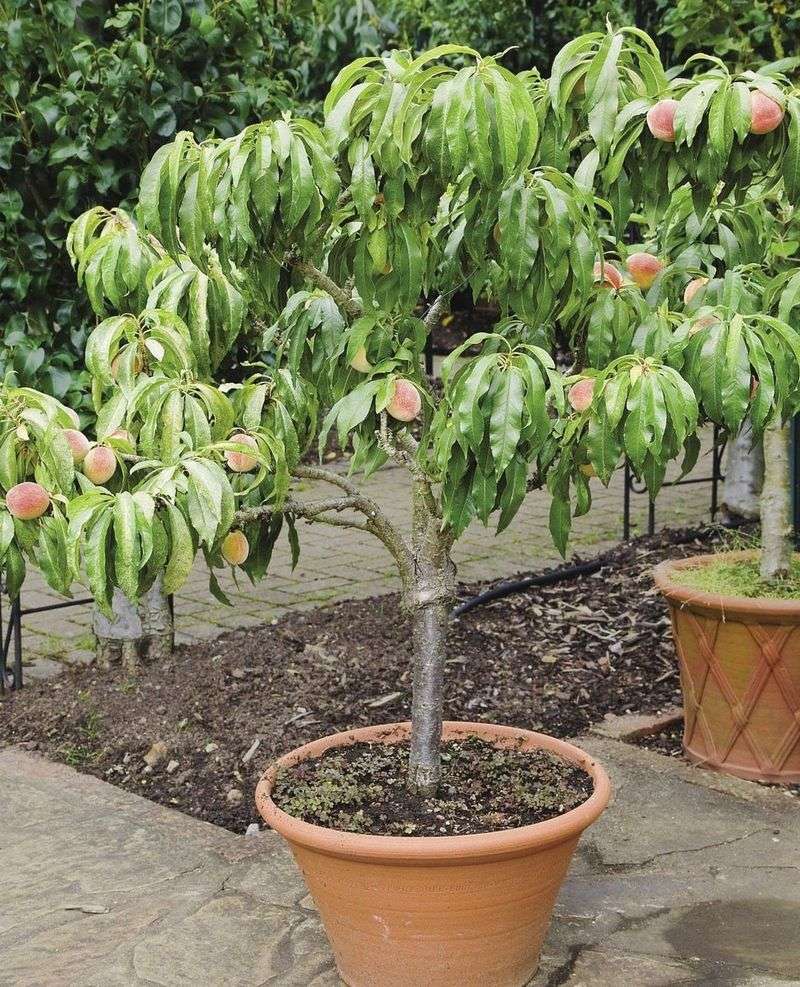
Peaches in a pot sounds ambitious, but dwarf varieties make it genuinely practical. With the right variety and a large enough container, you can harvest real peaches from a patio tree in your first or second year.
Low-chill varieties are essential in warm desert climates. Standard peach trees need hundreds of chill hours to break dormancy and fruit properly.
Low-chill types like Desert Gold and Tropic Snow were developed specifically for regions with mild winters.
Container size directly affects fruit production. Go with at least a 25 to 30 gallon pot.
Smaller containers restrict root growth and limit how much energy the tree can store for fruiting. Bigger pots also hold soil temperature more stable during extreme heat spikes.
Well-draining soil is non-negotiable. Peaches are highly sensitive to root problems caused by standing water.
Mix quality potting soil with coarse perlite at roughly a 70/30 ratio for reliable drainage year-round.
Water consistently during the growing season. Peaches need regular moisture as fruit develops, but easing off just before harvest concentrates sweetness in the fruit.
That small timing adjustment makes a noticeable difference in flavor.
Fertilize with a balanced fruit tree fertilizer in early spring before bud break. A second feeding after harvest helps the tree recover and store energy for next season.
Thin fruit early if clusters form, leaving space between each peach for proper sizing.
7. Kumquat Trees Stay Small While Producing Fruit
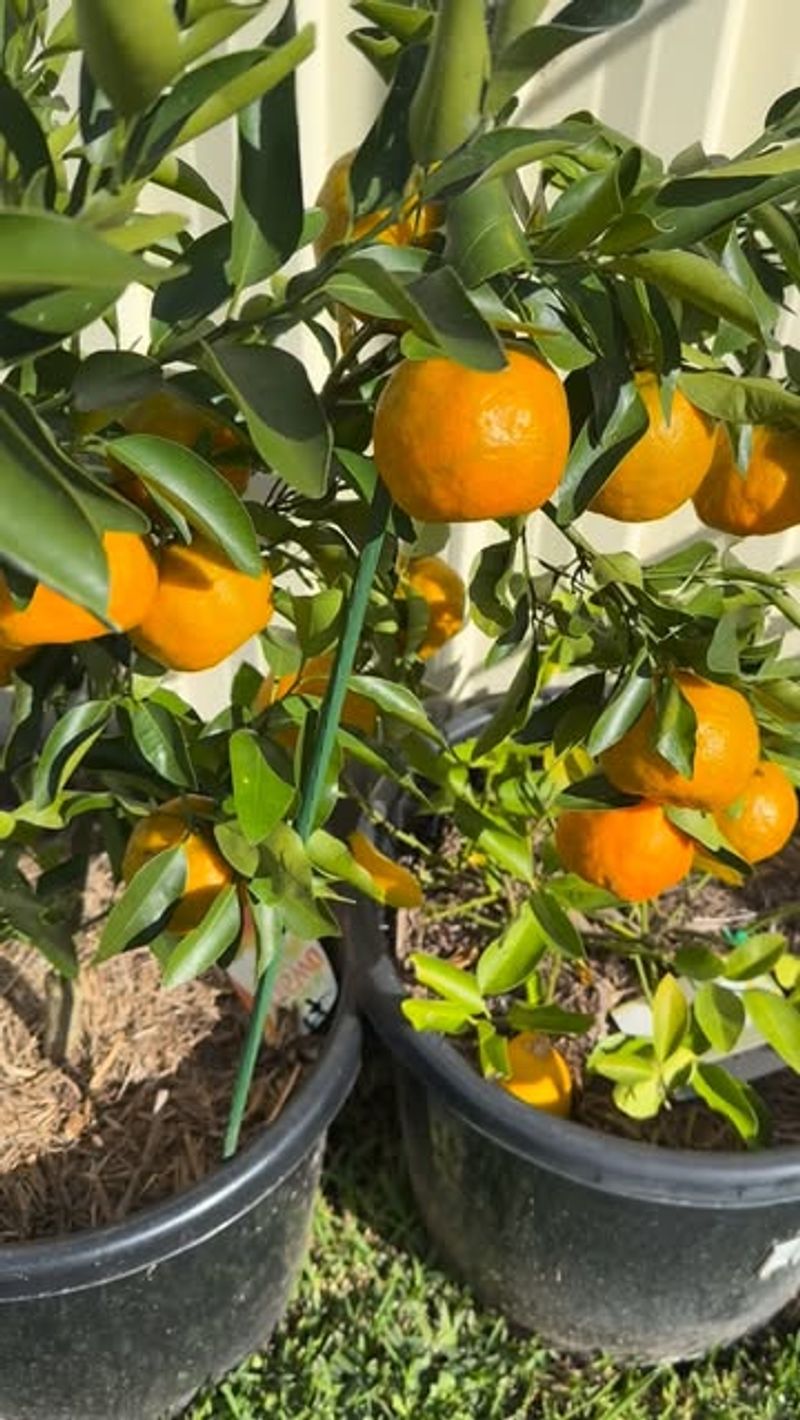
Kumquats pack a lot of personality into a small package. Bite-sized fruit, glossy dark leaves, and a naturally compact shape make these trees one of the easiest container citrus options for warm desert climates.
Unlike most citrus, you eat kumquats whole. The rind is sweet while the flesh is tart, creating a flavor combination that catches most people off guard in the best way.
Fresh off the tree, they are genuinely addictive.
Nagami is the most widely available variety and performs well in containers. Meiwa produces rounder, sweeter fruit and tends to be slightly more cold-tolerant, which matters during cooler desert nights in winter months.
A 15 to 20 gallon container gives kumquats enough root space without overwhelming a small patio. These trees stay naturally small, rarely exceeding six to eight feet even in-ground, so container growing keeps them even more manageable.
Full sun is important. Kumquats fruit best with at least six hours of direct sunlight daily.
In shaded spots, the tree stays healthy but fruit production drops off significantly and the flavor tends to be less intense.
Water when the top inch of soil dries out. Consistent watering during fruit development prevents splitting and improves overall yield.
Feed with citrus fertilizer every six to eight weeks from spring through early fall. Pull back fertilizing in winter when growth naturally slows down.
8. Dwarf Lime Trees Perform Well In Containers
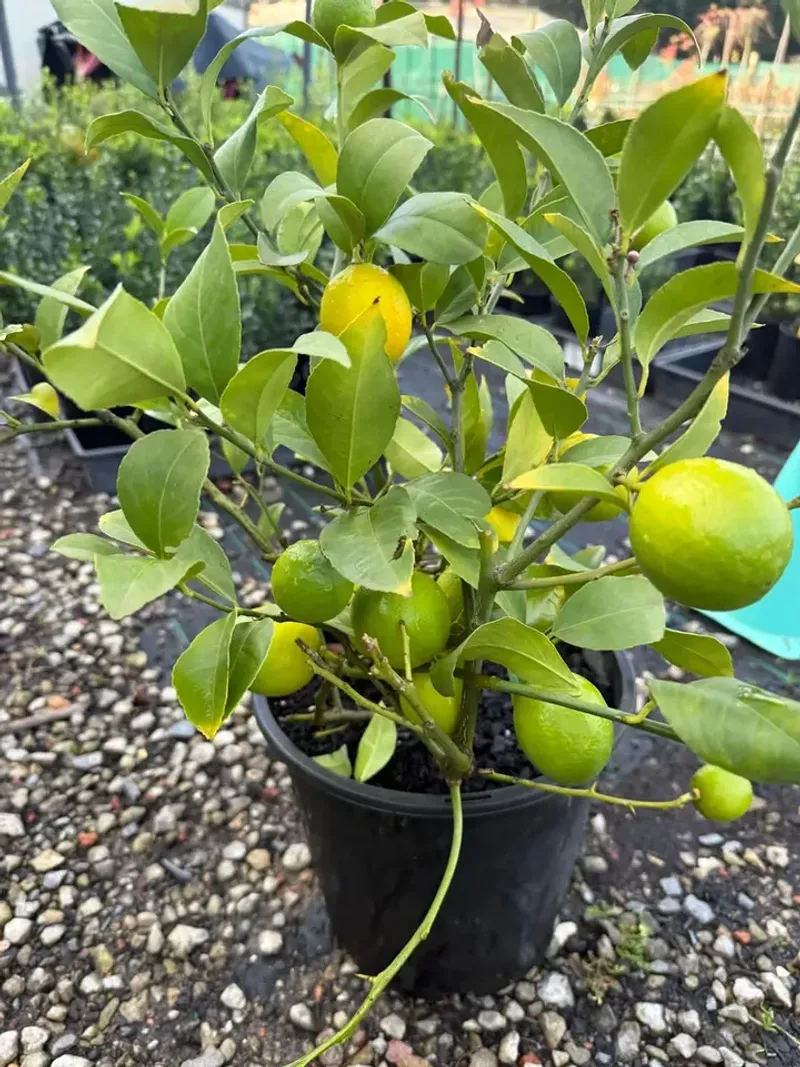
Limes might be the most practical citrus to grow at home. Fresh lime juice on demand, fragrant blossoms in spring, and a tree that fits neatly on any patio make dwarf lime trees a genuinely useful addition to any outdoor space.
Bearss seedless lime is the top choice for container growing. It produces full-sized, juicy limes on a compact tree that handles heat well.
Persian lime, another common name for this variety, is what you find in most grocery stores, so the flavor is familiar and reliable.
Container size matters more than most people realize. Start with at least a 15 gallon pot and move up to 25 gallons as the tree matures.
Larger containers hold moisture longer, which reduces how often you need to water during peak summer heat.
Citrus-specific potting mix works best. Regular potting soil tends to compact over time and restricts drainage, which causes root problems.
Adding perlite improves airflow around roots and keeps the soil structure loose season after season.
Water deeply when the top two inches feel dry. Shallow, frequent watering encourages surface roots that struggle during extreme heat.
Deep watering pushes roots downward and creates a more resilient root system overall.
Fertilize every six weeks during spring and summer. Watch for pale yellow leaves between the veins, a sign of iron chlorosis that is common in container citrus.
Chelated iron applied as a foliar spray corrects the problem within a week or two.