7 Mistakes To Avoid When Growing Pomegranates In Containers In Arizona
Pomegranates and Arizona seem like a perfect match, and in many ways they are.
These trees love heat, handle dry conditions better than most fruit plants, and can produce a genuinely impressive harvest when everything comes together the right way.
Container growing has made pomegranates even more accessible for homeowners who don’t have a lot of ground space to work with.
More people are trying it, and that’s exciting to see. But there’s a gap between growing a pomegranate that survives and growing one that actually thrives and produces fruit consistently.
That gap often comes down to a few specific mistakes that are surprisingly easy to make, especially when you’re new to container growing in a desert climate.
Some of these errors seem minor in the moment but quietly affect the plant’s health over time.
1. Using Containers That Are Too Small For Root Growth
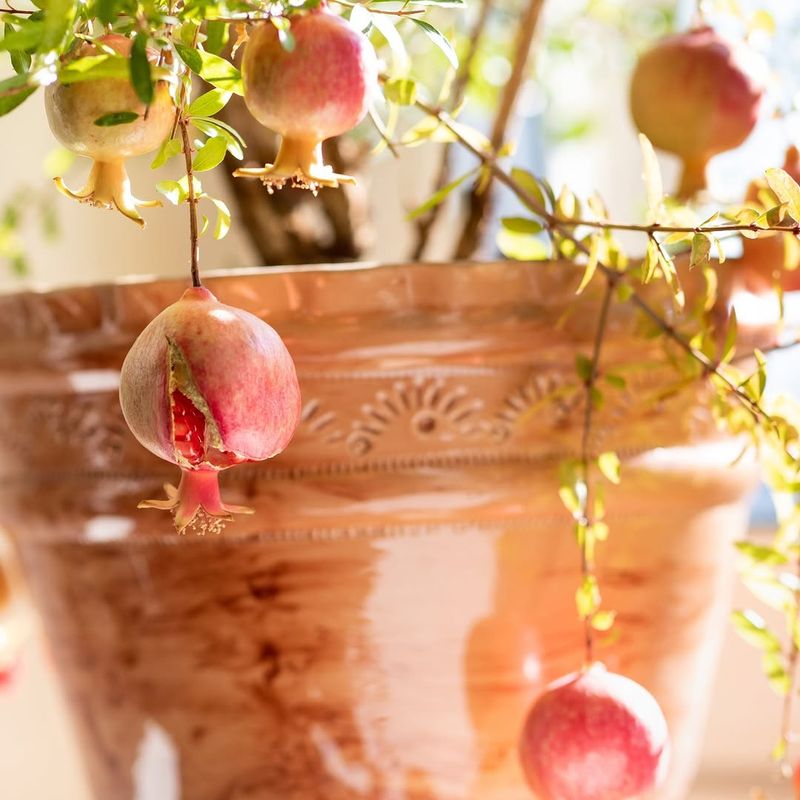
Size matters more than most people realize when it comes to container gardening in Arizona. A pot that looks fine in spring can become a root prison by midsummer, leaving your pomegranate struggling to pull in water and nutrients when it needs them most.
Pomegranate roots spread wide and need room to breathe. When they get packed in tight, the plant stresses out fast, especially during Arizona’s triple-digit heat waves.
Roots circling the inside of a small container can choke off healthy growth and make the plant far more vulnerable to heat damage than it would be in a properly sized pot.
Start with a container that holds at least 15 to 20 gallons. That gives the root system space to develop without hitting walls too quickly.
As the plant matures, moving up to a 25- or 30-gallon container is a smart move.
Fabric grow bags are worth considering in Arizona’s climate because they allow air pruning of roots, which actually encourages healthier branching underground.
Heavy ceramic or thick-walled plastic pots also help insulate roots from the scorching ground temperatures that Phoenix and Tucson gardeners deal with every summer.
2. Planting In Soil That Drains Too Slowly
Heavy, dense soil sitting in a container is a recipe for root rot, and Arizona gardeners are not immune just because the climate is dry. Watering frequency goes up in the desert heat, which means slow-draining soil stays wet far longer than it should between waterings.
Standard potting mixes often hold too much moisture for container pomegranates in Arizona. Adding perlite, coarse sand, or decomposed granite to your mix improves drainage noticeably.
A good target ratio is roughly 60 percent quality potting mix to 40 percent drainage material, though you can adjust based on how quickly your specific mix dries out.
Drainage holes at the bottom of your container are non-negotiable. Pots without them, or with holes that get blocked by roots or debris, trap water at the base where roots sit.
That standing water creates an oxygen-starved zone that weakens roots over time.
Elevating your container slightly off the ground using pot feet or bricks also helps water escape freely. On Arizona patios where temperatures regularly hit 110 degrees Fahrenheit or higher, containers sitting flat on concrete can get extremely hot at the base, which compounds any drainage problem.
Your Arizona Garden Changes Every Week. Your Plan Should Too.
Gardening in Arizona changes quickly throughout the season. Every Friday you’ll receive a simple weekly plan showing exactly what to plant, prune, fertilize, harvest, and protect so you never miss the right timing.
3. Overwatering And Causing Root Stress
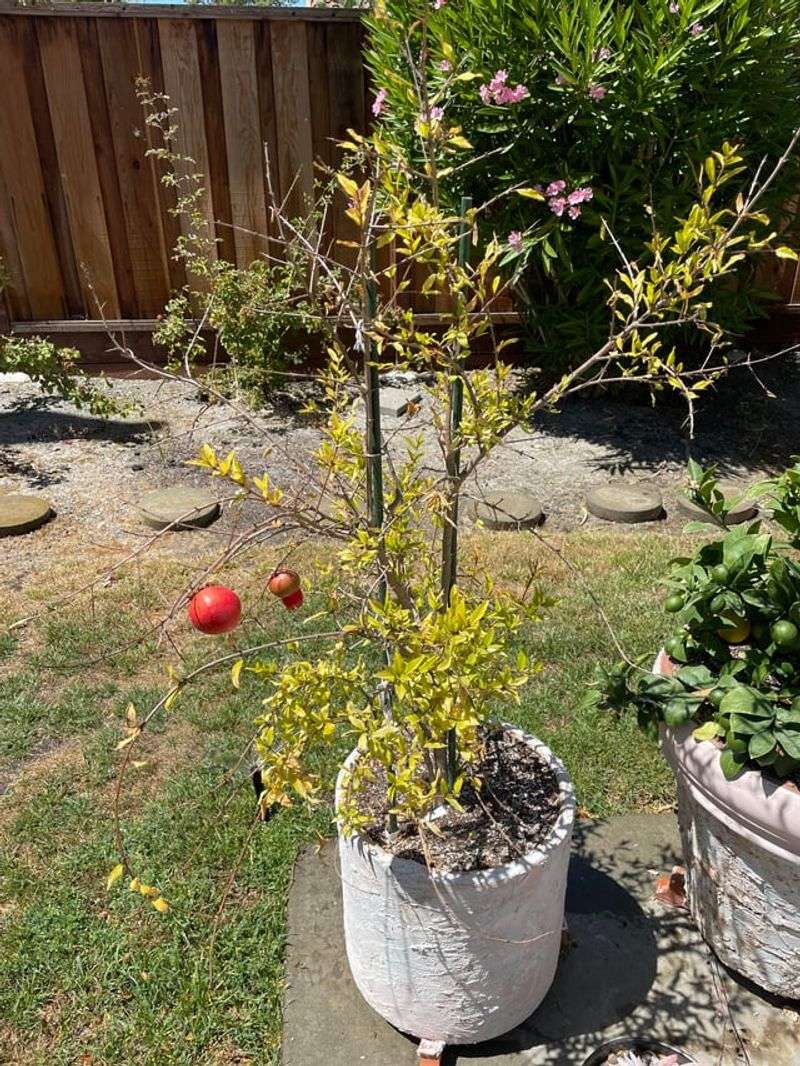
Overwatering is one of the sneakiest mistakes in Arizona container gardening because the heat makes you feel like the plant always needs more water. Leaves wilt in the afternoon sun, and the instinct is to grab the hose, but wilting does not always mean drought stress.
Pomegranates are surprisingly drought-tolerant once established, even in containers. Constantly wet soil around the roots cuts off oxygen, weakens the root system, and opens the door to fungal problems that are hard to reverse.
Root stress from overwatering can look almost identical to drought stress, which makes it easy to keep making the same mistake without realizing it.
Before watering, stick your finger two to three inches into the soil. If it still feels damp, wait another day.
In Arizona summers, containers in full sun may need water every one to two days, but that schedule should be based on actual soil moisture, not a fixed calendar.
Morning watering is almost always better than evening watering in Arizona. It gives the plant what it needs before peak heat arrives and allows any surface moisture to evaporate before nightfall, reducing fungal risk.
Drip irrigation systems with timers work well for containers, but they should still be adjusted seasonally.
Young pomegranate plants need more careful monitoring than established ones.
4. Letting Soil Dry Out Too Much During Heat
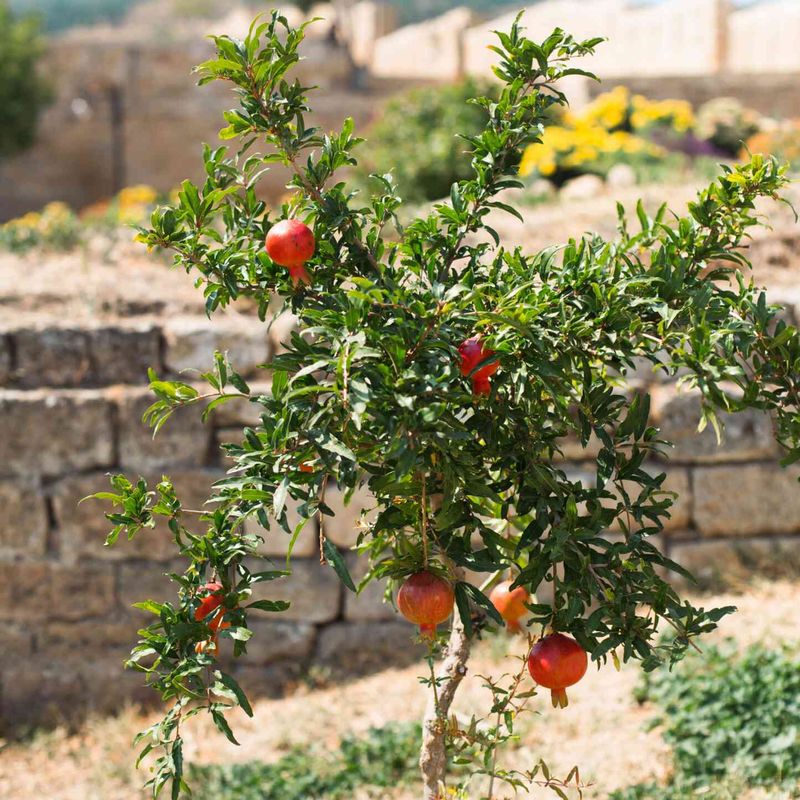
Bone-dry soil in a container during an Arizona summer is just as damaging as overwatering, and it can happen shockingly fast.
A pot sitting on a south-facing patio in Scottsdale or Mesa can go from adequately moist to completely parched in less than 24 hours when temperatures are above 105 degrees Fahrenheit.
When soil dries out completely, it often pulls away from the sides of the container. Water poured on top then runs straight down the gap and out the drainage holes without ever reaching the root zone.
The plant looks watered, but the roots are still bone dry, which is a frustrating and surprisingly common problem for Arizona container gardeners.
To fix hydrophobic soil, place the container in a shallow tray of water for 20 to 30 minutes and let the soil slowly reabsorb moisture from the bottom up. Adding a layer of mulch on top of the soil surface also slows evaporation significantly during the hottest months.
Pomegranates under drought stress in containers show signs like leaf curl, premature fruit drop, and general wilting that does not recover in the evening. Catching these signs early and responding quickly prevents longer-term setbacks in growth and fruit production.
5. Placing Pots In Harsh Afternoon Sun Too Soon
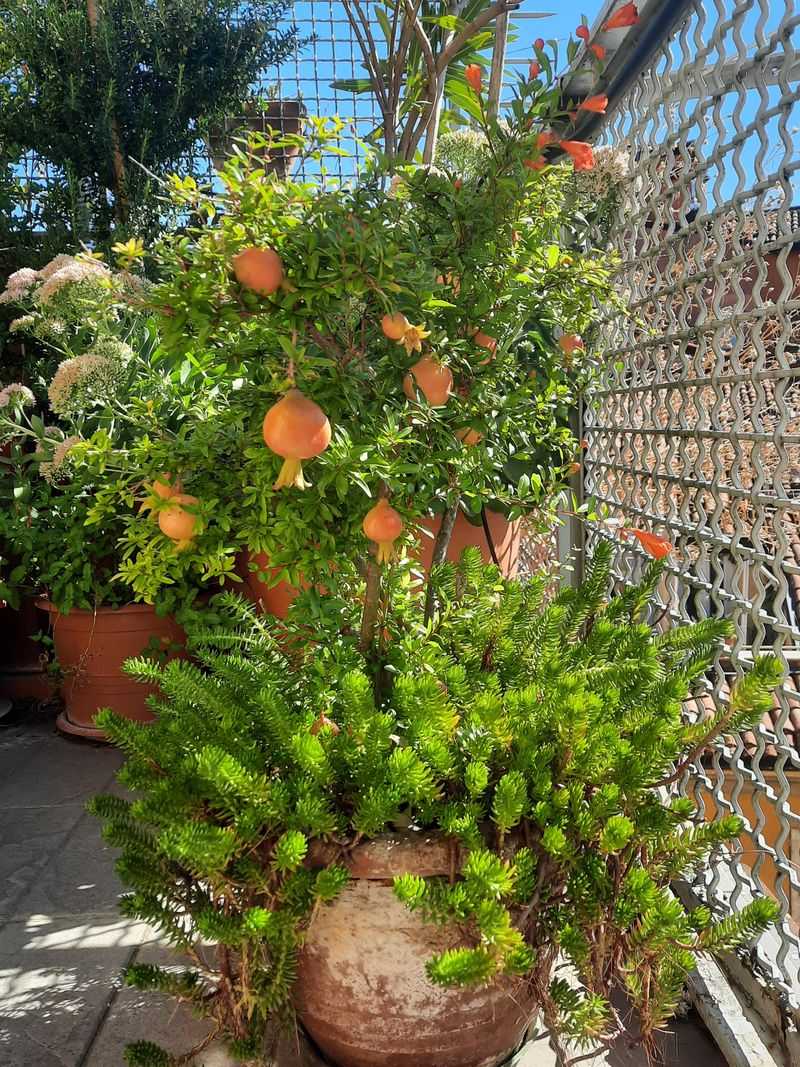
Full afternoon sun in Arizona is not the same as full sun anywhere else.
When the thermometer hits 112 degrees in Phoenix and the sun is bearing down from the west at 3 p.m., even sun-loving plants can get scorched, especially younger ones that have not had time to toughen up.
Pomegranates do love heat and sunlight, but there is a real difference between gradually introducing a plant to Arizona’s intense afternoon exposure versus dropping it straight into the harshest possible spot.
Leaf scorch, bleached fruit, and sudden wilting are common outcomes when a recently potted or newly purchased plant gets full western sun before it has adjusted.
East-facing or southeast-facing spots tend to work better for getting started. Plants get plenty of morning light and warmth without the brutal intensity of late afternoon rays.
Once the plant has been in the ground, or in this case the container, for a few weeks and shows strong new growth, it can handle more direct exposure.
Shade cloth rated at 30 to 40 percent can make a meaningful difference during the hottest stretch of Arizona summers, roughly June through early September. Draping it over the plant during peak afternoon hours is a practical solution that does not require moving heavy containers around.
6. Skipping Regular Feeding During Active Growth
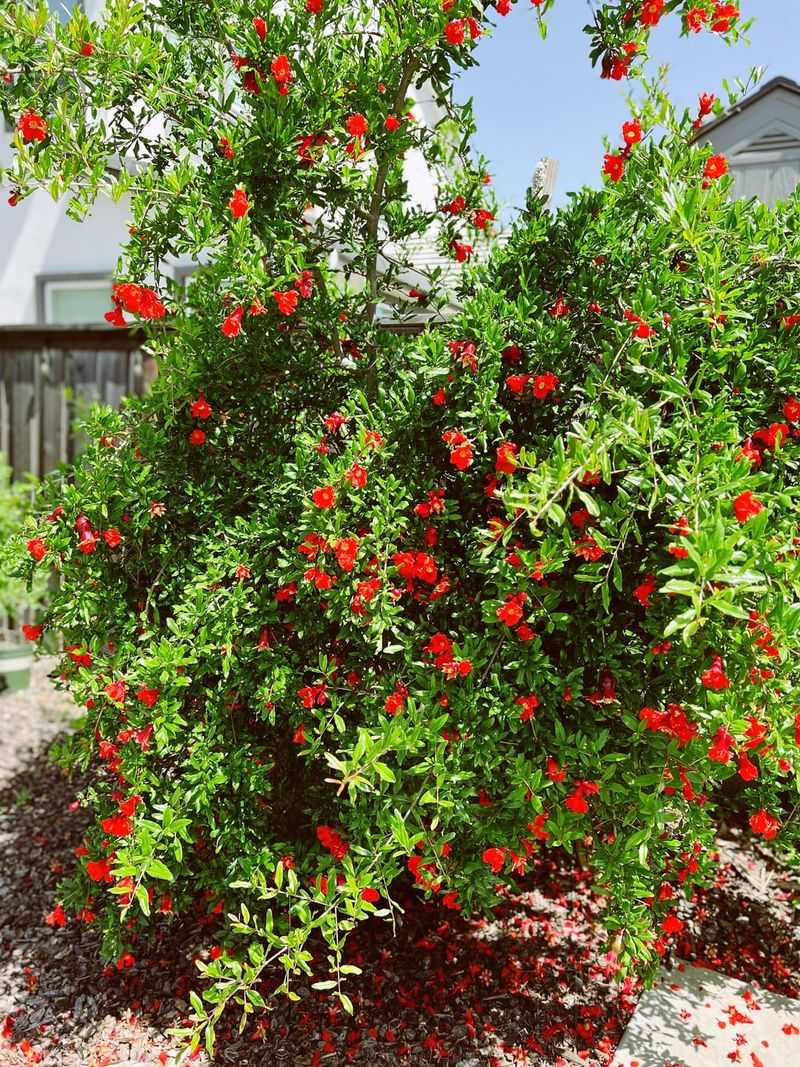
Container plants run out of nutrients faster than in-ground plants, full stop. Every time you water, especially in Arizona where watering happens frequently, some of those nutrients flush right out through the drainage holes.
Without regular feeding, a container pomegranate slowly runs low on what it needs to push out new growth and develop fruit.
Active growth for pomegranates in Arizona typically kicks off in late February or March and continues through early fall. During this stretch, a balanced fertilizer applied every four to six weeks keeps the plant fueled without pushing excessive leafy growth at the expense of flowering.
Look for fertilizers with a moderate phosphorus content, since phosphorus directly supports flower and fruit development.
Slow-release granular fertilizers work well for containers because they provide a steady supply over time rather than a sudden spike. Mixing them into the top layer of soil at the start of the growing season is an easy approach that reduces the need for frequent applications.
Liquid fertilizers can supplement between granular feedings when you want a quicker response.
Watch for pale or yellowing leaves during the growing season. In Arizona, iron deficiency shows up fairly often in container pomegranates because of the region’s alkaline water and soil.
An iron chelate supplement added a couple of times per year can correct this without requiring a complete soil overhaul.
7. Skipping Pruning And Letting Growth Become Leggy And Weak
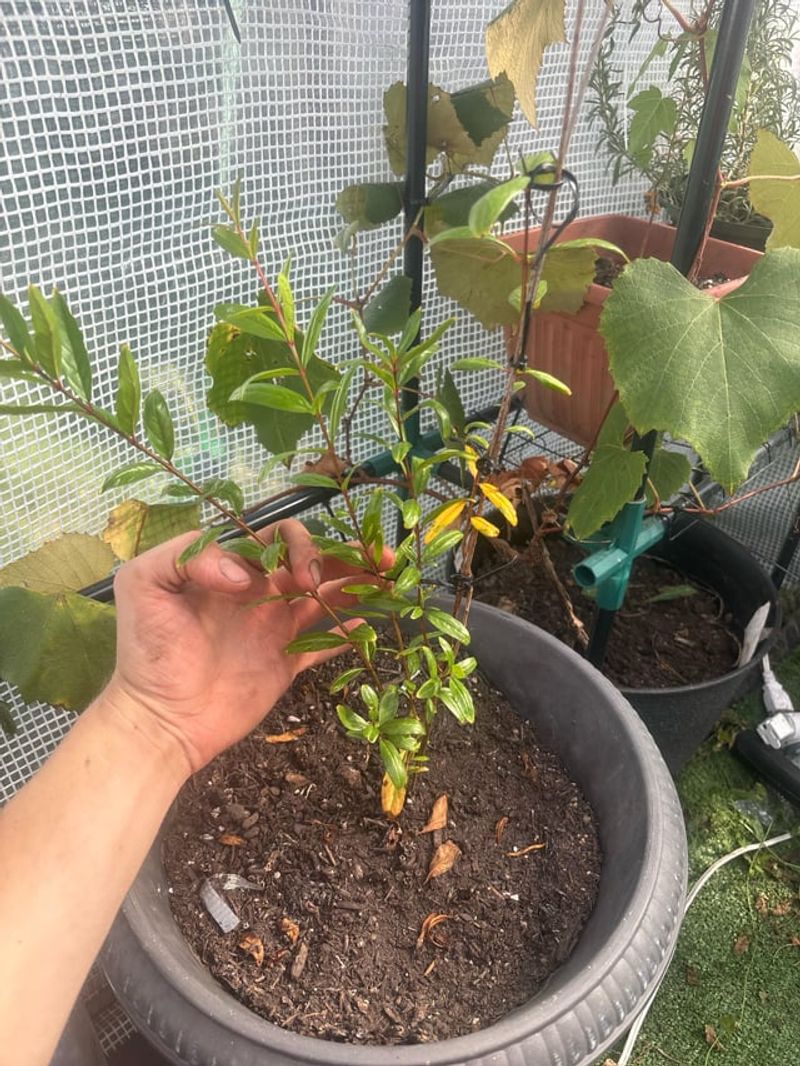
Left completely unpruned, a container pomegranate in Arizona will put out a tangle of thin, crossing branches that look busy but produce very little fruit. Without some shaping, the plant spends energy maintaining weak interior growth instead of directing it toward strong, productive stems.
Pruning does not have to be complicated or aggressive. Removing suckers that sprout from the base, cutting back any branches that cross and rub against each other, and trimming out the weakest shoots once a year is usually enough to keep a container plant in good shape.
Late winter, right before new growth begins in Arizona, is the ideal window for this work.
Pomegranates fruit on new growth from established wood, so the goal is to maintain a sturdy framework of main branches while encouraging fresh growth each season.
Cutting back overly long shoots by about a third helps redirect energy toward shorter, stronger laterals where flowers and fruit actually form.
Container pomegranates that are never pruned tend to become top-heavy, which creates a real stability problem in Arizona where afternoon monsoon winds can be surprisingly strong.
A tall, unbalanced plant in a container can tip over during a summer storm, which damages both the plant and the pot.