What Arizona Homeowners Plant To Attract Gila Woodpeckers Year Round
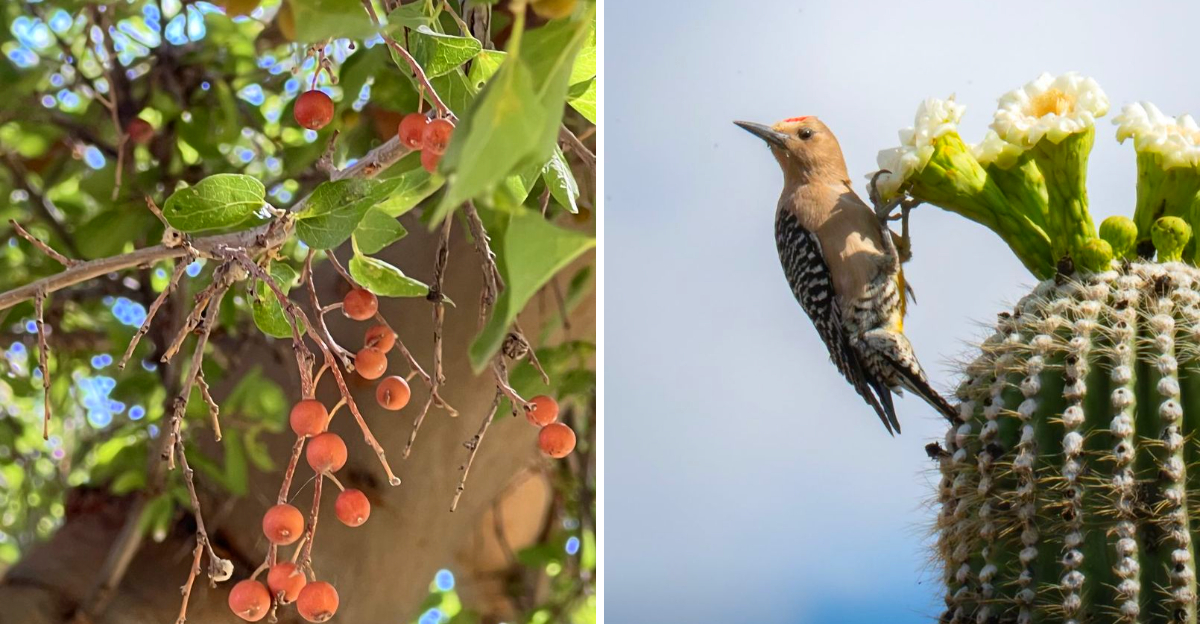
If you’ve ever been startled by a loud, chattering call coming from somewhere in your Arizona yard and looked up to find a boldly patterned bird with a red cap staring back at you, congratulations.
You’ve met a Gila woodpecker, and honestly, it’s one of the better wildlife encounters a desert yard can offer.
These birds are a genuine personality. Loud, confident, and surprisingly entertaining to watch, they’re as much a part of the Sonoran Desert experience as saguaros and monsoon storms.
The thing is, Gila woodpeckers don’t just show up randomly. They’re looking for something specific.
Tall cacti, native trees, fruiting shrubs, insects, nesting structure. A yard that checks those boxes becomes a place they actually want to stick around.
And it turns out that building that kind of habitat starts with choosing the right plants.
1. Saguaro Offers The Strongest Nesting Connection
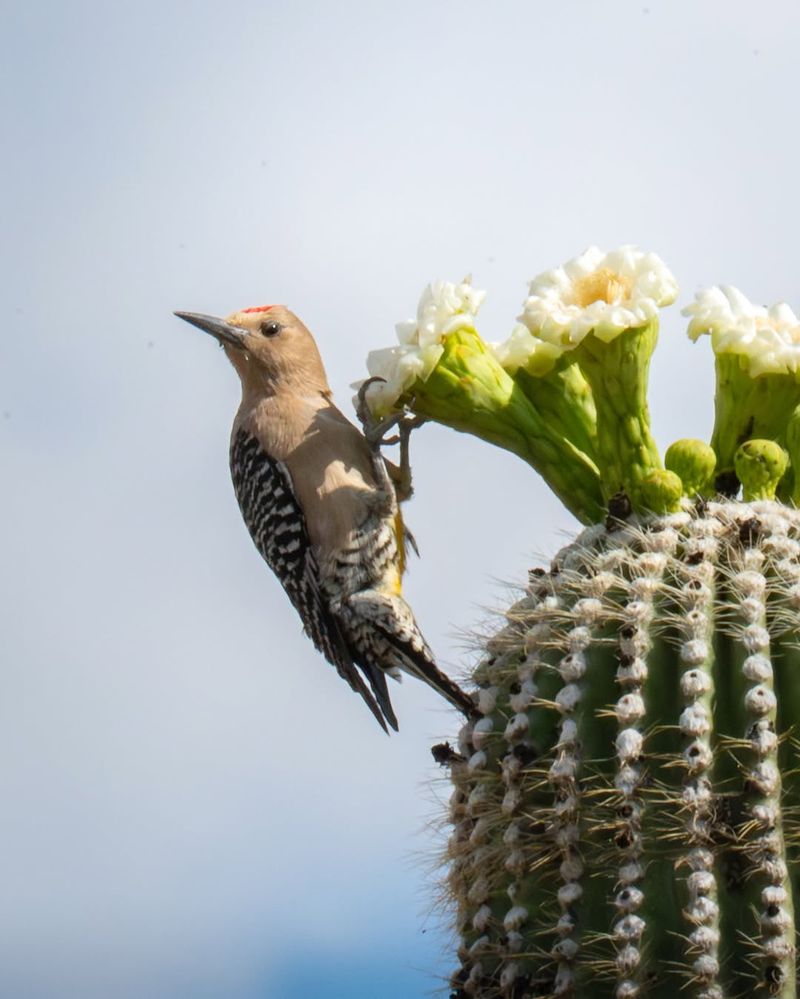
Few plants in Arizona carry as much wildlife significance as the saguaro cactus, and for Gila woodpeckers, this giant columnar cactus is central to their survival.
Saguaros can grow over 40 feet tall and live well over 150 years, giving birds decades of usable habitat in a single plant.
Gila woodpeckers excavate nest cavities directly into the saguaro’s fleshy interior, creating hollow chambers that dry into hard, boot-shaped shells that other cavity-nesting birds later reuse.
In an Arizona yard, a mature saguaro can serve as both a nesting site and a seasonal food source. The cactus produces cream-colored flowers in late spring that attract insects, followed by red fruit in early summer that Gila woodpeckers actively feed on.
This combination of nesting structure and food in one plant makes the saguaro uniquely valuable.
Homeowners in the Sonoran Desert region can plant young saguaros, though patience is necessary since these cacti grow slowly. Purchasing nursery-grown specimens from reputable Arizona native plant nurseries is the responsible approach.
Even a younger saguaro can attract Gila woodpeckers over time as it matures and begins fruiting.
Pairing a saguaro with other native plants creates the layered desert habitat these birds rely on most, rather than expecting one plant alone to bring them in year round.
2. Velvet Mesquite Creates Valuable Desert Habitat
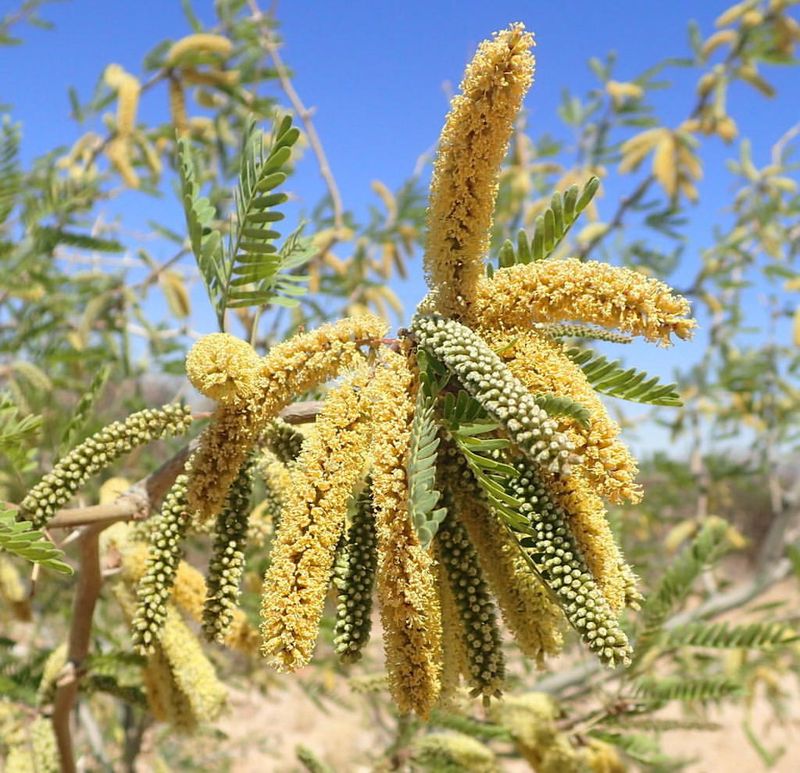
Walking through a Sonoran Desert wash in Arizona, you will almost always spot a velvet mesquite tree anchoring the landscape with its wide, feathery canopy and deeply furrowed bark.
This native tree is one of the most ecologically productive plants a homeowner can add to a wildlife-friendly yard.
Its rough, deeply textured bark hosts a surprising variety of insects, including beetles and wood-boring larvae that Gila woodpeckers probe for with their strong bills.
Velvet mesquite produces long seed pods that ripen in summer, attracting a range of desert wildlife.
While Gila woodpeckers focus more on the insects living in and around the tree than the pods themselves, the overall activity a mesquite generates in a yard can draw these birds in regularly.
The dense canopy also provides shade and shelter, which helps other insect-attracting plants grow beneath it.
Your Arizona Garden Changes Every Week. Your Plan Should Too.
Gardening in Arizona changes quickly throughout the season. Every Friday you’ll receive a simple weekly plan showing exactly what to plant, prune, fertilize, harvest, and protect so you never miss the right timing.
In an Arizona yard, velvet mesquite works well as a shade anchor in a back corner, along a fence line, or near a dry wash feature. It is drought-tolerant once established and grows relatively quickly compared to ironwood or saguaro.
Homeowners should give it plenty of room since mature trees can spread 30 to 40 feet wide.
Combining mesquite with fruiting shrubs and a saguaro nearby strengthens the overall habitat value of the yard for Gila woodpeckers considerably.
3. Blue Palo Verde Supports A Sonoran Desert Yard
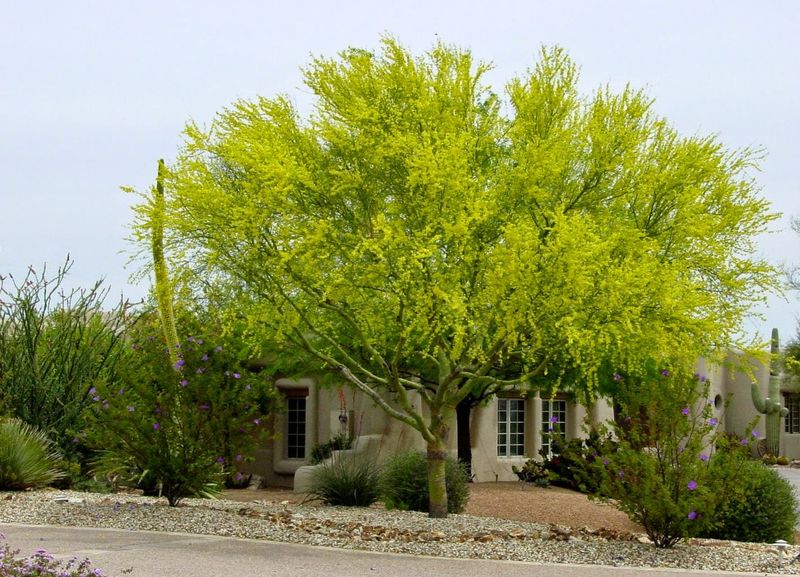
Every spring in Arizona, blue palo verde trees burst into clouds of yellow flowers so vivid they look almost unreal against the pale desert sky.
This native tree is a cornerstone of Sonoran Desert ecosystems and one that Arizona homeowners increasingly turn to when designing bird-friendly, low-water yards.
The blue-green bark of the palo verde allows it to photosynthesize even when it drops its tiny leaves during dry periods, making it one of the most drought-adapted trees available for Arizona landscapes.
For Gila woodpeckers, blue palo verde offers reliable insect activity throughout the year. The bark and branch structure harbor beetles, ants, and other insects that these birds forage on.
During bloom season, the flowers attract pollinators that in turn draw insect-feeding birds into the yard. The branching structure also provides perching and foraging opportunities even outside of bloom periods.
Blue palo verde grows moderately fast and can reach 25 to 30 feet tall with a broad, open canopy that casts light, filtered shade. It fits well in front yards, open desert-style borders, or as a mid-sized canopy tree in a layered native plant garden.
Homeowners planting for wildlife should consider placing blue palo verde near a saguaro or fruiting shrubs to create overlapping zones of food, perching, and shelter.
No single tree can guarantee Gila woodpecker visits, but blue palo verde consistently contributes to the habitat quality that draws these birds in.
4. Ironwood Adds Structure For Bird-Friendly Landscapes
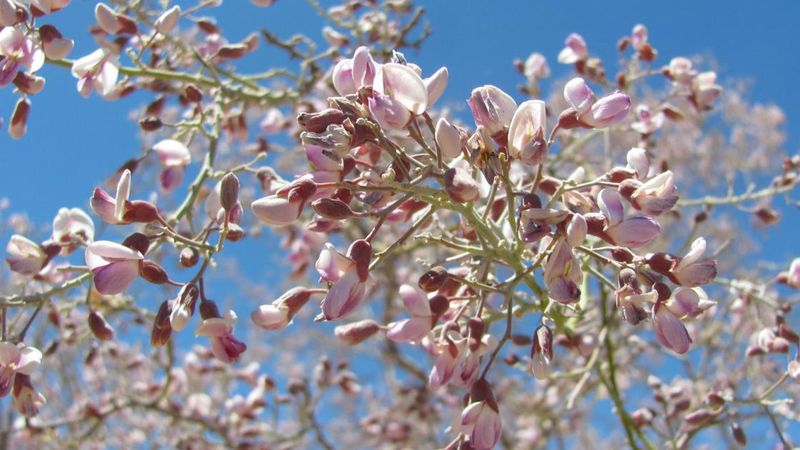
Among all the native trees found in the Sonoran Desert, ironwood is one of the oldest and most ecologically generous.
A single mature ironwood in an Arizona yard can support dozens of wildlife species, and Gila woodpeckers are among the birds most likely to take advantage of its dense structure and insect-rich bark.
Ironwood trees can live for hundreds of years, developing thick, deeply furrowed trunks that harbor wood-boring beetles and other invertebrates these woodpeckers actively seek.
The tree blooms in late spring with clusters of soft lavender to purple flowers that attract bees and other pollinators, which in turn pull insect-feeding birds into the yard. Ironwood also produces small seed pods that support other desert wildlife.
Its evergreen canopy, which it only partially drops in cold spells, provides shelter and perching structure throughout Arizona’s year.
Ironwood grows slowly, so homeowners looking for quick results may need to combine it with faster-growing plants while the tree matures.
It is best suited for larger yards, desert-style borders, or properties with enough open space to accommodate a tree that can eventually reach 25 feet or more.
Planting ironwood near wolfberry, prickly pear, or saguaro creates a rich, multi-layered habitat that offers Gila woodpeckers more reasons to stay and return. Patience with this tree tends to pay off in long-term wildlife activity across the yard.
5. Prickly Pear Provides Cactus Fruit And Insect Activity
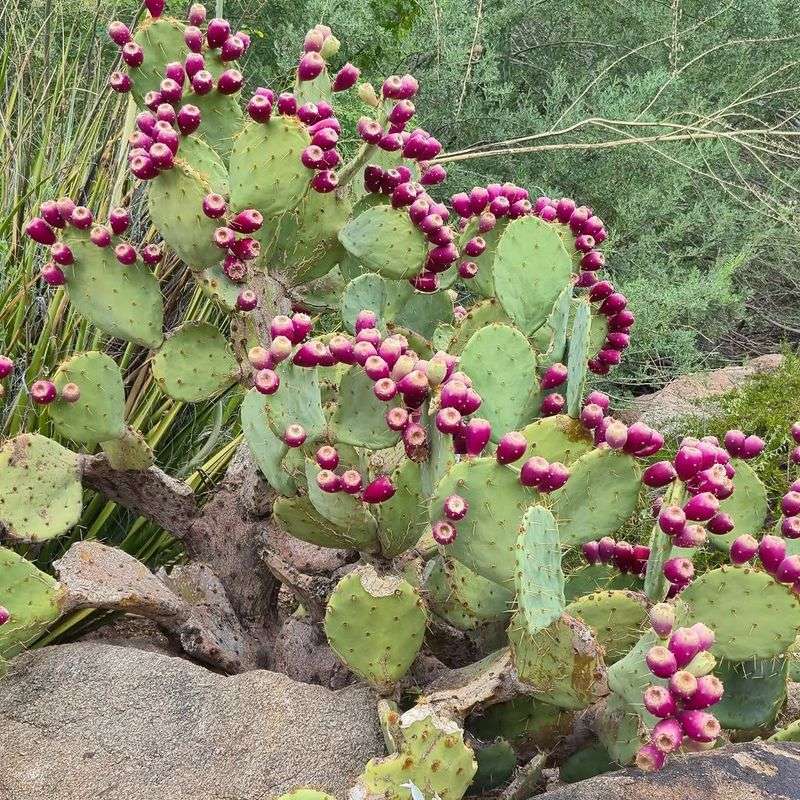
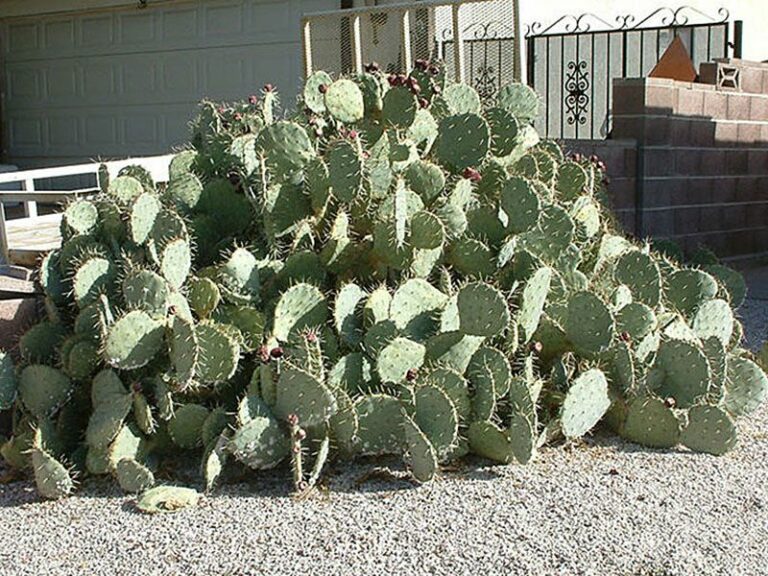
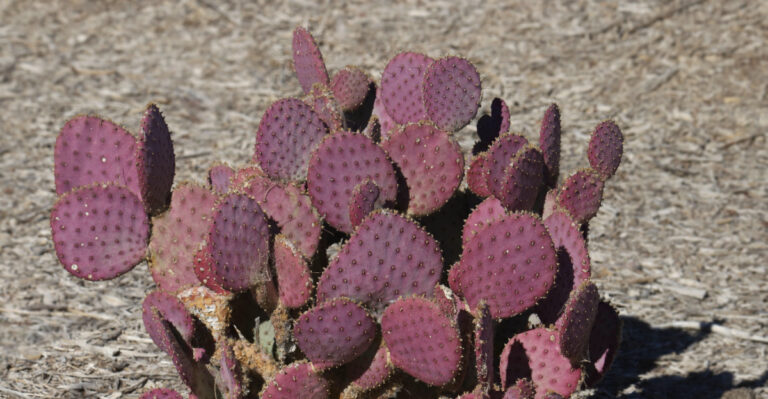
Bright red and purple tunas, the ripe fruits of prickly pear cactus, are one of the more recognizable sights in an Arizona summer yard.
Gila woodpeckers visit prickly pear regularly when the fruit is ripe, pecking into the soft flesh to reach the sweet interior.
This fruiting period, which typically runs from mid to late summer in much of Arizona, gives these birds a reliable seasonal food source that complements what saguaro fruit offers earlier in the year.
Beyond the fruit, prickly pear pads attract insects year round, particularly ants, beetles, and cactus bugs that crawl across the surface and between the spines.
Gila woodpeckers will forage around the base and surface of prickly pear plants for these invertebrates outside of fruiting season.
The flat, paddle-shaped pads also provide some shelter for smaller desert creatures that in turn keep insect activity elevated around the plant.
Prickly pear is one of the most manageable native cacti for residential yards. It stays relatively low and wide, making it suitable for borders, rocky slopes, or as a ground-level layer beneath taller saguaros and native trees.
Several species of prickly pear are native to Arizona, including Engelmann prickly pear, which is among the most wildlife-productive.
Homeowners should plant it in full sun with excellent drainage and keep it away from high foot-traffic areas due to its sharp spines.
Paired with taller plants, it rounds out a well-layered bird-friendly yard.
6. Wolfberry Offers Seasonal Berries Gila Woodpeckers Use
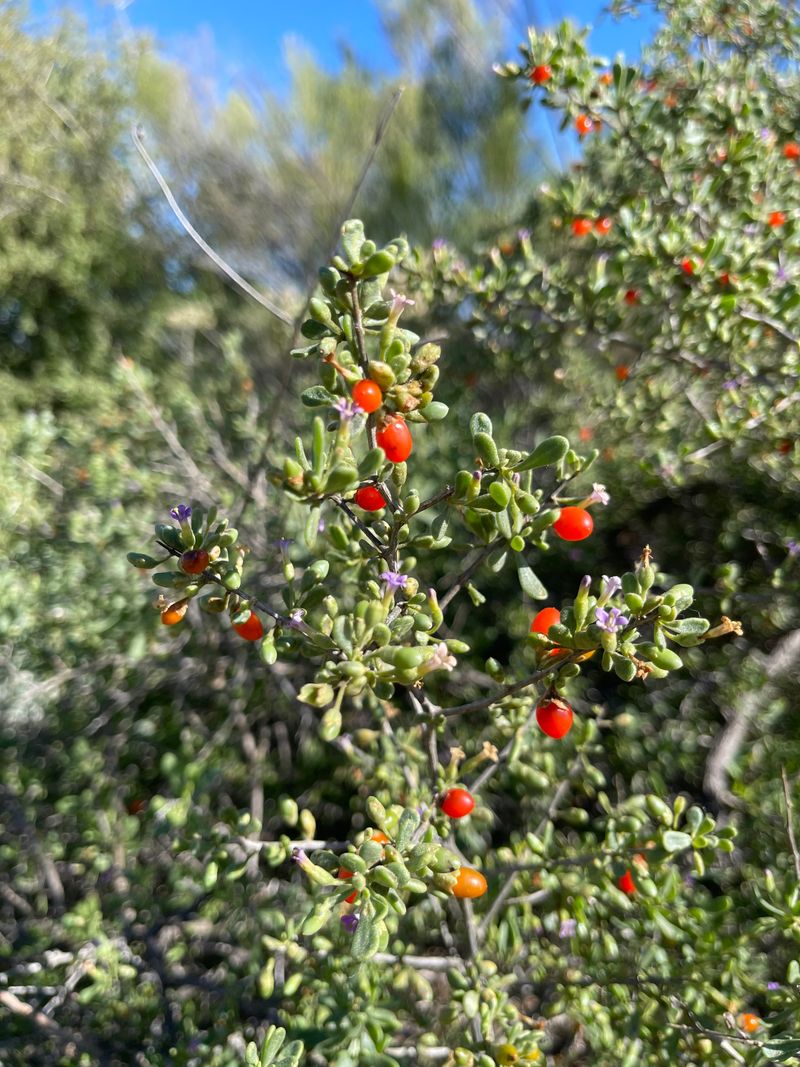
Tucked along dry washes and desert edges across Arizona, wolfberry shrubs produce small, bright red berries that attract a surprising number of bird species during fall and winter months.
Gila woodpeckers are among the birds that visit wolfberry when fruit is available, supplementing their diet with these small berries during cooler seasons when insects may be less active.
Arizona has several native wolfberry species, including desert wolfberry and thornless wolfberry, both of which produce wildlife-valuable fruit.
Wolfberry is a thorny, deciduous to semi-evergreen shrub that tends to grow in dense, tangled clusters. This growth habit actually adds habitat value because the thick branching provides shelter and nesting cover for multiple bird species.
Gila woodpeckers may not nest in wolfberry the way they do in saguaros, but they use the shrub for foraging and perching during fruit season. The thorny structure also deters predators, making the area around wolfberry safer for foraging birds.
In an Arizona yard, wolfberry works well planted along a fence line, in a naturalistic desert border, or near a dry wash feature.
It tolerates heat, drought, and rocky soils once established and needs very little supplemental water in most Arizona climates.
Growing to roughly 6 to 10 feet in height, it fits comfortably beneath the canopy of a mesquite or ironwood tree.
Combining wolfberry with taller native trees and a saguaro gives Gila woodpeckers multiple layers of food and cover to use across seasons.
7. Desert Hackberry Adds Fruit And Dense Cover
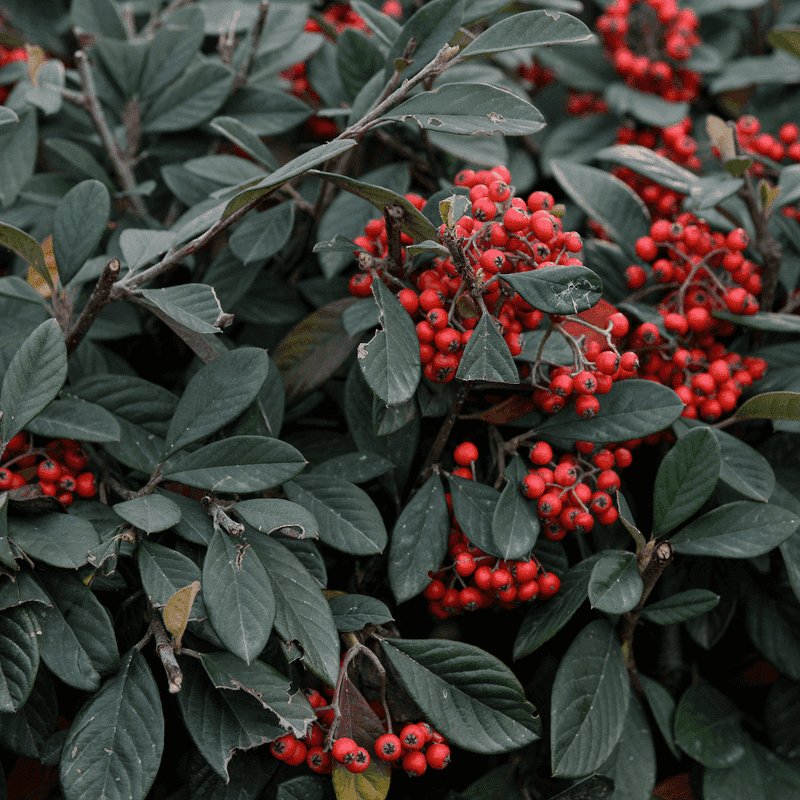
Some of the best bird-watching moments in Arizona happen quietly, beside a fruiting shrub that most people walk right past without noticing.
Desert hackberry is one of those underappreciated native plants that consistently delivers wildlife value in Arizona yards.
This thorny, dense shrub produces small orange to red berries in late summer through fall, and Gila woodpeckers are among the birds known to feed on them during that period.
Desert hackberry grows as a spiny, multi-stemmed shrub that can reach 6 to 12 feet tall depending on soil and water availability.
Its dense branching structure offers excellent cover and shelter for birds, and the thorny thicket interior makes it a relatively safe foraging zone.
The fruit is small but numerous when the plant is established and growing in a suitable Arizona location with good sun exposure and well-drained soil.
Beyond the fruit itself, desert hackberry supports caterpillars and other insects that are part of the broader food web Gila woodpeckers rely on.
It is a host plant for several native butterfly species, meaning insect activity around this shrub stays fairly consistent across warm months.
Homeowners can use desert hackberry as a natural screen, a wildlife border planting, or a mid-layer shrub beneath taller native trees. It handles heat and drought well and requires minimal care once established.
Placing it near other fruiting plants and a water source can improve its attractiveness to Gila woodpeckers throughout the year.
8. Netleaf Hackberry Supports Larger Wildlife-Friendly Yards
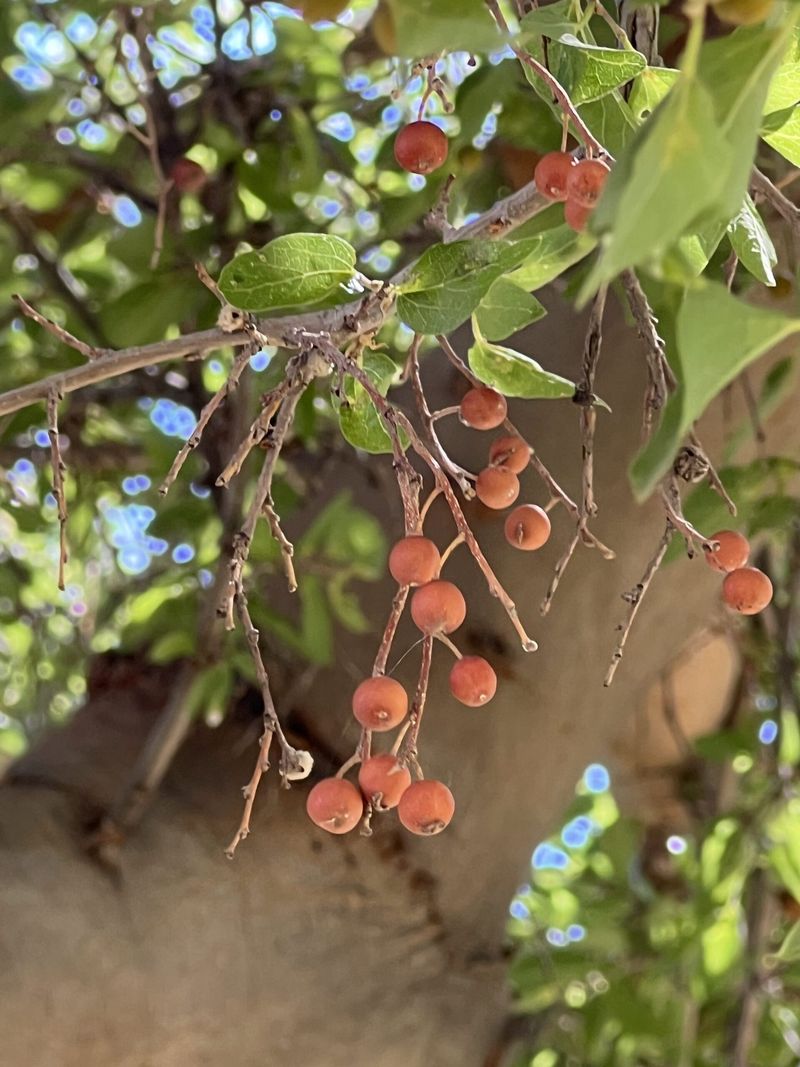
When an Arizona yard has the space for a mid-sized canopy tree that does double duty as both a food source and a wildlife shelter, netleaf hackberry is worth serious consideration.
This native tree grows in canyons, dry washes, and rocky slopes across much of Arizona and the broader Southwest, making it well-suited to the challenging growing conditions that many residential yards present.
Unlike its shrubby relative desert hackberry, netleaf hackberry develops into a true tree with a defined trunk and a broad, spreading canopy.
Netleaf hackberry produces small, dark red to purple berries in fall that attract a wide variety of birds, including Gila woodpeckers.
The tree’s deeply ridged, corky bark is also a productive foraging surface, harboring insects and larvae that woodpeckers probe for throughout the year.
The dense canopy provides shade and nesting cover for multiple bird species, adding general habitat value beyond just Gila woodpecker use.
In larger Arizona yards, netleaf hackberry works well as a shade tree in a back corner, near a dry wash, or as a canopy anchor in a layered native plant garden.
It is drought-tolerant once established but benefits from occasional deep watering during its first few years in the ground.
Mature trees can reach 20 to 30 feet tall, so homeowners should plan for its eventual size.
Pairing netleaf hackberry with wolfberry, prickly pear, and a saguaro creates a layered yard that offers Gila woodpeckers food, shelter, and structure across every season.