7 Signs Carpenter Bees Are Doing Serious Damage To Your North Carolina Porch
Something is slowly eating your porch, and it is doing it quietly enough that many homeowners never notice until the damage is already serious.
It is not termites. It is not rot. It is something most people walk right past every single day without giving a second thought.
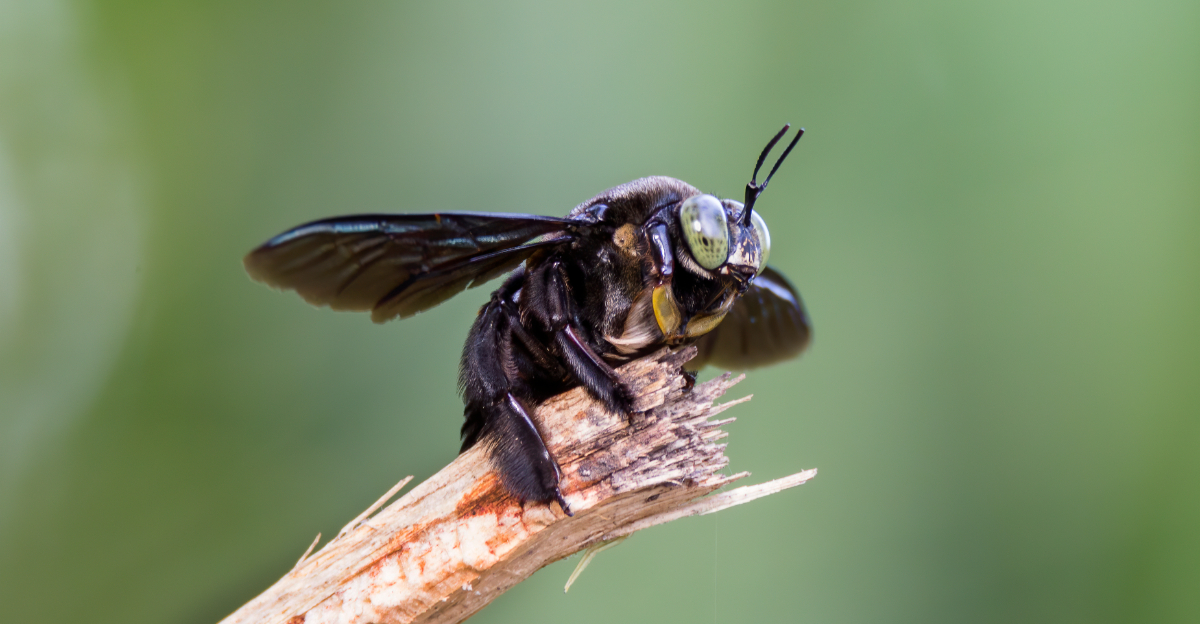
Carpenter bees are one of the most overlooked threats to wooden porches across North Carolina, and the damage they cause happens almost entirely out of sight.
By the time it becomes obvious, those bees may have been boring into your wood for years.
The warm, humid climate across North Carolina makes untreated and weathered wood an open invitation for these insects to nest season after season.
Many homeowners spot the big fuzzy bees hovering around and assume they are harmless. That assumption is expensive.
Seven specific signs tell you that carpenter bees are causing real, structural damage to your porch right now. Knowing what to look for changes everything about how fast you can catch iteven
1. Round Holes Keep Multiplying
A single perfectly round hole in your porch railing might look harmless at first glance.
One hole almost never stays one hole for long. Carpenter bees bore entrance tunnels that measure roughly half an inch in diameter, and they are so clean and precise that many homeowners mistake them for drill marks left by a contractor.
What makes this sign especially telling is the pattern.
New holes appear near old ones because female carpenter bees often return to the same general area each spring to start a fresh tunnel. Carpenter bees prefer bare, weathered, or unpainted softwoods like pine and cedar, which are extremely common in North Carolina porch construction.
Treated or painted wood is far less attractive to them, but once a colony establishes a nesting site, they come back reliably every single season.
Each tunnel runs about an inch straight in, then turns sharply and extends up to six inches or more along the wood grain.
One board can hold multiple tunnels branching in different directions without looking severely damaged from the outside.
The real threat builds gradually. Over several seasons, a single board can become more tunnel than wood.
Check your railings, fascia boards, and overhead beams closely. Count the holes.
If that number has grown since last summer, your porch has an active carpenter bee problem that needs attention sooner rather than later.
2. Fresh Sawdust Collects Below Rails
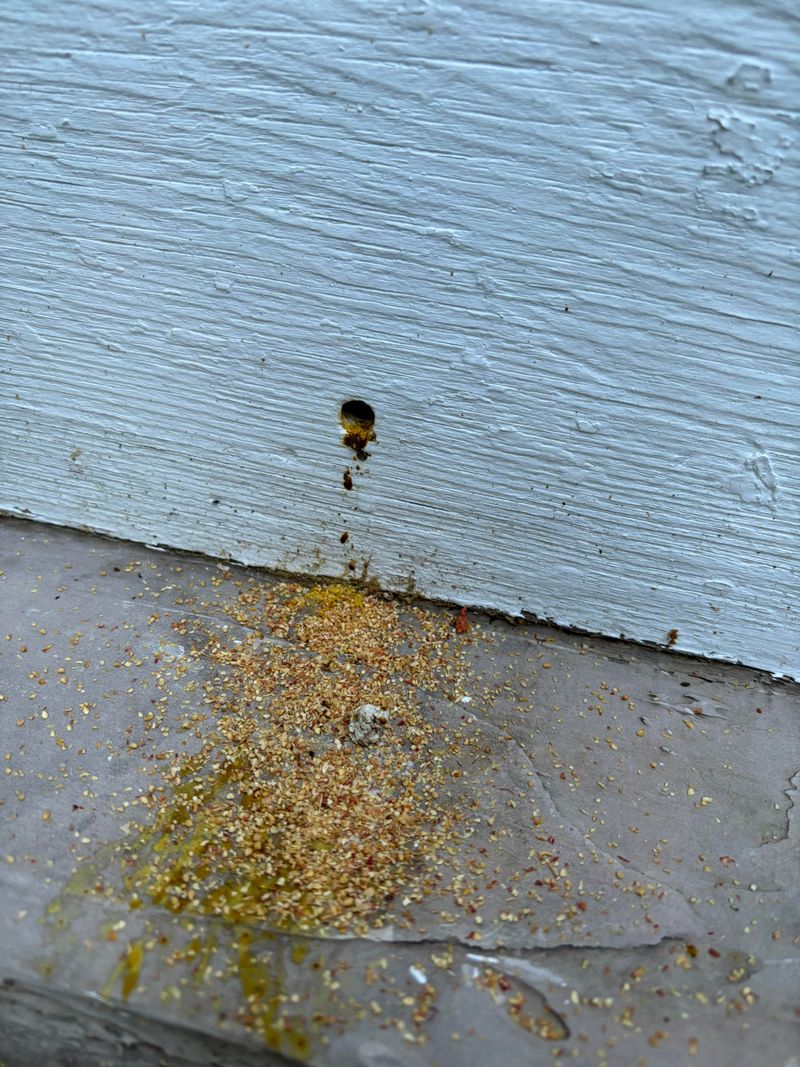
Most people sweep it away without thinking twice.
That fine yellow or tan powder collecting on your porch floor beneath the railings is not just regular dust. It is frass, a combination of wood shavings and waste material that carpenter bees push out as they excavate their tunnels.
Spotting it is one of the earliest and most reliable signs of active nesting.
Fresh frass looks almost like coarse sawdust or fine wood shavings. It tends to pile up directly below the entrance holes because the bees kick it out as they work.
After rain, it can wash away quickly, so you may only notice it during dry stretches.
Your North Carolina Garden Changes Every Week. Your Plan Should Too.
Gardening in North Carolina changes quickly throughout the season. Every Friday you’ll receive a simple weekly plan showing exactly what to plant, prune, fertilize, harvest, and protect so you never miss the right timing.
Make it a habit to crouch down and look along the base of your porch rails and the area below your fascia boards at least once a month during spring and summer.
The amount of frass you find gives you a rough sense of how much activity is happening.
A small pinch suggests early-stage tunneling. A noticeable pile tells you the bees have been busy for a while and the tunnel may already be several inches deep.
Carpenter bee tunneling activity peaks in spring when females are preparing brood chambers.
Catching the frass early gives you the best chance to treat and seal the wood before the tunnel network grows too complex to address with simple repairs. Early frass means easy fixes. Ignored frass means bigger problems.
3. Yellow Stains Mark The Wood
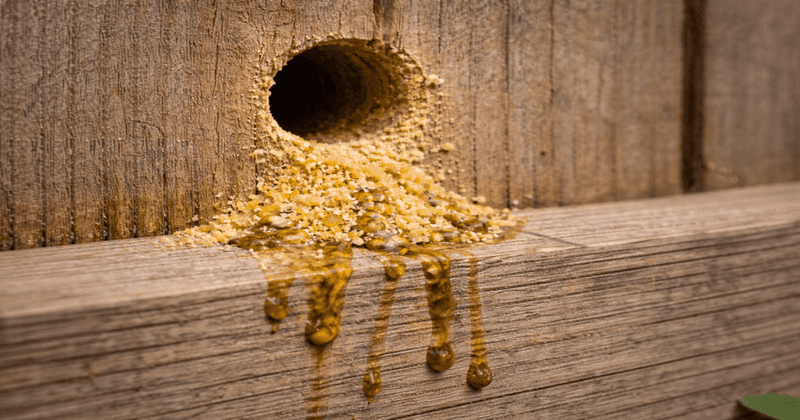
Your porch wood should not have mysterious yellow or brownish streaks running down from small holes.
That discoloration is a calling card left by carpenter bees, and once you know what it looks like, you will start noticing it in places you walked past a hundred times before.
The staining comes from a combination of bee waste, pollen, and nectar that accumulates inside the tunnel and seeps out near the entrance over time.
This sign shows up most clearly on vertical surfaces like porch posts, the sides of deck boards, and fascia boards where gravity pulls the residue downward.
The staining is not just cosmetic. It tells you that the tunnel behind it has been actively used for at least one full nesting cycle, meaning eggs were laid, larvae developed, and adult bees emerged.
That lifecycle leaves behind organic material that darkens the wood and can attract other insects over time.
Staining also gives you a clue about tunnel age.
Fresh stains tend to be lighter and more yellow. Older stains turn darker and may spread wider as seasons pass and multiple generations use the same tunnel entrance.
Some homeowners first notice the streaks while painting or pressure washing and assume it is mold or mildew.
Scrubbing it away without treating the tunnel underneath just resets the clock. The bees return, the tunnel stays open, and the staining comes right back.
Treat the source, not just the surface, and you will actually get ahead of the damage.
4. Bees Return To The Same Boards
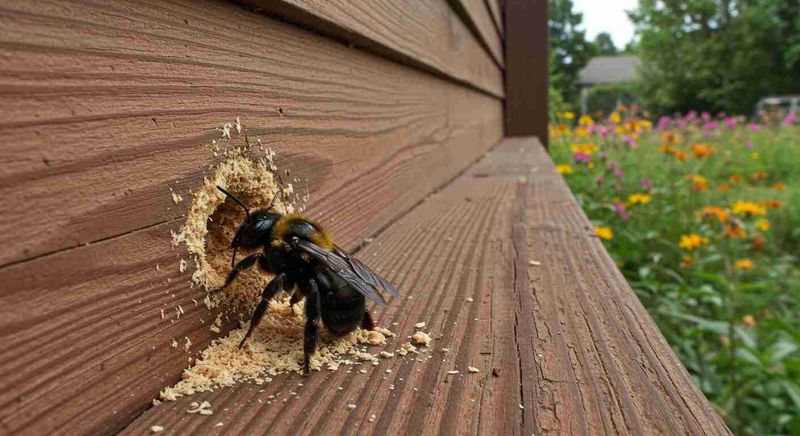
Watch your porch on a warm spring afternoon and you might notice something odd.
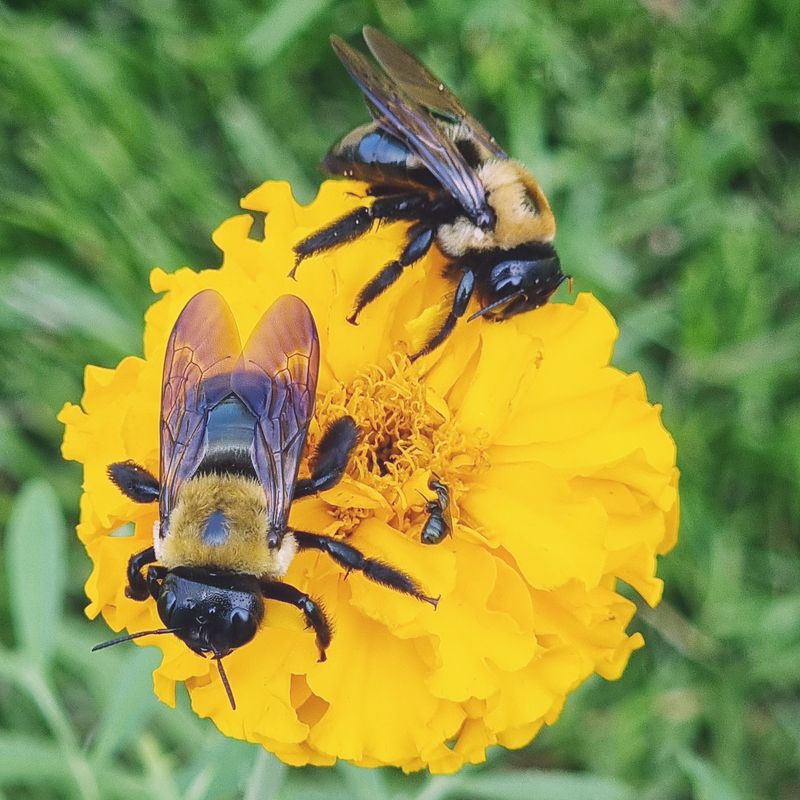
A big, shiny black bee keeps hovering around the same spot on your railing, day after day. That is not coincidence. Carpenter bees have a strong homing instinct that brings them back to the same wood they or their parents used the previous year.
This repeat behavior is one of the clearest signs that your porch has become an established nesting site.
Female carpenter bees do most of the structural work. They select the nesting board, excavate the tunnel, and stock it with pollen and nectar for their offspring.
Males are the ones hovering aggressively near the porch entrance, but they have no stinger and pose no real physical threat.
The female is the one doing the actual damage, and she is methodical about it. She prefers wood that is already familiar, often enlarging old tunnels rather than starting from scratch.
Unfinished, bare, or weathered softwood is her top choice. Pine railings left unpainted are practically a welcome sign.
Painting or staining all exposed wood surfaces is the most effective long-term prevention strategy. Bees are far less likely to tunnel into wood with a solid protective coating.
That one board she keeps returning to every spring is probably the most vulnerable spot on your entire porch.
Addressing it promptly can break the cycle before another generation sets up permanent residence inside your lumber.
5. Woodpeckers Start Tearing At Trim
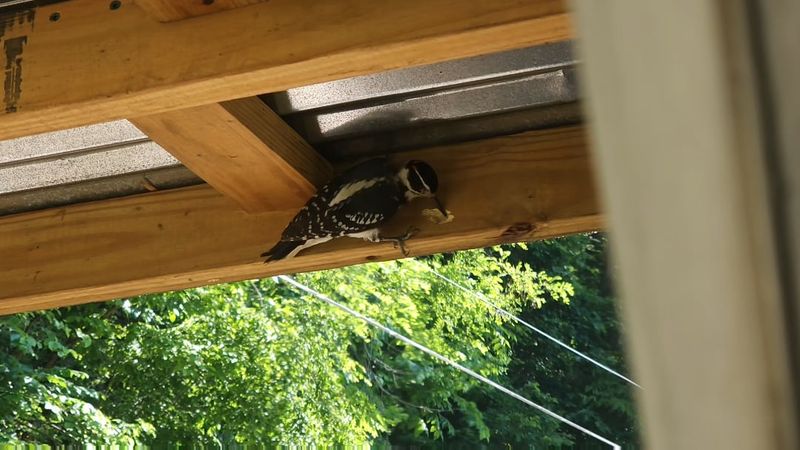
When a woodpecker starts hammering away at your porch trim, it is not searching for bugs at random.
It knows exactly what is in there.
Woodpeckers, especially downy and red-bellied woodpeckers common throughout North Carolina, have a remarkable ability to detect carpenter bee larvae moving inside wooden galleries. Once they find a tunnel, they tear the wood apart to reach the protein-rich grubs inside.
The damage woodpeckers cause can be far more dramatic than the original bee tunnels.
A bird working a single board can strip away large chunks of wood in a short amount of time, leaving jagged, irregular gouges that look nothing like the clean round holes the bees made.
This secondary damage often alarms homeowners more than the bee activity itself, and for good reason.
Woodpecker activity on your porch is essentially a red flag waved by nature.
It confirms that carpenter bee tunnels are present, that larvae are actively developing inside, and that the infestation has likely been going on long enough for a full reproductive cycle to complete.
By the time you see a woodpecker tearing at your fascia board, you are no longer dealing with a fresh problem.
You are dealing with an established one.
Inspect every board near the woodpecker activity and expect to find multiple tunnels that need treatment and repair before the next season arrives. The bird found them. Now it is your turn.
6. Porch Boards Sound Hollow In Spots
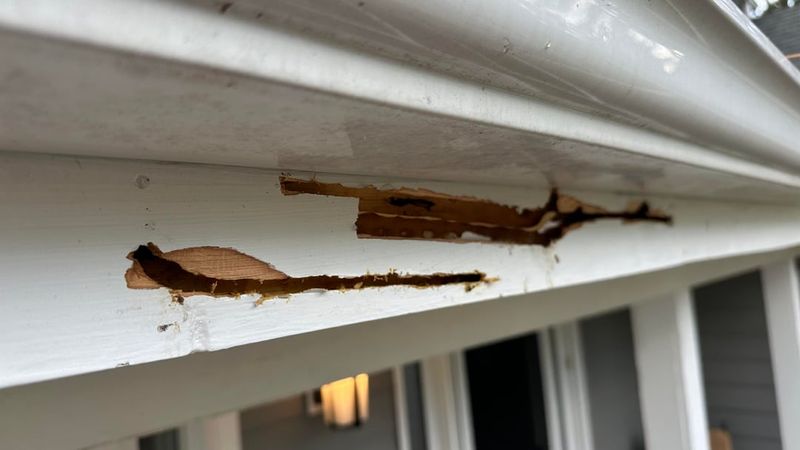
Grab your knuckles and knock on your porch posts and railings.
Solid wood gives a firm, dense thud. Wood that has been hollowed out by carpenter bee tunnels gives a lighter, almost papery knock that sounds noticeably different.
This simple test costs nothing and can reveal damage that is completely invisible from the outside.
Once you hear that hollow sound, you know the interior of the board has been compromised.
Hollow spots are most common in boards that have hosted carpenter bees for multiple seasons.
Each year, new tunnels branch off old ones, and the network inside a single board can become surprisingly complex. A post that looks perfectly fine on the surface might be riddled with intersecting galleries running in several directions.
The wood fibers holding it together get thinner with every passing season, and structural weakness follows.
For load-bearing porch posts, that is not a situation to ignore or postpone.
Carpenter bee tunnels do not immediately threaten structural integrity in most cases, but repeated tunneling over many years absolutely can weaken boards to the point where replacement becomes necessary.
Hollow-sounding wood near joints, supports, or weight-bearing sections of your porch deserves prompt evaluation.
Before scheduling any repairs, probe the area carefully with a screwdriver or awl. Soft spots or areas where the tool sinks easily confirm internal damage.
Document what you find with photos so a contractor can assess the full scope before any patching or replacement begins.
The knock test takes thirty seconds. The information it gives you is worth considerably more than that.
7. Paint And Sealant Bubble Near Entry Points
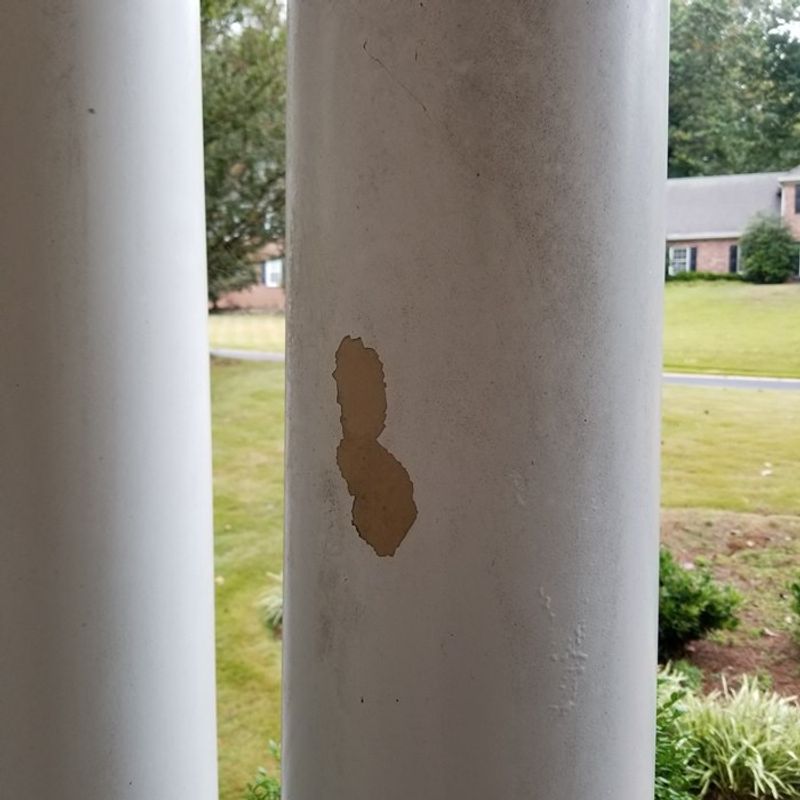
Bubbling, peeling, or lifting paint around small holes in your porch wood is easy to blame on moisture or age.
Sometimes that is exactly what it is. But when the bubbling appears in isolated patches directly around entry holes, carpenter bees are frequently the actual cause.
As bees excavate tunnels, they push frass and moisture toward the entrance point. That material accumulates just beneath the surface of painted or sealed wood and creates pressure that lifts the coating from underneath.
The paint separates from the wood rather than peeling from the outside in, which is the detail that distinguishes bee activity from standard weathering.
This sign shows up most often on painted softwood railings and fascia boards that have been in place for more than a couple of seasons.
The bubbling tends to form a small ring around the entry hole rather than spreading broadly across the surface.
Running a fingernail lightly across a bubbled patch near a visible hole tells you a lot quickly.
If the paint lifts easily and the wood beneath feels soft or granular, tunneling has been happening in that spot for long enough to affect the wood structure beneath the coating.
Fresh paint applied over active tunnel entrances without sealing the holes first creates a temporary cosmetic fix that the bees work around within a single season.
They either reopen the existing entrance or bore a new one nearby, and the bubbling returns along with it.
Seal the tunnels completely, treat the wood, and then repaint. Doing it in that order is the only approach that actually holds.
Otherwise, you are just giving the bees a freshly painted surface to ruin again next spring.