Signs Of Spotted Lanternfly North Carolina Gardeners May Notice Before They See The Bug
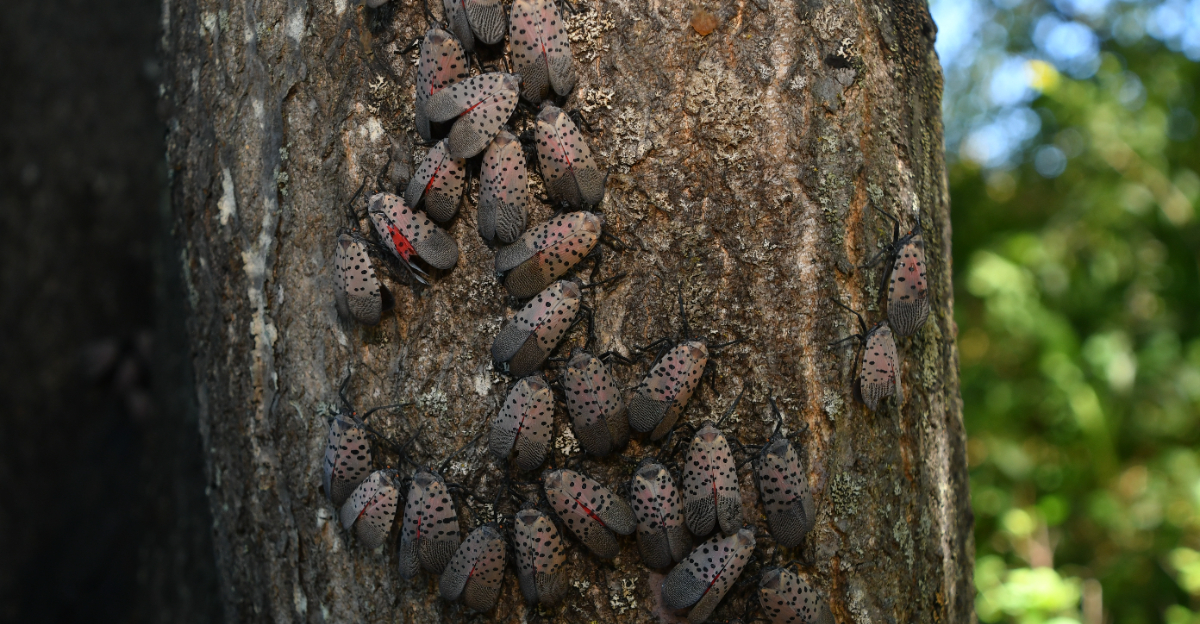
Spotted lanternfly is moving closer to North Carolina, and the gardeners who will catch it earliest are not the ones waiting to see the insect itself.
The most reliable early indicators show up on plants before most people think to connect them to this pest.
Weeping bark wounds, sticky surface residue, and sudden sooty mold are all hidden warning signs in a garden. These symptoms point directly to an active insect infestation long before a spotted lanternfly is ever physically seen.
Knowing what to look for on the plants rather than in the air is what gives North Carolina gardeners the earliest possible warning and the best chance of reporting and responding before populations establish.
1. Sticky Leaves Under Favorite Host Plants
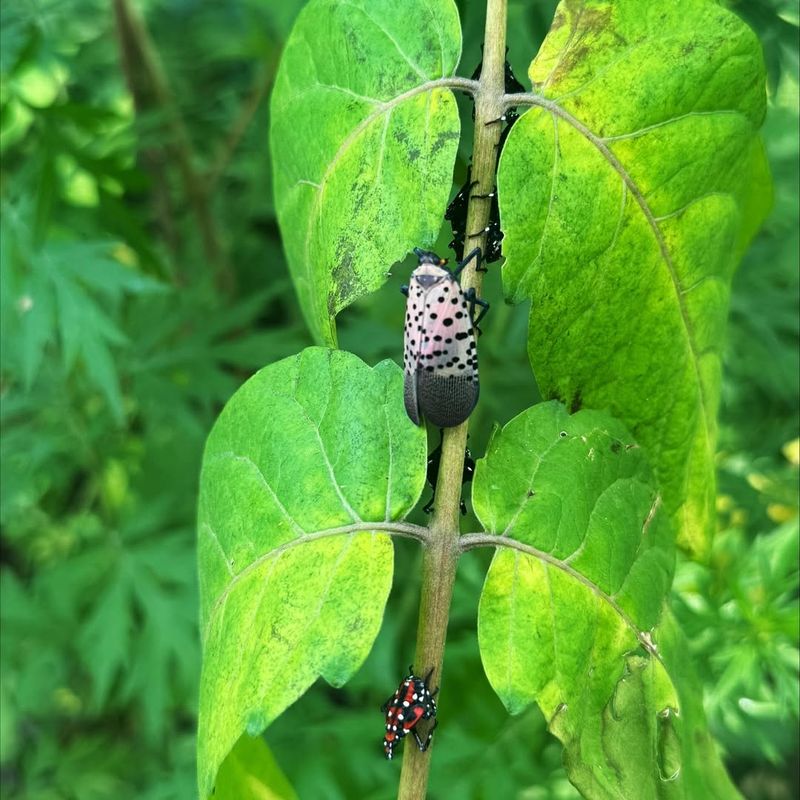
Walk under almost any large tree in late summer and brush your hand across the leaves or nearby furniture, and you might feel something you did not expect: stickiness.
That sugary coating is called honeydew, and it comes from insects that feed on plant sap. Spotted Lanternfly is a heavy sap feeder, and it produces a lot of honeydew as it eats.
Honeydew can drip down from feeding areas high in the canopy and land on lower leaves, patio furniture, outdoor rugs, wooden decks, and even the ground beneath the plant.
You might first notice it as a shiny patch on a leaf or a strange tackiness on your outdoor chair. It can feel similar to a light syrup coating on surfaces that are normally dry.
North Carolina gardeners should pay close attention to this sign under trees like black walnut, maple, willow, and tree of heaven, all of which Spotted Lanternfly commonly uses as hosts.
Sticky surfaces below a tree during late summer and fall are worth investigating further.
Look up into the canopy, check the trunk, and inspect the undersides of leaves before assuming the stickiness is from another source. Catching this early clue puts you ahead of the problem.
2. Black Sooty Mold On Leaves And Hard Surfaces
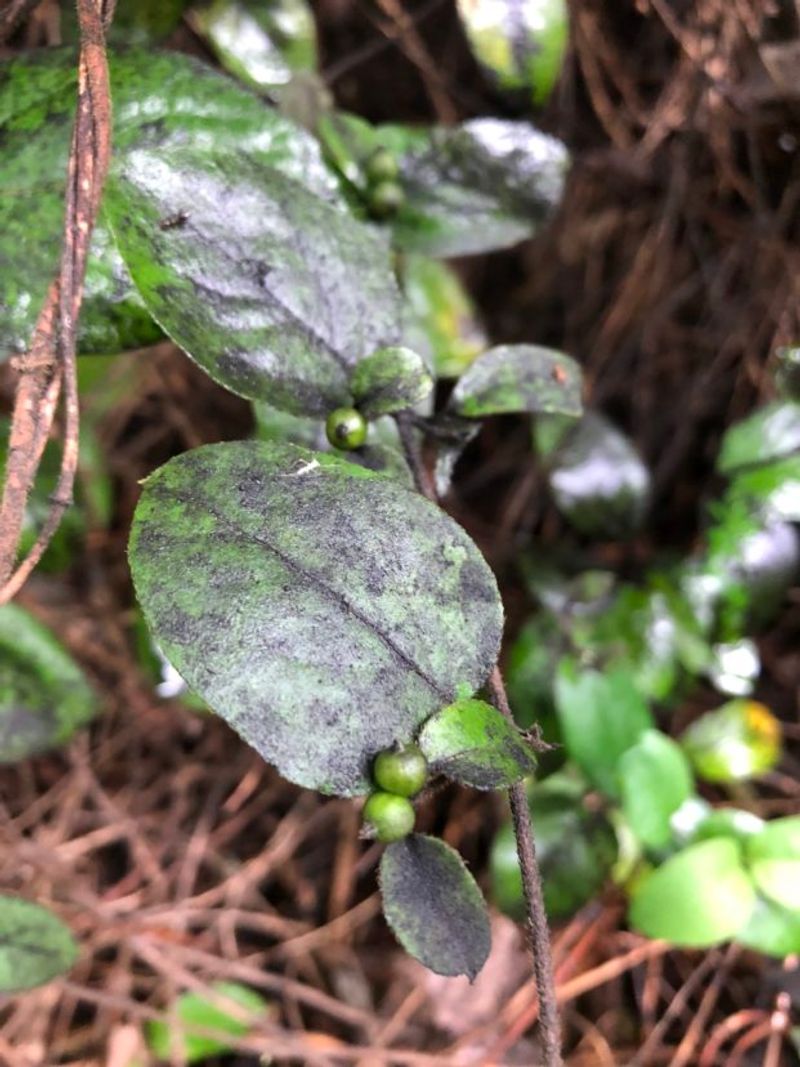
A dark, dusty-looking coating showing up on your garden plants or patio surfaces might look like simple grime, but it could be telling you something much more important.
Black sooty mold is a fungus that grows on top of honeydew left behind by sap-feeding insects.
Where you find sooty mold, there is almost always an active insect feeding situation somewhere above it.
Gardeners in North Carolina might notice this dark coating on the upper sides of lower leaves, along fence railings, on deck boards, outdoor furniture, or even on cars parked under infested trees.
The mold itself is not what harms the plant directly, but it blocks sunlight from reaching the leaf surface, which can weaken the plant over time.
It also makes your outdoor space look dingy and neglected even when you are keeping up with yard work.
Spotting sooty mold is a strong signal to look upward and inspect nearby plants carefully. Check the trunk and branches of the tree above the affected area.
Look for egg masses, nymphs, or adult insects resting on the bark. Sooty mold can linger even after insects move on, so fresh or spreading patches of mold are more telling than old dry ones.
Your North Carolina Garden Changes Every Week. Your Plan Should Too.
Gardening in North Carolina changes quickly throughout the season. Every Friday you’ll receive a simple weekly plan showing exactly what to plant, prune, fertilize, harvest, and protect so you never miss the right timing.
When in doubt, take a photo and report what you find to your local Extension office for guidance.
3. Ants, Wasps, And Other Insects Gathering Near One Plant
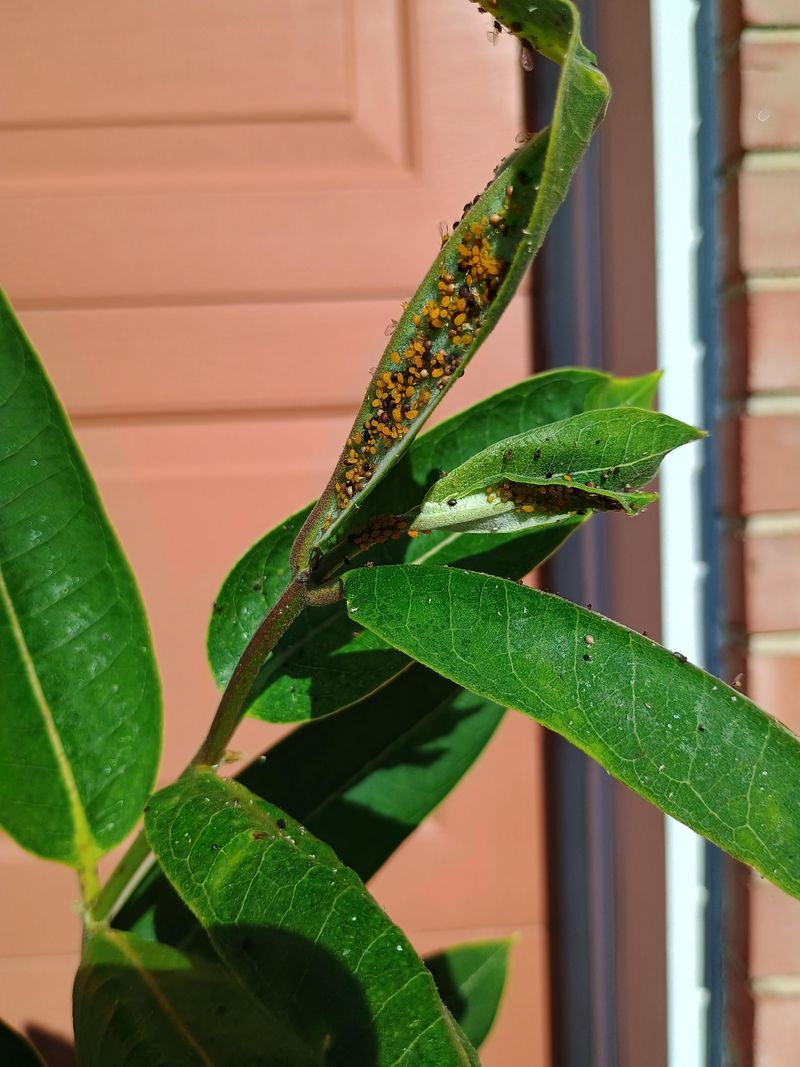
Something interesting happens when honeydew builds up on a plant: other insects show up for the free meal.
Ants, wasps, yellow jackets, and even flies are drawn to the sugary liquid that Spotted Lanternfly leaves behind.
If you notice an unusual amount of insect traffic around one particular tree, vine, or shrub, that concentration of activity is worth paying attention to.
Most gardeners assume wasps near a plant mean there is a nest nearby, or that ants are simply doing what ants do.
But when multiple types of insects gather repeatedly on the same trunk or around the same grapevine, it often points to a honeydew source.
This kind of secondary insect activity can actually be one of the earliest visible clues a gardener notices, even before the sticky residue becomes obvious to the touch.
Walk around the base of the plant and look at the trunk at eye level.
Check where the insects seem most concentrated and look for shiny patches, egg masses, or small insects resting on the bark.
Spotted Lanternfly nymphs and adults tend to rest on trunks and lower branches during certain parts of the day.
Noticing a wasp swarm around your muscadine or a trail of ants marching up your apple tree is your garden sending you a message worth following up on quickly and carefully.
4. Gray Mud-Like Egg Masses On Outdoor Surfaces
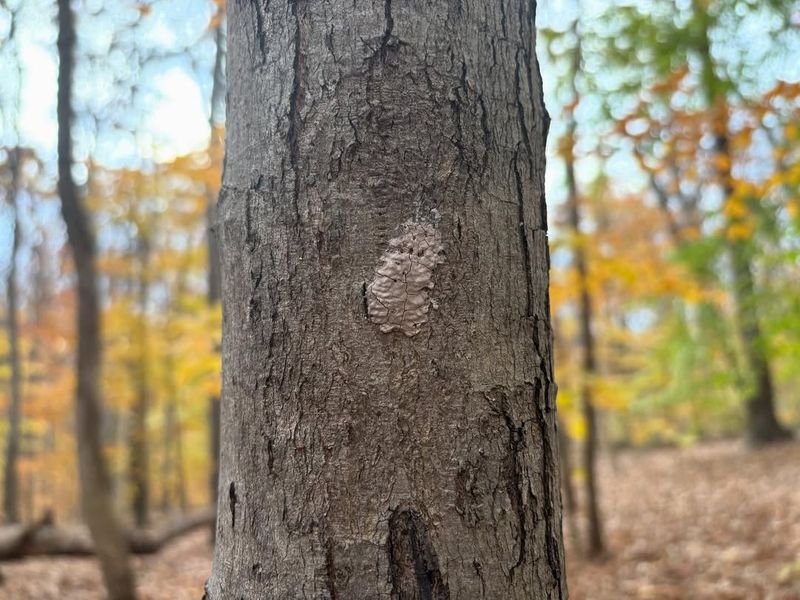
Spotted Lanternfly egg masses are easy to miss because they look nothing like what most people picture when they think of insect eggs.
Instead of a neat cluster or a silky sac, these egg masses look like a smear of dried gray mud or a patch of old putty.
They are flat, roughly rectangular, and can measure one to two inches long. Fresh ones may look slightly waxy or shiny, while older ones appear cracked and dull.
Gardeners in North Carolina might find them on tree trunks, wooden fence posts, stone walls, firewood, grills, outdoor furniture, trailers, and even the sides of vehicles.
Because they blend in so well with rough bark or weathered wood, they are often overlooked during routine yard checks.
Running your fingers along a rough surface and feeling an unexpectedly smooth or waxy patch can sometimes lead you right to one.
The egg masses contain rows of small seeds arranged in columns, and that structure becomes visible when the outer coating wears away.
Finding egg masses is significant because each one can hold around 30 to 50 eggs.
Spotting them in fall or winter, before the eggs hatch in spring, gives you the best window to report them and get help from your local Extension office or the North Carolina Department of Agriculture.
Early reporting truly makes a difference in slowing the spread.
5. Tree Of Heaven Growing Near The Garden
Not every invasive pest problem starts with the pest itself. Sometimes it starts with a plant.
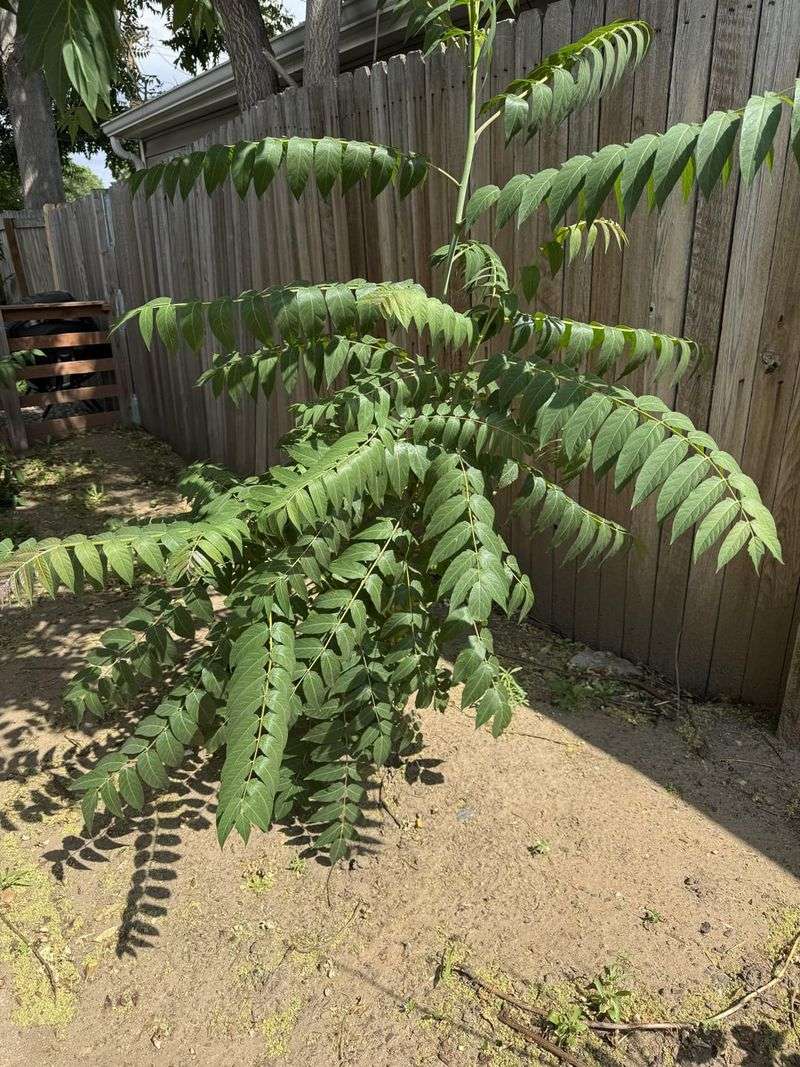
Tree of heaven, known scientifically as Ailanthus altissima, is one of Spotted Lanternfly’s most preferred host plants, and it grows abundantly across North Carolina.
You have probably seen it along roadsides, fence lines, alleys, and wooded property edges without knowing exactly what it was.
Tree of heaven has large compound leaves made up of many leaflets arranged along a central stem, somewhat similar to sumac or black walnut.
The leaflets have small notches near their base that give off a strong, unpleasant smell when crushed.
The tree grows fast, sometimes several feet in a single season, and it tends to pop up in disturbed soil and neglected corners of a property.
Finding tree of heaven near your garden, orchard, or property edge is a reason to increase your scouting efforts significantly.
Spotted Lanternfly is strongly attracted to this tree and will often congregate on it in large numbers during late summer and fall.
Even if you have never seen the insect before, discovering tree of heaven nearby raises the likelihood that Spotted Lanternfly could be present or moving into your area.
Learn to recognize it, check it regularly, and report any unusual insect activity you notice on or around it to your county Extension agent right away.
6. Sticky Grapevines Or Muscadine Supports
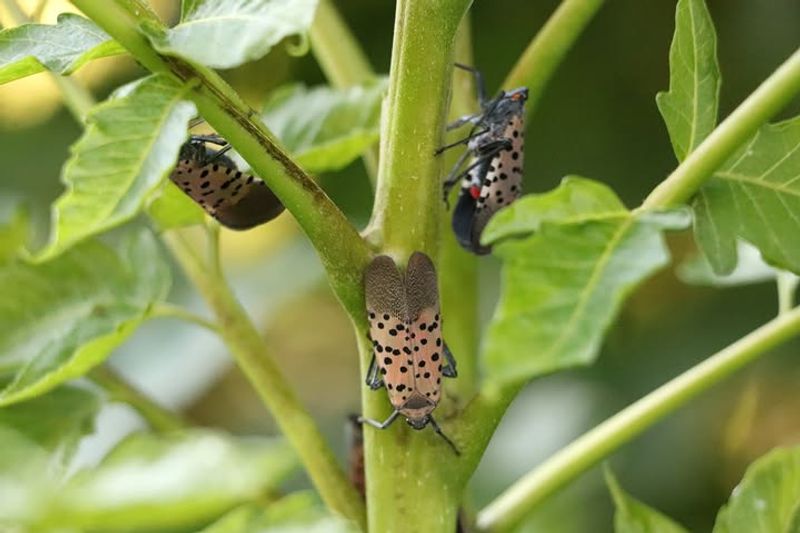
Grapevines and muscadines hold a special place in North Carolina gardens and small farms, and that makes this next sign especially important to know.
Spotted Lanternfly is considered a serious threat to grapes because it feeds heavily on the vines and reduces their ability to produce healthy fruit.
Before you ever see the insect itself, your grapevines may start showing signs that something is feeding on them.
Check your trellis posts, support wires, and the main trunk of the vine for stickiness or a shiny wet appearance.
Look at the undersides of leaves for honeydew buildup. Notice whether wasps or ants seem unusually interested in a particular section of vine.
Black sooty mold forming along the lower canes or on nearby wooden posts is another clue worth investigating.
A vine that seems weaker than expected during the growing season, with smaller leaves or reduced shoot growth, may also be worth a closer look.
It is important to note that sticky vines do not automatically mean Spotted Lanternfly is present, since other insects like aphids and leafhoppers also produce honeydew.
But grapevines and muscadines are high-priority plants to monitor closely in North Carolina, especially as Spotted Lanternfly continues to expand its range.
Inspecting your vines carefully at least once a week during summer and fall gives you the best chance of catching a problem while it is still manageable and before significant harm occurs.
7. Small Black Or Red Nymphs Moving Before Adults Appear
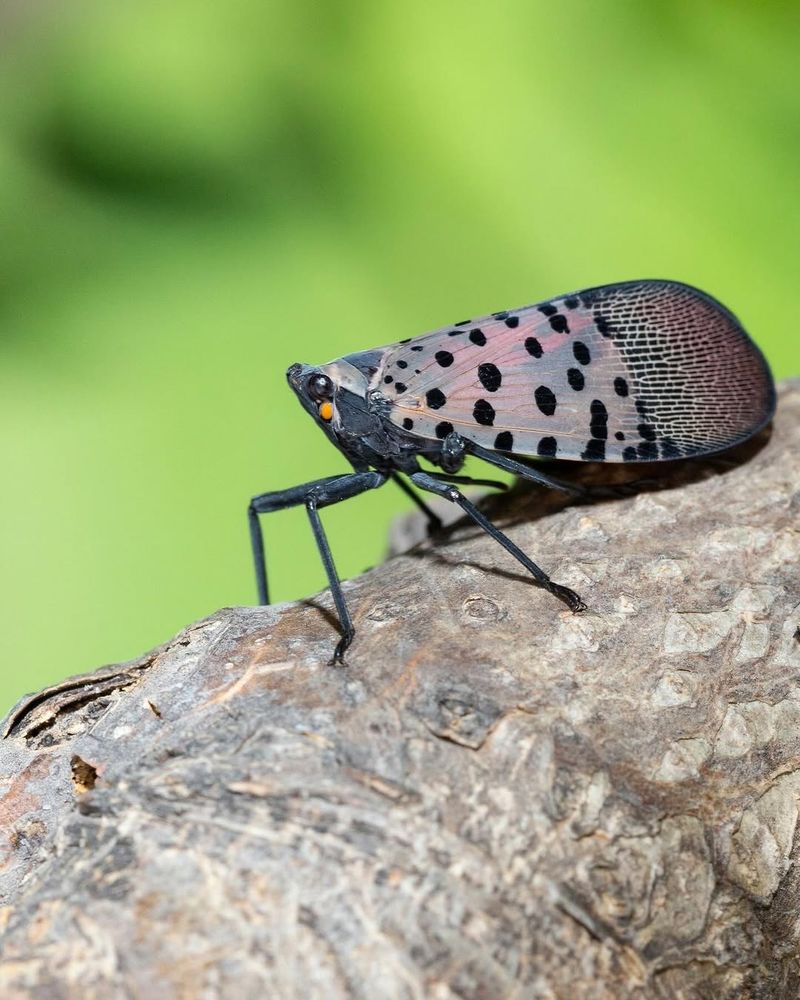
Most people picture the adult Spotted Lanternfly when they hear the name, with its striking red hindwings and bold spotted pattern.
But the young nymphs look completely different, and they appear weeks before the adults do.
Knowing what they look like could help North Carolina gardeners catch an infestation much earlier in the season.
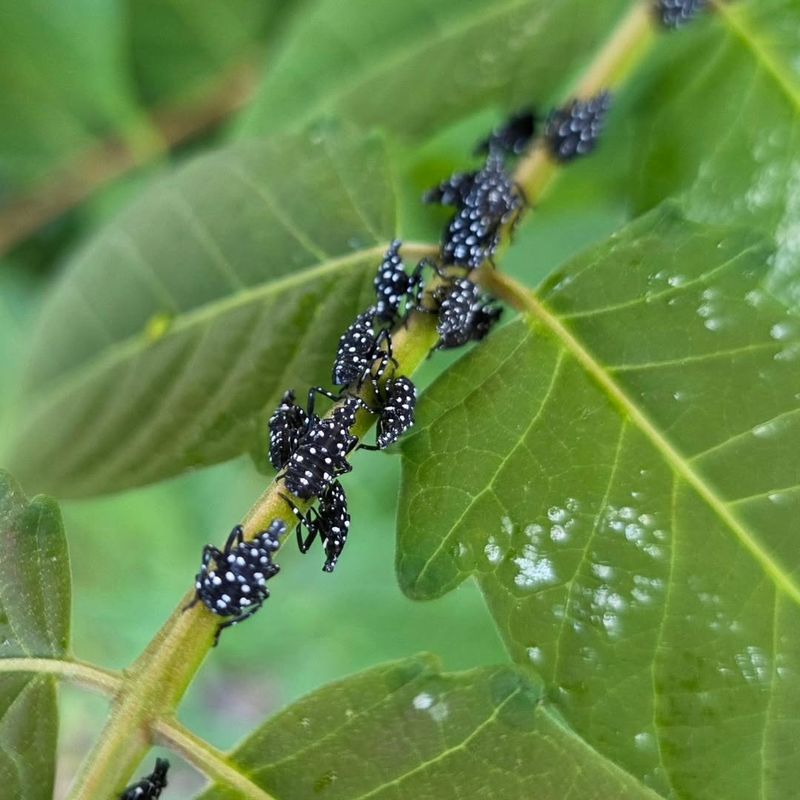
Early-stage nymphs are small, around a quarter inch long, and are black with white spots. They can be easy to confuse with other small insects at first glance.
As they grow through later nymph stages, they develop patches of red along with the black and white markings, making them a bit more distinctive.
All nymph stages are wingless and move by jumping quickly when disturbed, which can make them tricky to photograph.
Look for nymphs on the trunks and stems of host plants from late spring through midsummer. They tend to move up and down the trunk and gather in groups when populations are high.
Taking a clear photo with your phone is genuinely helpful when reporting to the North Carolina Department of Agriculture or your local Cooperative Extension office. Even a blurry photo is better than no photo at all.
If you spot small jumping insects with spots on a tree trunk and are not sure what they are, do not wait, report it and let an expert help you confirm the identification quickly.
8. Outdoor Items That Could Carry Egg Masses

One of the reasons Spotted Lanternfly spreads so quickly from one region to another is that it hitchhikes.
Females lay egg masses on almost any hard, flat surface, which means everyday outdoor items can unknowingly carry eggs from an infested area to a clean one.
This is one of the most important things North Carolina gardeners can understand about how this pest moves.
Firewood is one of the highest-risk items, especially when moved from one county or state to another. But the list goes well beyond firewood.
Grills, patio furniture, potted plants, outdoor toys, bicycles, campers, trailers, stone slabs, decorative rocks, and vehicles have all been known to carry egg masses.
The eggs can survive transport and hatch in a new location where the pest was not previously present, which is exactly how infestations get started in new areas.
Before moving any outdoor items from one property to another, take a few minutes to inspect them carefully.
Look for gray, mud-like smears on flat or rough surfaces, paying attention to the underside of furniture legs, the undersides of trailer hitches, and the rough surfaces of firewood.
Scraping an egg mass into a bag with hand sanitizer or rubbing alcohol and reporting it is more helpful than simply brushing it off.
North Carolina gardeners who travel, camp, or move materials between properties play a real role in either slowing or speeding the spread of this pest.
9. A Reason To Report Instead Of Guess
Finding something unusual in your garden and wondering what it is can feel frustrating, especially when you cannot find a clear answer on your own.
But with Spotted Lanternfly, you do not have to figure it out alone.
North Carolina has resources ready to help gardeners report and confirm possible sightings, and that reporting network is genuinely valuable for protecting the state’s plants, orchards, and vineyards.
If you notice sticky surfaces, black sooty mold, unusual insect gathering, shiny bark, gray egg masses, or small jumping nymphs on your property, take clear photos from multiple angles.
Note the location as specifically as you can, including the address, nearest cross street, or GPS coordinates if possible.
Then report the sighting to the North Carolina Department of Agriculture and Consumer Services or contact your local Cooperative Extension office.
Both are equipped to help identify what you found and advise you on next steps.
Reporting matters most when you are outside a known infested area, because early reports allow officials to respond before the population grows.
You do not need to be certain before you report. A clear photo and a location are enough to get the process started.
The most useful habit any North Carolina gardener can build right now is regular scouting: check for honeydew, sooty mold, egg masses, host plants like tree of heaven, and unusual insect traffic around your garden every week during the growing season.
Your observations could genuinely help protect your community.