7 Fast Growing Trees North Carolina Homeowners Use To Shade Patios Without Damaging Foundations
Patio shade is one of the most common landscaping goals across North Carolina, and the instinct to reach for the fastest-growing tree available is completely understandable when you are sitting in full afternoon sun through a July that refuses to cool down.
The problem is that speed and foundation safety rarely come packaged together in the same tree, and choices made purely for quick canopy coverage often create expensive structural problems within ten to fifteen years.
These trees grow shade fast, but know their boundaries, giving you a quick canopy without wrecking your North Carolina foundation, pipes, or sidewalks.
1. Common Crape Myrtle
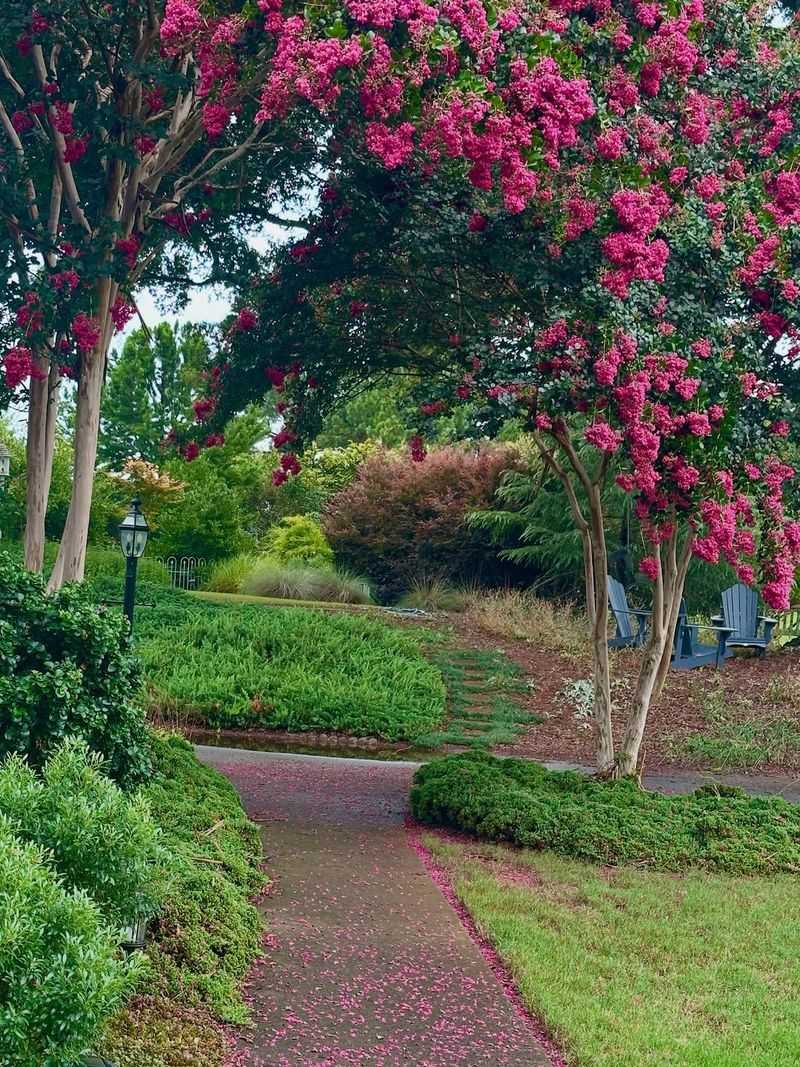
Few trees bring as much summer color to a North Carolina patio as the crape myrtle.
With its bright clusters of flowers in shades of pink, red, white, and lavender, it earns its spot fast.
Crape myrtles are well-loved because they grow quickly and stay relatively compact compared to large canopy trees, making them a smart option for homeowners who want shade without planting something massive.
One of the biggest advantages here is that you can choose a variety sized perfectly for your space.
Dwarf types stay under ten feet, while standard varieties can reach twenty-five to thirty feet at maturity.
Matching the variety to your available space before you plant is the most important step. A crape myrtle that outgrows a tight patio corner becomes a pruning headache and a mess.
Full sun is where crape myrtles truly shine. They love heat and will reward you with months of blooms from summer into early fall.
However, plant them at least eight to fifteen feet from the house depending on the mature size of the variety you select.
Roots are generally not aggressive, but tight planting against a foundation is never a smart call with any tree.
One honest downside worth mentioning is debris. Flower petals, seed pods, and small branches fall regularly during the growing season. Near a heavily used patio, driveway, or walkway, this cleanup can add up.
Planting slightly off to the side of your main patio area rather than directly above it helps manage the mess while still delivering beautiful dappled shade.
2. Weeping Yaupon Holly
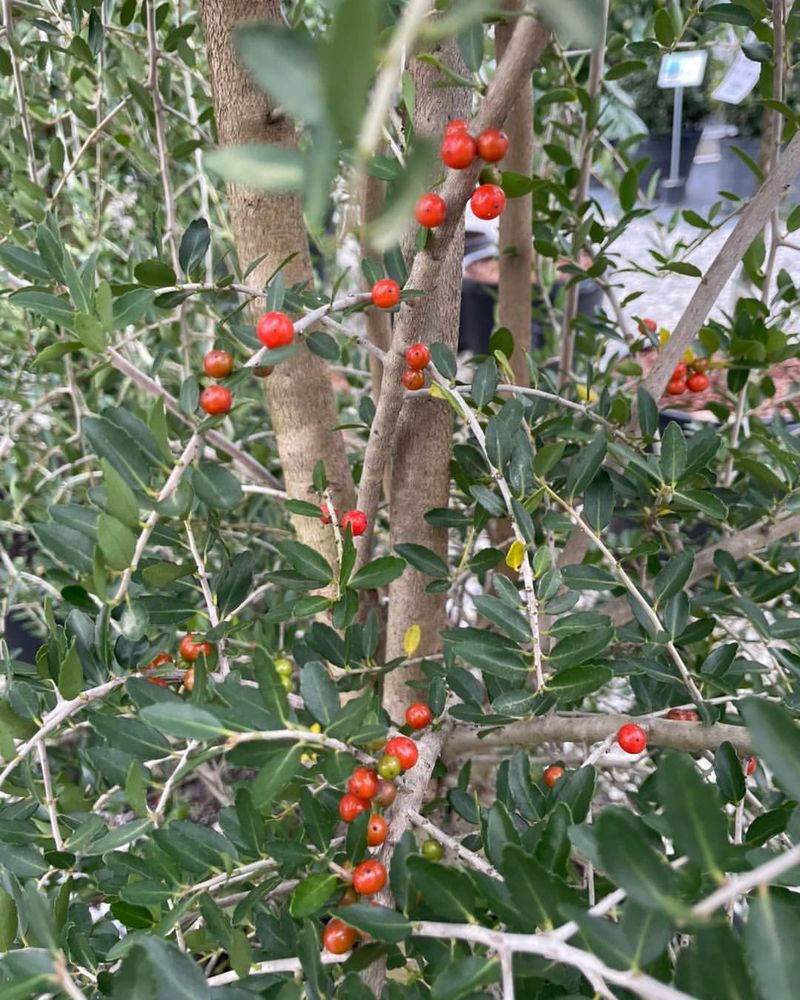
Weeping yaupon holly has a kind of quiet elegance that most people do not expect from a holly.
Its long, arching branches sweep downward in soft cascading layers, creating a sculptural look that works beautifully beside a patio.
Unlike the stiff, formal appearance of many evergreens, this tree has an open, airy feel that lets light filter through rather than blocking everything out.
As a native plant, weeping yaupon holly is remarkably tough once it settles in.
It handles full sun and partial shade, bounces back from short periods of flooding, shrugs off drought after establishment, and even tolerates salt spray and urban pollution.
For homeowners in coastal or urban parts of North Carolina, that kind of durability is genuinely valuable.
Not many trees can handle that range of conditions without looking worn out.
Because it stays on the smaller side, typically topping out between fifteen and twenty feet, it fits patio-scale spaces better than a large canopy tree. It provides light, filtered shade rather than deep, dense coverage.
Your North Carolina Garden Changes Every Week. Your Plan Should Too.
Gardening in North Carolina changes quickly throughout the season. Every Friday you’ll receive a simple weekly plan showing exactly what to plant, prune, fertilize, harvest, and protect so you never miss the right timing.
If your goal is to take the edge off direct afternoon sun without plunging the whole patio into shadow, weeping yaupon holly delivers exactly that kind of comfortable, gentle overhead presence.
Spacing still matters, even with a smaller tree like this one. Keep it at least eight to ten feet from the house, patio edge, and any walkways.
Its root system is not aggressive, but proper clearance protects your hardscape long term and gives the tree enough room to develop its natural weeping shape without crowding or interference from nearby structures.
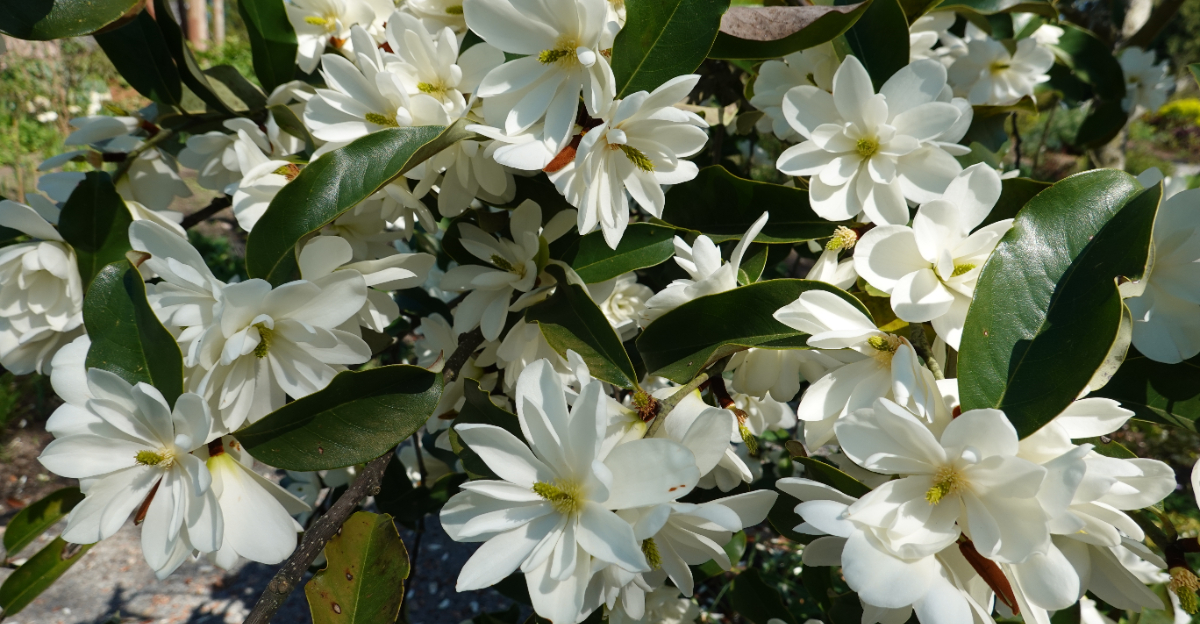
3. Sweetbay Magnolia
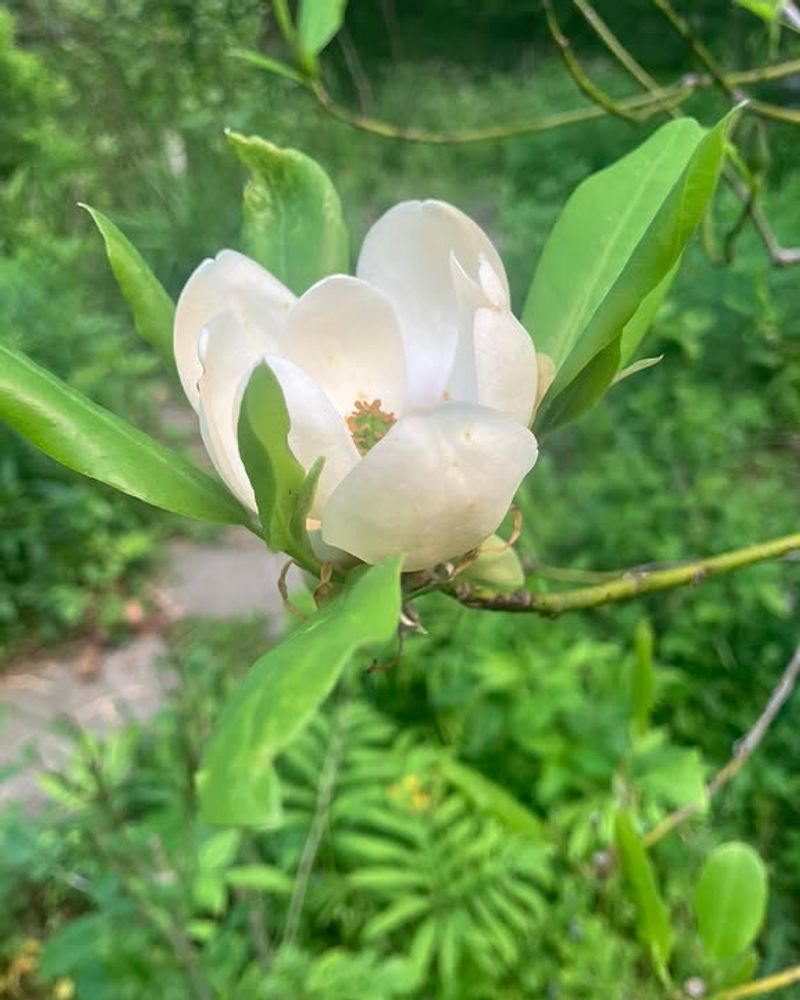
There is something almost dreamy about a sweetbay magnolia in bloom. The creamy white flowers open in late spring and carry a soft, sweet fragrance that drifts across a patio on a warm evening.
Unlike its famous cousin, the southern magnolia, sweetbay stays more manageable in size and drops far less leaf litter, making it a more practical choice for homeowners who want beauty without constant cleanup.
Sweetbay magnolia grows at a moderate pace, and in ideal young-tree conditions with rich, moist, acidic soil, it can put on growth surprisingly fast.
North Carolina’s Piedmont and coastal plain regions often provide exactly the kind of slightly acidic, moisture-retaining soil this tree loves.
If your yard tends to stay a little wet or your soil holds moisture well, sweetbay is one of the best trees you can plant near a patio.
The glossy, two-toned leaves, dark green on top and silvery underneath, catch the breeze and shimmer in the sunlight. Even when it is not blooming, it looks attractive.
In warmer parts of North Carolina, sweetbay behaves almost like a semi-evergreen, holding its leaves well into winter.
That extended coverage adds real value for homeowners wanting year-round visual interest near the patio. Root space matters with this tree.
Give it room to spread to its full mature width, which can reach fifteen to twenty feet across depending on the growing conditions.
Planting too close to a foundation, retaining wall, or patio slab edge invites future problems.
A comfortable setback of at least ten to fifteen feet from the house keeps both the tree and your structure in good shape.
4. Eastern Redbud
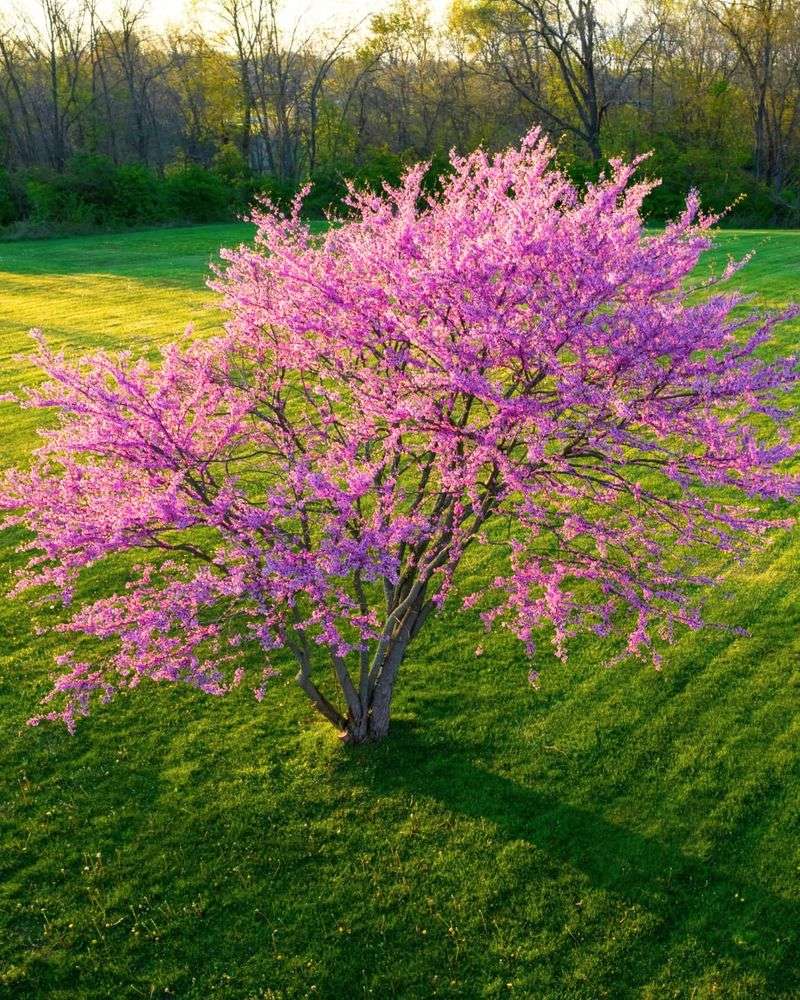
Every spring, eastern redbud puts on one of the most jaw-dropping floral shows in the entire plant world.
Before a single leaf appears, the branches explode with hundreds of tiny magenta-pink blooms that cover every twig from tip to trunk.
Neighbors stop and stare. It is that kind of tree. Beyond the spring spectacle, redbud settles into a graceful shape with broad, heart-shaped leaves that create soft, filtered shade through the warmer months.
Eastern redbud is native to North Carolina and grows across much of the state, from the mountains to the coastal plain.
That native status means it is already adapted to local soils, insects, and weather patterns.
It does not need much fussing once established, which makes it appealing to homeowners who want results without high maintenance.
The filtered shade it provides is ideal for patios where you want light and airflow, not a dark, enclosed feel. Size is one of its biggest advantages near a patio.
Redbud typically maxes out between twenty and thirty feet tall with a similar spread, making it a much safer bet near a home than a large fast-growing shade tree.
Because it stays in a manageable range, the risk of root damage to walkways and foundations is far lower than with trees like maples or oaks. Soil drainage is critical for long-term success.
Redbud thrives in well-drained, slightly moist soil and struggles in compacted, waterlogged, or extremely dry spots. Plant it in a protected location away from harsh reflected heat from walls or pavement.
Give it at least ten feet of clearance from the house and patio edge to allow the canopy to develop its natural rounded, layered form without crowding.
5. Downy Serviceberry
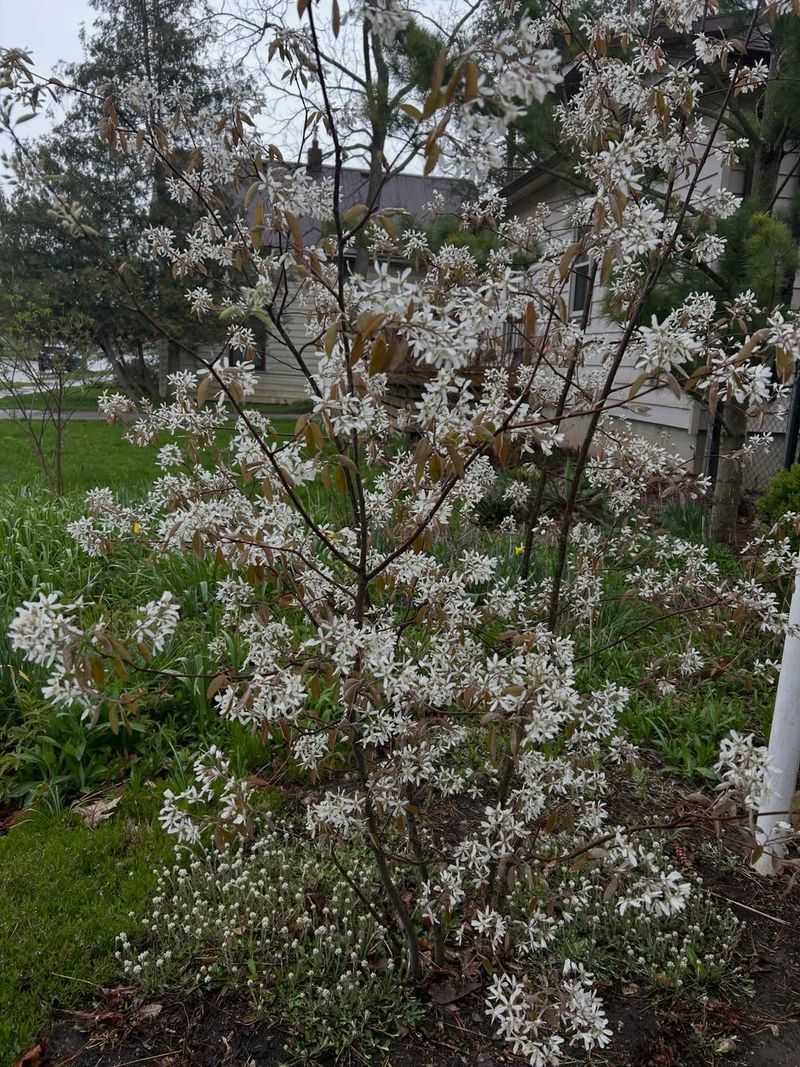
Downy serviceberry is the kind of tree that earns admiration from gardeners who pay close attention.
It’s subtle at first, but once you catch its early spring white blooms, summer’s deep purple berries, and a fiery orange-red fall finale, you’ll see why native plant lovers are obsessed.
It offers four-season interest in a compact, patio-friendly package.
As a smaller native tree, downy serviceberry typically reaches fifteen to twenty-five feet in height with a spread of around ten to fifteen feet.
That modest footprint makes it well suited for patio-scale planting where a giant canopy tree would feel overwhelming or create root problems.
It grows in full sun to partial shade, and it performs beautifully along the edge of a patio where it can receive morning light and some afternoon relief from the hottest summer sun.
Moist, well-drained soil is where this tree really thrives. It naturally grows along woodland edges and stream banks in North Carolina, so it prefers conditions that are not bone-dry or waterlogged.
Adding organic matter to your soil at planting time and mulching well around the base helps maintain the steady moisture levels it appreciates.
Regular watering during dry stretches in the first two years sets it up for strong, independent growth afterward.
One thing to keep in mind is that the berries attract birds enthusiastically, which is wonderful for wildlife lovers but can mean some dropping and staining near a light-colored patio surface.
Planting it slightly off to one side rather than directly overhead keeps the patio cleaner while still enjoying the shade and seasonal beauty this charming native tree brings.
6. Red Maple
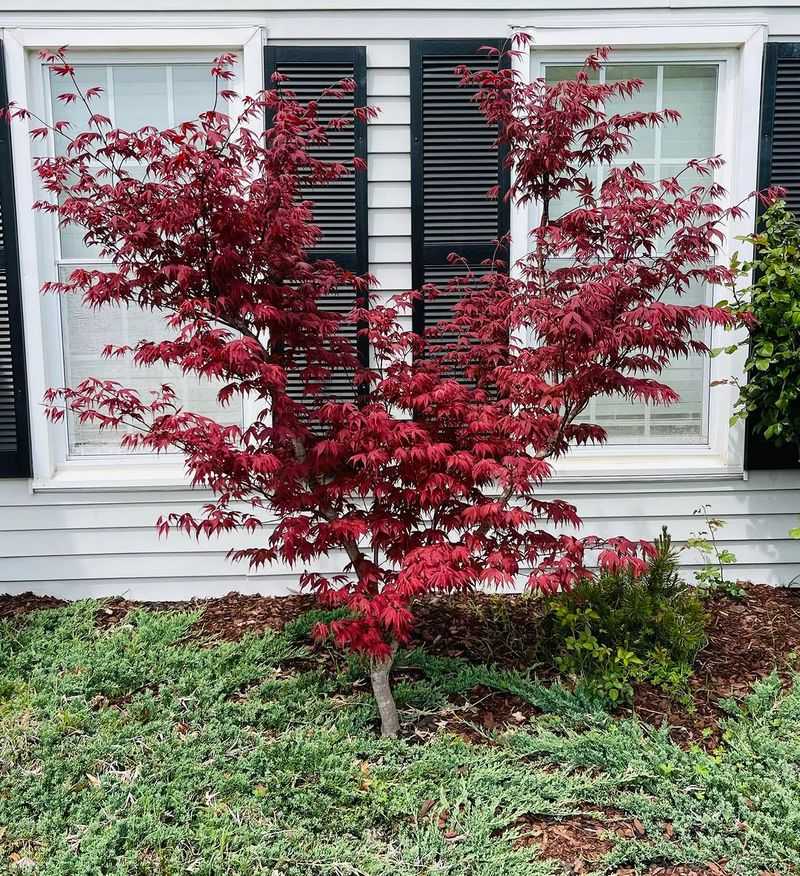
Red maple moves fast. For homeowners who want real, deep patio shade and want it within a few years rather than a few decades, red maple delivers in a way that few native trees can match.
It is one of the most common trees in North Carolina for good reason.
It adapts well to a wide range of soils, grows reliably across the Piedmont, mountains, and coastal plain, and lights up every fall with brilliant red and orange color that makes the whole yard look like a painting.
The speed and size of red maple are exactly why placement matters so much. This is not a tree for tight corners, narrow side yards, or spots close to the house.
At maturity, red maple can reach sixty to ninety feet tall with a canopy spread of forty feet or more.
Surface roots become more prominent as the tree matures, and they can crack sidewalks, lift patio slabs, and interfere with shallow utility lines if the tree is planted too close to any of these features.
The smart move is to plant red maple in a larger open lawn area where it can shade the patio from a distance.
Even thirty to forty feet away, a mature red maple canopy extends far enough to cast meaningful afternoon shade across a patio.
That setback protects your foundation, walkways, and patio while still letting you enjoy the cooling effect of a big, beautiful shade tree.
Soil moisture helps red maple perform at its best. It naturally grows along stream banks and in bottomlands, so it appreciates consistent soil moisture.
Avoid planting in extremely dry, compacted areas. With the right space and reasonable moisture, red maple grows fast, looks stunning, and shades your outdoor space for generations.
7. River Birch
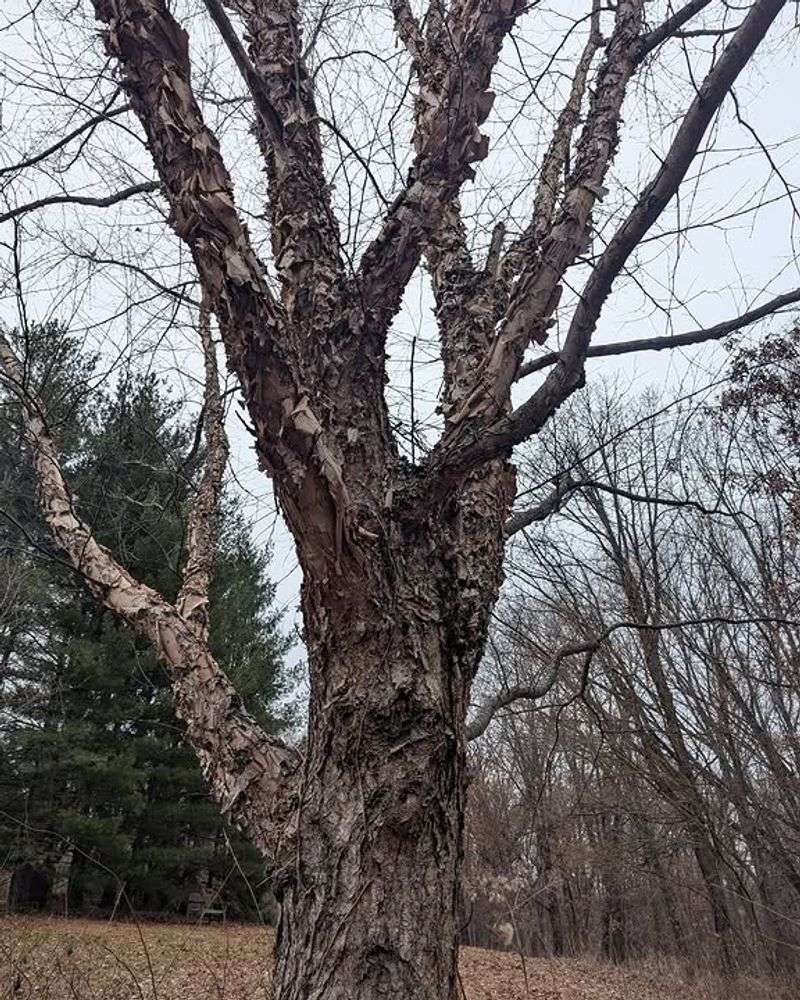
River birch has one of the most distinctive looks of any tree in the Southeast.
That peeling, papery bark in shades of cinnamon, cream, and soft tan catches the eye in every season, even when the branches are bare in winter.
It grows fast, it looks stunning year-round, and it thrives in exactly the kind of wet, low-lying spots where many other trees struggle to survive.
For North Carolina homeowners with a damp yard or a rain garden, river birch is often the perfect fit. Growth rate is a genuine strength.
River birch regularly puts on three or more feet of height per year under good conditions, making it one of the faster native trees available in the region.
It handles full sun and partial shade equally well, and its preference for moist, acidic soil means it performs especially well in the Piedmont and coastal plain areas of North Carolina where drainage can be slow after heavy rain.
Size and root behavior are the two things that demand respect with this tree. River birch becomes a large tree at maturity, often reaching forty to seventy feet tall with a wide-spreading canopy.
Its roots are vigorous and will seek out moisture wherever they can find it, which means gutters, water lines, and patio slabs are all at risk if the tree is planted too close.
A minimum setback of thirty feet from the house, foundation, and any hardscape is a practical starting point.
Twig and branchlet drop is another real consideration. River birch sheds small twigs regularly throughout the year, especially after wind or storms.
Over a heavily used patio, that cleanup becomes a frequent chore.
Plant it in a naturalized area, along a property edge, or beside a rain garden where it can grow freely and still cast long afternoon shade across your outdoor living space from a safe distance.