5 North Carolina Native Plants That Help Deter Ticks And 3 That Invite Them
Not all native plants are equal when it comes to tick pressure, and that distinction matters enormously for North Carolina gardeners trying to build landscapes that work against tick activity rather than quietly supporting it.
Five natives in particular modify yard conditions in ways that make tick survival and movement genuinely more difficult.
Three others, despite being regionally appropriate and ecologically valuable in other ways, create exactly the kind of dense, humid, low-light ground cover that ticks depend on to stay active through the season.
Knowing which group each plant belongs to before it goes in the ground is information that changes how a tick-conscious North Carolina yard gets designed from the border edges inward.
1. American Beautyberry Has The Best Tick Repellent Evidence
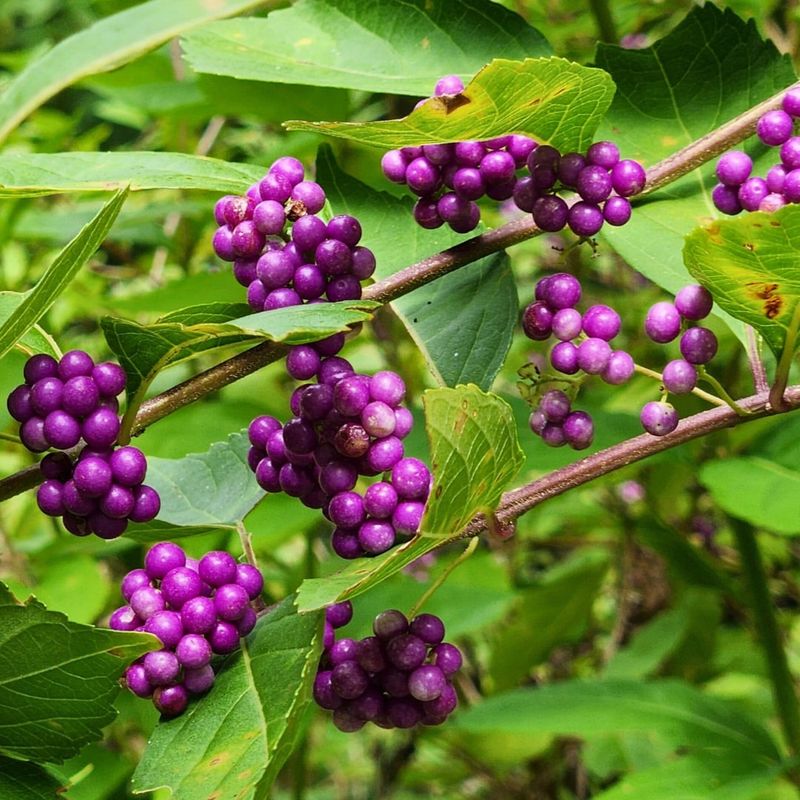
Few native plants have earned as much attention in tick research as American beautyberry. NC State University lists it as native to the central and southeastern United States, and researchers have found something genuinely interesting inside its leaves.
Studies have identified compounds called callicarpenal and intermedeol in crushed beautyberry leaves, and these compounds showed real repellent activity against mosquitoes, ticks, and fire ants in research settings.
The key word here is crushed. The plant itself sitting in your garden is not going to act like a yard spray or an invisible force field.
The repellent effect comes from physically crushing the leaves and applying them, which is something people in the South have done for generations as a folk remedy. Scientists later confirmed there was real chemistry behind that old practice.
Growing American beautyberry in North Carolina is fairly straightforward. It tolerates partial shade, handles clay soil reasonably well, and produces those unforgettable clusters of bright purple berries in late summer and fall.
Birds absolutely love it, so it doubles as a wildlife plant. For gardeners who want native plants backed by actual research, this one stands above the rest on this list.
Planting it along a walkway or near a seating area means you can easily grab a leaf, crush it between your fingers, and put that natural chemistry to practical use during tick season.
2. Hoary Mountain Mint Helps Make A Sunny Bed Less Tick Friendly
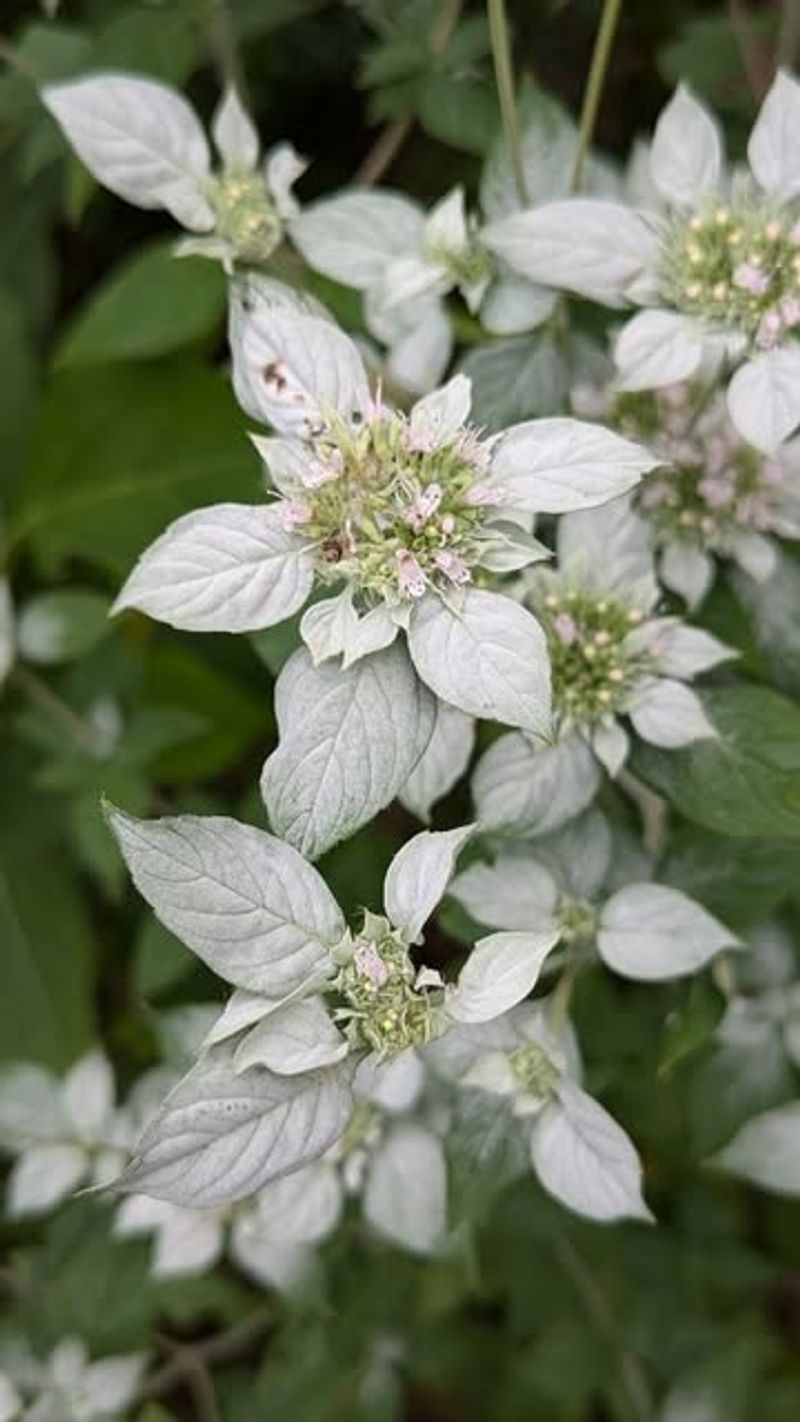
Walk past hoary mountain mint on a warm afternoon and you will notice the scent immediately.
The leaves carry a strong, clean fragrance that comes from the aromatic oils packed inside them, and that same quality makes this plant a standout choice for gardeners thinking about tick-smart design.
NC State lists it as a North Carolina native that grows in full sun to partial shade, handles dry soil once established, and shows strong deer resistance.
The real benefit here is not just the plant itself but where and how you use it. Ticks prefer damp, shaded edges with low tangled vegetation where they can climb onto passing hosts.
Hoary mountain mint naturally fits into the opposite kind of space. Plant it in open, sunny, well-spaced beds with good airflow, and you are building a garden environment that simply does not offer the conditions ticks prefer.
Your North Carolina Garden Changes Every Week. Your Plan Should Too.
Gardening in North Carolina changes quickly throughout the season. Every Friday you’ll receive a simple weekly plan showing exactly what to plant, prune, fertilize, harvest, and protect so you never miss the right timing.
It grows in clumps, reaches about two to three feet tall, and blooms in midsummer with small white flowers that pollinators go wild for. Bees, butterflies, and beneficial wasps will visit it constantly.
Because it spreads gradually through rhizomes, giving it enough space and dividing it every few years keeps the bed tidy and open rather than crowded.
Replacing a damp, brushy edge with a planting of hoary mountain mint in full sun is a practical and genuinely attractive way to redesign a problem area while also supporting native pollinators throughout the season.
3. Spotted Beebalm Fits Dry Pollinator Beds
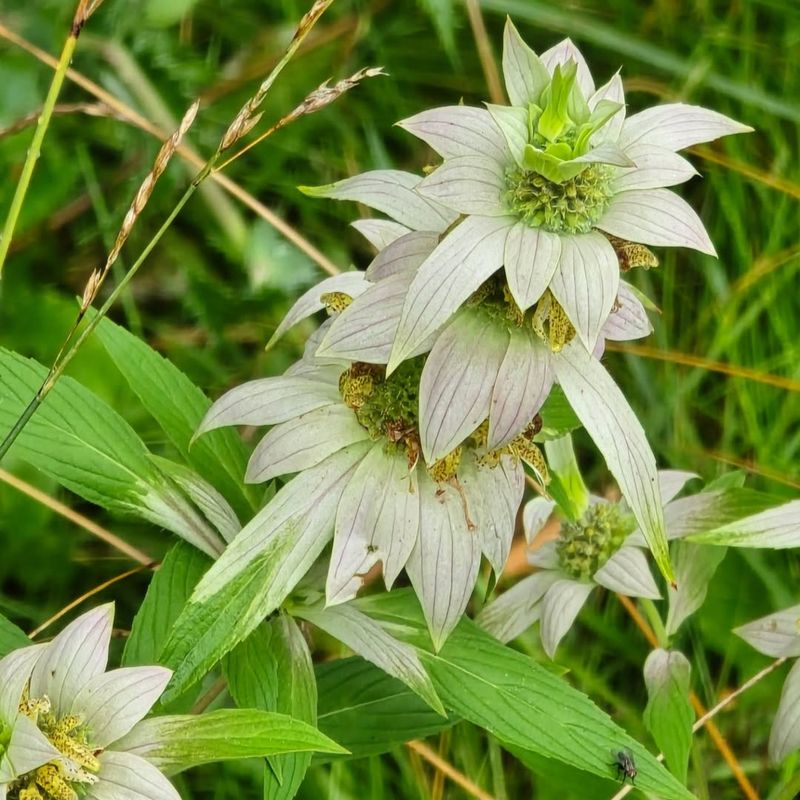
Spotted beebalm has a quiet confidence about it.
Unlike some showier plants that demand rich soil and regular moisture, this native North Carolina wildflower is comfortable in dry, well-drained sites and still manages to attract a steady stream of pollinators from midsummer into fall.
It forms tidy clumps, carries fragrant foliage, and works well in beds where you want structure without a lot of fuss.
For gardeners thinking about tick-smart planting, spotted beebalm earns its place by fitting naturally into the kind of conditions that are less hospitable to ticks. Open, dry, sunny beds with good airflow are not where ticks thrive.
The goal is not to claim that spotted beebalm removes ticks from your yard, because that would not be accurate.
The honest point is that choosing plants like this one helps you build a garden environment with better overall conditions rather than accidentally creating a damp, crowded edge.
Spacing matters a lot with spotted beebalm. Packing it too tightly into a shaded corner with poor drainage would work against the whole idea.
Give it room to breathe, place it where sunlight reaches the base of the plant, and avoid overwatering once it settles in. It typically grows one to three feet tall and pairs beautifully with other dry-site natives like rattlesnake master or aromatic aster.
Gardeners who prioritize both beauty and thoughtful plant placement will find spotted beebalm a genuinely rewarding addition to a well-designed pollinator bed in North Carolina.
4. Rattlesnake Master Keeps Beds Upright And Open
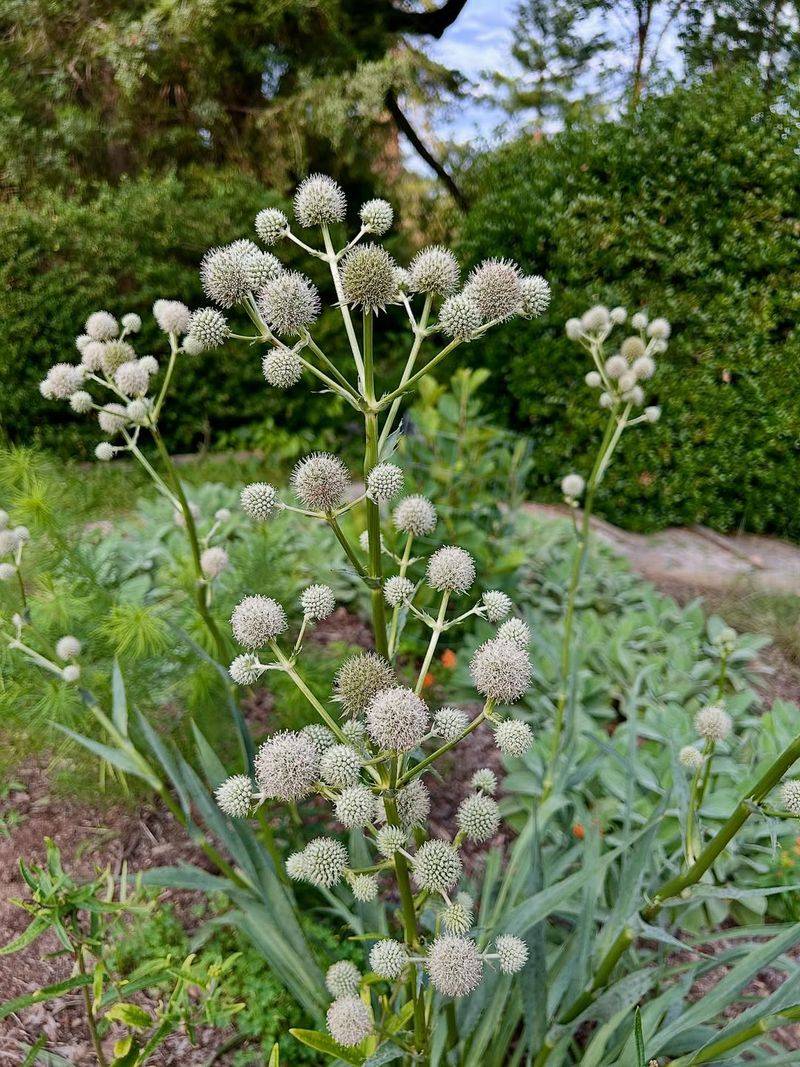
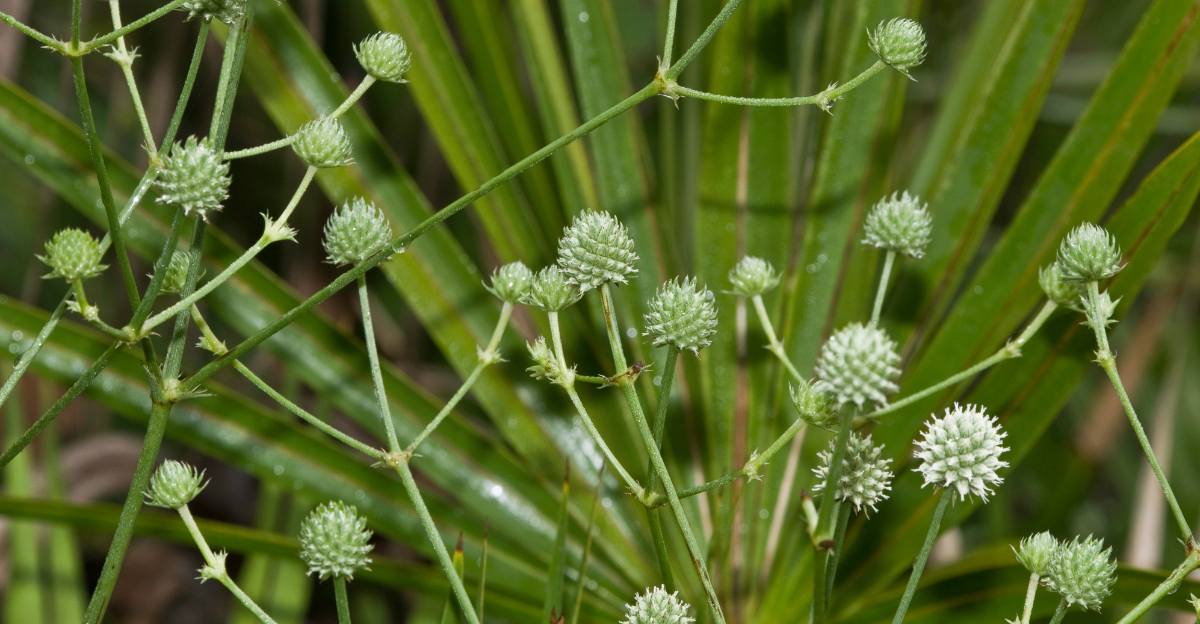
There is something almost architectural about rattlesnake master. Its stiff, sword-shaped leaves radiate outward from the base, and its globe-shaped flower heads sit on tall upright stalks that can reach five or six feet.
In a garden bed, it commands attention without taking over, and that structural quality is exactly what makes it useful in a tick-aware planting design.
Rattlesnake master is native to the eastern and central United States and grows well in full sun across North Carolina. It actually prefers lean conditions, thriving in shallow rocky soil, dry loamy sand, or sites with little organic matter.
Rich, moist soil can cause it to flop or become too lush. That preference for dry, open ground naturally aligns with the kind of environment that does not support tick activity at ground level.
The upright form of the plant is part of why it works so well here. Dense, low, tangled plantings that stay damp near the soil surface are far more tick-friendly than a bed of tall, airy plants with space between them and sunlight reaching the ground.
Rattlesnake master helps keep a planting honest in that way. It also blooms in midsummer, attracting specialist bees and a wide range of other pollinators.
Pair it with other dry-site natives and give each plant enough room so the base stays open and dry.
For gardeners who want bold structure, low maintenance, and smarter bed design, rattlesnake master is a strong and genuinely underused choice in North Carolina landscapes.
5. Aromatic Aster Is Better Than A Damp Weedy Edge
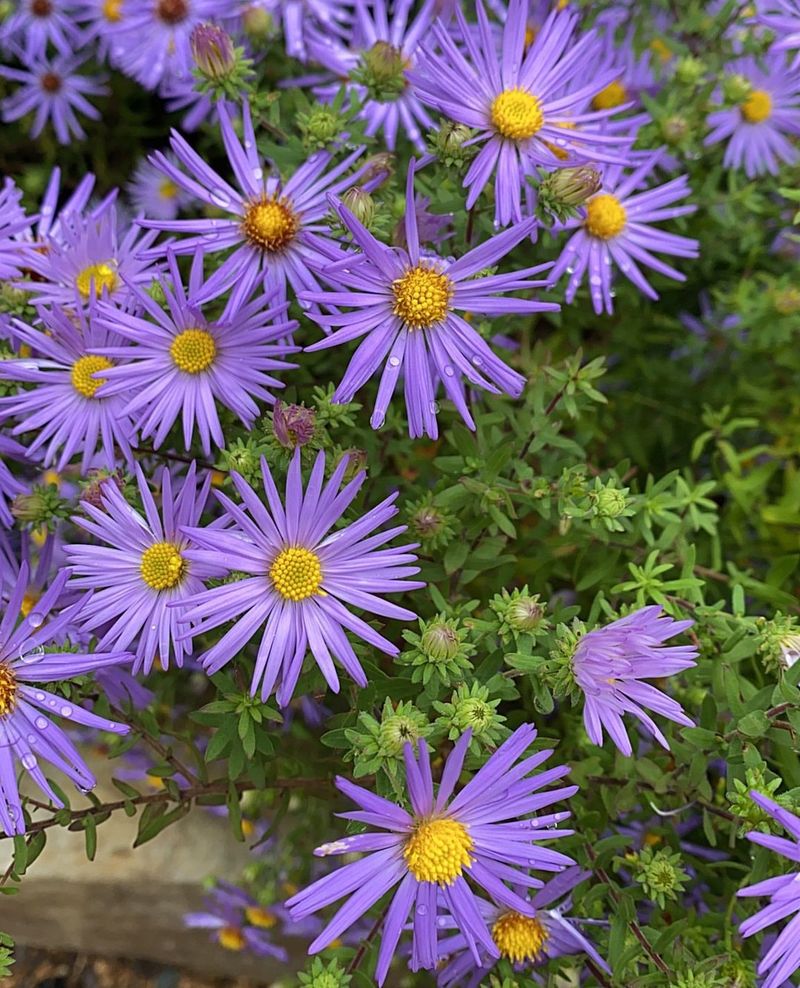
By the time most flowers have finished for the season, aromatic aster is just getting started.
It blooms in fall with masses of small purple flowers with yellow centers, and at that time of year it becomes one of the most important nectar sources for late-season pollinators.
NC State lists it as drought tolerant and resistant to both deer and rabbits, which already makes it a practical choice for North Carolina gardens with difficult conditions.
The connection to tick-aware gardening comes down to what aromatic aster can replace. Sunny edges along walkways, fences, or property lines often get neglected and slowly turn into weedy, unmanaged brush.
That kind of overgrown edge is exactly the habitat where ticks wait for a host. Planting aromatic aster in those spaces with good spacing and regular thinning keeps the area open, sunny, and far less inviting to ticks than a tangle of random vegetation would be.
Aromatic aster typically grows one to three feet tall and spreads over time, which is actually a useful quality in a border or meadow planting as long as you stay on top of dividing it every few years.
If it becomes too dense, it starts to create the same low, matted conditions you were trying to avoid.
Used well though, it is a genuinely smart substitute for neglected edges. The fragrance from the crushed foliage is a nice bonus, and the late-season bloom display is one of the most cheerful sights in a North Carolina fall garden.
6. Virginia Creeper Can Create Tick Friendly Cover

Virginia creeper is genuinely one of North Carolina’s most striking native vines. In fall, its five-leaflet clusters turn a brilliant red that can stop you in your tracks, and wildlife depends on it heavily for both food and cover.
Birds eat the berries, and many insects use the foliage throughout the growing season. As a native plant with real ecological value, it deserves credit for what it does well.
At the same time, placement matters enormously with this one. Virginia creeper is a vigorous grower that can reach 30 to 50 feet or more, and it does not just climb.
It creeps along the ground just as readily, forming dense low mats in shaded areas. That ground-level growth is where the concern comes in for tick-aware gardeners.
Shaded, moist cover close to the soil surface is exactly the kind of habitat where ticks can be most active, and unmanaged Virginia creeper can create that environment quickly along patios, paths, or play areas.
The vine is not a plant to remove from your property entirely. It belongs in the right spot, trained up a large tree or covering a back fence away from high-traffic areas.
The problem comes when it spreads unchecked along the ground near places where people and pets spend time. Regular management, clear boundaries, and intentional placement make a real difference.
If you have children or pets using the yard, being thoughtful about where Virginia creeper is allowed to sprawl is a genuinely practical part of managing your outdoor space in North Carolina.
7. Common Greenbrier Can Turn Into A Dense Thicket
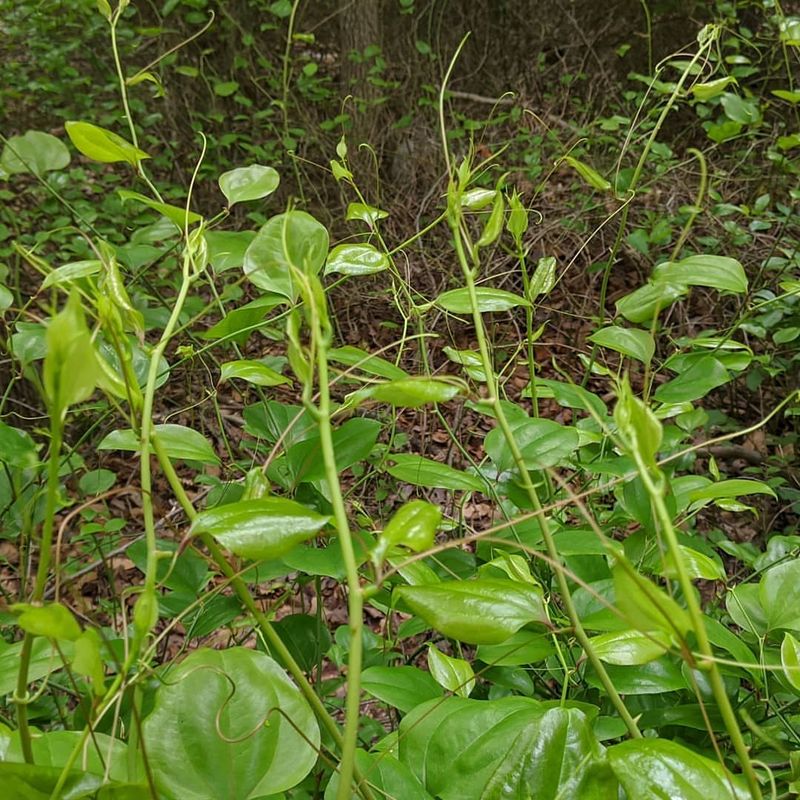
Common greenbrier is one of those plants that wildlife biologists genuinely appreciate and backyard gardeners often wrestle with. It is a native vine found throughout North Carolina in woodlands, fields, pond borders, hedgerows, and thickets.
Birds nest in it, small mammals use it for cover, and its berries provide food for a range of wildlife species. From a pure ecology standpoint, it earns its place in the landscape.
The challenge for homeowners comes when greenbrier moves into garden edges near walkways, sitting areas, or spots where people regularly pass through.
It climbs using curved thorns that grab onto nearby plants and structures, and it can also sprawl along the ground to form dense, tangled mats that are very difficult to move through.
That combination of shade, moisture, and low tangled cover is exactly the kind of environment where ticks are most likely to be present and waiting.
In a low-traffic restoration area, a back corner of a property, or along a natural buffer far from the house, greenbrier does real ecological work and belongs there.
The concern is when it goes unmanaged right beside a garden path, a seating area, or anywhere children and pets play.
Thorny thickets right next to active outdoor spaces are not just uncomfortable to deal with, they can also make tick awareness harder to practice.
If greenbrier is already growing near high-traffic areas in your yard, cutting it back and keeping a clear buffer zone is a straightforward and worthwhile step for any North Carolina homeowner.
8. River Cane Can Make A Thick Shaded Edge
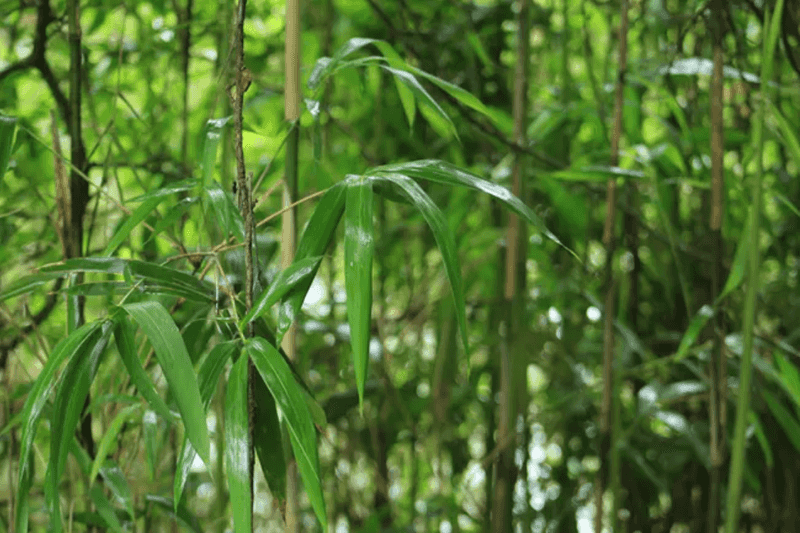
River cane holds a fascinating place in North Carolina’s natural and cultural history.
It is the only native bamboo east of the Rocky Mountains, and for centuries it was a cornerstone plant for Indigenous communities throughout the Southeast, used for tools, baskets, housing materials, and food.
Ecologically, it supports a remarkable range of wildlife, including several species that depend almost entirely on canebrakes for habitat. Its restoration along stream banks and floodplains is genuinely important conservation work.
For homeowners trying to reduce tick-friendly habitat right around their living spaces, though, river cane in the wrong location creates a real challenge.
It grows in dense clumps that can spread into extensive canebrakes over time, with tall, closely packed stems and a shaded interior that stays cool and moist.
That environment provides excellent cover for many animals and invertebrates, which is ecologically valuable but not what you want pressed against a patio, a bedroom window, or a narrow garden path where people move through daily.
The honest take on river cane is that it belongs in the right context. A streamside restoration planting, a natural buffer along a creek or drainage area, or a large property with space for it to spread without crowding active outdoor areas is where it truly shines.
Planting it right against a fence line next to a play area or squeezing it into a tight border is where the mismatch happens.
River cane is a plant worth celebrating and restoring in North Carolina, just with thoughtful placement that respects both its ecological role and your comfort outdoors.