Florida Native Plants Worth Planting Right Now In The Middle Of Summer
Conventional wisdom says wait until fall to plant in Florida. Cooler temperatures, more reliable rainfall, less stress on new plants.
That advice is not wrong for most plants. For Florida natives, the picture is more complicated.
A specific group of natives actually handles summer planting better than most gardeners expect. They are adapted to this climate at its most demanding.
Getting them in the ground now gives root systems a head start that fall-planted material does not always match. The key is knowing which ones tolerate the transition and which ones genuinely need a cooler window to establish without a fight.
That distinction separates a summer planting success from a frustrating and expensive setback. Florida’s rainy season is actually working in your favor right now if the right plants go in.
Free irrigation, warm soil, and conditions that certain natives were built for from the ground up.
1. Seaside Goldenrod Settles Into Sunny Beds Before Fall Bloom
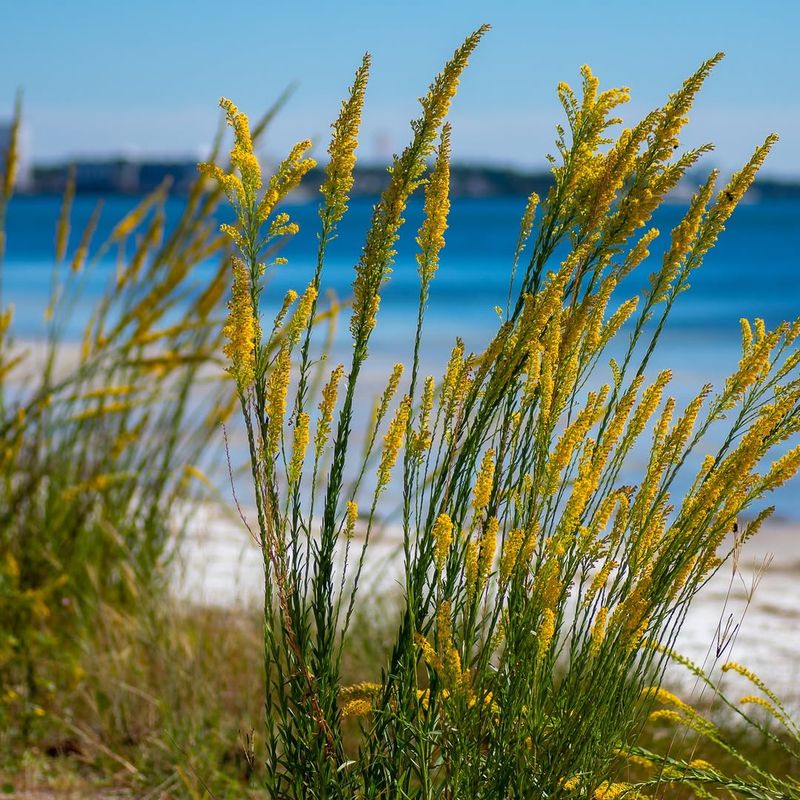
A bare sunny bed in late summer is actually an opportunity, not a problem, especially when seaside goldenrod is the plant going in. Solidago sempervirens is a native perennial that handles full sun, well-drained soil, and coastal conditions with quiet toughness.
That makes it worth planting before its fall bloom season arrives. Getting it in the ground now gives roots several weeks to anchor before the plant puts energy into flowering.
Seaside goldenrod is a solid pollinator plant. Its bright yellow plumes attract native bees, butterflies, and other beneficial insects during a time when late-season nectar sources start to thin out.
It has demonstrated salt and coastal tolerance, making it a reasonable choice for coastal beds and sandy shoreline gardens where many plants struggle. Inland sunny beds with good drainage work well too.
Mature plants can spread and grow fairly large, so this is not the right choice for a tight formal border or a small tidy edge. Give it room and let it do its thing.
Establishment watering is non-negotiable during summer. Water deeply and consistently for the first several weeks, especially during any dry spells between rain events.
Mulch around the base to hold moisture without burying the crown. Once fall arrives and those golden plumes open up, the late-season payoff makes the careful summer start completely worthwhile.
2. Partridge Pea Brings Fast Native Color To Hot Sandy Soil
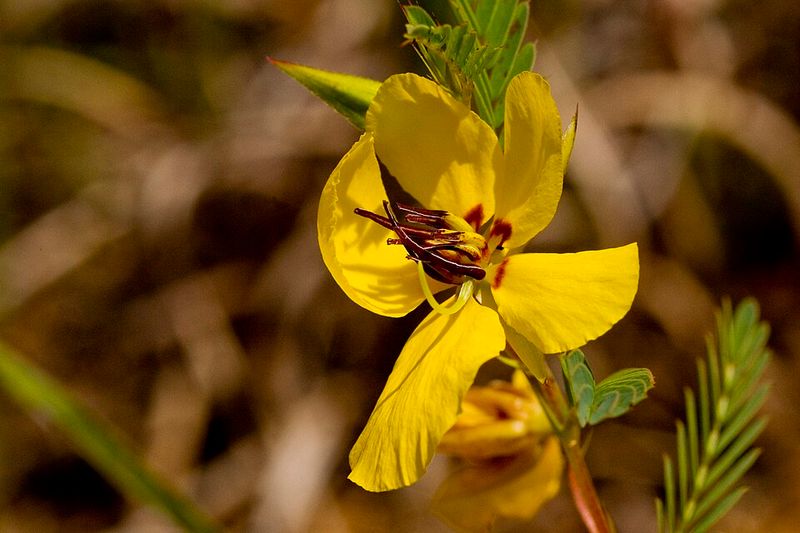
Some plants are built for the worst spots in the yard, and partridge pea is one of them. Chamaecrista fasciculata thrives in hot, dry, sandy soil where other plants give up quickly.
It is a native annual or short-lived perennial that grows fast, blooms with cheerful yellow flowers, and starts producing seeds before the season ends. For a sunny sandy bed that needs quick seasonal color, it fits the bill without requiring rich soil or heavy irrigation.
Bees are genuinely drawn to partridge pea. Bumblebees in particular visit the flowers for pollen, and the plant supports specialist native bee species that rely on it.
Planting it now means flowers can arrive within weeks, and seed set follows shortly after. Those seeds will drop and sprout the following season, giving the bed a self-renewing quality that works well in naturalistic pollinator gardens and open sandy areas.
Your Florida Garden Changes Every Week. Your Plan Should Too.
Gardening in Florida changes quickly throughout the season. Every Friday you’ll receive a simple weekly plan showing exactly what to plant, prune, fertilize, harvest, and protect so you never miss the right timing.
Honest expectations matter here. Partridge pea looks informal and somewhat wild as it grows.
It is not the right plant for a neat foundation planting or a tidy formal border. It belongs in relaxed naturalistic beds, open pollinator areas, roadside-style strips, or sandy corners where a loose, lively look is welcome.
Water it during the first few weeks to help it get established, but once roots are set, it handles dry summer stretches on its own reasonably well.
3. Blue Mistflower Gets Ready For A Cooler Late-Season Show
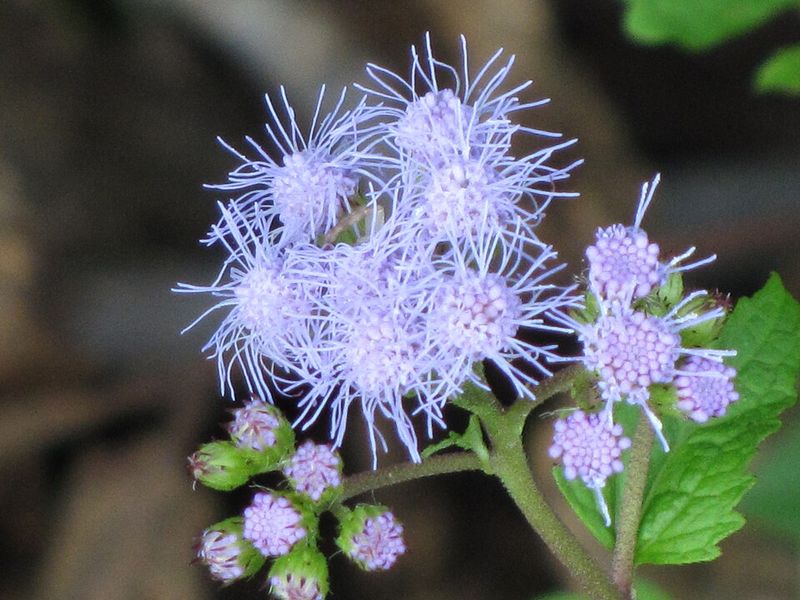
Planting blue mistflower in midsummer might seem counterintuitive, but the timing actually makes sense. Conoclinium coelestinum blooms in fall, not summer.
Getting it in the ground now gives it the establishment time it needs to perform well when the weather finally cools. A partly shaded or moist site is where it truly settles in and spreads into a soft, full planting.
The flower clusters are a standout feature. Soft blue-purple blooms appear in clusters that butterflies, especially skippers and sulphurs, visit heavily during the fall season.
At a time when many summer flowers are winding down, blue mistflower provides a genuine late-season nectar source that keeps pollinators active in the garden. The color reads beautifully against fall foliage and dried grasses.
There is an important caveat about site selection. Blue mistflower needs consistent moisture to perform well.
It spreads through rhizomes and can move through a bed fairly aggressively when conditions suit it. Gardeners should place it thoughtfully rather than tucking it into a small formal bed.
Dry, exposed sandy soil without irrigation is not the right home for this plant. During the summer establishment period, water regularly and keep the root zone mulched to retain soil moisture.
Once it is settled and fall arrives, the soft blue-purple show it puts on makes the careful summer start genuinely rewarding.
4. Rouge Plant Fills Warm Shade With Easy Native Color
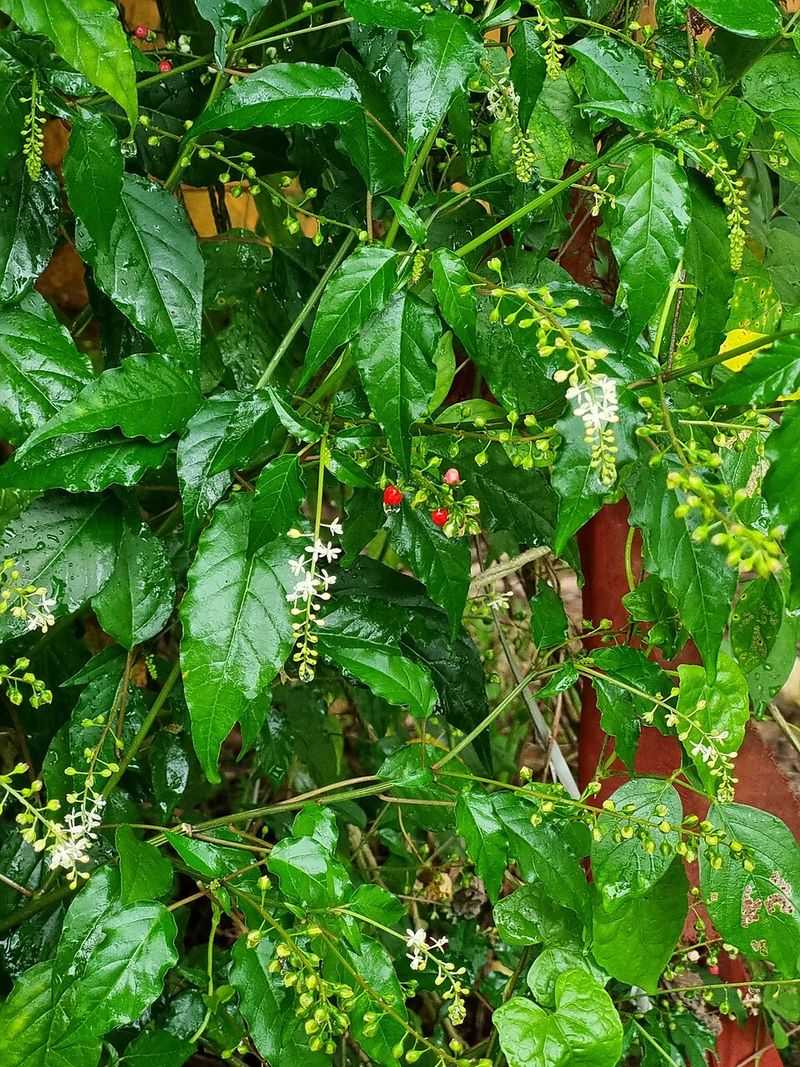
Shaded spots under large trees can be some of the trickiest places to fill in a home landscape, especially during summer. Rouge plant, Rivina humilis, is a native that actually belongs in those warm, shaded, or partly shaded spots.
Its small white to pinkish flowers appear on arching stems and are followed by clusters of bright red berries that add a jewel-like quality to the understory.
Birds are attracted to the berries, which adds wildlife value beyond just the visual interest. The plant has a soft, relaxed growth habit that suits shaded borders and garden edges under tree canopies.
It also works in naturalistic understory plantings where a tidy formal look is not the goal. It is regionally suited to warm parts of this state and fits well in central and southern regions where shade gardens need reliable native options.
Rouge plant can reseed and spread when conditions are favorable, so placing it with intention matters more than scattering it randomly. It is not a formal edging plant and should not be treated as one.
During summer establishment, keep the soil consistently moist and mulch around the base to protect roots from heat. Avoid planting it in full sun or dry exposed soil, as it needs the protection of shade and reasonable moisture to settle in well.
Once established, it rewards patient gardeners with color, berries, and a genuinely natural understory look.
5. Tickseed Sunflower Brightens Damp Summer Edges
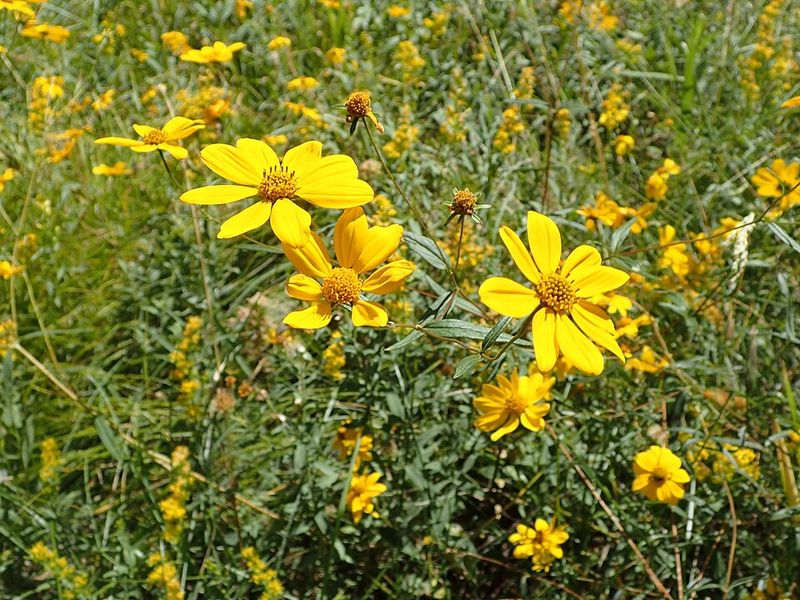
Not every spot in a yard is dry and sandy. Wet edges, swales, rain gardens, and pond margins are real features in many home landscapes across this state.
Tickseed sunflower is one of the best native wildflowers for those soggy sunny spots. Bidens laevis produces large, cheerful yellow blooms that light up damp edges from late summer into fall.
It can also handle standing water far better than most flowering plants.
Pollinators respond well to the flowers. Native bees and butterflies visit regularly during the bloom period.
That makes tickseed sunflower useful in wet pollinator gardens and rain garden plantings where moisture-tolerant flowering plants are hard to find. Planting it now in a suitable wet or moist site gives it time to root in before the peak bloom season arrives.
The site requirement here is non-negotiable. Tickseed sunflower is not a dry-bed plant.
Planting it in well-drained or sandy soil without consistent moisture will stress it quickly. It belongs at pond edges, in swales, along damp borders, or in rain gardens where water pools or drains slowly.
It can spread and reseed, so a naturalistic wet edge suits it far better than a narrow formal border. Water during the first few weeks of establishment even in a wet site, since newly planted roots still need time to reach the surrounding moisture.
6. Scarlet Hibiscus Turns Wet Spots Into A Summer Statement
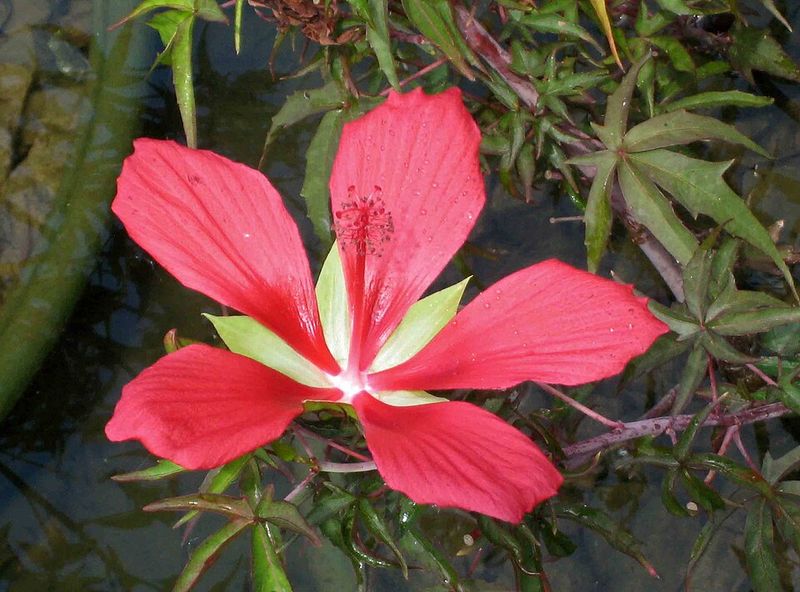
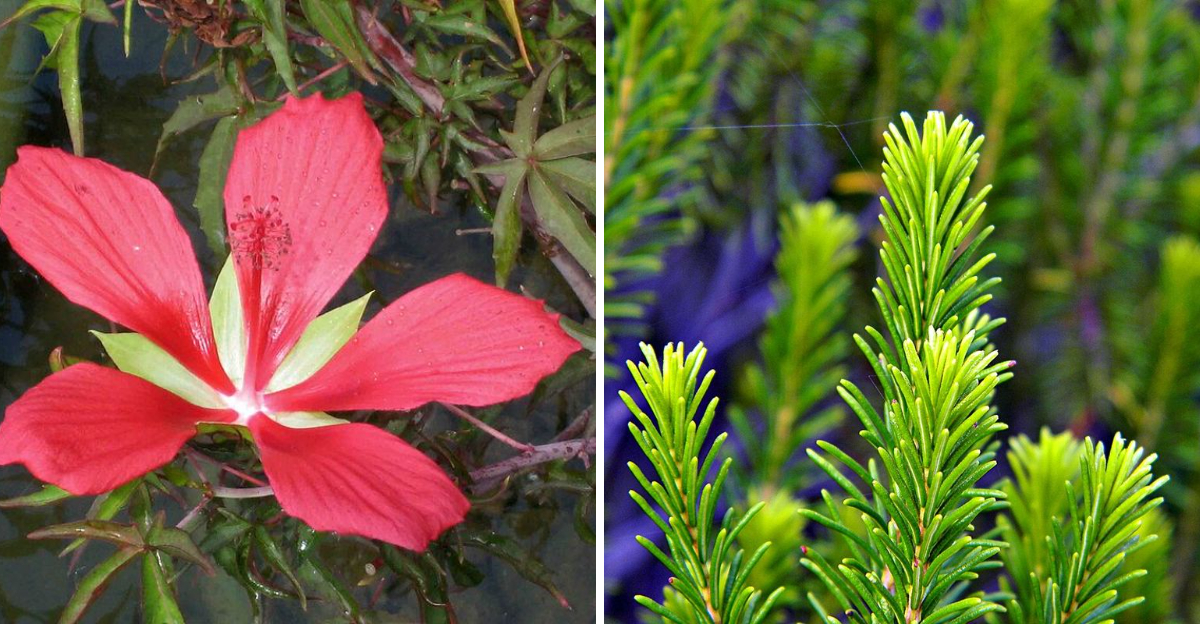
Few native plants make a bolder statement in a wet sunny spot than scarlet hibiscus. Hibiscus coccineus grows tall, sometimes reaching six to eight feet or more, with deeply cut foliage that looks almost tropical and flowers that stop people mid-stride.
Those large, brilliant red blooms are genuinely stunning, and hummingbirds visit them reliably during the summer and fall bloom period.
Planting it now in a moist or wet site makes good sense. Scarlet hibiscus is already an active grower during summer.
Putting it in the ground while the rainy season delivers regular moisture can help roots establish faster than they would in a dry period. A rain garden, a wet swale, a pond edge, or a low-lying yard area that stays consistently moist are all suitable homes for this plant.
The site requirements are firm. Scarlet hibiscus needs consistent moisture and will struggle in dry sandy soil, no matter how much supplemental watering is applied.
It also needs space, both vertically and horizontally, so planting it near walkways or tight borders is not a good match. During establishment, water deeply and regularly even in a wet site, since newly planted roots need time to spread.
Mulch helps stabilize soil temperature around the base. Once established, this plant earns its place in the landscape with height, color, and reliable hummingbird activity every season.
7. Florida Rosemary Handles Dry Sandy Beds With Scrubland Style
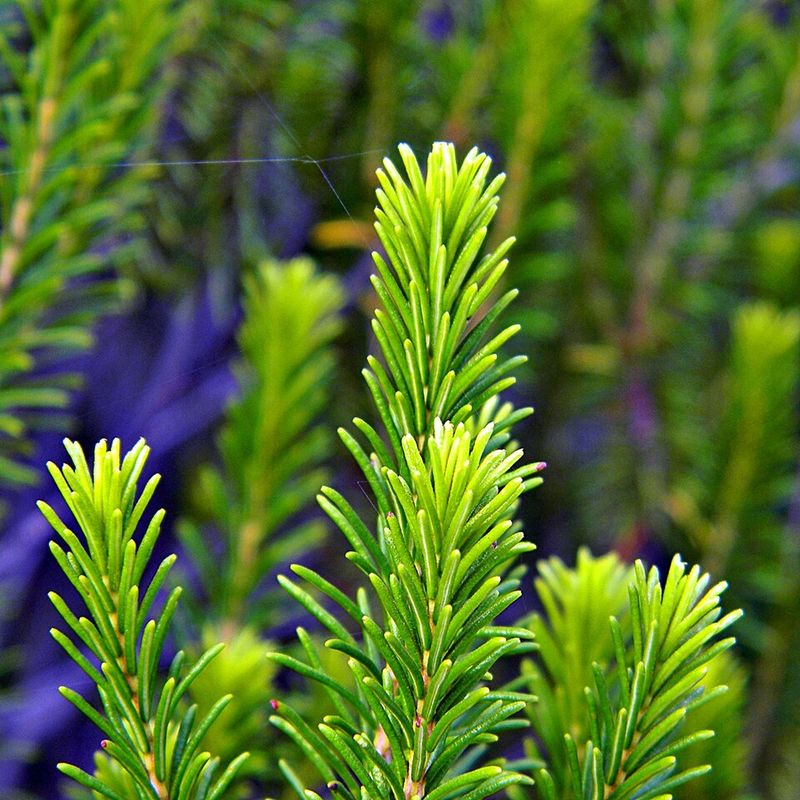
Before anything else, one thing needs to be said clearly: Florida rosemary is not culinary rosemary. Ceratiola ericoides is a native Florida scrub shrub that looks nothing like the herb in your kitchen, and it should not be eaten or used for cooking.
It belongs in a completely different plant family and fills a completely different ecological role, one tied specifically to dry, sandy, acidic scrub habitats.
In the right site, though, it is a genuinely interesting evergreen shrub. The fine, needle-like foliage gives it a soft texture that reads well in xeric or scrubland-style plantings.
It handles full sun and extremely well-drained sandy soil with a quiet resilience. Once established, its drought tolerance is notable.
It fits naturally into scrub-style home landscapes, sandy coastal areas, and dry native plant gardens where low fertility and sharp drainage are the norm.
Summer planting works only when the site is correct. Florida rosemary does not want amended soil, irrigation zones, or mulch piled against its base.
It needs the lean, hot, dry conditions it evolved in. Planting it in rich soil or giving it too much water can stress it more than the summer heat will.
Water lightly during the first few weeks to help roots settle, then back off. Finding it at nurseries may require some searching, so call native plant nurseries ahead of your visit to confirm availability before making the trip.
8. Narrowleaf Sunflower Builds Toward A Big Fall Nectar Show
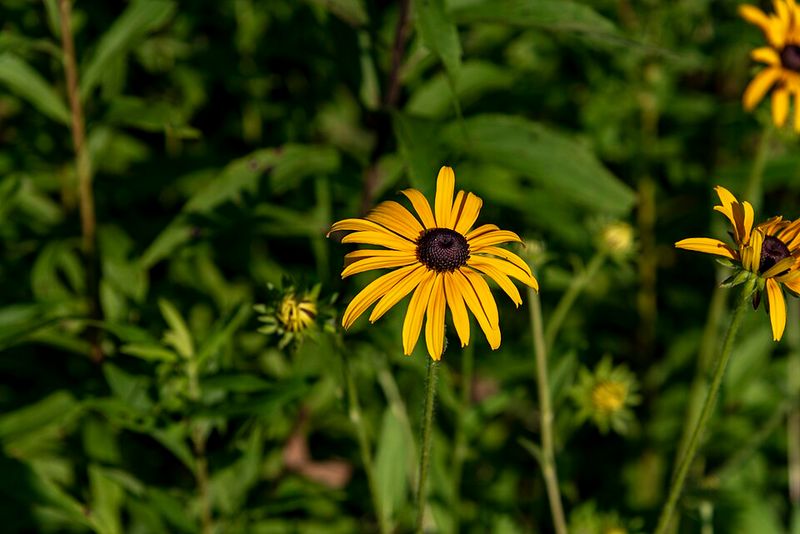
A gardener planting narrowleaf sunflower in midsummer is essentially making an investment in fall. Helianthus angustifolius is a tall native sunflower that blooms in autumn.
It produces masses of bright yellow flowers that serve as a major late-season nectar and pollen source for native bees, butterflies, and other pollinators.
Getting it in the ground now gives the plant time to establish roots and build strong stems before that fall show begins.
Height is a real factor with this plant. Narrowleaf sunflower can reach six feet or taller in moist sunny conditions, and it spreads through rhizomes to form colonies over time.
That combination of height and spread makes it an excellent back-of-border plant, a wet edge anchor, or a naturalistic mass planting in a large open area. It is not the right choice for a narrow walkway planting or a small tidy bed near the front door.
Moist to wet sunny sites suit it best. It can handle brief flooding and performs well along damp borders, swales, and low-lying yard edges where moisture lingers after rain.
During summer establishment, water consistently and mulch around the base to protect young roots from heat stress. As the plant grows through late summer, resist the urge to cut it back, since that tall stem structure is exactly what supports the fall bloom display.
Patience through summer pays off with a genuinely impressive nectar show when cooler weather finally arrives.