Where Flea Beetles Chew First On Michigan Eggplants Before The Leaves Look Shredded
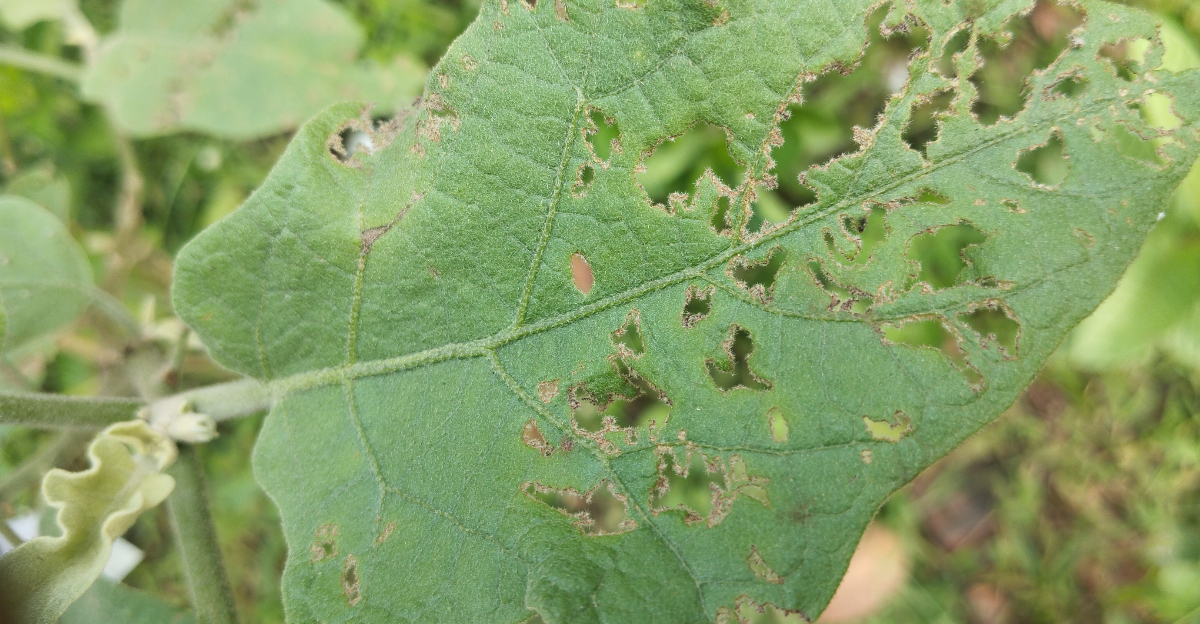
Flea beetle damage on Michigan eggplant looks like it appeared all at once, covering multiple leaves with the characteristic small holes before most gardeners realize feeding has been happening for days.
Flea beetles do not start everywhere simultaneously. They establish on specific parts of the plant first, following patterns rooted in leaf tenderness, sun exposure, and proximity to soil level.
Knowing where to look before the damage becomes widespread across the canopy gives Michigan gardeners a genuine early warning window.
Finding feeding activity early completely changes how you manage the pest problem. It lets you stop a small, local population before it grows and causes widespread damage.
1. Tender Young Leaves Show The First Tiny Holes
Something surprising happens on eggplant leaves before the whole plant starts looking rough. The very first chewing from flea beetles almost always shows up on the youngest, most tender leaves near the top of the plant.
Those brand new leaves have thinner tissue and softer surfaces, making them much easier for small beetles to feed on compared to older, tougher growth lower down.
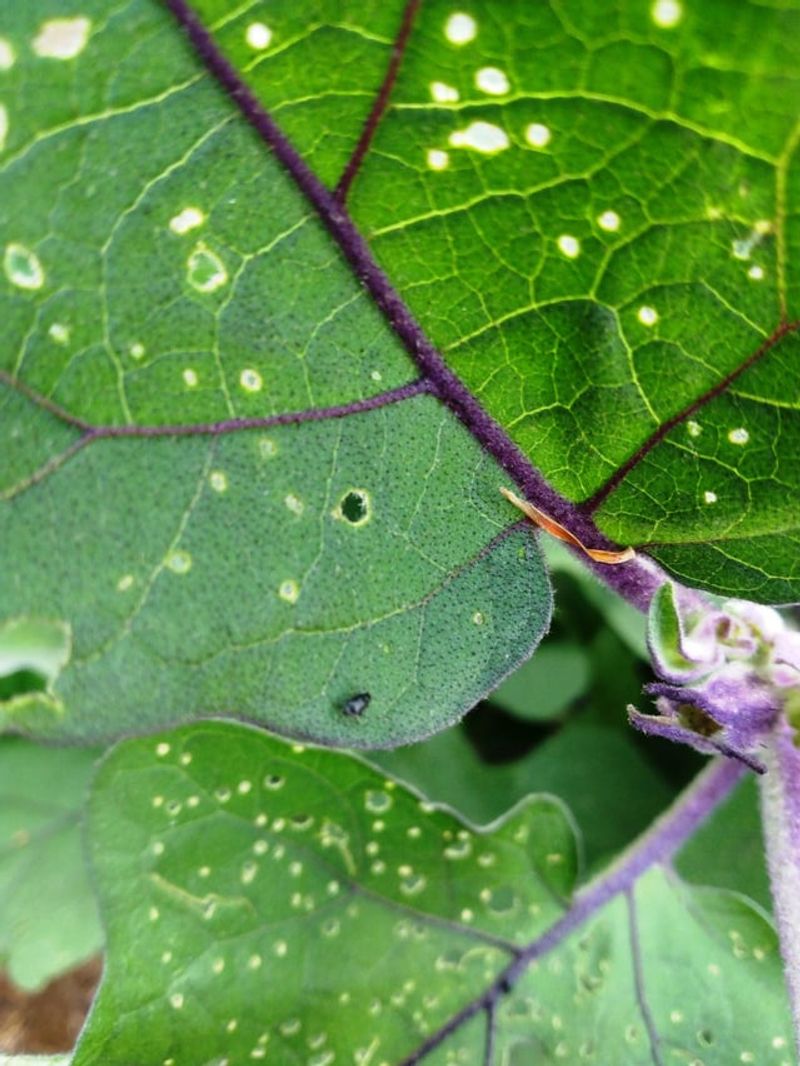
The damage at this stage looks like tiny round holes, sometimes called shot holes because they resemble little bullet marks scattered across the leaf. At first glance, a gardener might not think much of it.
The holes are small, almost like a pin went through the leaf, and the plant still looks mostly green and okay overall.
Here is where it gets tricky. Flea beetles multiply fast during warm Michigan summers, and what starts as a handful of tiny holes can turn into widespread shredding within just a few days if the population grows unchecked.
Young leaves simply cannot handle heavy feeding the way mature leaves can, so the visible damage escalates quickly.
Checking those newest leaves at the top of your eggplant every couple of days during late spring and early summer is one of the smartest habits you can build.
Morning is a great time to look because beetles tend to be more active and visible before the heat of the day picks up.
Catching those first few holes early means you still have time to step in and protect the plant before the feeding spreads further down the stem.
2. New Transplants Are The Most Vulnerable
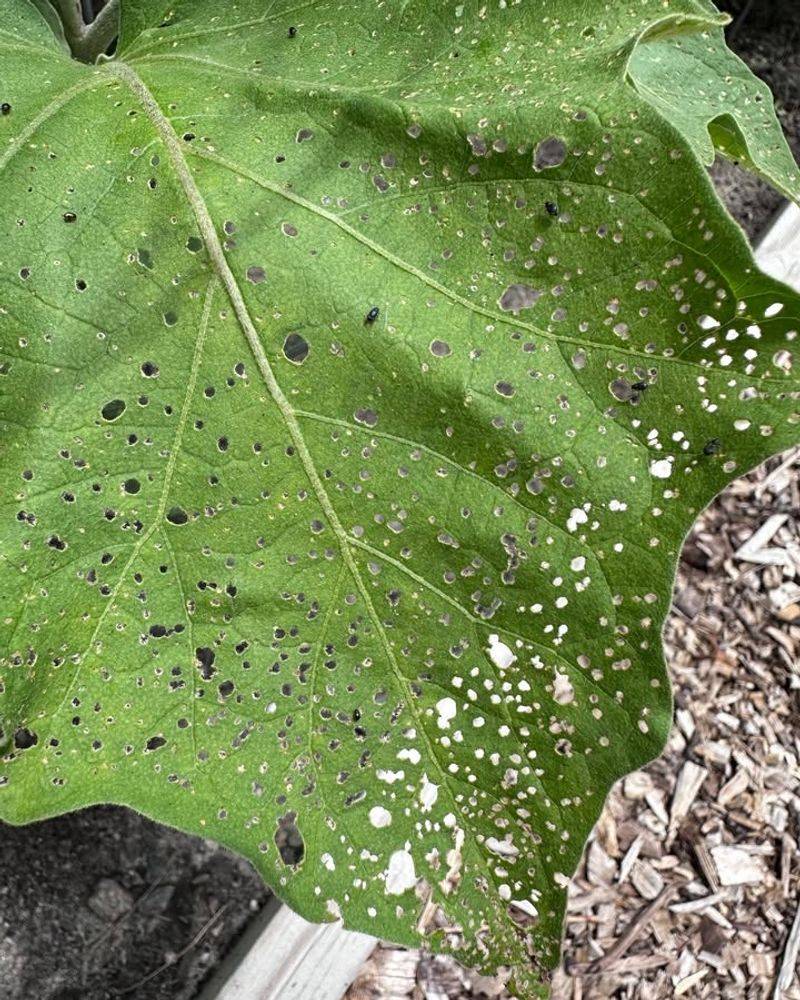
Planting eggplant starts into the garden feels exciting, but those first few weeks after transplanting are honestly the most stressful time for a young plant.
When eggplants move from the protected environment of a greenhouse or indoor seed tray into the open garden, they go through a period called transplant shock.
During this adjustment phase, they are already working hard just to establish roots, which leaves very little energy for bouncing back from insect feeding.
Flea beetles seem to zero in on fresh transplants almost immediately. A small plant with just a few sets of leaves has almost no leaf area to spare.
Even ten or fifteen tiny holes on a seedling can represent a significant portion of its total leaf surface, which means the plant loses the ability to absorb sunlight and make food much faster than a big, established eggplant would.
Your Michigan Garden Changes Every Week. Your Plan Should Too.
Gardening in Michigan changes quickly throughout the season. Every Friday you’ll receive a simple weekly plan showing exactly what to plant, prune, fertilize, harvest, and protect so you never miss the right timing.
On a large plant, the same amount of feeding might go almost unnoticed. On a transplant, though, that light chewing can make the whole plant look rough within just a couple of days.
Gardeners in Michigan often notice their small eggplants looking ragged before they even fully settle into the soil.
The best strategy is to check transplants every single day during the first two weeks after planting. Look carefully at both the tops and undersides of leaves.
Catching flea beetle activity at this stage gives you the best chance of protecting your plants before real damage builds up. Starting with strong, healthy transplants also helps because vigorous plants handle stress better from the very beginning.
3. Lower Leaves Can Show Early Speckled Damage
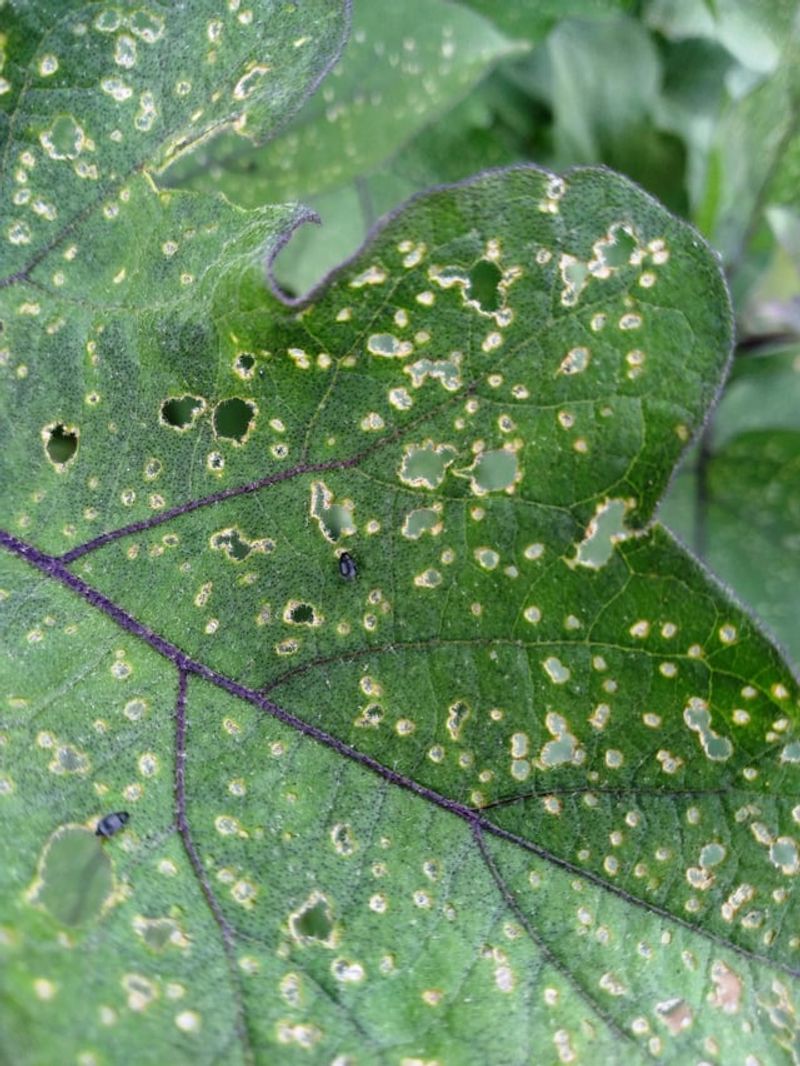
Most gardeners naturally look at the top of a plant first, which makes sense because that is what catches the eye.
With flea beetles on eggplants, though, checking the lower leaves is just as important, especially early in the season when beetles are actively searching for feeding spots.
Lower leaves sit closer to the ground where flea beetles often hide in the soil and leaf litter between feedings.
Early flea beetle damage on lower leaves tends to look different from the more obvious shredded appearance that shows up later in the season.
At the start, you might notice a scattered speckled pattern, almost like tiny dots or pin-sized openings spread unevenly across the leaf surface.
The holes are so small at first that they can look like water spots or even natural leaf markings if you are not looking carefully.
Running your fingers gently along the underside of lower leaves can help you feel the texture of early holes before they become easy to see from above.
Some gardeners describe the early feeding pattern as looking like someone lightly pressed a pin into the leaf repeatedly without any clear order or direction. It is subtle but worth noticing.
Once you spot that speckled pattern starting to develop, the clock is ticking. Those small openings can multiply rapidly as more beetles feed over the following days.
Lower leaves might not be as flashy as new growth at the top, but they serve as an early warning system. Making them part of your regular inspection routine in Michigan gardens can help you catch a flea beetle problem while it is still very manageable.
4. Leaf Edges And Thin Leaf Tissue Can Look Ragged Fast
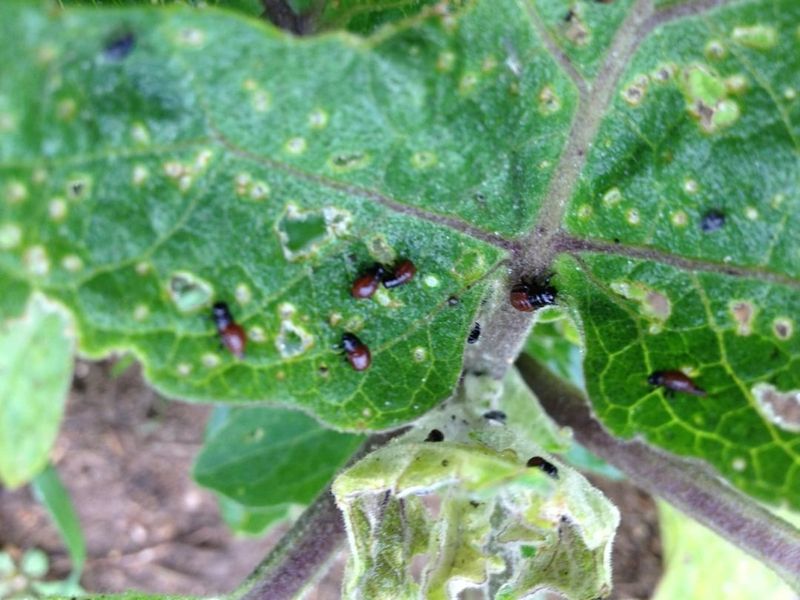
There is a point in flea beetle feeding where individual tiny holes start connecting, and that is when the leaf suddenly shifts from looking slightly damaged to looking genuinely shredded.
It happens faster than most people expect, especially along the thinner parts of the leaf where the tissue is more delicate and has less structural strength to hold together between feeding marks.
Leaf edges are particularly vulnerable because the tissue there is naturally thinner and dries out more easily. When beetles chew along the margins of an eggplant leaf, the small holes have less surrounding material to hold the leaf shape intact.
A cluster of feeding marks near the edge can make the whole border look torn or ragged even when the total amount of tissue removed is actually quite small.
The same thing happens along the thinner areas between leaf veins. Flea beetles do not usually chew through the tougher vein tissue, so they tend to feed in the softer spaces in between.
When many of those spots get hit close together, the leaf can start to look lacy or almost see-through in patches, which is often when gardeners first notice something is seriously wrong.
Understanding this pattern is actually helpful because it tells you that what looks like dramatic damage might have started from a relatively small number of feeding events that just happened to cluster in the wrong spots.
Catching the problem before that clustering happens is the goal.
Inspecting leaf edges and the areas between veins during your regular garden walks gives you the best chance of stepping in before a few small holes turn into something that looks much worse.
5. Beetles May Jump Before Gardeners Get A Good Look
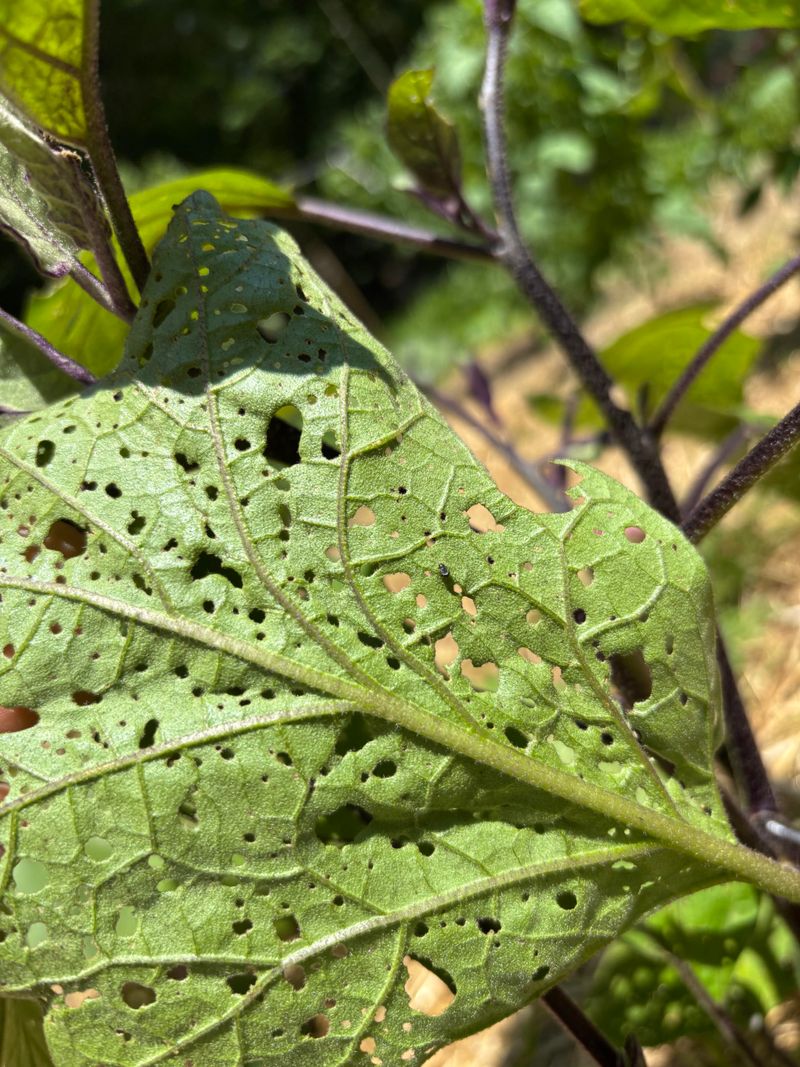
Flea beetles have a trick that makes them genuinely frustrating to catch in the act.
The moment you brush against a plant or reach toward a leaf to take a closer look, the beetles launch themselves into the air with their powerful back legs and disappear into the surrounding foliage or soil almost instantly.
The name flea beetle actually comes from this jumping behavior, which looks a lot like what a flea does when disturbed.
Because of this, many Michigan gardeners end up staring at a damaged leaf without ever clearly seeing the insect that caused it.
You might see a quick flash of dark movement, or notice that something small jumped away, but getting a good visual on the actual beetle before it vanishes takes patience and a little strategy.
The adults are typically very small, shiny, and dark colored, which makes them blend in surprisingly well against soil and plant material.
One trick that works well is to approach your eggplants slowly and calmly, without shaking the leaves or creating vibrations.
Getting low to the ground and looking across the leaf surface at an angle can sometimes help you spot beetles before they detect you.
Early morning visits to the garden when temperatures are cooler can also help because beetles tend to be slightly less active and jumpy in cooler conditions.
Knowing that the insect is hard to spot actually reinforces why watching for the leaf damage itself is so important.
The tiny holes are often your most reliable clue that flea beetles are present and feeding, even when the beetles themselves seem to vanish before you can confirm what you are seeing.
6. Hot Dry Weather Can Make The Damage More Obvious
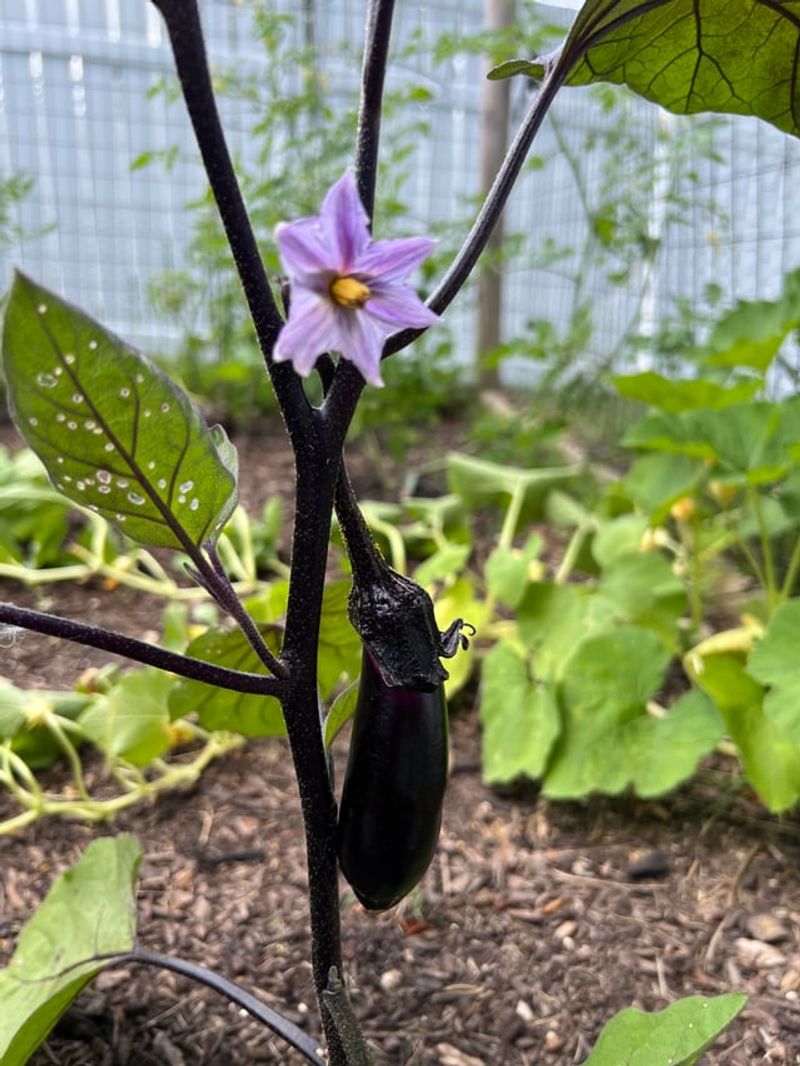
Michigan summers can swing between stretches of comfortable growing weather and sudden hot, dry spells that stress vegetable plants in a real hurry.
During those warmer, drier periods, flea beetle damage on eggplants tends to become much more noticeable, and the reasons behind that are pretty interesting once you understand what is happening to the plant.
When eggplants are well-watered and growing actively, they can sometimes outgrow minor flea beetle feeding. New leaves come in fast enough that the plant stays ahead of the damage. But during a hot dry stretch, growth slows down significantly.
The plant focuses its energy on surviving the heat and conserving moisture rather than pushing out fresh new growth, which means those feeding holes stay visible much longer without new tissue coming in to replace what was lost.
Stressed plants also have a harder time recovering from any kind of physical damage.
A leaf with several small holes loses moisture through those openings more quickly than an undamaged leaf does, which can make the stress from drought and the stress from feeding compound each other.
The result is that eggplants can look much worse during a dry spell than they would under the same beetle pressure during cooler, wetter conditions.
Keeping eggplants consistently watered during hot Michigan stretches is genuinely helpful, not just for the plant itself but also because a well-hydrated plant is better equipped to handle whatever insect pressure it faces.
Mulching around the base of the plant helps retain soil moisture and keeps roots cooler, giving your eggplants a better foundation for getting through both the heat and any beetle activity happening at the same time.
7. Row Covers Work Best Before The Damage Starts
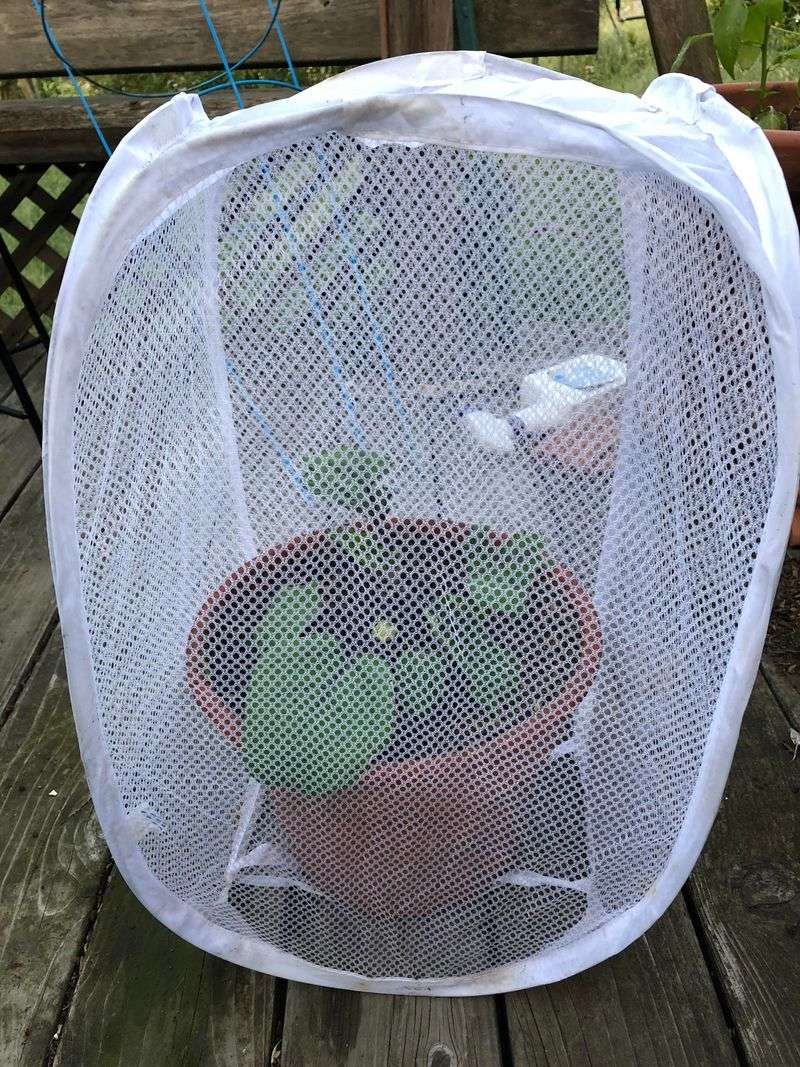
Floating row covers are one of the most reliable tools a Michigan gardener can use to keep flea beetles away from eggplants, but timing matters more than most people realize.
The cover works by creating a physical barrier between the plant and the beetles, which means it needs to go on before the beetles have a chance to reach the plants in the first place.
Putting a cover on after you already see damage is better than nothing, but the real benefit comes from acting early.
Right after transplanting your eggplant starts into the garden is the ideal window. Drape the lightweight fabric row cover directly over the plants and anchor the edges securely to the ground using soil, rocks, garden staples, or sandbags.
The goal is to close off any gaps where adult beetles could squeeze underneath, because even small openings can give them access to the plants.
Floating row covers let in sunlight, air, and water while keeping insects out, so your plants can grow normally underneath without being exposed to feeding pressure during that vulnerable early stage.
Many gardeners in Michigan use row covers as a standard part of their eggplant routine from planting day through the first several weeks of the growing season.
As plants grow larger and the season progresses, you will need to manage the covers to make sure they do not restrict growth or trap too much heat on very warm days.
Checking underneath regularly also ensures you catch any beetles that may have gotten in before the cover was secured.
With good management, row covers can dramatically reduce the amount of flea beetle feeding your eggplants experience all season long.