Why Wasps Are Choosing Your Tennessee Porch For Their Summer Nests
You spotted it before your coffee even cooled, a papery nest tucked into the corner of your porch ceiling, built overnight like wasps paid rent. Tennessee summers bring a lot of things, and uninvited stinging insects are near the top of the list.
But wasps do not pick your porch randomly. They are making a calculated choice, and your porch is checking every box on their list.
Shelter from rain, warmth from the sun, wood to chew, and food sources nearby, a typical Tennessee porch delivers all of it.
The earlier you understand what draws them in, the more options you have for handling it on your terms. Wasp season in Tennessee runs longer than most homeowners expect, and that gives these insects plenty of time to settle in deep.
Wasps Pick Tennessee Porches For A Reason
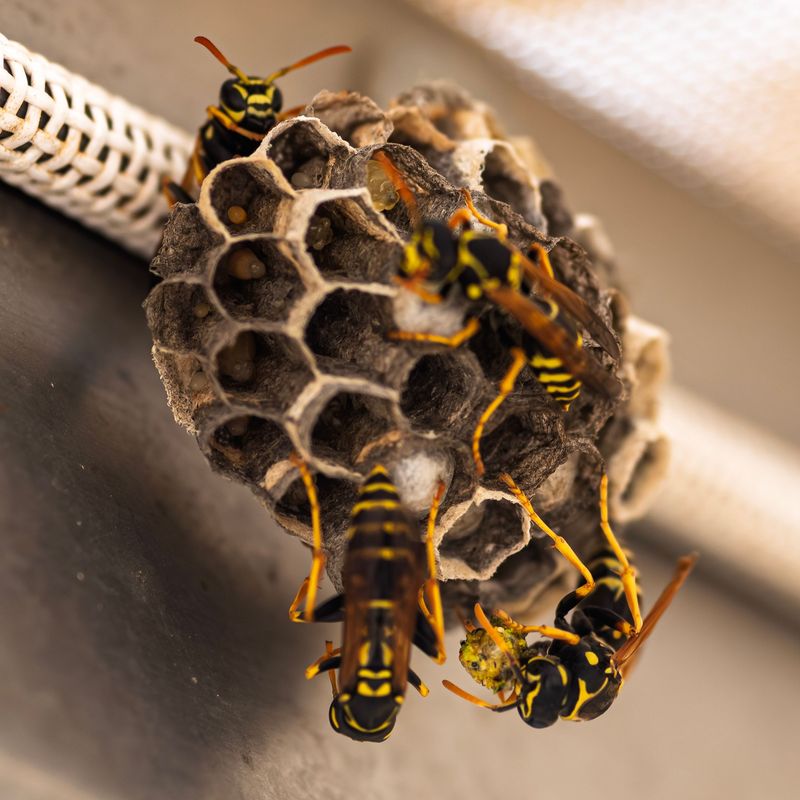
Warm weather arrives in Tennessee, and wasps get to work fast. Your porch is not a random target, it is a calculated choice these insects make every single spring.
Wasps are drawn to sheltered spots that stay dry and face the morning sun. Tennessee porches check every one of those boxes without even trying.
The eaves, ceiling corners, and wooden beams of a covered porch mimic natural nesting spots like tree hollows or rock overhangs. Wasps evolved to seek exactly that kind of protection from rain and wind.
A porch also sits close to flowering plants, trash bins, and outdoor grills, all reliable food sources. Wasps eat insects and sugary substances, so your yard is basically a buffet next door to a cozy hotel.
Tennessee summers start warming up in April and stay hot well into October. That extended warm season gives wasp colonies extra time to grow large and well-established on your porch.
Tennessee’s long warm season gives wasp colonies more time to grow large and well-established before the first cold snap arrives. They chew wood fibers and mix them with saliva, creating that papery material you see hanging overhead.
Older porches with unpainted or weathered wood are especially popular. The soft wood fibers are easier to scrape, making nest construction quicker and less energy-draining for the colony.
Knowing why wasps are choosing your Tennessee porch for their summer nests is the first step toward reclaiming your outdoor space this season.
The Porch Features That Make Wasps Feel At Home
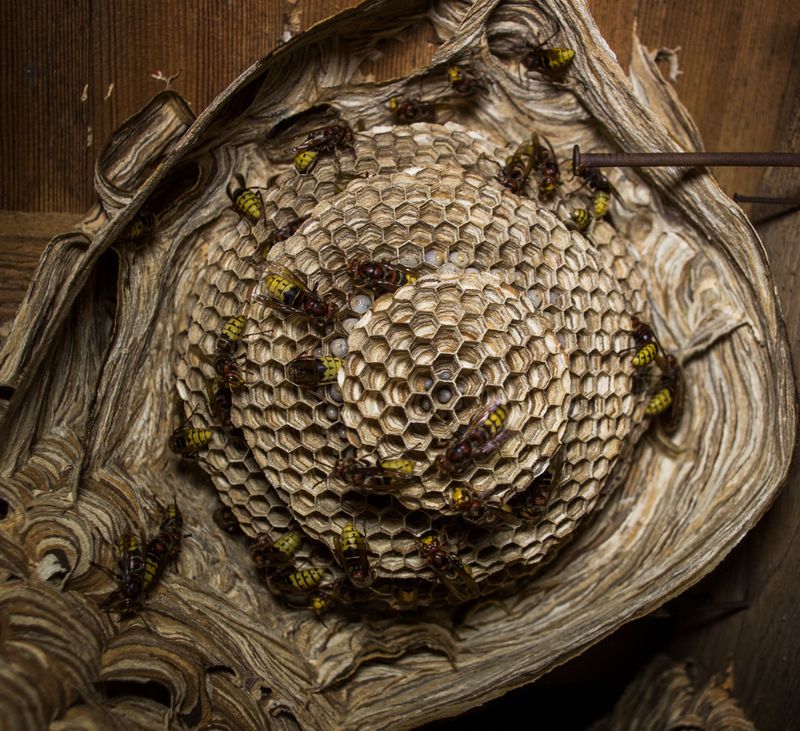
Not every porch gets a wasp nest, but some seem to attract them year after year. Specific features make your porch more appealing than your neighbor’s.
Overhead protection is the biggest draw. A covered porch shields a nest from heavy rain, which can destroy a colony quickly if left exposed.
Wooden ceilings and beams are prime real estate for paper wasps. They can scrape material directly from your porch structure, cutting down on travel time and energy spent gathering resources.
Ceiling fans that sit idle give wasps the still air they prefer for scouting and early nest construction. A fan that rarely runs is basically an open invitation.
Your Tennessee Garden Changes Every Week. Your Plan Should Too.
Gardening in Tennessee changes quickly throughout the season. Every Friday you’ll receive a simple weekly plan showing exactly what to plant, prune, fertilize, harvest, and protect so you never miss the right timing.
Light fixtures are another magnet. Wasps are attracted to light sources because insects gather around them at night, creating an easy hunting ground right above the nest site.
Cracks and gaps in porch walls or soffits also invite yellowjackets, which prefer enclosed cavities over open-air spots. A tiny gap is all they need to move an entire colony inside your walls.
Potted plants on the porch add to the appeal by providing nectar and attracting small insects. Wasps are predators, so a porch surrounded by prey is hard to resist.
Cluttered storage areas under porch steps or in corners offer hidden nesting spots too. Old furniture, stacked wood, and unused planters all create the kind of cozy shelter wasps actively seek out.
Common Wasp Species Building Nests In Tennessee
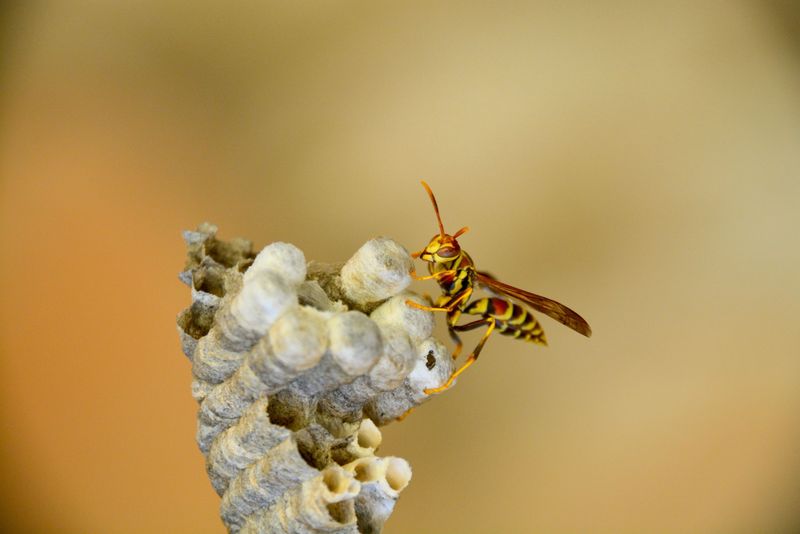
Not every stinging insect buzzing around your porch is the same species. Tennessee hosts several wasp types, and each one builds a different kind of nest in a different kind of spot.
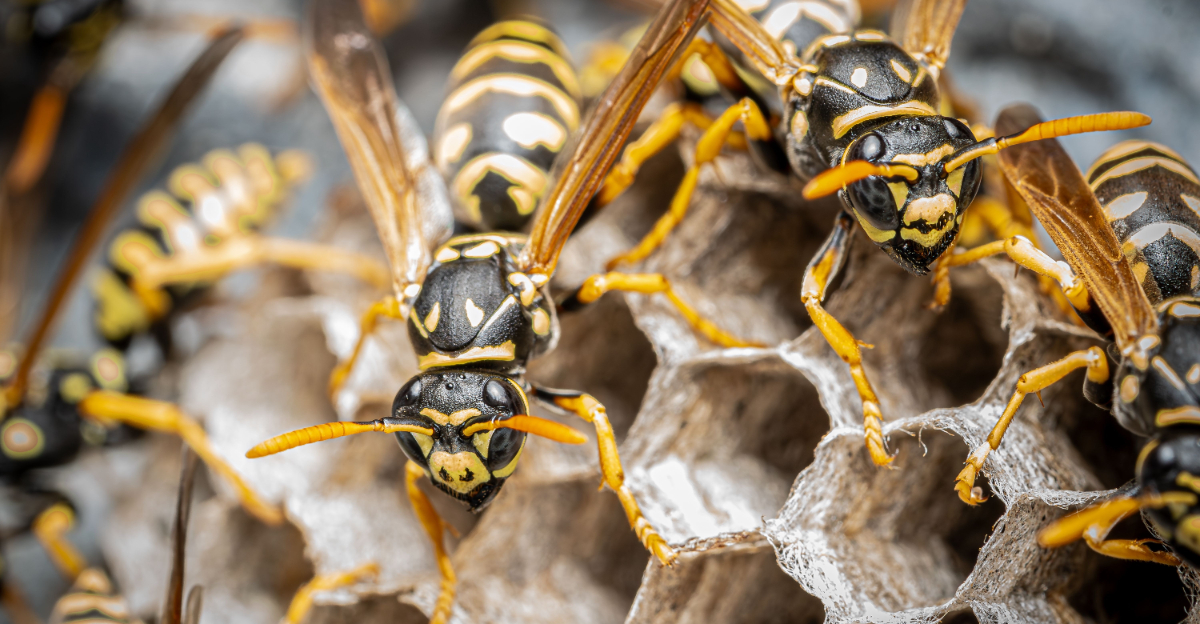
Paper wasps are the most common porch visitors in the state. They build open, umbrella-shaped nests with visible hexagonal cells, usually hanging from eaves or ceiling corners.
These wasps are slender with long legs that dangle during flight. They are generally less aggressive than other species, but they will sting if the nest feels threatened.
Yellowjackets are a different story entirely. They tend to build enclosed nests in wall voids, underground burrows, or inside old furniture stored on the porch.
Their nests can grow enormous by late summer, sometimes housing thousands of workers. Yellowjackets become noticeably more aggressive as the colony peaks in August and September.
Bald-faced hornets are technically a type of yellowjacket, though they look different. These nests grow steadily through summer and can reach basketball size by late summer or early fall.
Mud daubers are the quieter residents of the wasp world. They build small, tubular mud nests on porch walls or under overhangs and are rarely aggressive toward humans.
Knowing which species has set up camp on your porch matters a lot. Each one requires a different response, and treating them all the same way can make the situation worse, not better.
What The Nest Location Tells You About The Species
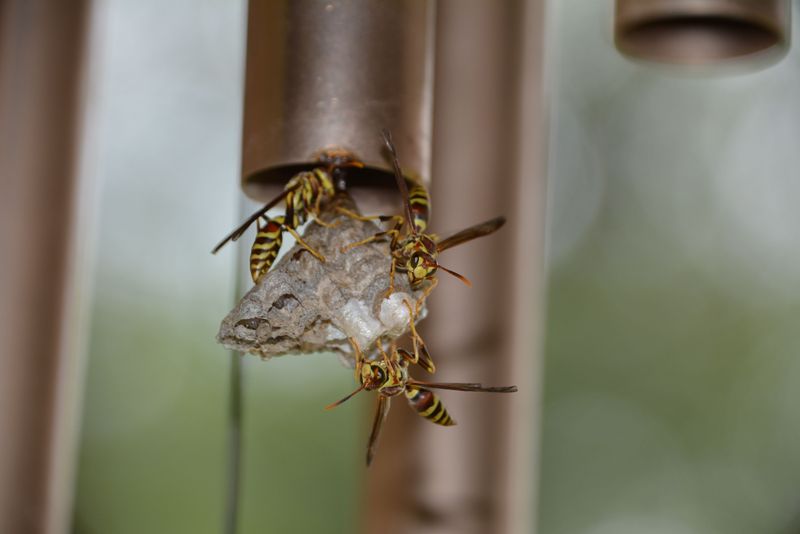
Spot a nest and you already know more than you think. Where a wasp builds tells you almost exactly who built it.
An open-celled nest hanging from your porch ceiling with no outer covering is almost always a paper wasp nest. These are the most common finds in Tennessee and tend to stay small all season.
If the nest looks like a gray paper ball with a single opening at the bottom, you are looking at a bald-faced hornet nest. These nests grow steadily through summer and can reach basketball size by late summer or early fall.
A nest tucked inside a wall gap, under a step, or in a buried void is a yellowjacket setup. You may never see the actual nest, just a steady stream of wasps entering and exiting a small hole.
Mud dauber nests look completely different from all the others. They appear as clusters of small mud tubes pressed against a flat surface like a wall, a beam, or even a window frame.
Multiple small nests in the same area suggest paper wasps that have spread across a porch over several seasons. Each nest is typically built by a new queen who returns to a familiar spot.
High-traffic nest locations, like directly above a door, create the most conflict with humans. Wasps passing in and out constantly are more likely to feel crowded and react defensively to movement.
Reading the nest location correctly helps you respond with the right plan and the right level of caution every time.
When A Porch Nest Is A Problem And When It Is Not
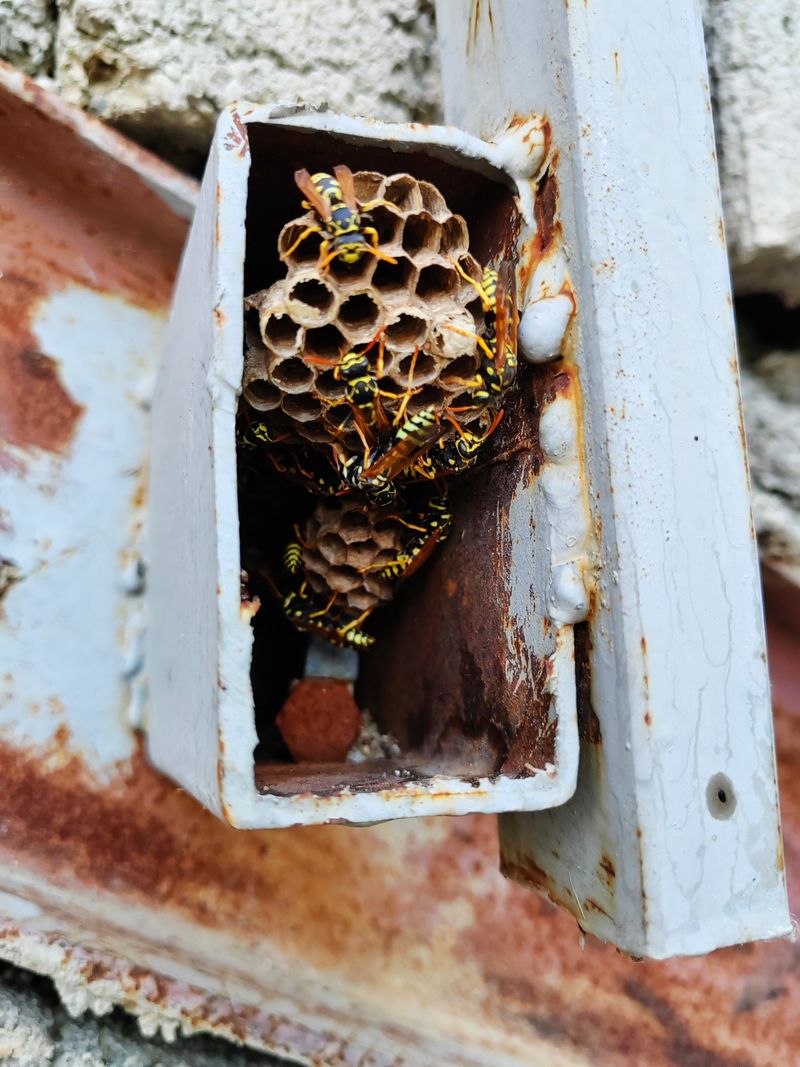
Not every wasp nest on your porch demands immediate action. Some are low-risk, and removing them does more harm than good for your local ecosystem.
A small paper wasp nest tucked in a far corner away from foot traffic is usually harmless. Paper wasps eat caterpillars and other garden pests, making them surprisingly useful neighbors.
If the nest is in a spot nobody approaches regularly, it is often fine to leave it alone through the season. Once temperatures drop in October or November, the colony will naturally collapse on its own.
The situation changes when a nest sits directly above a door, near a seating area, or along a path people walk every day. Constant human movement near a nest increases the chance of a defensive sting.
Households with young children, elderly family members, or anyone allergic to stings face a higher risk from any active nest nearby. In those cases, even a small nest deserves prompt attention.
Yellowjacket nests are almost always a bigger concern than paper wasp nests. Their colonies grow much larger, and they become significantly more defensive as summer progresses toward fall.
Mud dauber nests are the safest of all. These solitary wasps rarely sting humans and pose almost no threat even when their nest is close to daily activity.
Assessing the risk honestly before reaching for a spray can saves you from unnecessary conflict with insects that might actually be helping your garden thrive this summer.
How To Discourage Wasps From Nesting Without Harming Them
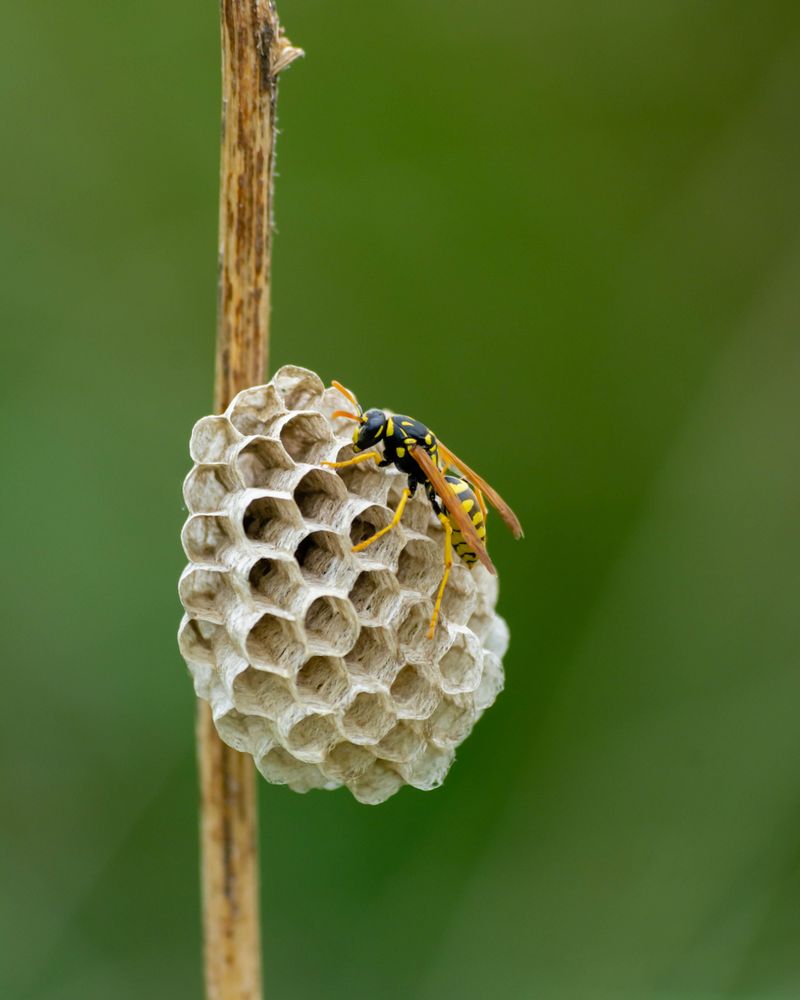
Prevention beats removal every single time. Making your porch less attractive to wasps is far easier than dealing with an established colony mid-July.
Start by sealing cracks and gaps in your porch ceiling, walls, and soffits before April arrives. Yellowjackets in particular need only a tiny opening to claim a space as their own.
Paint or stain bare wood on your porch regularly. Weathered, untreated wood is much easier for paper wasps to scrape, so a fresh coat of paint removes one of their favorite building materials.
Fake nest decoys may help deter paper wasps, since they tend to avoid areas where another colony appears to already be established.
Peppermint oil is a widely used home remedy that some homeowners find helpful as a deterrent. Mix it with water and spray it along porch beams, eaves, and ceiling corners every couple of weeks throughout the warm season.
Keep outdoor food covered and trash bins sealed tightly. Sugary drinks, grilled meat, and overripe fruit draw wasps in from a wide area, making your porch feel like a destination worth nesting near.
Run your ceiling fan regularly during peak wasp season. Wasps prefer still air for nest-building, and consistent airflow disrupts their scouting and early construction efforts significantly.
Choosing prevention over panic keeps your porch comfortable for you while allowing wasps to find a better spot, and that balance is exactly what living alongside nature in Tennessee is all about.