16 Full Shade Annuals Michigan Gardeners Can Grow Without Direct Sun
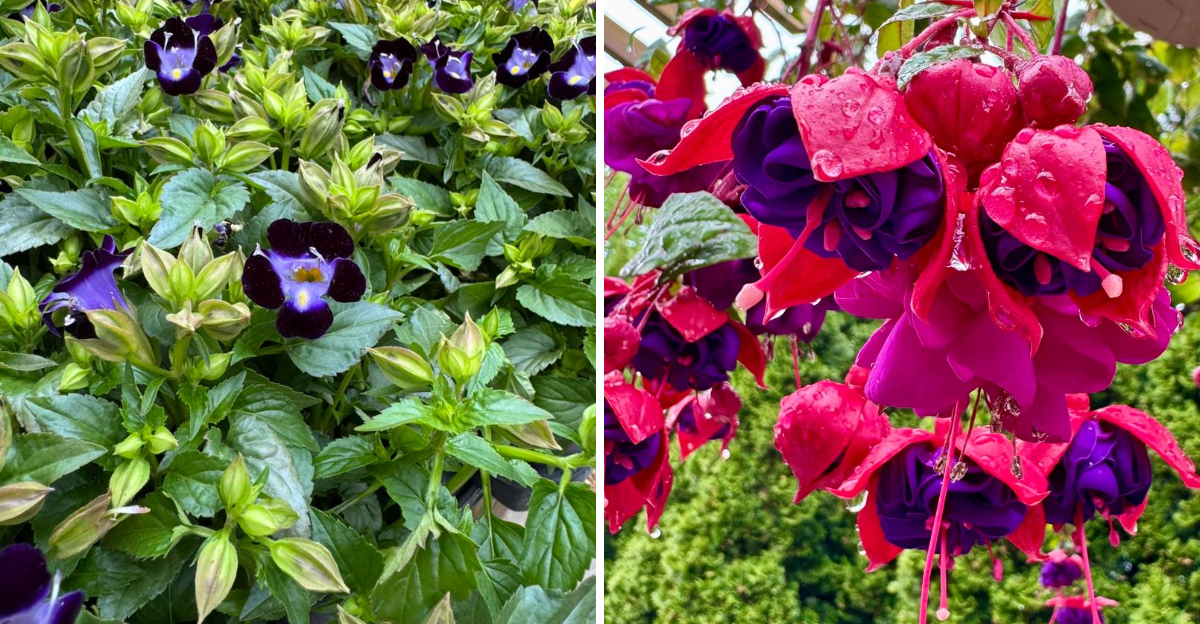
Growing a beautiful garden in Michigan does not require a sunny yard.
In fact, some of the most striking garden displays in the state happen in the shadiest spots, under tree canopies, along north-facing walls, beside covered porches, and in the deep corners of yards where sunlight barely reaches by afternoon.
Most gardeners treat shade like a problem to solve. The gardeners who figure out which plants actually prefer those conditions stop thinking about it as a problem entirely.
Michigan’s shade gardens have one significant advantage that sunny beds do not: they stay cooler and more humid through the brutal heat of July and August, which is exactly the environment a long list of annuals evolved to thrive in.
Sixteen plants on this list prove that full shade is not a limitation. It is simply a different set of conditions that calls for a different set of plants.
From classic impatiens to the metallic shimmer of Persian shield, these annuals fill shaded spaces with color, texture, and life from late spring through the first fall frost without ever asking for a single hour of direct sun.
1. Impatiens Brighten Classic Shade
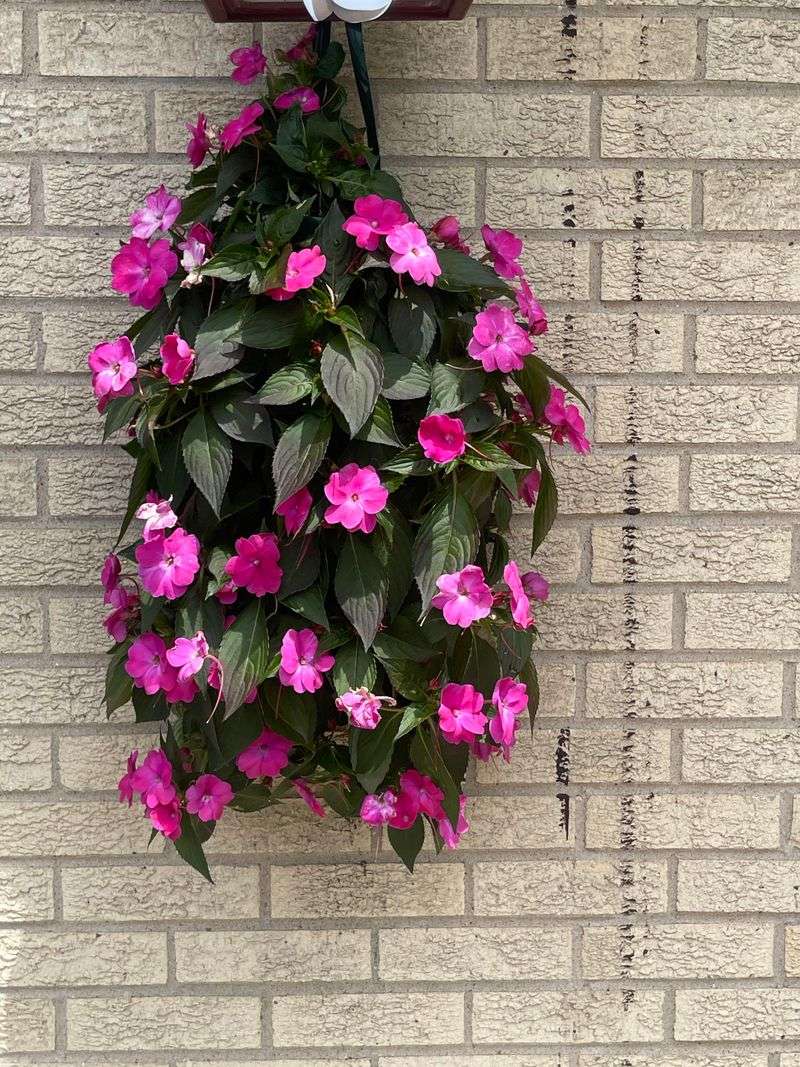
Few plants have earned their place in the shade garden quite like impatiens.
Gardeners across Michigan have relied on them for decades, and for good reason. They push out blooms nonstop from planting day all the way until the first frost, rarely asking for much in return.
Standard impatiens prefer consistent moisture and well-drained soil.
Plant them in full to partial shade and keep the soil from drying out between waterings. Hot, dry soil is their biggest challenge, so mulching around the base locks in moisture during Michigan summers.
Downy mildew hit impatiens populations hard around 2012, so choosing disease-resistant varieties is smart.
Look for SunPatiens Compact or Beacon series, which were developed with better resistance to that fungal problem. Michigan State University Extension has specifically praised Beacon impatiens for their improved performance in shaded beds.
Spacing matters more than most gardeners realize.
Give each plant about ten to twelve inches of breathing room so air can circulate freely around the foliage. Crowded plants stay damp longer, which invites trouble.
Colors range from white and soft pink to bold coral and deep red.
Mixing a few shades in one container or bed creates a vibrant, layered look that holds up beautifully all season long without any deadheading required.
2. Wax Begonias Keep Beds Polished
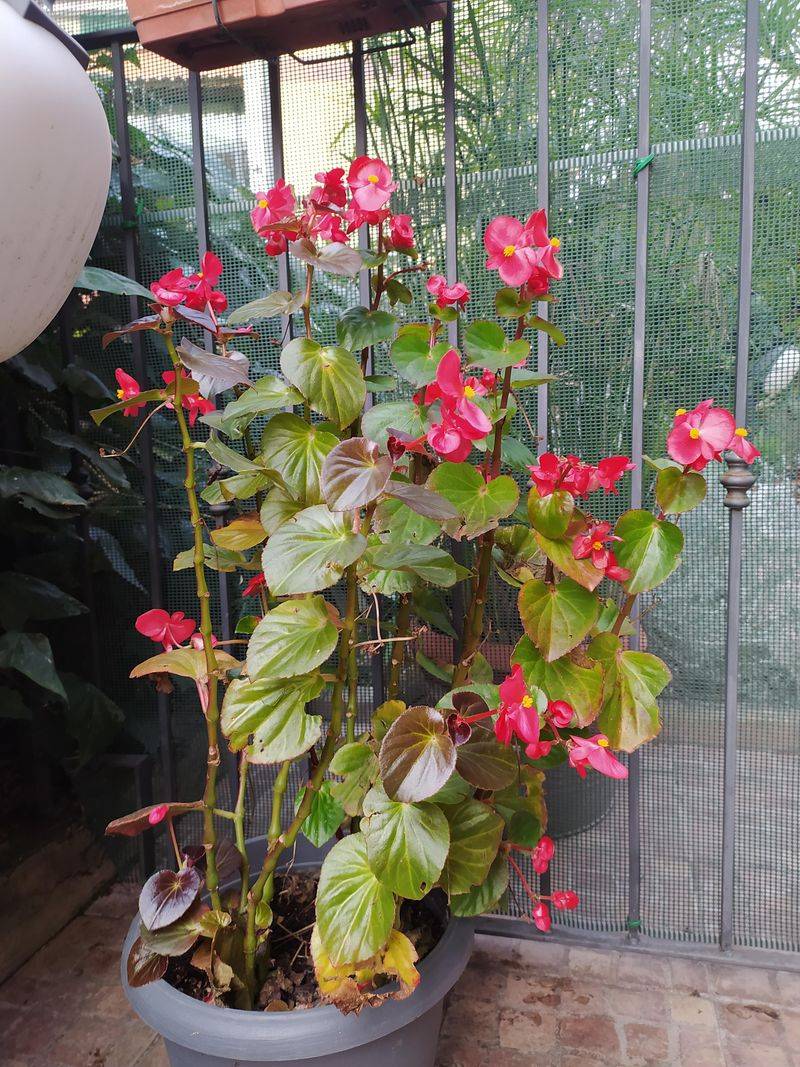
There is something almost architectural about a well-planted row of wax begonias.
Their rounded shape, glossy leaves, and tidy clusters of flowers make any bed look intentional and well-kept without much effort from the gardener. No deadheading required, no flopping over, no drama.
Wax begonias handle shade beautifully, though they also tolerate more sun than most plants on this list.
In Michigan, the shadier the spot, the more they lean toward lush green foliage with slightly fewer blooms. Bright shade, meaning open sky without direct rays, gives them the best balance of leaf color and flower production.
Your Michigan Garden Changes Every Week. Your Plan Should Too.
Gardening in Michigan changes quickly throughout the season. Every Friday you’ll receive a simple weekly plan showing exactly what to plant, prune, fertilize, harvest, and protect so you never miss the right timing.
Bronze-leaved varieties like the Cocktail series tend to be slightly more tolerant of heat and drier conditions than their green-leaved cousins.
Both types prefer moist, well-drained soil rich in organic matter. Work some compost into the planting bed before setting them out, and they will reward you generously.
Wax begonias also shine in containers.
A simple pot filled with red wax begonias on a shaded front step looks clean and welcoming from mid-June through September.
For a polished container combination, pair white wax begonias with dark green sweet potato vine trailing over the edge.
Water consistently, feed with a balanced fertilizer every two to three weeks, and these reliable workhorses will keep your garden looking sharp all season.
3. Tuberous Begonias Bring Big Blooms
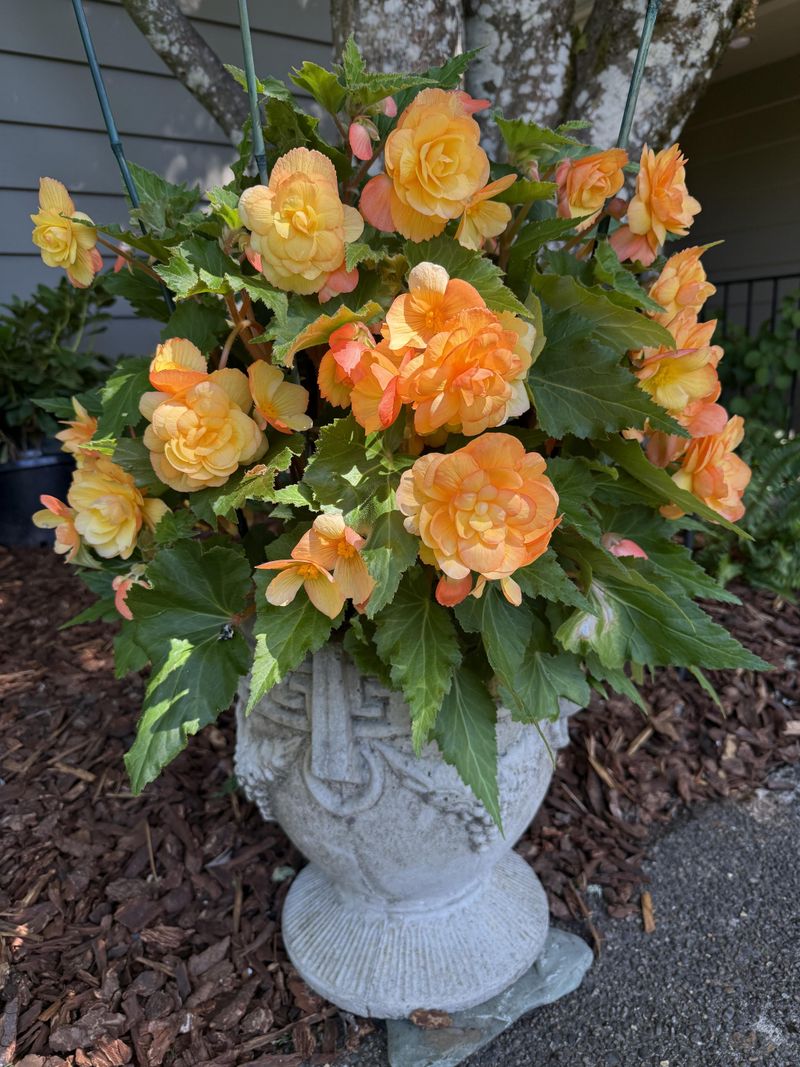
Tuberous begonias are the showoffs of the shade world.
Their blooms can reach the size of a softball, with ruffled petals in shades of orange, yellow, pink, crimson, and white that look almost too perfect to be real. Gardeners who discover them for the first time often cannot believe they grow in the shade.
In Michigan, tuberous begonias perform best when planted after soil temperatures warm in late May or early June.
They do not like cold nights, so patience pays off. Start tubers indoors about six to eight weeks before your last frost date if you want a head start on the season.
Hanging basket varieties with cascading stems are especially popular for covered porches and pergolas where sunlight barely reaches.
The blooms drape downward in a waterfall of color that catches every eye. Upright varieties work well in deep pots or window boxes set back from direct afternoon light.
Consistent moisture is critical.
Tuberous begonias like evenly moist soil but will develop root problems quickly if left sitting in standing water. Use a well-draining potting mix and make sure containers have drainage holes.
Feed every two weeks with a low-nitrogen, high-phosphorus fertilizer to encourage more blooms and fewer leaves.
When fall arrives and foliage yellows naturally, dig up the tubers and store them in a cool, dry spot indoors to replant next spring. That is excellent value for one plant.
4. Coleus Adds Color Without Flowers
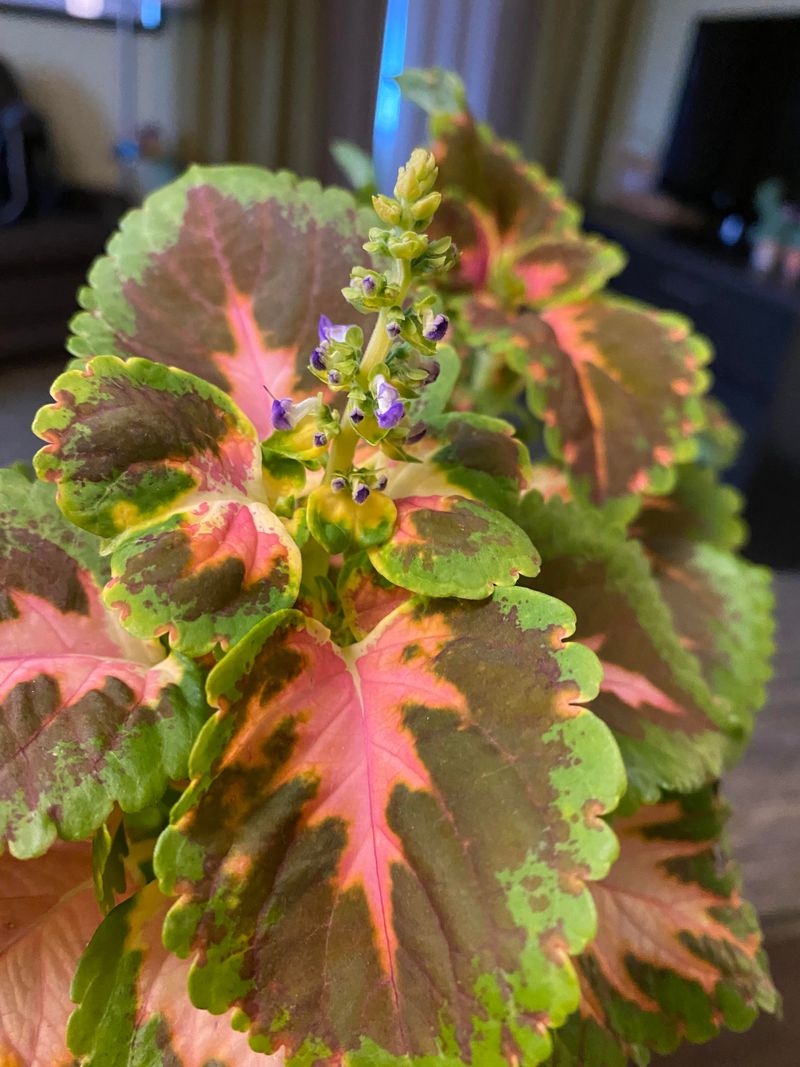
Coleus proves that flowers are optional when your leaves look that good.
This plant is grown entirely for its foliage, which comes in a dizzying range of colors including lime green, burgundy, hot pink, burnt orange, and almost every combination in between. One coleus plant can carry more visual interest than a whole flat of blooms.
Michigan gardeners love coleus because it is genuinely low-maintenance.
Plant it in shade or bright shade, water it regularly, and it basically takes care of itself. If flower spikes appear, pinch them off to keep the plant bushy and the leaf color at its most vivid.
Newer coleus varieties like Colorblaze and Mainstreet series hold their color even in brighter conditions and resist bolting longer into the season.
These are great picks for spots that get a little morning light but stay shaded in the afternoon heat.
Coleus looks stunning in containers, especially when you mix two or three contrasting varieties in one pot.
Pairing a dark burgundy coleus with a chartreuse lime variety creates bold contrast that reads beautifully from a distance.
Pinch it back by one-third in midsummer if it gets leggy, and it will bounce back fuller than ever within two weeks.
5. Caladium Turns Shade Into Drama
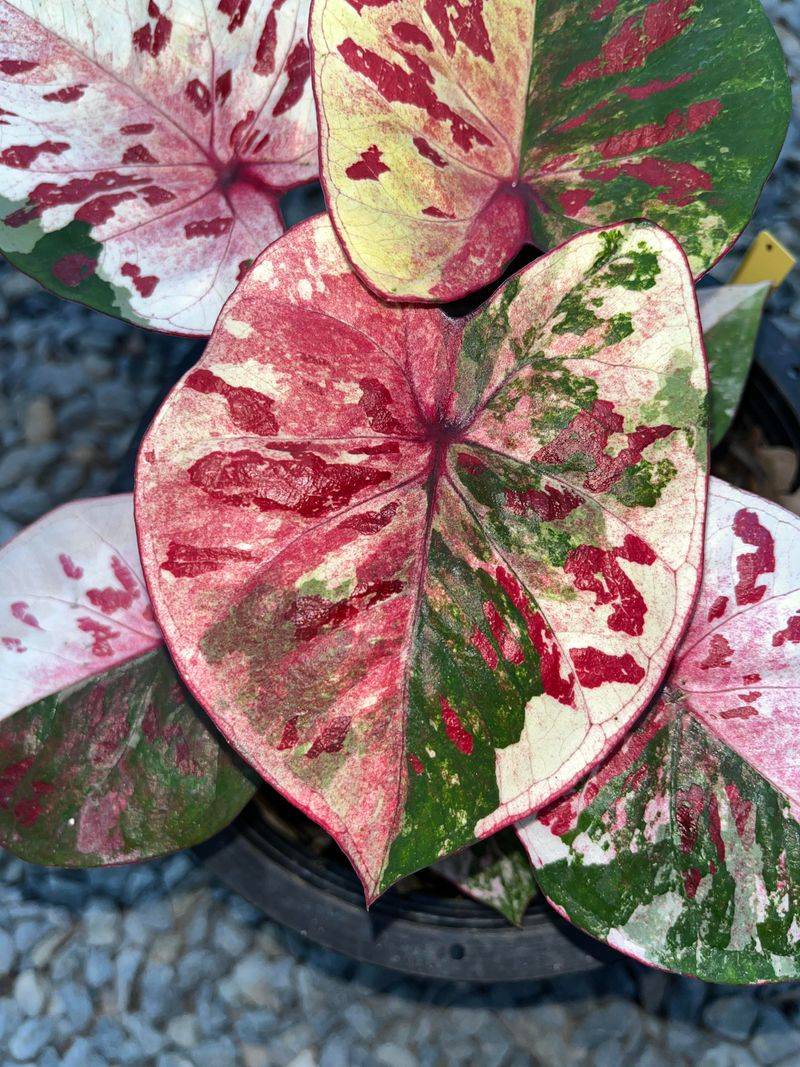
Walk past a well-planted caladium bed and you will stop every single time.
The leaves are enormous, paper-thin, and patterned in combinations of pink, red, white, and green that look hand-painted.
No other shade plant commands attention quite the way caladium does, and it asks for almost nothing in return except warmth and moisture.
Warmth is the key word here.
Caladiums are tropical plants that do not tolerate cold soil. In Michigan, wait until late May or early June when nighttime temperatures stay reliably above 60 degrees Fahrenheit before planting outdoors.
Full shade is where caladiums truly shine.
Bright, indirect light brings out the richest color in most varieties. Too much direct sun bleaches the leaves and causes the edges to scorch. Under a dense canopy of trees or on a north-facing porch is perfect caladium territory.
Fancy-leaved varieties have broader, more dramatic foliage, while strap-leaved types are narrower and slightly more sun-tolerant.
Keep the soil consistently moist but never waterlogged, and feed monthly with a balanced liquid fertilizer.
When fall approaches and nights cool down, dig up the tubers before frost and store them in a warm, dry location to replant the following season.
They are absolutely worth saving year after year for the sheer drama they deliver.
6. Torenia Flowers In Quiet Corners
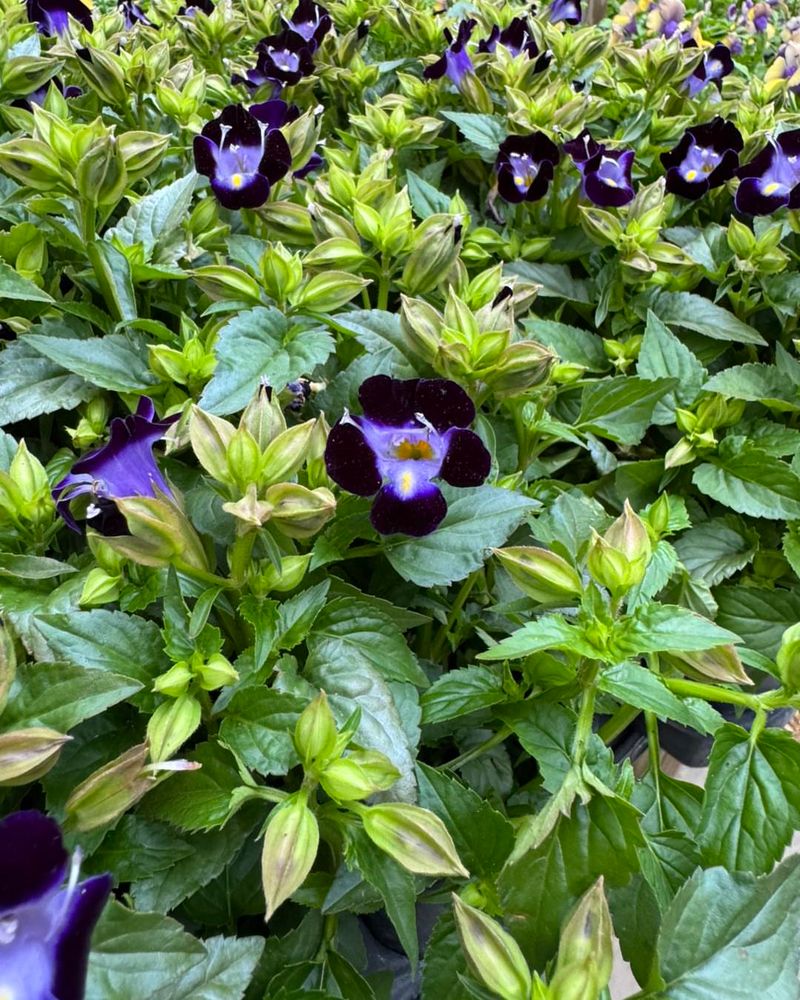
Tucked into a forgotten corner of the garden, torenia does something remarkable.
It blooms steadily in spots where most flowering plants simply give up. The small, trumpet-shaped flowers come in purple, pink, rose, and white, usually with a contrasting yellow throat that gives them a cheerful, almost whimsical look.
Torenia goes by the common name wishbone flower because of the way its stamens arch together inside the bloom, resembling a wishbone.
It is a fun little detail that makes this plant feel like more than just a filler. Kids especially get a kick out of hearing the story behind the name.
In Michigan, torenia thrives in full to partial shade with consistent moisture.
It does not like to dry out, so regular watering is essential, particularly during warm stretches in July and August.
The Summer Wave series is especially vigorous, self-cleaning, and heat-tolerant compared to older varieties.
No deadheading is needed since the plant drops spent blooms on its own and keeps producing new ones.
Plant torenia in late May after frost risk passes, space plants about eight to ten inches apart, and you will have color in your quiet corners from June straight through to October.
7. Browallia Adds Soft Blue Color
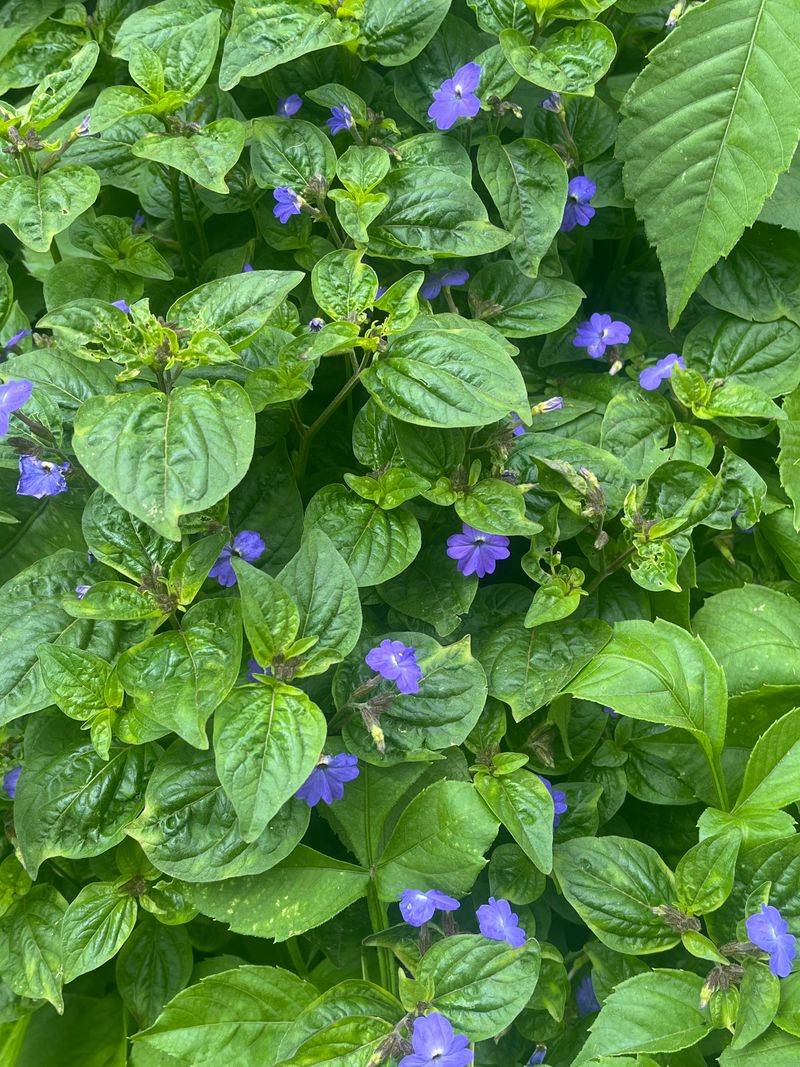
Blue flowers in a shade garden are genuinely rare, which is exactly what makes browallia so valuable.
The star-shaped blooms appear in soft lavender-blue or crisp white, hovering above compact, bushy foliage like little scattered stars. For gardeners who want cool, calming tones in a shaded space, browallia is one of the best choices available.
Sometimes called bush violet, browallia is not as widely sold as impatiens or begonias, so you may need to start it from seed or seek it out at specialty nurseries.
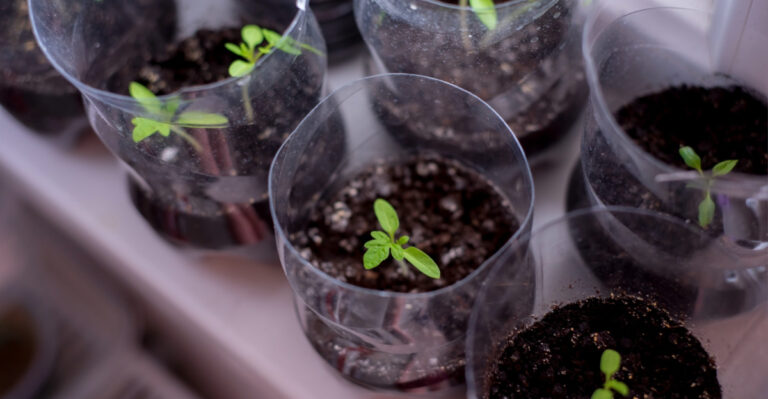
Starting from seed indoors about ten to twelve weeks before the last frost date gives you a good head start. The seeds need light to germinate, so press them onto the surface of the seed-starting mix without covering them.
Once established, browallia prefers cool, consistently moist conditions.
It performs beautifully in Michigan from late spring through early fall, but it can slow down during the hottest weeks of summer. Placing it in a spot with good airflow and afternoon shade helps it push through the heat.
Window boxes and hanging baskets suit browallia especially well.
The slightly trailing habit of some varieties lets stems spill softly over the edge of a container, adding a delicate, cottage-garden quality.
Pair it with white impatiens or silver dusty miller for a cool, moon-lit container combination that looks elegant even on the cloudiest Michigan day.
8. Lobelia Trails From Shady Pots
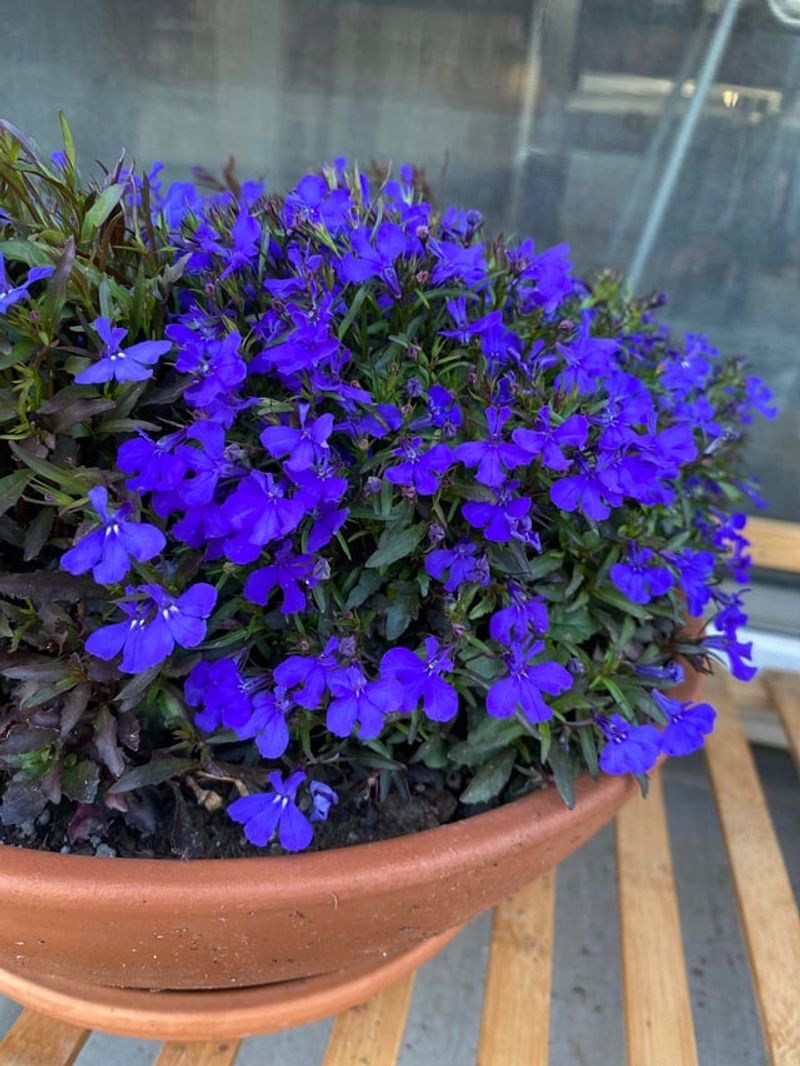
Lobelia is the kind of plant that makes hanging baskets look effortless.
Those tiny, vivid blue or violet flowers cascade in dense curtains over the edges of pots and baskets, creating a waterfall effect that is hard to replicate with any other plant.
Most gardeners know lobelia as a sun plant, but trailing lobelia actually prefers cooler, shadier conditions.
In Michigan, it thrives in spring and early summer, then sometimes slows during the hottest weeks of July. Shaded spots keep it going longer than exposed, sunny positions.
Consistent moisture is non-negotiable for lobelia.
It wilts dramatically when allowed to dry out, though it usually recovers quickly once watered. Hanging baskets dry out faster than ground-level containers, so check them daily during warm stretches.
Crystal Palace is one of the most popular trailing varieties, with deep blue flowers and bronze-tinted foliage that adds extra richness to any arrangement.
Pair it with white bacopa and pink torenia for a soft, romantic shade basket that holds color from late May through September.
If lobelia starts to look tired and sparse in midsummer, shear it back by about half.
New growth appears quickly, and the plant rebounds with a fresh flush of blooms that carries it comfortably through the rest of the season.
9. Fuchsia Makes Hanging Baskets Glow
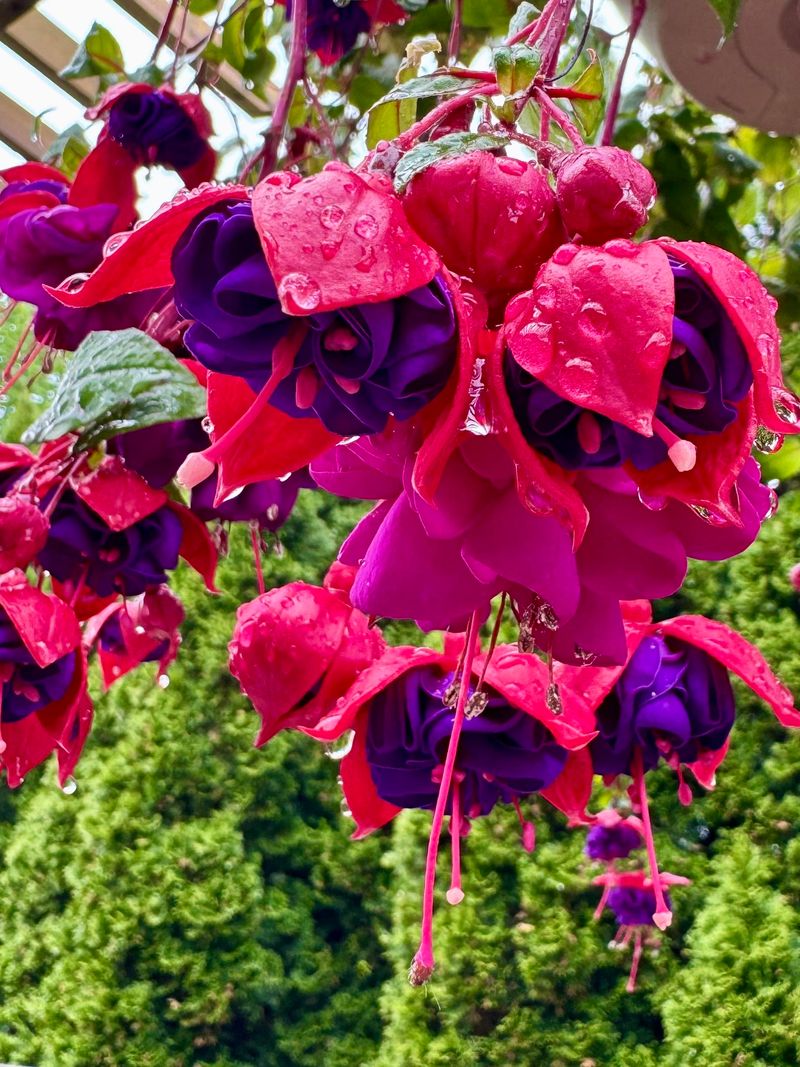
Hanging a fuchsia basket on a shaded porch is one of the easiest ways to make a Michigan garden look like something out of a magazine.
The pendulous blooms dangle like little lanterns in shades of pink, red, purple, and white, often in two-toned combinations that look almost artificially vivid. Hummingbirds find them irresistible, which is a bonus worth mentioning.
Fuchsia is a cool-season lover.
It performs best in Michigan from late May through early July and again in late August and September when temperatures drop back below 80 degrees Fahrenheit.
During the hottest weeks of summer, it may pause blooming. That is completely normal behavior and not a sign of trouble.
Keep fuchsia consistently moist.
Hanging baskets can dry out in just a day or two during warm weather, so daily watering is often necessary. Use a moisture-retaining potting mix and add a slow-release fertilizer at planting time.
Shade is essential.
Direct afternoon sun scorches fuchsia leaves quickly and shuts down flowering. A north-facing porch, a pergola draped with shade cloth, or the sheltered side of a fence provides the cool, bright indirect light fuchsia loves.
If the plant gets leggy mid-season, pinch back the stem tips to encourage branching and more blooms.
Double-flowered varieties like Gartenmeister or Dollar Princess are especially showy and widely available at Michigan garden centers each spring.
10. Polka Dot Plant Adds Speckled Color
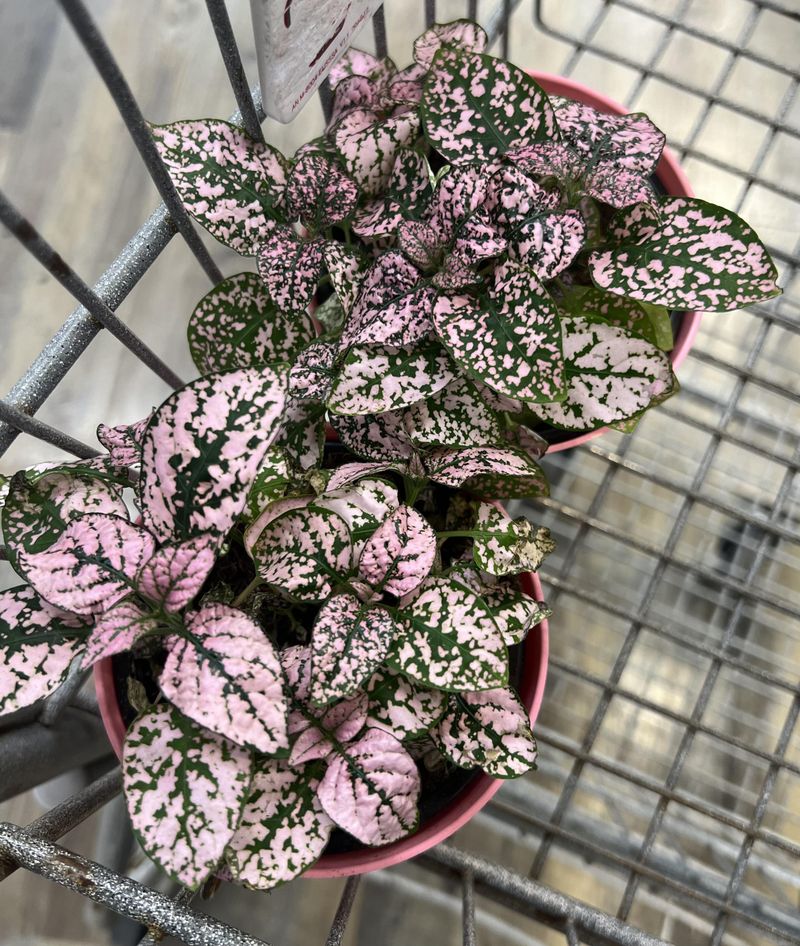
Spotted, splashed, and speckled, the polka dot plant looks like someone had a little too much fun with a paintbrush.
The leaves come in combinations of pink, red, or white against a green background, with markings so bold and irregular they seem almost random. It is one of the most visually playful foliage plants you can grow in a shaded container.
Botanically known as Hypoestes phyllostachya, polka dot plant is native to Madagascar and loves warmth and humidity.
In Michigan, it grows best outdoors from late May through September in shaded beds or containers. It reaches about ten to twelve inches tall, making it a great middle-layer filler in mixed pots.
Bright shade produces the most vivid leaf markings.
Deep, dense shade causes the colors to fade toward plain green, so aim for a spot with filtered light or open sky overhead without direct sun hitting the leaves.
Keep the soil consistently moist and feed monthly with a balanced liquid fertilizer to keep the foliage looking sharp.
If the plant starts to stretch and get leggy, pinch back the stem tips to encourage bushier growth.
Pinching also delays flowering, which is actually helpful since polka dot plant tends to decline after it blooms and sets seed, so keeping it vegetative extends its season nicely.
11. Persian Shield Brings Metallic Leaves
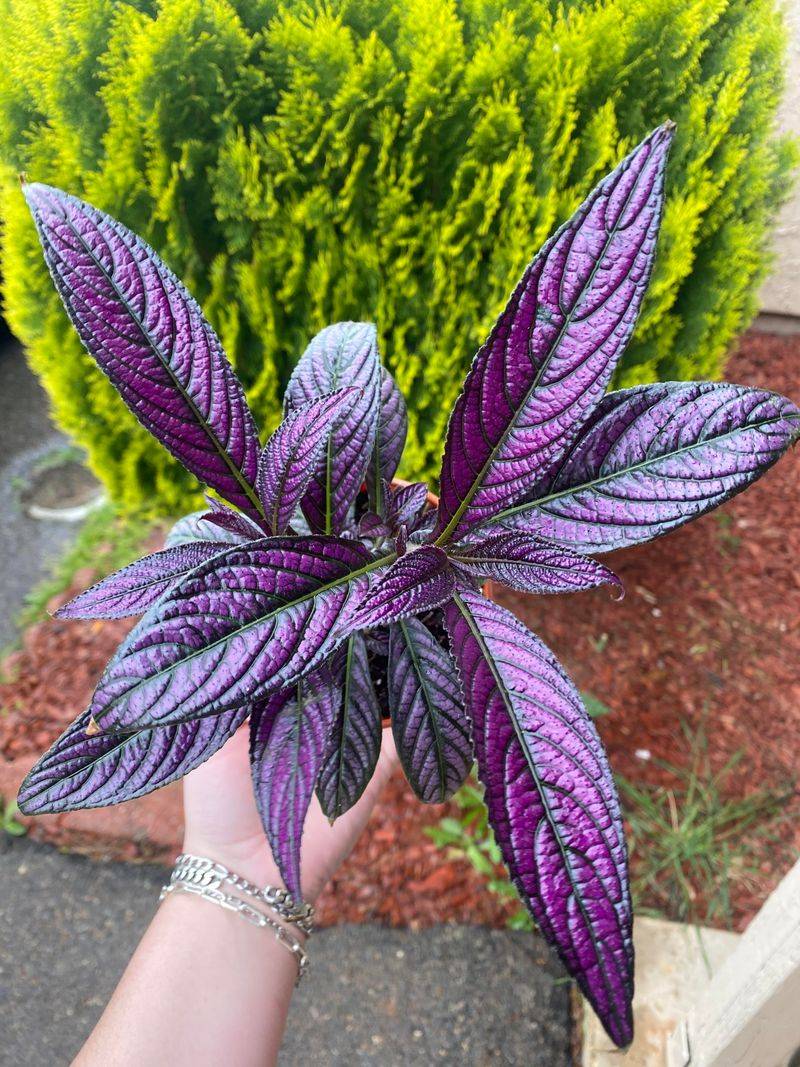
Persian shield might be the most glamorous foliage plant in the shade garden.
The leaves are iridescent, shifting from deep purple to silver to green depending on the angle of the light. Under a canopy of trees on a bright Michigan afternoon, a single pot of Persian shield looks like it is lit from within.
Botanically called Strobilanthes dyerianus, Persian shield is a tropical plant grown as an annual in Michigan.
It loves warmth and humidity, so wait until late May to plant it outdoors. Cool spring temperatures slow its growth significantly, and it really hits its stride in the warmth of June and July.
Bright shade is the sweet spot for Persian shield.
Too much deep shade makes the iridescent quality less vivid, while too much direct sun bleaches the leaves toward dull green. A spot with filtered light under a high tree canopy or on a bright, north-facing patio gives the best color payoff.
Persian shield grows twelve to eighteen inches tall and works beautifully as a thriller plant in a mixed container.
Pair it with chartreuse sweet potato vine as a spiller and white impatiens as a filler for a container combination that looks sophisticated and intentional.
Keep the soil evenly moist and feed every two weeks with a balanced liquid fertilizer.
12. Plectranthus Softens Container Edges
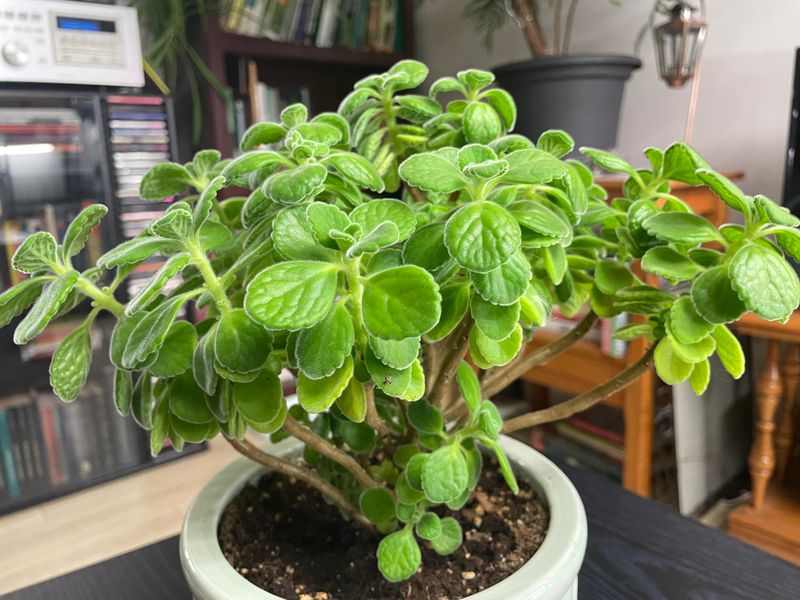
Not every plant in a container needs to bloom to earn its place.
Plectranthus makes that case better than almost anything else, with its soft, scalloped leaves and graceful trailing habit that spills over pot edges like a gentle waterfall.
Plectranthus argentatus, sometimes called silver spurflower, is especially popular.
Its thick, silvery-green leaves have a velvety texture that catches light beautifully. Plectranthus forsteri Marginatus, which has white-edged green leaves, offers a looser, more trailing growth habit that works well in larger containers.
In Michigan, plectranthus performs best in partial to full shade with consistent moisture.
It tolerates brief dry periods better than lobelia or torenia, making it slightly more forgiving for gardeners who occasionally forget to water.
Plectranthus is most useful as a spiller in mixed shade containers, softening the hard lines of pots and window boxes with its relaxed, trailing stems.
It pairs well with bold-leaved plants like caladium or coleus, providing a soft, neutral contrast that lets those showier plants pop even more.
Pinch back occasionally to prevent any single stem from getting too long and unbalanced.
Feed monthly with a balanced fertilizer and enjoy one of the most underrated container plants available at Michigan nurseries each spring.
13. Sweet Potato Vine Trails In Shade
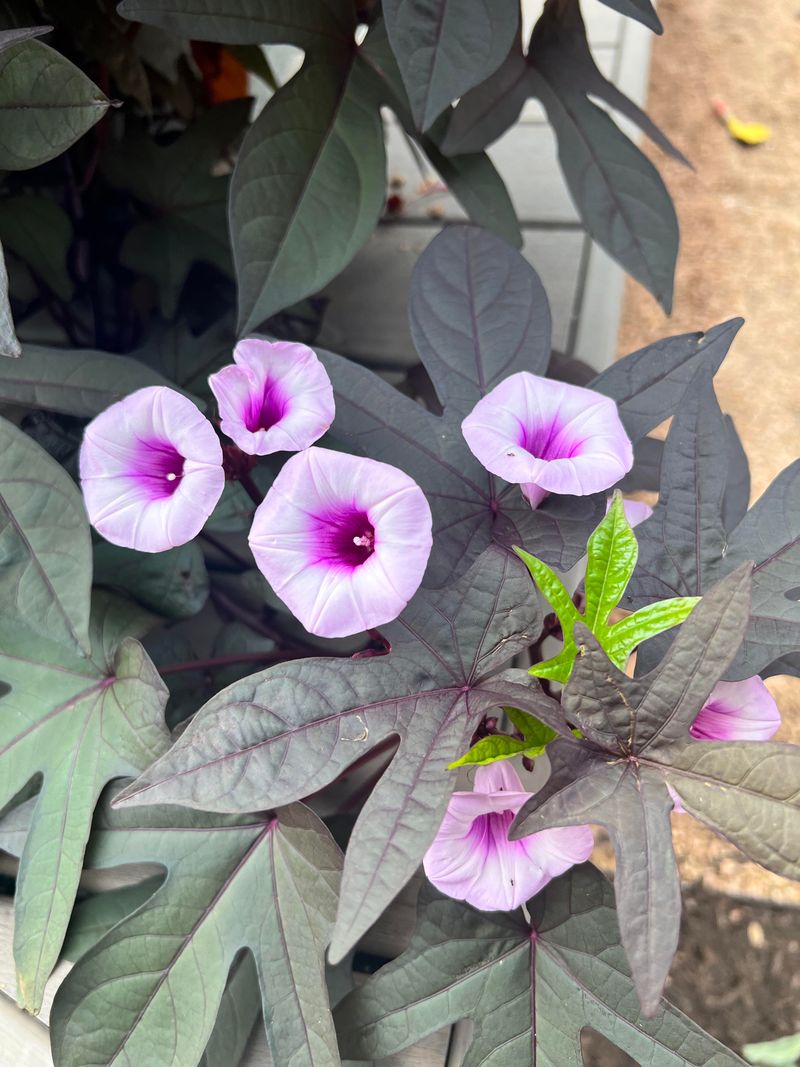
Sweet potato vine is the spiller that shade gardeners reach for again and again, and it never disappoints.
Those long, trailing stems covered in heart-shaped or deeply lobed leaves cascade over pot edges, window boxes, and raised beds with an energy that makes every container look fuller and more lush. It grows fast, looks great, and asks for very little.
Ipomoea batatas comes in a range of foliage colors including chartreuse, lime green, bronze, burgundy, and near-black.
Marguerite is one of the most popular chartreuse varieties and absolutely glows in a shaded setting. Blackie offers dark, almost purple foliage that creates stunning contrast against light-colored companions.
Sweet potato vine tolerates more shade than many people expect.
It grows more slowly in deep shade than in bright conditions, but it still fills containers reliably and looks great doing it. Bright shade, like the dappled light under a large oak tree, produces the fastest growth and richest leaf color.
Water regularly since the vines can get quite large by midsummer and drink a lot.
If the vines get too long and unruly, trim them back without hesitation. The plant rebounds quickly and looks better for it.
At the end of the season, the tubers can actually be harvested and eaten, though ornamental varieties tend to be starchier than culinary sweet potatoes. Still a fun surprise hiding in the pot.
14. New Guinea Impatiens Handles Bright Shade
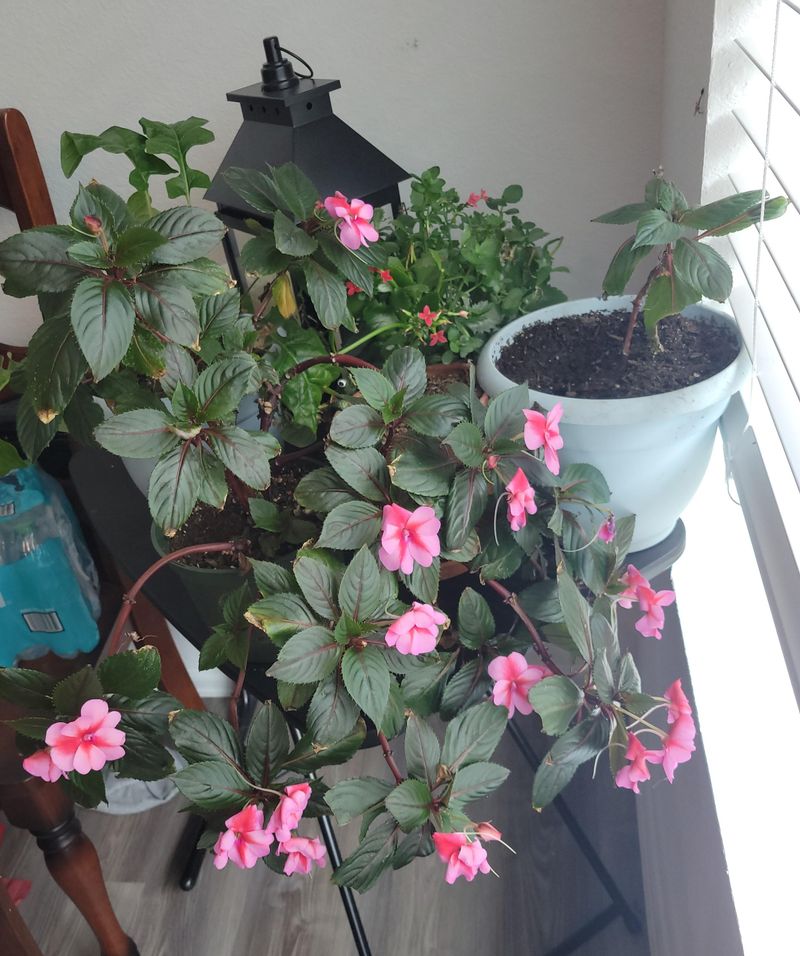
Bigger blooms, bolder leaves, and a stronger constitution make New Guinea impatiens stand out from its classic cousin.
The flowers can reach two to three inches across, and the dark, glossy foliage provides a rich backdrop that makes each bloom pop.
For Michigan gardeners dealing with bright shade rather than deep shadow, this is one of the top performers available.
New Guinea impatiens need more light than standard impatiens to bloom their best.
They prefer bright, indirect light or dappled shade, the kind you find at the edge of a tree canopy or along a fence that blocks afternoon sun but allows morning brightness.
Heat tolerance is another advantage.
New Guinea impatiens handle Michigan summers better than standard varieties and are not as susceptible to downy mildew.
That combination of heat tolerance and disease resistance makes them a smart investment for shaded beds and containers.
Plant them after the last frost date in mid-May, spacing about twelve to fifteen inches apart in beds.
In containers, they work well as the focal thriller plant surrounded by trailing lobelia or sweet potato vine.
Deadheading is not necessary since spent blooms drop cleanly, but removing leggy stems mid-season encourages fresh, compact growth that keeps the plant looking polished straight through to frost.
15. Wishbone Flower Works In Containers
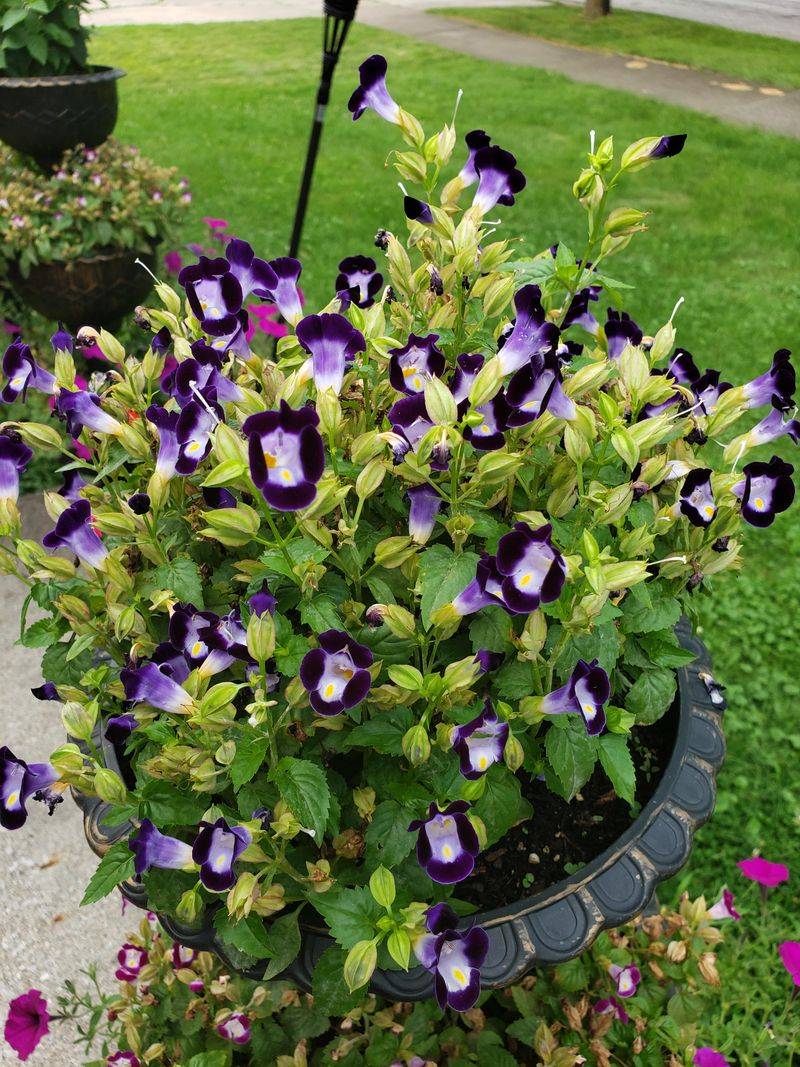
Compact, cheerful, and surprisingly productive, the wishbone flower earns every inch of space it takes up in a shade container.
Each bloom is a tiny two-lipped trumpet in shades of purple, lavender, rose, or white, usually marked with a contrasting splash of yellow at the center. The overall effect is delicate without being fussy.
Torenia fournieri, the classic upright species, tends to be slightly more compact than spreading varieties and works especially well in smaller pots, window boxes, and mixed containers where spreading varieties might crowd out neighbors.
Consistent shade and moisture are the two non-negotiable requirements.
Wishbone flower wilts quickly in dry soil and will not recover its best appearance after severe drought stress. Water regularly, mulch around in-ground plants, and use a moisture-retaining potting mix in containers.
For a foolproof shade container, try pairing wishbone flower with trailing plectranthus and a single upright coleus.
The coleus provides height, the wishbone flower fills the middle zone with color, and the plectranthus softens the edges with trailing foliage.
Feed the whole container every two weeks with a balanced water-soluble fertilizer.
This three-plant combination holds its shape and color from late May through September with minimal fussing, making it one of the most satisfying container recipes for Michigan shade gardeners.
16. Rex Begonia Gives Foliage Color
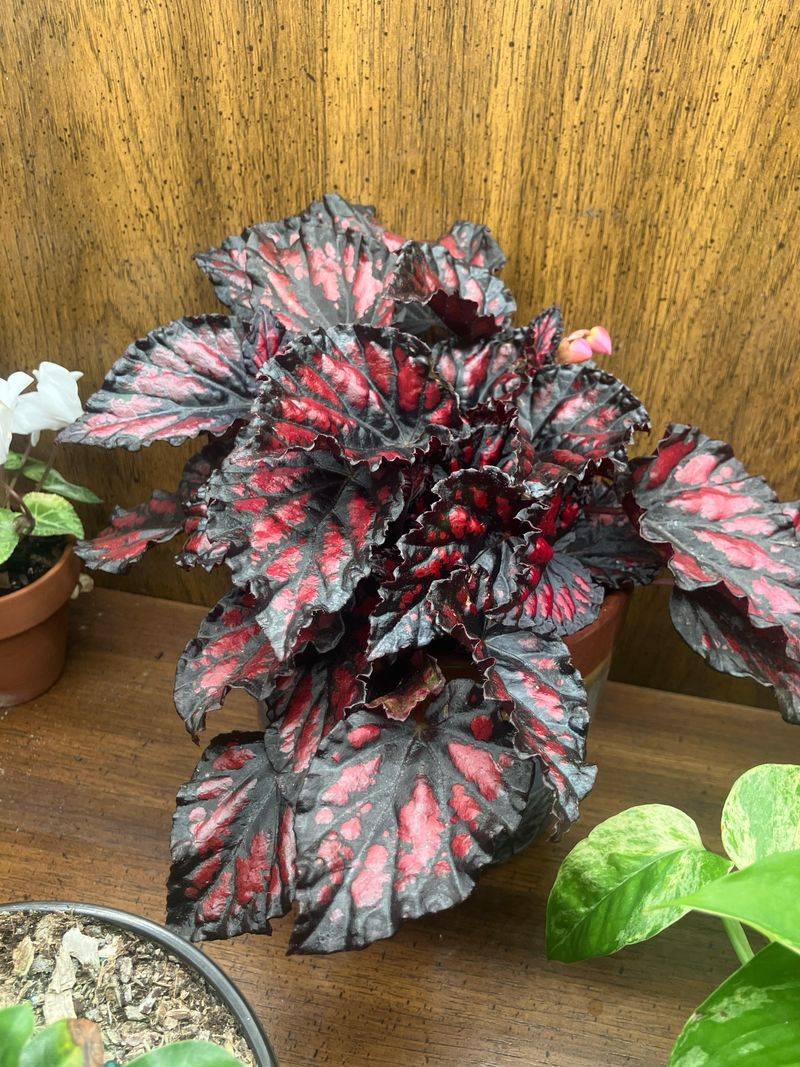
Rex begonias are the collectors’ plants of the shade world.
The leaves are enormous, swirling with patterns of silver, burgundy, green, pink, and near-black that look more like abstract art than anything that grew in a pot.
Once you start growing rex begonias, it is very easy to end up with a whole shelf of them.
Unlike tuberous or wax begonias, rex begonias are grown almost entirely for their foliage. The flowers are small and generally removed to keep the plant’s energy focused on producing those spectacular leaves.
In Michigan, they work best as container plants on sheltered, shaded porches or patios protected from heavy rain and harsh wind.
Rex begonias prefer bright, indirect light.
Deep shade causes the leaf patterns to fade and growth to slow noticeably. A covered porch with open sky exposure but no direct sun is close to ideal.
Humidity matters for rex begonias.
Michigan summers can get quite dry during heat waves, and low humidity causes leaf edges to brown. Setting the pot on a tray of pebbles filled with water raises the humidity around the plant without waterlogging the roots.
Water when the top inch of soil feels dry and never let them sit in standing water.
Feed monthly with a diluted, balanced fertilizer and enjoy one of the most visually complex plants you can grow in any shaded Michigan container.