Signs A Skunk Has Been Visiting Your Michigan Yard At Night And How To Discourage It

Waking up to small holes in your lawn or a strange smell in the air can leave you wondering what visited your yard overnight. In Michigan, skunks are a common nighttime guest, especially in spring when the ground softens and food becomes easier to find.
They are usually quiet and rarely seen, but the signs they leave behind are hard to miss once you know what to look for. Many homeowners mistake their activity for other animals at first, which can delay the right response.
The good news is that skunks are not trying to damage your yard on purpose. They are simply searching for insects and grubs beneath the surface.
Understanding the clues they leave can help you confirm what is happening and take simple steps to make your yard less inviting moving forward.
1. Small Cone-Shaped Holes In The Lawn
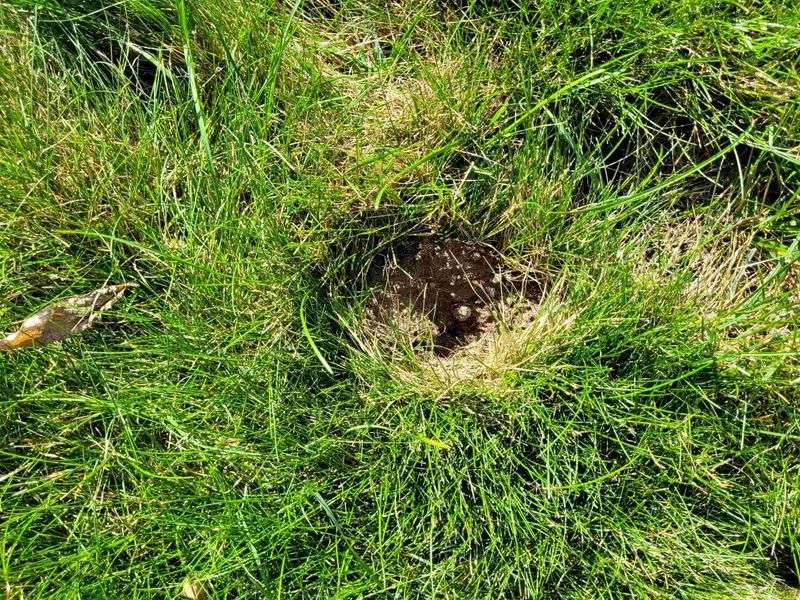
Picture stepping outside on a Michigan morning and finding your lawn dotted with small, funnel-shaped holes scattered everywhere. These little excavations are one of the clearest signs a skunk paid you a visit overnight.
Skunks dig these holes while hunting for grubs, earthworms, and soil insects hiding just beneath the surface.
The holes are usually about two to three inches wide and roughly cone-shaped, almost like someone poked the ground with a thick finger. You will typically find several of them grouped together in patches across your yard.
Soft, moist soil is especially easy for skunks to dig into, so lawns that were recently watered or rained on tend to show the most damage.
Spring and early summer are peak seasons for this kind of activity in Michigan, when grub larvae are close to the surface and easy to sniff out. Skunks have an impressive sense of smell and can detect insects underground with surprising accuracy.
That natural talent makes your lawn a nightly buffet if grubs are present. One of the best ways to reduce this problem is to treat your lawn for grubs using a safe, appropriate product. Fewer grubs mean less reason for a skunk to visit.
Keeping your lawn aerated and healthy also helps, since healthy grass is more resistant to grub infestations that attract these nighttime diggers.
2. Rolled Or Torn-Up Sod

Finding rolled-up sections of your lawn in the morning is a shocking sight, especially when you had no idea anything was out there the night before. Skunks can peel back loose turf like a carpet when grub populations underneath are especially high.
This behavior is more aggressive than simple hole-digging and usually signals a bigger pest problem beneath your grass.
When the grub infestation is heavy, skunks work harder and longer to get to their food, tearing up larger sections of sod in the process. Michigan yards with sandy or loamy soil tend to be more vulnerable because the ground gives way more easily.
You might notice jagged edges of grass that look like they were flipped over by hand.
This kind of damage most often appears in spring and early summer across Michigan, when white grubs are actively feeding near the surface. Raccoons can cause similar damage, so checking for skunk-specific tracks nearby can help you confirm who the real culprit is.
Your Michigan Garden Changes Every Week. Your Plan Should Too.
Gardening in Michigan changes quickly throughout the season. Every Friday you’ll receive a simple weekly plan showing exactly what to plant, prune, fertilize, harvest, and protect so you never miss the right timing.
Five-toed prints with claw marks are a strong giveaway. Addressing the grub problem directly is your most effective long-term fix. Apply a grub control treatment suited for Michigan lawns, following all label instructions carefully.
Once the food source disappears, skunks will naturally move on to more rewarding feeding grounds elsewhere in the neighborhood.
3. Strong Musky Odor Near Structures
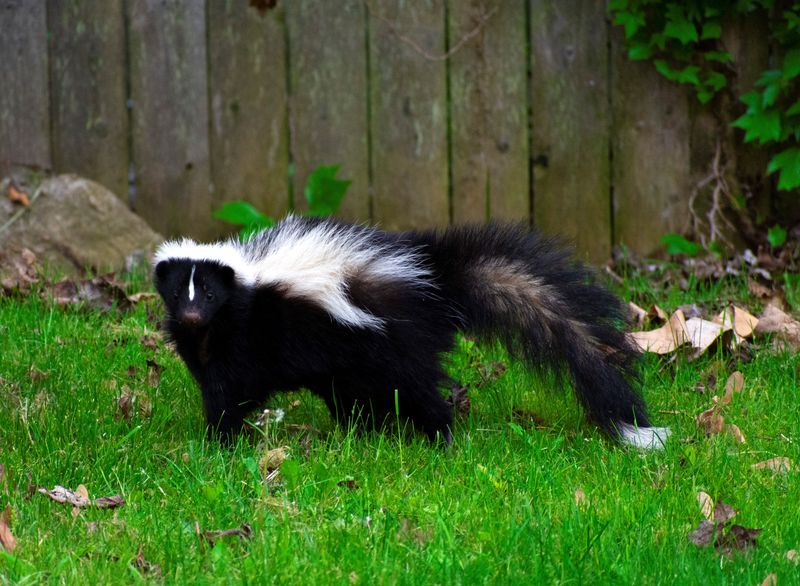
You do not always need to see a skunk to know one has been around. That heavy, unmistakable musky smell hanging near your deck, shed, or crawl space is one of the most reliable clues a skunk has been visiting your Michigan yard regularly.
Even without spraying, skunks carry a natural odor that lingers in areas they frequent.
Skunk spray itself is a much stronger version of this smell and can stick to surfaces, wood, and soil for weeks if left untreated. If the odor is concentrated under a porch or near foundation vents, there is a good chance a skunk has been resting or sheltering there.
Michigan winters can push skunks to seek warm, enclosed spaces under structures. Pay attention to when the smell is strongest. Fresh skunk odor in the early morning hours usually means the animal was active nearby just hours before.
A faint but persistent smell that does not go away after several days suggests the skunk may have found a regular route through or around your property.
To reduce the attraction, clean up any food debris near your structures and check for gaps or openings where a skunk could squeeze underneath. Placing ammonia-soaked rags or citrus peels near suspected entry points can help discourage them from settling in.
These simple steps go a long way in keeping your Michigan yard fresh.
4. Tracks With Five Toes And Claw Marks
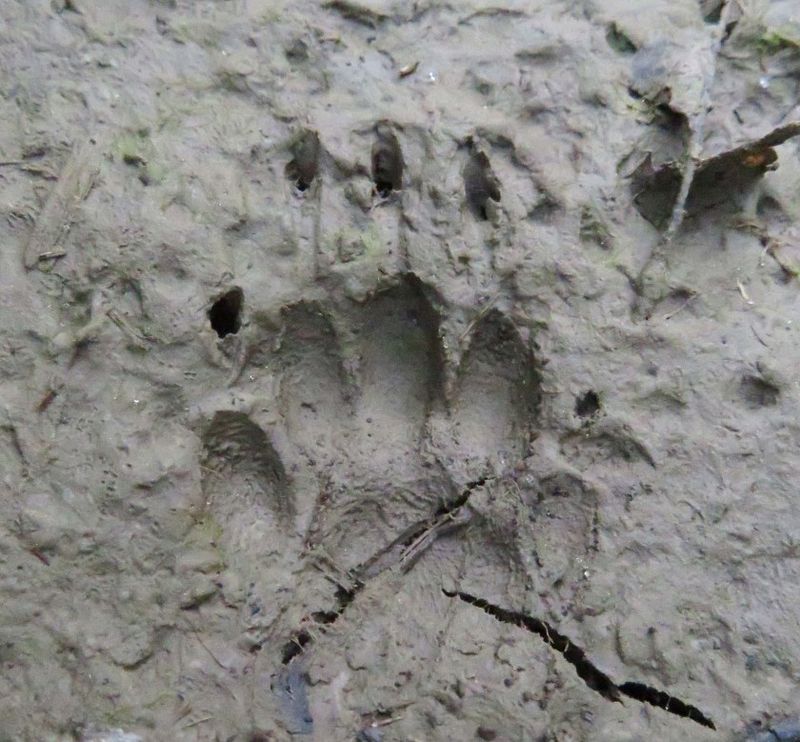
Not every homeowner thinks to look for animal tracks, but they can tell you a lot about what has been wandering through your yard at night. Skunk tracks are quite distinctive once you know what to look for.
The front feet leave five-toed prints with long, prominent claw marks, while the back feet are slightly larger and shaped a bit like a small human footprint.
You are most likely to spot these tracks in soft garden soil, muddy patches near water sources, or bare dirt areas around your Michigan yard after a rainy night.
The prints are small, typically about one to two inches wide, and are often found in a waddling pattern since skunks walk with a slow, shuffling gait. That shuffling stride leaves tracks that are surprisingly close together.
Comparing what you find to a reference image online can quickly confirm whether you are dealing with a skunk versus a raccoon or opossum. Raccoon tracks look more like tiny human hands, while skunk tracks have a narrower, more compact shape.
Knowing the difference saves you time and helps you respond with the right deterrent. Once you identify skunk tracks, trace the path they follow through your yard to find entry points or areas of interest.
Blocking those pathways with natural barriers, fencing, or repellent plants like marigolds can help redirect the skunk away from your Michigan property over time.
5. Nighttime Activity Captured On Security Cameras
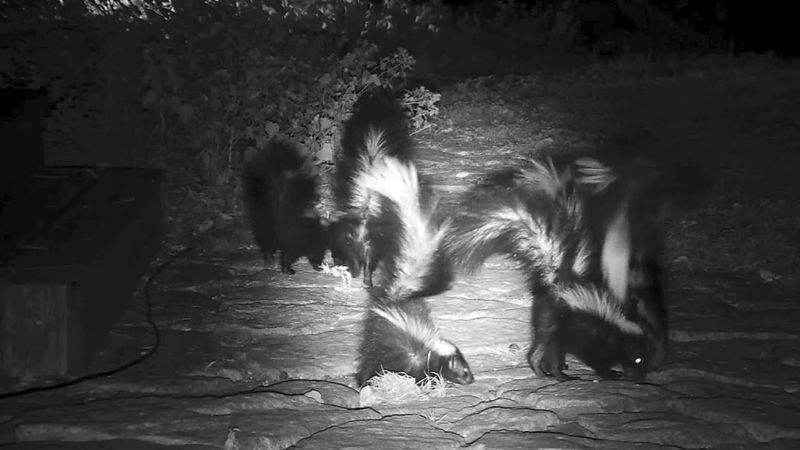
Modern technology makes it easier than ever to catch a midnight visitor in the act. If you have a trail camera or home security camera pointed at your Michigan yard, reviewing the footage might reveal a skunk casually strolling through your grass after dark.
Skunks are almost entirely nocturnal, meaning they do all their foraging between dusk and dawn.
Spotting one on camera is actually a great outcome because it removes all guesswork. You know exactly what animal is causing the disturbance, which lets you take targeted action right away.
Many Michigan homeowners are surprised to discover how boldly skunks move through yards, often following the same path night after night.
Trail cameras placed near garden beds, compost areas, or fence lines tend to capture the most activity. If your camera has motion-activated recording, review clips from the hours between 10 p.m. and 3 a.m., which is when skunks are most active.
You might even catch multiple visits in a single night if food sources are plentiful.
Once you confirm skunk activity through footage, you can start placing deterrents along the exact routes the skunk uses. Motion-activated sprinklers or lights positioned at those spots are especially effective because they target the animal right where it travels.
Being strategic with your placement makes the deterrents work much faster and more efficiently.
6. Damage Near Compost Or Trash Areas
Waking up to find your compost pile scattered or your trash can knocked over is frustrating, and skunks are often the reason. These animals are opportunistic eaters, which means any easy food source in your Michigan yard becomes an instant attraction.
Compost bins filled with fruit scraps, vegetable peels, and other organic matter are basically an open invitation.
Skunks have a strong sense of smell and can sniff out food from a surprising distance. Once they find a reliable food source in your yard, they will return to it night after night until it is no longer available.
Tipped trash cans with scattered contents are a classic sign, especially if the mess appears in the early morning hours.
Managing your compost properly is one of the most effective ways to remove this attraction. Use a bin with a tight-fitting lid, avoid adding meat or dairy to your compost, and consider burying fresh scraps under older material to reduce surface odors.
For trash cans, invest in animal-proof containers with locking lids that skunks cannot tip or pry open.
Keeping your Michigan yard clean and free of accessible food is genuinely one of the most powerful long-term deterrents available. When skunks consistently find nothing to eat in your yard, they naturally redirect their nightly routes elsewhere.
Consistency is everything here, so make securing food sources a regular habit throughout the warmer months.
7. Burrows Or Dens Under Structures
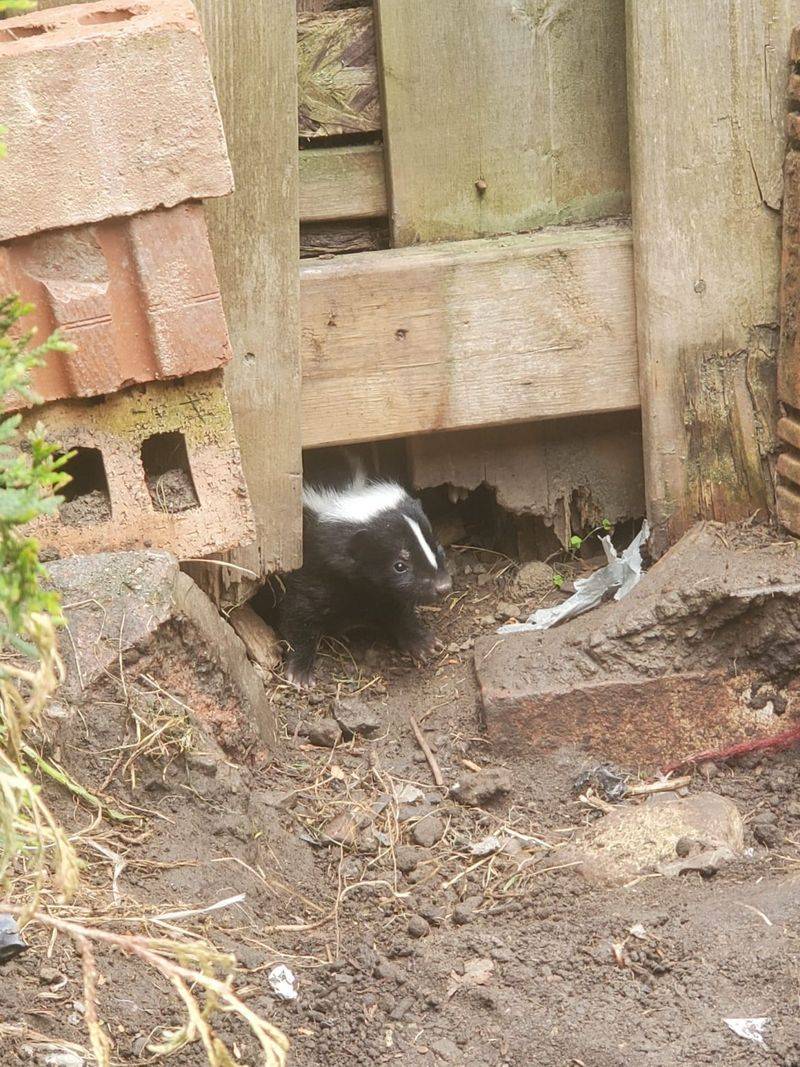
Skunks do not just pass through your yard. Sometimes they decide to move in.
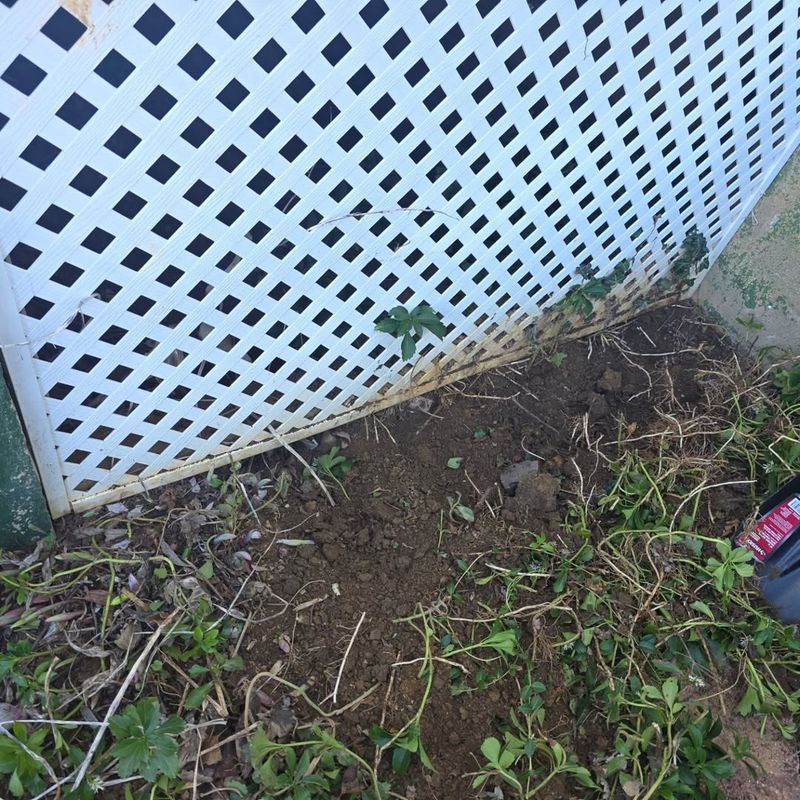
Finding a small, freshly dug opening beneath your deck, porch, or garden shed is a strong sign that a skunk has claimed that spot as a temporary den.
Michigan skunks are especially likely to seek shelter under structures during spring when females are preparing to raise their young.
The entrance to a skunk burrow is typically about four to six inches wide, just large enough for the animal to squeeze through comfortably. You may notice loose dirt piled near the opening, which is a telltale sign of fresh digging activity.
A faint musky smell coming from underneath the structure is another strong confirmation.
Evicting a skunk from an established den requires patience and the right approach. Placing bright lights or a battery-powered radio near the entrance can make the space feel unsafe and encourage the skunk to relocate on its own.
Give it a few days before assuming the method has not worked, since skunks take time to decide to leave.
Once the skunk has moved on, seal the opening using hardware cloth or a sturdy wire mesh buried several inches into the ground to prevent re-entry. Leaving the area open after eviction is a common mistake that just invites the next visitor in.
Securing your Michigan yard structures permanently is always the smarter long-term solution.
8. Remove Food Sources Right Away

Skunks are practical animals. They go where the food is, and if your Michigan yard keeps delivering easy meals, they will keep showing up.
Removing every possible food source is the single most impactful step you can take to discourage nighttime visits. The good news is that most of these changes are simple and cost very little to implement.
Start with pet food. Leaving dog or cat bowls outside overnight is one of the most common reasons skunks become regular visitors.
Bring all pet food indoors before sunset without exception. Bird feeders are another overlooked culprit since spilled seeds and suet attract skunks just as much as they attract birds.
Fallen fruit from apple, pear, or cherry trees is a major draw in Michigan yards during late summer and fall. Picking up fallen fruit daily removes a reliable food source that skunks scout for every night.
Even small amounts left on the ground can keep a skunk coming back on a regular schedule.
Securing your garbage is equally important. Use cans with tight locking lids and place them in a garage or enclosed area overnight when possible.
Rinse recyclables before placing them in outdoor bins to reduce food odors. Every small effort adds up, and once your yard stops offering easy rewards, skunks will redirect their nightly foraging routes to somewhere more promising.
9. Treat Your Lawn For Grubs
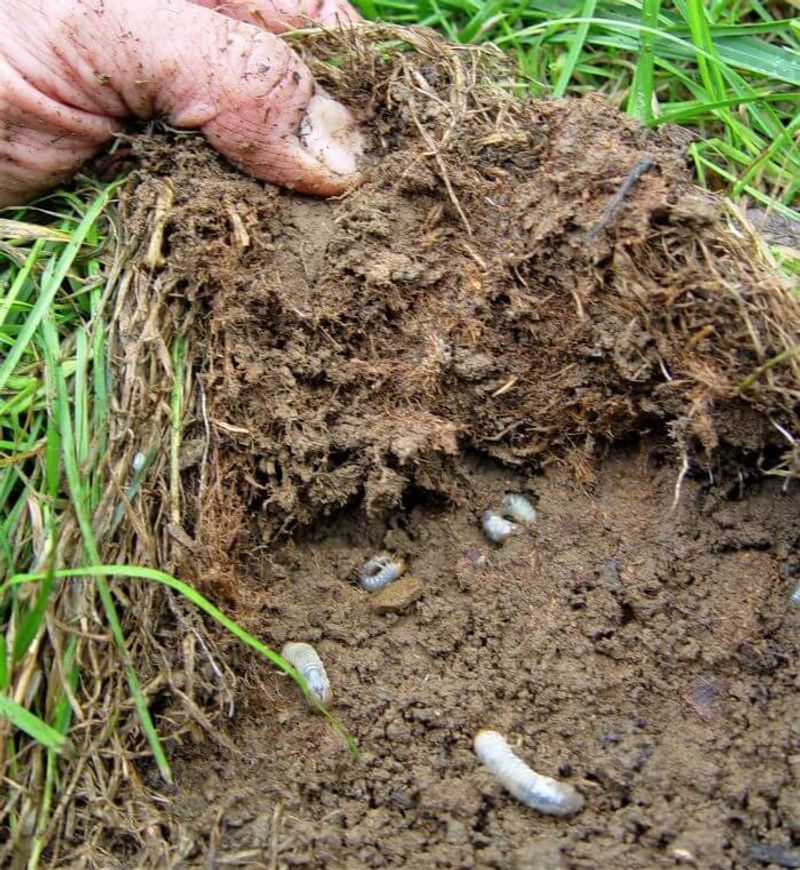
Grubs are the number one reason skunks target Michigan lawns in the first place. These soft, white larvae of beetles like Japanese beetles and June beetles live just below the surface of your grass, making them an easy and nutritious meal for any foraging skunk.
Reducing grub populations in your lawn removes the main reason skunks keep returning.
The best time to treat for grubs in Michigan is late summer, typically between July and August, when the young larvae are small and close to the surface.
Products containing milky spore or beneficial nematodes offer a natural, soil-safe approach that many Michigan homeowners prefer.
Chemical options are also available and can be very effective when applied correctly and at the right time of year.
Before treating, check whether you actually have a grub problem by cutting back a small section of turf and counting the grubs per square foot. More than five grubs per square foot is generally considered a threshold worth treating.
Treating unnecessarily can disrupt beneficial soil organisms, so confirming the infestation first is always a smart move.
Healthy, well-maintained grass is also more resilient to grub damage overall. Watering deeply but infrequently, mowing at the right height, and aerating annually all help your Michigan lawn stay thick and strong.
A dense, healthy lawn is simply harder for grubs to thrive in, which makes it far less attractive to hungry skunks searching for an easy night meal.
10. Use Motion-Activated Lights And Sprinklers

Skunks prefer darkness and quiet, which makes motion-activated deterrents one of the smartest tools Michigan homeowners can use against them.
The sudden burst of bright light or a spray of water catches a skunk completely off guard, triggering its natural instinct to retreat.
Over time, repeated startling experiences teach the animal that your yard is simply not worth the hassle.
Motion-activated sprinklers are particularly effective because they combine the shock of unexpected water with movement and sound all at once.
Place them near garden beds, compost areas, or any entry point you have identified through camera footage or track patterns.
Most models are easy to install and run off a standard garden hose connection with no wiring required.
Motion-sensor lights serve a similar purpose and are especially useful near decks, sheds, and fence lines. Skunks are naturally cautious animals, and sudden bright light in what they expected to be a dark space sends a clear message.
Solar-powered options are affordable and require no electrical work, making them a practical choice for most Michigan yards.
Combining both sprinklers and lights along the same route a skunk uses creates a strong deterrent corridor that is difficult to ignore. Pair these tools with food source removal and grub treatment for a layered approach that covers all the bases.
Using multiple strategies together is always more effective than relying on any single method alone.