Arizona Garden Plants That Help Repel Gnats And Flies Naturally All Summer Long
Nothing ruins a perfectly good Arizona patio evening quite like a cloud of gnats showing up uninvited right around the time you’ve finally gotten comfortable. They don’t care that you’ve set up the outdoor furniture beautifully.
They have absolutely no respect for the occasion. A lot of Arizona homeowners would rather not reach for chemical sprays every time they want to enjoy their backyard, and honestly that’s a completely reasonable position.
Here’s where it gets interesting though.
Certain aromatic herbs and fragrant garden plants have a natural scent that flying insects tend to find less than appealing, and growing them in containers or raised beds near seating areas can make a noticeable difference in how enjoyable those spaces feel.
No plant is a magic solution, but some of them are genuinely worth having around for this reason alone.
1. Basil Adds Scent Near Summer Seating Areas
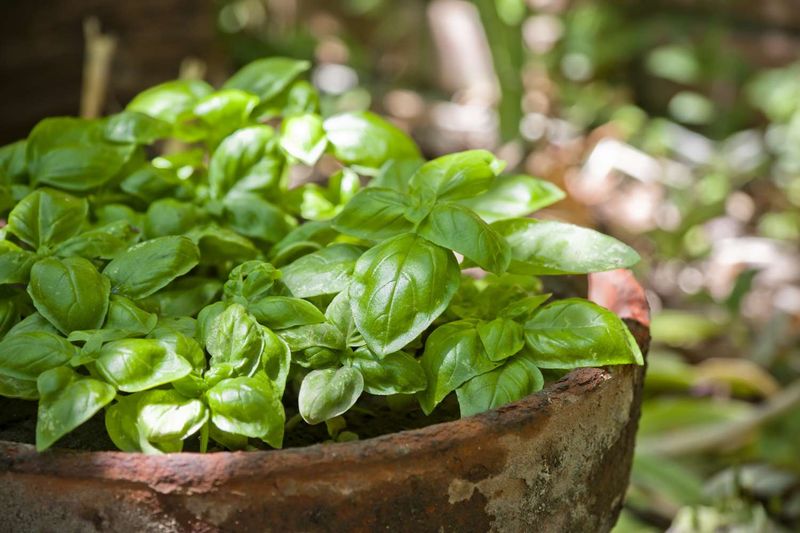
Few herbs smell as immediately recognizable as basil, and that bold, clove-like scent is exactly why many Arizona gardeners keep a pot or two close to their outdoor seating.
The fragrance becomes especially noticeable on warm evenings when the air is still and guests are gathered around a patio table.
Placing basil containers near chairs, dining areas, or porch edges may help discourage gnats and flies from hovering too close.
Basil does well in Arizona during the warmer months, though it prefers morning sun and some afternoon shade to avoid scorching in intense desert heat.
A good-quality potting mix with solid drainage helps keep the roots healthy without holding too much moisture, since overly damp soil can actually attract fungus gnats rather than repel them.
Checking soil moisture before watering is a simple habit that goes a long way.
Brushing the leaves gently as you walk past releases more of that aromatic oil into the air, which can briefly freshen the space around your seating area.
Basil also works well in raised beds alongside tomatoes and peppers, making it a practical dual-purpose herb for Arizona home gardens.
Keeping plants trimmed regularly encourages bushier growth and keeps the scent fresh throughout the summer season.
2. Rosemary Releases Aroma When Brushed Or Clipped
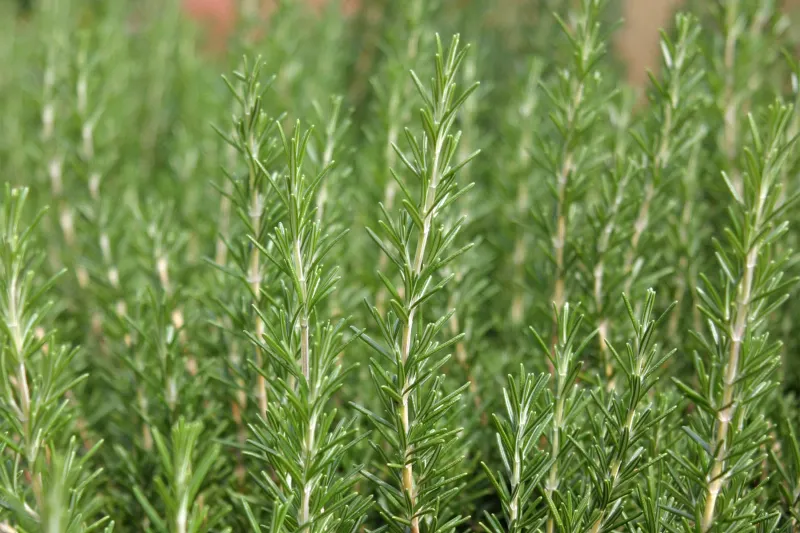
Walking past a rosemary plant and brushing against its needle-like leaves releases one of the most distinct herbal fragrances you can grow in an Arizona garden.
That piney, resinous scent is what makes rosemary a popular choice near patio edges and outdoor seating areas where gnats and flies tend to gather on warm summer afternoons.
The aroma becomes stronger with heat, which means Arizona summers actually work in rosemary’s favor.
Rosemary is one of the most heat-tolerant and drought-adapted herbs available to Arizona gardeners. It handles full sun well, thrives in dry air, and prefers sandy or well-draining soil over anything that holds moisture for too long.
Overwatering is one of the most common mistakes with rosemary in container gardens, and soggy potting mix can invite fungus gnats regardless of how fragrant the plant may be above the soil line.
Your Arizona Garden Changes Every Week. Your Plan Should Too.
Gardening in Arizona changes quickly throughout the season. Every Friday you’ll receive a simple weekly plan showing exactly what to plant, prune, fertilize, harvest, and protect so you never miss the right timing.
Clipping rosemary regularly for cooking or simply to shape the plant releases bursts of fragrance that can briefly freshen the air around a seating area. Larger rosemary shrubs can also serve as informal borders along patio edges in Arizona landscapes.
Whether grown in a container or planted directly in a raised bed, rosemary brings practical beauty, culinary usefulness, and a strong herbal scent that many flying insects seem to find unappealing.
3. Lavender Works Best With Heat-Smart Placement
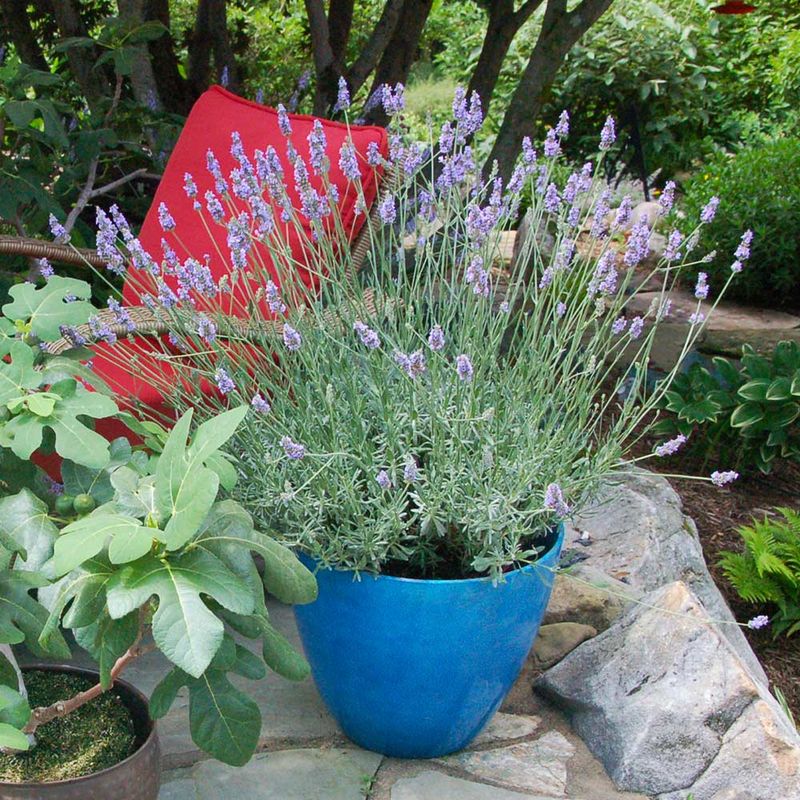
Lavender has a reputation as a calming, pleasant-smelling herb, and its floral fragrance is often associated with repelling certain flying insects when placed strategically around outdoor living spaces.
In Arizona, though, growing lavender well requires a bit of thoughtful planning.
The intense afternoon sun and extreme summer heat can stress lavender plants quickly if they are placed in exposed spots without any shade relief.
Spanish lavender varieties tend to handle Arizona heat better than English lavender, making them a smarter starting point for local gardeners.
Planting in containers gives you the flexibility to move lavender to shadier spots during the hottest part of the day, which can help the plant survive the summer in better shape.
Well-draining soil is non-negotiable, since lavender roots are highly sensitive to moisture buildup and will struggle in soggy potting mix.
Positioning a lavender pot near a patio chair or outdoor dining table allows the gentle fragrance to drift into the surrounding air, especially when a light breeze passes through.
Rubbing the flower stems or leaves between your fingers releases a stronger burst of scent that some gnats and flies find unpleasant.
Lavender also attracts pollinators like bees, so placing it thoughtfully, away from food prep areas but near garden edges, tends to work best for Arizona home landscapes during summer.
4. Mint Belongs In Pots Near Patio Edges
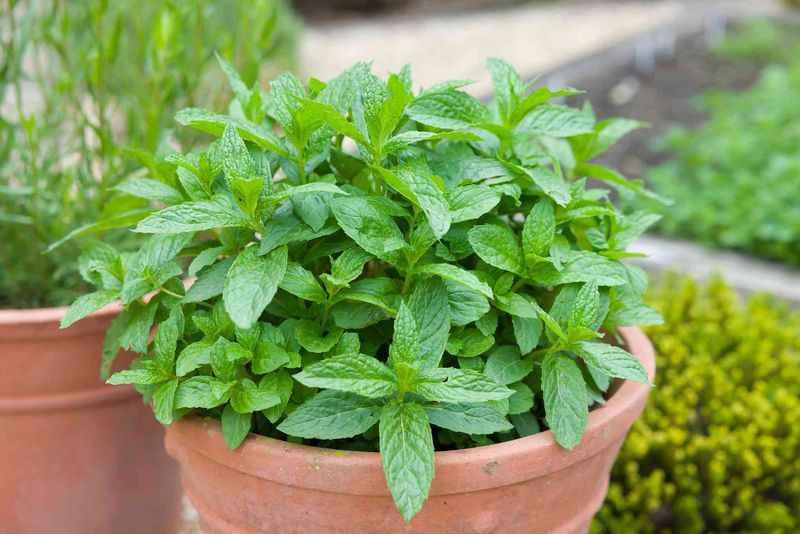
Mint is one of those herbs that earns its reputation quickly once you brush a leaf and catch that sharp, cool fragrance drifting into the air around you.
Many Arizona gardeners keep mint in containers near patio edges specifically because the scent may help discourage gnats and flies from settling too close to outdoor seating.
It is a simple, low-cost addition to a summer container garden that also happens to be useful in the kitchen.
Keeping mint in pots rather than planting it directly in the ground is genuinely important, especially in Arizona landscapes. Mint spreads aggressively through underground runners and can take over a garden bed surprisingly fast if left unchecked.
A container with drainage holes and quality potting mix gives you control over both the plant’s growth and the moisture level in the soil, which matters because overly wet soil encourages fungus gnats regardless of what herb is growing above it.
Mint prefers some afternoon shade in Arizona to avoid wilting during peak summer heat. Morning sun with protection from the harshest midday rays tends to keep plants looking healthier and smelling stronger.
Crushing or pinching a few leaves near a seating area releases more of that crisp scent into the surrounding space.
Spearmint and peppermint are both solid choices for Arizona patios, and either variety works well in a small container garden throughout summer.
5. Lemongrass Brings Citrus Scent To Warm Containers
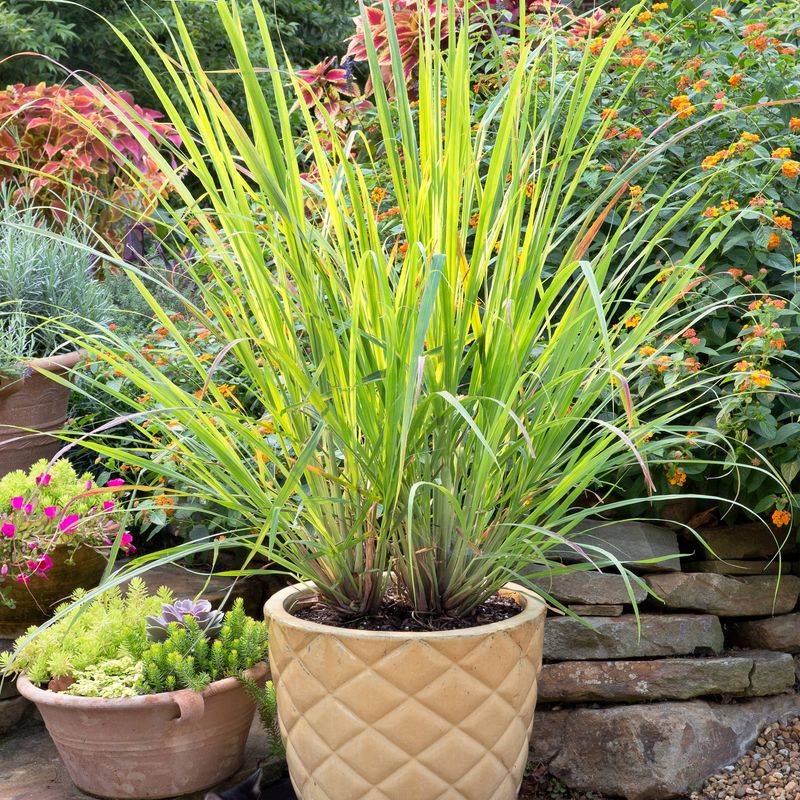
There is something undeniably tropical about a tall, swaying lemongrass plant growing in a big container on an Arizona patio.
The citrusy, slightly grassy scent it releases, especially when the long leaves are brushed or bent in a breeze, is one of the reasons homeowners across warm climates grow it near outdoor seating areas.
Lemongrass contains citral, a naturally occurring compound responsible for its recognizable lemon-like fragrance, which some flying insects find off-putting.
Lemongrass thrives in Arizona summer heat and handles full sun without much complaint, making it one of the more forgiving aromatic plants for desert gardens.
It grows quickly in warm weather and can reach impressive heights in a single season when given a large enough container and consistent watering.
Good drainage remains important, since standing water in a pot can attract fungus gnats even when the plant above the soil smells wonderful.
Placing a large lemongrass container near a patio entrance, beside a seating area, or at the edge of an outdoor dining space gives the fragrance room to spread naturally.
Brushing the leaves as you walk past or gently bending a stalk releases more of the citrus scent into the surrounding air.
Lemongrass also makes a flavorful addition to teas and cooking, so it earns its place in an Arizona container garden on multiple levels throughout the long summer season.
6. Lemon Balm Needs Afternoon Protection In Arizona
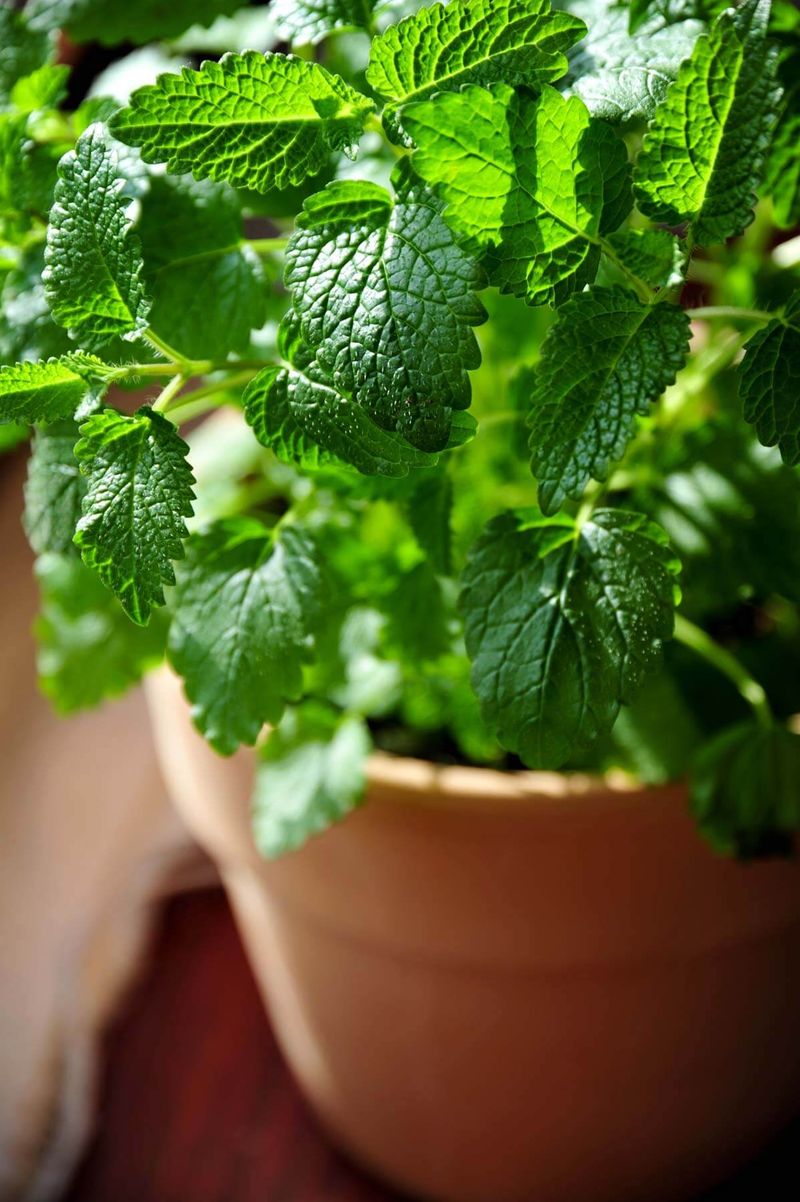
Lemon balm has a mild, lemony fragrance that becomes noticeably stronger when you rub its soft, textured leaves between your fingers.
Many gardeners grow it near outdoor seating areas hoping the scent will help deter gnats and flies during warm summer evenings.
In Arizona, lemon balm can be a bit more delicate than tougher herbs like rosemary or lemongrass, so knowing where to place it makes a real difference in how well it performs.
Afternoon shade is genuinely helpful for lemon balm in Arizona. The intense midday and afternoon sun can cause the leaves to wilt, scorch, or drop their quality quickly during the hottest months.
A spot that gets morning sun and then moves into shade by early afternoon, or a patio corner that stays sheltered, tends to work much better for keeping lemon balm healthy and fragrant all summer long.
Container growing suits lemon balm well in Arizona because you can move the pot as the season shifts and the sun angle changes.
Use a potting mix with good drainage and avoid letting the soil stay wet for extended periods, since moist organic material in pots is one of the main contributors to fungus gnat activity.
Harvesting lemon balm leaves regularly encourages fresh growth and keeps the plant releasing that pleasant citrus scent near your outdoor living space throughout summer.
7. Catnip Or Catmint Offers A Strong Aromatic Caveat
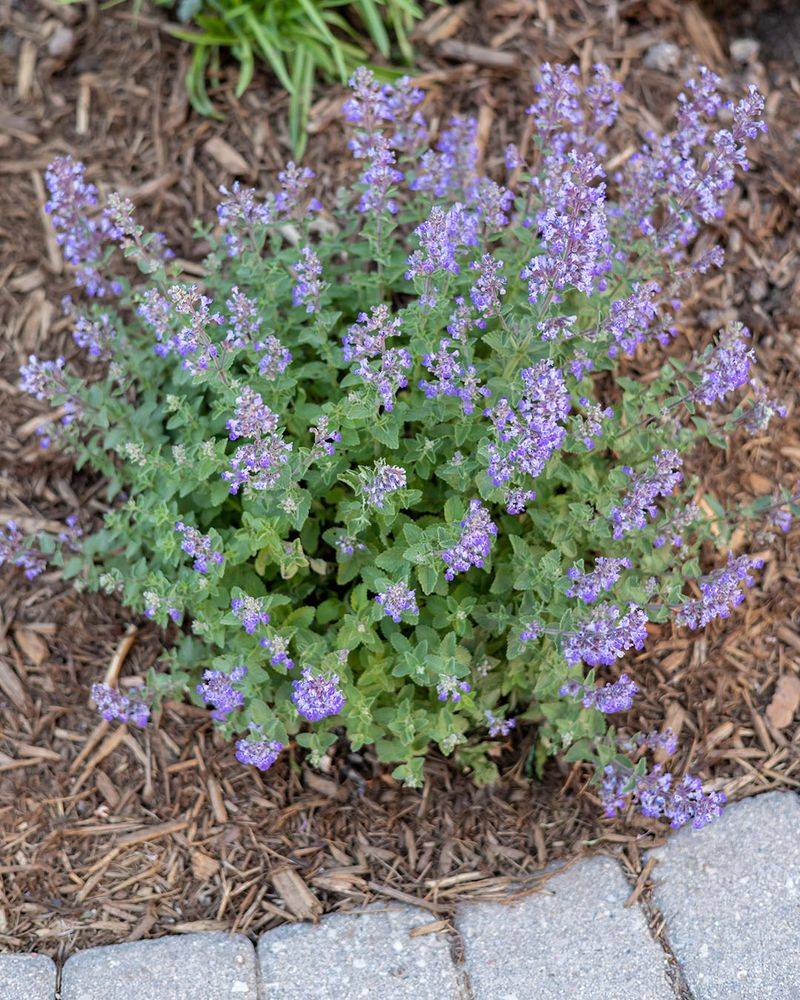
Catnip and catmint belong to the same plant family and share a similar musky, herbal scent that research has associated with repelling certain insects, including mosquitoes and flies, in controlled settings.
That reputation has made both plants increasingly popular in home gardens where people want a low-maintenance aromatic option near seating areas.
Before planting either one in an Arizona garden, though, there is one obvious caveat worth considering.
If cats visit your yard or patio, catnip will almost certainly attract them, sometimes enthusiastically enough to flatten the plant entirely.
Catmint tends to be slightly less irresistible to cats and also handles Arizona heat a bit more gracefully, especially varieties bred for warmer climates.
Both plants prefer well-draining soil and can tolerate dry conditions once established, which makes them reasonably suited to Arizona landscapes when placed thoughtfully.
Catmint in particular produces attractive lavender-purple flowers that bloom through much of the growing season, adding visual interest to a patio border or raised bed edge.
The scent is most noticeable when leaves are rubbed or brushed, so placing plants near a walkway or beside a seating area allows the fragrance to release naturally as people move past.
As with any aromatic herb, catmint and catnip work best as one part of a broader approach to reducing gnats and flies rather than as a standalone solution in an Arizona summer garden.
8. Sage Adds Dry-Climate Fragrance With Good Drainage
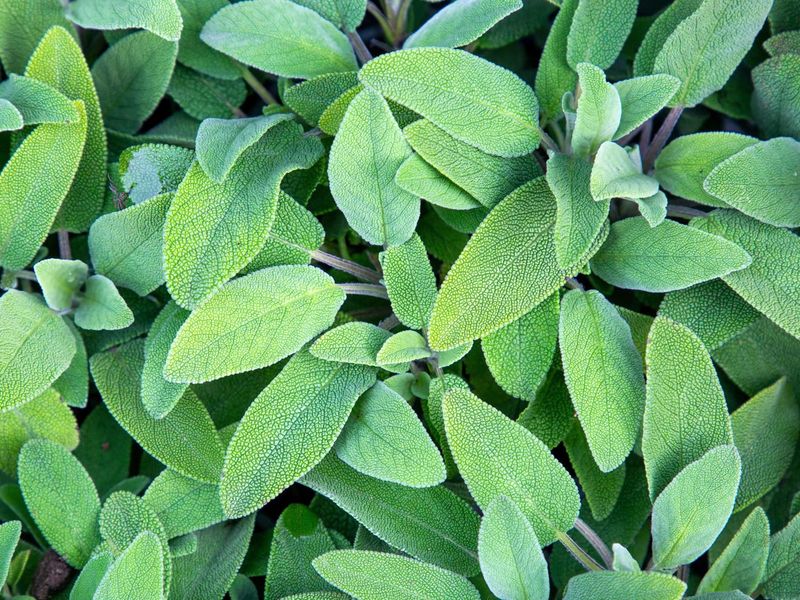
Sage has a bold, earthy fragrance that feels right at home in the dry heat of an Arizona summer. Its soft, silver-green leaves hold aromatic oils that release most noticeably when brushed, clipped, or warmed by the afternoon sun.
Gardeners who grow sage near patios or outdoor seating areas often appreciate the way its scent fills the air during warm evenings, and some flying insects seem to find the smell unpleasant enough to avoid the immediate area.
One of sage’s real advantages in Arizona is its natural preference for dry, well-draining conditions. It handles heat and drought far better than many other herbs and does not need frequent watering once established in a container or garden bed.
This drought tolerance actually helps with gnat prevention, since keeping soil on the drier side reduces the moist, organic conditions that fungus gnats rely on to breed and multiply near potted plants.
Culinary sage works well in raised beds or medium-sized containers along patio edges, where its compact, rounded shape fits neatly without taking up too much space.
Ornamental sage varieties, including some native and desert-adapted types found in Arizona landscapes, can grow larger and work well as informal borders or low shrubs near seating areas.
Trimming sage regularly keeps it from getting woody too quickly and encourages fresh, fragrant growth throughout the summer months in Arizona home gardens.