What It Really Means When Blue Jays Keep Visiting Your Florida Yard
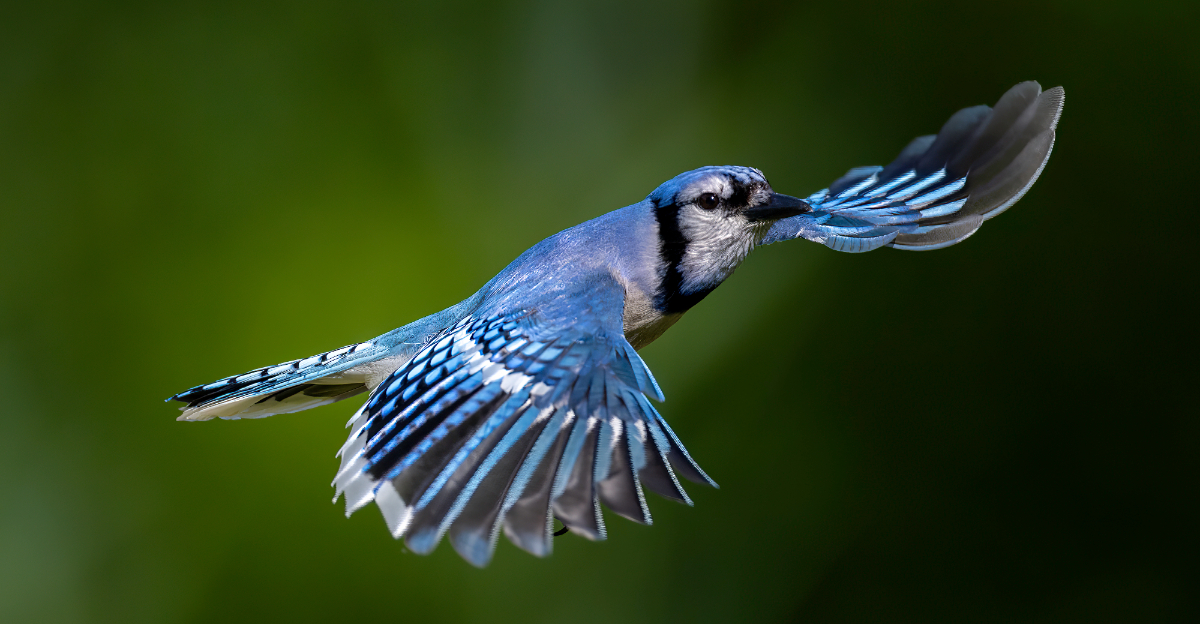
A blue jay in a Florida yard is hard to miss and harder to ignore. Loud, bold, and completely unbothered by whatever else is happening in the garden.
Most people either love them or find them exhausting, but very few stop to ask what their presence actually says about the yard they keep coming back to. Blue jays are not random.
They show up where specific conditions are met, where certain food sources exist, where the habitat has something worth returning to. A yard that blue jays visit consistently is telling you something real about what is growing there and what it supports.
The meaning behind a blue jay visit pulls from more than one direction. Natural history, Florida folklore, and Indigenous tradition across the Southeast all attach significance to this bird in ways that go deeper than most people expect.
What keeps bringing them back to your yard is worth understanding from both angles.
1. Blue Jays Usually Mean Your Yard Has Food Worth Checking
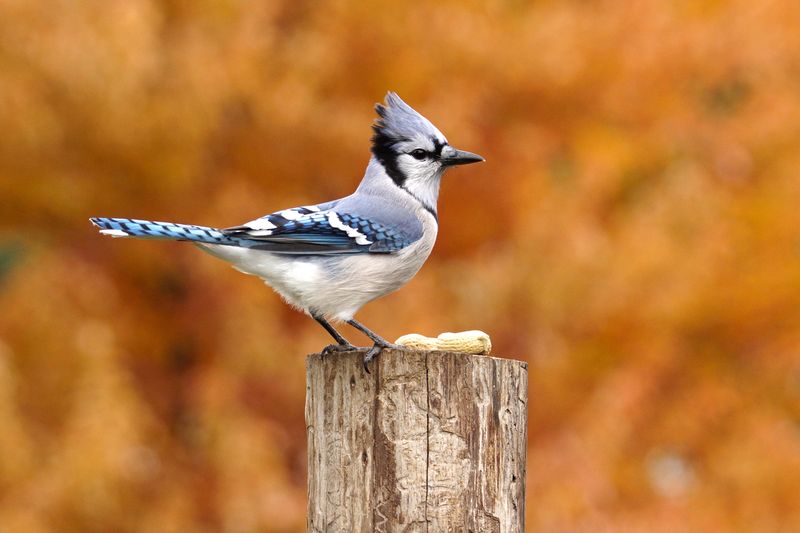
Picture a blue jay (Cyanocitta cristata) landing on your fence post, scanning the yard like it owns the place. That confident, calculating look is not random.
Jays are highly intelligent birds that read landscapes the way a forager reads a map, and if one keeps showing up, your yard has likely passed inspection.
Food is almost always the first reason. Blue jays eat a wide range of foods, including acorns, nuts, seeds, insects, berries, and fruit.
They will also visit feeders stocked with peanuts, sunflower seeds, or suet. According to Cornell Lab of Ornithology, blue jays are well known for caching acorns and other food items.
They sometimes carry several at once in their throat pouch and crop.
A jay that returns repeatedly is likely treating your yard as a reliable food source on its daily route. It may be harvesting acorns from an oak, checking a feeder at a predictable time, or scanning the ground for insects after rain.
Jays do not commit to one food type. If your yard offers variety, expect more visits.
Avoid letting seed pile up below feeders, since rotting seed attracts unwanted pests. Keep feeders clean and stocked with fresh food.
A yard that offers consistent, safe food will almost certainly attract blue jays more than once.
2. Repeated Visits Point To A Reliable Backyard Routine
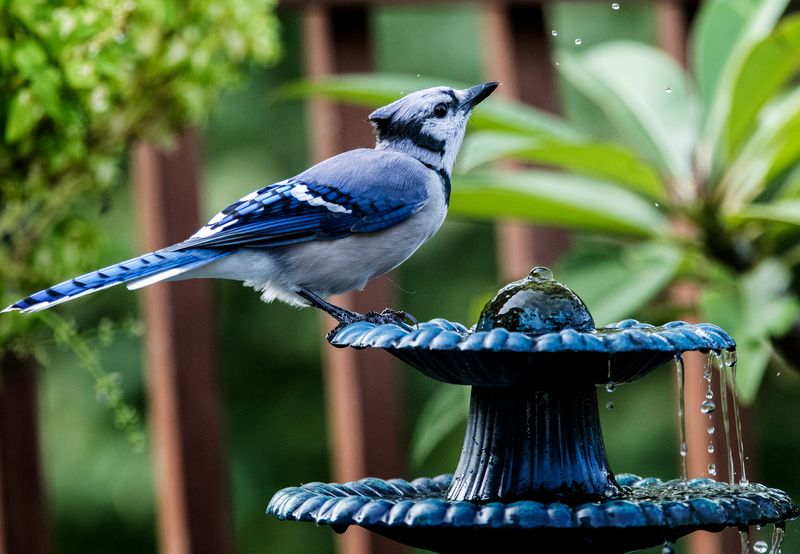
Every morning, like clockwork, the same blue jay appears at the edge of the yard. It checks the feeder, moves to the birdbath, then disappears into the oaks.
Sound familiar? Blue jays are creatures of habit when a yard proves dependable.
These birds have strong spatial memory and can learn the layout of a neighborhood with surprising precision. A yard with a feeder refilled at the same time each day can become part of their daily circuit.
So can a birdbath with fresh water or an oak that drops acorns on a predictable schedule. Repeated visits often mean your yard has earned a regular spot on that route.
Audubon notes that blue jays are non-migratory across much of their range, meaning the same individual bird may visit your yard for months or even years. This is not the bird becoming tame or seeking human connection.
Your Florida Garden Changes Every Week. Your Plan Should Too.
Gardening in Florida changes quickly throughout the season. Every Friday you’ll receive a simple weekly plan showing exactly what to plant, prune, fertilize, harvest, and protect so you never miss the right timing.
It is simply responding to a reliable environment.
Pay attention to timing, flight direction, and behavior during each visit. Does the jay always arrive from the east?
Does it leave toward a specific tree line? These patterns can tell you a lot about where it nests and what it values in your yard.
Keeping a simple notebook or phone log of visit times and behaviors can help you understand what your yard offers and what might make it even better for wildlife.
3. Loud Calls Often Signal Territory Or Alarm
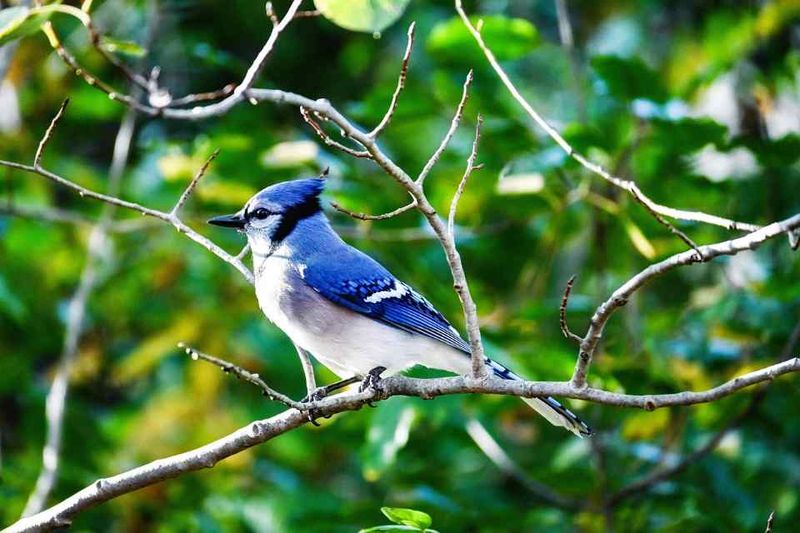
A sharp, piercing call from the oak tree is often the first sign a blue jay is nearby. That sound is not just noise.
Blue jays are among the most vocal birds in North America, and their calls carry real information for other birds in the area.
Blue jays call for several reasons. They may be defending territory, staying in contact with a mate or group, warning other birds about a nearby predator, or responding to a hawk passing overhead.
Cornell Lab of Ornithology documents that blue jays will mob predators like red-tailed hawks, barred owls, and even domestic cats. They call loudly to alert other birds and drive the threat away.
A jay calling from your yard does not mean it is aggressive toward you. Most alarm calls are directed at perceived threats in the environment, not at people standing nearby.
If you notice a jay calling repeatedly while looking upward or toward a specific tree, scan that area carefully. There may be a hawk perched nearby or a snake moving through the brush.
Loud, repeated visits are worth observing with patience. Watch where the bird looks, how long it calls, and whether other birds in the yard go quiet or scatter.
That response tells you the jay is doing what it does naturally: acting as a vocal, observant presence in a shared bird community. Keeping cats indoors or supervised can reduce unnecessary alarm behavior in your yard.
4. Oak Trees Make A Yard More Attractive To Blue Jays
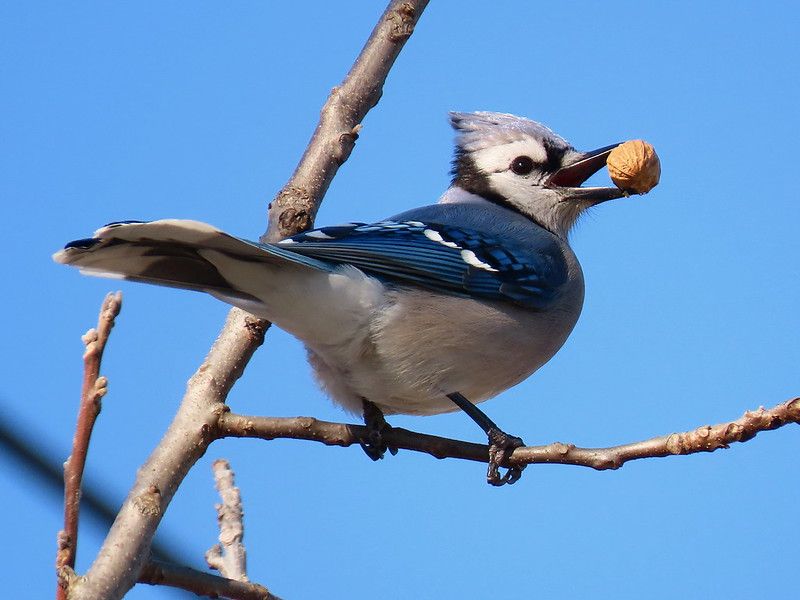
An oak tree in the yard is practically a welcome sign for blue jays. Of all the plants that can attract these birds, oaks tend to be the most consistent draw, especially when acorns are present and ready to harvest.
Blue jays have a well-documented relationship with oaks. According to Cornell Lab of Ornithology, a single blue jay can carry up to five acorns at a time using its throat pouch and bill.
It may also cache thousands of acorns each season. Many of those cached acorns are never retrieved, which means blue jays have played a real role in spreading oak populations across eastern North America over time.
Live oaks, water oaks, and laurel oaks are common in this state and all produce acorns that blue jays will readily harvest. Yards with mature oaks tend to see more consistent jay activity, especially in fall and early winter when acorn production peaks.
Even if your oak is young, jays may still explore the branches for insects, caterpillars, or shelter.
Cover matters too. Oaks with dense canopies give jays a safe place to land, assess the yard, and move between feeding areas without staying exposed.
You do not need an oak to attract blue jays, but having one makes longer, more regular visits much more likely. Native oaks also support a wide range of insects, which adds even more food value for visiting birds.
5. Feeders Can Turn Quick Visits Into Daily Stops
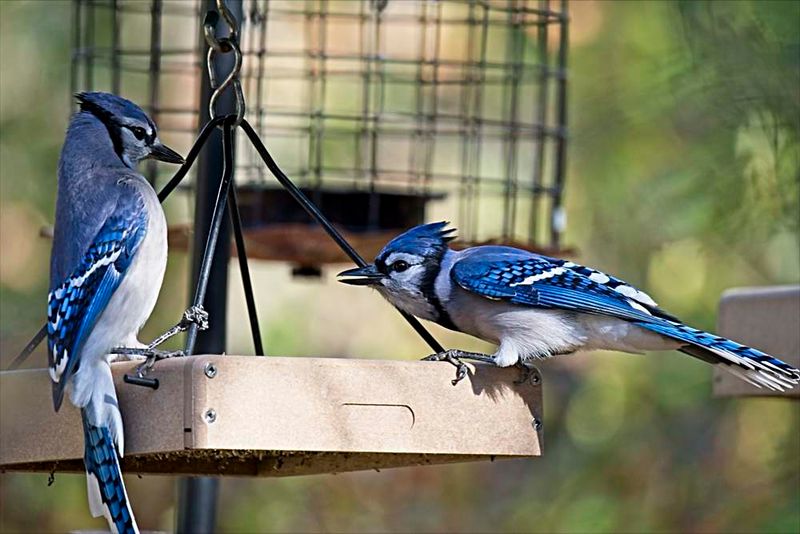
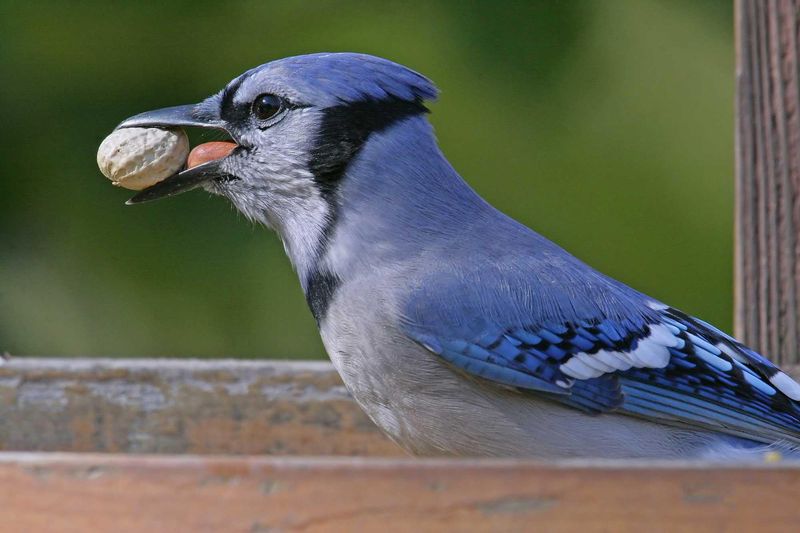
One peanut is all it takes. A blue jay that finds a well-stocked feeder does not forget the location.
Feeders can shift a jay from an occasional passerby into a daily visitor with a very clear purpose.
Blue jays are drawn to platform feeders and hopper-style feeders that can hold larger food items. Whole or shelled peanuts are a strong attractant.
Sunflower seeds, suet, and corn are also accepted. Because jays are larger birds, they may scatter smaller seed while searching for preferred items, which can draw other species to feed below.
This is not aggression. It is simply how they forage.
Responsible feeder management matters for bird health. Clean feeders every one to two weeks with a mild soap solution, and rinse thoroughly before refilling.
Remove any wet, clumped, or spoiled seed promptly. Seed that sits too long below a feeder can develop mold, which is harmful to birds.
Avoid offering bread, salty snacks, or processed foods of any kind.
Feeders are not required to attract blue jays, but they can make visits more frequent and easier to observe. If you enjoy watching jays up close, a platform feeder placed within view of a window is a practical option.
Position it near a tree or shrub so the bird has a safe landing spot before approaching. Fresh food, a clean surface, and a predictable location are what keep blue jays returning reliably.
6. Dense Shrubs Give Them Cover Between Flights
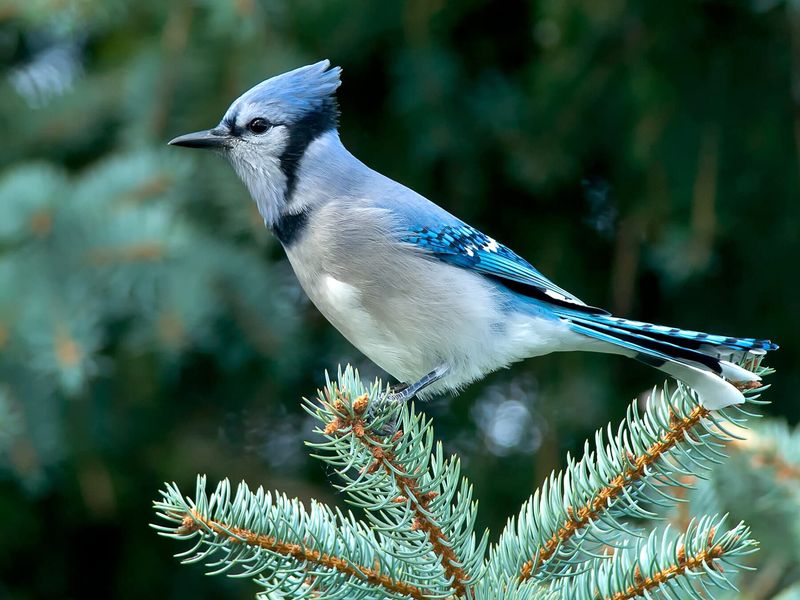
Not every yard feels safe enough for a blue jay to linger. Open, manicured lawns with no nearby cover can discourage birds from spending much time on the ground or between feeding stops.
When shrubs, hedges, and layered plantings are present, jays have somewhere to pause, watch, and move without staying exposed.
Cover serves a protective function for birds. Dense shrubs let a jay retreat quickly if a hawk or cat enters the yard.
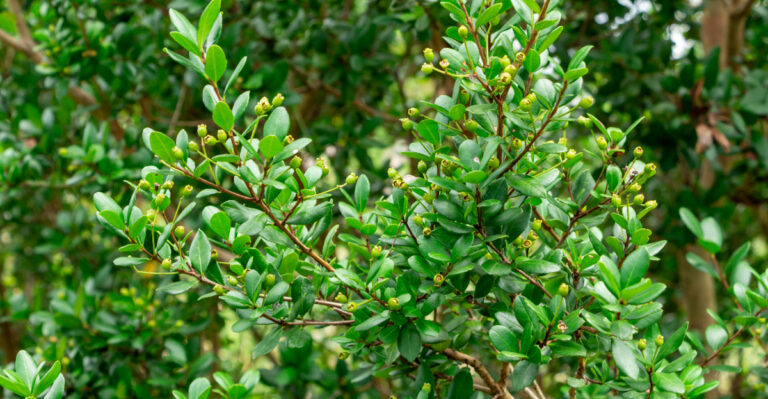
Native shrubs like beautyberry (Callicarpa americana), firebush (Hamelia patens), and wax myrtle (Morella cerifera) provide cover. They also offer berries and insects that add food value.
UF/IFAS Extension and Florida-Friendly Landscaping resources consistently recommend layered plantings for supporting native wildlife.
A yard with trees, mid-level shrubs, and low groundcover creates the kind of structure birds feel comfortable moving through.
Blue jays tend to use this layered approach naturally, moving from a high perch to a mid-level shrub to the ground and back up again.
Open yards with no transition zones can feel exposed and may result in shorter, less frequent visits.
If your yard currently has mostly open lawn, adding a few native shrubs near your feeder or birdbath can make a noticeable difference. Start small and observe whether jay behavior changes over time.
Cover does not need to be elaborate. Even a single dense shrub near a feeding area gives a jay a reason to stay a little longer and return a little more often.
7. Paired Jays May Be Scouting A Nesting Area
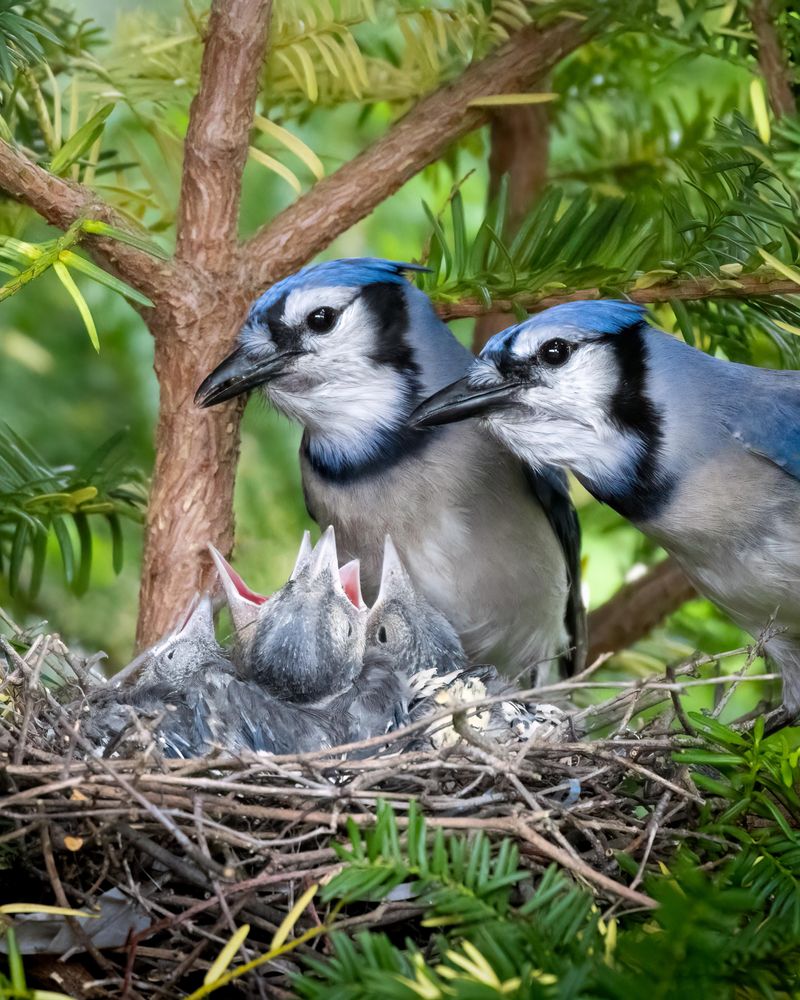
Spotting two blue jays moving through the yard together, especially in late winter or early spring, is worth paying attention to. A pair of jays exploring trees, checking shrubs, or moving through the same space repeatedly may be doing more than just foraging.
They could be assessing the yard as a potential nesting territory.
Blue jays typically breed between March and July across much of their range, though timing can vary by region.
According to Cornell Lab of Ornithology, blue jays build cup-shaped nests in the crotch or thick outer branches of a tree, often using twigs, grass, bark strips, and mud.
Both the male and female participate in nest building and territory assessment.
A pair visiting your yard does not guarantee they will nest there. They may simply be moving through an area that includes your yard as part of a larger territory.
However, if you see two jays repeatedly checking the same tree or shrub over several days, nesting behavior is a reasonable possibility.
If you suspect an active nest, observe from a comfortable distance and avoid pruning or disturbing nearby trees during the nesting season. Active nests and the birds that use them are protected under the federal Migratory Bird Treaty Act.
Do not attempt to move or remove a nest. If a bird appears injured or a nest is disrupted by weather or an accident, do not handle it yourself.
Contact a licensed wildlife rehabilitator through Florida Fish and Wildlife Conservation Commission for guidance.
8. The Real Meaning Comes From What Keeps Bringing Them Back
A blue jay that keeps returning to your yard is not arriving by accident. Every repeat visit reflects something real about what your yard offers, whether that is food, trees, water, cover, a safe routine, or seasonal opportunity.
That is the most grounded answer to what those visits actually mean.
Some people find personal significance in blue jays because they are bold, colorful, and hard to overlook. That kind of connection to nature is meaningful and worth honoring.
At the same time, the behavior of a returning jay is rooted in habitat quality and learned experience, not symbolic intention. Understanding both perspectives makes you a more observant and thoughtful wildlife watcher.
Ask yourself what your yard provides. Is there a feeder with reliable food?
A birdbath with clean water? An oak or native shrub that offers cover and forage?
These are the conditions blue jays respond to. Improving any one of them, even slightly, can shift occasional visits into a consistent, rewarding routine for both bird and observer.
Refresh birdbath water every few days to prevent mosquito breeding and keep it clean for visiting birds. If a jay ever appears unusually tame, disoriented, or unwell, do not attempt to handle it.
Contact a licensed wildlife rehabilitator or reach out to Florida Fish and Wildlife Conservation Commission for direction.
Responsible observation, a well-kept yard, and a little patience are the best tools for understanding and supporting the blue jays that choose to visit.