California Plant Enthusiasts Are Buzzing About This Rare Corpse Flower Bloom In San Francisco
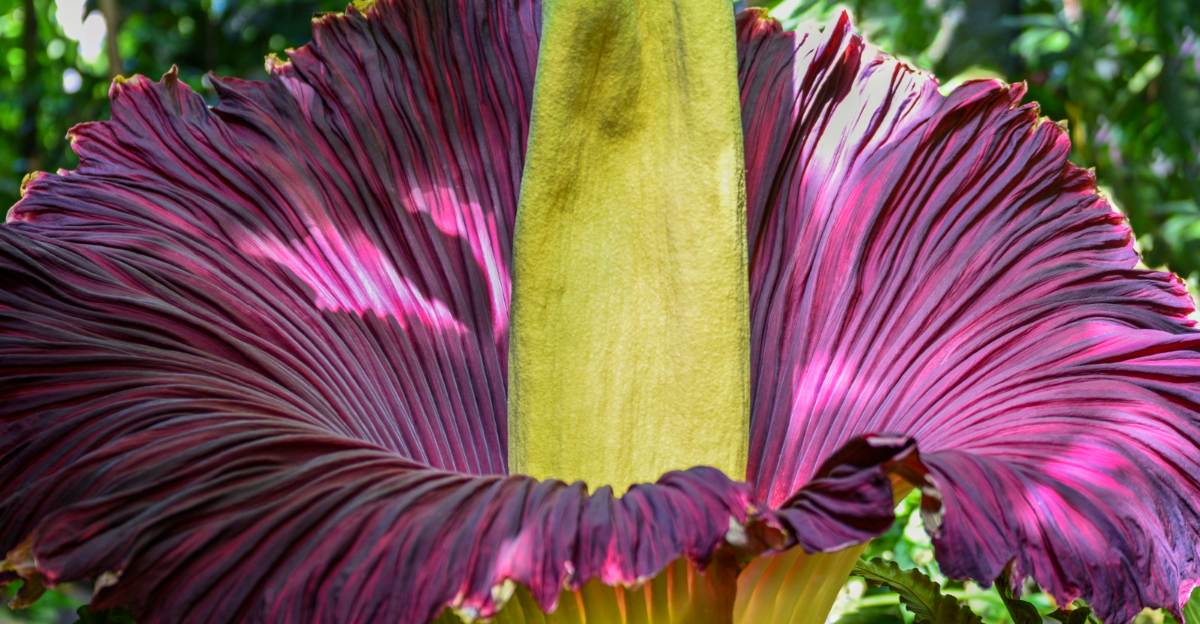
Something wonderfully weird is happening inside the Conservatory of Flowers in Golden Gate Park, and California plant lovers are not missing their chance to sniff the spectacle.
Scarlet, a rare corpse flower, is blooming in San Francisco, and yes, the nickname is much prettier than the smell.
Known scientifically as Amorphophallus titanum, or titan arum, this tropical giant comes from Sumatra’s rainforests and rarely puts on its dramatic show in cultivation.
When it finally opens, the peak moment can last only a day or two, which explains the rush.
With its towering shape, deep red interior, hidden tiny flowers, heat-producing spadix, and famously foul odor, this bloom is the kind of bizarre botanical event that turns plant people into very happy detectives.
1. Visitors Are Gathering At San Francisco’s Conservatory Of Flowers
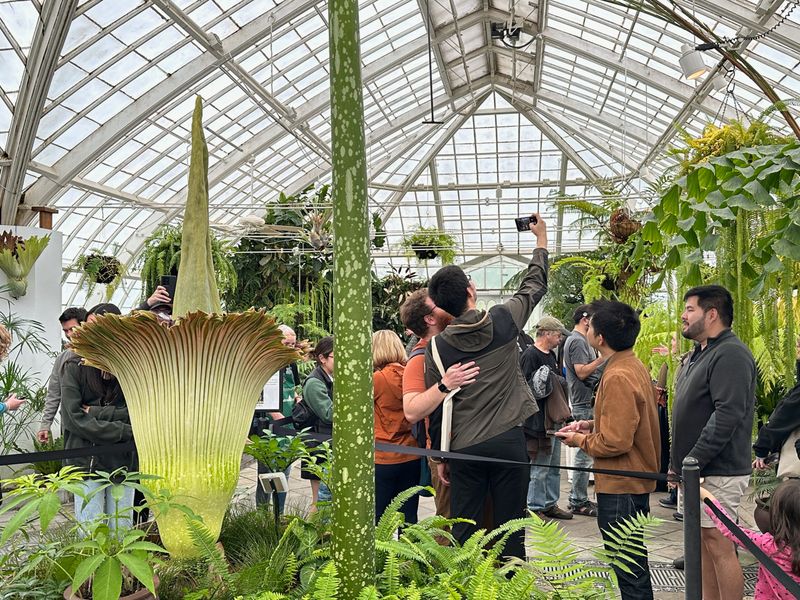
Visitors have been making their way to the Conservatory of Flowers in Golden Gate Park, and the mood feels more like a botanical event than a casual garden visit.
California plant lovers, curious families, and first-time visitors are all showing up with one goal in mind: catching a glimpse of the blooming titan arum before its brief window closes.
The Conservatory of Flowers, one of the oldest and most beloved wooden conservatories in the United States, has hosted rare botanical events before, but a corpse flower bloom tends to draw a special kind of crowd.
People arrive early, some before the doors even open, hoping to get close to the towering plant and experience the full sensory event firsthand. Staff members at the Conservatory often extend hours during a bloom so that more visitors can participate.
The atmosphere inside is a lively mix of amazement, laughter, and the occasional grimace as the smell hits for the first time.
For many San Francisco residents, this is their first encounter with a tropical plant of this scale blooming right in their own city.
Golden Gate Park becomes a destination for plant enthusiasts who might otherwise travel far to see something this unusual.
Moments like this remind California communities why public botanical gardens are such valuable and irreplaceable spaces.
2. This Giant Bloom Is Not Really One Flower
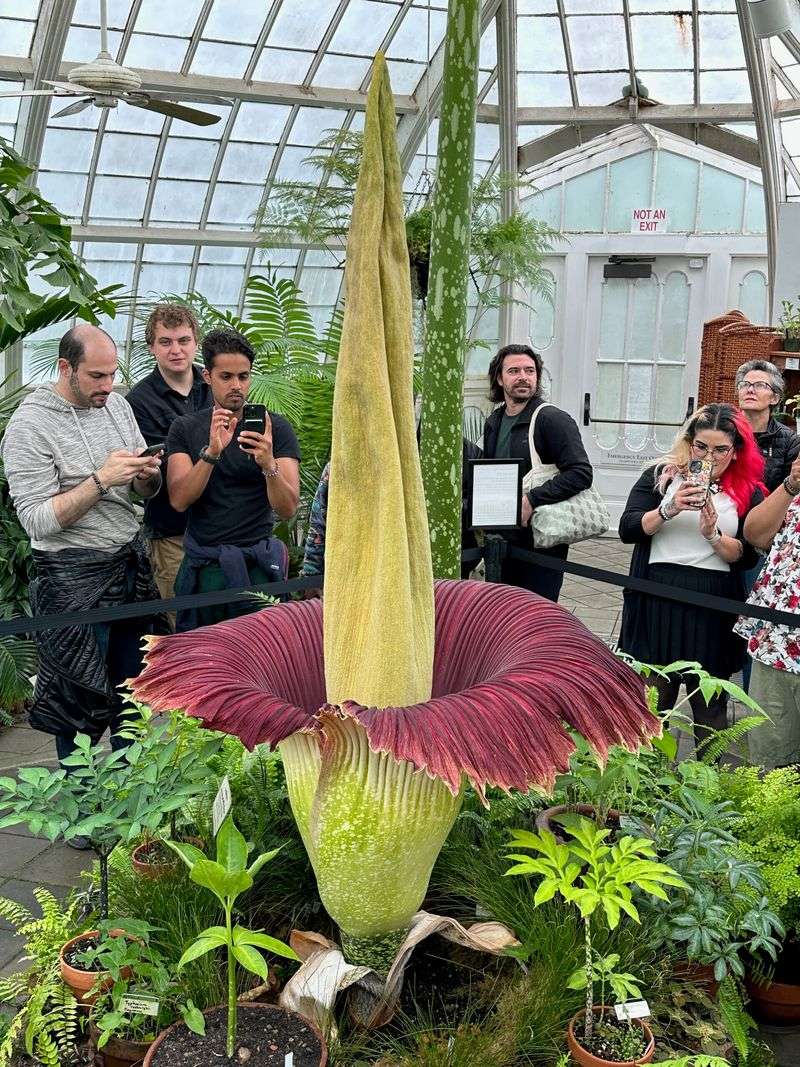
At first glance, the corpse flower looks like one enormous flower, and it is easy to understand why people assume that. The towering structure can reach over six feet tall, and its deep reddish-purple interior is dramatic and eye-catching.
But what visitors are actually looking at is an inflorescence, which is a cluster of many small flowers arranged along a central stalk called the spadix, all wrapped by a large modified leaf called the spathe.
The spathe is the pleated, skirt-like structure that opens outward during the bloom. It reveals a dark burgundy interior that some people compare to raw meat in both color and texture.
The spadix rises from the center like a tall column and is the part of the plant that produces heat and releases the bloom’s intense odor.
Your California Garden Changes Every Week. Your Plan Should Too.
Gardening in California changes quickly throughout the season. Every Friday you’ll receive a simple weekly plan showing exactly what to plant, prune, fertilize, harvest, and protect so you never miss the right timing.
Botanically speaking, Amorphophallus titanum produces two types of tiny flowers hidden near the base of the spadix: female flowers, which open first, and male flowers, which release pollen slightly later.
This timing helps prevent self-pollination and encourages cross-pollination between different plants.
Understanding this structure changes how you see the whole bloom. What looks like one dramatic flower is actually a highly organized biological system designed to attract specific insects and carry out reproduction in a very efficient, if unconventional, way.
3. The Show Only Lasts A Few Days
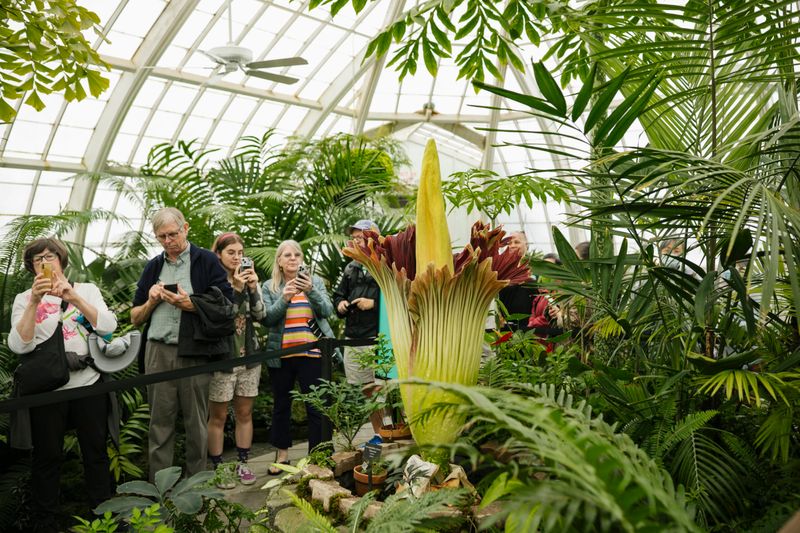
Blink and you might miss it. The corpse flower’s bloom is one of the most fleeting events in the plant world, with the spathe typically remaining fully open for only about 24 to 48 hours before it begins to collapse and close.
The smell is strongest during the first night of blooming, which is why many botanical gardens, including those in California, organize special evening viewing events so visitors can experience the peak of the bloom.
Before this brief flowering moment, the plant spends years building up energy. A corpse flower can take anywhere from seven to ten years or even longer to produce its first bloom, and subsequent blooms may be spaced several years apart.
All of that energy storage happens underground in a massive corm, which is a swollen underground stem that can weigh hundreds of pounds in mature plants.
Once the bloom collapses, the plant shifts out of its flowering phase. If pollination was successful, it may develop fruit over the following months.
If not, it eventually returns to building energy for a future bloom. For visitors in San Francisco, the urgency is real.
Checking the Conservatory of Flowers website or social media for bloom updates is the best way to plan a visit before the moment passes.
4. The Famous Stench Has A Purpose
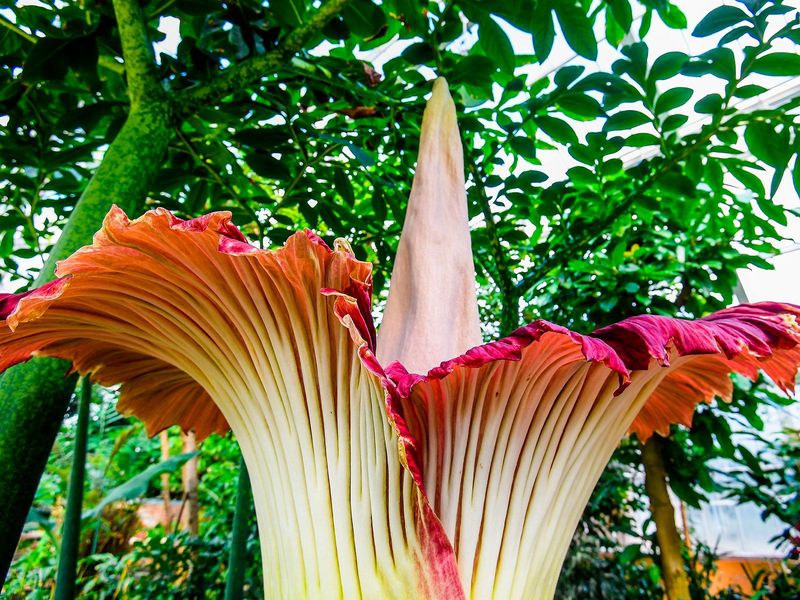
Few things prepare you for the smell of a blooming titan arum, and that reaction is exactly what the plant is counting on. The odor has been compared to rotting meat, old garbage, and sweaty gym clothes all at once.
To humans, it is deeply unpleasant. To the insects the plant is trying to attract, it is irresistible.
The corpse flower produces a blend of chemical compounds that mimic the scent of decaying organic matter, which draws in carrion beetles and flesh flies looking for a place to lay their eggs or feed.
These insects crawl inside the spathe and make their way to the tiny flowers at the base of the spadix. In the process, they pick up or deposit pollen, completing the pollination cycle the plant depends on.
The smell is the plant’s most powerful tool, and it only needs to work for a short time during that narrow bloom window.
Interestingly, the intensity of the odor tends to peak during the night and into the early morning hours of the first day of blooming. By the second day, the scent begins to fade as the male flowers open and the plant shifts its focus.
For California visitors who arrive on day two, the smell may be noticeably milder. Arriving on the first night, if the Conservatory allows it, gives you the full, unforgettable experience that plant enthusiasts talk about for years.
5. The Plant Warms Up To Spread Its Scent
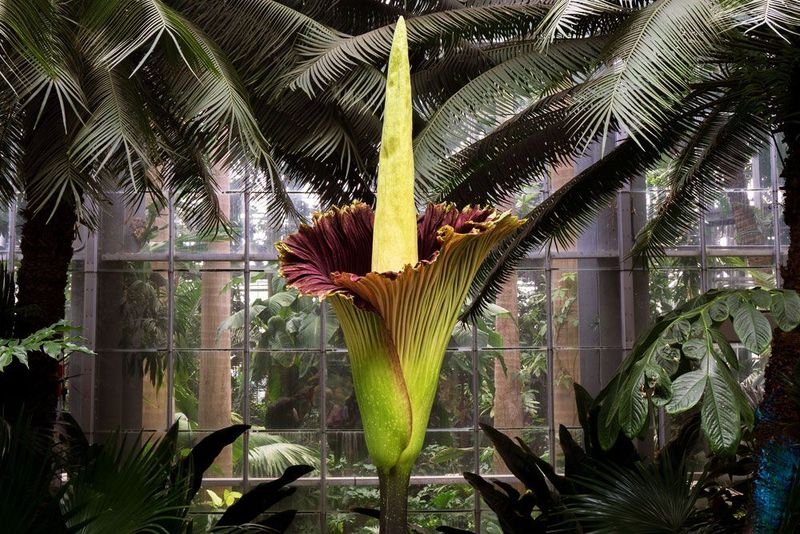
One of the most surprising things about the corpse flower is that it can actually raise its own temperature. During the bloom period, the spadix, the tall central column of the inflorescence, generates heat through a biological process called thermogenesis.
The temperature of the spadix can reach levels significantly warmer than the surrounding air, sometimes approaching human body temperature.
This heat serves a very specific purpose. Warmth helps volatilize, or release into the air, the chemical compounds responsible for the plant’s signature odor.
Essentially, the spadix acts like a natural diffuser, broadcasting the scent more effectively across a wider area to attract pollinators from greater distances.
In the dense rainforests of Sumatra where this plant originates, getting the attention of the right insects quickly and efficiently is critical during such a short bloom window.
The heat production is also thought to mimic the warmth of fresh carrion, making the illusion even more convincing for the insects the plant is trying to attract.
When visitors stand near the bloom and feel warmth radiating from the spadix, they are witnessing a remarkable example of plant biology in action.
For California plant enthusiasts who study unusual botanical adaptations, this thermogenic ability is one of the most fascinating aspects of the titan arum. It is a reminder that plants are far more dynamic and resourceful than they are often given credit for.
6. Tiny Flowers Hide Inside The Towering Bloom
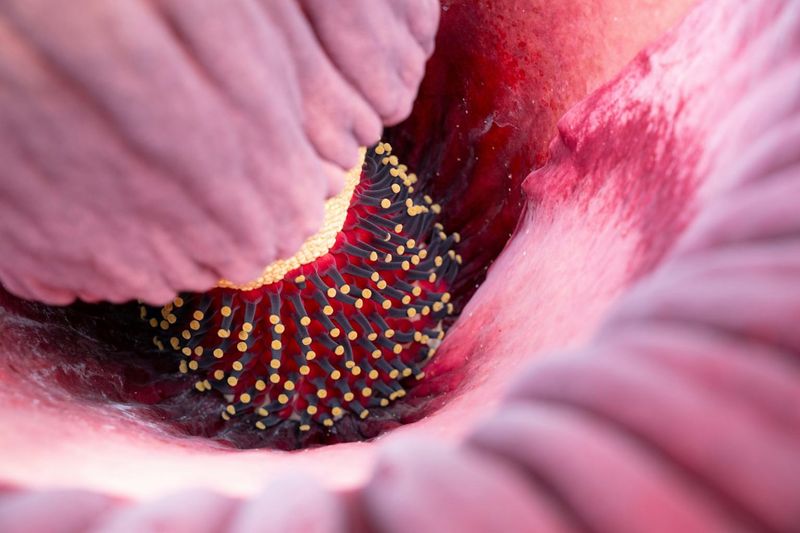
Tucked away at the very base of the spadix, hidden beneath the dramatic folds of the spathe, are the actual reproductive flowers of the titan arum. They are tiny, pale, and easy to miss entirely if you do not know to look for them.
Yet these small structures are the whole reason the plant goes through such an elaborate and energy-intensive bloom in the first place.
Female flowers open first, during the initial phase of the bloom, and they are ready to receive pollen from another titan arum plant. A day or so later, the male flowers open and begin releasing their own pollen.
This staggered timing is a built-in strategy to encourage cross-pollination rather than self-pollination, which generally produces stronger, more genetically diverse offspring.
Botanical garden staff sometimes assist with hand pollination when two plants are blooming at or near the same time, either at the same institution or by carefully transporting pollen between facilities.
In California, several botanical gardens maintain titan arum specimens, and coordinating between collections has helped produce seeds that support both research and conservation efforts.
For visitors peering inside the spathe at the Conservatory of Flowers, those tiny flowers represent something much bigger than they appear.
They are the plant’s entire reproductive investment, the reason for the smell, the heat, the towering structure, and the crowd gathered around it in San Francisco.
7. Its Story Begins In Sumatra’s Rainforests
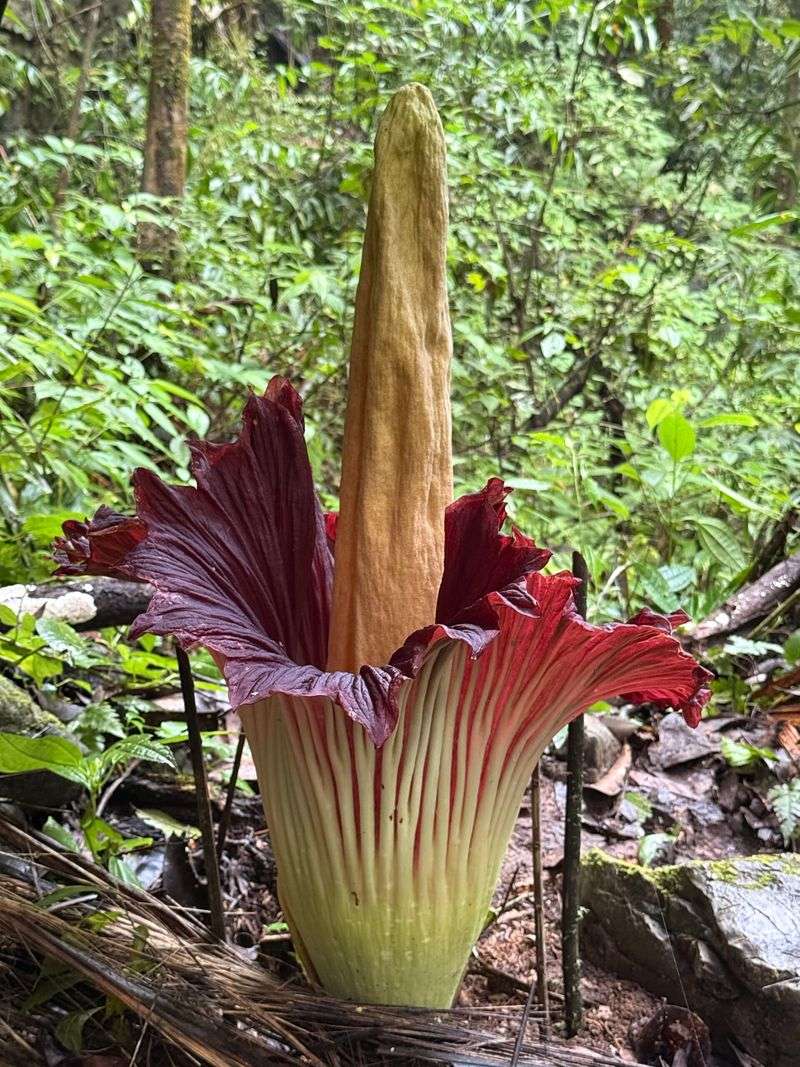
Far from the foggy streets of San Francisco and the manicured paths of Golden Gate Park, the corpse flower has its origins in the tropical rainforests of Sumatra, Indonesia.
In its natural habitat, it grows on steep, rocky slopes in lowland and hill forests, often in areas with rich, well-drained soil and filtered light beneath a dense tree canopy.
The climate there is warm and humid year-round, which is quite different from what most of California offers.
The plant was first described scientifically in the 1870s by Italian botanist Odoardo Beccari during an expedition to Sumatra.
His discovery caused significant excitement in the botanical world, and specimens were eventually cultivated in botanical gardens across Europe and later in North America.
Today, titan arum plants are grown in controlled greenhouse environments at botanical institutions around the world, including several in California.
Because it is not native to California or anywhere in North America, every bloom event at a place like the Conservatory of Flowers is the result of careful, dedicated horticultural work.
Growing a tropical rainforest plant in San Francisco requires replicating conditions that are very different from the local climate.
Growers monitor soil composition, humidity, temperature, and light levels closely over many years. When a bloom finally happens, it represents not just a botanical event but a genuine achievement by the people who tend these remarkable plants.
8. Wild Corpse Flowers Are Growing Rarer
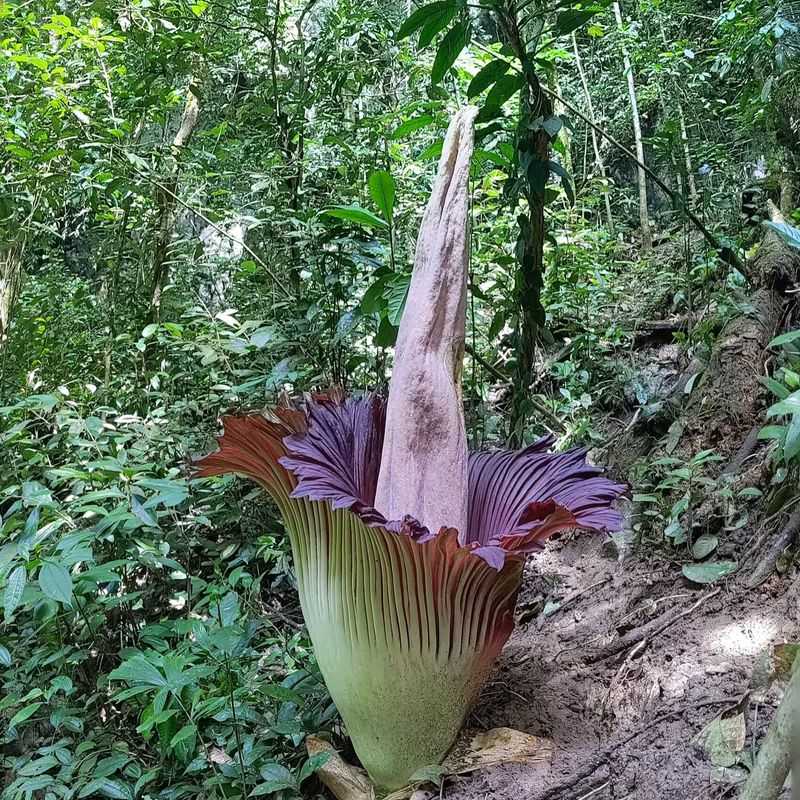
While San Francisco visitors line up to see a blooming titan arum at the Conservatory of Flowers, wild populations of this plant in Sumatra face serious pressure from habitat loss.
Sumatran forests have been significantly reduced over recent decades due to agricultural expansion, logging, and land conversion.
The corpse flower depends on specific forest conditions to survive, and as those habitats shrink, so does the number of plants growing in the wild.
The species is currently listed as endangered, meaning wild populations face serious pressure if habitat loss and other threats continue.
Botanical gardens play an increasingly important role in maintaining living collections of titan arum outside of its native range.
These collections serve as a kind of insurance, preserving genetic material and supporting research into the plant’s biology and reproductive needs.
California botanical institutions that grow and study Amorphophallus titanum contribute to a broader global network of conservation-minded horticulture.
When a bloom occurs and seeds are successfully produced through pollination, those seeds may be shared between institutions to help maintain healthy, genetically diverse populations in cultivation.
For the plant enthusiasts gathering in San Francisco right now, the excitement of watching a bloom is also connected to something more meaningful.
Appreciating rare plants up close has a way of turning casual curiosity into genuine support for the conservation work that helps protect them in the places where they naturally belong.