Arizona Native Plants That Thrive In July Heat With No Extra Water
Water does not always end up where you expect after a summer storm. It can pour off the roof in a steady stream, soak one small area, and leave the rest of the yard almost untouched.
Many homeowners notice those spots are difficult to landscape because some plants struggle while others seem perfectly happy.
It is easy to think extra water is always a good thing, but rooftop runoff creates unique conditions. The soil can go from very dry to very wet in a short time, especially during the monsoon season.
Not every plant can handle those sudden changes without showing signs of stress.
Some plants are naturally much better suited to these conditions than others. In Arizona, choosing the right varieties can turn those tricky runoff areas into attractive parts of the landscape instead of constant problem spots.
A smart planting choice can save time, water, and plenty of frustration over the years.
1. Desert Marigold Keeps Blooming Through Long Dry Spells
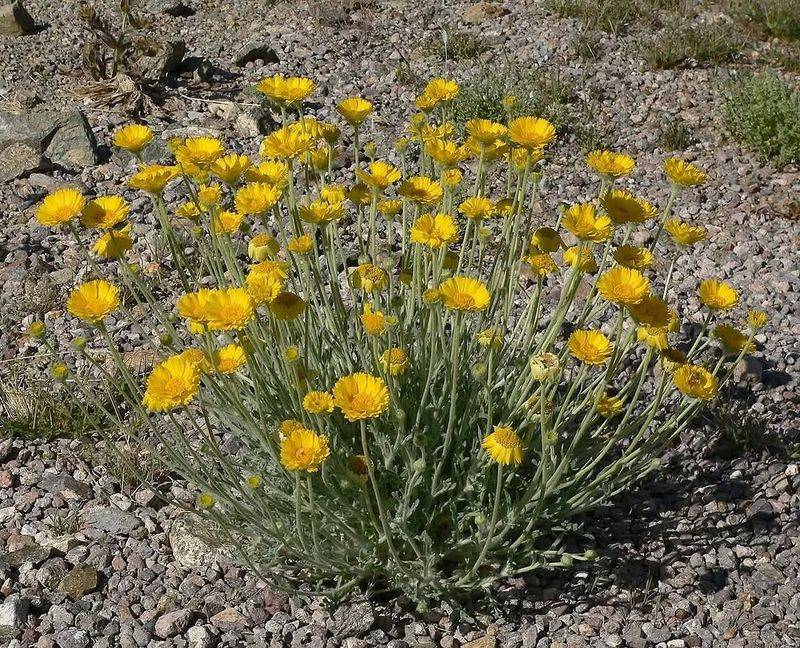
Bright yellow flowers in July heat sounds impossible, but Desert Marigold pulls it off without breaking a sweat. Baileya multiradiata pushes out cheerful blooms even when rainfall is weeks away.
Most flowering plants would have shut down completely by now.
Established plants handle dry spells remarkably well. Rocky, fast-draining soil actually suits them better than rich garden beds.
Overwatering causes more problems than drought ever will with this plant.
Gardeners in the low desert region often use Desert Marigold along dry pathways or rocky slopes. It fills in bare spots naturally and reseeds itself over time.
One plant can quietly become a small colony across a few seasons.
Height stays modest, usually between one and two feet. That compact size makes it easy to pair with taller shrubs without overcrowding.
Good airflow around the plant helps it stay healthy through humid monsoon stretches.
Pollinators visit the blooms regularly throughout summer. Bees and butterflies show up even on the hottest afternoons.
Wildlife activity around Desert Marigold makes any yard feel more alive and connected to the surrounding landscape.
Planting in fall gives roots time to settle before summer arrives. Spring-planted specimens can also establish well with occasional deep watering during their first season.
After that first year, supplemental water is rarely needed to keep them thriving.
2. Brittlebush Adds Bright Color Without Regular Watering
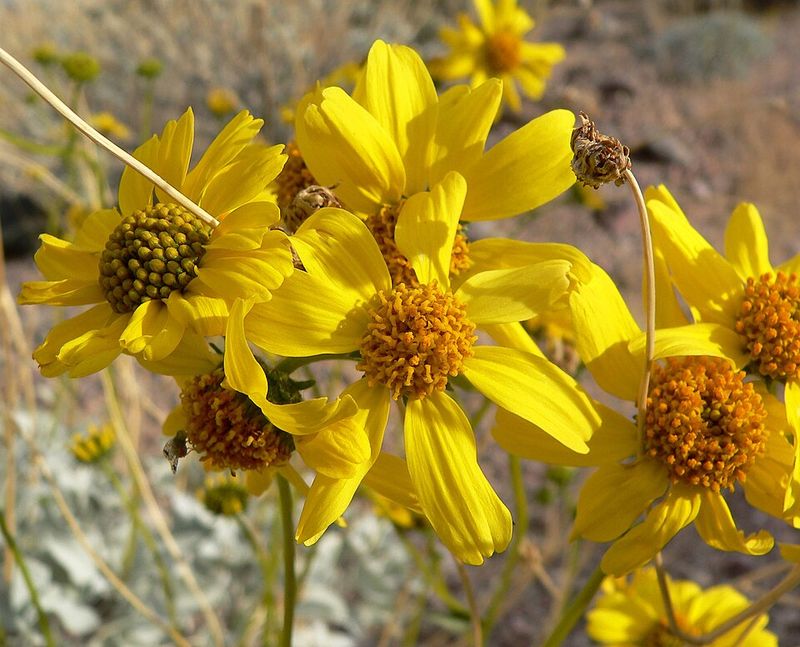
Walk through any dry wash in the Sonoran region during spring and you will spot Brittlebush everywhere. Encelia farinosa is almost impossible to miss with its silvery leaves and golden flower stalks.
By July, the blooms are gone, but the plant is far from finished.
Summer brings a different kind of beauty to Brittlebush. Leaves turn pale and almost white to reflect intense sunlight.
Some plants drop leaves entirely during the driest stretches, which is completely normal and not a sign of trouble.
Root systems go surprisingly deep for a small shrub. That depth lets the plant tap into soil moisture long after the surface has dried out completely.
Your Arizona Garden Changes Every Week. Your Plan Should Too.
Gardening in Arizona changes quickly throughout the season. Every Friday you’ll receive a simple weekly plan showing exactly what to plant, prune, fertilize, harvest, and protect so you never miss the right timing.
Extra irrigation during July can actually stress the plant rather than help it.
Size stays manageable at roughly two to four feet tall and wide. Rounded mounding shape looks natural in desert-style landscapes.
Older woody stems can get scraggly, but a light cutback after bloom season refreshes the plant quickly.
Hummingbirds and native bees use Brittlebush during bloom season. Even in summer, the dense foliage offers shade and shelter for small insects and lizards.
Yards with Brittlebush tend to attract noticeably more wildlife year-round.
Sandy or gravelly soil works best for long-term health. Heavy clay holds too much moisture and leads to root problems over time.
Plant on a slight slope or mounded area to encourage proper drainage throughout the year.
3. Fairy Duster Stays Strong Through Intense Summer Heat
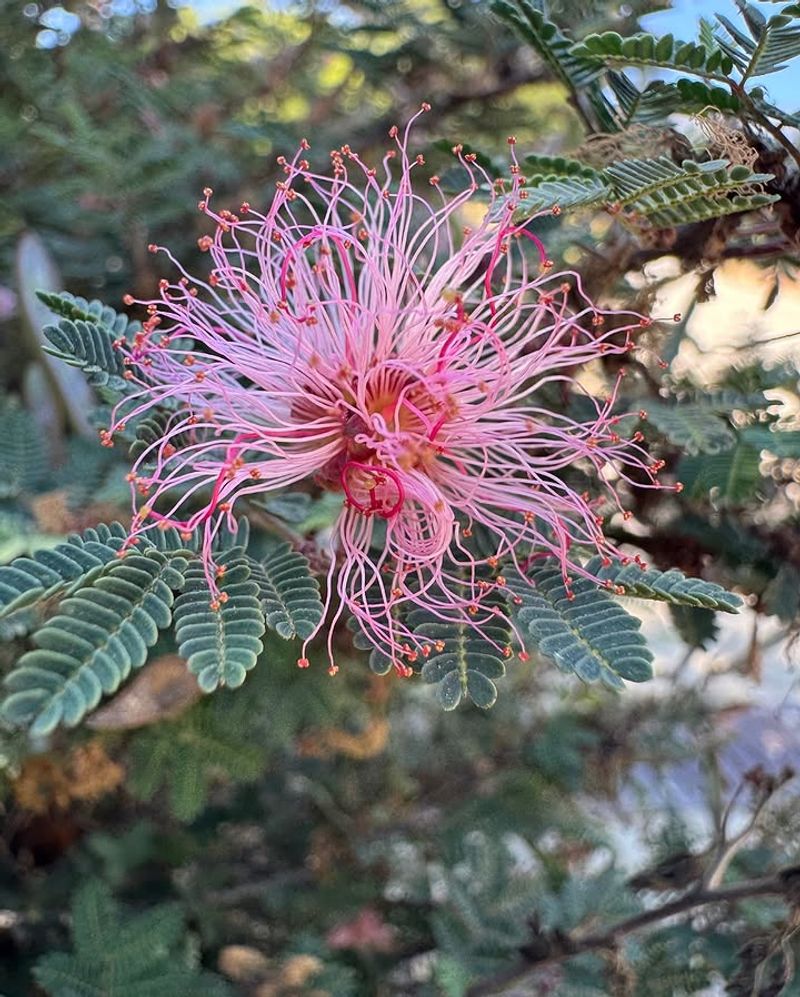
Soft pink puffball blooms on a plant that handles scorching heat without complaint. Calliandra eriophylla is one of those surprises that catches people off guard the first time they see it.
Nothing about its delicate appearance suggests it can handle July temperatures past 108 degrees.
Fairy Duster grows low and spreading, usually staying under three feet tall. That low profile keeps it out of the worst wind and helps it hold moisture near the base.
Roots spread wide rather than deep, anchoring well in rocky desert soil.
Blooming happens in waves, often triggered by rain or a drop in temperature. After monsoon storms roll through the region, fresh blooms can appear quickly.
A well-established plant rewards even small amounts of rainfall with a burst of color.
Hummingbirds target the fluffy flowers aggressively during peak bloom. Native bees and butterflies also visit regularly.
Having Fairy Duster near a window or patio means constant wildlife activity to watch through the hottest part of summer.
Full sun works best for strong growth and reliable flowering. Partial shade can cause the plant to stretch and become leggy over time.
Open, exposed spots with good airflow are ideal for keeping it compact and healthy.
Established plants need almost no attention in July. Skip the hose unless you are in a stretch of extreme heat with zero monsoon activity.
Drought tolerance is genuinely impressive once roots have had a full season to settle in.
4. Creosote Bush Thrives In Dry Soil And Scorching Temperatures
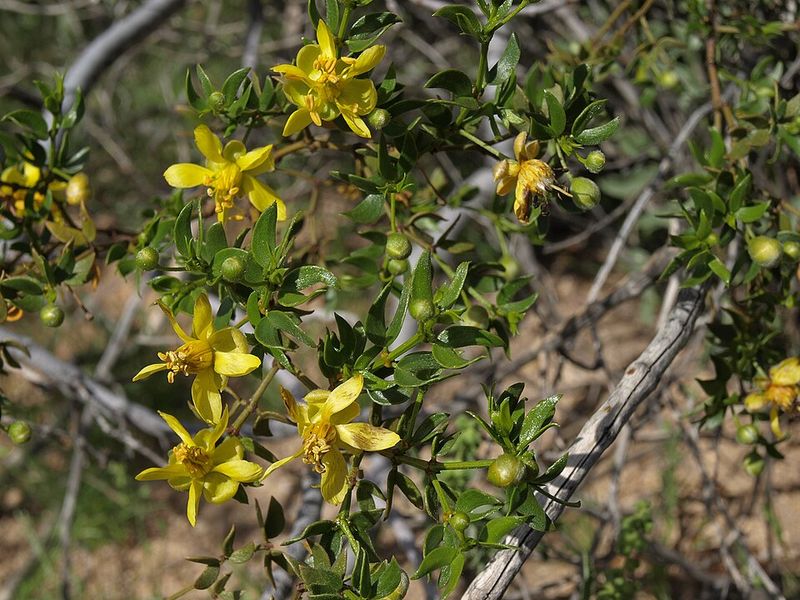
Few plants on earth are as well-adapted to heat and drought as Creosote Bush. Larrea tridentata has been surviving in low desert environments for thousands of years.
Waxy, resin-coated leaves reduce water loss dramatically. That coating also gives the plant its distinctive smell, especially noticeable right after rain.
Many people in the desert Southwest consider that scent one of the most comforting smells in nature.
Small yellow flowers appear after rain events, even brief ones. Fuzzy white seed pods follow quickly and scatter easily on the wind.
Wildlife from insects to small mammals rely on Creosote Bush throughout the year for food and shelter.
Root systems spread wide and release chemicals that limit competition from nearby plants. Spacing in the wild looks almost intentional because of this.
In a yard setting, give each plant enough room to develop fully without crowding.
Growth is slow, which is worth knowing before planting. Expect gradual development over several years rather than quick results.
Patience pays off because a mature Creosote Bush becomes a nearly indestructible anchor plant in any desert landscape.
No supplemental water is needed once established, even in July. Rocky or sandy soil is preferred.
Heavy irrigation causes more harm than drought ever will with this resilient, ancient shrub.
5. Globe Mallow Thrives With Minimal Water In Summer
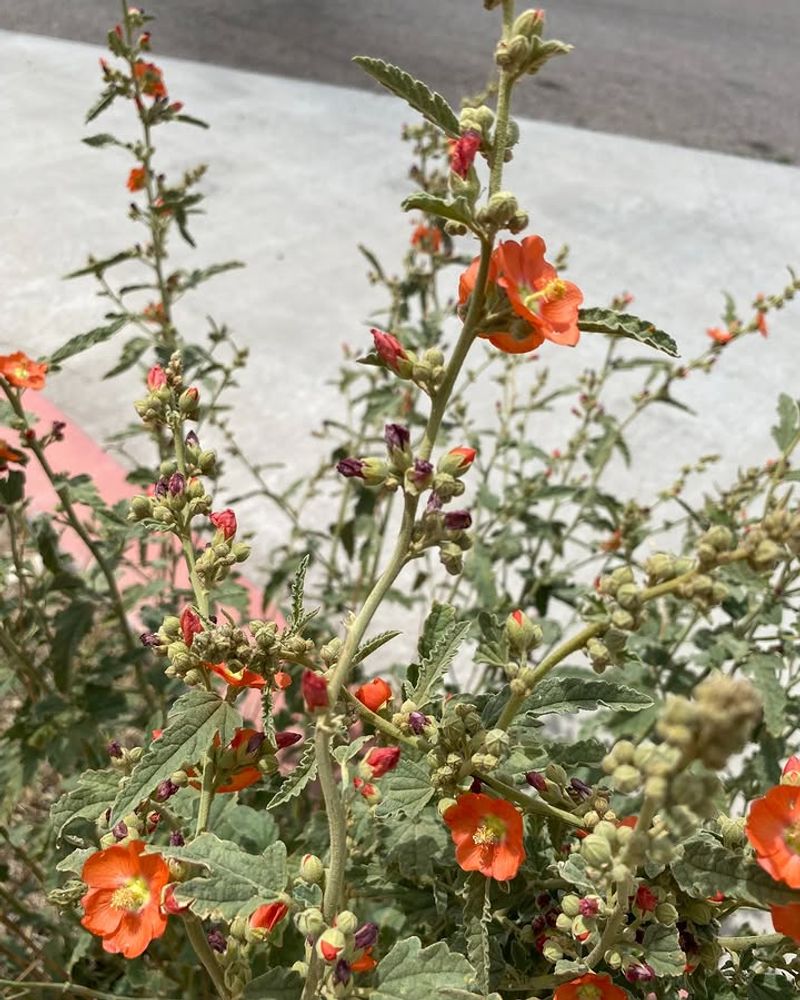
Burnt orange flowers rising up through dry rocky soil in the middle of summer. Globe Mallow, known scientifically as Sphaeralcea ambigua, is one of the most reliable bloomers in the low desert during extreme heat.
Colors range from deep orange to soft peachy pink depending on the variety.
Plants grow quickly after establishment and can reach three feet tall. Stems are covered in fine hairs that help reduce moisture loss.
That fuzzy texture is easy to feel when you brush against the plant in the garden.
Blooming often slows during the absolute peak of summer heat. Once monsoon moisture arrives, fresh flowers push out again rapidly.
That rhythm of rest and renewal makes Globe Mallow feel almost responsive to seasonal changes.
Bees absolutely love this plant. Native bee species in particular visit Globe Mallow blooms consistently through the warm season.
Placing it near a seating area gives you a front-row view of all that pollinator activity.
Soil drainage matters a lot for long-term health. Standing water after monsoon storms can cause root stress.
Raised beds or naturally sloped areas work well for keeping roots in good shape through the wet season.
Pruning back hard in late winter encourages dense, bushy new growth each spring. Skip the pruning and plants can get woody and open.
Either way, Globe Mallow bounces back reliably and continues performing with very little help from the gardener.
6. Chuparosa Handles Summer Heat While Attracting Hummingbirds
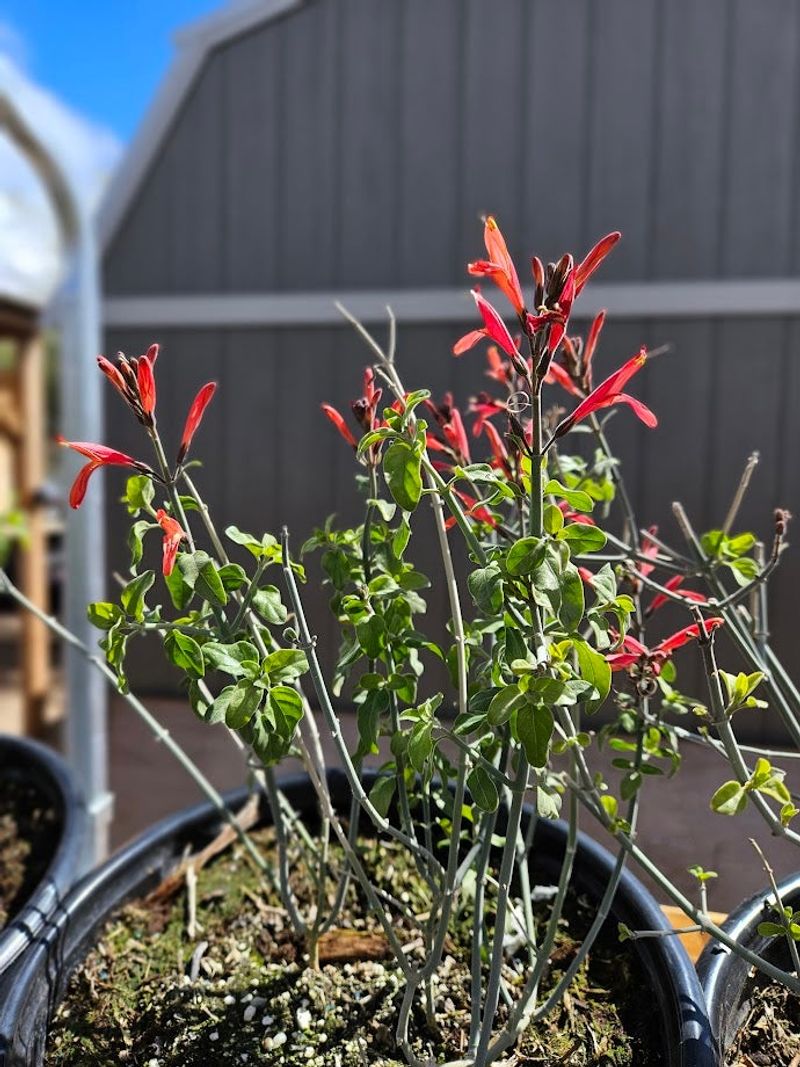
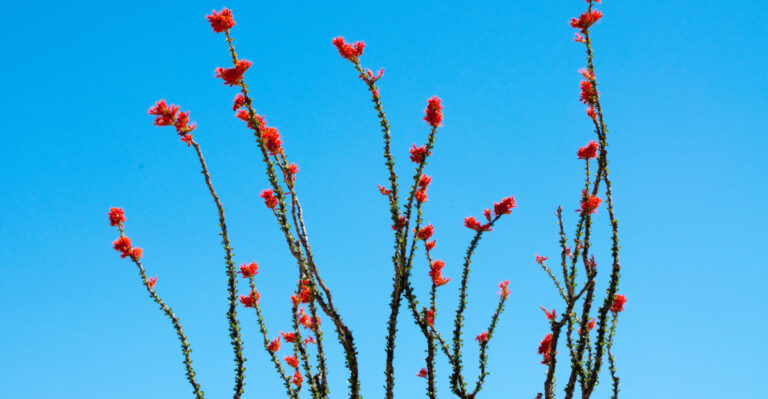
Hummingbirds find Chuparosa before most gardeners even know it exists. Justicia californica produces bright red tubular flowers that are practically designed for hummingbird feeding.
Blooming can happen year-round in mild desert winters, but the plant stays reliably active through summer heat as well.
Leafless or nearly leafless stems during the hottest months are completely normal. Chuparosa drops foliage to reduce water demand when heat peaks.
Stems stay green and photosynthetically active even without leaves, which is a clever survival strategy.
Shrubs typically reach four to five feet tall and wide. Arching branches give it a soft, informal shape that fits naturally in desert gardens.
Avoid pruning during active heat since the plant needs every bit of energy it has during summer.
Established plants need almost no water in July. A deep soak every few weeks during extended dry spells is acceptable.
More than that can cause problems in heavy soil that holds moisture too long.
Orioles and warblers also visit Chuparosa during migration seasons. Even in July, hummingbird traffic around a blooming plant is impressive to watch.
Placing it near a window or shaded sitting area makes the most of all that wildlife activity.
Full sun to light shade both work well for this shrub. Rocky bajada soil and sandy washes are its natural habitat.
Replicating those conditions in your yard gives you the best chance at a long-lived, low-maintenance plant that rewards you season after season.
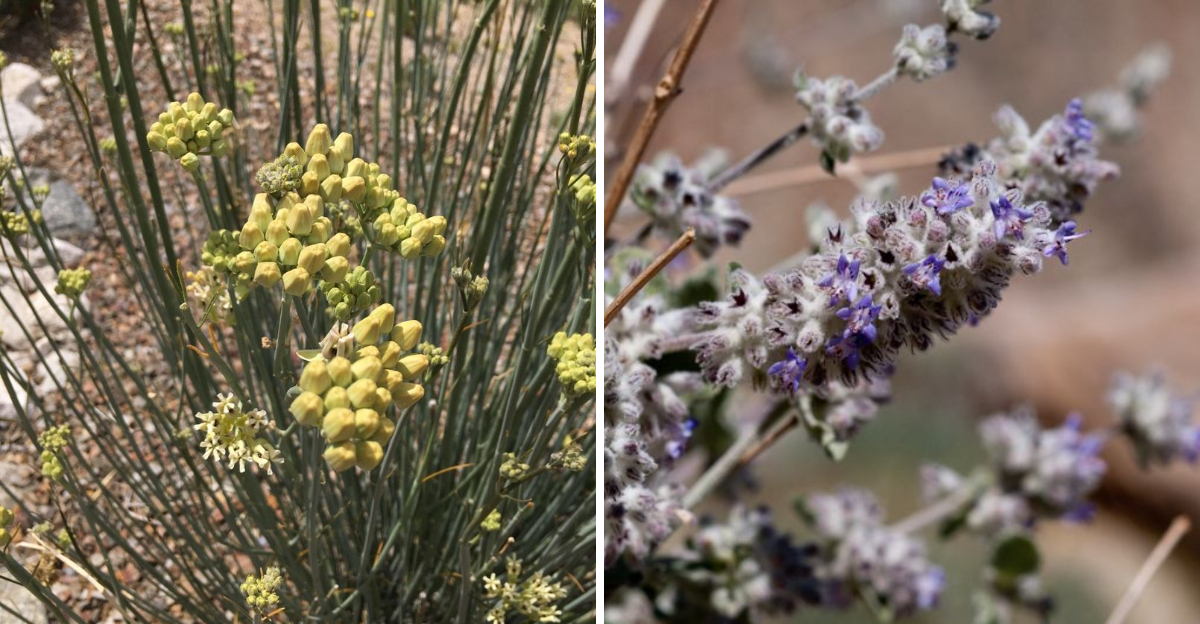
7. Desert Milkweed Supports Pollinators Without Frequent Watering
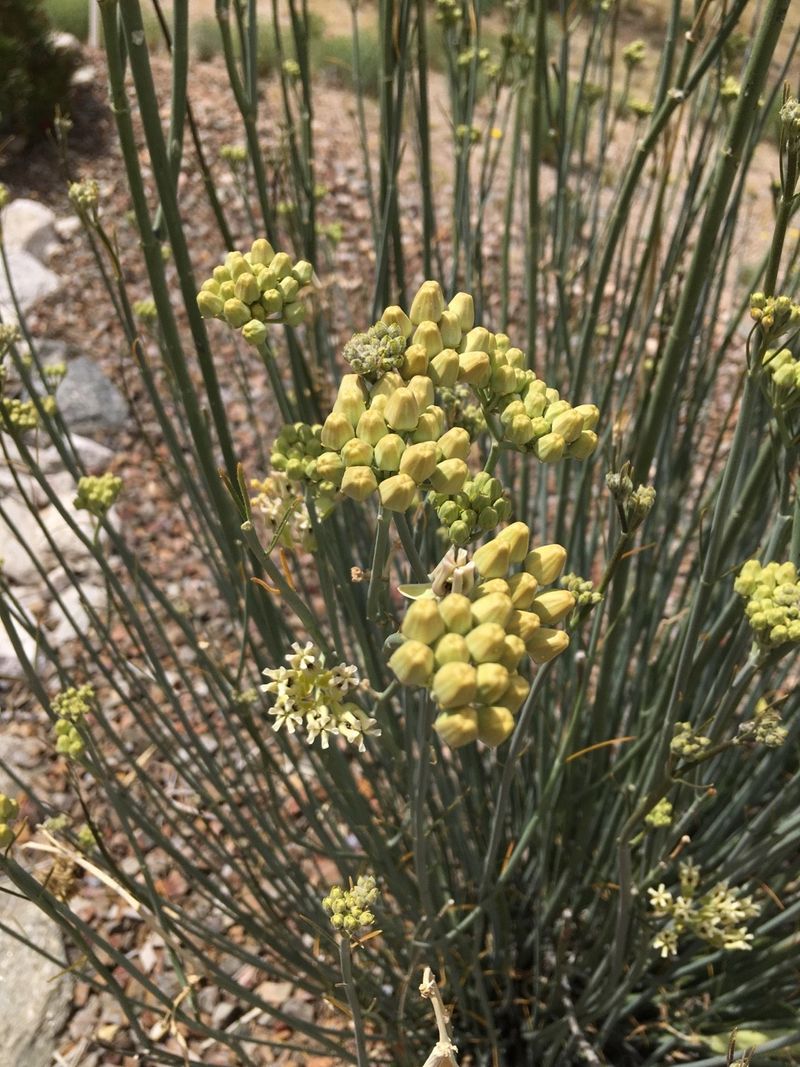
Monarch butterflies need milkweed to complete their life cycle, and Desert Milkweed delivers that without demanding much in return. Asclepias subulata grows in some of the hottest and driest spots in the low desert region.
Needle-like stems and sparse leaves are perfectly suited to surviving extreme summer conditions.
Clusters of small creamy-white flowers attract a wide range of pollinators. Monarchs, queens, and native bees all visit regularly when the plant is in bloom.
Caterpillars feed on the foliage, which is part of what makes this plant ecologically valuable.
Height can reach four to six feet under good conditions. Stems grow upright and almost rush-like in appearance.
Grouped plantings create a striking visual effect that looks intentional and sculptural in a desert garden setting.
Drainage is non-negotiable with Desert Milkweed. Soggy soil during monsoon season stresses the root system badly.
Gravelly or sandy spots with fast drainage keep the plant healthy through both dry spells and summer rain events.
No irrigation is needed once the plant is fully established. Supplemental water during the first season helps roots develop properly.
After that, rainfall alone is usually enough to sustain it through even the longest dry stretches of summer.
Seed pods split open in fall and release silky white seeds on the breeze. Watching that happen is genuinely satisfying.
New seedlings sometimes sprout nearby, giving you free plants without any extra effort on your part.
8. Desert Lavender Stays Resilient Through Long Periods Of Heat
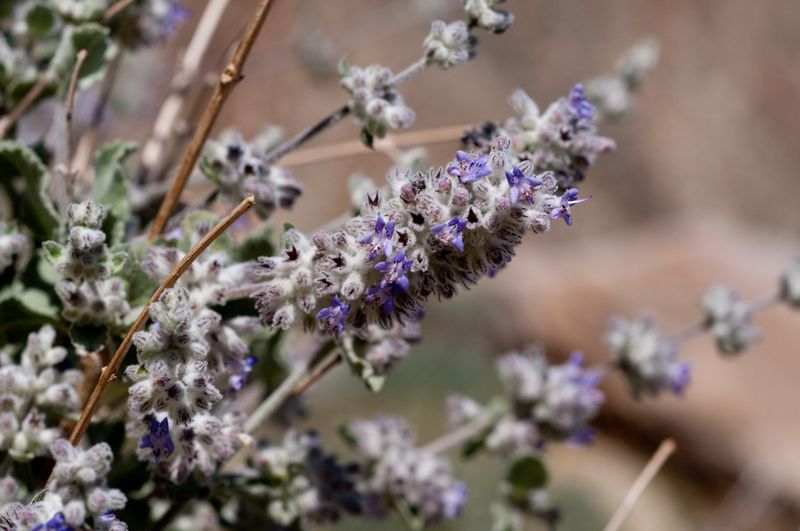
Purple flower spikes covering a silvery shrub in the middle of July heat. Desert Lavender, or Hyptis emoryi, earns a permanent place in any water-wise garden.
The fragrance alone makes it worth growing, especially on warm evenings when the scent drifts noticeably through the air.
Silvery-gray foliage reflects sunlight and helps the plant stay cooler than surrounding plants. Leaf texture is soft and slightly fuzzy to the touch.
Both the fragrance and the texture make Desert Lavender one of the more sensory-rich plants in a desert landscape.
Shrubs can grow quite large, sometimes reaching six feet tall and equally wide. Placement matters because a mature plant takes up real space.
Giving it room from the start prevents the need for heavy pruning later on.
Bees swarm Desert Lavender blooms with remarkable intensity. Native bees, honeybees, and even some wasp species visit consistently during peak bloom.
Wildlife activity around this plant is some of the most concentrated you will find in a dry garden.
July heat does not slow it down noticeably once roots are established. Sandy, rocky, or gravelly soil all work well.
Avoid planting in low spots where monsoon water pools after storms since prolonged wet roots cause problems.
No supplemental irrigation is needed during summer for established plants. First-year plants benefit from occasional deep watering to push roots down.
After that, the plant handles whatever the desert throws at it with quiet, steady resilience.