These Florida Plants Make Summer Yards Look Better Than Everyone Else’s
Florida summers are brutal, but your yard does not have to suffer through them.
The heat, the humidity, the afternoon thunderstorms, all of it can actually work in your favor if you plant the right things.
The yards that look stunning in July are not maintained by people who work harder. They are maintained by people who chose smarter.
The secret is plants that were practically built for Florida’s wild summer conditions, the ones that bloom harder when it gets hotter, spread faster when it gets wetter, and feed more butterflies when everything else is struggling to stay upright.
Some of these plants attract every butterfly in the neighborhood. Some light up shady corners that nothing else will touch.
Others spread across the ground like a living carpet of color that covers bare soil and asks for almost nothing in return.
You might be surprised by how easy summer gardening becomes once you stop fighting the climate and start working with it.
These plants can completely transform your outdoor space before the summer is even halfway over.
1. Firebush Turns Heat Into Color
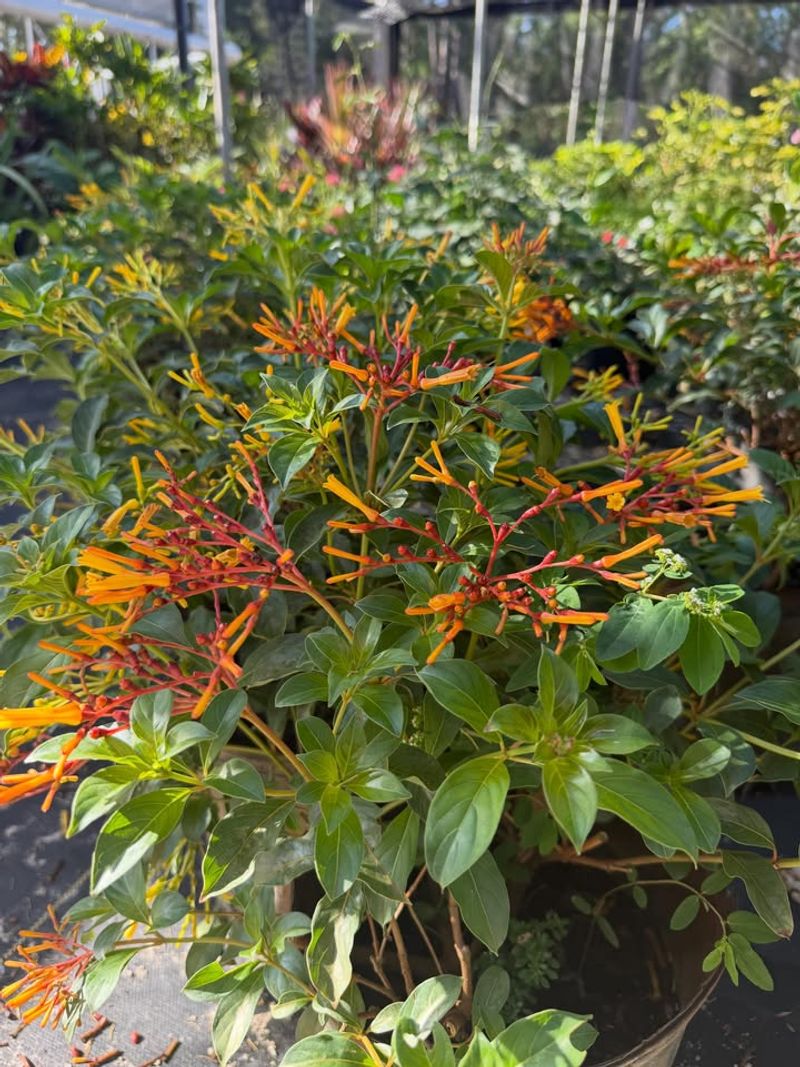
Scorching sun and steamy afternoons do not slow firebush down one bit. In fact, the hotter it gets, the more this Florida native seems to thrive.
Firebush, known scientifically as Hamelia patens, is a fast-growing shrub that produces clusters of bright orange-red tubular flowers from late spring all the way through fall.
You can plant it in full sun or partial shade, and it will reward you either way.
The blooms come in fast and keep coming, which makes it one of the most reliable summer performers in any Florida yard. Hummingbirds, butterflies, and bees all show up like they received a personal invitation.
Firebush can grow six to fifteen feet tall if left alone, but it responds well to pruning and stays manageable in smaller spaces.
It handles drought once established, needs very little fertilizer, and is not picky about soil. It is fired up and ready to go no matter what the season throws at it.
After a frost, it may return from the roots in North Florida, but it bounces back strong when warm weather returns.
In Central and South Florida, it stays evergreen year-round. Plant it near a fence, along a border, or as a specimen shrub and watch your yard go from dull to dazzling in a single growing season.
2. Pentas Keep Butterflies Busy
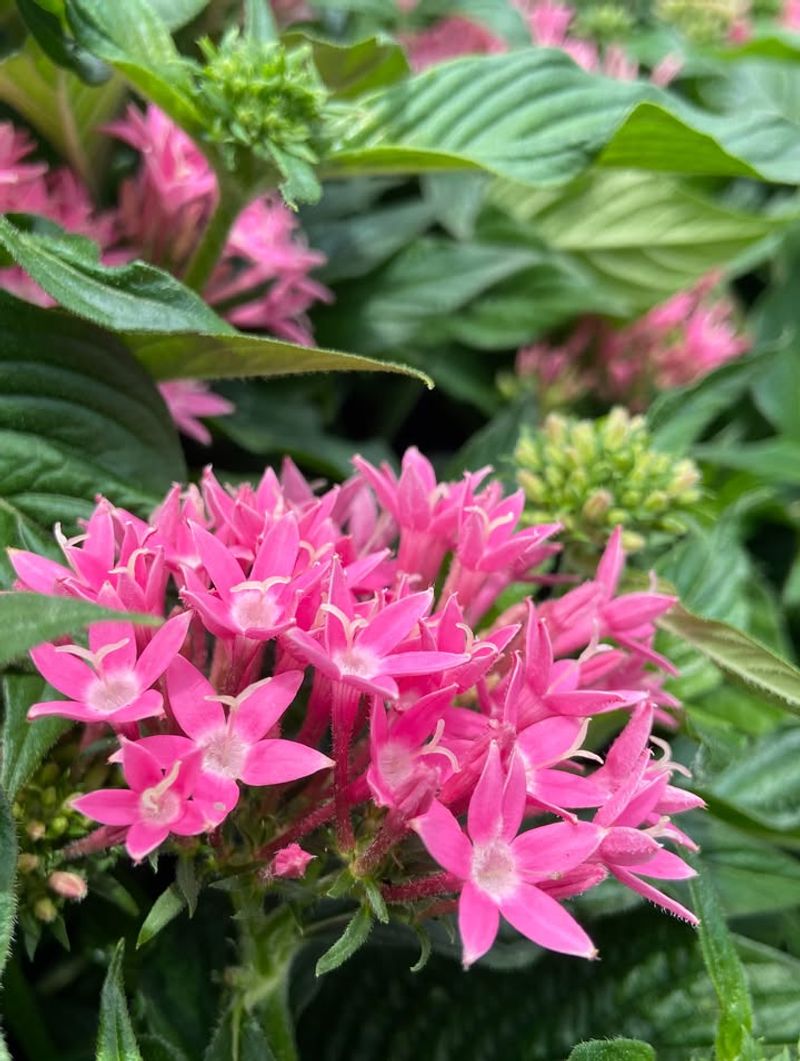
Walk through any Florida nursery in June and you will spot pentas stacked near the entrance, and for good reason.
Pentas lanceolata, commonly called Egyptian star flower, is one of the most butterfly-friendly plants you can grow in a Florida summer garden.
The clusters of small, star-shaped flowers bloom in red, pink, white, lavender, and coral from late spring until the first cold snap.
Full sun is where pentas truly shines.
Give it at least six hours of direct sunlight a day and it will produce nonstop blooms without much fuss. It handles Florida humidity well, tolerates brief dry spells, and is not demanding about soil quality as long as drainage is decent.
Your Florida Garden Changes Every Week. Your Plan Should Too.
Gardening in Florida changes quickly throughout the season. Every Friday you’ll receive a simple weekly plan showing exactly what to plant, prune, fertilize, harvest, and protect so you never miss the right timing.
Butterflies absolutely cannot resist it.
Gulf fritillaries, monarchs, zebra longwings, and swallowtails all treat pentas like their personal buffet. That is the kind of yard traffic worth bragging about to your neighbors.
Pentas works beautifully in containers, raised beds, and traditional garden borders.
It stays compact, usually reaching just one to three feet tall depending on the variety. Trimming spent blooms encourages even more flowers, but even if you skip that step, pentas keeps pumping out color all summer long without much encouragement.
3. Beach Sunflower Covers Hot Ground
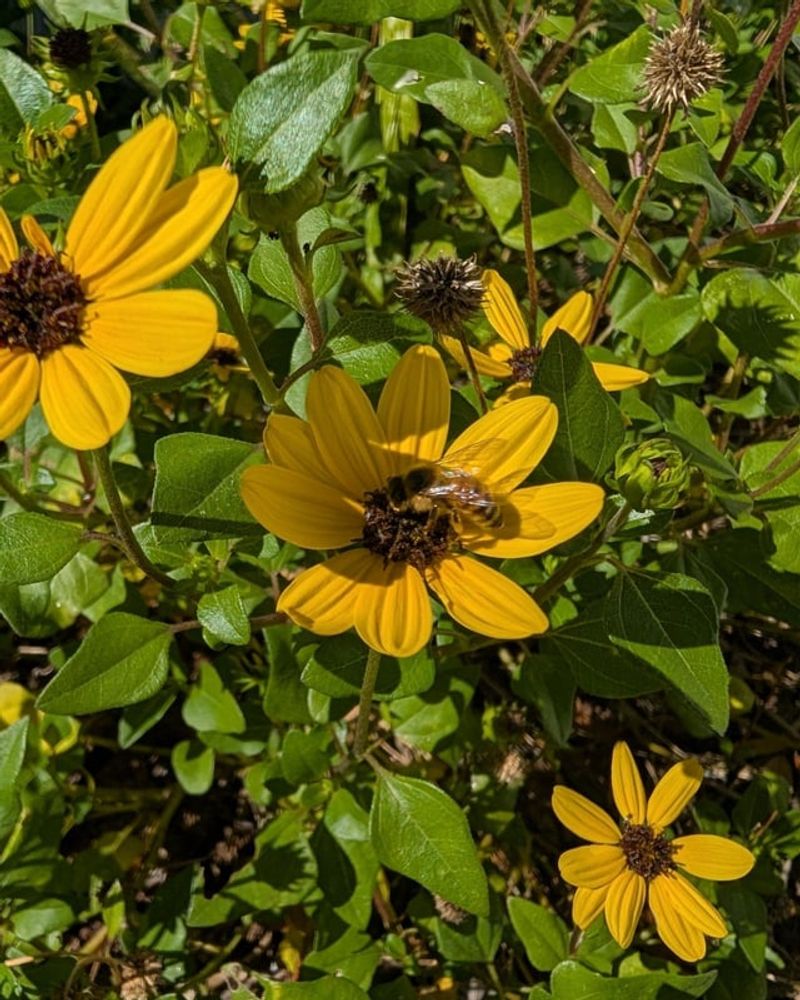
Not every plant can handle sandy, nutrient-poor soil baking in full Florida sun. Beach sunflower, Helianthus debilis, handles it without breaking a sweat.
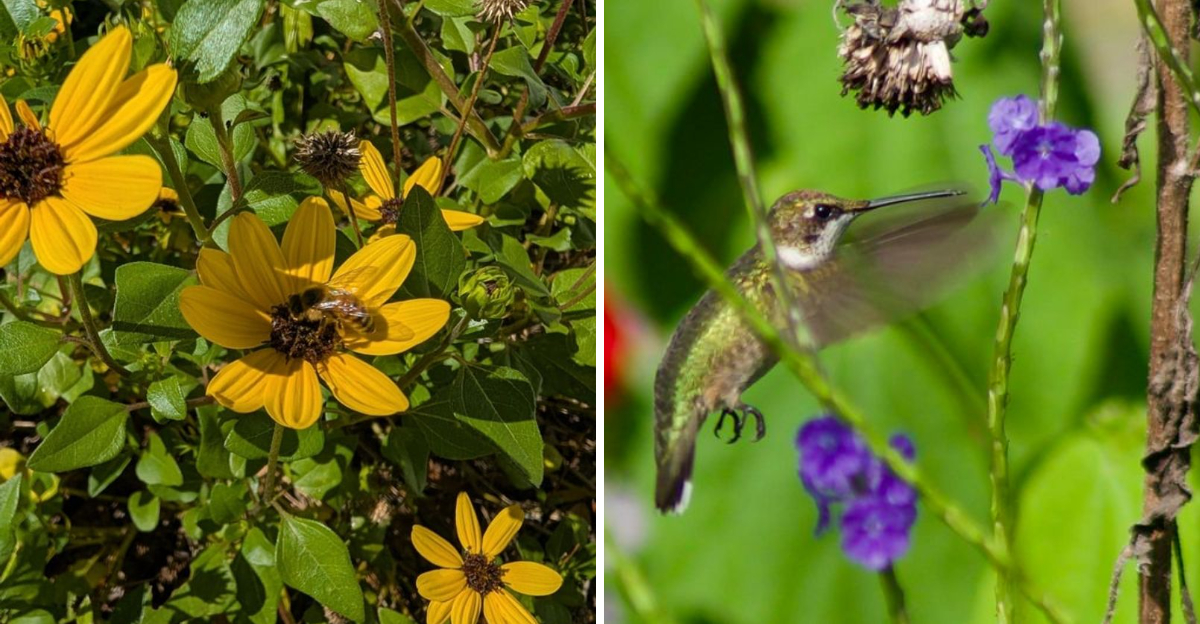
This low-growing native groundcover spreads quickly and produces cheerful yellow daisy-like flowers almost continuously from spring through fall, sometimes even into winter in South Florida.
It is a natural fit for coastal yards, sandy inland lots, and any space where other plants have given up.
The plant creeps along the ground, rooting as it spreads, and fills in bare patches with surprising speed. Once established, beach sunflower needs almost no supplemental water and thrives on rainfall alone.
Pollinators love it.
Bees visit constantly, and goldfinches and other small birds snack on the seeds once the blooms fade. You get color, wildlife activity, and ground coverage all from one tough little plant.
Beach sunflower works well on slopes, near driveways, along roadsides, and in front of taller shrubs where you need something low and spreading.
It grows about one to two feet tall and can spread six feet or more across in a single season. It does not require fertilizer, rarely needs pruning, and resists most pests.
Plant it once and it will come back faithfully year after year without asking for a thing.
4. Coontie Adds Glossy Structure
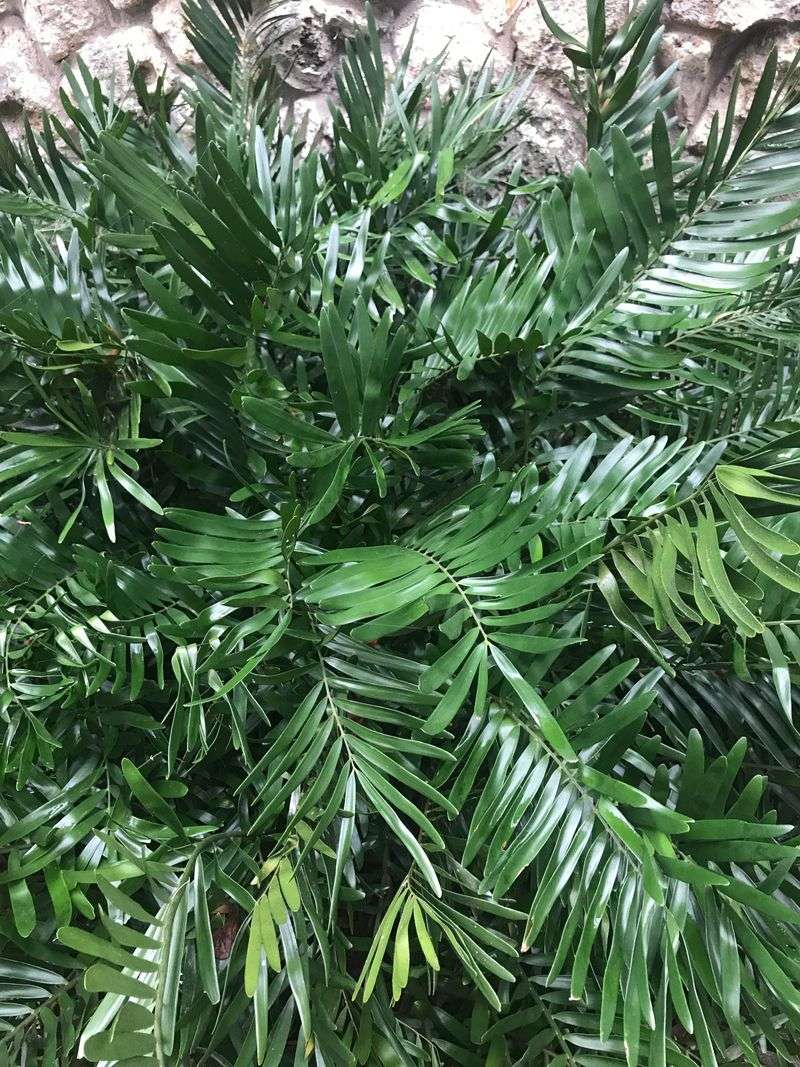
Some plants earn their place in a yard not through flashy flowers but through sheer dependability and good looks.
Coontie, Zamia integrifolia, is Florida’s only native cycad, and it has been thriving here long before humans started planting gardens.
Its dark, glossy green fronds give any landscape a polished, structured look that holds up beautifully all summer long.
Coontie grows slowly but steadily into a dense, low mound that typically reaches two to three feet tall and wide.
It tolerates shade, drought, and poor soil, which makes it useful in spots where other plants struggle. Established plants are extremely tough and require almost no maintenance once they settle in.
The real bonus comes from its role in the ecosystem.
Coontie is the only larval host plant for the atala butterfly, a striking species that was once nearly gone from Florida. Planting coontie supports atala recovery and brings a rare and beautiful butterfly into your yard.
It works well as a border plant, a foundation planting, or a ground layer beneath tall trees.
The foliage stays attractive year-round, which is a rare quality in a Florida landscape plant. Pair it with ferns, firebush, or native grasses for a layered, low-maintenance design.
Coontie is not just a plant, it is living Florida history rooted right in your yard.
5. Blanket Flower Handles Sandy Beds
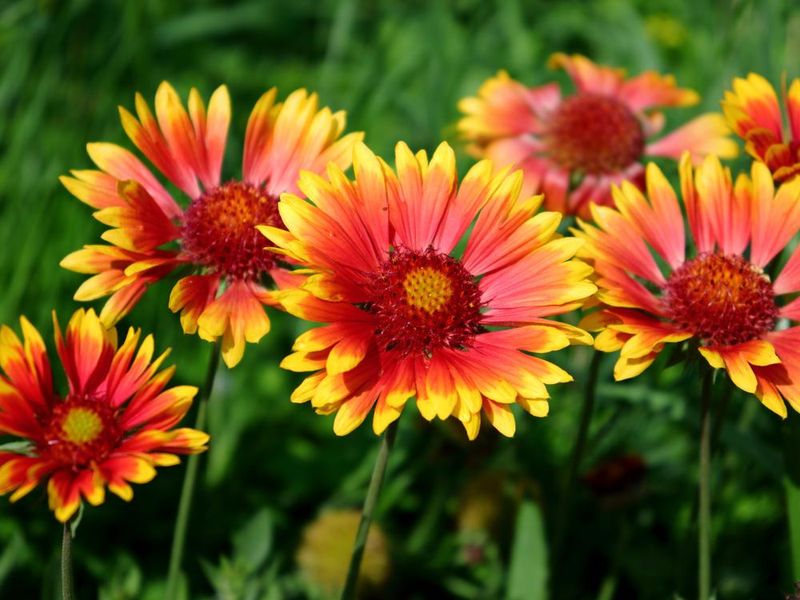
Bold, sun-soaked, and completely unbothered by sandy soil, blanket flower is the kind of plant that makes other gardeners stop and stare.
Gaillardia pulchella is a Florida native wildflower with daisy-like blooms in fiery red, orange, and yellow, often with two or three colors banded together on a single flower.
The effect is vivid and cheerful, like a summer sunset you can plant in the ground.
Blanket flower thrives in dry, well-drained, sandy conditions that would stress most ornamental plants.
It actually performs better with less water and no fertilizer, making it a perfect match for Florida’s naturally sandy soils. Overwatering or heavy soil is the one thing that can cause problems, so keep it lean and let it do its thing.
Blooms appear from spring through fall and attract bees, butterflies, and small birds.
The plant stays compact at about one to two feet tall and works beautifully in wildflower meadows, front borders, and sunny coastal gardens. It self-seeds readily, so you may find new plants popping up nearby the following season.
Blanket flower is also salt-tolerant, which makes it a smart pick for yards near the coast.
It pairs well with beach sunflower, railroad vine, and other native coastal plants. For a low-water, high-color summer garden, blanket flower belongs at the top of your list.
6. Salvia Brings Summer Spikes
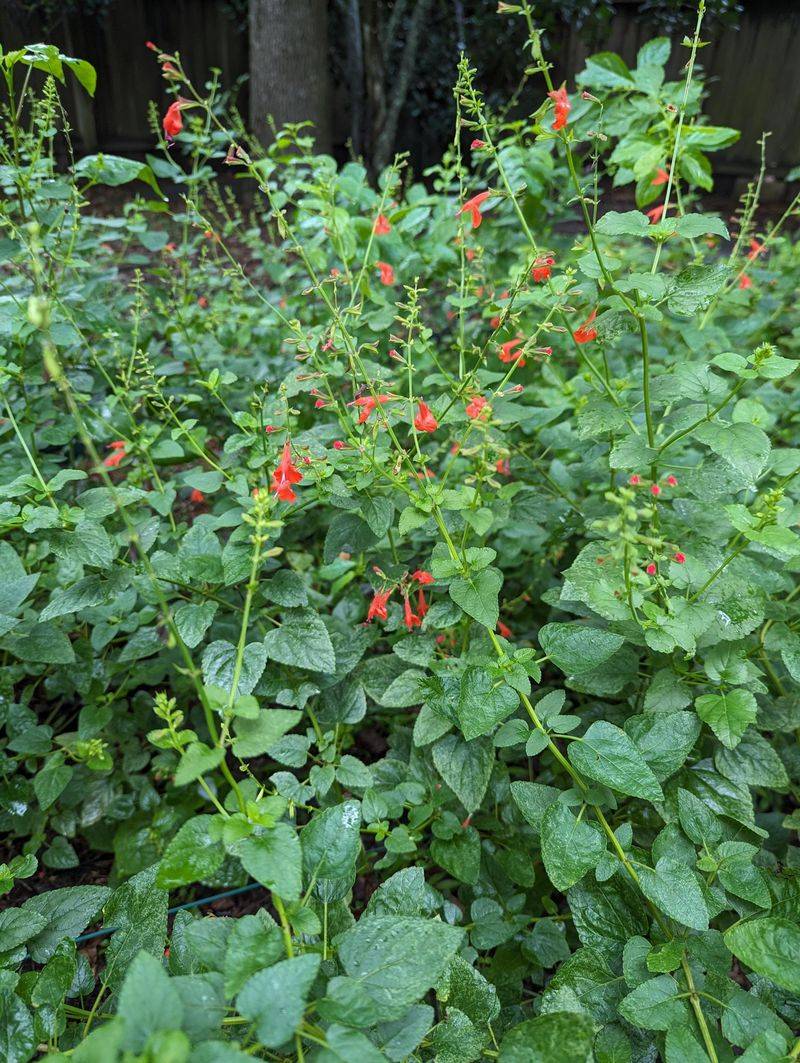
There is something satisfying about a plant that stands straight up and announces itself.
Salvia does exactly that with tall, upright spikes covered in tubular flowers that bloom in shades of red, blue, purple, and coral all summer long.
Several salvia species perform well in Florida, including Salvia coccinea, tropical sage, and Salvia guaranitica, anise sage, both excellent choices for summer gardens.
Pollinators treat salvia spikes like a landing strip.
Hummingbirds hover around the tubular blooms, while bees and butterflies work their way up and down each flower spike methodically.
Planting a few clumps of salvia near other flowering plants creates a whole pollinator ecosystem right outside your window.
Salvia handles full sun well and tolerates Florida’s summer heat without wilting or fading.
It is moderately drought-tolerant once established and benefits from occasional deadheading to keep the blooms coming strong.
The plants typically reach two to four feet tall depending on the variety, and work well as mid-border plants or in containers.
Salvia coccinea self-seeds generously, which means one planting can turn into a small colony over time.
Plant a few different salvia varieties together and enjoy the nonstop color and wildlife action from June through October. Your yard will have more personality than ever, and the pollinators will not stop visiting all season long.
7. Porterweed Pulls In Pollinators
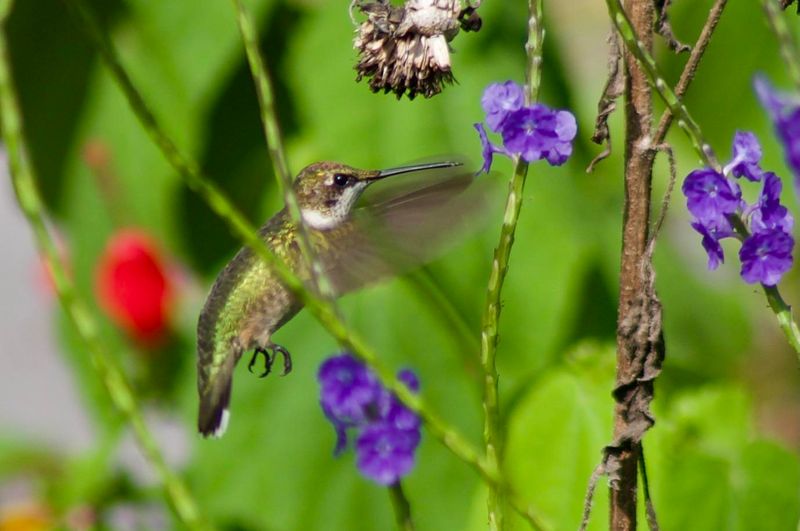
Few plants in Florida work as hard for pollinators as porterweed.
Stachytarpheta jamaicensis, native blue porterweed, produces long, slender flower spikes studded with small but intensely colored blue-purple blooms.
The flowers open gradually along the spike from bottom to top, which means the plant stays in bloom for an extraordinarily long time throughout the warm months.
Butterflies find porterweed almost irresistible.
Zebra longwings, Gulf fritillaries, and skippers visit constantly, and bees are never far behind. If you have been hoping to turn your yard into a pollinator haven, porterweed is one of the most effective tools available in Florida’s climate.
The plant grows two to four feet tall and spreads outward into a loose, open mound.
It thrives in full sun and tolerates partial shade reasonably well. Once established, it is quite drought-tolerant and handles sandy or average Florida soils without complaint. It even reseeds itself, so a single plant can spread naturally over time.
Porterweed looks great in naturalistic gardens, cottage-style beds, and butterfly gardens.
It pairs especially well with pentas, salvia, and firebush for a layered, pollinator-rich planting. Trim it back occasionally to keep the shape tidy and encourage fresh new growth.
Porterweed is a no-fuss, high-impact plant that earns its space in any Florida summer yard.
8. Caladium Brightens Shady Corners
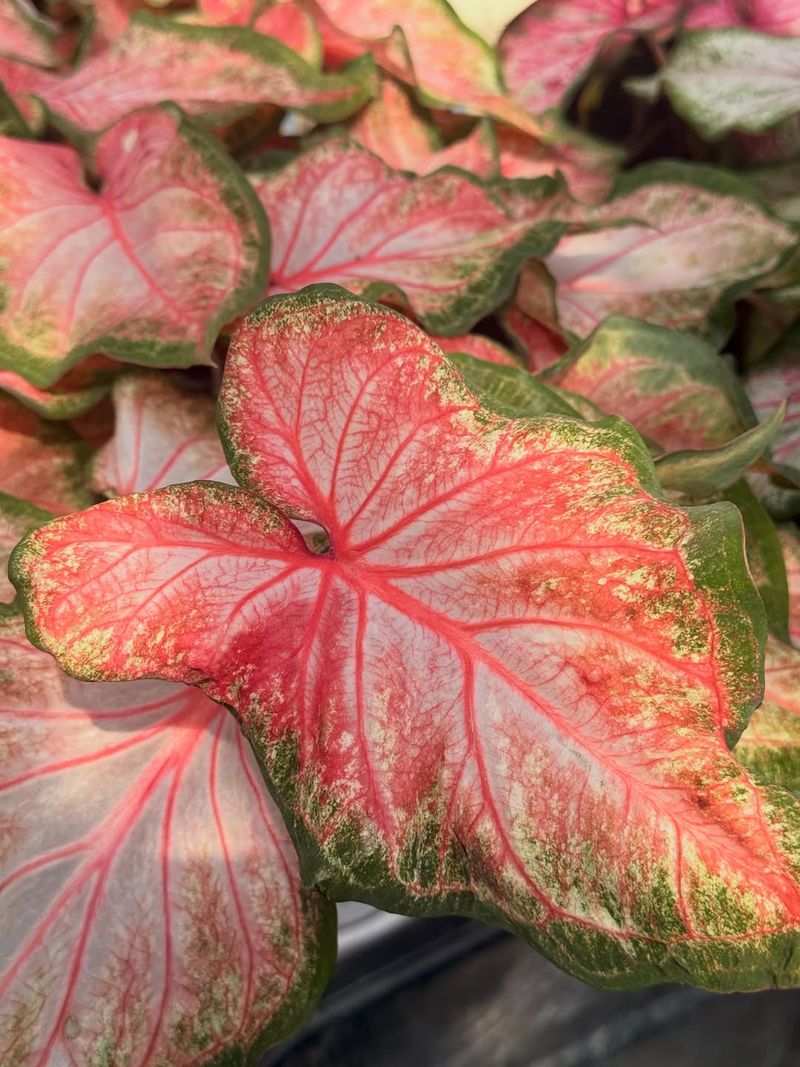
Not every corner of a Florida yard gets full sun, and that is actually a good thing when you have caladiums.
Caladium bicolor is a tropical bulb plant grown for its spectacular foliage.
The large, heart-shaped leaves come in combinations of red, pink, white, green, and silver, often with contrasting veins and edges that make each leaf look like a piece of art someone painted by hand.
Caladiums are at their absolute best in Florida’s hot, humid summers, which is exactly when most shade plants look tired and washed out.
They love warmth and humidity, making Central and South Florida practically ideal conditions for them. In shadier spots under trees or along north-facing walls, they fill in with bold, tropical color that transforms dull corners into eye-catching focal points.
Plant caladium tubers in spring after the soil warms up, and they will emerge within a few weeks and grow quickly through summer.
They prefer moist, well-drained soil rich in organic matter and benefit from a slow-release fertilizer applied at planting time. Keep the soil consistently moist but never waterlogged.
Caladiums pair beautifully with ferns, impatiens, and coontie for a layered shade garden look.
When fall temperatures drop, the foliage fades and the tubers go dormant. Store them or leave them in the ground in South Florida and they will return next summer, brighter and bolder than ever.