The Fast-Growing Native Georgia Plant That Hummingbirds Keep Visiting
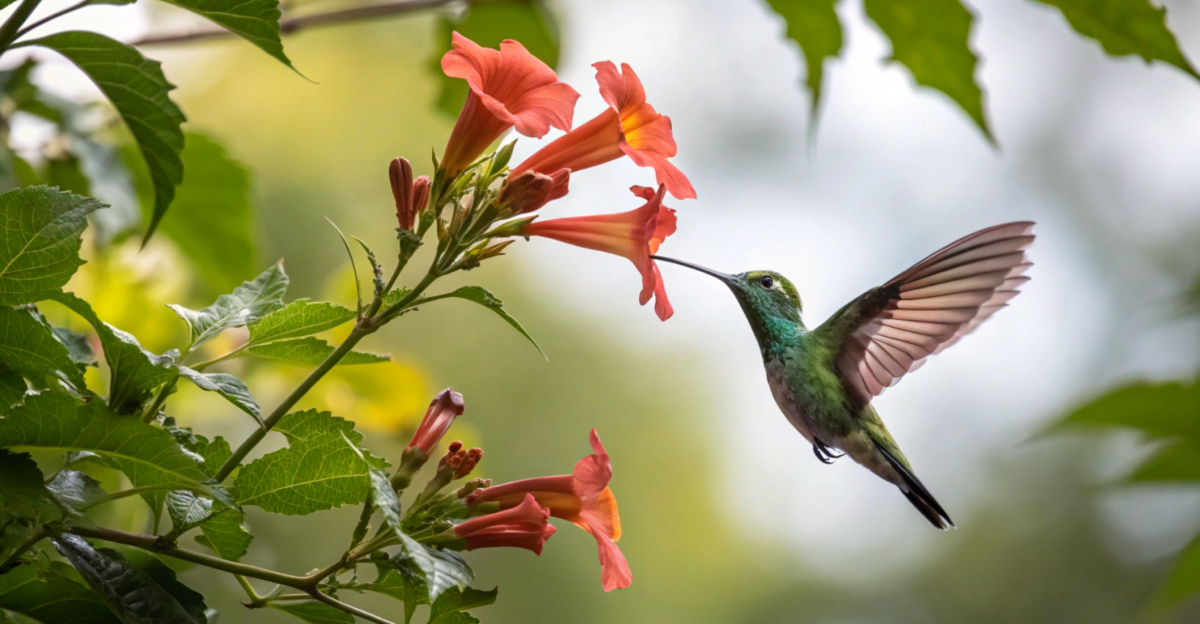
If you have ever spotted a hummingbird hovering around a fence line in Georgia summer and followed its path back to the source, there’s a good chance trumpet creeper was involved.
Those bold orange blooms are genuinely hard to miss, and the vine producing them is every bit as bold as the flowers suggest.
Trumpet creeper is a native Georgia plant with serious energy, the kind that climbs fences, covers arbors, and reaches for trellises with a determination that can surprise first-time growers.
It’s a showstopper in the right spot and a real handful in the wrong one.
The good news is that understanding how this vine actually grows and what it needs to stay manageable makes a big difference in whether it becomes a garden highlight or a project you didn’t sign up for.
Placement and a little planning go a long way.
1. Trumpet Creeper Grows Fast In Georgia Landscapes
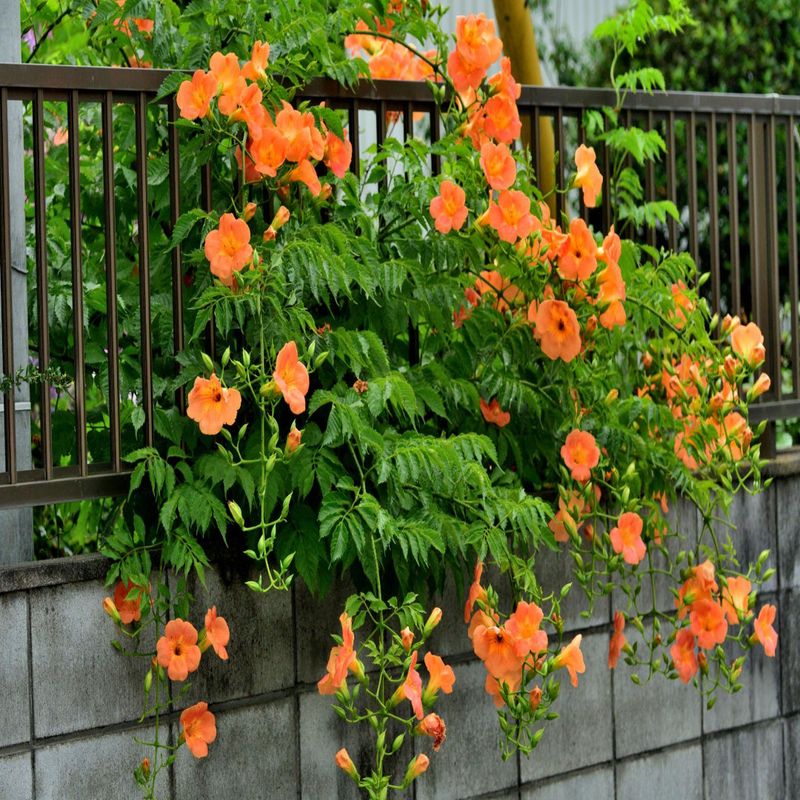
Few vines put on a summer show quite like trumpet creeper does across Georgia.
Once established, this native plant can add several feet of new growth in a single season, covering fences, arbors, and trellises with a thick canopy of dark green leaves and clusters of bold orange blooms.
Homeowners who plant it near a bare fence in spring may be surprised by how quickly it fills that space before the season ends.
Trumpet creeper, known botanically as Campsis radicans, is native to the southeastern United States, including Georgia. It uses aerial rootlets to cling to surfaces, which helps it climb structures without needing to be tied or trained constantly.
That clinging habit is part of what makes it so efficient at covering vertical spaces in a short amount of time.
Georgia summers provide exactly the kind of warm, humid conditions that trumpet creeper thrives in. The vine tends to push out most of its growth during the hottest months, which lines up well with peak hummingbird activity in the state.
For gardeners who want to attract pollinators and create a lush, naturalistic look along a fence line or garden edge, trumpet creeper can deliver results with relatively little effort.
Just be ready for a vine that does not stay small for long.
2. Tubular Orange Flowers Draw Hummingbirds In Summer
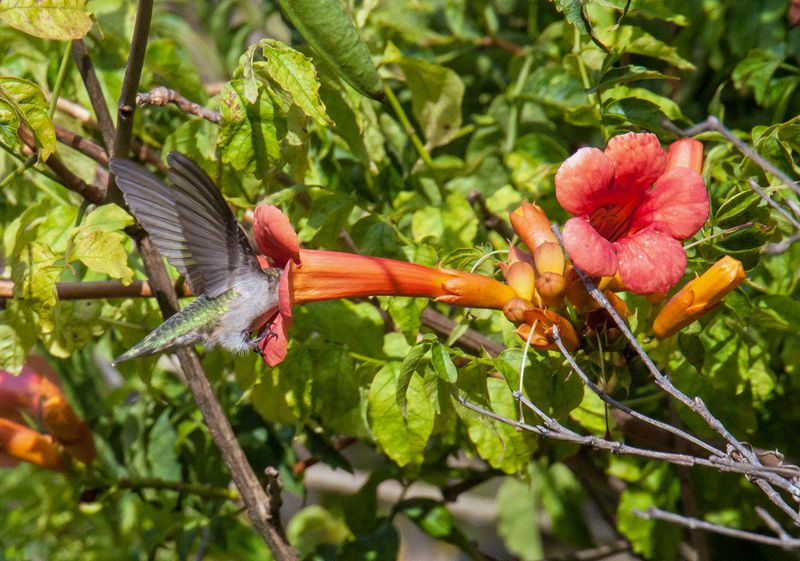
Watch a trumpet creeper in bloom on a warm Georgia morning and there is a good chance a ruby-throated hummingbird will show up within minutes.
The tubular shape of each flower is practically designed for hummingbirds, with a long narrow throat that fits their bills and a nectar supply waiting at the base.
Butterflies and bees also visit, but hummingbirds tend to be the most consistent and enthusiastic callers.
Trumpet creeper typically blooms from late spring through late summer in Georgia, with peak flowering often happening in July and August.
That timing lines up with the period when ruby-throated hummingbirds are most active in the state before they begin their fall migration south.
Planting trumpet creeper near a patio, deck, or window can turn an ordinary summer afternoon into a front-row seat for hummingbird activity.
Your Georgia Garden Changes Every Week. Your Plan Should Too.
Gardening in Georgia changes quickly throughout the season. Every Friday you’ll receive a simple weekly plan showing exactly what to plant, prune, fertilize, harvest, and protect so you never miss the right timing.
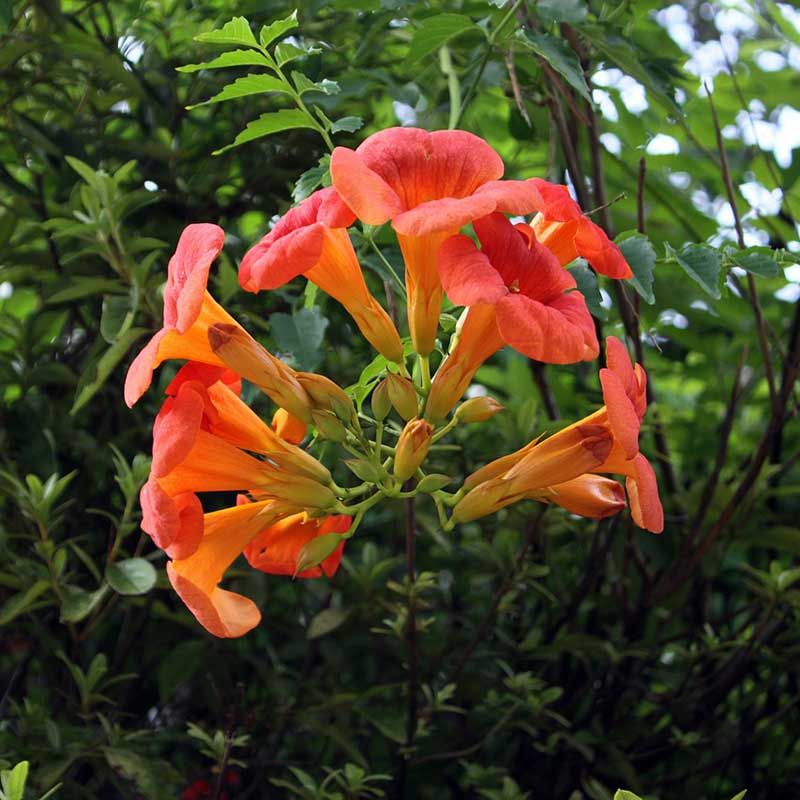
The flowers come in shades of orange and red-orange, and the clusters can be quite large, sometimes containing a dozen or more blooms at once. Each flower holds nectar that hummingbirds access by hovering and inserting their bills into the tube.
The vine blooms repeatedly throughout the season rather than all at once, which means there is a steady supply of fresh flowers available over several weeks.
For Georgia gardeners who want reliable hummingbird visits without maintaining a feeder, trumpet creeper is one of the most dependable native options available.
3. Full Sun Helps Produce More Blooms
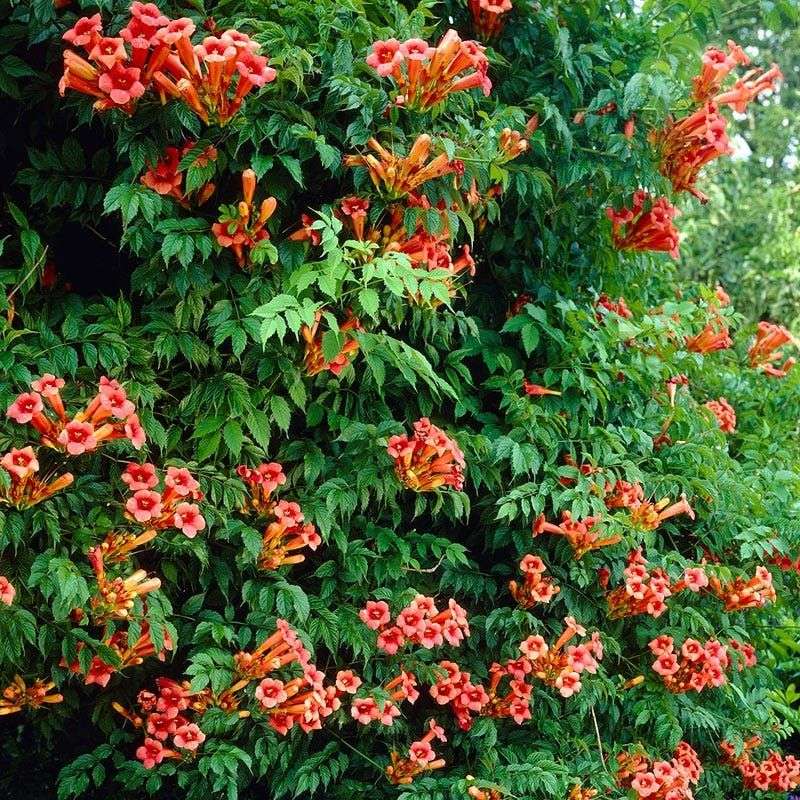
Placement matters quite a bit when it comes to how well trumpet creeper performs in a Georgia garden. Plants grown in full sun tend to produce significantly more flowers than those growing in partial or heavy shade.
A vine tucked along a shaded fence may grow plenty of foliage but deliver far fewer of those orange blooms that make the plant so appealing to hummingbirds and gardeners alike.
Full sun generally means at least six hours of direct sunlight per day, and trumpet creeper responds well to even more than that in Georgia’s long summer days.
South-facing or west-facing fence lines and structures tend to offer the kind of sun exposure that encourages heavy flowering.
Gardeners who notice their trumpet creeper growing vigorously but not blooming much may simply need to evaluate whether the planting site gets enough direct light throughout the day.
Soil quality is less critical for trumpet creeper than sun exposure is. The vine can handle a range of soil types, including clay-heavy Georgia soils that challenge many other plants.
It does not need rich, amended beds to thrive, which makes it a low-maintenance choice for sunny spots that might be difficult to plant otherwise.
Combining full sun with reasonable drainage gives trumpet creeper the conditions it needs to reward Georgia gardeners with a long, colorful bloom season that hummingbirds will notice from a surprising distance away.
4. Strong Support Keeps The Vine Manageable
Climbing a fence post with ease, wrapping around an arbor beam, or scaling a brick wall with aerial rootlets, trumpet creeper is a vine that takes support seriously.
Because it can grow quite heavy over time, the structures it climbs need to be solid and well-built.
Lightweight trellises made from thin wood or flimsy plastic may not hold up under the weight of a mature trumpet creeper, especially during Georgia’s summer thunderstorms.
Sturdy wooden arbors, heavy-gauge wire fencing, chain-link fences, and masonry walls tend to handle trumpet creeper well.
The aerial rootlets the vine uses to attach itself can grip rough surfaces firmly, so brick, stone, and rough-cut wood offer good holds.
Smooth painted surfaces or vinyl structures may not provide enough grip for the rootlets, which could cause sections of the vine to pull away or need additional fastening.
Homeowners should also think about what sits beneath or behind the support structure. Trumpet creeper’s rootlets can work their way into wood siding, gaps in mortar, or under roof edges if given the chance.
Positioning the vine on a freestanding arbor or fence away from the house tends to give it room to climb without risking damage to exterior walls or rooflines.
With the right support in the right spot, trumpet creeper can be a striking and manageable addition to a Georgia garden rather than a source of ongoing frustration.
5. Suckers Can Spread Beyond The Planting Spot
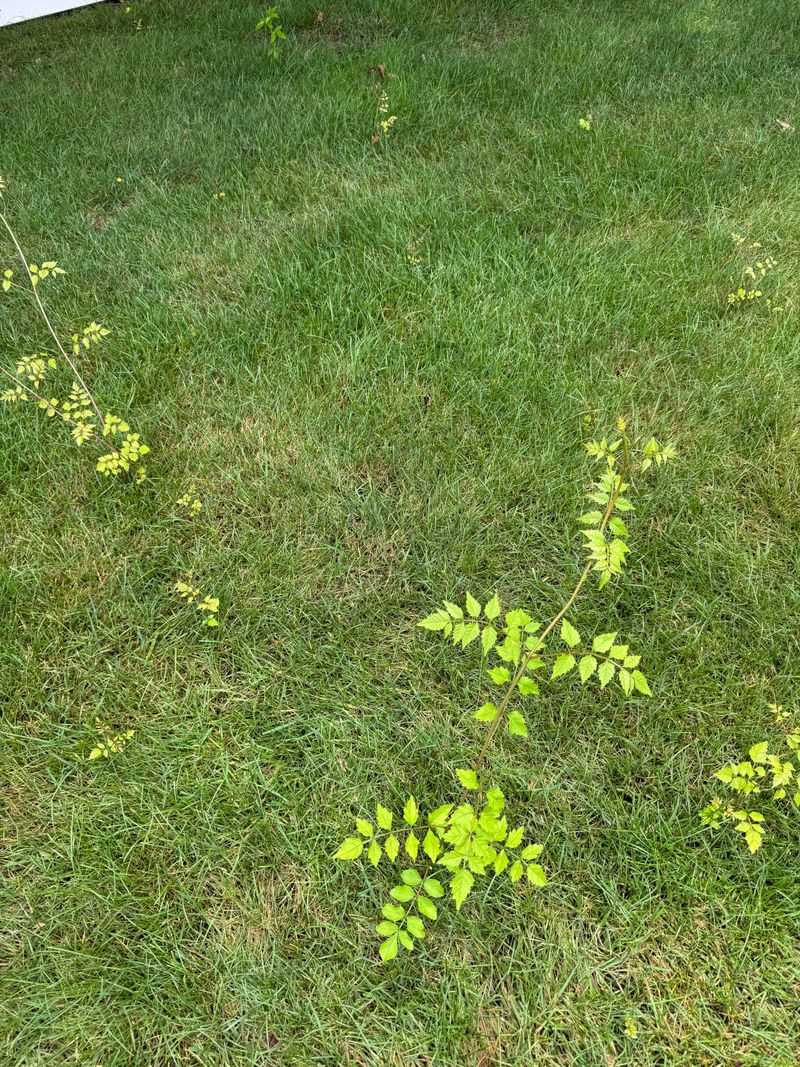
One of the things Georgia homeowners notice fairly quickly after planting trumpet creeper is that new shoots start popping up in unexpected places. These suckers, which grow from the vine’s spreading root system, can emerge several feet away from the main plant.
They may show up in lawn areas, through mulch beds, or even in neighboring garden sections where they were not invited.
Suckering is a natural part of how trumpet creeper spreads in the wild, and in a naturalized setting it can help the vine colonize a larger area over time. In a managed home landscape, though, those same suckers can become a regular maintenance task.
Left unchecked, they can spread into areas where they compete with other plants or create an untidy appearance along otherwise neat garden borders.
Catching suckers early makes removal much easier. Young shoots pulled or cut at ground level before they establish deep roots come out with relatively little effort.
Waiting until they become woody and well-rooted makes the job harder and may require more frequent follow-up.
Some Georgia gardeners use a sharp spade to sever the connecting roots and remove sections of the spreading root system when suckers become persistent in one area.
Choosing a planting spot with open space around it, such as a naturalized edge or a large fence line away from other beds, helps reduce how often suckers become a noticeable issue in the landscape.
6. Pruning Helps Control Vigorous Growth
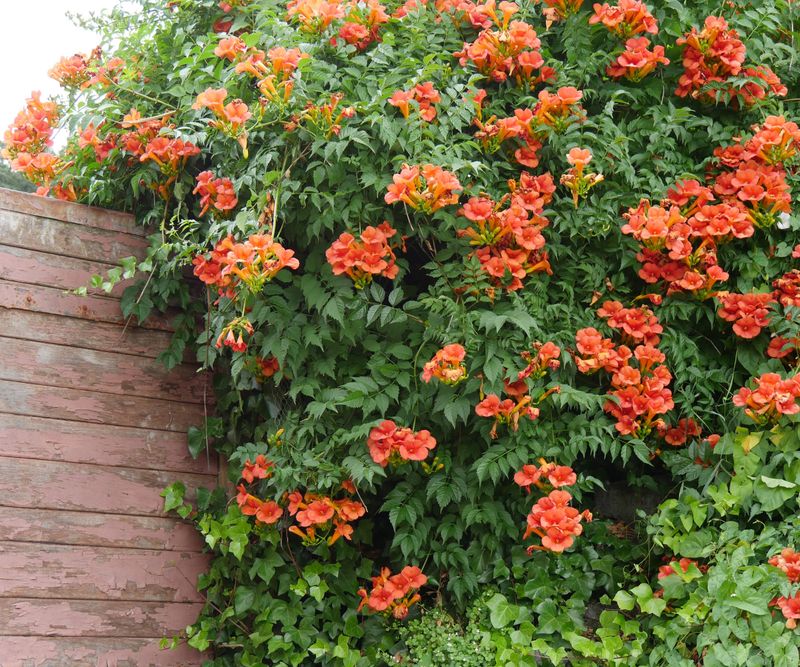
Summer pruning can feel almost like a negotiation with trumpet creeper.
The vine grows quickly and enthusiastically, and without occasional trimming it can overtake nearby shrubs, climb into trees, or cover a fence so densely that air circulation becomes limited.
Regular pruning keeps the vine in check and can actually encourage more flowering by redirecting the plant’s energy toward bloom production rather than endless stem elongation.
Light pruning throughout the growing season helps manage wayward stems that reach into areas where they are not wanted.
Cutting back long shoots that stray beyond their intended support keeps the vine looking tidy and prevents it from attaching to structures or plants nearby.
In late winter or very early spring, a harder pruning session can reshape the entire vine and remove older woody stems that no longer produce many flowers.
Wearing gloves while pruning trumpet creeper is worth mentioning because some people experience mild skin irritation from contact with the sap or foliage.
The reaction varies from person to person, but using gloves and long sleeves during pruning sessions is a simple precaution.
Georgia gardeners who stay on top of pruning once or twice a season tend to find trumpet creeper much more satisfying to grow than those who let it go unchecked for a full year or two.
A little consistent attention goes a long way toward keeping this fast-growing native vine an asset rather than an ongoing challenge in the landscape.
7. Naturalized Edges Give It Room To Climb
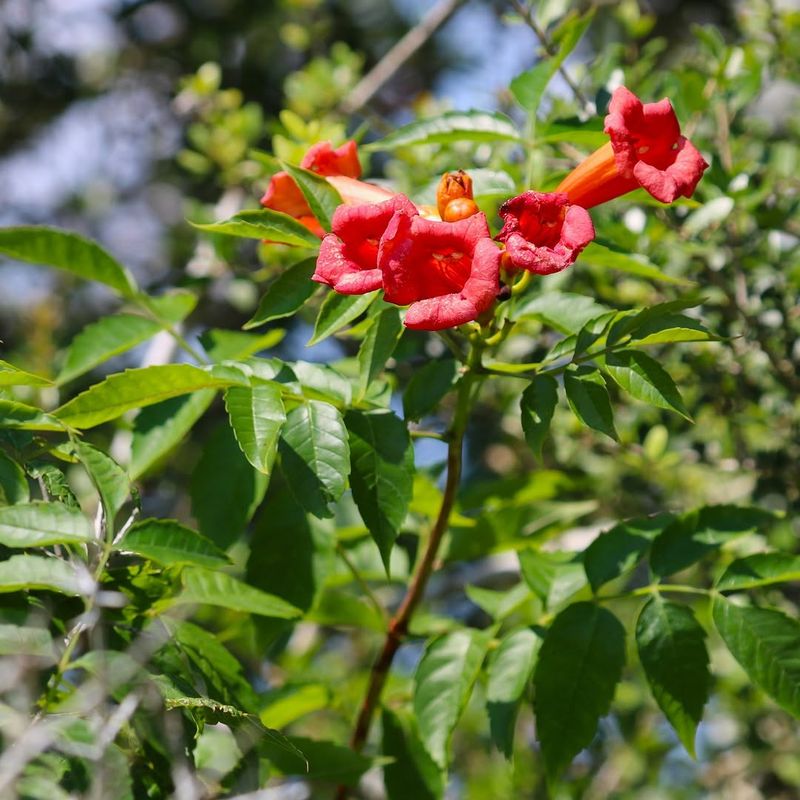
Along the back edge of a property, beside a creek bank, or at the boundary where a Georgia yard meets a wooded area, trumpet creeper tends to feel right at home.
Naturalized edges offer the kind of open, sunny exposure and informal structure that suits the vine’s vigorous personality.
In these settings, the vine can spread a bit more freely without conflicting with manicured garden beds or formal plantings.
Naturalized planting areas also reduce the pressure on homeowners to manage every new sucker or prune every wayward stem on a tight schedule.
When trumpet creeper has room to expand along a fence line or climb through the lower branches of a tree at the yard’s edge, its spreading habit becomes less of a concern and more of a feature.
Hummingbirds and other pollinators benefit from these larger, less structured plantings because there is more flower coverage to visit over a longer period.
Georgia has many properties with fence lines, drainage easements, or back borders that sit unused and often look bare through summer. Trumpet creeper can fill those spaces with color and wildlife activity that would otherwise be absent.
Pairing the vine with other native plants that tolerate similar conditions, such as wild bergamot or native grasses, can create a low-maintenance naturalized edge that supports pollinators throughout the warm season.
Giving trumpet creeper a generous space like this tends to bring out its best qualities while keeping its more aggressive tendencies well away from the rest of the garden.
8. Coral Honeysuckle Offers A Gentler Alternative
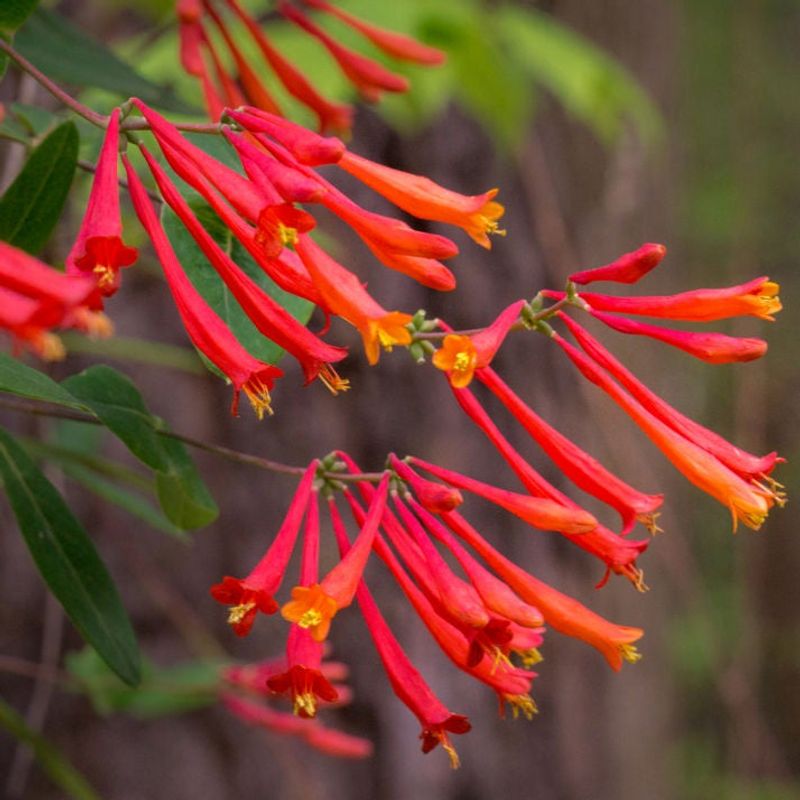
Not every Georgia gardener has the fence line, the open edge, or the patience for a vine as assertive as trumpet creeper.
For those who want to attract hummingbirds with a native vine but prefer something that stays a bit more contained, coral honeysuckle is worth a close look.
This native vine, known as Lonicera sempervirens, produces tubular red and yellow flowers that hummingbirds visit with genuine enthusiasm throughout spring and into summer.
Coral honeysuckle grows at a moderate pace compared to trumpet creeper, making it easier to manage on smaller trellises, garden fences, or mailbox posts without the same level of ongoing pruning.
It does not spread by suckers the way trumpet creeper does, which means it tends to stay where it is planted without sending new shoots into the lawn or nearby beds.
That more restrained habit makes it a better fit for smaller Georgia yards or tighter garden spaces near patios or entryways.
The flowers are slightly smaller than trumpet creeper blooms, but hummingbirds respond to them reliably because of the same tubular shape and nectar-rich design.
Coral honeysuckle also tends to bloom earlier in the season, sometimes starting in late winter or early spring in Georgia, which can provide a nectar source for early-arriving hummingbirds before other vines have leafed out.
Growing both vines in a Georgia garden, where space allows, can extend the bloom period and keep hummingbirds coming back from spring all the way through late summer.