These Texas Garden Bugs Look Intimidating But They Are The Reason Your Plants Stay Healthy
Walk through a Texas garden on a warm morning and you might spot something that stops you completely.
A strange spiky bug on a tomato leaf, a fuzzy fly hovering near the flowers, or a shiny black beetle disappearing into the soil can all look pretty alarming at first glance. The spray bottle starts to seem like a reasonable response.
But before you reach for it, take a closer look.
Many of these creepy-looking critters are actually working hard to protect your plants. Texas gardens are home to an impressive lineup of predatory insects that feed on the very pests that damage your vegetables, flowers, and shrubs.
Learning to recognize these helpful hunters changes the way you think about bugs in the garden entirely.
Broad-spectrum sprays can wipe out the good guys along with the bad, leaving your garden worse off than before.
The bugs on this list may look intimidating, but they are keeping your plants healthier every single day without asking for anything in return.
Nine of them deserve a proper introduction.
1. Assassin Bugs Hunt Soft Bodied Pests
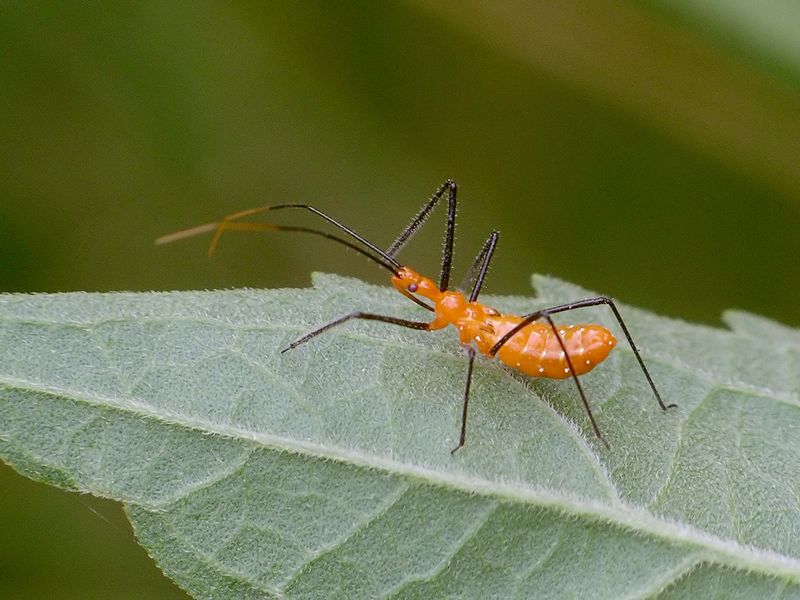
If you have ever spotted a slender, angular bug with a curved beak lurking on your pepper plants, there is a good chance you were looking at an assassin bug.
These insects belong to the family Reduviidae, and Texas is home to several species that are genuinely useful in the garden.
Their long, curved mouthpart called a rostrum is used to pierce prey and inject a paralyzing fluid, which sounds alarming but is exactly what makes them so effective against garden pests.
Assassin bugs target soft-bodied insects like aphids, caterpillars, leafhoppers, and small beetles.
They move slowly and deliberately, which makes them easy to overlook at first. But once they lock onto a target, they are surprisingly efficient hunters.
A single assassin bug can consume dozens of pests over its lifetime, making it one of the more valuable predators you can have patrolling your vegetable beds.
One important note: do not handle assassin bugs with your bare hands.
Their bite is reported to be quite painful, and while it is not medically dangerous to most people, it is definitely not something you want to experience. Observe them from a distance and let them do their work.
Protecting populations of predatory insects like assassin bugs is one of the smartest moves a Texas gardener can make for long-term plant health.
2. Wheel Bugs Patrol Bigger Prey
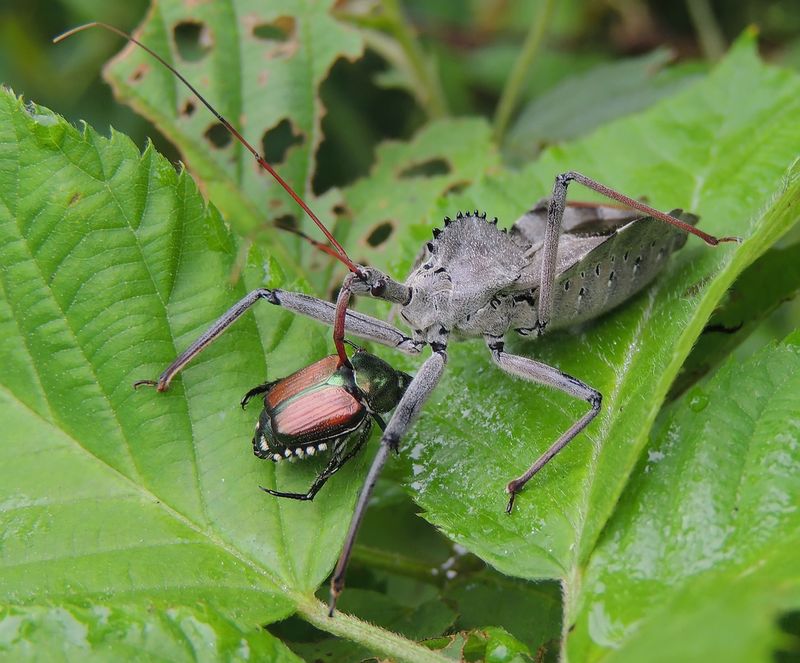
There is something almost prehistoric about the wheel bug.
With a jagged, gear-shaped crest rising from its back and a body that can stretch over an inch long, this insect looks like it belongs in a science fiction movie rather than a flower bed.
That dramatic appearance is exactly what makes gardeners nervous, and exactly why so many of them accidentally remove one of their best allies.
Wheel bugs are actually a type of assassin bug, making them part of the same beneficial family.
They are one of the largest assassin bug species in North America, and they use that size to their advantage by targeting bigger prey that smaller predators cannot handle.
Your Texas Garden Changes Every Week. Your Plan Should Too.
Gardening in Texas changes quickly throughout the season. Every Friday you’ll receive a simple weekly plan showing exactly what to plant, prune, fertilize, harvest, and protect so you never miss the right timing.
Caterpillars, stink bugs, Japanese beetles, and even large moths are fair game for a wheel bug on the hunt.
Because of their size and striking appearance, wheel bugs are often mistaken for dangerous pests and removed from gardens by well-meaning gardeners.
Wheel bugs are completely harmless to plants and should be left alone whenever possible. Like other assassin bugs, they can deliver a painful bite if picked up or cornered, so admire them from a respectful distance.
Spotting a wheel bug in your garden is genuinely a sign that your yard has a healthy, functioning ecosystem worth protecting.
3. Big-Eyed Bugs Work Near The Soil
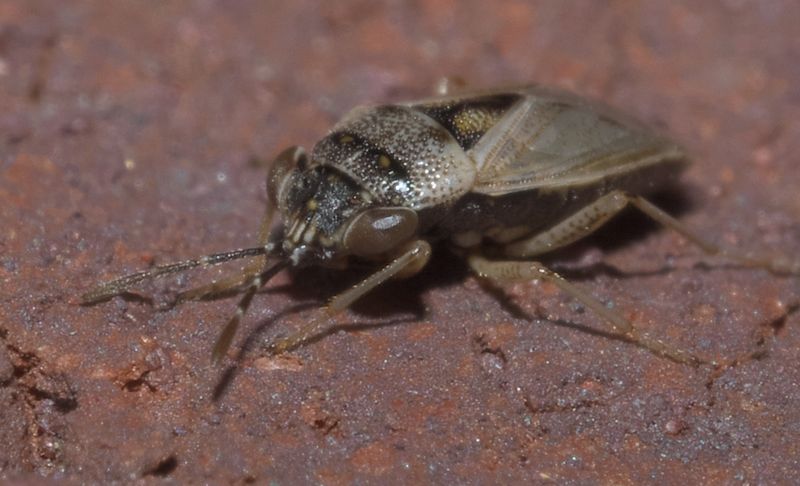
Small, fast, and easy to overlook, big-eyed bugs are the kind of garden helper that most people walk right past without ever noticing.
Named for their oversized, wide-set eyes that take up a significant portion of their tiny heads, these insects belong to the genus Geocoris and are considered one of the most important predatory bugs in Texas vegetable gardens.
They might be small, but their appetite is impressive.
Big eyed bugs feed on a wide range of soft-bodied pests, including spider mites, aphids, small caterpillars, and insect eggs.
They tend to stay close to the soil surface and low-growing vegetation, which puts them right where many of the most damaging garden pests live and reproduce.
Vegetable growers in Texas especially benefit from their presence because big eyed bugs are active in the same areas where crops like squash, beans, and tomatoes are most vulnerable to pest pressure.
One of the things that makes big eyed bugs particularly valuable is that they are active during hot Texas summers when pest populations tend to spike.
They are also relatively tolerant of warm, dry conditions compared to some other beneficial insects.
If you spot a tiny, fast-moving oval bug with giant eyes scurrying around your vegetable bed, resist the urge to squash it.
That little insect is working harder than it looks, and your plants are better off for it.
4. Green Lacewings Clear Tender Growth
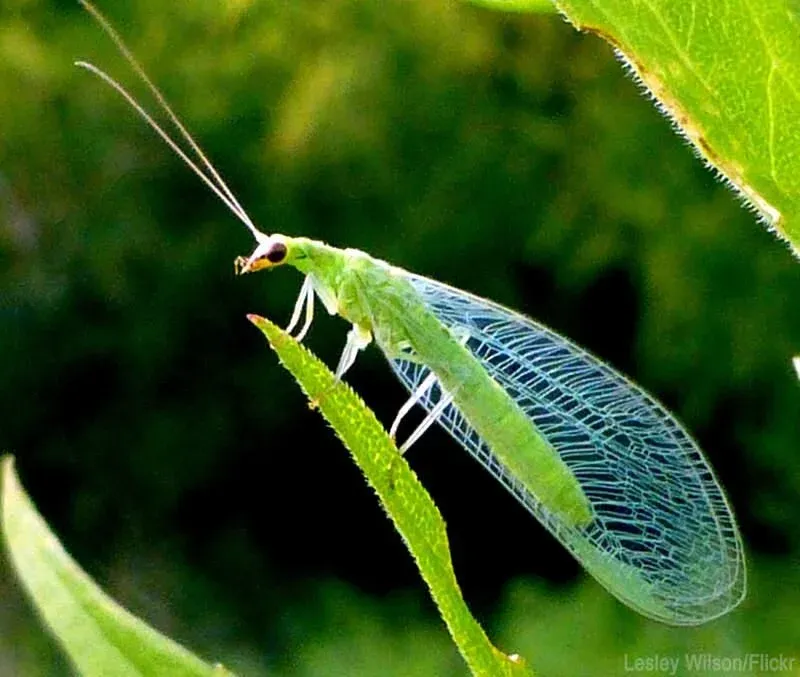
Adult green lacewings are genuinely beautiful insects.
Their transparent, lace-patterned wings catch the light in a way that makes them look almost jewel-like, and their bright green bodies blend softly into garden foliage.
Many gardeners who spot them never realize they are looking at one of the most effective aphid-fighting insects in Texas. The adults are gentle and harmless, but their larvae are a completely different story.
Lacewing larvae are sometimes called aphid lions, and that nickname is well earned.
Hatching from tiny eggs suspended on delicate silk threads above plant leaves, these larvae emerge hungry and aggressive.
They use hollow, curved mouthparts to grab and drain soft-bodied prey, targeting aphids, thrips, whiteflies, small caterpillars, and mealybugs.
A single lacewing larva can consume hundreds of aphids before it pupates into an adult, making it one of the most productive pest controllers you can have on tender new plant growth.
Green lacewings are especially valuable in Texas gardens during spring and early summer when aphid populations tend to explode on new growth.
Planting flowering herbs like dill, fennel, and cilantro attracts adult lacewings to your garden, where they will lay eggs and establish populations naturally.
Encouraging lacewing populations through habitat plantings is far more effective than purchasing and releasing them, since released insects often disperse quickly. Letting these delicate fliers settle in on their own terms pays off in a big way.
5. Lady Beetles Feast On Aphids
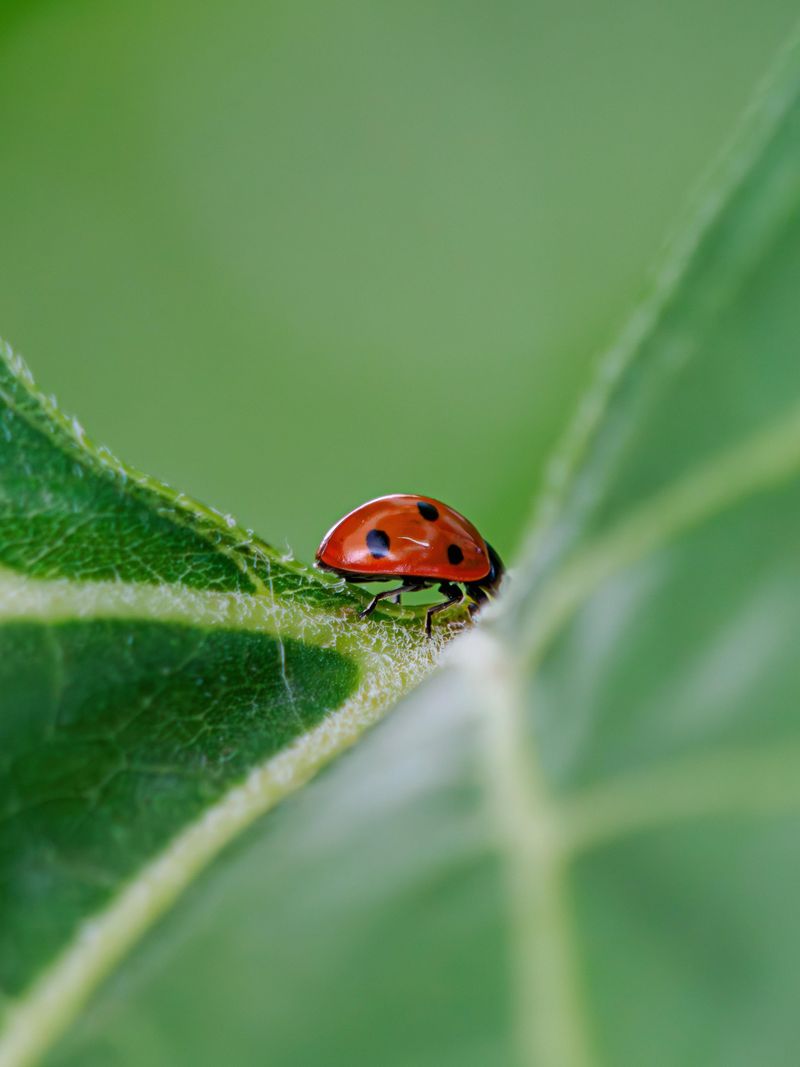
Few insects are as universally recognized and well-loved as the lady beetle, commonly called a ladybug.
Their cheerful red-and-black spotted shells make them one of the most familiar garden visitors in Texas, and that familiarity is well deserved.
Lady beetles are serious predators, and both adults and larvae play an important role in keeping aphid populations from spiraling out of control on your plants.
Adult lady beetles can consume up to 50 aphids per day, which adds up fast during a long Texas growing season.
But the larvae are where things get really impressive. Lady beetle larvae look nothing like the adults. They are dark, spiky, and vaguely alligator-shaped, which causes many gardeners to mistake them for pests and remove them.
This is one of the most common and costly mistakes in the garden.
Those strange-looking larvae are just as hungry as the adults, if not more so, and they work constantly through their larval stage to clear aphid colonies from stems and leaves.
Avoiding broad-spectrum insecticide sprays is the single most important thing you can do to protect lady beetle populations in your yard.
Many commercial products labeled for aphid control also eliminate lady beetles and their larvae, creating a cycle where pest populations rebound faster than the predators can recover. Let the beetles work and your plants will thank you.
6. Praying Mantids Grab Passing Insects
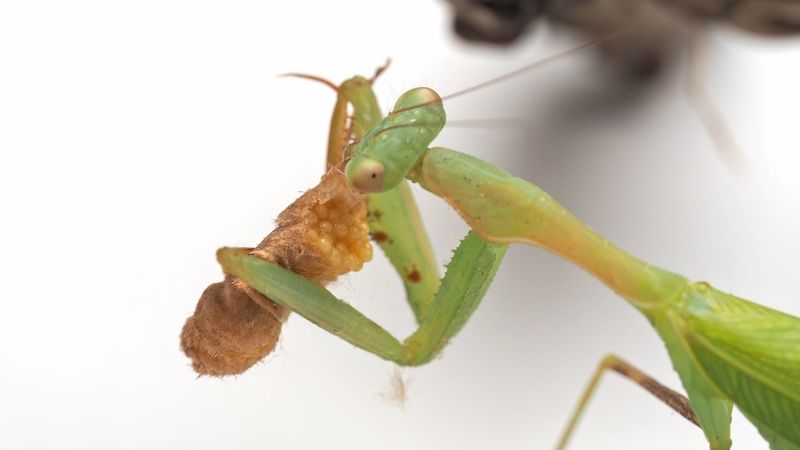
There is something almost meditative about watching a praying mantis.
It holds perfectly still, triangular head tilted slightly, front legs folded as if in prayer, waiting with extraordinary patience for something to come within reach.
When prey gets close enough, the strike happens faster than the human eye can follow. It is one of the most impressive hunting displays in the insect world.
Praying mantids are ambush predators, meaning they do not chase prey but instead wait for it to come to them.
They are generalists, which means they eat whatever passes by, including flies, moths, beetles, caterpillars, and unfortunately, other beneficial insects like bees and butterflies.
This is worth knowing because mantids are not selective pest controllers. They eat the bad guys and the good guys with equal enthusiasm.
That said, their overall presence in a garden is generally considered positive, since they do consume significant numbers of pest species.
Texas has several native mantid species, and the Chinese mantis, an introduced species, is also commonly found here.
Gardeners are sometimes tempted to handle mantids because they seem calm and curious, but it is better to admire them without touching.
Watch from a comfortable distance and enjoy one of the garden’s most theatrical predators doing exactly what it was built to do.
7. Robber Flies Snatch Pests Midair
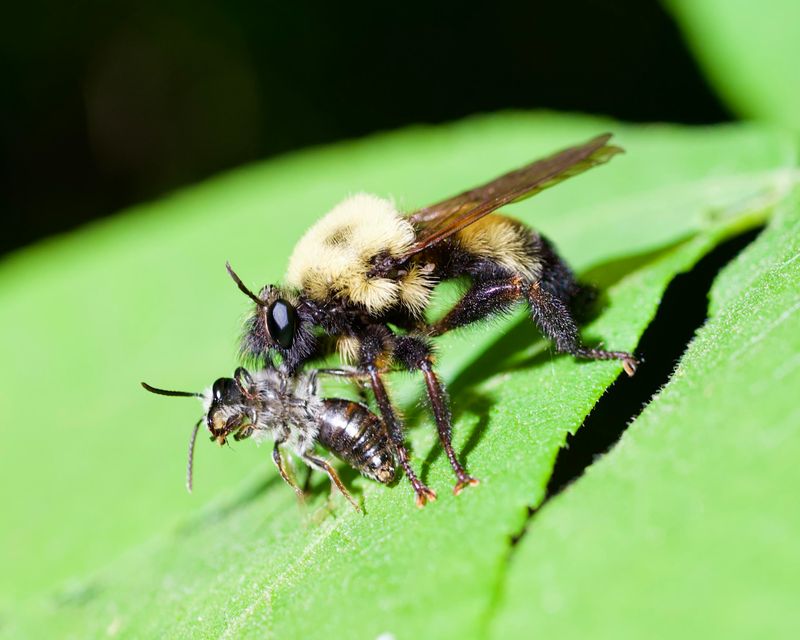
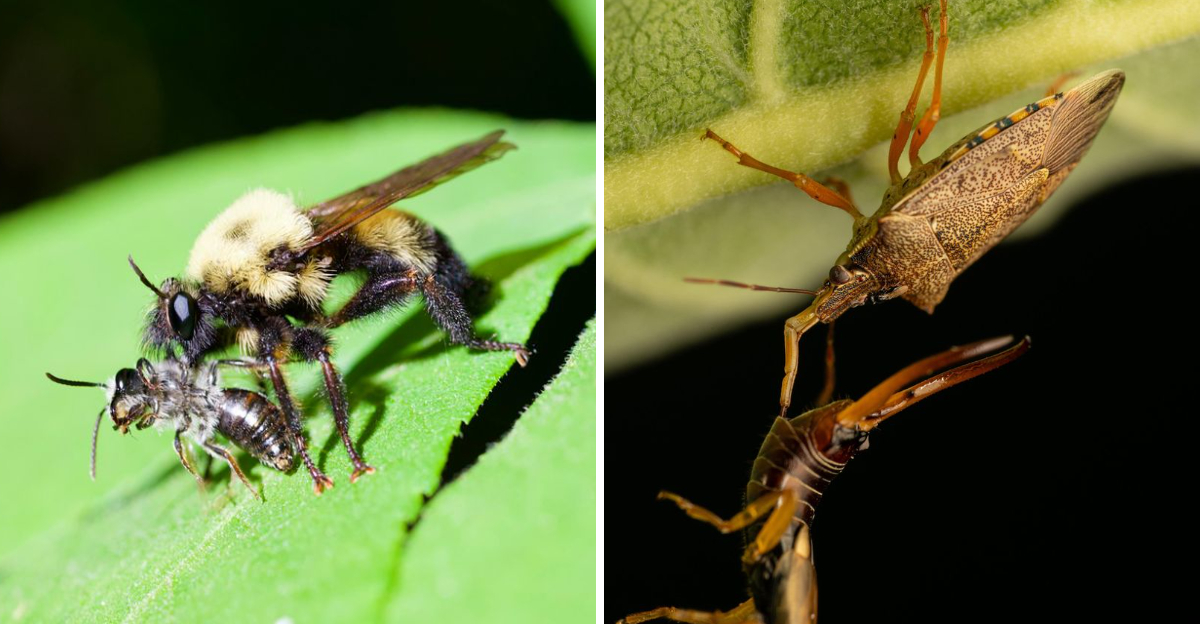
If you have ever been startled by a large, bristly fly that suddenly launched itself off a fence post and disappeared into the air, you may have witnessed a robber fly in action.
These insects are among the most skilled aerial hunters in the insect world, and their appearance can genuinely catch you off guard.
Robber flies are stocky, hairy, and equipped with sharp, bearded faces that make them look more intimidating than helpful.
Despite their fierce looks, robber flies are excellent pest controllers.
They hunt entirely on the wing, launching from perches to intercept passing insects mid-flight with remarkable accuracy.
Their targets include leafhoppers, beetles, wasps, grasshoppers, and various flies that damage garden plants. They grab prey with their powerful legs, inject a paralyzing fluid, and consume the soft contents of their catch.
Texas is home to dozens of robber fly species, ranging from small and slender to impressively large.
Some of the bigger species are occasionally mistaken for hornets or large bees, which causes unnecessary alarm. The bristly, bearded face is actually the easiest way to tell a robber fly apart from other large flies.
Robber flies can bite if handled, so like all the insects on this list, they are best appreciated from a distance.
Seeing one perched in your garden is a sign of a healthy, diverse insect community that is actively working in your favor.
8. Ground Beetles Work The Night Shift
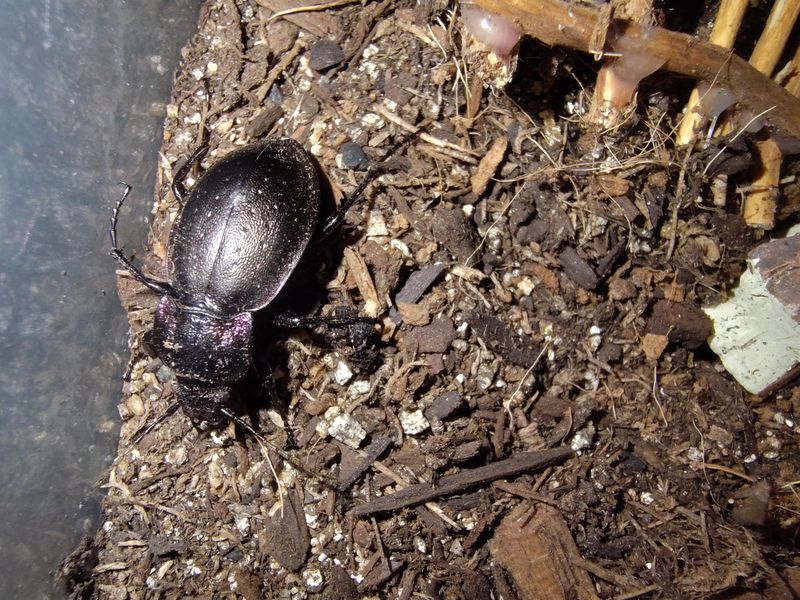
Most of the pest control happening in your garden at night goes completely unnoticed, and ground beetles deserve a lot of credit for that.
These shiny, fast-moving beetles belong to the family Carabidae, one of the largest and most ecologically important beetle families in North America.
In Texas, ground beetles are active throughout the growing season, working under cover of darkness to hunt the pests that hide in the soil and mulch during the day.
Ground beetles feed on a wide range of soil-level pests, including cutworms, slugs, snails, grubs, and the eggs of various harmful insects.
Some species also consume weed seeds, which adds another layer of value for gardeners trying to reduce weed pressure naturally. They are fast runners but poor fliers, so they stay close to the ground where their prey lives.
Leaving areas of bare soil, mulch, and leaf litter in your garden gives ground beetles the habitat they need to thrive.
Because they are most active at night, you might only ever see a ground beetle if you lift a board, a pot, or a pile of mulch during the day. They scatter quickly when exposed to light, which is completely normal behavior.
Ground beetles are harmless to plants and people.
Avoid disturbing their hiding spots too frequently, and consider reducing the use of soil-applied insecticides that can eliminate these quiet, hardworking hunters before they ever get a chance to help.
9. Spined Soldier Bugs Guard Your Vegetable Patch
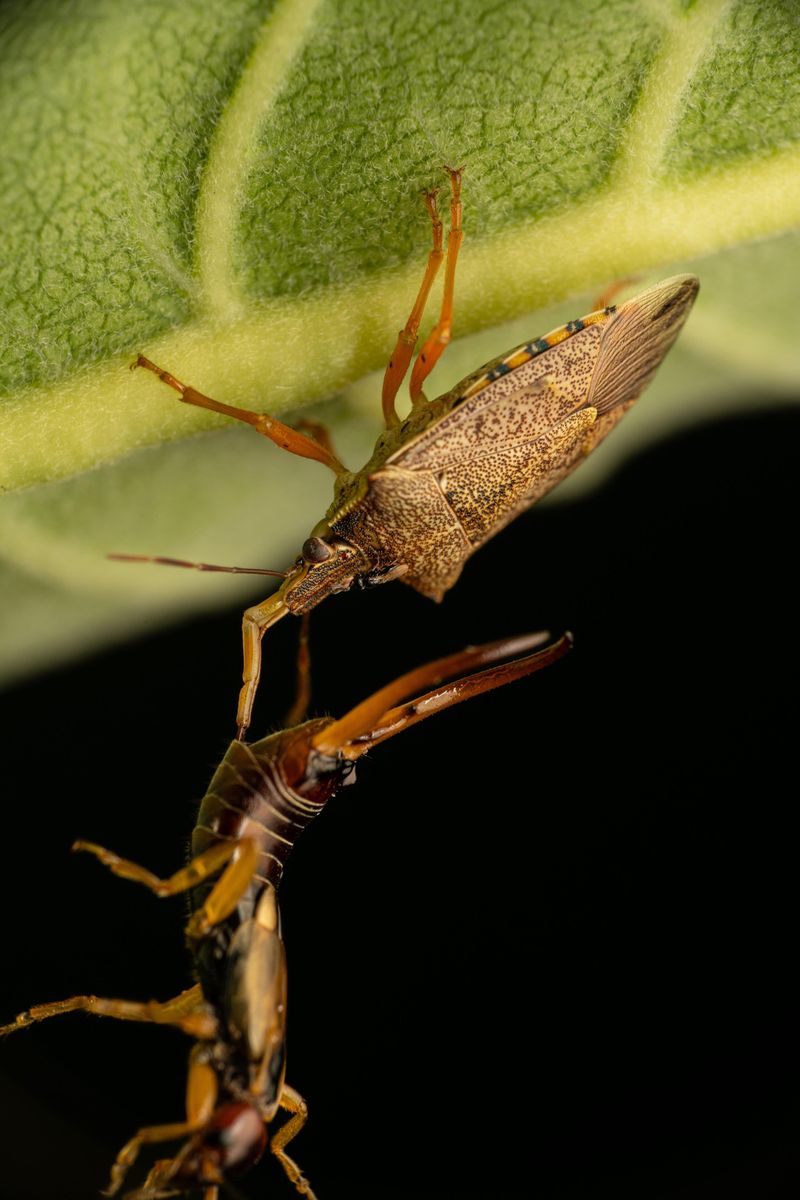
At first glance, a spined soldier bug looks a lot like a stink bug, and that resemblance has cost many of them their lives in Texas gardens.
The two insects are closely related and share a similar shield-shaped body, but there is one easy way to tell them apart: the spined soldier bug has sharp, pointed projections on its shoulders that give it a noticeably more angular silhouette.
Once you know what to look for, the difference becomes obvious.
Unlike stink bugs, which feed on plants and cause real damage, spined soldier bugs are predators.
They feed on soft-bodied caterpillars and beetle larvae, including some of the most destructive pests in Texas vegetable gardens. Mexican bean beetle larvae, cabbage loopers, and fall armyworm caterpillars are all on the menu.
Texas A&M AgriLife Extension lists the spined soldier bug as one of the most important native predatory bugs in the state, particularly for vegetable growers dealing with caterpillar pests.
One of the best ways to support their populations is to avoid eliminating what you assume are stink bugs without taking a closer look first. A quick check of those shoulder spines can save a valuable garden ally.
Spined soldier bugs can emit a mild odor when disturbed, which is another reason to observe rather than handle any bug that resembles a stink bug.