9 Signs Spotted Lanternfly Adults Have Arrived In Pennsylvania Gardens This July
July is a turning point in Pennsylvania gardens, and not in the way many gardeners expect.
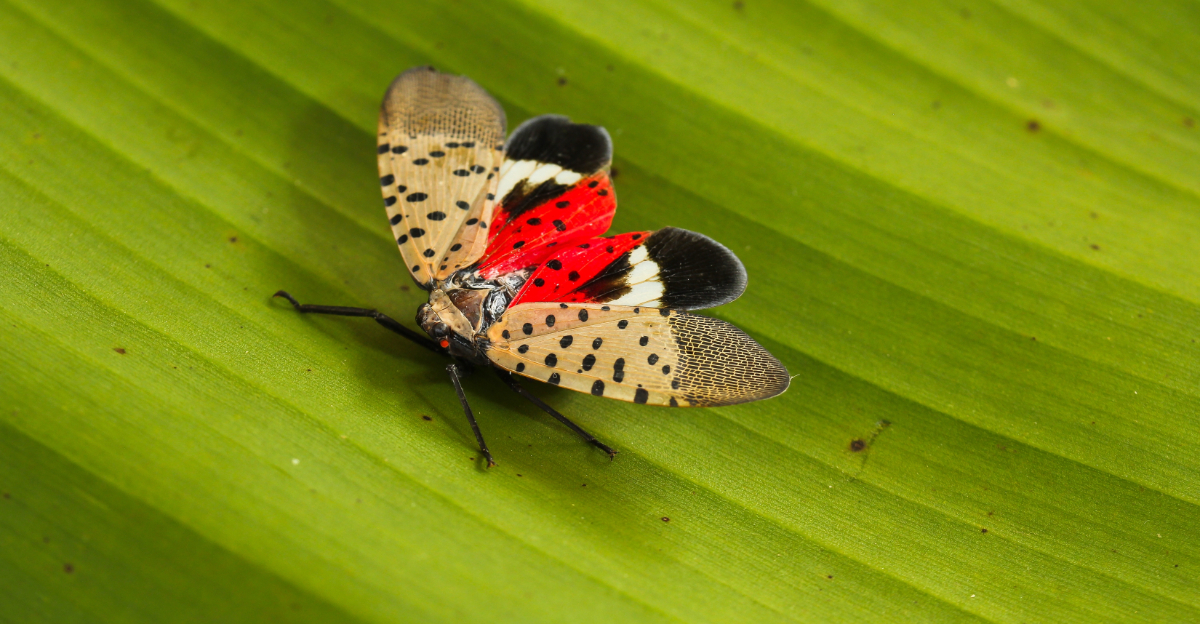
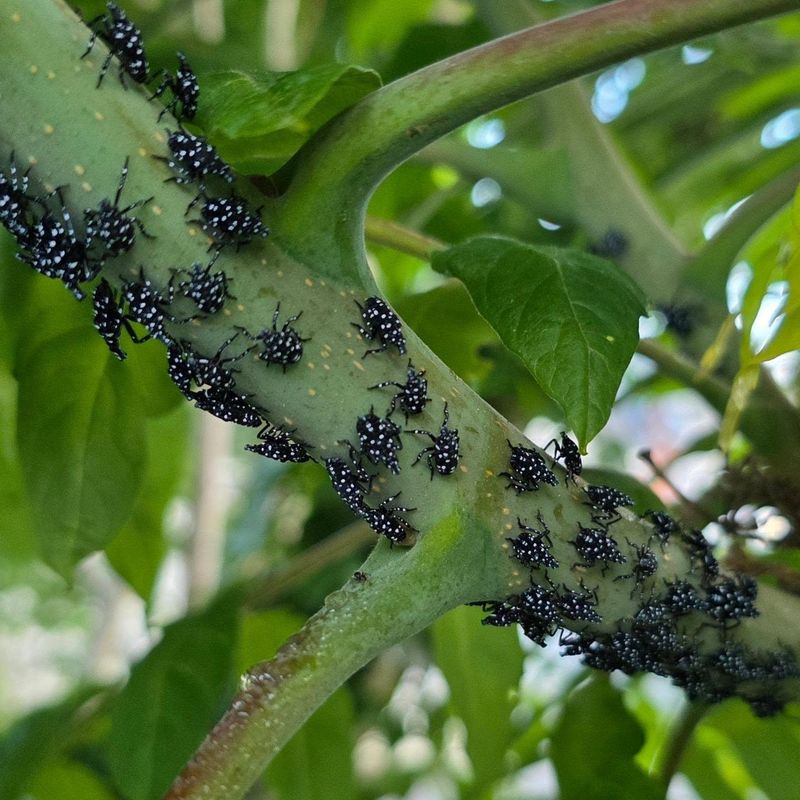
The spotted lanternfly, which spent spring and early summer as a small crawling nymph, is now growing into its adult form.
That shift matters because adult spotted lanternflies are more mobile, harder to miss, and can spread more quickly across your yard and neighborhood than anything you encountered earlier in the season.
Knowing what to look for right now can help you protect your plants and report sightings before the population grows.
This invasive pest from Asia has been spreading across Pennsylvania since it was first confirmed in Berks County in 2014.
Adults typically begin appearing in late July, and by August they are feeding heavily on grapes, hops, apples, and ornamental trees across the state.
The good news is that catching them early gives you more options.
You do not need to panic, but you do need to pay attention. Walking your garden in the morning or evening, checking tree trunks, and looking for sticky residue on leaves are all simple habits that can make a real difference this July.
1. Gray Spotted Wings Rest On Trunks
A flash of movement catches your eye near the base of a tree, and then it stops.
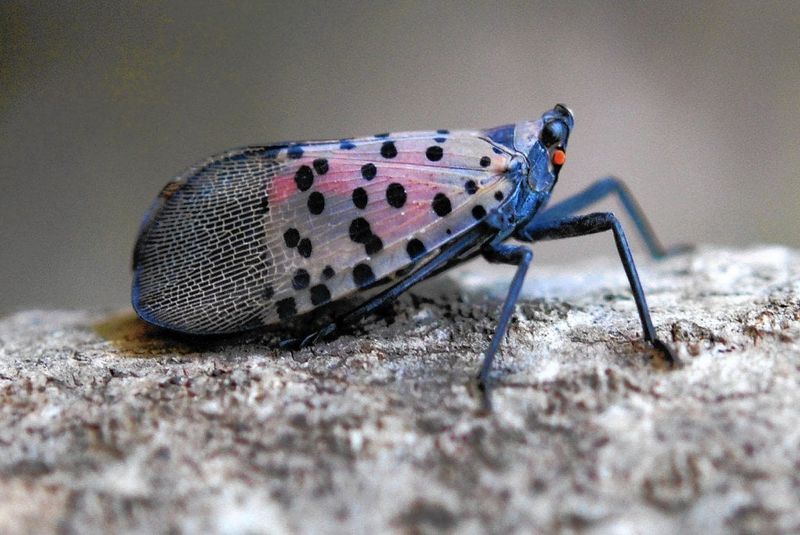
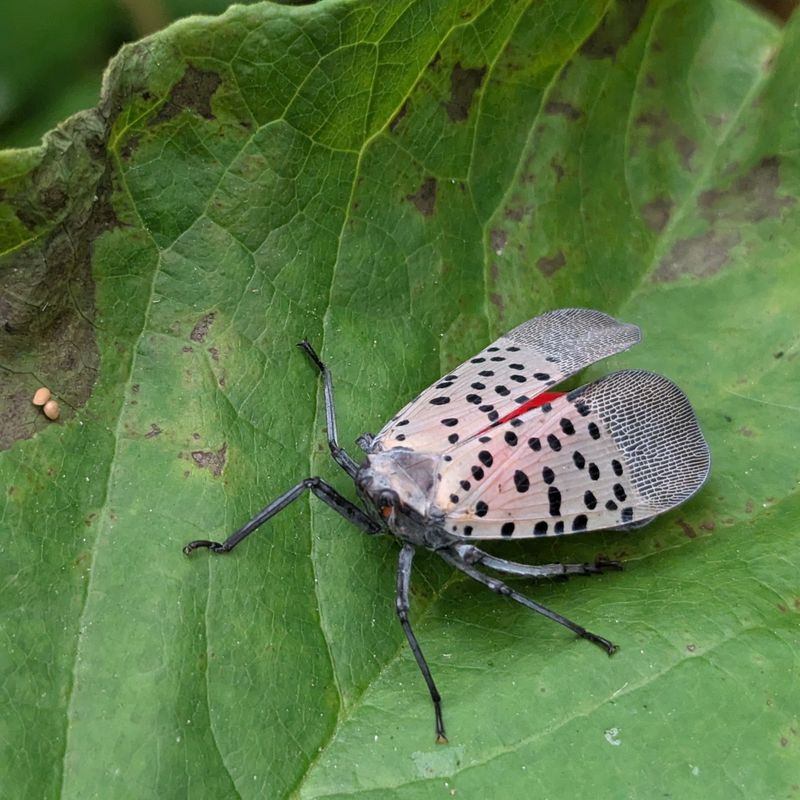
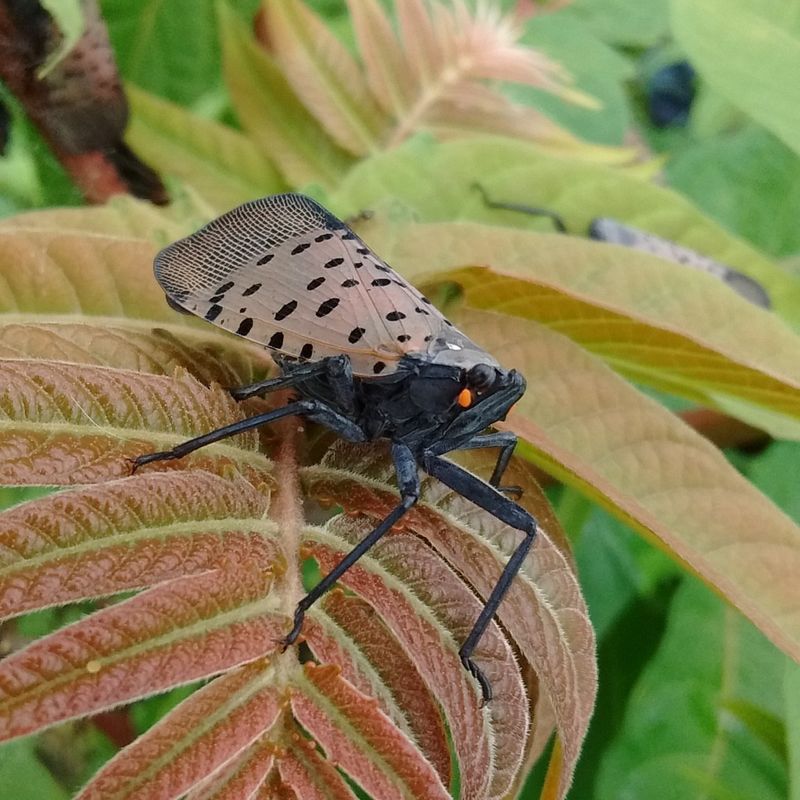
You look closer and see a flat, gray insect pressed against the bark, almost blending in. That is exactly what a spotted lanternfly adult looks like when it is resting with its wings folded.
The forewings, which are the outer wings you see when the insect is still, are a soft grayish-tan color with neat rows of black spots near the top.
Toward the bottom edge, the spots give way to a brick-like pattern of gray and black blocks. The wings are held flat against the body, making the insect look almost like a small, decorative tile stuck to the tree.
Adults are about an inch long, which makes them noticeably bigger than the nymphs you may have spotted earlier in the season.
They tend to rest low on trunks, often within the first four feet from the ground. You might also find them on fence posts, garden walls, and smooth-barked trees like maples and black walnuts.
Morning is a great time to check because the insects tend to be less active in cooler temperatures.
Run your eyes slowly along tree trunks and woody stems. If you spot one, take a photo and report it using the Pennsylvania Department of Agriculture’s online reporting tool. Your report helps track the spread into new areas.
2. Red Hindwings Flash When They Jump
Nothing prepares you for the first time you see a spotted lanternfly open its wings.
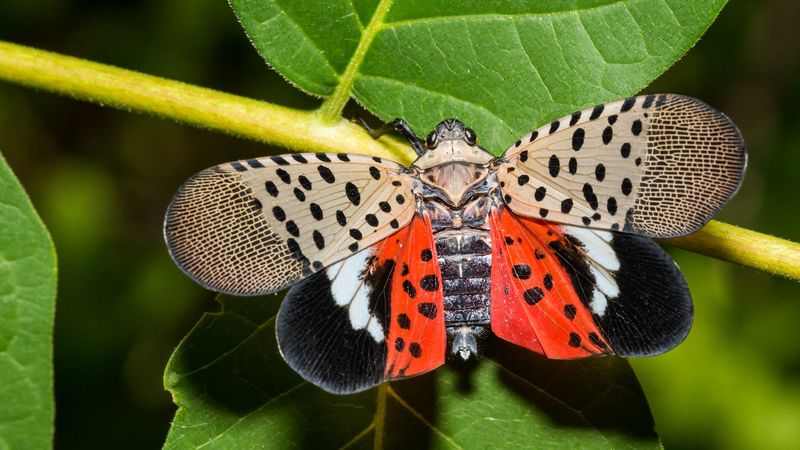
You reach toward one resting on a post, and suddenly it leaps into the air with a burst of bright red that seems completely out of place in a quiet garden.
That flash is one of the most reliable ways to confirm what you are looking at.
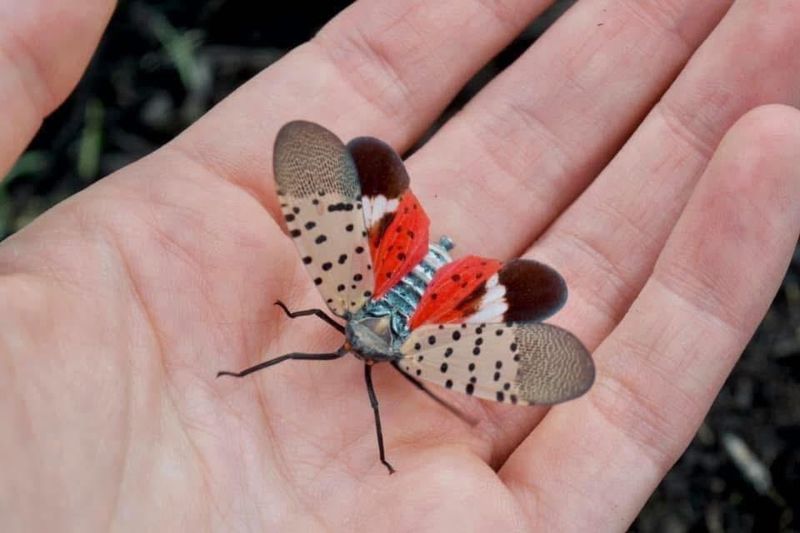
Beneath those dull gray forewings are hindwings that are vivid red with bold black spots near the top and a wide white band across the middle.
Your Pennsylvania Garden Changes Every Week. Your Plan Should Too.
Gardening in Pennsylvania changes quickly throughout the season. Every Friday you’ll receive a simple weekly plan showing exactly what to plant, prune, fertilize, harvest, and protect so you never miss the right timing.
The lower portion of the hindwing fades to black. When the insect jumps or takes short flights, those colors are impossible to miss. Scientists believe the bright colors may startle predators, giving the lanternfly a moment to escape.
Spotted lanternflies are not strong fliers.
They tend to jump first and then glide a short distance before landing again. If you see an insect doing that hopping, gliding movement near your trees or fence line, watch for the red flash as it opens its wings.
That combination of gray-on-bark and red-in-flight is a clear signature.
You do not need to catch the insect to report it. A clear photo of the wings, even in motion, is helpful to authorities.
Penn State Extension recommends photographing both the resting and flying positions whenever possible to help with identification and tracking efforts across the state.
3. Adults Gather On Tree Of Heaven
Tree of heaven, known scientifically as Ailanthus altissima, is like a magnet for spotted lanternflies.
Walk past one of these fast-growing weedy trees in July and you may find dozens of adults clustered on the trunk and lower branches.
If you are not sure whether you have tree of heaven on your property, now is a good time to learn how to identify it.
Tree of heaven has long compound leaves with many leaflets, and when you crush a leaf it releases a strong, unpleasant smell that many people compare to peanut butter gone bad.
The bark on younger trees is smooth and greenish-gray. These trees grow aggressively along roadsides, fence lines, and at the edges of wooded areas.
Finding adults on this tree does not mean they will stay there.
They also move to nearby fruit trees, ornamental plants, and garden crops. Think of tree of heaven as a warning sign that spotted lanternflies are active in the area.
Check the trunk carefully, especially on the south-facing side where the tree gets more sun.
Look at branch junctions and rough patches of bark. Clusters of adults resting together in July are a strong signal that the population is building in your yard or neighborhood.
4. Sticky Honeydew Coats Leaves Below
Sometimes you notice the mess before you notice the insect.
Spotted lanternflies feed by piercing plant stems and drawing out sap, and as they feed they excrete a sugary liquid called honeydew.
That honeydew drips down onto the leaves, stems, and soil below, leaving behind a sticky, shiny coating that looks almost like someone sprayed the plant with a light syrup.
Run your hand across a leaf that looks unusually shiny.
If it feels tacky or slightly sticky, that is a sign that something above has been feeding heavily. Honeydew can also fall onto garden furniture, walkways, and cars parked near infested trees.
If your car has mysterious sticky spots and you park near trees, spotted lanternflies could be the reason.
Heavy honeydew deposits can stress plants by blocking sunlight from reaching the leaf surface.
The leaves may start to look dull or discolored over time. Plants that are already dealing with drought or other stressors are more vulnerable to this kind of feeding pressure.
Look carefully at the undersides of leaves and the stems just above sticky areas.
You may find adults feeding in groups, often facing downward on the stem. Checking for honeydew is a useful scouting habit because it reveals feeding activity even when the insects themselves have moved on.
5. Black Sooty Mold Follows The Sugar
After the honeydew comes the mold.
When spotted lanternflies feed heavily on a plant, the sugary honeydew they leave behind becomes a food source for a type of fungus called sooty mold.
This mold grows on the sticky surface and creates a dark, powdery coating that looks like soot or ash has been dusted onto the plant.
Sooty mold is not a disease that infects the plant directly, but it does cause real problems.
The black coating blocks sunlight from reaching the leaf surface, which slows photosynthesis and weakens the plant over time.
Heavily coated leaves may turn yellow and drop early. On fruit trees and grapevines, sooty mold can also affect the appearance and sometimes the flavor of fruit.
You might first notice sooty mold on the ground beneath a heavily infested tree, where fallen leaves have accumulated a dark film.
Check the trunk, lower branches, and any plants growing beneath a suspected feeding site. The mold tends to spread outward from the area where feeding is most intense.
Sooty mold can be wiped away with a damp cloth on smooth surfaces, and a gentle rinse with water can help on leaves.
The real fix is reducing the source of honeydew by managing the spotted lanternfly population. If you see sooty mold in your garden this July, take it as a clear signal to inspect nearby plants carefully.
6. Wasps And Flies Crowd The Residue
Here is something that catches many gardeners off guard.
You walk past a tree and notice an unusual number of wasps, yellow jackets, and flies buzzing around the trunk and lower branches.
There are no visible flowers nearby and no obvious food source. But the insects keep coming. That activity is worth a closer look.
Spotted lanternfly honeydew is rich in sugar, and many other insects find it irresistible.
Wasps, hornets, yellow jackets, ants, and various fly species are all drawn to the sweet residue. They gather on tree bark, fence posts, and any surface where honeydew has pooled or dripped.
This secondary insect activity can actually help you locate a spotted lanternfly feeding site before you ever spot the lanternflies themselves.
If you see an unusual cluster of stinging insects near a tree trunk in July, approach carefully and look at the bark.
Check for the shiny honeydew coating and for adult lanternflies resting or feeding nearby. The presence of attracted insects is not harmful on its own, but it does confirm that feeding activity is happening at that location.
Some research has suggested that a small number of native predators do feed on spotted lanternflies, but natural predation alone is not enough to control the population at this time.
Reporting your sighting and following state guidance remains the most effective step you can take as a home gardener in Pennsylvania this summer.
7. Grape Vines Get Heavy Visitor Traffic
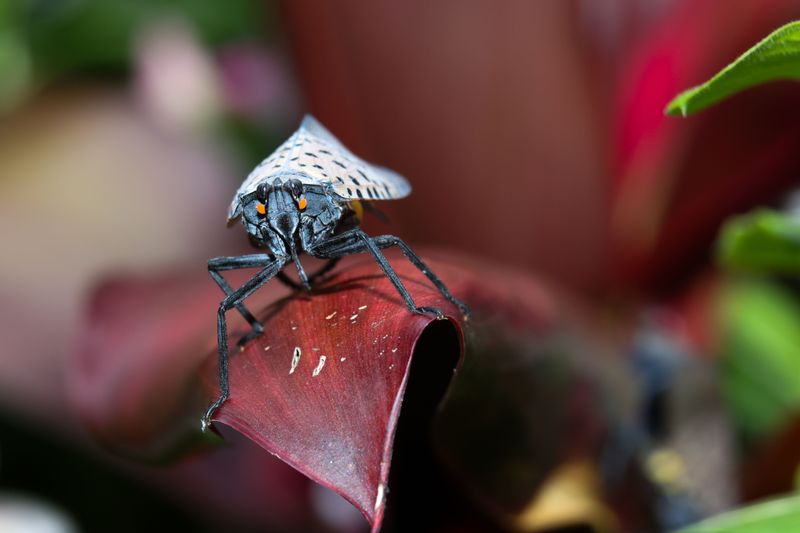
Pennsylvania has a growing wine and grape industry, and spotted lanternfly adults have a particular fondness for grapevines.
By late July, adult lanternflies may begin shifting their feeding attention toward grapes, and home gardeners with backyard vines should be watching closely.
A heavy infestation on a grapevine can weaken the plant significantly over a single season.
Adults feed on the green stems of grapevines, inserting their piercing mouthparts to access the sap just beneath the surface.
This feeding can cause the vine to weep sap, which then attracts even more insects. You may notice wilting leaves, reduced fruit set, or sections of vine that look stressed compared to the rest of the plant.
In severe cases, vines that are fed on repeatedly through July, August, and September may struggle to recover fully heading into winter.
Check your grapevines morning and evening, since spotted lanternflies tend to be most active during those cooler parts of the day.
Look at the main stems and where the stems meet the trunk of the vine. Adults often gather in groups, which makes them easier to spot once you know where to look.
The Pennsylvania Department of Agriculture has specific guidance for grape growers, and Penn State Extension offers resources tailored to both commercial and home vineyard owners.
8. Egg Masses Start Later In The Season
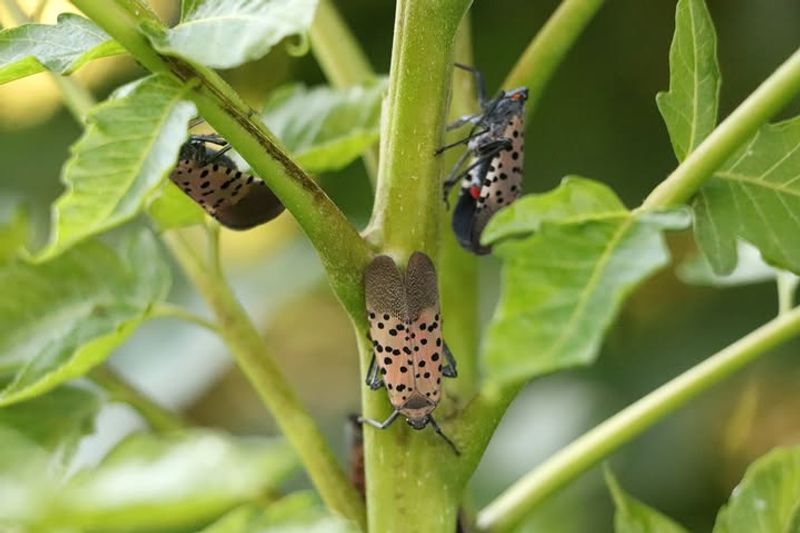
One thing worth understanding about July is that you are catching spotted lanternflies at the beginning of their adult phase, before egg laying becomes a major concern.
Adults typically begin laying eggs in late September and continue through November. So if you are checking for egg masses right now and not finding many, that is normal for this time of year.
Egg masses look like small patches of gray putty or dried mud pressed flat against a surface.
Beneath that coating are rows of seed-like eggs arranged in neat columns. You might find them on tree bark, smooth rocks, outdoor furniture, vehicles, and even cardboard boxes left outside.
They blend in remarkably well, which is why many people do not notice them until spring.
The reason it matters to find adults in July is that managing the population now, before egg laying begins, is more effective than trying to address egg masses in the fall.
Each adult female can lay one or two egg masses, and each mass contains 30 to 50 eggs. Catching adults early limits how many eggs end up in your garden and neighborhood.
Penn State Extension recommends scraping egg masses with a stiff card into a bag of hand sanitizer or rubbing alcohol when you find them in fall.
For now, focus on identifying and reporting adult activity. That information helps state agencies understand where the population is moving and how to direct resources most effectively this season.
9. Hops Plants Draw Feeding Attention
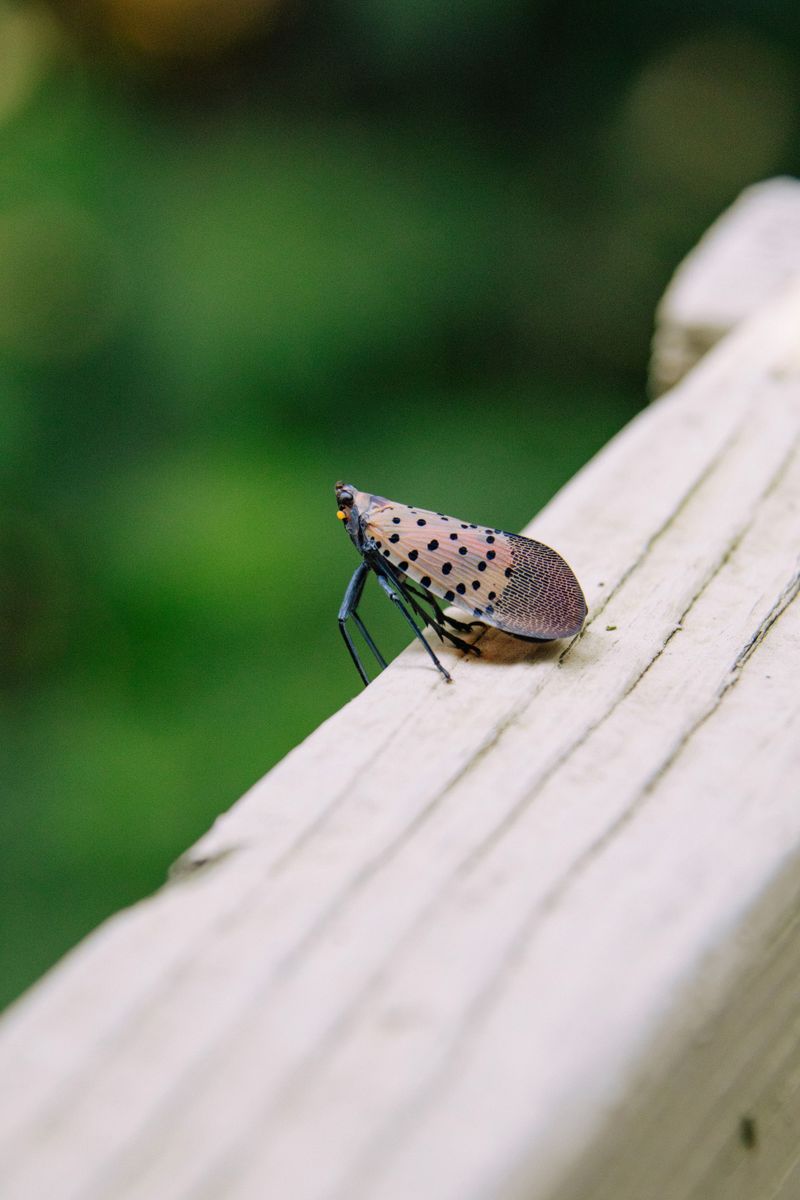
Pennsylvania’s craft brewing scene has grown dramatically over the past decade, and with it, the number of home hop growers across the state.
If you grow hops in your backyard for homebrewing or as an ornamental vine, spotted lanternfly adults are a pest you need to watch for closely this July.
Hops are listed by Penn State Extension as one of the plants most vulnerable to spotted lanternfly feeding damage.
Hop plants grow quickly in summer and produce long, climbing bines that are covered with soft green growth. That tender growth is exactly what spotted lanternflies prefer.
Adults feed on the bines and leaf stems, drawing out sap and leaving behind the familiar honeydew residue. A heavily infested hop plant may show wilting, yellowing, and reduced cone production by late summer.
Check your hop bines every few days in July.
Look along the main stem and at the base of leaves where they attach to the bine. Adults tend to gather in groups, so if you spot one, there are likely more nearby.
Early morning checks are most effective because the insects are slower in cooler temperatures and easier to observe.
Reporting hop plant infestations is especially valuable to researchers tracking how spotted lanternfly populations affect agricultural crops beyond grapes and apples.