Why Massachusetts Beach Roses Handle Droughts That Weaken Backyard Varieties
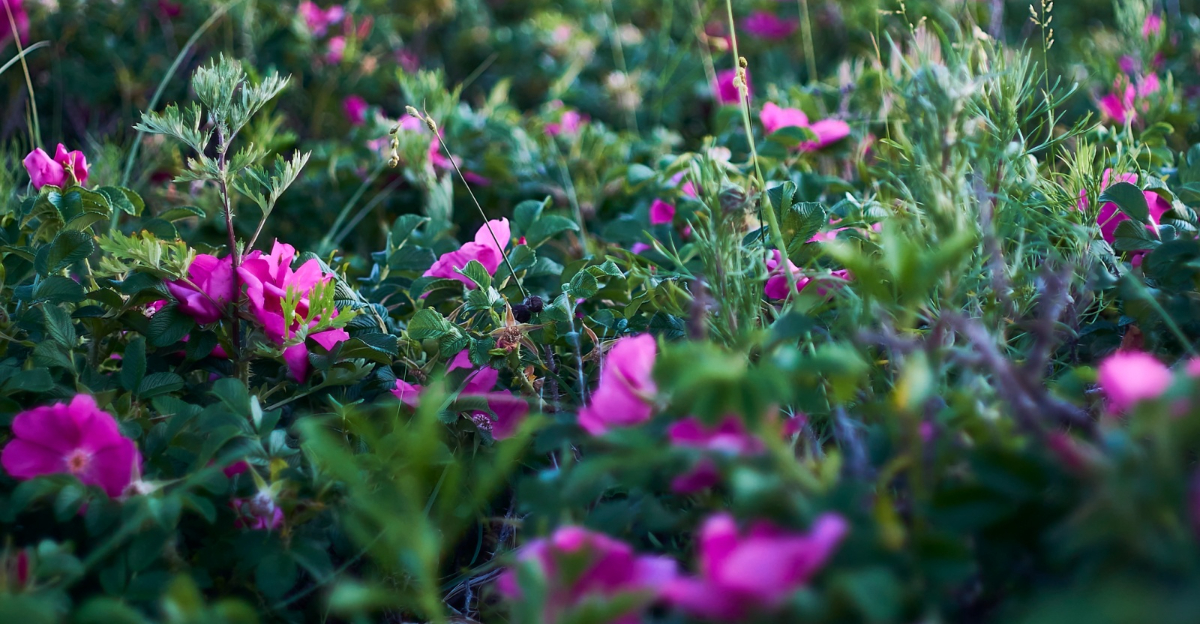
Walk any stretch of Massachusetts shoreline in July. You’ll notice something strange. While inland gardens sag under humidity and thirst, the wild roses growing along the dunes look almost unshaken.
Rosa rugosa is the wrinkled beach rose that spreads freely across Massachusetts coastlines, from Plum Island to Cape Cod.
It didn’t get tough by accident. Salt spray, steady wind, and sand that drains water in minutes would overwhelm most cultivated roses within a season.
Beach roses take it in stride. Their thick, crinkled leaves trap moisture. Their roots dig deep and wide, chasing groundwater other plants can’t reach.
Centuries of coastal weather shaped a plant that treats hardship as routine rather than crisis.
Once you understand the mechanics behind that resilience, you start seeing your own garden differently. Every wilting petal, every crispy leaf edge becomes a question.
Is this plant actually suited to where it’s growing, or just tolerated there? Beach roses don’t just endure. They rewrite what gardeners assume a rose needs to thrive.
1. Deep Taproots Reach Moisture Far Below The Surface
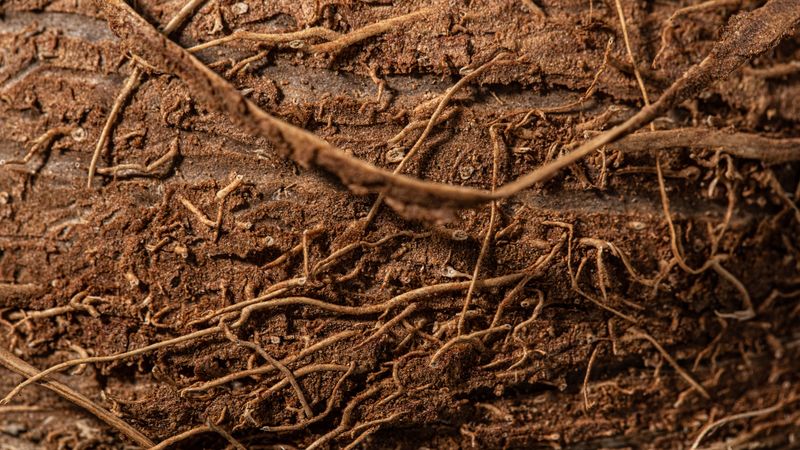
Forget what you know about typical rose roots. Beach roses along the Massachusetts shoreline grow taproots that push down several feet into the ground, far past the dry upper layers of sand.
Most backyard rose varieties have shallow, spreading root systems. Those roots sit close to the surface, where summer heat and low rainfall dry things out fast.
Beach roses play a completely different game. Their roots chase water downward, reaching moisture that surface-level roots could never access during a drought.
Sandy coastal soils drain quickly after rain, which encourages beach roses to grow deeper root systems over time.
When a dry spell hits, backyard roses show visible stress because their food and water supply dries up.
Beach roses are minimally affected because they’re already drawing from cooler, moister soil layers below.
Gardeners who struggle with drought often try mulching or extra watering to protect shallow-rooted plants. That works short-term, but it never fixes the root problem, literally.
The depth of a beach rose’s root system is one of its greatest advantages. Though hidden underground, it helps sustain moisture and nutrient supply throughout the summer.
You can’t see it, but it’s quietly keeping the plant fed and hydrated all summer long. Massachusetts beach roses handle droughts that weaken backyard varieties largely because of what’s happening underground.
Strong roots are the foundation of every drought-resistant plant, and beach roses have had centuries to perfect theirs.
2. Thick, Leathery Leaves Reduce Water Loss

Run your finger across a beach rose leaf and you’ll feel something different right away. The surface is thick, almost stiff, with deep ridges that feel nothing like the smooth, soft leaves on a hybrid tea rose.
That toughness isn’t just texture for texture’s sake. Thick leaves lose water more slowly through a process called transpiration, which is how plants release moisture through their leaf surfaces.
Your Massachusetts Garden Changes Every Week. Your Plan Should Too.
Gardening in Massachusetts changes quickly throughout the season. Every Friday you’ll receive a simple weekly plan showing exactly what to plant, prune, fertilize, harvest, and protect so you never miss the right timing.
Thin, delicate leaves found on many ornamental rose varieties act almost like open windows. Water escapes easily, especially when temperatures spike and dry winds blow across a summer garden.
Beach rose leaves are more like insulated walls. Less moisture escapes, which means the plant stays hydrated longer between rain events or waterings.
Scientists call this adaptation xeromorphic, which basically means the plant is physically built to hold onto water. Beach roses developed this trait through generations of living in exposed, wind-blasted coastal environments.
Backyard gardeners often notice their hybrid roses drooping by midday on hot summer days. This indicates water stress, occurring when the plant loses moisture faster than its roots can replace it.
Beach roses almost never show that midday wilt. Their thick leaves act as a buffer, buying the plant extra time during heat waves and dry stretches.
Next time you’re near a coastal thicket in Massachusetts, pinch a beach rose leaf between your fingers. That firmness you feel is drought survival built right into the plant’s biology, and it makes all the difference.
3. Waxy Leaf Coating Helps Lock In Hydration
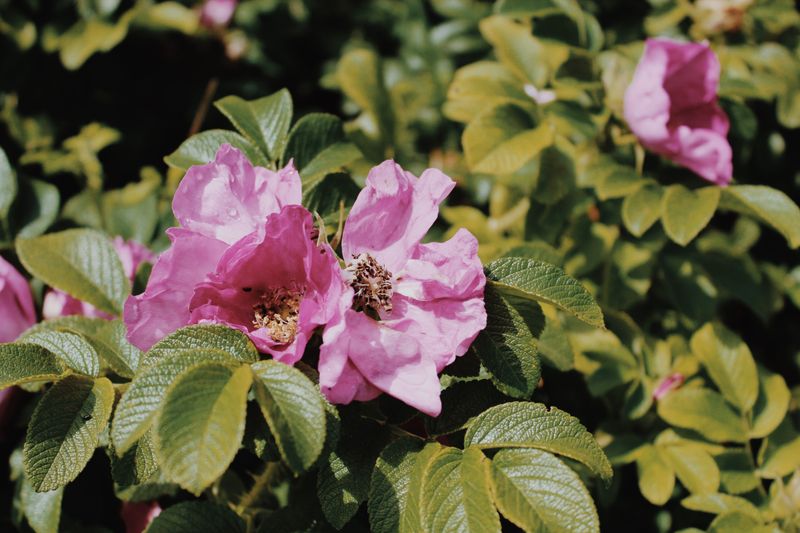
Water beads up and rolls off a beach rose leaf like it’s coated in invisible wax, because it basically is. A natural substance called a cuticle covers the leaf surface, creating a waterproof barrier that works in both directions.
That coating keeps outside moisture from soaking in, but more importantly, it keeps inside moisture from escaping. On a hot, breezy coastal day, that distinction matters enormously.
Ornamental roses bred for big blooms and vibrant colors often sacrifice this kind of structural protection. Plant breeders focused on beauty, and drought resilience wasn’t always part of the equation.
Beach roses never had breeders optimizing them for flower shows. They were shaped by survival pressure alone, and the waxy cuticle is one result of that long adaptive process.
On days when the temperature climbs and dry winds sweep across the Massachusetts coast, that waxy layer is working hard. It’s slowing the rate of water loss to a fraction of what an uncoated leaf would experience.
Gardeners sometimes wonder why their prized roses shrivel during heat waves even after thorough watering. Often, the issue isn’t soil moisture at all but the leaf’s inability to hold onto what it has.
A thicker, waxier cuticle is one of the clearest physical differences between wild coastal roses and cultivated backyard types. It’s invisible to the naked eye but powerful in a drought.
Beach roses handle droughts partly because of this built-in armor. That shiny, slightly stiff look on their leaves isn’t just visual, it’s a survival mechanism refined over generations.
4. Sandy Coastal Soil Trains Roots To Seek Water Efficiently
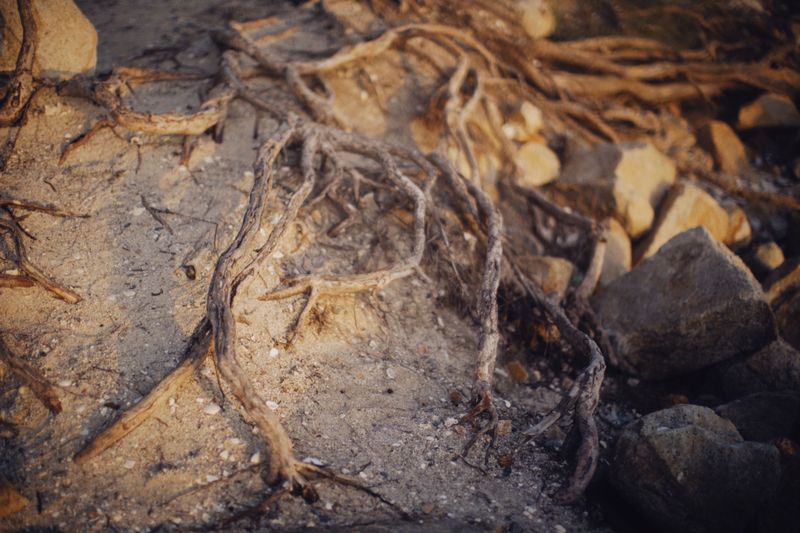
Growing up in sand sounds like a disadvantage, but for beach roses it’s actually a training ground. Sandy coastal soil drains water almost immediately after rain, which forces roots to become aggressive water-seekers from the very start.
Backyard garden soil tends to hold moisture longer, especially if it’s been amended with compost or other organic material. Roses grown in that kind of soil never need to work very hard to find water.
Beach roses, by contrast, grow up in soil that offers almost no cushion. Every dry spell is a real test, and the roots that survive are the ones that learned to spread wide and go deep.
Over generations, this pressure created a root architecture that’s remarkably efficient. Beach rose roots can extract water from soil that would seem bone dry to most other plants.
Think of it like the difference between a kid who walked everywhere and one who always had a ride. The walker builds stamina that shows up later in life when things get tough.
When a drought hits Massachusetts gardens, backyard roses struggle because their pampered root systems aren’t prepared. Beach roses are already operating in low-moisture mode, so the transition barely registers.
Sandy soil also tends to be warmer, which speeds up root growth early in the season. That head start means beach roses establish deep, efficient root networks before summer heat peaks.
The soil that seems like a weakness is actually the environment that makes these plants so resilient.
5. Salt Tolerance Builds Broader Resilience To Harsh Conditions
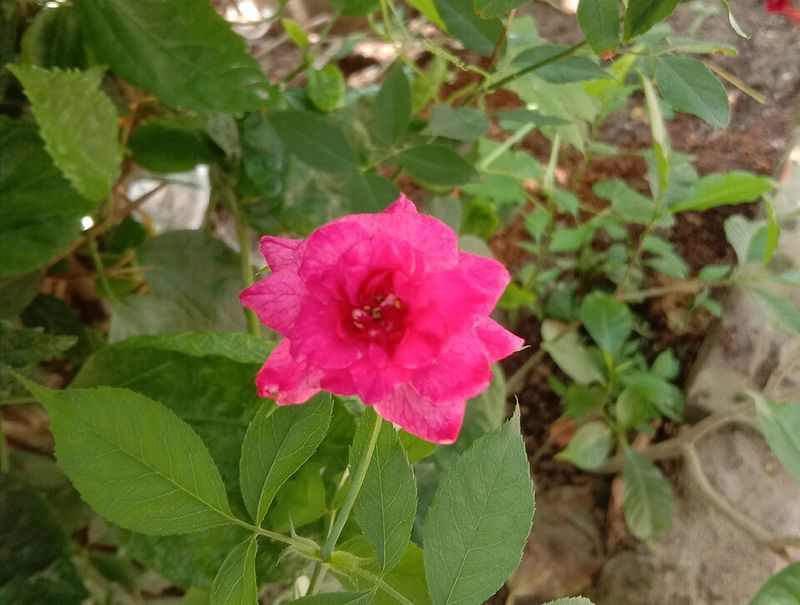
Salt is one of the harshest things a plant can face. It pulls moisture out of plant tissue through osmosis, essentially dehydrating cells from the inside out, and most ornamental roses can’t handle even small amounts of it.
Beach roses live in salt spray zones where the air itself carries a mineral load. Somehow, they not only survive that exposure but thrive in it, producing bright blooms and thick foliage all season long.
The biological mechanisms that allow a plant to tolerate salt overlap significantly with those that help it handle drought. Both stressors involve the plant managing water at the cellular level.
Beach roses have evolved specialized cell membranes and internal chemistry that regulate salt and water balance more effectively than most cultivated varieties. It’s a whole-body adaptation, not just one feature.
When gardeners grow Rosa rugosa inland, away from any ocean influence, the plant’s salt tolerance doesn’t disappear. Those same internal systems keep working, giving the plant a broader resilience to heat, dry air, and water stress.
Ornamental roses bred in controlled environments lack this kind of hardening. They’re optimized for beauty under ideal conditions but have little reserve when conditions turn rough.
Salt tolerance and drought tolerance rely on overlapping biological mechanisms, so a plant adapted to one often shows resilience to the other as well.
Massachusetts beach roses handle droughts that weaken backyard varieties partly because salt exposure built a toughness that transfers across multiple types of environmental stress.
6. Efficient Foliage Structure Limits Water Demand
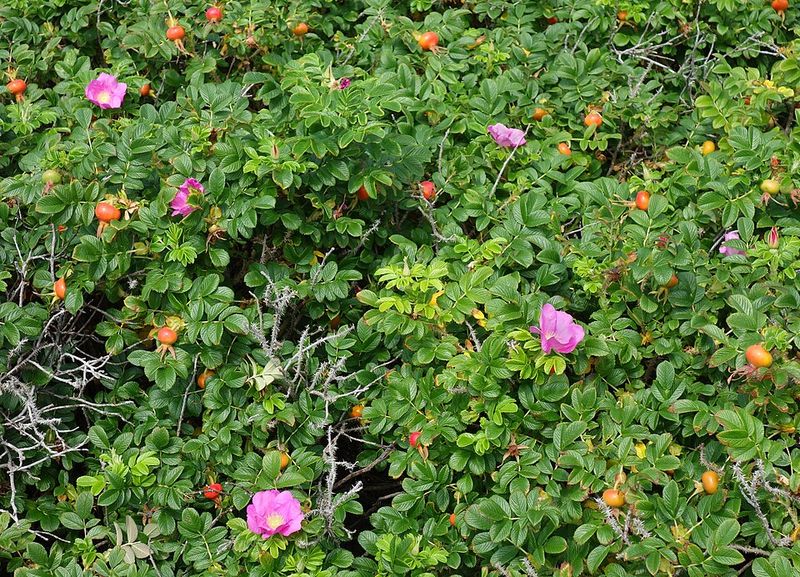
Size isn’t the whole story when it comes to water use. What matters more is how a plant’s leaves are arranged and how much of that leaf surface is actually exposed to sun and wind at any given time.
Beach roses grow as dense, sprawling shrubs, often reaching four to six feet wide. Despite that size, their leaves grow close together in a tight, overlapping pattern that shades much of the plant’s own foliage.
That self-shading matters. Leaves protected from direct sun and wind lose less moisture through transpiration than leaves fully exposed on all sides.
Backyard roses bred for dramatic size and abundant blooms often have a more open branching structure. Leaves sit further apart, catching more sun and losing more water as a result, even on a smaller plant.
Beach roses weren’t bred for dramatic impressions at garden shows. Their dense growth pattern evolved naturally to protect the plant’s own moisture supply in an environment where water is never guaranteed.
A tightly packed shrub also recovers faster after a drought ends. Once rain returns, the plant’s compact leaf arrangement helps it regulate water loss again quickly, without needing to rebuild large amounts of new growth.
Efficient foliage structure is a quiet but powerful advantage in drought conditions. It’s not about being small. It’s about wasting as little water as possible for every inch of growth the plant maintains.
7. Wild Genetics Favor Toughness Over Ornamental Refinement
There’s a reason wild animals are generally tougher than domesticated ones. Generations of survival pressure weed out weakness fast, leaving only the traits that actually work in the real world.
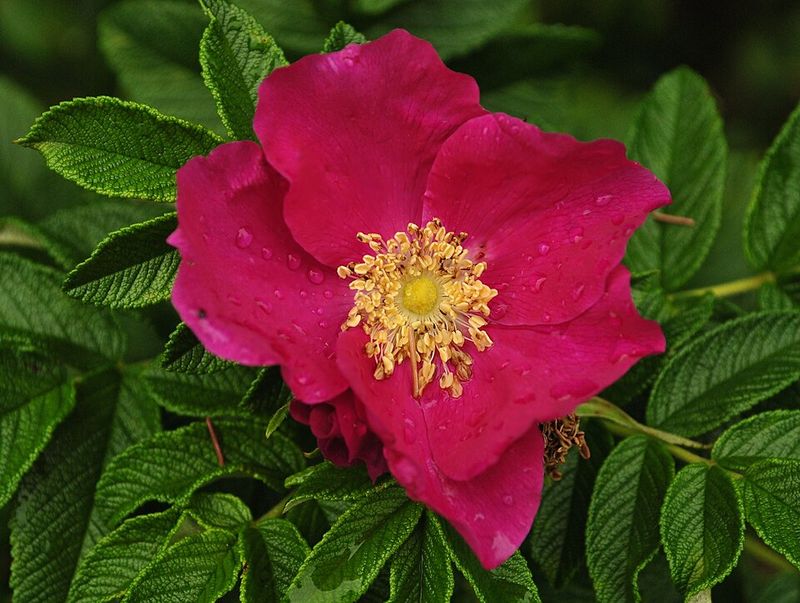
Beach roses carry wild genetics that haven’t been softened by decades of selective breeding. Rosa rugosa originated in coastal regions of East Asia and spread naturally, adapting to tough conditions along the way.
Hybrid tea roses and other ornamental varieties were developed by breeders who prioritized flower size, color, and fragrance. Drought tolerance was rarely at the top of anyone’s wish list at a rose show.
That selective focus created beautiful plants that need a lot of help to survive. Regular watering, fertilizing, and pest control are often required just to keep them looking presentable through a normal summer.
Beach roses need almost none of that. Their wild genetics include natural disease resistance, cold hardiness, and a water-use efficiency that cultivated varieties simply don’t carry.
Interestingly, some modern breeders are now crossing Rosa rugosa with ornamental varieties specifically to introduce more toughness. The wild gene pool is being mined for traits that centuries of ornamental breeding discarded.
When a drought hits and backyard roses start looking ragged, wild genetics are the reason beach roses keep their composure. Survival instincts don’t switch off just because conditions get rough.
Choosing a plant with wild ancestry isn’t settling for less beauty. It’s choosing a plant that was built to last, and in a changing climate, that choice is looking smarter every year.
8. Early Root Investment Conserves Long-Term Water Reserves
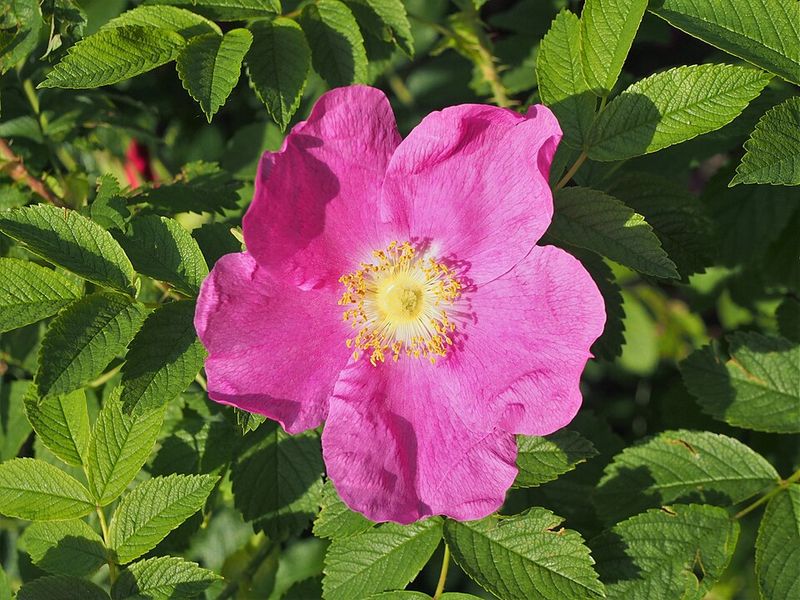
Fast growth and smart resource use aren’t always at odds. Beach roses establish and grow quickly once planted, but that speed doesn’t come at the expense of long-term water security the way it does in many ornamental varieties.
Fast-growing hybrid roses tend to put most of their early energy into visible growth. Stems, leaves, and blooms appear quickly, but the root system underneath often stays shallow and underdeveloped.
Beach roses take a different approach. Even as they establish quickly above ground, they direct a significant share of their early energy into building deep, wide root systems before investing heavily in top growth.
That early root investment pays off for years. A well-developed root system reaches moisture that shallow-rooted plants simply can’t access, especially once summer heat sets in.
Backyard gardeners often get excited about roses that fill space quickly and bloom heavily in the first season. But that rapid top growth can leave the root system underprepared for the first real drought.
Beach roses avoid that trap by building their foundation early. The plant that results is fast to fill its space and equipped to handle water scarcity from its very first dry summer onward.
Massachusetts beach roses handle droughts that weaken backyard varieties partly because of this early prioritization. Investing in roots before investing in size is a survival strategy hiding in plain sight.
That same resilience comes with a caveat. Rosa rugosa spreads so effectively along the coast that it’s considered invasive or potentially invasive in parts of Massachusetts and New England.
Gardeners drawn to its toughness should check local guidance before planting it, especially near natural dune or wetland areas.