The White Powder On California Squash Is Not What Most Gardeners Think
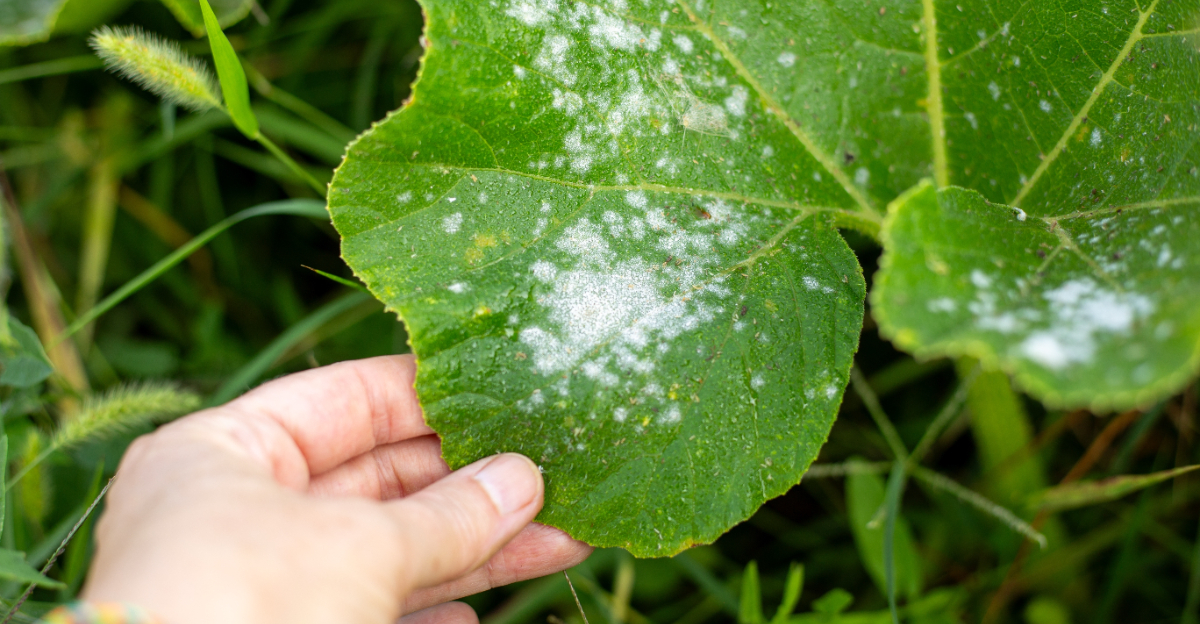
White powder on squash leaves can make California gardeners worry fast. It often looks like a sign that the plant is failing, but the real story is not always that simple.
Squash leaves naturally have pale markings sometimes, and those can be easy to mistake for a problem.
Other times, the powder is a true warning that the plant needs better airflow or a change in care.
The trick is knowing how to tell the difference before you start treating the wrong thing. A healthy leaf pattern usually stays flat and even.
A problem coating may spread, rub off, or show up more after warm days and cool nights. Once you know what you are looking at, you can respond with more confidence.
Your squash patch may need less panic and more careful observation than you think.
1. Some Squash Leaves Naturally Have White Markings
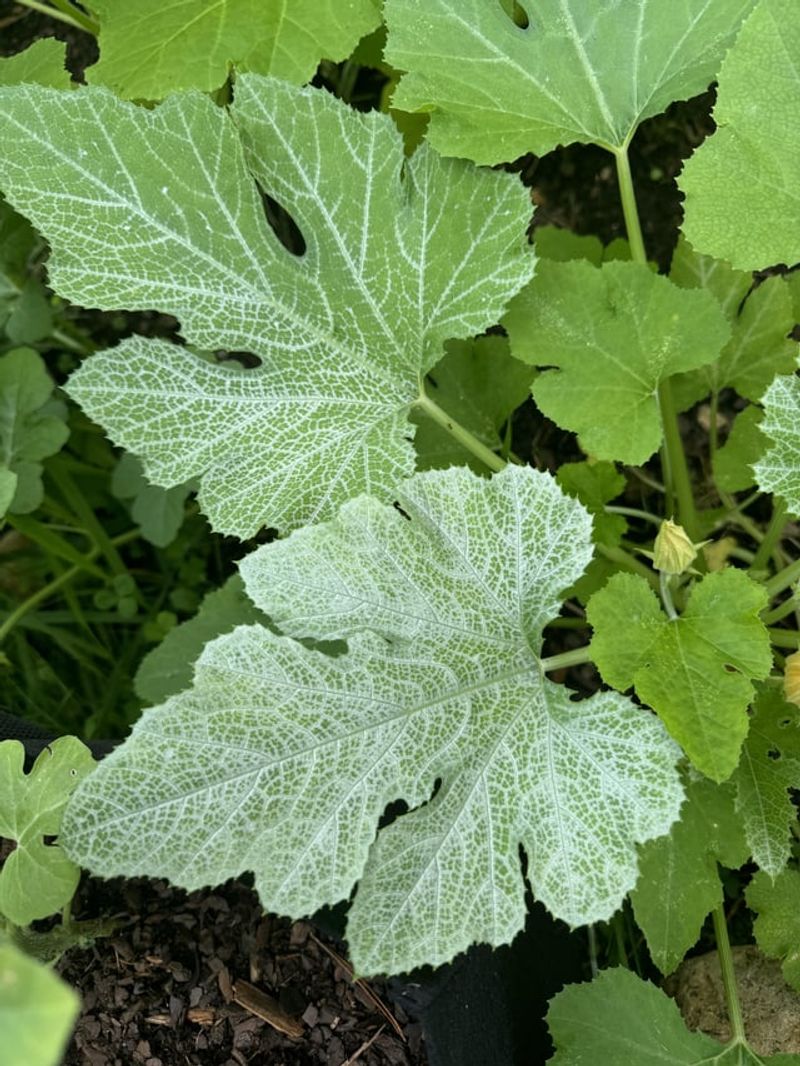
Not every white pattern on a squash leaf is a sign of trouble. Many popular squash varieties, including zucchini and acorn squash, are bred to have natural silver or white markings on their leaves.
These markings are part of the plant’s genetics, not a reaction to disease or stress.
Growers across California are often surprised to learn this fact. They rush to treat their plants with sprays or powders when the leaves were perfectly healthy all along.
Knowing which squash varieties carry these natural markings can save you time, money, and unnecessary worry.
The markings usually appear as light silver or pale white patches scattered across the green leaf surface. They can look almost painted on, giving the leaf a two-toned or marbled appearance.
Some gardeners actually find these patterns quite attractive and even use them to identify specific cultivars.
Seed packets and plant tags sometimes mention variegated or silvery foliage as a feature, not a flaw.
If you bought a transplant from a nursery without reading the label carefully, it is easy to miss this detail.
Always keep your plant tags or take a photo of the label so you can check back later if you have questions about what you are growing.
2. Powdery Mildew Looks Like A Dusty Coating
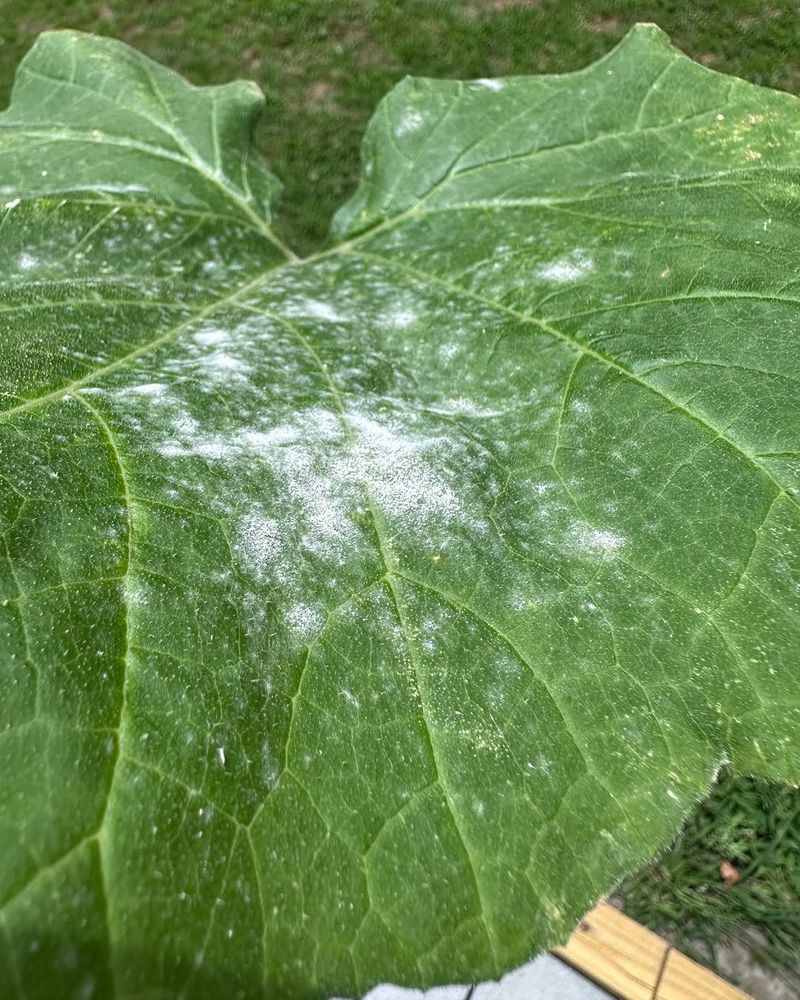
Powdery mildew has a very specific look that sets it apart from natural leaf patterns. It appears as a white or grayish coating that looks like someone dusted flour across the surface of the leaf.
The texture is soft and powdery, almost like chalk dust sitting on top of the plant.
Unlike natural markings, powdery mildew tends to show up in irregular patches that grow and merge over time. You might notice a small circle of white one day, and a week later that same spot has doubled in size.
The coating can also appear on stems and even on young fruit in some cases.
This fungal disease thrives in warm temperatures with low humidity, which makes it especially common during late summer in many parts of California.
It does not need wet leaves to spread, which surprises many gardeners who think fungal problems only happen in rainy conditions.
Your California Garden Changes Every Week. Your Plan Should Too.
Gardening in California changes quickly throughout the season. Every Friday you’ll receive a simple weekly plan showing exactly what to plant, prune, fertilize, harvest, and protect so you never miss the right timing.
In fact, dry air can actually make things worse by stressing the plant.
Powdery mildew is caused by several types of fungi, and squash is one of the most common targets in home gardens. Spotting it early gives you the best chance of slowing its spread.
Regular monitoring of your plants, even just a quick look every few days, makes a big difference in catching it before it gets out of hand.
3. The Rub Test Can Help Tell The Difference
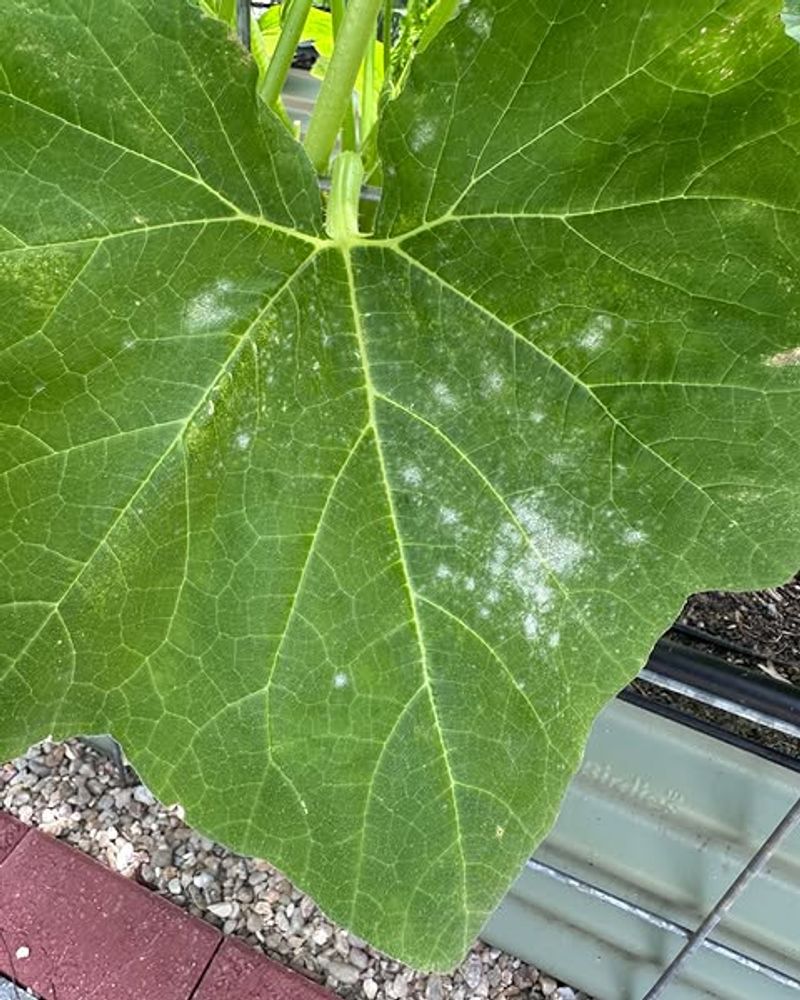
One of the easiest ways to figure out what you are dealing with is to use a simple rub test. Gently press your finger or thumb onto the white area of the leaf and rub it lightly.
What happens next tells you a lot about what you are looking at.
If the white coating rubs off and leaves a smear on your finger, you are most likely dealing with powdery mildew.
The fungal spores that make up the coating are loose and powdery, so they transfer easily when touched.
Your finger may pick up a faint white residue, similar to wiping chalk off a board.
On the other hand, natural leaf markings will not rub off at all. Those silver and white patterns are part of the leaf’s actual surface cells, so they stay firmly in place no matter how much you rub.
The leaf may feel smooth or slightly waxy, but the color does not transfer to your skin.
This quick test takes about five seconds and requires no tools or special knowledge. It is one of the most reliable ways for beginner gardeners to get a clear answer without guessing.
Try the rub test on a few different spots across the leaf to make sure you are getting a consistent result, since one spot alone may not give you the full picture.
4. Natural Markings Stay Flat On The Leaf
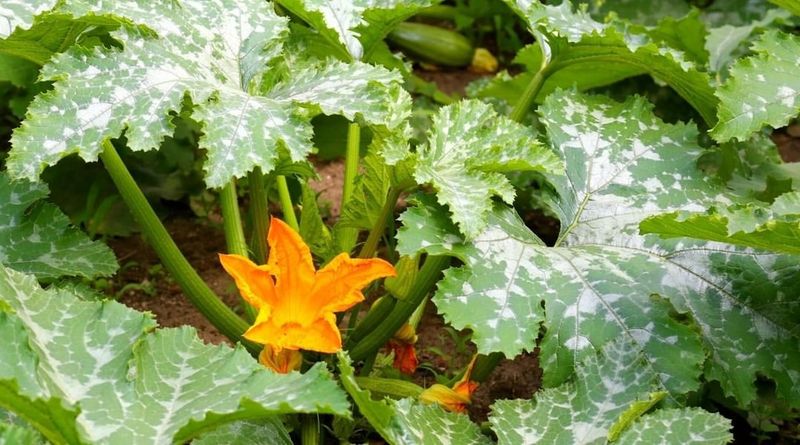
One key feature of natural leaf markings is that they sit completely flat on the surface of the leaf. There is no raised texture, no gritty feel, and no bumpy coating.
The white or silver color is simply part of how the leaf looks, built right into the plant’s cells from the start.
When you run your finger across a naturally marked squash leaf, it should feel smooth and even. The surface feels the same whether you are touching a white area or a green area.
There is no change in texture between the two colors because both are just part of the same leaf tissue.
Powdery mildew, by contrast, often creates a slightly rough or gritty feel on the leaf surface. The fungal growth sits on top of the leaf rather than being part of it.
In some cases, you can even see tiny raised structures if you look closely with a magnifying glass.
Paying attention to texture is especially helpful when the light makes it hard to see color differences clearly.
On a bright sunny day, both natural markings and powdery mildew can look similar from a distance.
Getting up close and feeling the leaf with your fingertips adds an important layer of information that your eyes alone cannot always provide.
This habit takes only a moment but can lead to a much more accurate diagnosis of what is happening with your plant.
5. Powdery Mildew Spreads Across New Leaves
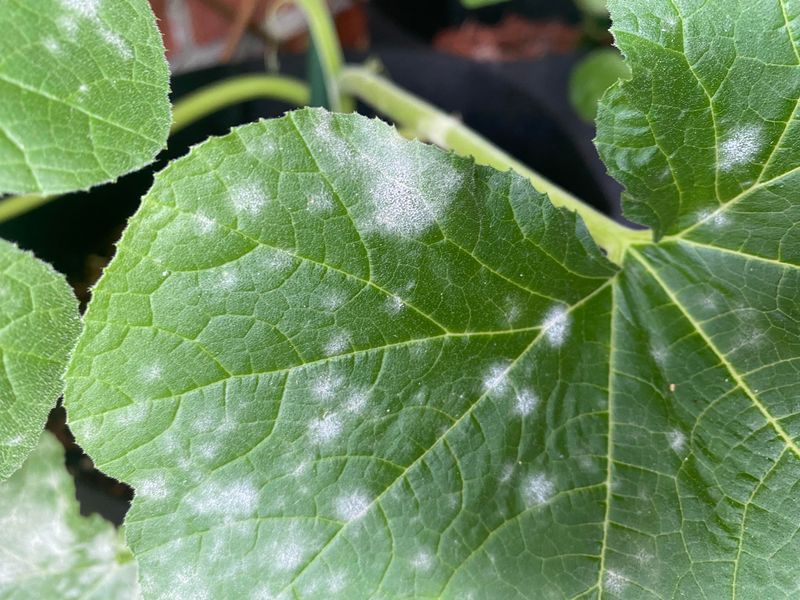
A clear sign that you are dealing with powdery mildew rather than natural markings is the way it moves through the plant. Powdery mildew does not stay in one place.
It spreads from leaf to leaf, often starting on older growth and working its way toward newer, younger leaves over time. Natural markings, on the other hand, are consistent from the start.
A squash plant with variegated foliage will show those same patterns on every leaf it produces, from the first true leaves all the way through the season.
The markings do not appear suddenly on a leaf that was previously solid green.
If you notice that leaves which were once fully green are now developing white patches, that change is a strong signal that something is going on.
Powdery mildew spreads through airborne spores that land on leaf surfaces and begin to grow in the right conditions.
One infected plant can spread spores to neighboring plants fairly quickly.
Checking your squash plants from the bottom up is a smart habit to build. Older leaves near the base of the plant tend to show symptoms first since they have been around the longest and may be more stressed.
Spotting mildew on lower leaves early gives you a window to take action before it climbs higher. Removing affected leaves promptly can slow down the spread and protect the rest of the plant.
6. Yellowing Leaves Point To A Real Disease Problem
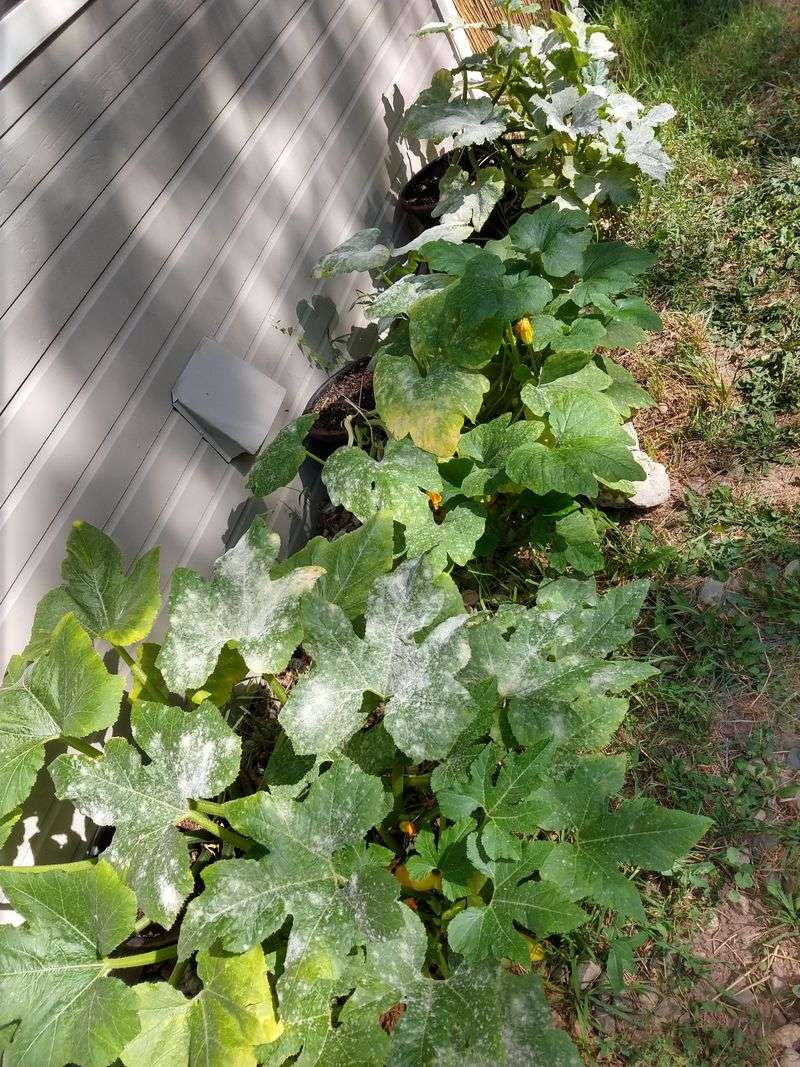
When powdery mildew gets bad enough, it does not just stay white. The affected leaves often begin to turn yellow around the edges or across the whole surface.
This yellowing is a sign that the fungal infection is interfering with the leaf’s ability to absorb sunlight and produce energy for the plant.
Natural markings never cause yellowing. A squash leaf with healthy variegation will stay green and firm, with the white or silver patches remaining stable throughout the plant’s life.
If you see yellowing spreading alongside white patches, that combination points strongly toward a disease issue that needs attention.
Yellowing caused by powdery mildew can look similar to other problems like nutrient deficiencies or overwatering.
That is why it is important to look at the full picture, including whether the white coating rubs off, whether new leaves are being affected, and whether the yellowing started near white patches or independently.
In California’s warmer inland regions, squash plants under heat stress are more vulnerable to secondary infections like powdery mildew. A stressed plant has a harder time fighting off fungal spores.
Keeping your plants well-watered, properly spaced for airflow, and fertilized on schedule helps them stay strong enough to resist infection.
Healthy plants are far better at holding off disease than ones that are already struggling with other challenges in the garden.
7. White Patches On Both Leaf Sides Are A Warning Sign
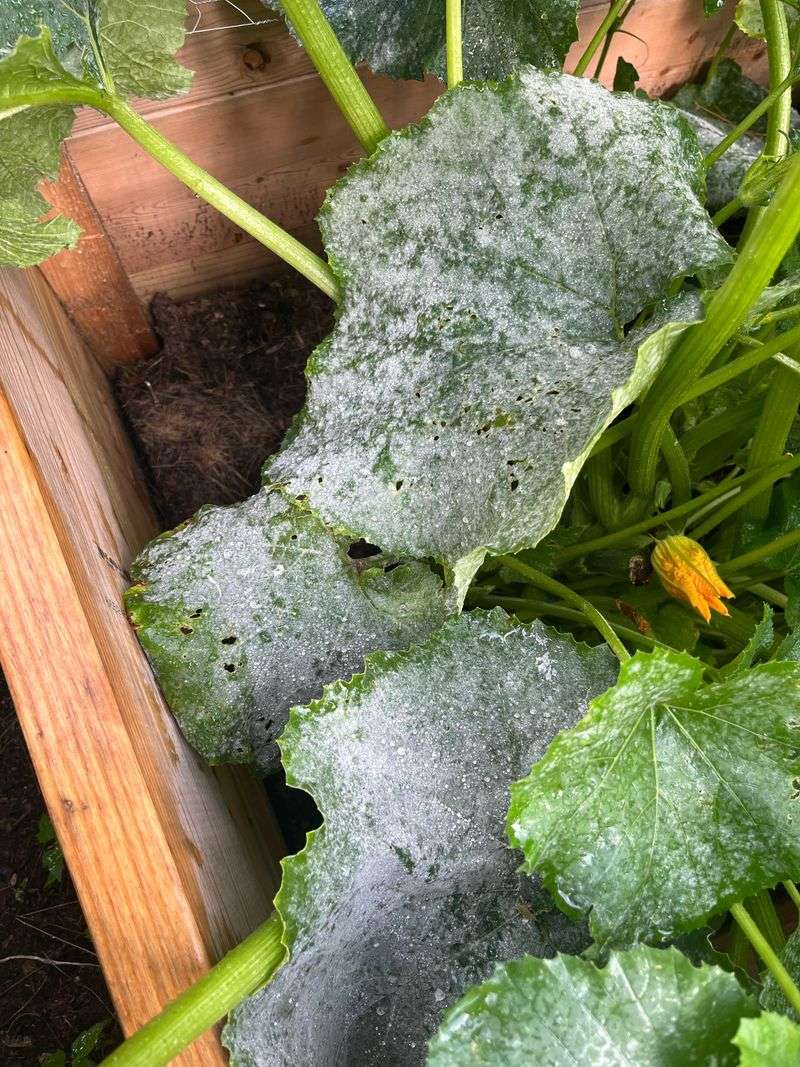
Most people only look at the top of a squash leaf when checking for problems. But flipping the leaf over and checking the underside can reveal a lot more information.
When powdery mildew becomes severe, it can appear on both the top and the bottom of the leaf at the same time.
Natural variegation almost always stays on the upper surface of the leaf. The underside of a naturally marked squash leaf is typically a lighter green or pale color, but it does not show the same white or silver patterning as the top.
Seeing matching white patches on both sides of the leaf is a serious warning sign.
Finding mildew on the underside of leaves usually means the infection has been going on for a while. By the time it reaches the lower surface, it has already established itself pretty firmly.
Acting quickly at this point is still worthwhile, but the window for easy management has narrowed.
In northern parts of California where summer days can be warm and nights cool, conditions can shift quickly and create the right environment for fungal growth. Checking both sides of your squash leaves every week or so is a small habit that pays off.
It takes only a minute per plant and can help you catch problems while they are still manageable.
Early detection on either leaf surface gives you a much better outcome than waiting until symptoms are obvious from across the garden.
8. Warm Dry Weather Can Make Powdery Mildew Worse
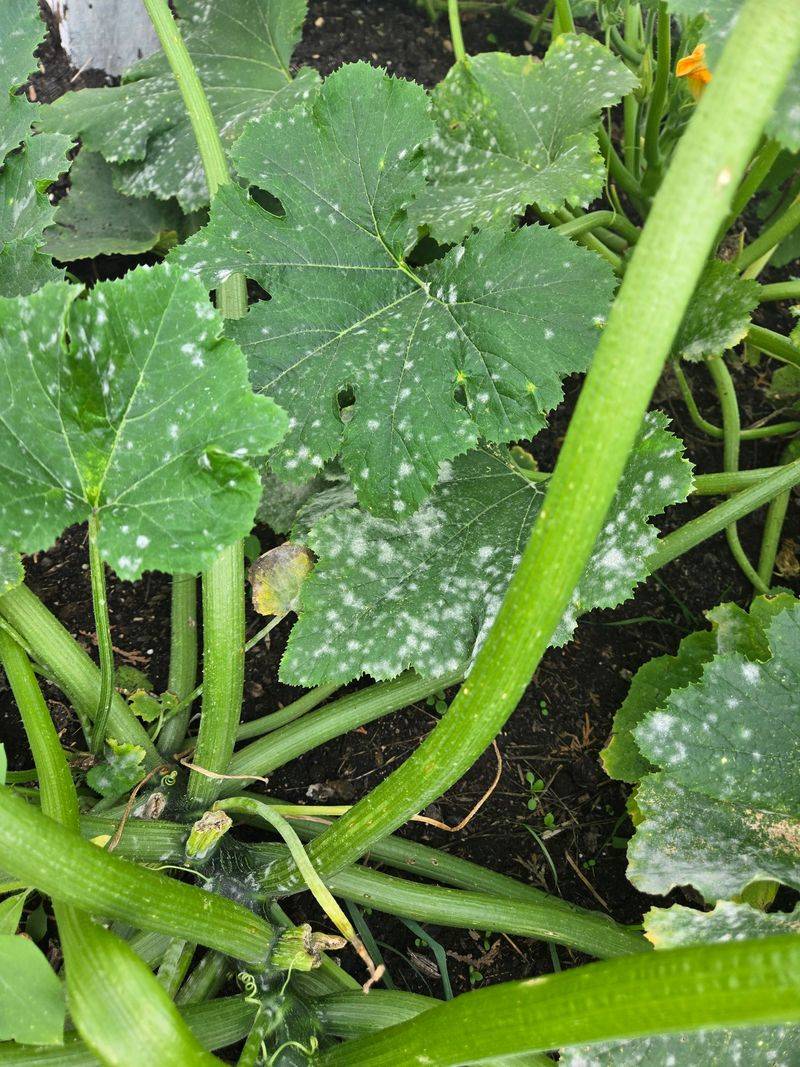
Most gardeners expect fungal problems to show up after heavy rain or in humid conditions. Powdery mildew breaks that rule in a surprising way.
It actually thrives in warm, dry weather and does not need wet leaves to spread and grow. This makes it especially tricky to manage during our state’s long dry summers.
The fungus spreads through tiny spores that float through the air. When temperatures are warm and airflow is low, those spores settle onto leaves and germinate quickly.
Dry conditions also stress squash plants, making them less able to defend themselves against infection at the same time.
Watering your plants at the base rather than overhead can help reduce stress without creating wet leaf surfaces.
Giving plants enough space between them improves air circulation, which helps keep spore levels lower around your garden. Crowded plants trap warm, stagnant air that fungal spores love.
In the Central Valley and other hot inland areas of California, summer temperatures can soar for weeks at a time.
These stretches of heat and low humidity create near-perfect conditions for powdery mildew outbreaks in squash patches.
Keeping an eye on your plants during heat waves is especially important.
Some gardeners apply a diluted baking soda spray or a neem oil solution as a preventive measure during these high-risk periods.
Always follow label directions and test on a small area first before treating the whole plant.