The Georgia Shrubs That Need Very Little Summer Care Once Established
Georgia summers have a way of separating the plants that belong here from the ones that were always just visiting, and by August the difference is pretty obvious.
Shrubs that aren’t suited to the heat, humidity, and dry stretches tend to make their feelings very clear, and keeping them alive starts feeling like a part-time job.
The good news is that choosing the right shrubs in the first place changes everything.
When a plant is genuinely matched to the local climate and planted in a spot that suits it, an established root system handles most of the work, especially with a solid layer of mulch helping out at the base.
That’s not the same as zero care, young shrubs and unusually long dry spells still need attention, but it’s a much more manageable situation than fighting the wrong plant through a brutal Georgia summer.
1. Yaupon Holly Handles Tough Georgia Sites
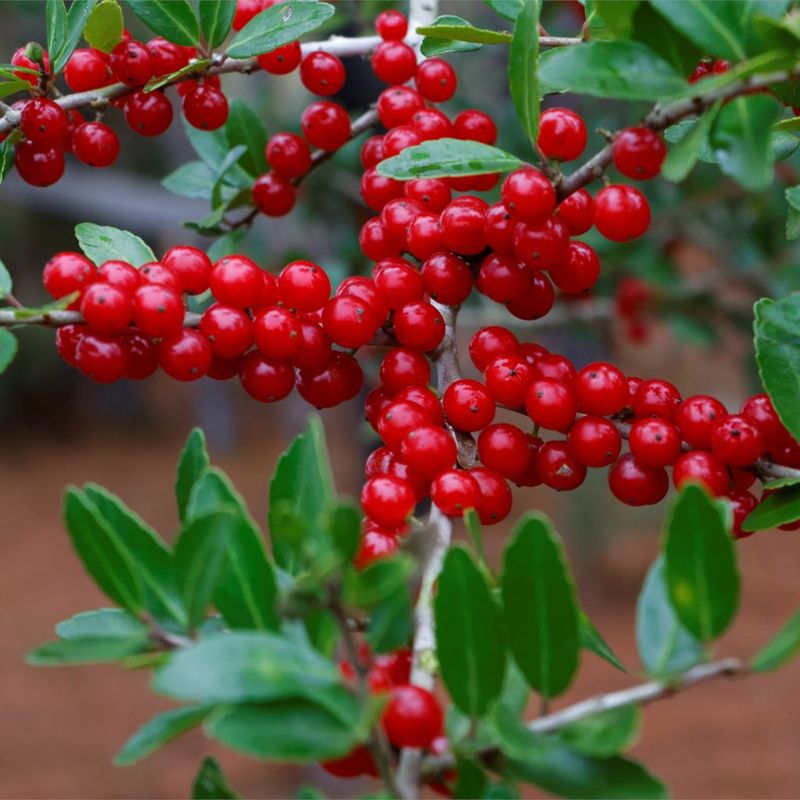
Few shrubs in Georgia can match the sheer toughness of yaupon holly. This native evergreen handles heat, drought, poor soil, wet feet, and salt spray with a kind of quiet confidence that most ornamental shrubs simply cannot pull off.
Once its root system is established, it rarely needs supplemental watering during a typical Georgia summer, which makes it a reliable choice for homeowners who want year-round structure without constant attention.
Yaupon holly fits well in full sun or partial shade, and it tolerates a wide range of soil types, from sandy coastal soils to heavier clay. Female plants produce bright red berries in fall and winter that birds find irresistible, adding genuine wildlife value to your yard.
If you want a more refined look, you can give it a light trim after its spring growth flush, but shaping is optional rather than necessary.
One thing to keep in mind is that yaupon holly can sucker at the base over time, so it works best where you have room for a slightly spreading habit or where you are willing to occasionally remove the extra stems.
In larger shrub borders or naturalized Georgia landscapes, that spreading tendency is often more of a feature than a problem.
Mature size varies by cultivar, so check the tag before planting near foundations or walkways.
2. American Beautyberry Adds Color With Little Fuss
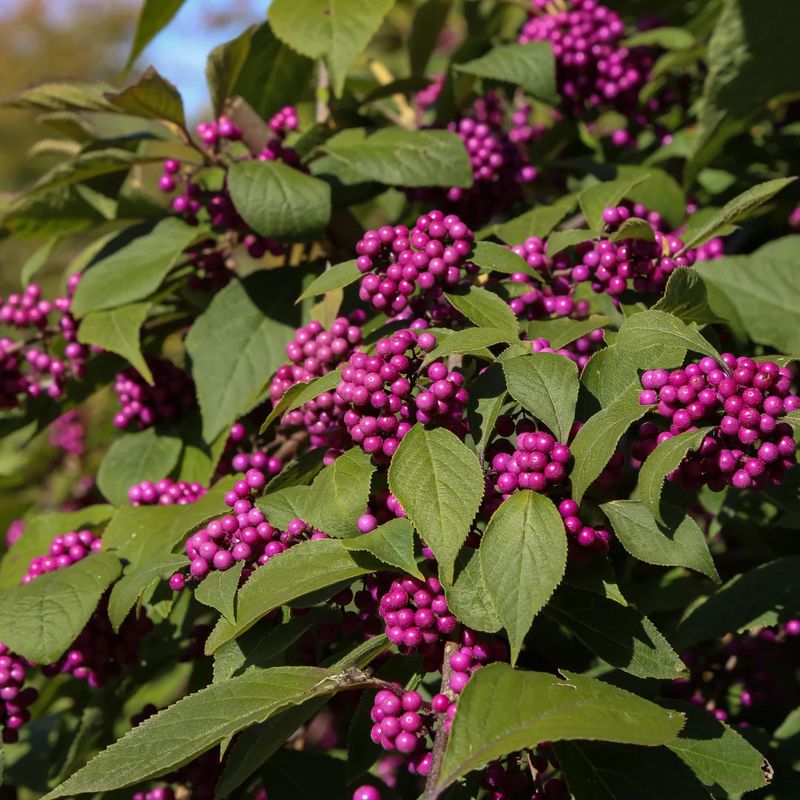
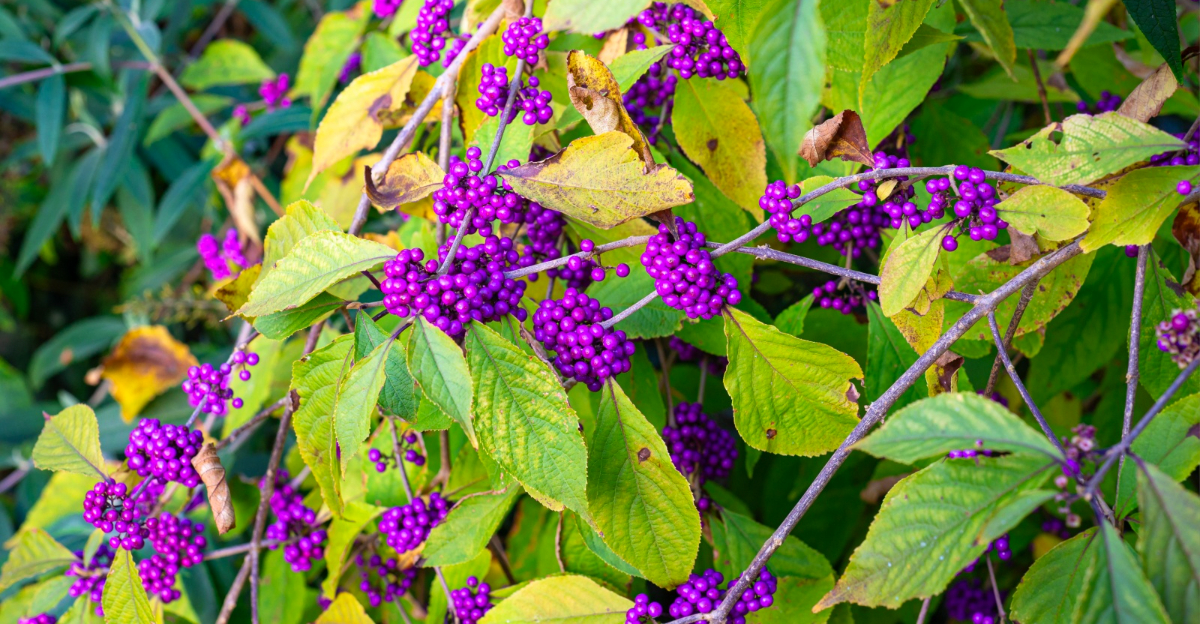
Clusters of electric purple berries lining long, arching stems in late summer make American beautyberry one of the most eye-catching native shrubs in any Georgia yard.
That burst of color arrives with almost no effort on your part, which is a big reason why this plant keeps showing up in low-maintenance native plantings across the state.
Once established, it handles Georgia’s summer heat and humidity without much complaint.
American beautyberry grows well in partial shade to full sun and tolerates a range of soil conditions, though it tends to look its best with some moisture in the soil and a bit of afternoon shade during the hottest Georgia summers.
It grows quickly and can reach six to eight feet tall and wide, so give it room to spread naturally.
Your Georgia Garden Changes Every Week. Your Plan Should Too.
Gardening in Georgia changes quickly throughout the season. Every Friday you’ll receive a simple weekly plan showing exactly what to plant, prune, fertilize, harvest, and protect so you never miss the right timing.
Because it blooms and fruits on new wood, many gardeners cut it back hard in late winter or early spring to encourage fresh, vigorous growth and better berry production.
That late-winter pruning is really the main maintenance task for this shrub. Through the summer months, established plants mostly take care of themselves.
Mulching around the base helps retain soil moisture during dry spells, and a deep watering during extended drought is a good idea.
Birds, foxes, and other wildlife feed on the berries in fall, making this shrub a genuinely useful addition to any wildlife-friendly yard or naturalized planting area.
3. Blackhaw Viburnum Works In Larger Shrub Borders
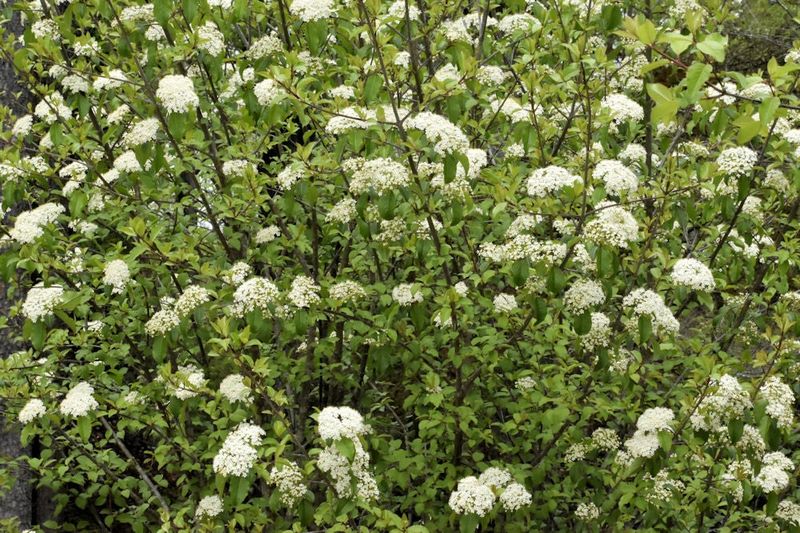
Wide shrub borders with room for a bold, multi-season performer are exactly where blackhaw viburnum earns its keep in Georgia landscapes.
This large native shrub or small tree produces flat-topped clusters of white flowers in spring, followed by blue-black fruit in late summer and fall that wildlife eagerly consume.
Its fall foliage turns shades of red, purple, and orange, giving it genuine four-season interest that most homeowners appreciate.
Blackhaw adapts to full sun or partial shade and tolerates a range of soil conditions, including clay soils that are common across much of Georgia.
Once established, it handles summer heat and moderate dry spells without requiring regular irrigation, especially when planted with a good layer of mulch around the root zone.
It is a sturdy, dependable shrub that rarely needs spraying or fussing once it settles into its spot.
The main planning consideration with blackhaw viburnum is its mature size. It can reach twelve to fifteen feet tall and nearly as wide, so it belongs in larger borders, naturalized areas, or open yards where it has room to develop its natural layered form.
Squeezing it into a tight foundation planting or narrow bed will only create more work over time.
In the right Georgia setting, though, this shrub can go through an entire summer with little more than a check-in during unusually dry stretches.
4. Rusty Blackhaw Viburnum Handles Heat Once Established
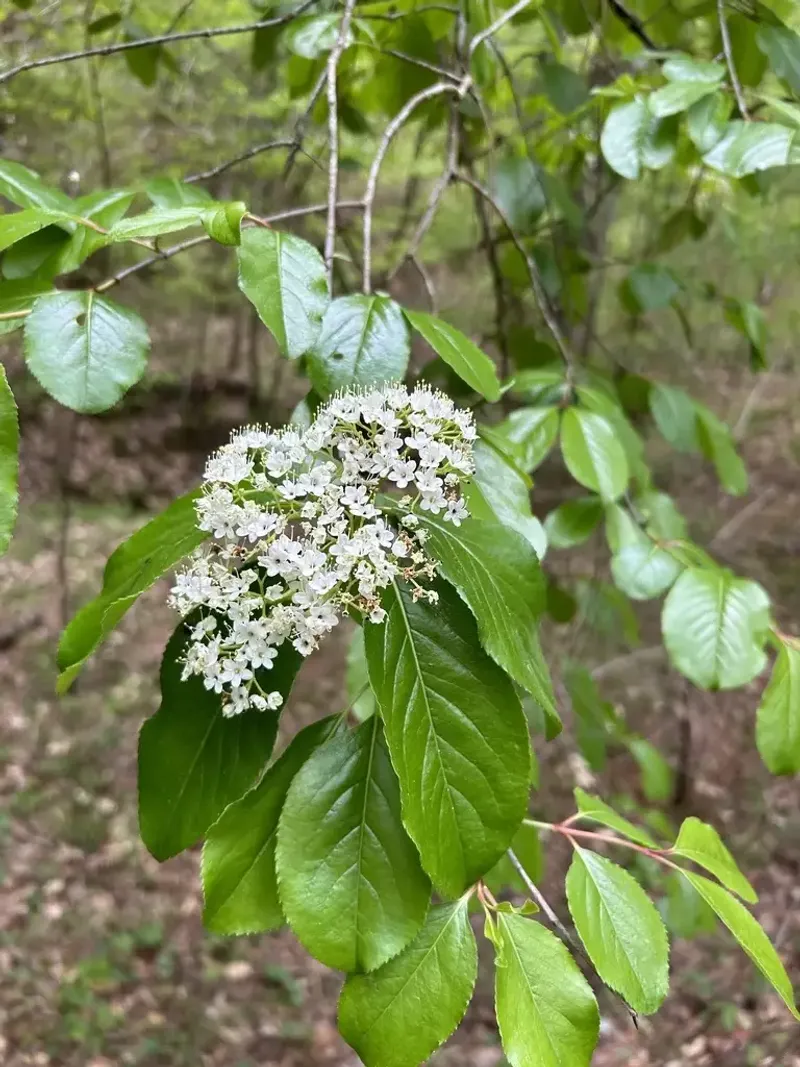
Walk through a dry Georgia woodland in midsummer and you might spot rusty blackhaw viburnum holding its leaves without a hint of stress, which tells you a lot about what this native shrub can handle in a home landscape.
Named for the rust-colored hairs on the undersides of its leaves and on its new growth, rusty blackhaw is closely related to blackhaw viburnum but tends to show even stronger tolerance for heat and dry conditions once its roots are established.
It thrives in full sun to partial shade and grows well in the well-drained, sometimes thin soils found on slopes and dry ridges across Georgia.
Spring brings flat-topped white flower clusters that attract pollinators, followed by blue-black fruit that birds and other wildlife feed on through fall.
The fall foliage color can be quite striking, shifting through shades of burgundy and orange before the leaves drop.
Rusty blackhaw typically grows ten to twelve feet tall, occasionally taller, so it fits best in larger shrub borders, naturalized edges, or open areas where its natural form can develop without heavy pruning.
Occasional shaping to remove crossing or damaged branches is about all the summer maintenance most established plants need.
Mulching at planting time and keeping new plants watered through their first Georgia summer sets them up for years of largely hands-off performance once they are fully established in the landscape.
5. Southern Wax Myrtle Makes An Easy Native Screen
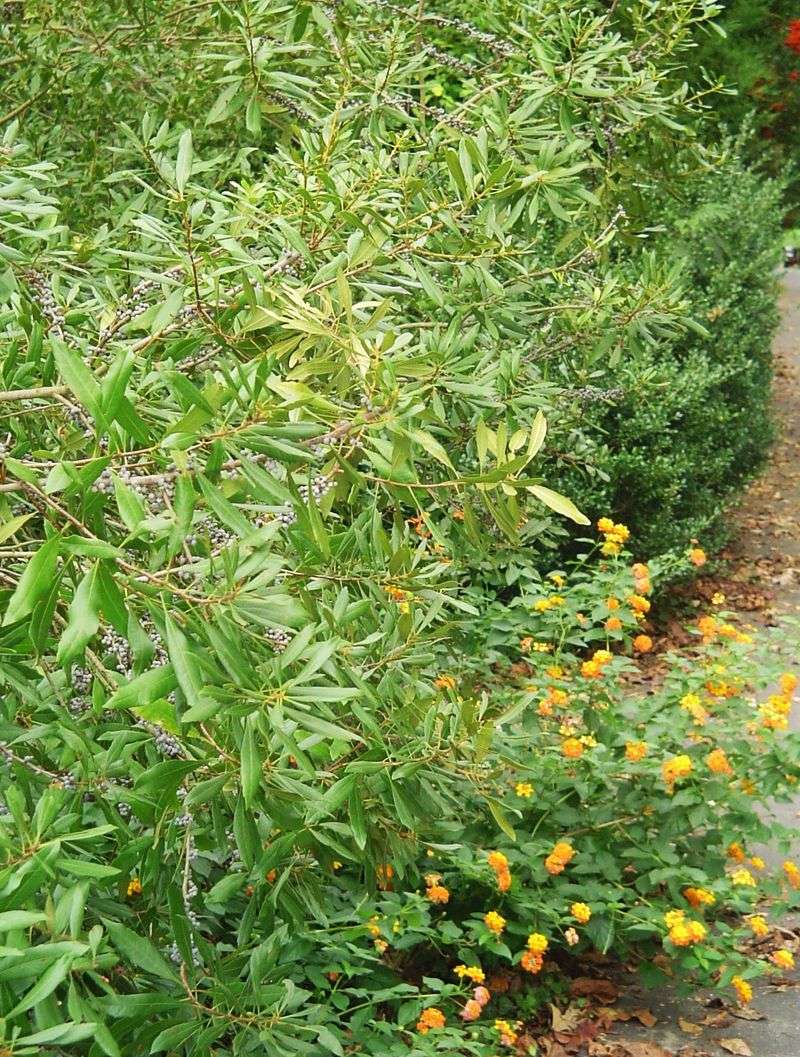
Evergreen screening shrubs that grow quickly and handle Georgia’s heat and humidity without constant attention are not easy to find, but southern wax myrtle fits that description well.
This fast-growing native shrub has aromatic gray-green foliage that stays on the plant year-round, making it a popular choice for privacy screens, windbreaks, and naturalized borders across the state.
Once established, it tolerates heat, humidity, and moderate drought with minimal summer care.
Southern wax myrtle grows in a wide range of conditions, from moist low spots near drainage areas to drier upland soils, and it handles full sun to partial shade.
Small waxy blue-gray berries produced on female plants attract birds, adding wildlife value to any planting.
The aromatic foliage is also a pleasant bonus near patios or garden paths where a breeze carries the scent.
The most important thing to know before planting southern wax myrtle is its mature size.
Without pruning, it can reach ten to twenty feet tall and spread widely, which makes it a better fit for larger yards, open naturalized areas, or wide screening situations rather than small foundation beds or tight spaces.
It can sucker vigorously, so plan for a spreading colony in naturalized settings.
Established plants in Georgia rarely need summer watering under normal conditions, though a deep soak during extended drought helps maintain their dense, attractive canopy through the hottest months of the year.
6. Winged Sumac Fits Sunny Naturalized Edges
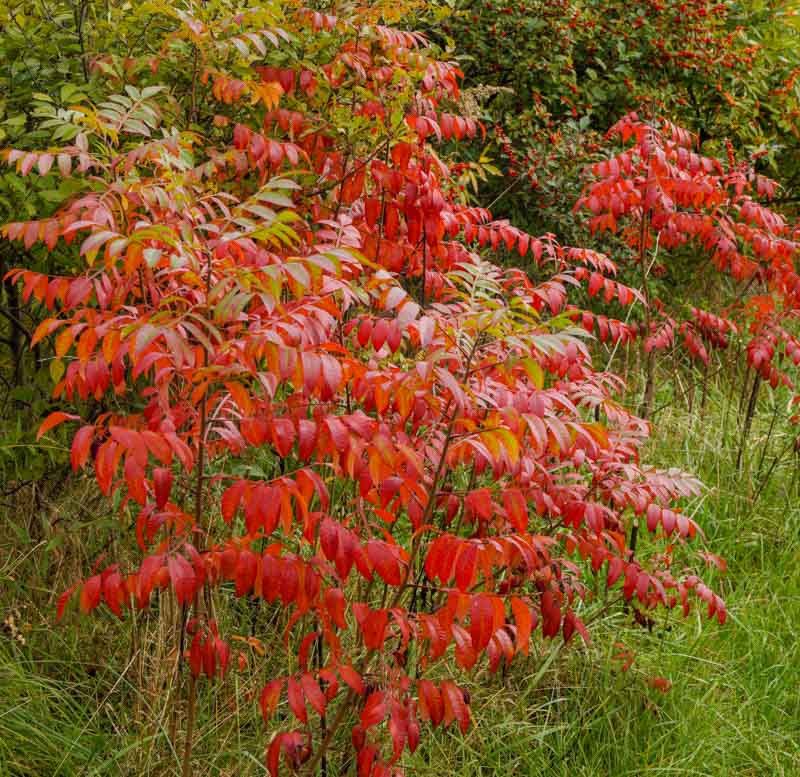
Sunny naturalized edges along fence lines, roadsides, and open meadow borders across Georgia often feature winged sumac doing exactly what it does best.
It spreads into a low-maintenance colony that provides great fall color, wildlife food, and textural interest without any regular summer attention from the homeowner.
The distinctive wings running along the stems between leaflets give this native shrub its common name and make it easy to identify among other sumac species.
Winged sumac thrives in full sun and handles dry, poor, or rocky soils with ease. It produces upright clusters of small white flowers in summer, followed by dense red fruit clusters that persist into winter and feed birds and small mammals.
In fall, the large compound leaves turn brilliant shades of orange, red, and scarlet, making it one of Georgia’s most dramatic native plants for autumn color in open, sunny settings.
Knowing what you are signing up for before planting winged sumac is worth the time.
It spreads by root suckers and can form large thickets over time, which is a real asset in naturalized areas but a potential headache in small or formal garden spaces.
It works best along property edges, in open slopes, or in large naturalized plantings where spreading is welcome.
Established colonies need very little summer care in Georgia, though occasional mowing or removal of outer suckers can keep a colony from expanding beyond its intended boundary.
7. Adam’s Needle Thrives In Hot Dry Spots
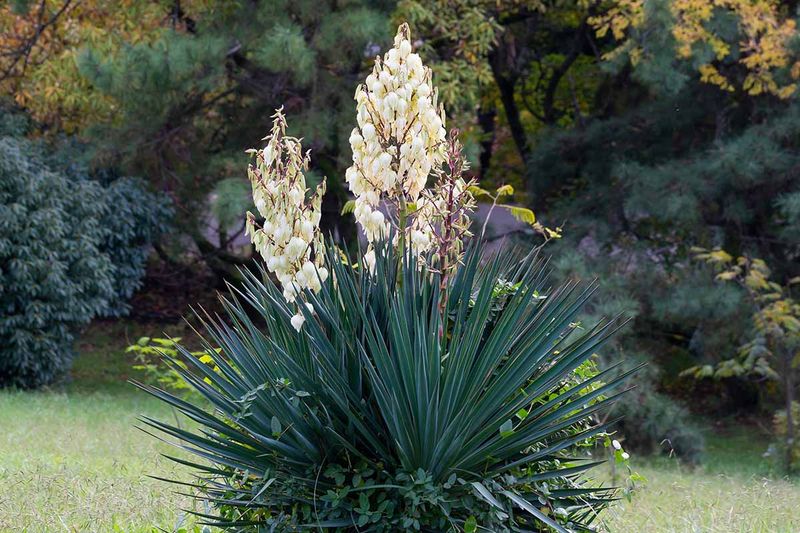
Hot, dry spots in Georgia yards where other plants struggle are exactly where Adam’s needle looks completely at home.
This native yucca produces dramatic rosettes of long, stiff, blue-green leaves that stay attractive year-round, and in late spring to early summer it sends up an impressive flower spike that can reach six to eight feet tall.
That spike is covered in creamy white bell-shaped flowers that attract pollinators and draw attention from across the yard.
Once established, Adam’s needle is one of the most drought-tolerant plants you can put in a Georgia landscape.
It thrives in full sun and well-drained soil, making it a natural fit for sandy or rocky beds, sunny slopes, and areas along the south or west side of a home where heat builds up through the afternoon.
Poor soil is not a problem for this plant, and it rarely needs fertilizing once it settles in.
The main thing homeowners should know before planting Adam’s needle is that its leaf tips are genuinely sharp. Planting it away from high-traffic areas, walkways, and spots where children or pets play frequently is a smart idea.
After the flower spike finishes blooming, cutting it back near the base keeps the plant looking tidy. Beyond that, established plants in Georgia need almost no summer care.
Removing old, brown outer leaves occasionally is about the only routine task most homeowners find worth doing on a regular basis.
8. Arrowwood Viburnum Works Where Soil Holds Moisture
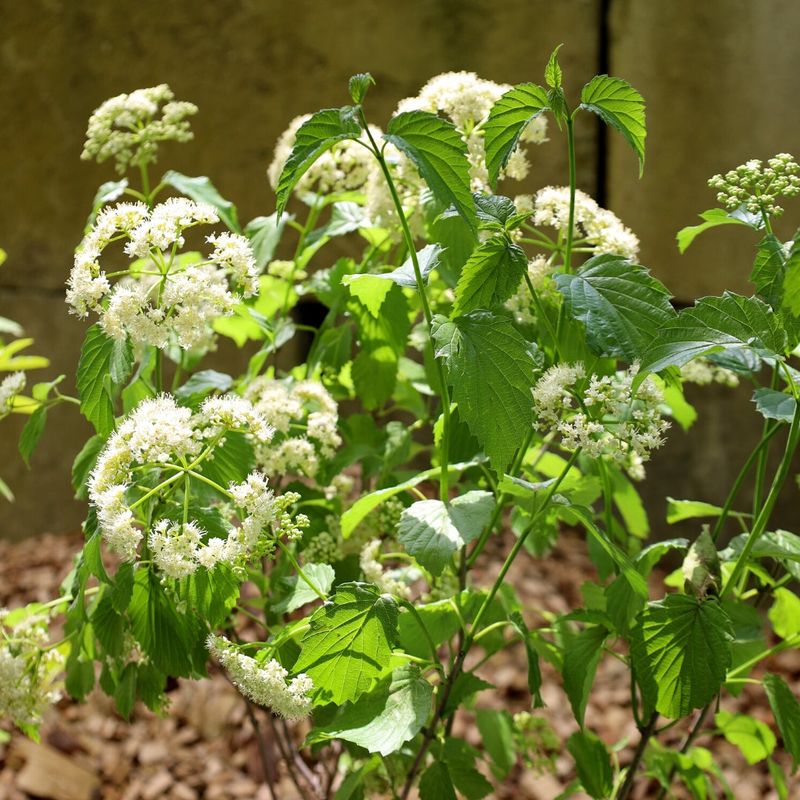
Low spots in Georgia yards where soil stays moist longer after rain can be tricky to plant well, but arrowwood viburnum is one of the native shrubs that genuinely appreciates that kind of site.
This adaptable, multi-stemmed native shrub produces flat clusters of white flowers in late spring that attract pollinators, followed by blue-black berries in late summer and fall that birds feed on readily.
Its glossy dark green foliage holds up well through Georgia’s humid summers.
Arrowwood viburnum grows in full sun to partial shade and handles a range of soil types, but it tends to perform especially well where there is some consistent soil moisture.
It can reach six to ten feet tall and wide, so it fits nicely in medium to larger shrub borders, naturalized low areas, rain garden edges, or woodland garden settings where its spreading, layered form has room to develop naturally over time.
Once established in a suitable spot, arrowwood viburnum needs very little summer care in Georgia under normal conditions.
Occasional removal of crossing or damaged branches and a fresh layer of mulch each year are about all most established plants require.
During unusually long dry stretches, even moisture-tolerant shrubs benefit from a deep watering to help them maintain healthy foliage and good berry production.
Fall foliage color can range from yellow to red, giving this reliable native shrub one more reason to earn a spot in a Georgia garden.