Native Georgia Ground Covers To Grow Instead Of English Ivy Under Trees
Georgia springs are stunning, and Georgia summers are, well, a lot. The heat rolls in fast, the humidity follows right behind it, and cool-season flowers that looked incredible in April start struggling before you even make it to June.
One week your garden is the prettiest thing on the street, and the next it looks like it needs a serious pep talk.
But here’s the thing: summers aren’t the enemy of a great garden, they’re just a filter for the wrong plants.
Choose flowers that are actually built for long hot days and thick southern humidity and your beds can stay full of color well into fall.
And honestly, some of these heat-loving options are so good-looking that you might end up wishing spring would hurry up and hand things over sooner.
1. Foamflower Adds Soft Blooms Under Trees
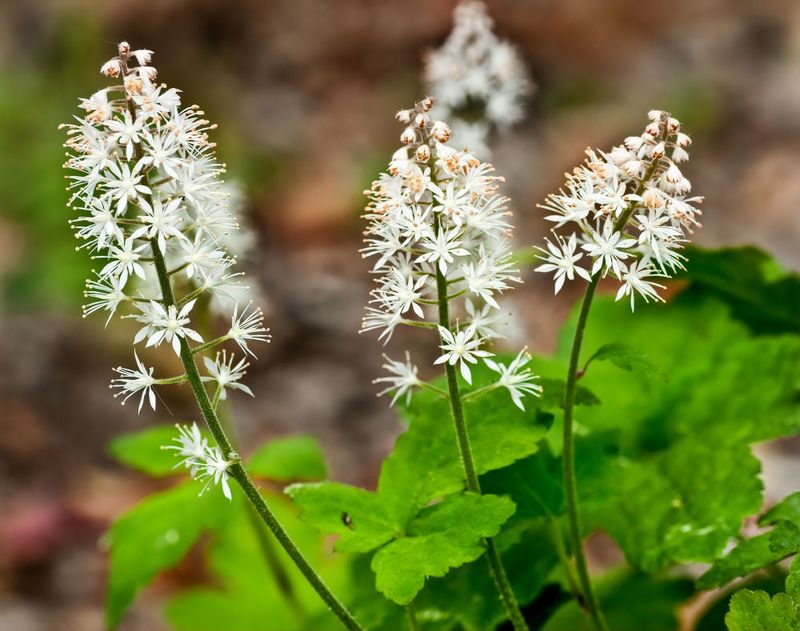
Bare soil beneath a canopy tree can feel like one of the hardest spots in a Georgia yard to fill, but foamflower, known botanically as Tiarella cordifolia, handles that challenge with quiet grace.
This low-growing native perennial produces clusters of frothy white to pale pink flower spikes in spring, rising just above a mat of attractive lobed leaves.
The blooms appear roughly from March through May in most Georgia locations, creating a soft, airy effect that feels right at home in a woodland-style planting.
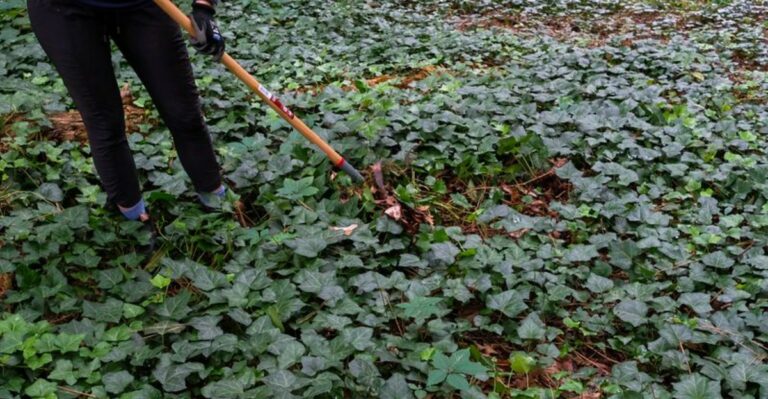
Foamflower spreads gradually by stolons, meaning it slowly fills in open ground without becoming aggressive or taking over the way English ivy can. In a shaded tree bed, this measured spread is genuinely useful.
Gardeners can space transplants roughly 12 to 18 inches apart and expect the plants to knit together over a season or two, eventually forming a low green carpet beneath the canopy.
The foliage holds its color through most of the year in Georgia, offering evergreen to semi-evergreen interest depending on the winter.
Some selections also show attractive burgundy or bronze veining on the leaves, which adds visual texture even when the plant is not in bloom.
Foamflower prefers consistently moist, well-drained soil rich in organic matter, so adding compost at planting can help it settle in.
Once established beneath trees, it handles light root competition reasonably well and tends to thrive in the dappled shade that large canopy trees naturally provide.
2. Allegheny Spurge Forms A Native Green Carpet
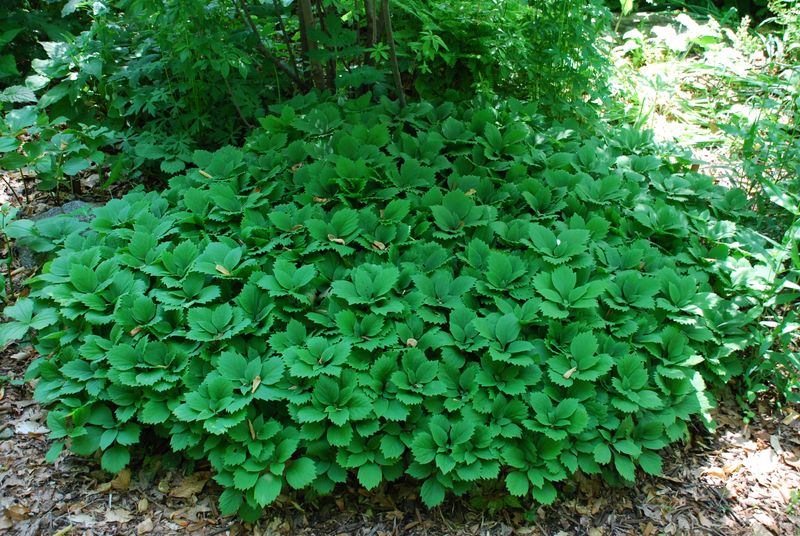
Swap English ivy for Allegheny spurge and a Georgia shade garden can take on a completely different, more regionally appropriate character.
Pachysandra procumbens is the native North American answer to the commonly planted Japanese pachysandra, and it brings a more interesting look to shaded tree beds with its softly mottled, semi-evergreen leaves.
The foliage often shows attractive silver-gray markings that make it visually engaging even without blooms.
In early spring, Allegheny spurge produces small, fragrant flower spikes near the base of the plant before the new foliage fully emerges. The flowers are not showy from a distance, but up close they carry a pleasant scent and attract early pollinators.
Your Georgia Garden Changes Every Week. Your Plan Should Too.
Gardening in Georgia changes quickly throughout the season. Every Friday you’ll receive a simple weekly plan showing exactly what to plant, prune, fertilize, harvest, and protect so you never miss the right timing.
This quiet seasonal detail makes the plant worth a closer look in March and April across much of Georgia.
Allegheny spurge spreads slowly, which means it takes a bit of patience to establish a full ground cover beneath a tree. Spacing plants about 12 inches apart and keeping the area lightly mulched during the first season can help speed up coverage.
It performs well in moderate to deep shade and handles the dry, root-filled soil beneath large trees better than many other native options once it gets settled.
Unlike English ivy, Allegheny spurge stays well-behaved and does not climb tree trunks or spread aggressively into surrounding areas.
For gardeners looking for a low-maintenance, native alternative with genuine staying power, this plant offers reliable texture and subtle seasonal appeal without demanding much attention after the first year.
3. American Coral Bells Brighten Shady Garden Edges
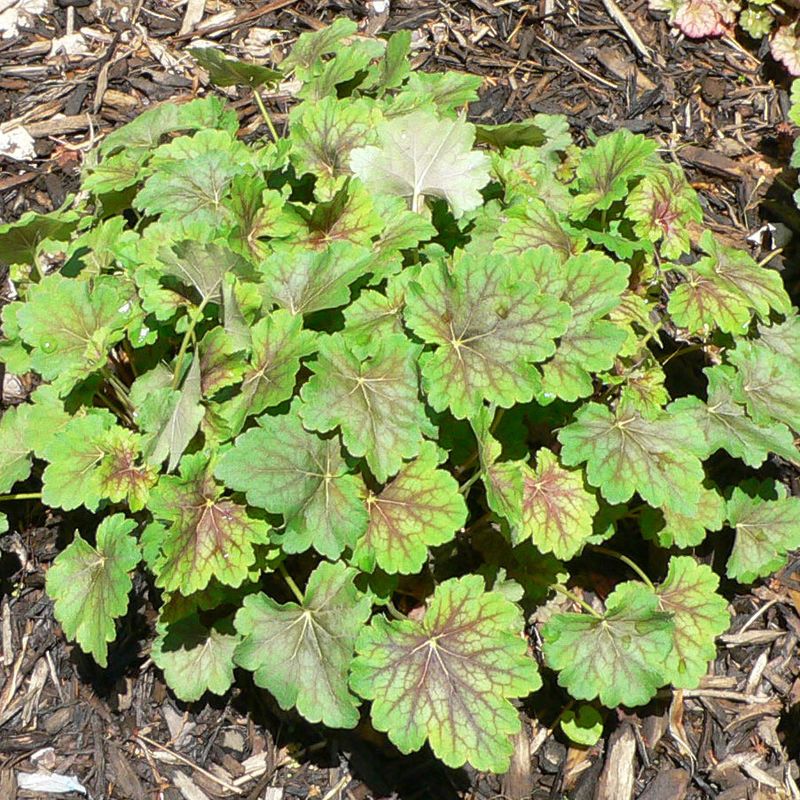
Few native plants bring as much visual energy to a shaded tree bed as American coral bells, or Heuchera americana.
The broad, lobed leaves come in a range of colors from deep burgundy and bronze to silvery green, and many plants show beautiful veining that catches the eye even in low light.
In Georgia gardens, the foliage often holds through winter, making coral bells a dependable source of color during the cooler months when other plants have gone dormant.
In late spring to early summer, slender wiry stems rise well above the foliage and carry small, airy flowers that attract hummingbirds and native bees.
The blooms are subtle rather than bold, but they add a delicate vertical element to what might otherwise be a flat planting beneath a tree canopy.
That combination of textured foliage and seasonal bloom makes coral bells genuinely useful along shaded garden edges and in mixed tree bed plantings.
American coral bells handles part shade to full shade well and can adapt to the drier, root-competitive conditions that often develop beneath large trees in Georgia.
Adding organic matter to the planting hole and watering consistently during the first growing season gives plants the best start.
Once established, they tend to be reasonably drought-tolerant and low maintenance.
Spacing transplants about 12 to 18 inches apart allows each plant room to develop its full rosette without crowding.
Over time, a planting of coral bells along a shaded tree edge creates a layered, woodland-inspired look that feels far more intentional than a solid spread of English ivy.
4. Green And Gold Spreads Color In Part Shade
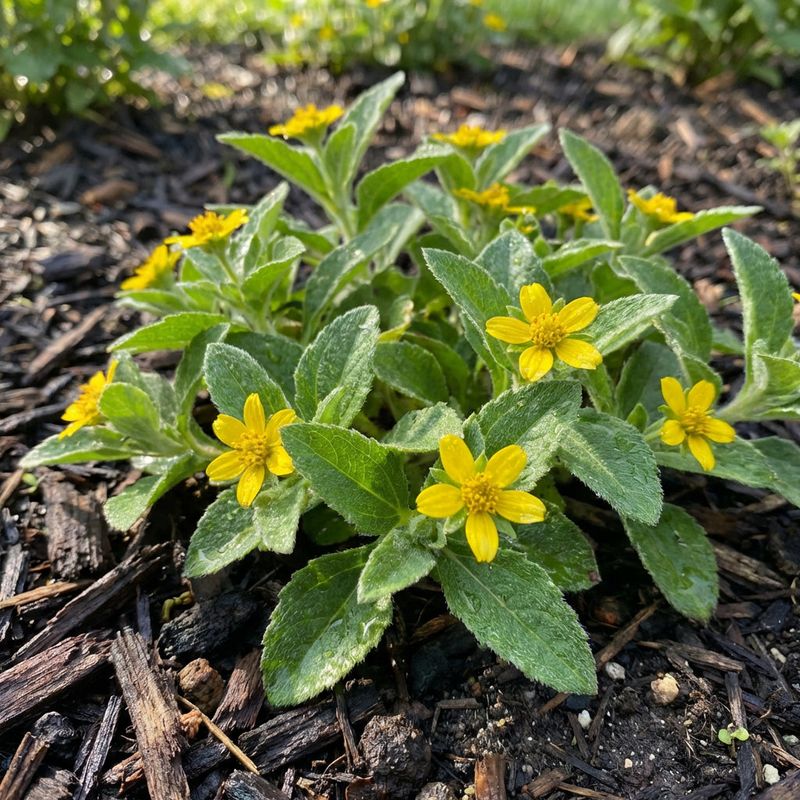
A cheerful little plant with a lot to offer, green and gold, or Chrysogonum virginianum, earns its place in Georgia shade gardens by producing bright yellow, daisy-like flowers over a long season.
Blooms typically begin in early spring and can continue sporadically through fall, especially in the cooler temperatures that Georgia experiences in spring and autumn.
That extended bloom period is unusual for a ground cover and gives this plant a clear advantage over many alternatives.
The foliage is a rich, dark green and stays relatively low to the ground, creating a tidy, semi-evergreen mat beneath trees.
Leaves are slightly fuzzy with a soft texture, and the plant spreads by both stolons and self-seeding, filling in gaps in a shaded bed over time without becoming invasive or hard to manage.
In Georgia landscapes, this measured spread makes it a practical choice for naturalized areas and woodland-style plantings where some ground-level movement is welcome.
Green and gold grows well in part shade to light shade, which makes it a strong candidate for tree beds that receive a few hours of filtered light.
It handles average garden soil with reasonable drainage and benefits from occasional watering during dry spells, especially in the first growing season.
Once established, it tends to look after itself with minimal intervention.
Planting green and gold in groups of three or more, spaced about 12 inches apart, can help create a fuller look more quickly.
The bright yellow flowers against dark green leaves create a warm, inviting contrast that brings genuine seasonal energy to otherwise quiet shaded spots in a yard.
5. Christmas Fern Brings Evergreen Texture To Shade
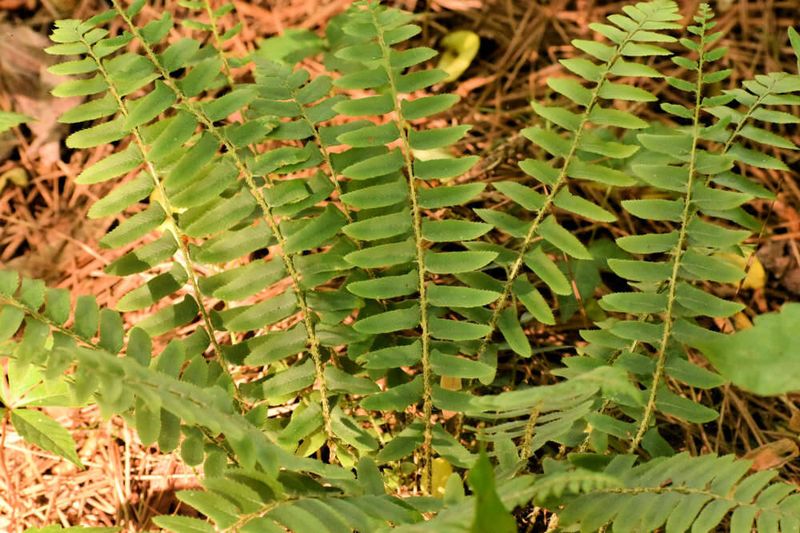
Walk through almost any Georgia woodland in December and there is a good chance you will spot Christmas fern still holding its deep green fronds while everything else has gone brown.
Polystichum acrostichoides earned its common name from this reliable evergreen quality, and that same trait makes it one of the most valuable native ground covers for shaded tree beds in home landscapes.
When most plants have gone dormant for winter, Christmas fern keeps the area beneath a tree looking full and intentional.
The arching, leathery fronds grow 12 to 24 inches tall and create a lush, layered effect that works especially well beneath large canopy trees.
Because the fronds arch outward from a central crown, Christmas fern naturally covers ground in a slightly mounded, textural way that feels more organic than a flat ground cover.
That quality helps it look at home in naturalized areas, woodland garden edges, and informal tree bed plantings.
Christmas fern is well-suited to the root-competitive, low-light conditions that develop beneath established trees in Georgia. It handles dry to moderately moist shade and adapts to a range of soil types, though it responds well to the addition of leaf compost at planting.
Once established, it tends to be low-maintenance and long-lived.
Spacing individual crowns about 18 to 24 inches apart allows each plant room to develop without crowding.
Over several seasons, a planting of Christmas fern beneath a large shade tree creates a dense, evergreen layer that suppresses weeds, protects the soil surface, and provides cover for small wildlife through the colder months.
6. Little Brown Jug Adds Woodland Interest Below Trees
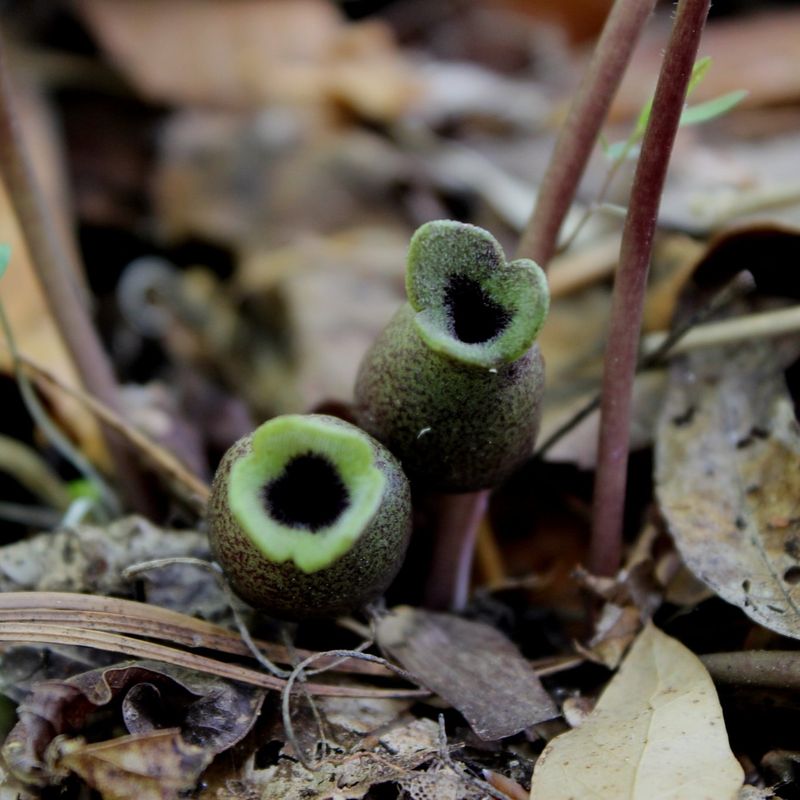
Tucked quietly beneath the leaf litter of Georgia woodlands, little brown jug, or Hexastylis arifolia, is one of those native plants that rewards the gardener who takes the time to look closely.
The glossy, deep green leaves are arrowhead-shaped with attractive silver mottling on some forms, and they hold their color through winter, making this plant one of the more dependable evergreen native ground covers in the Georgia landscape palette.
The common name comes from the small, jug-shaped flowers that appear at soil level in late winter to early spring.
The blooms are largely hidden beneath the foliage and leaf litter, which means they are easy to miss, but they add a layer of botanical interest for anyone who crouches down to look.
The flowers are reportedly pollinated by small insects that crawl along the ground, which adds a fascinating ecological detail to an already intriguing plant.
Little brown jug grows well in moderate to deep shade and handles the dry, root-filled conditions beneath large trees better than many other ground covers.
It spreads slowly by rhizomes, so patience is needed when establishing a planting, but the result is a dense, weed-suppressing mat that requires very little care once it gets going.
Spacing plants 8 to 12 inches apart and mulching lightly between them during establishment can help speed up coverage.
For gardeners looking to replace English ivy with something that genuinely belongs in a Southern woodland, little brown jug offers the right combination of toughness, evergreen foliage, and understated regional character that few other plants can match.
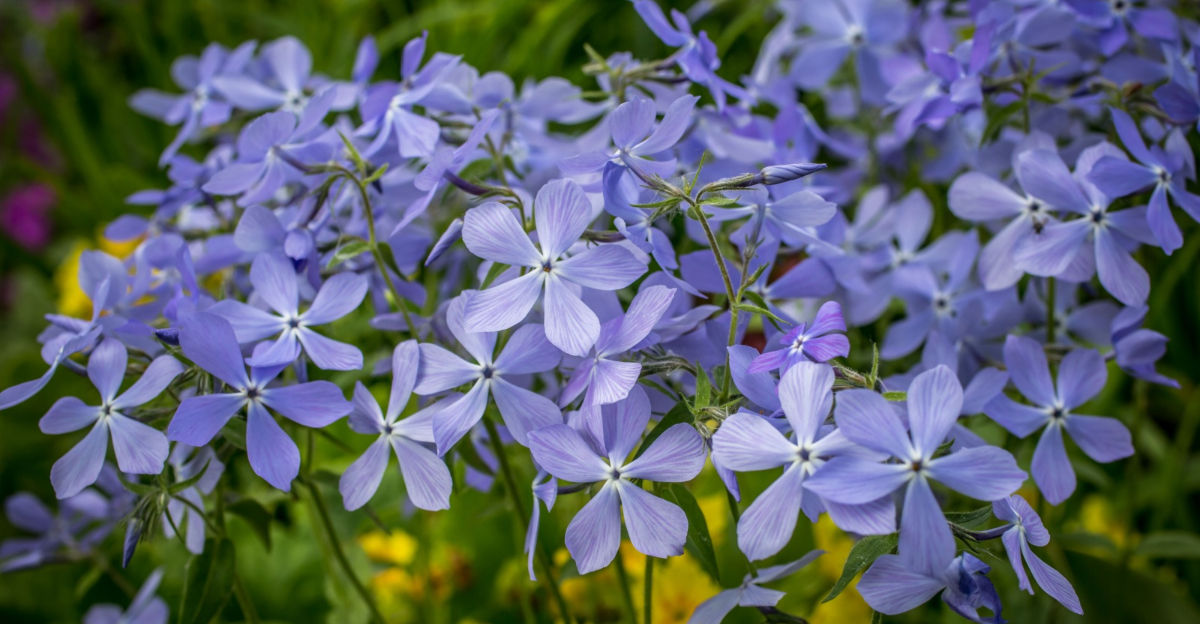
7. Woodland Phlox Brings Spring Color To Tree Beds
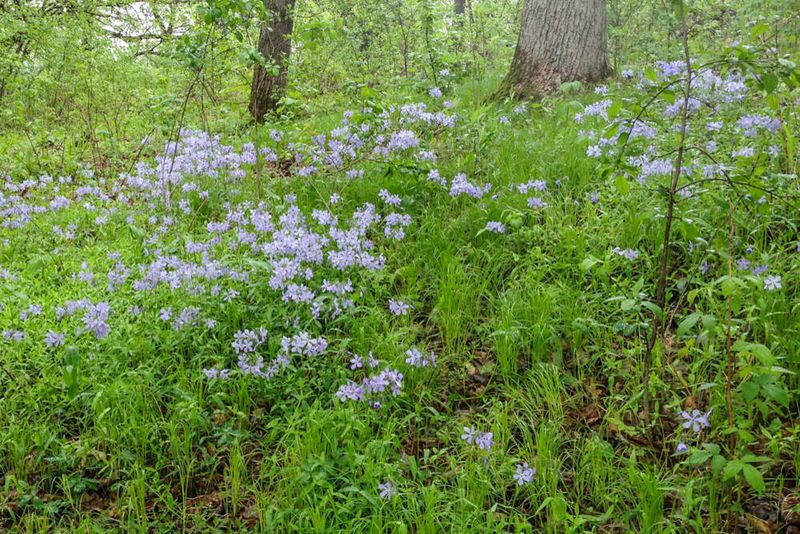
When the soil beneath a shade tree wakes up in early spring, woodland phlox is one of the first native ground covers to make a real visual statement.
Phlox divaricata produces loose clusters of fragrant, lavender-blue to pale violet flowers from roughly March through May, creating a soft wash of color across the shaded ground before most other plants have even leafed out.
That early bloom season gives it a special role in the spring garden that few other native ground covers can fill.
The foliage is semi-evergreen, forming a low, spreading mat of narrow green leaves that fills in shaded tree beds fairly quickly by Georgia standards.
Woodland phlox spreads by both stolons and self-seeding, which means it can gradually colonize a larger area beneath a tree canopy over several growing seasons.
This natural spread is far more predictable and manageable than English ivy, and it supports native pollinators including early butterflies and bees that visit the spring blooms.
Woodland phlox performs well in part shade to light shade and prefers moist, organically rich soil. In Georgia, planting it where it receives morning light and afternoon shade tends to produce the best results.
Watering during dry stretches in the first season helps plants establish strong root systems before summer heat sets in.
Spacing transplants about 12 to 18 inches apart gives each plant room to spread naturally.
Combined with other native ground covers like Christmas fern or foamflower, woodland phlox can help create a layered, seasonally dynamic tree bed that changes character throughout the year while keeping the soil covered and protected.