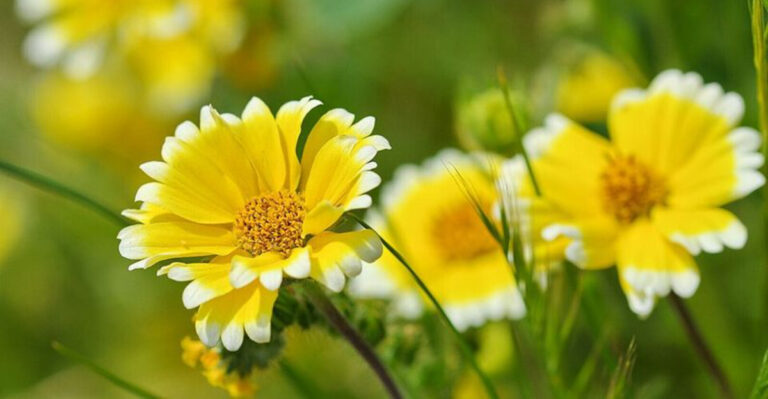
8 California Native Perennials That Perform Best When You Stop Paying Attention To Them
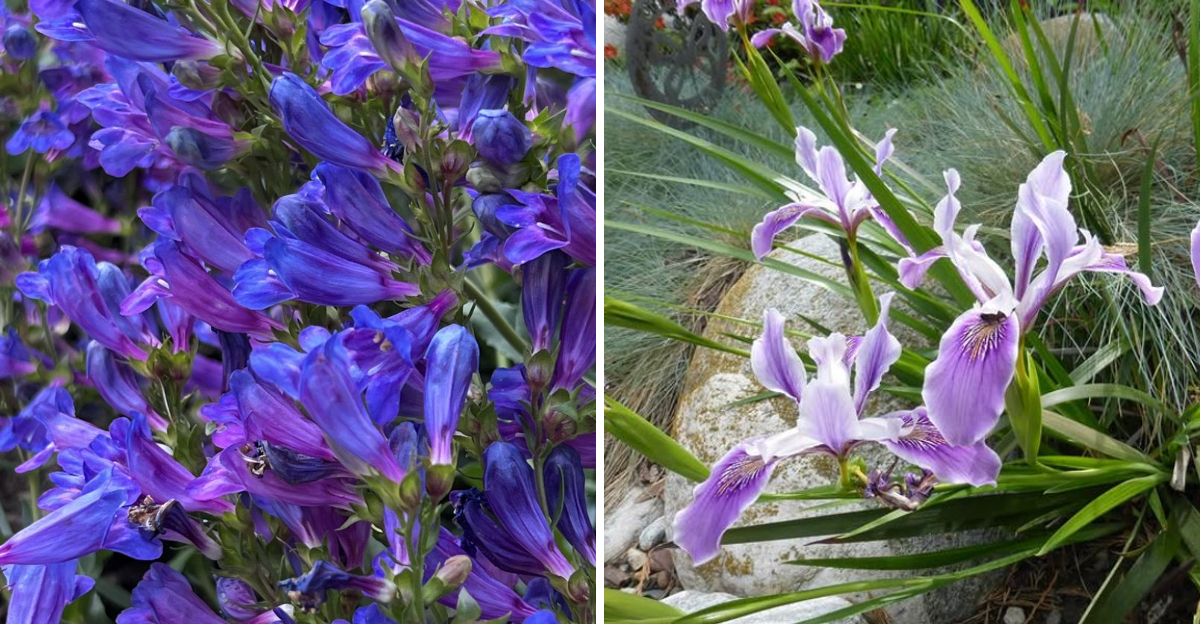
California summers are long, hot, and dry, and most garden plants make you pay for every week of that heat with extra watering, fertilizing, and fussing.
But a handful of native perennials actually prefer it when you back off.
These plants evolved right here, on rocky slopes and sun-baked hillsides where summer rain is basically a rumor.
They developed deep root systems, waxy leaves, aromatic oils, and other strategies that let them handle conditions that would finish off most ornamentals without breaking a sweat.
The secret is picking the right plant for the right spot, giving it solid care during the first year or two while it gets established, and then stepping away.
Most California gardeners do exactly the opposite. They keep watering out of habit, add fertilizer to be safe, and wonder why the plant looks worse every season.
Once these eight natives settle in, they reward your restraint with flowers, fragrance, and wildlife value that overwatered exotics simply cannot match.
If you have ever lost a plant to too much attention rather than too little, this list is for you.
1. California Fuchsia Lights Up Dry Soil
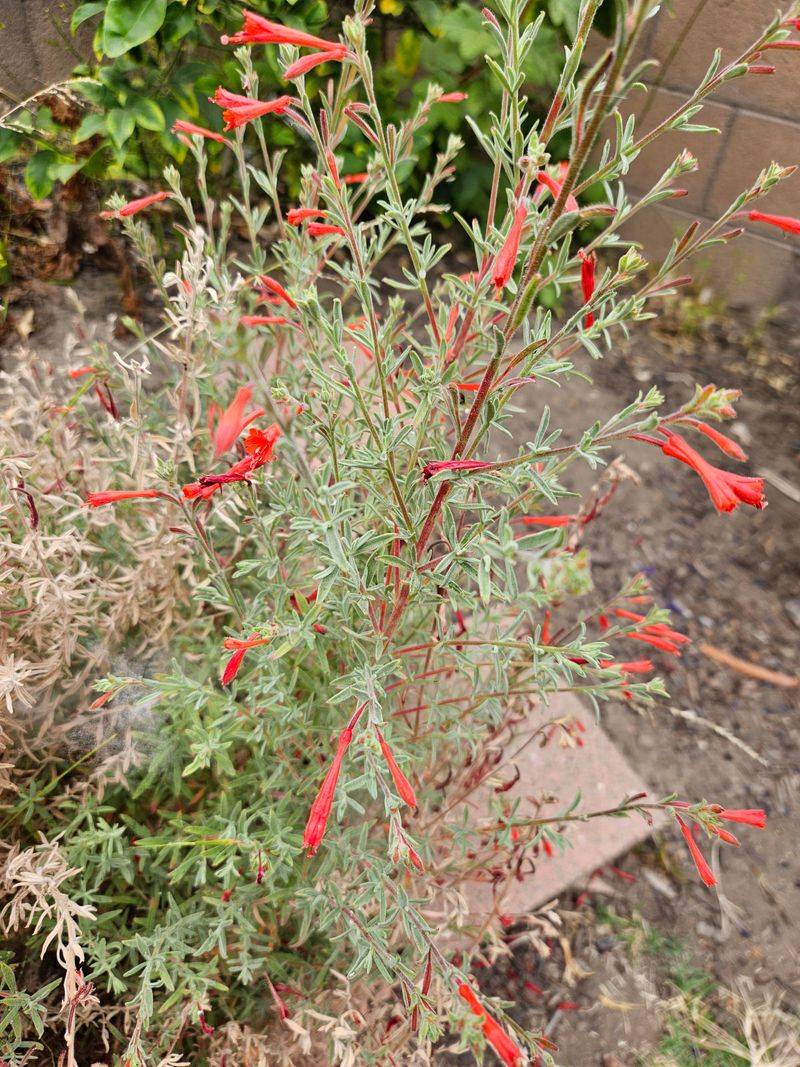
Just when the rest of the garden starts looking exhausted in August, California fuchsia decides it is time to perform.
This low-growing perennial, known botanically as Epilobium canum, pushes out a thick flush of scarlet-orange tubular flowers right when hummingbirds are fueling up for migration.
Watching an Anna’s hummingbird work a patch of California fuchsia is one of those small garden moments that feels genuinely earned.
The plant spreads by underground runners and forms loose, silvery-gray mats that stay tidy in dry soil but can get a little enthusiastic in richer beds.
If you are planting near a walkway or a smaller garden space, give it a border to work against. In lean, fast-draining soil, it stays more compact and blooms even harder.
During its first season, water it regularly every week or so to help it root in.
After that, it handles Southern and Central California summers on rainfall alone in most years. Occasional summer water in the hottest inland zones keeps it looking fresh, but it does not need much.
Cut it back hard in late winter before new growth starts, and it comes back thick and vigorous.
Overwatering, especially in clay soil, is the main way this plant struggles. Choose a sunny spot with good drainage and trust it to do its thing once established.
2. Yarrow Handles Heat With A Smile
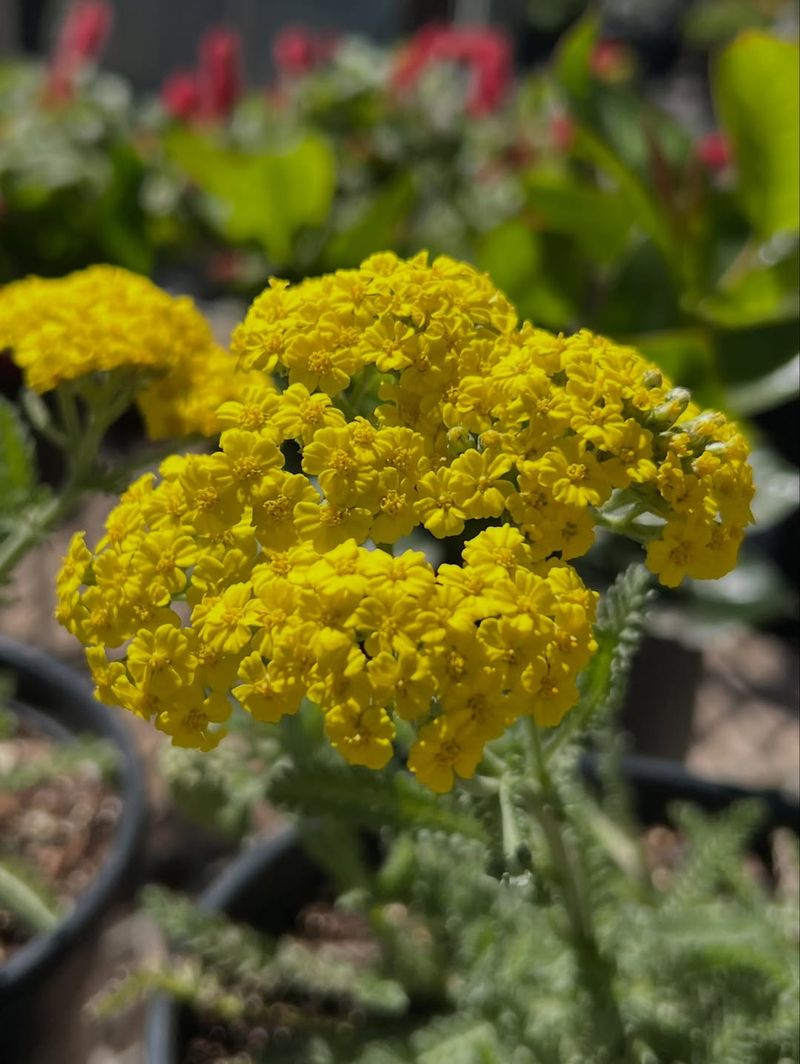
Few plants carry the same cheerful toughness as native yarrow.
Achillea millefolium grows across much of California in grasslands, meadows, and open hillsides, which means it has had a very long time to figure out how to handle heat, drought, and poor soil.
Once established in a sunny spot, it basically runs itself.
The flat-topped flower clusters come in white, cream, and soft yellow depending on the ecotype, and they attract an impressive parade of native bees, wasps, and butterflies from late spring through midsummer.
Your California Garden Changes Every Week. Your Plan Should Too.
Gardening in California changes quickly throughout the season. Every Friday you’ll receive a simple weekly plan showing exactly what to plant, prune, fertilize, harvest, and protect so you never miss the right timing.
One thing that surprises new growers is how strongly yarrow responds to soil quality.
Put it in rich, moist garden soil and it sprawls, flops, and looks a little sloppy. Put it in lean, dry, well-drained soil and it stands upright, blooms more heavily, and spreads at a manageable pace.
It is one of those plants that genuinely rewards you for not trying too hard.
Water it weekly during the first growing season to get the roots established. After that, it survives on seasonal rainfall in most California regions with little to no supplemental irrigation.
Trimming spent flower clusters encourages a second flush of blooms, and cutting the whole plant back by about half in midsummer can refresh the foliage if it starts looking tired.
3. Matilija Poppy Wants Room And Respect
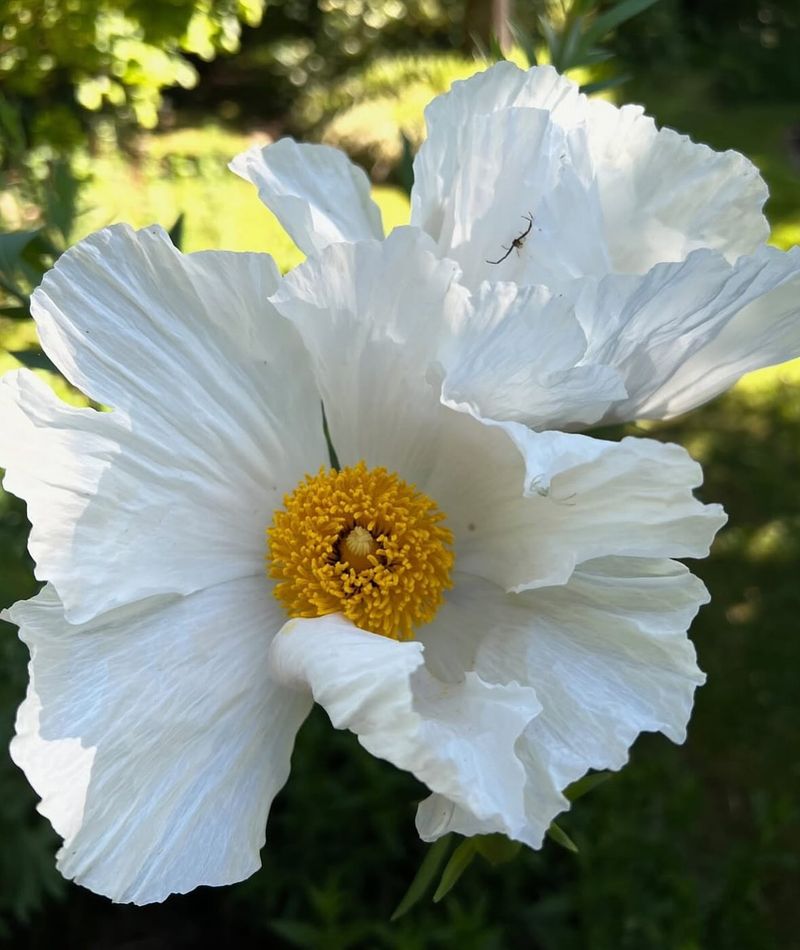
There is nothing subtle about Matilija poppy.
Romneya coulteri grows six to eight feet tall, spreads by aggressive underground rhizomes, and produces flowers the size of fried eggs, white and crinkled with a burst of golden stamens in the center.
It is the kind of plant that stops people mid-conversation. It also asks very little from you once it finds its footing.
The catch is the establishment phase.
Matilija poppy can be slow to settle in during its first year, and it does not like being moved once rooted. Choose your spot carefully before planting.
Give it full sun, very fast drainage, and enough room to spread, ideally six to ten feet in every direction over time.
Water it regularly through the first dry season, then step back.
Once established, it handles California summers on little to no supplemental irrigation. Cut the whole plant down to a few inches in late fall after it goes dormant.
It will look alarming for a few weeks, but it comes back in spring with fresh gray-green foliage and starts blooming by late May or June.
Planting it against a fence, a dry slope, or the back of a large border gives it the space it needs without letting it overtake smaller plants nearby.
Respect its scale and it will reward you every spring without asking for much in return.
4. Sulfur Buckwheat Feeds Pollinators Late
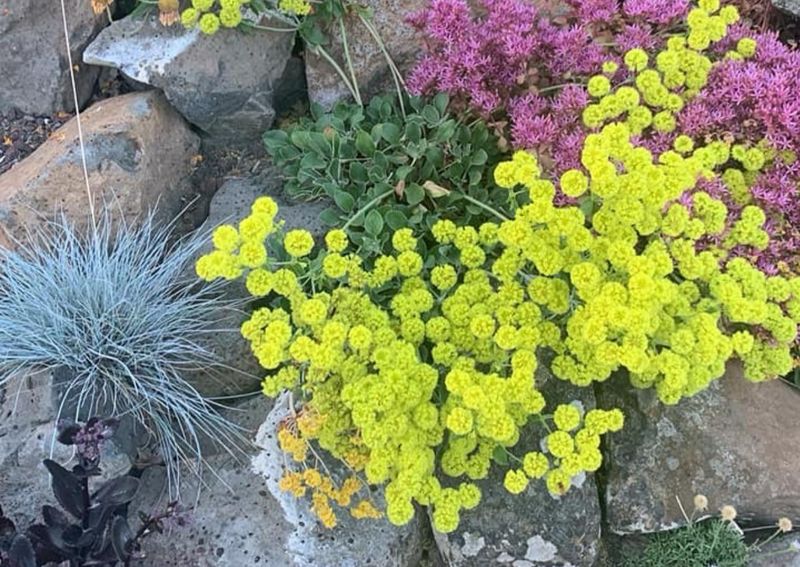
A lot of native plants wrap up their show by July, but sulfur buckwheat is just getting started.
Eriogonum umbellatum, one of the most widely distributed buckwheats in California, blooms in bright sulfur yellow from late spring into summer, then holds its flower heads as they age to rust and copper tones through fall.
That extended season makes it genuinely valuable for late-season native bees, skippers, and other insects that need food sources when most other plants have gone dry.
Sulfur buckwheat thrives in conditions that would stress most garden plants.
Rocky, sandy, or gravelly soil with excellent drainage is exactly what it wants. Plant it on a dry slope, at the edge of a pathway, or in a raised bed with fast-draining mix and it will settle in happily.
Rich soil and overwatering are the two things most likely to shorten its life, so resist the urge to pamper it.
During the first growing season, water it every week or two to help establish the root system. After that, it handles dry summers with minimal intervention.
The spent flower heads look attractive well into winter and provide seed for birds, so there is no rush to cut them back.
Sulfur buckwheat earns its place quietly and consistently, season after season, in the kind of spot where most other plants give up entirely.
5. Foothill Penstemon Keeps Blooming Lean
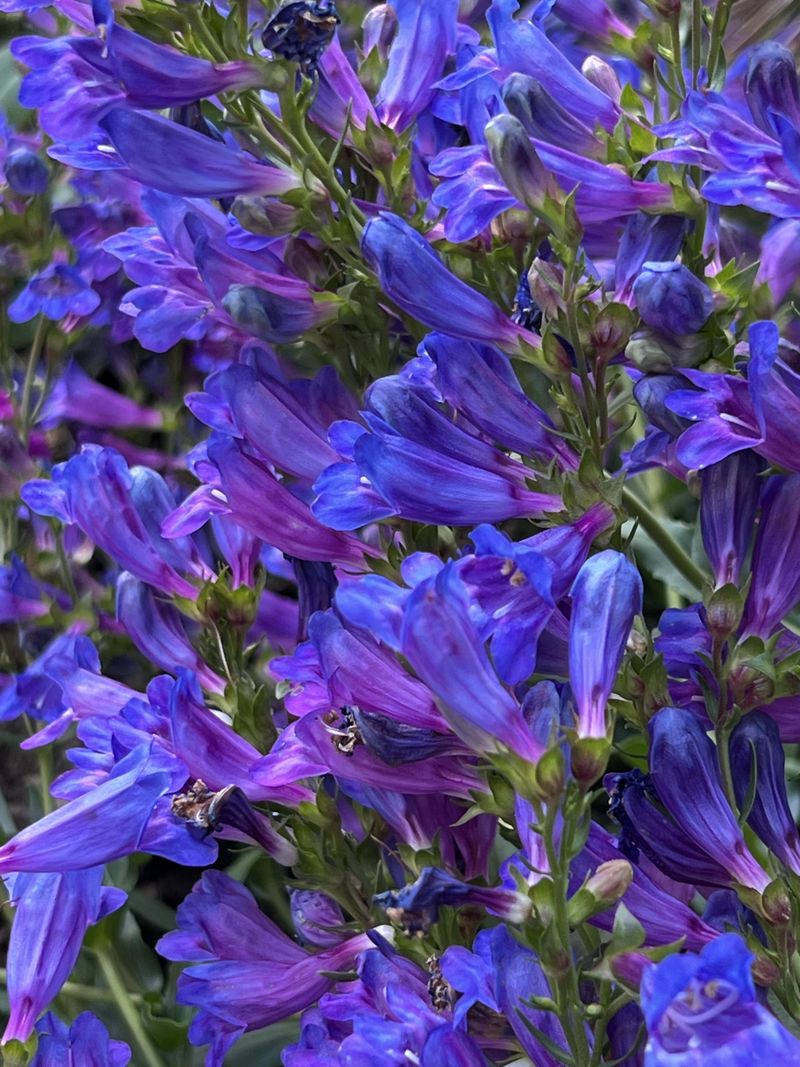
Lean soil is not a problem for foothill penstemon. It is the whole point.
Penstemon heterophyllus, sometimes called blue-eyed penstemon, grows naturally on dry chaparral slopes and foothill grasslands where the soil is rocky and nutrients are minimal.
Give it that same kind of tough love in your garden and it responds with weeks of blooming that attracts hummingbirds and bumblebees in equal measure.
The flowers come in shades ranging from sky blue to deep violet-pink depending on the seed source or cultivar.
The cultivar Margarita BOP is widely available and produces reliable blue-purple spikes on compact plants about two feet tall. Whatever form you choose, the care is similar: full sun, fast drainage, and no fertilizer.
Adding compost or nitrogen-rich amendments actually shortens the plant’s life by pushing soft, floppy growth that is more vulnerable to root problems.
Water new transplants consistently through the first dry season, aiming for deep, infrequent watering rather than frequent shallow sprinkles.
Once established, foothill penstemon handles dry summers well and may only need occasional deep watering during extended heat waves.
The plant tends to be short-lived by nature, often lasting three to five years, but it self-sows gently in the right conditions.
Letting a few seedlings develop nearby keeps the show going without any extra effort on your part.
6. Coyote Mint Smells Better With Neglect
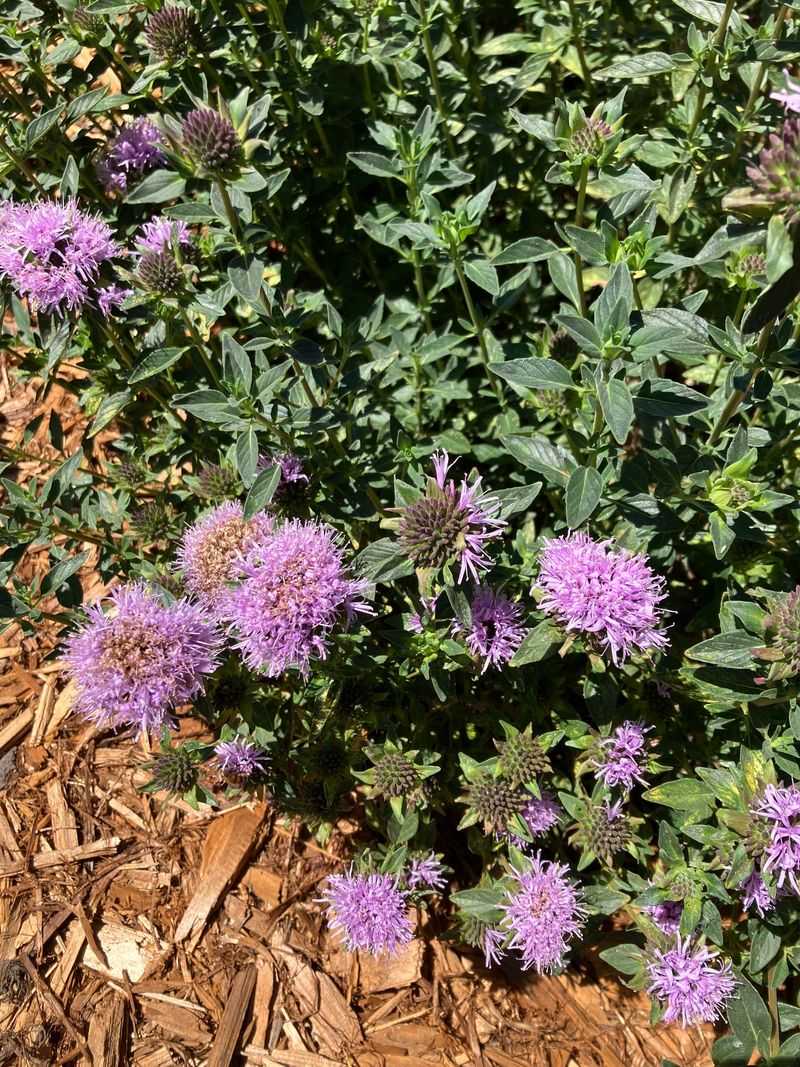
Brush your hand across a patch of coyote mint and the scent hits you like a small, pleasant surprise.
Monardella villosa fills the air with a sharp, sweet mint fragrance that is somehow more intense in dry, hot conditions than in moist ones.
That alone makes it worth growing, but the real show happens when the purple to lavender flower clusters open in summer and native bees arrive in numbers that are genuinely impressive for such a small plant.
A blooming patch of coyote mint in July is one of the busiest, most alive spots in any California garden.
The plant forms low, spreading mounds about one to two feet tall and wide. It works well at the front of a border, along a pathway where you will brush against it, or tucked into a dry slope with other low-water natives.
Like most plants in this group, it wants excellent drainage and full to part sun.
Water it consistently during the first growing season to establish a strong root system. After that, coyote mint handles dry summers with very little supplemental irrigation.
Cut it back by about one third in late fall or early spring to keep the mounding shape tidy and encourage fresh growth.
Avoid overwatering at all costs, especially in heavy clay soil. The fragrance, the pollinators, and the near-zero maintenance once established make this one of the most satisfying native perennials you can add to a California garden.
7. Seaside Daisy Softens Tough Edges
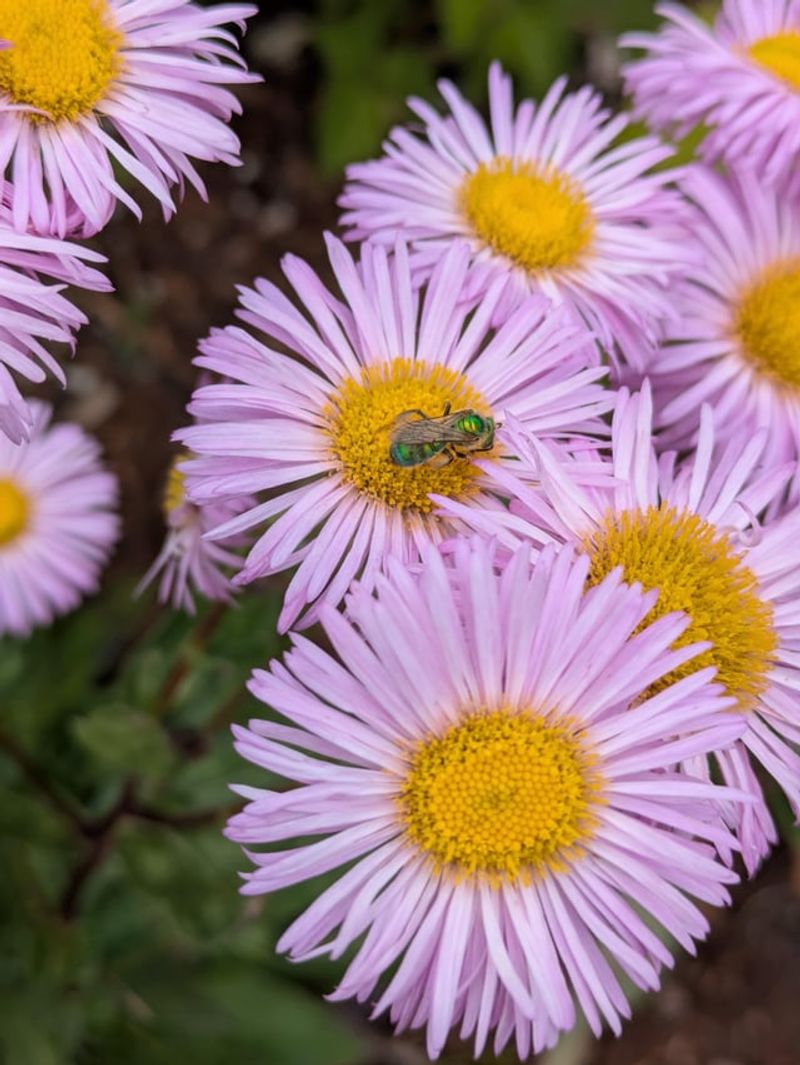
Dry slopes, rocky edges, and the thin strip of soil along a driveway are not easy spots to plant. Seaside daisy was practically made for them.
Native to the California coast from Southern Oregon down through Baja, this low-growing perennial produces cheerful lavender to purple daisy flowers for months at a time, often starting in spring and continuing in waves through summer and into fall.
The plant stays low, usually under a foot tall, and spreads into a loose groundcover that suppresses weeds reasonably well in dry spots.
Full sun to light shade both work, though more sun generally means more flowers. In very hot inland valleys, afternoon shade helps it stay fresh through the hottest weeks.
Get it established with regular watering through its first dry season, then ease back.
Once rooted in, seaside daisy manages on low to moderate water and looks best when you are not hovering over it with a hose.
Trimming spent flowers keeps the display going longer, and a light trim after the main bloom period tidies the plant without stressing it.
Avoid heavy clay soil with poor drainage, as that is the one condition that tends to cause problems.
Given a well-drained site and a little patience during establishment, seaside daisy pays you back with almost year-round color and zero drama.
8. Douglas Iris Settles Into Dry Shade
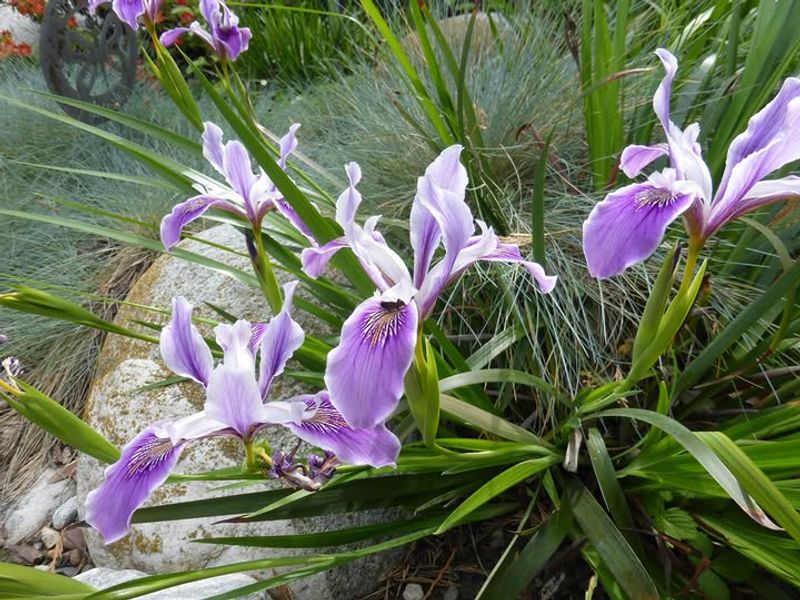
Dry shade is one of the hardest problems in a California garden, especially under native oaks where summer water can actually harm the tree’s root zone.
Douglas iris, Iris douglasiana, is one of the few flowering perennials that genuinely thrives in those conditions.
It grows naturally along the California coast and in woodland edges from Southern Oregon to Santa Barbara, often in partial to full shade with dry summers and little soil disturbance.
Under an established oak, it can be exactly the right plant in exactly the right place.
The flowers are stunning in spring, ranging from deep purple and lavender to creamy white and pale yellow depending on the seed source.
The strappy evergreen foliage stays attractive year-round and forms tidy clumps that slowly expand over time without becoming invasive.
Plant Douglas iris in fall if possible so it can establish through the cool, wet season before facing its first dry summer.
Water it regularly during establishment, then reduce irrigation sharply once it has been in the ground for a full year. In the dry shade of an established oak, it often needs no supplemental water at all after the second year.
Divide clumps every four to five years if they start to look crowded in the center.
Otherwise, the best thing you can do for Douglas iris is simply leave it alone and let it settle into its spot on its own terms. Some plants perform best when the gardener steps back, and this is one of them.