This Pennsylvania Garden Caterpillar Gets Less Attention Than A Copperhead But Its Sting Is Just As Memorable
Most Pennsylvania gardeners know to watch out for copperheads when they’re working outdoors. The warning feels reasonable, the risk feels clear.
But there’s a caterpillar showing up in Pennsylvania gardens that delivers a sting so intense and unexpected that people who have experienced it rarely forget it. And almost nobody sees it coming.
That’s the problem. This caterpillar doesn’t look dangerous. It’s actually quite striking, even beautiful in its own unusual way. The kind of thing that makes you want to take a closer look or pick it up for a better look.
And that instinct, completely natural and understandable, is exactly what leads to an encounter most people wish they could take back. The sting it delivers is caused by venomous spines that make contact with skin on touch.
The reaction can range from sharp, burning pain to swelling, nausea, and in some cases a response serious enough to need medical attention. If you spend time in a Pennsylvania garden, knowing this caterpillar exists could save you a very unpleasant experience.
Saddleback Caterpillar: The Pennsylvania Garden Caterpillar With A Sting You Won’t Forget
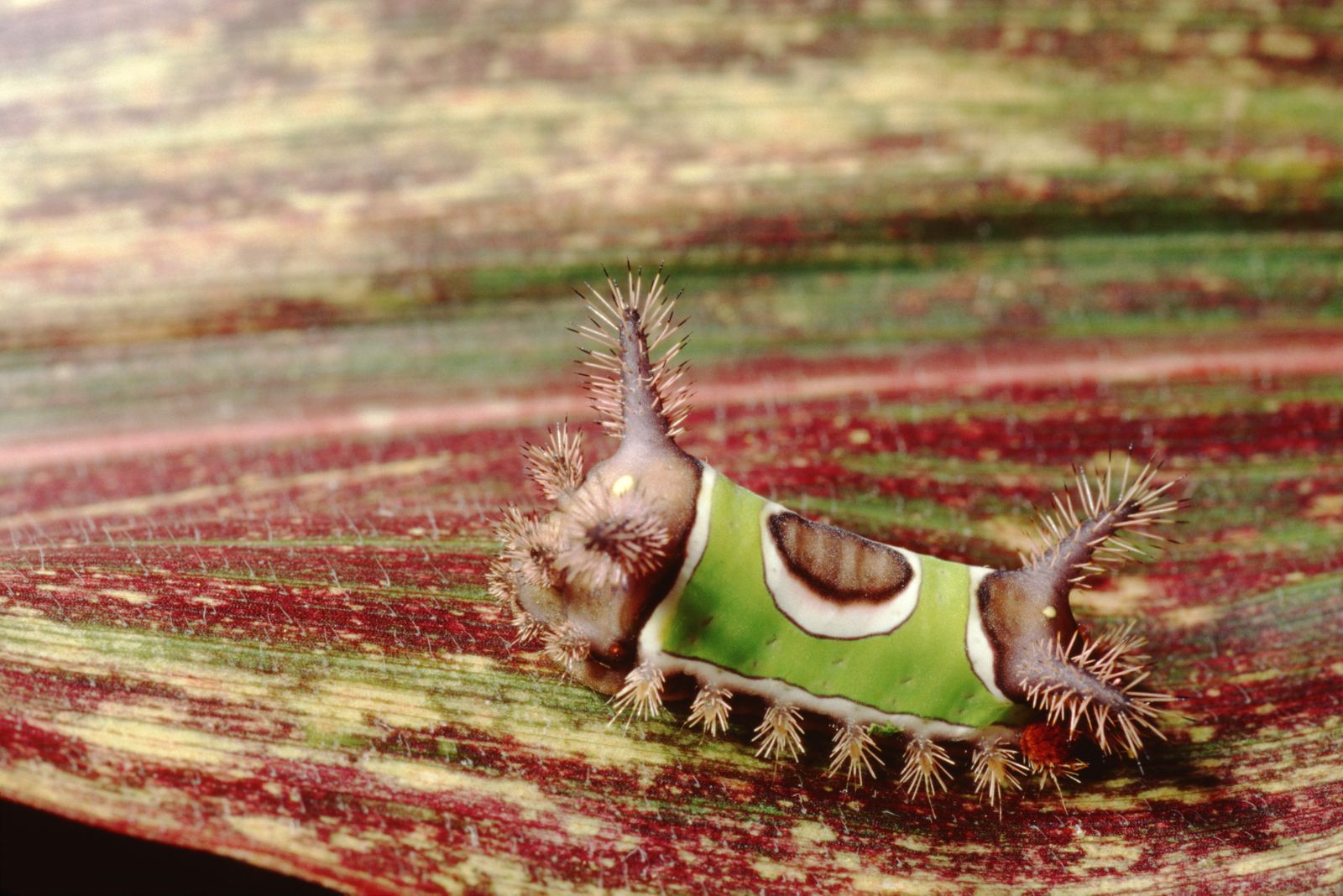
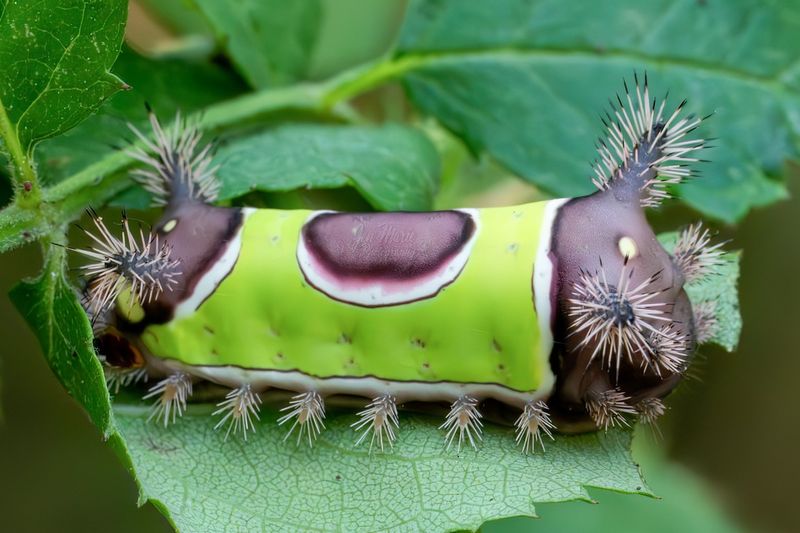
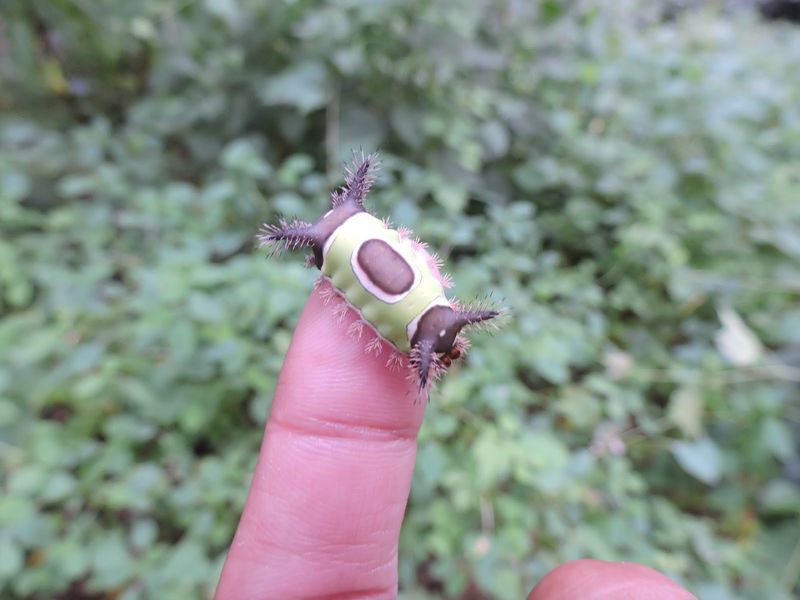
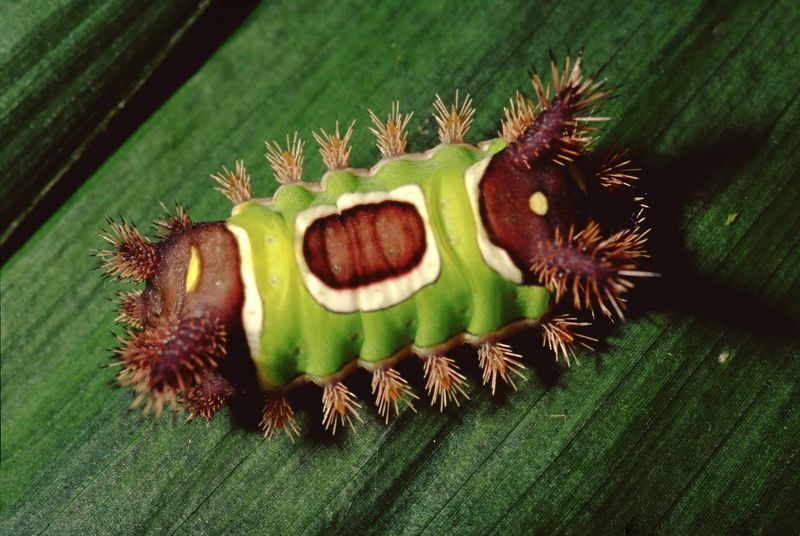
Picture a tiny creature wearing a bright green saddle on its back, outlined in white and centered with a brown dot.
That is exactly what the saddleback caterpillar looks like, and it is one of the most eye-catching insects you might find on your garden plants in Pennsylvania. Its scientific name is Acharia stimulea, and it belongs to a group known as slug caterpillars.
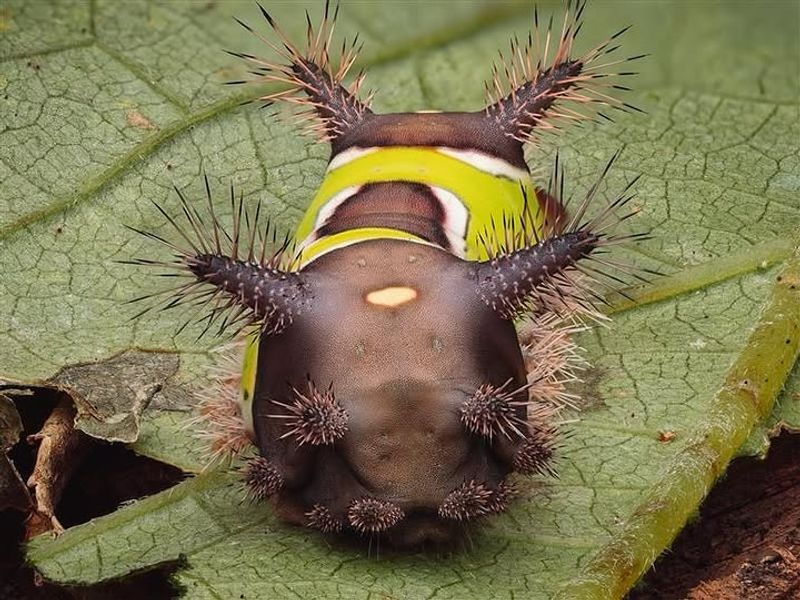
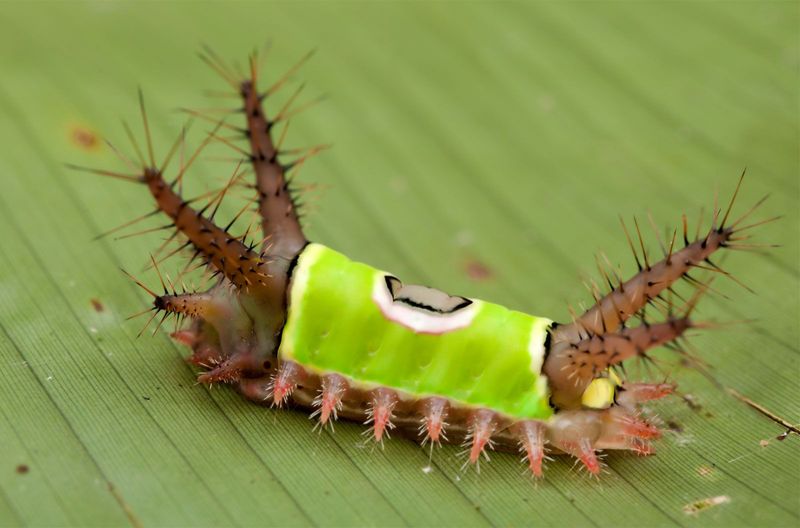
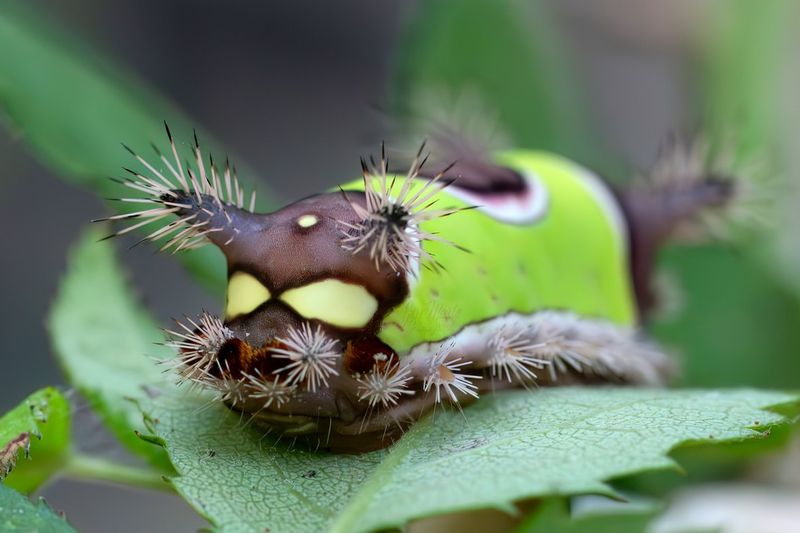
The body is mostly brown on both ends, with that vivid green patch running across the middle. Surrounding the entire body are clusters of sharp, hollow spines called urticating hairs.
These spines are connected to venom glands, and when skin makes contact with them, the result is an immediate and intense sting that most people never forget.
Many gardeners see this caterpillar and assume it is harmless because it looks almost decorative. That bright coloring is actually a warning signal in nature, telling predators to back off. Humans, unfortunately, do not always get the message until it is too late.
Saddleback caterpillars are active from mid-summer through early fall in Pennsylvania. They feed on a wide variety of plants, including ornamental shrubs, fruit trees, corn, and garden perennials.
They are not rare, and they can show up in backyard gardens without much warning. Knowing what this caterpillar looks like is your first line of defense.
If you spot a small, slow-moving creature with a green patch and spiny bristles on a plant leaf, do not touch it. Step back, take a look, and give it the respect it has clearly earned.
Why This Caterpillar Catches Gardeners Off Guard
Most people spending time in a Pennsylvania garden spend zero seconds worrying about caterpillars. Snakes, bees, and wasps tend to get all the attention when it comes to outdoor stings and bites.
But the saddleback caterpillar is sneaky in a way that most garden pests simply are not, and that is exactly why so many people get caught off guard.
Your Pennsylvania Garden Changes Every Week. Your Plan Should Too.
Gardening in Pennsylvania changes quickly throughout the season. Every Friday you’ll receive a simple weekly plan showing exactly what to plant, prune, fertilize, harvest, and protect so you never miss the right timing.
When you are pruning a rose bush, reaching into a tomato plant, or pulling weeds near a shrub, your hands and arms move fast. You are focused on the task, not on scanning every single leaf for a tiny caterpillar.
The saddleback is only about an inch long, which makes it incredibly easy to miss until your skin has already made contact with those spines.
Unlike a bee that buzzes loudly or a wasp that hovers visibly near a nest, the saddleback just sits quietly on a leaf. It does not move toward you.
It does not make noise. It simply waits, and if your hand brushes against it, the spines do the rest of the work instantly.
Gardeners who have been stung often describe the moment as completely unexpected. One second they were gardening normally, and the next second they felt a sharp burning sensation that seemed to come out of nowhere.
That element of surprise is part of what makes this caterpillar so memorable. Awareness is everything here.
Once you know the saddleback caterpillar exists and can show up on common garden plants, you will naturally start paying closer attention to what is hiding on those leaves before your hands get too close.
Where Saddleback Caterpillars May Hide In Pennsylvania Gardens
Saddleback caterpillars are not picky eaters, and that means they can show up on a surprisingly wide range of plants.
In Pennsylvania gardens, some of the most common spots to find them include ornamental shrubs, apple and cherry trees, blueberry bushes, roses, corn stalks, and dense leafy perennials.
Basically, if a plant has broad, healthy leaves, there is a chance a saddleback caterpillar could be resting on one of them.
One of their favorite habits is resting on the undersides of leaves. This is important to understand because the underside of a leaf is exactly where your fingers go when you are pulling a stem, checking for pests, or guiding a vine.
You often cannot see the underside until your hand is already there, which makes accidental contact much more likely.
Vines and climbing plants are especially worth watching. Caterpillars on a vine can end up at arm or chest height, meaning contact can happen without you even looking downward.
Trellises, fence-line plantings, and climbing roses are all spots worth checking carefully before reaching in.
Fruiting plants like blueberries and raspberries are also common hiding spots. When you are harvesting berries, your focus is naturally on the fruit, not on scanning every leaf surface.
Slowing down just a little and glancing at the undersides of leaves before grabbing a stem can make a big difference.
Pennsylvania has a long growing season with plenty of lush plant growth, which gives saddleback caterpillars lots of habitat to work with. Staying aware of the kinds of plants in your yard helps you know where to look first.
What The Sting Feels Like And Why You Should Avoid Touching It
Anyone who has been stung by a saddleback caterpillar tends to remember it vividly. The first sensation is usually a sharp, burning pain that hits almost immediately after contact.
Within minutes, the area often turns red and starts to swell. Some people describe it as feeling like a wasp sting, while others say the burning sensation lingers longer than they expected.
After the initial sting, itching and irritation can set in and last for several hours. In some cases, a rash or small raised welts appear around the contact area.
The spines can also break off and remain embedded in the skin, which keeps the irritation going even after the caterpillar is no longer present. Removing those embedded spines carefully with tape or tweezers can help reduce ongoing discomfort.
Most reactions stay localized to the area that made contact. For the average healthy adult, the sting is painful and annoying but manageable.
Washing the area with soap and water, applying a cold pack, and using an over-the-counter anti-itch cream can all help ease symptoms.
However, some people are more sensitive to insect venom than others. If swelling spreads beyond the sting site, breathing feels unusual, or symptoms seem to be getting significantly worse rather than better, seeking medical advice promptly is the right move.
Children and anyone with known insect sensitivities should be watched closely after any contact. The bottom line is straightforward. Those colorful spines are not decoration.
They are a working defense system, and they do their job very effectively. Avoiding contact entirely is always the safest approach.
What To Do If You Find One On A Plant
Spotting a saddleback caterpillar on one of your garden plants does not need to turn into a crisis. The most important rule is simple: do not touch it with bare hands.
Those spines are just as effective whether the caterpillar is sitting still or being accidentally grabbed, so bare skin contact is always a risk.
If you need to move it off a plant you use frequently, thick gardening gloves can help, but even then, use a stick, a folded piece of cardboard, or a garden tool to nudge it rather than picking it up directly.
The caterpillar can be guided onto a leaf or branch and relocated to a less-used part of the yard if needed.
Avoid pressing down on it or squishing it against a surface with exposed skin, because the spines can still cause a reaction even after the caterpillar is no longer moving.
If you notice several saddleback caterpillars on a plant near a high-traffic area, like a fruit bush your kids harvest from or a shrub next to a walkway, it may be worth reaching out to your local Penn State Extension office.
They can offer guidance on safe, appropriate management options without requiring you to handle the caterpillars yourself.
Pest control professionals familiar with garden insects are another solid resource if the population seems large or if the affected plants are in a spot where accidental contact is likely.
There is no need to panic, but taking action to reduce the risk in high-use areas makes good sense. Staying calm, thinking before reaching, and using the right tools makes all the difference when you encounter one of these spiny little visitors.
How To Garden Safely Without Panicking
Finding out that a painful caterpillar might be hiding in your garden does not mean you need to give up gardening or spend every session on high alert.
A few simple habits can dramatically lower the chances of an accidental encounter, and most of them are easy to build into your regular routine.
Gloves are your best friend. Wearing sturdy gardening gloves every time you work around shrubs, trees, or dense plantings protects your hands from not just caterpillars but also thorns, rough bark, and other irritants.
Long sleeves add another layer of protection when you are reaching into thick or overgrown areas. It sounds basic, but a lot of stings happen simply because someone stepped outside without gloves for what they thought would be a quick task.
Before pruning or harvesting, take a few seconds to visually check the undersides of leaves near where your hands will be going. You do not need to inspect every single leaf on the plant.
Just a quick look at the stems and leaf surfaces closest to your work area can catch a caterpillar before contact happens.
Teaching children not to touch colorful or fuzzy caterpillars is another important step. Kids are naturally curious, and a bright green and brown caterpillar looks pretty interesting up close.
A simple rule, look but never touch, goes a long way toward keeping little hands safe. After working around dense shrubs, shake out your gloves and sleeves before pulling them off. Caterpillars occasionally drop or cling to fabric without being noticed.
The saddleback caterpillar is worth respecting, and with a little awareness, it is easy to share the garden peacefully.