This Pest Is Going After California Tomatoes And Pomegranates Right Now
California tomatoes and pomegranates already have enough drama with heat, watering mood swings, and squirrels acting like tiny criminals.
Now leaffooted bugs have entered the chat, and they are not here to admire your garden.
These long-legged pests use their piercing mouthparts to suck juices straight out of tomatoes, pomegranates, and other warm-season favorites.
They leave behind sunken spots, odd discoloration, damaged fruit, and a whole lot of gardener rage. And you know what’s the worst part?
They often show up in groups, looking weirdly confident while doing absolutely nothing good for your harvest.
If your tomatoes are developing strange blemishes or your pomegranates are getting hit before they can fully shine, leaffooted bugs may be the sneaky culprits.
The good news is that you can fight back without turning your yard into a chemical war zone.
A little scouting, handpicking, cleanup, and smart prevention can help protect your summer crop before these pests invite their entire extended family.
1. Leaffooted Bugs Pierce Fruit Instead Of Chewing Leaves
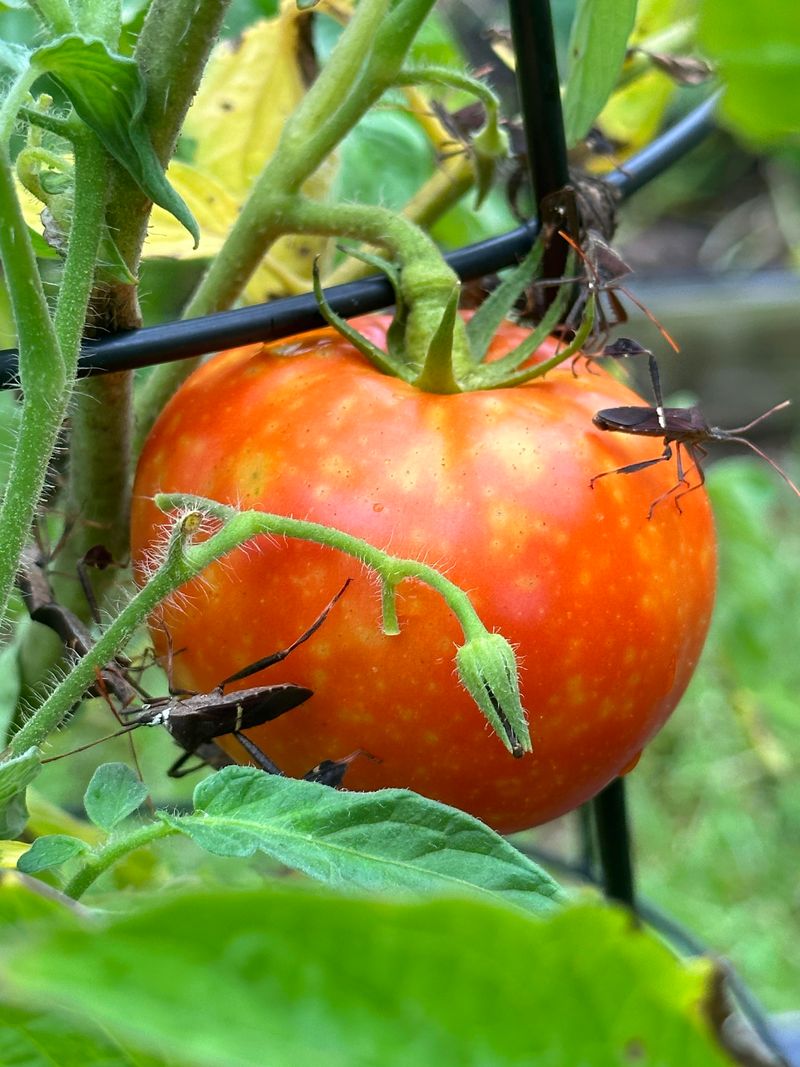
Most people expect garden pests to chew holes in leaves, but leaffooted bugs work differently. They use a sharp, needle-like mouthpart to pierce directly into fruit.
Once inside, they suck out the juice and leave behind toxic saliva.
That saliva is what causes most of the damage. It breaks down the tissue inside the fruit and creates spots, discoloration, and a bitter taste.
You might not even see the entry point because it is so small.
Leaffooted bugs belong to the family Coreidae and are closely related to stink bugs. They release a strong, unpleasant smell when threatened.
This is a defense trick that makes predators back off.
Unlike caterpillars or aphids, leaffooted bugs do not leave obvious chewed edges. The damage shows up as sunken areas, white patches, or pithy sections inside the fruit.
California gardeners often blame heat or disease before they think to check for bugs.
These insects are strong fliers and can move from plant to plant quickly. They are active during the hottest parts of the day and tend to hide on the underside of leaves when temperatures drop.
Checking your plants in the morning gives you the best chance of spotting them before they scatter.
2. Tomatoes Show Damage As Sunken Spots
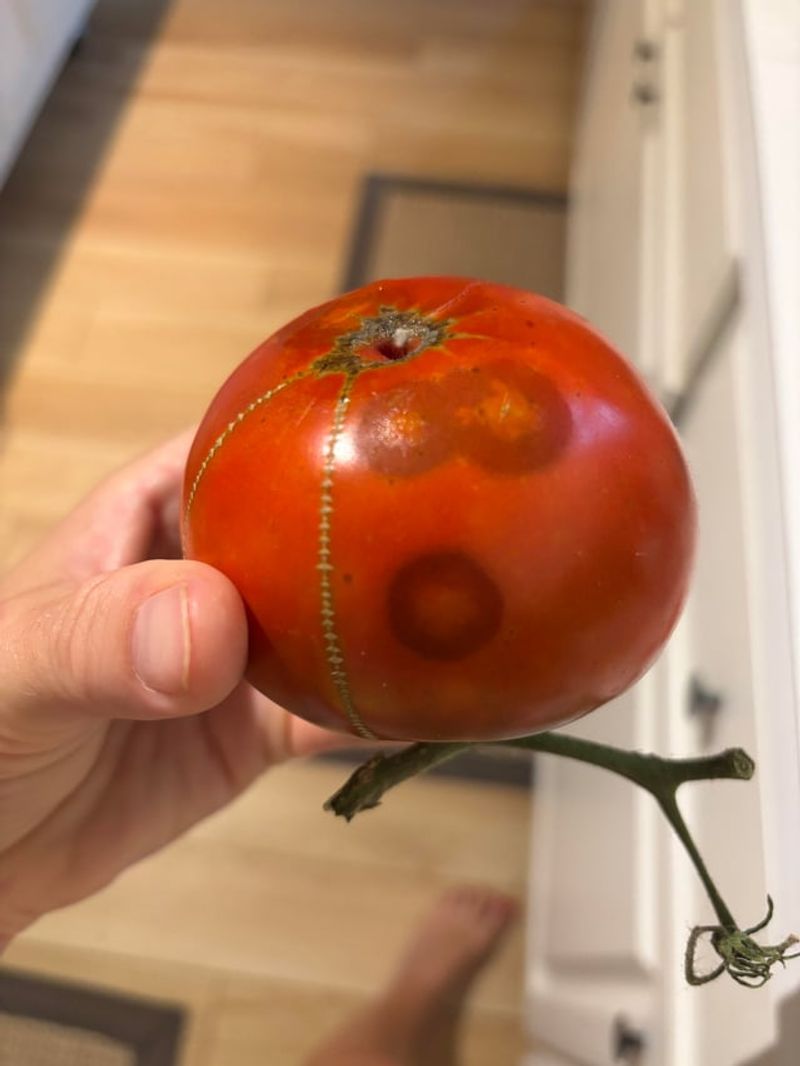
Sunken spots on tomatoes are one of the clearest signs that leaffooted bugs have been feeding. The skin around the damaged area often looks pale, yellowish, or slightly wrinkled.
At first, it can look like a bruise or a fungal problem.
When you cut the fruit open, the real story shows up. The tissue underneath the sunken spot is usually white, dry, or pithy.
That texture change happens because the bug’s saliva breaks down the cells from the inside out.
This kind of damage is called cat-facing when it appears near the blossom end, but leaffooted bug feeding can happen anywhere on the fruit.
The spots tend to be scattered and irregular, unlike the uniform damage from blossom end rot.
Tomatoes that are still green when they get pierced often develop hard, off-color patches as they ripen. Those patches never soften the way healthy fruit does.
Your California Garden Changes Every Week. Your Plan Should Too.
Gardening in California changes quickly throughout the season. Every Friday you’ll receive a simple weekly plan showing exactly what to plant, prune, fertilize, harvest, and protect so you never miss the right timing.
Even if the rest of the tomato looks fine, the damaged area will taste bitter or bland.
Checking your plants every few days during peak California summer heat is the best way to catch this early. Look for small, shiny spots on green tomatoes first.
Catching the problem while fruit is still developing gives you a much better chance of protecting the rest of your harvest.
3. Small Tomatoes May Drop After Feeding
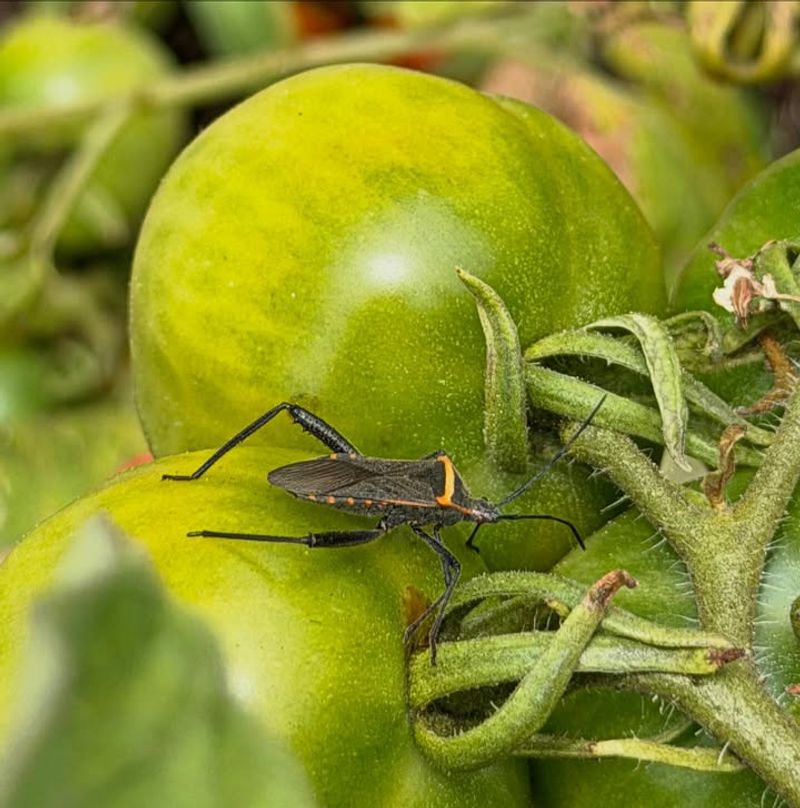
Cherry tomatoes and other small varieties are especially vulnerable to leaffooted bug feeding. When these tiny fruits get pierced early in their development, the plant often gives up on them entirely.
The tomato simply stops growing and falls off the vine. This fruit drop can be confusing because it looks like a watering problem or a pollination issue.
Many gardeners adjust their irrigation or fertilizer without ever solving the real problem.
Checking the dropped fruit closely often reveals the tiny brown feeding marks left behind.
Fruit drop from pest feeding usually happens in clusters. You might notice several small tomatoes on the ground under the same plant over just a few days.
That pattern is a strong clue that something is actively feeding in that area.
Even fruit that stays on the vine after feeding may not be worth eating. The internal damage causes an off flavor that most people notice right away.
Some describe it as soapy or medicinal, which comes from the bug’s saliva mixing with the fruit tissue.
Protecting small tomato varieties means checking them more often than larger ones. Their thin skin makes them easier targets, and their small size means even one feeding event can ruin the whole fruit.
Floating row covers can help block access before the bugs arrive in large numbers.
4. Pomegranates Can Hide Damage Inside
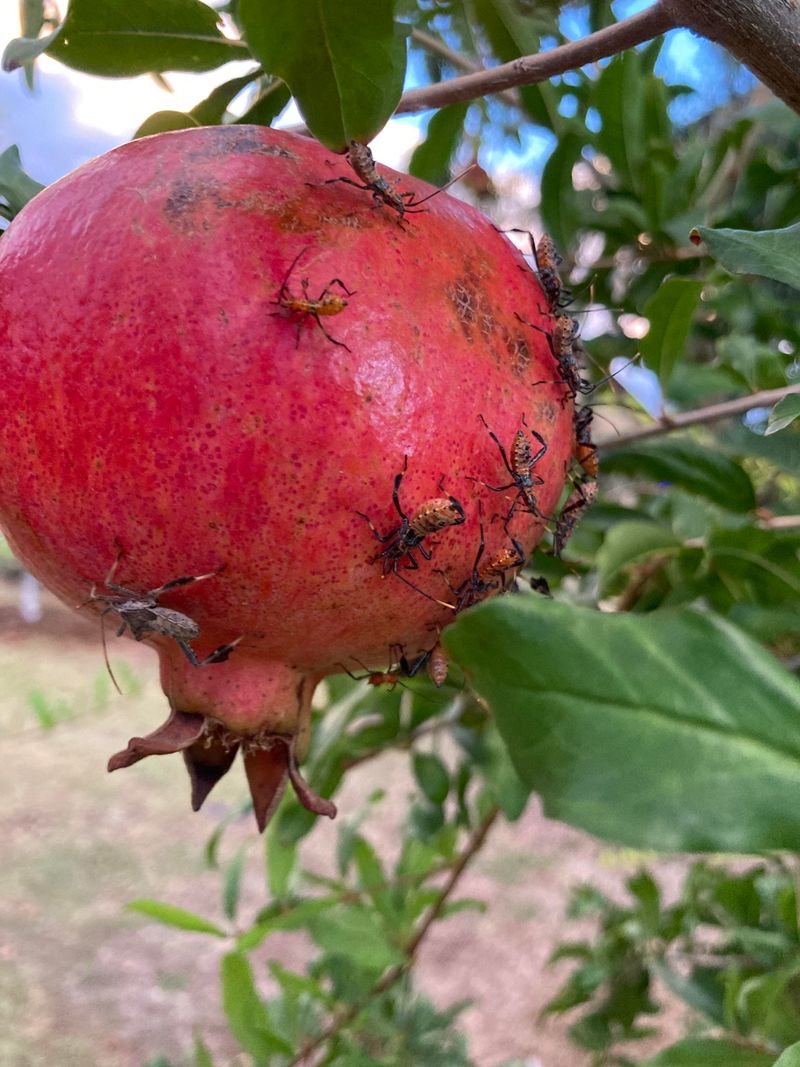
Pomegranates are tricky because their thick outer skin hides almost everything happening inside. A fruit that looks perfectly healthy on the outside can be full of ruined arils on the inside.
Leaffooted bugs are one of the main reasons this happens in home gardens across California.
The bug pierces through the outer rind and feeds directly on the juice-filled arils inside. The skin seals back up almost immediately, leaving little to no visible trace.
That is what makes pomegranate damage so frustrating to catch early.
By the time the fruit is ripe and you cut it open, the damage is already done. Discolored arils, off flavors, and mushy sections are the most common results.
In some cases, the feeding also invites mold or secondary infections to set in.
Pomegranate trees in warmer inland areas tend to see heavier pressure from these bugs. The Central Valley and other hot interior regions provide ideal conditions for leaffooted bugs to build up large populations.
Trees near weedy fields or overgrown borders face the highest risk.
Bagging individual fruits with paper or mesh bags is one way to protect them. It takes time, but it creates a physical barrier the bugs cannot get through.
Some growers start bagging when fruits are about golf ball size, which gives the best protection before peak feeding season begins.
5. Withered Arils Are The Real Warning Sign
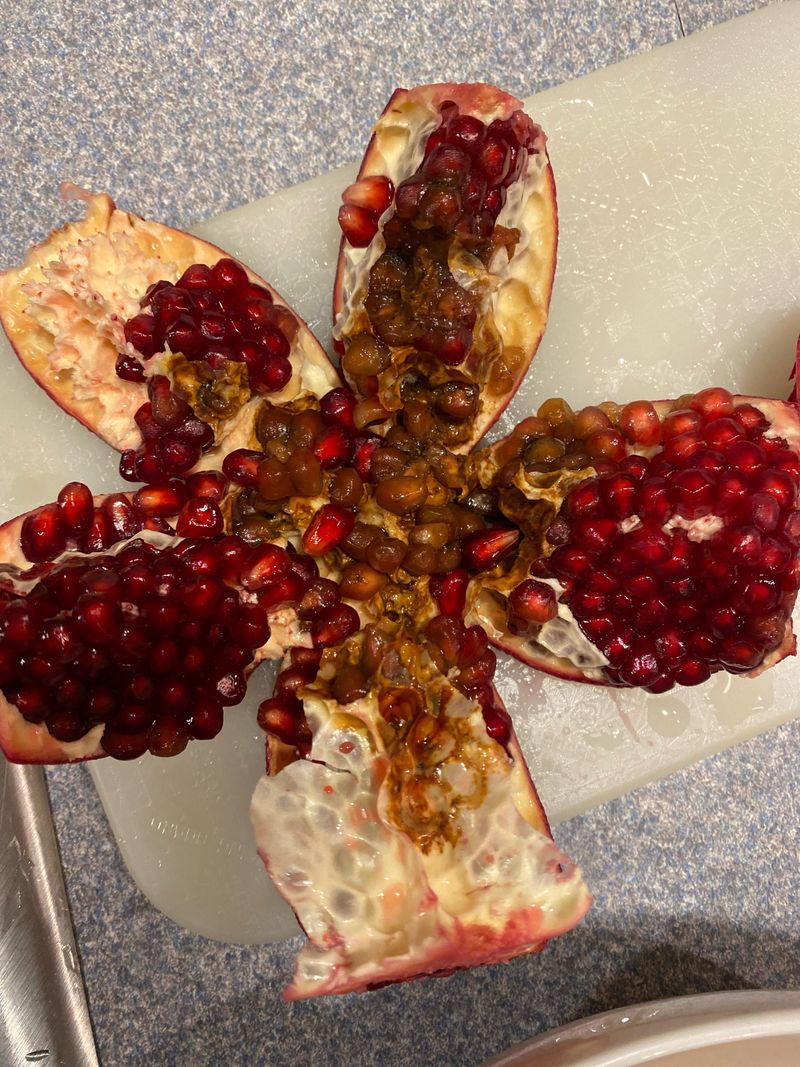
Cutting open a pomegranate and finding shriveled, brown arils is a gut punch for any gardener. That withered look is one of the most reliable signs of leaffooted bug damage.
Healthy arils should be plump, juicy, and deep red or pink in color.
When a bug pierces the fruit and feeds on the arils, those individual seeds lose their moisture. They collapse inward and turn brown or tan.
Sometimes only a few arils are affected, but heavy feeding can ruin large sections of the fruit.
The damage is not always obvious from the outside. The rind stays firm and the fruit continues to develop normally in size.
That is why so many gardeners are surprised when they finally open the fruit at harvest time.
Withered arils can also be caused by poor pollination or drought stress, so it is worth ruling those out first. However, if you are seeing this problem across multiple fruits on the same tree, pest feeding is the more likely cause.
Look for the tiny brown puncture marks on the outer skin as an added clue.
Monitoring your tree throughout summer gives you the best chance of catching the bugs before they do too much damage.
Even checking once a week can help you spot nymphs early when they are easiest to remove. Early action always leads to better results at harvest.
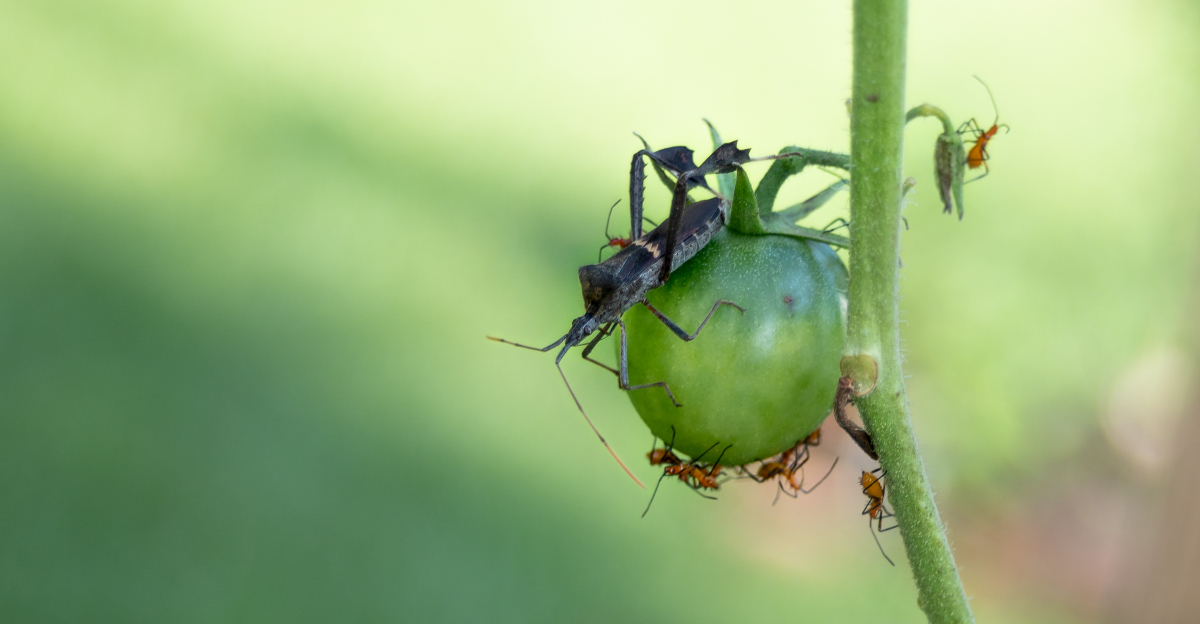
6. Nymphs Gather In Bright Orange Clusters
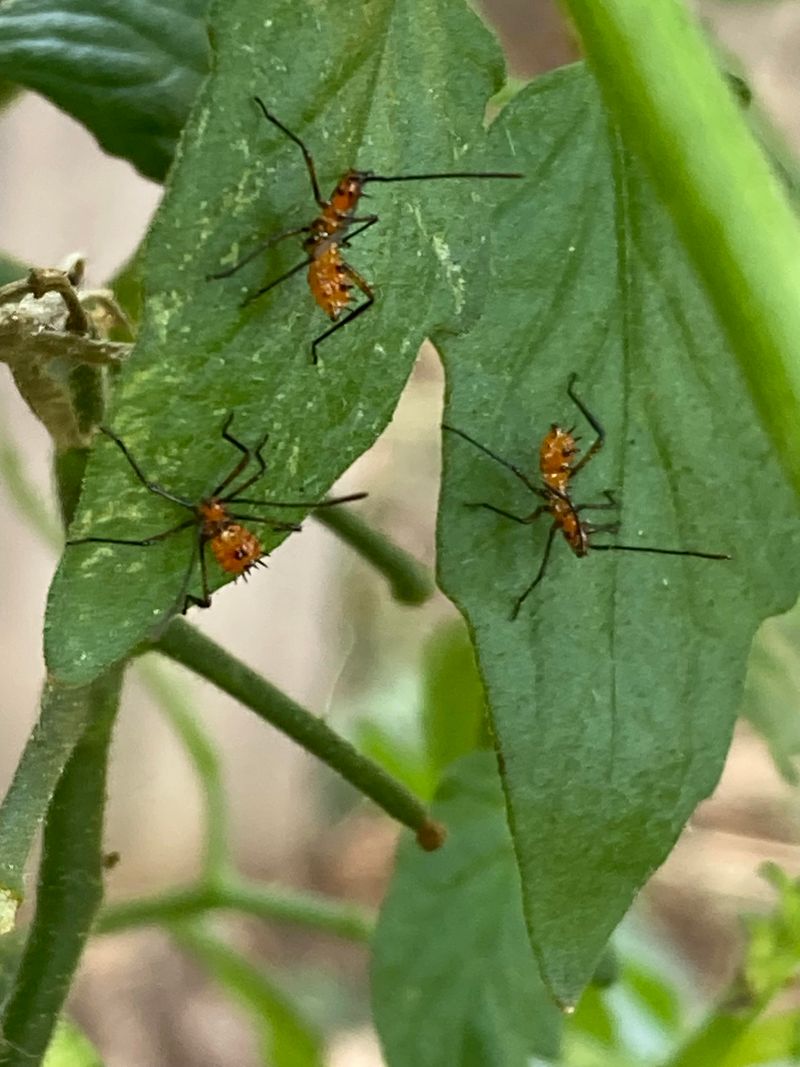
Few garden sights are as striking as a cluster of bright orange nymphs gathered on a single stem. These are baby leaffooted bugs, and they tend to stay together right after hatching.
That grouping behavior actually works in your favor if you catch it early.
Nymphs go through five stages before becoming adults. In the early stages, they are entirely orange or red with dark legs.
As they grow, they start to look more like the adults, with longer bodies and early signs of the leaf-shaped leg flaps.
They are most vulnerable when they are young and still clustered. A single removal at this stage can eliminate dozens of future adults before they ever get a chance to spread.
That is why scouting your garden regularly during early summer is so valuable.
Nymphs often gather on stems near the base of plants or along the undersides of large leaves. Pomegranate branches and tomato cages are common spots.
They tend to stay still in the heat of the day, which makes them easier to spot than fast-moving adults.
Knocking them into a bucket of soapy water is a quick and effective way to remove them. You do not need any special equipment.
Just a container, some dish soap, and a little patience. Wearing gloves helps since they can release that sharp odor when disturbed.
7. Adults Give Themselves Away With Leafy Legs
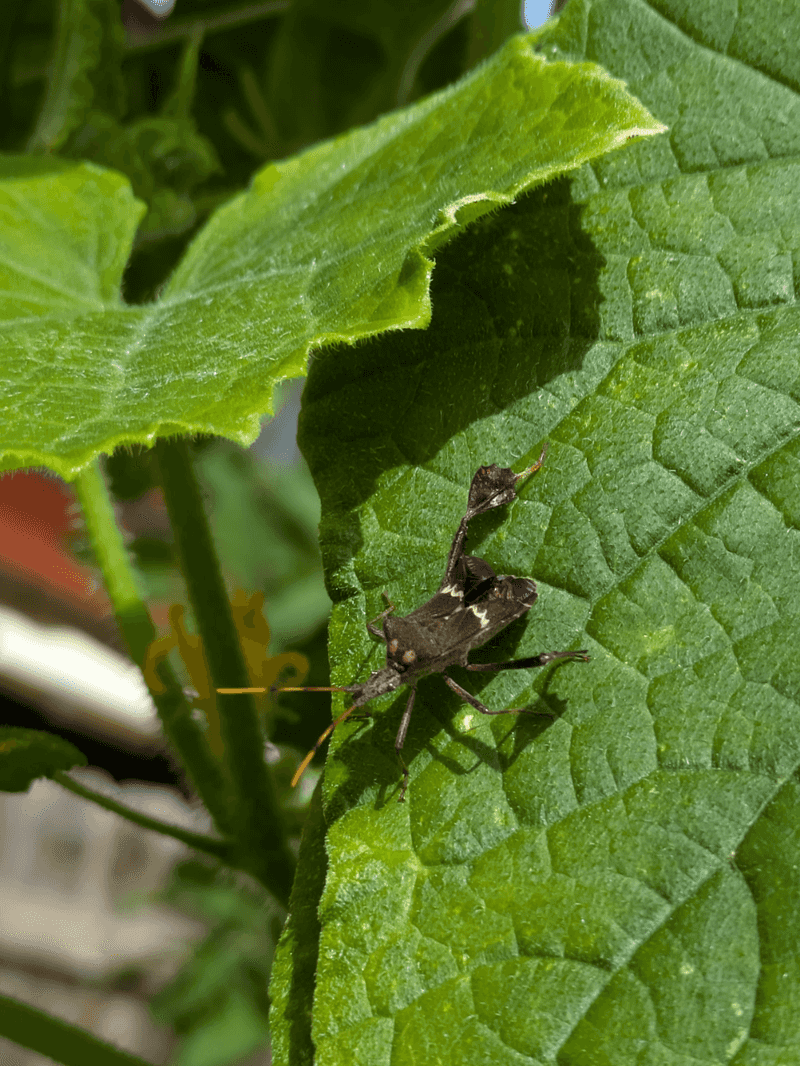
Once you know what to look for, adult leaffooted bugs are actually pretty easy to identify. The most obvious feature is the flattened, leaf-shaped expansion on their hind legs.
That is exactly where the name comes from, and it makes them unlike almost any other garden pest.
Adults are large for garden insects, measuring about three-quarters of an inch to an inch long. They are brown or grayish-brown with a white zigzag band across the middle of their back.
Their long antennae and bulky body give them an almost prehistoric look.
Despite their size, they can be surprisingly hard to catch. Adults are fast fliers and will take off the moment they sense movement.
They also drop from plants and play as if they’re long gone when startled, which makes handpicking a bit of a challenge compared to dealing with nymphs.
Adults become most active in late summer and early fall. That timing overlaps perfectly with tomato ripening season and pomegranate development in California.
Hot, dry conditions seem to push their numbers even higher during drought years.
Checking plants in the early morning is the best strategy because adults are slower and less alert when temperatures are cool. A headlamp and a pair of gloves make early morning scouting much easier.
Catching even a few adults before they lay eggs can reduce the next generation significantly.
8. Weedy Borders Help Them Build Up
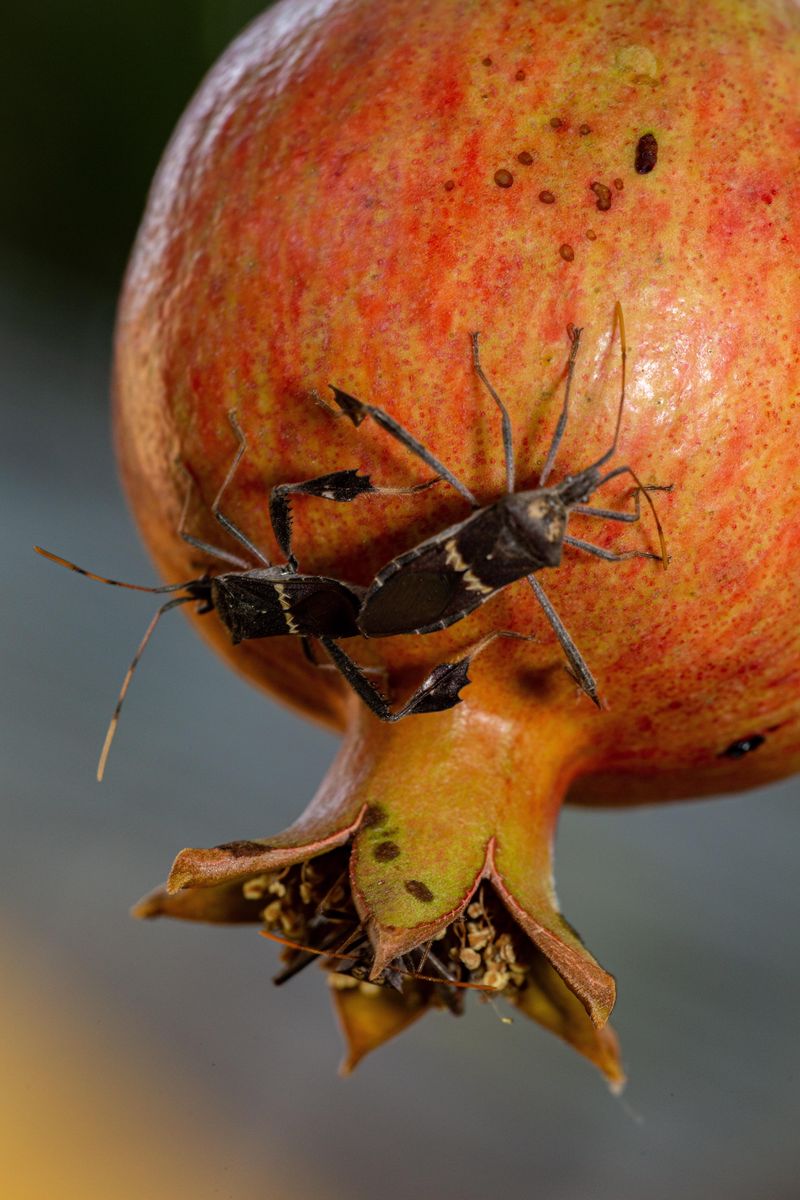
Weedy areas around your garden are not just an eyesore. They are also a prime habitat where leaffooted bugs breed and build up their numbers before moving into your fruit trees and vegetable beds.
Clearing these areas is one of the most overlooked prevention steps.
These bugs feed on a wide variety of wild plants, including thistle, fennel, and wild mustard. These weeds are common along fence lines, roadsides, and the edges of agricultural fields across northern and central regions of California.
When those wild plants dry out in summer, the bugs move toward irrigated gardens.
Overgrown borders also provide shelter. Dense vegetation gives adults and nymphs places to hide from predators and weather.
The more cover available, the faster populations can grow without being noticed.
Mowing or pulling weeds along the edges of your property in late spring can disrupt this buildup before it gets out of hand.
Focus especially on any areas with tall, dry grass or seed-heavy plants. Those are the spots leaffooted bugs prefer most.
You do not need to create a perfectly bare border. Even a narrow strip of cleared ground between wild areas and your garden can slow their movement.
Reducing the amount of suitable habitat near your plants gives you a meaningful head start before peak season arrives each year.
9. Handpicking Works Best While They’re Young
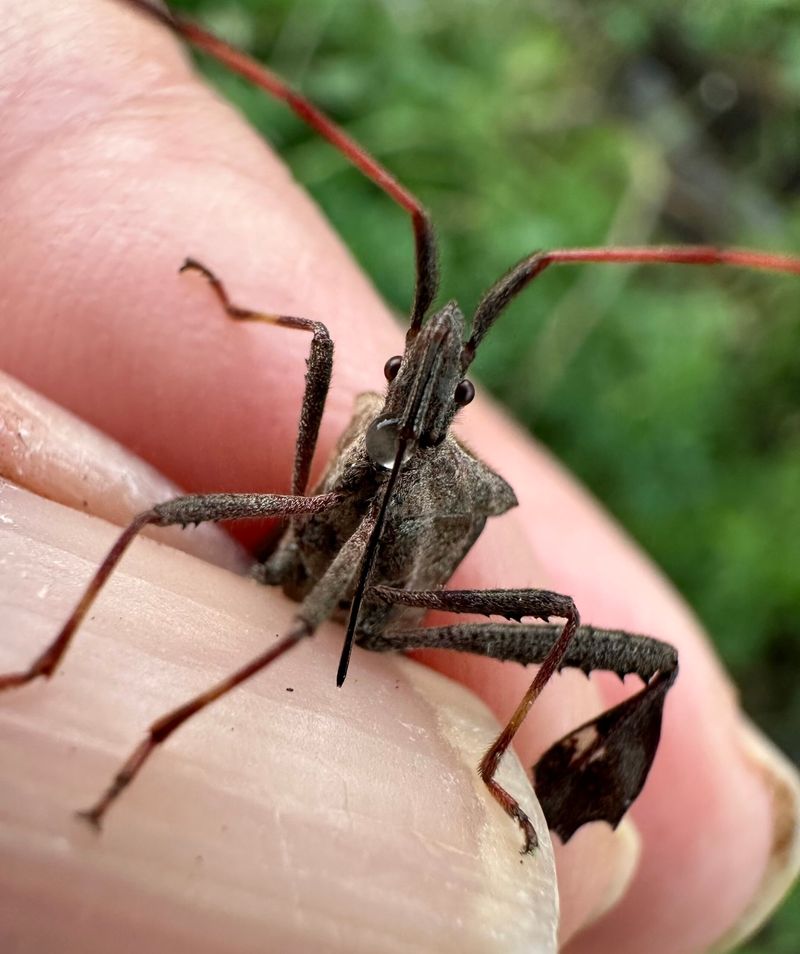
Handpicking is one of the most effective tools you have against leaffooted bugs, especially when the nymphs are still young and clustered together. It costs nothing, requires no chemicals, and can make a real difference when done consistently.
The key is acting early before they spread out across your California garden.
Wear gloves every time you handle these bugs. Their odor is strong and can linger on your skin for a while.
Nitrile gloves work well and give you enough grip to pluck them off stems and leaves without too much trouble.
Drop them directly into a container filled with soapy water. The soap breaks the surface tension and prevents them from escaping.
Seal the container before disposing of it to make sure none of them get away.
For adults, a slightly different approach works better. Hold the container under the branch where they are resting, then give the branch a quick shake.
Adults often fall rather than fly when surprised this way. It takes a little practice but gets easier over time.
Aim to scout your garden at least twice a week during peak summer months. Early morning is the best time because the bugs are slower and easier to catch.
Even removing a small number of adults or a single egg mass can noticeably reduce the pressure on your plants over the rest of the season.