This Sticky Residue On California Citrus Leaves Is A Pest Warning Sign
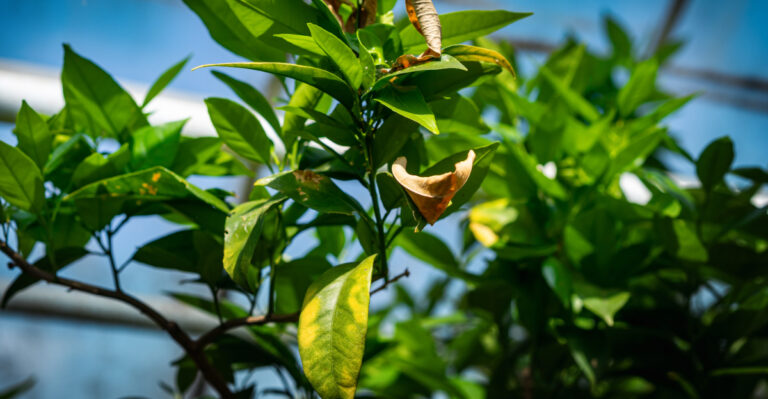
Sticky citrus leaves are easy to brush off at first. They look messy, but the tree may still seem healthy enough.
Then the shine spreads, ants show up, or a dark film starts coating the leaves. That is when the problem gets harder to ignore.
In California citrus trees, this residue is often a sign that tiny pests are feeding where you may not notice them right away.
They hide on stems, leaf undersides, and new growth, leaving clues behind before the damage becomes obvious.
The sooner you spot the pattern, the easier it is to protect the tree and keep fruit growing well. A little stickiness can tell you a lot, especially when you know what to check next.
1. Sticky Leaves Usually Mean Honeydew
That slippery, shiny film on your citrus leaves has a name, and it is not pretty. It is called honeydew, and it is basically insect waste.
When tiny bugs feed on plant sap, they take in way more sugar than their bodies can use. The extra sugar gets excreted as a sticky liquid that lands on leaves, stems, and anything underneath the tree.
Honeydew is one of the earliest and most reliable signs that something is feeding on your tree. It shows up before you even spot the bugs themselves.
If your leaves feel tacky to the touch or look like someone drizzled syrup on them, pests are likely already at work.
The stickiness itself does not hurt the tree directly. But it creates the perfect surface for a black fungus called sooty mold to grow, which blocks sunlight from reaching the leaf.
Over time, this can weaken the tree and reduce fruit production.
Catching honeydew early gives you the best chance to act fast. Run your fingers along the top and bottom of leaves.
Check stems and fruit too. A sticky feel anywhere on the tree is your cue to look closer. Once you identify the pest behind it, treatment becomes much easier and more targeted.
2. Scale Insects Are A Common Citrus Culprit
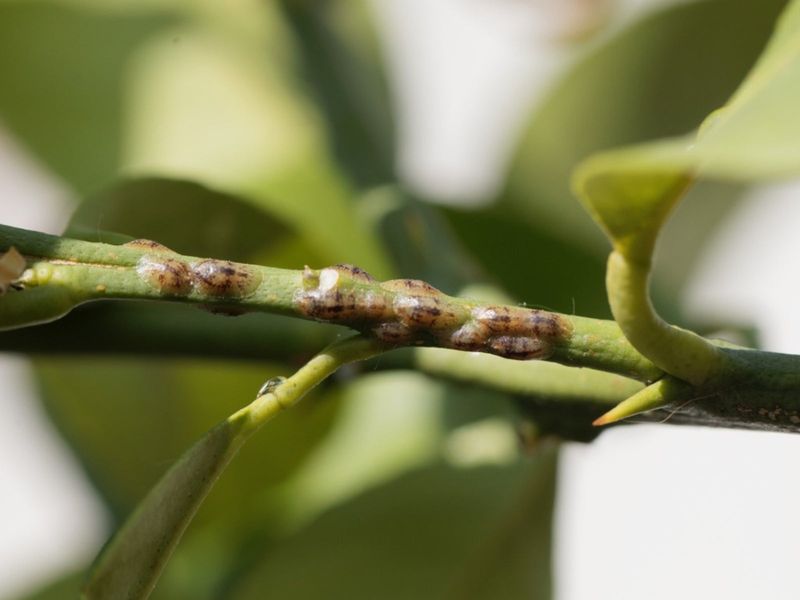
Scale insects are sneaky little pests that do not look like bugs at all at first glance. They appear as tiny bumps on stems and leaves, almost like part of the bark.
But underneath each bump is a soft-bodied insect quietly sucking sap from your tree. They come in two main types: soft scale and armored scale.
Soft scale insects are the ones most likely to produce honeydew. California red scale and citrus snow scale are two common species found on citrus trees in this state.
They tend to cluster along branches and the undersides of leaves. Heavy infestations can cause yellowing leaves and reduced fruit size.
Armored scale insects do not produce honeydew, but they still damage trees by feeding directly on plant tissue.
They are harder to remove and often require horticultural oil sprays to manage effectively.
One of the best ways to deal with scale is to encourage natural predators. Ladybugs and parasitic wasps love to feed on scale insects and can keep populations in check without any chemicals.
Your California Garden Changes Every Week. Your Plan Should Too.
Gardening in California changes quickly throughout the season. Every Friday you’ll receive a simple weekly plan showing exactly what to plant, prune, fertilize, harvest, and protect so you never miss the right timing.
You can also scrub small infestations off with a soft brush and soapy water. For larger problems, neem oil or insecticidal soap applied to the whole tree works well when used consistently over several weeks.
3. Aphids Leave A Shiny Mess On Tender Growth
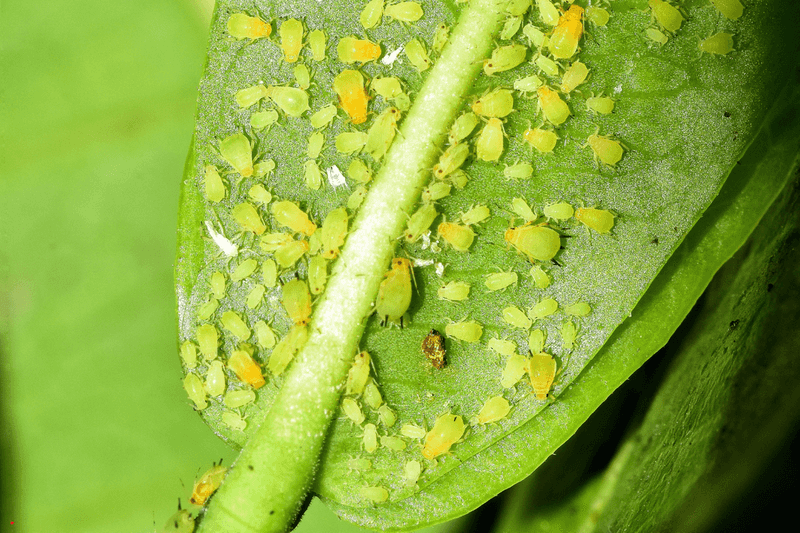
Few pests reproduce as fast as aphids. A single female can produce dozens of offspring in just a few days without even needing a mate.
Before you know it, a small cluster of aphids on new growth can turn into a full-blown infestation that covers the tips of every branch on your tree.
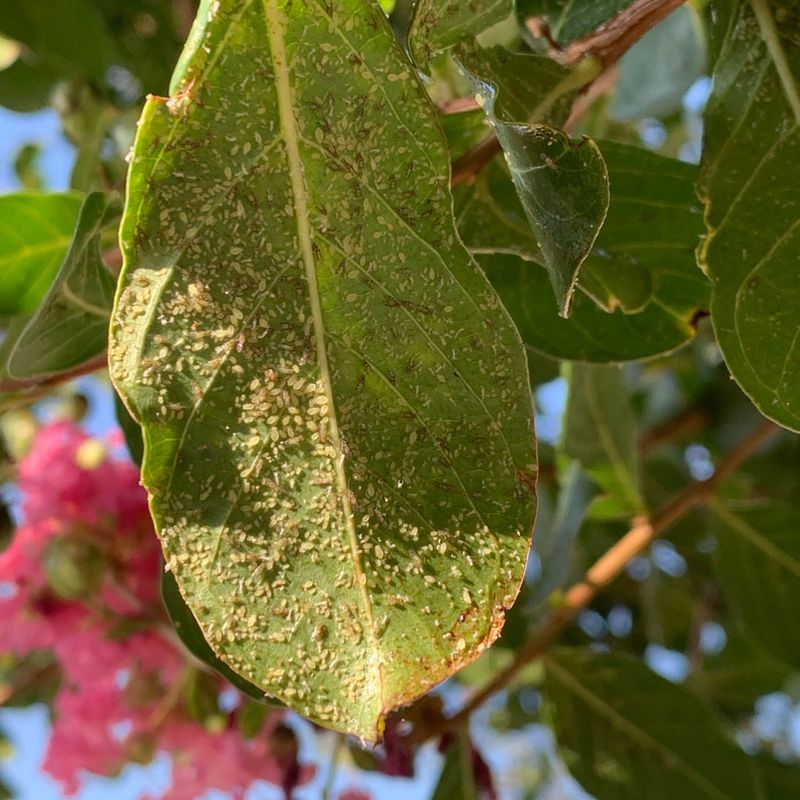
Citrus aphids are usually found on the newest, softest leaves and stem tips. They are tiny, often green or black, and tend to gather in tight groups.
As they feed, they release honeydew that coats the surrounding leaves with that familiar shiny, sticky film. Curling or puckering leaves are another telltale sign of aphid activity.
The good news is that aphids are one of the easiest pests to manage. A strong blast of water from a garden hose can knock most of them off the tree.
Do this in the morning so the leaves dry out during the day. Repeat every few days for two weeks to break the cycle.
Ladybugs, lacewings, and parasitic wasps all prey on aphids naturally. Avoid using broad-spectrum pesticides that wipe out these helpful insects.
If you need something stronger, insecticidal soap or neem oil sprayed directly on the aphids works without harming beneficial bugs in the area.
4. Whiteflies Can Coat Leaves With Sticky Waste
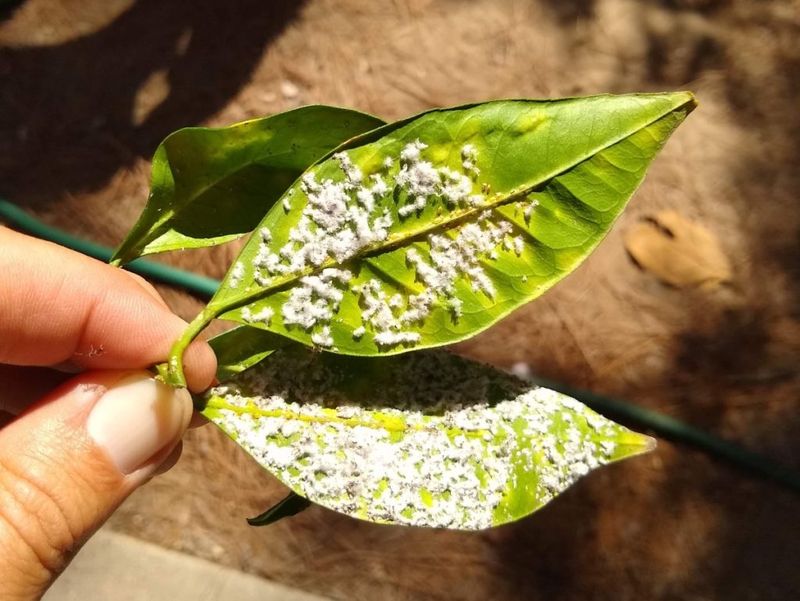
Shake a citrus branch and watch what happens. If a cloud of tiny white insects flies up into the air, you have got whiteflies.
These small, moth-like pests are easy to miss when they are resting because they blend in with the underside of leaves. But once disturbed, they scatter fast and make themselves very obvious.
Whiteflies feed by piercing leaf tissue and sucking out sap, much like aphids and scale. As they feed, they produce large amounts of honeydew that drips onto lower leaves and creates that sticky, shiny coating.
In heavy infestations, entire branches can become coated in residue and eventually develop black sooty mold.
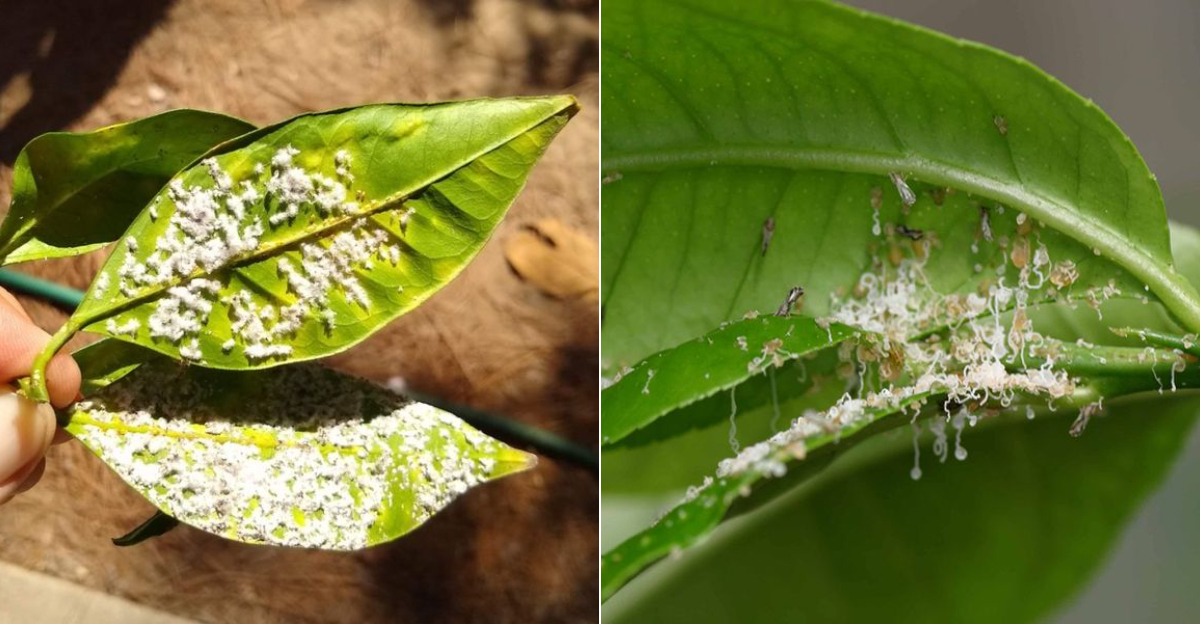
Citrus whitefly and woolly whitefly are both common in this state. Woolly whitefly is especially easy to spot because it leaves behind white, waxy threads on leaves that look almost like tiny bits of cotton.
Yellow sticky traps placed near the tree can help you monitor how bad the infestation is. Reflective mulch under the tree can also confuse and deter adult whiteflies.
For treatment, neem oil or insecticidal soap sprayed on the undersides of leaves every five to seven days is very effective.
Make sure to coat the leaf undersides thoroughly since that is where the eggs and nymphs live and feed.
5. Mealybugs Hide In Cottony Clumps Along Stems
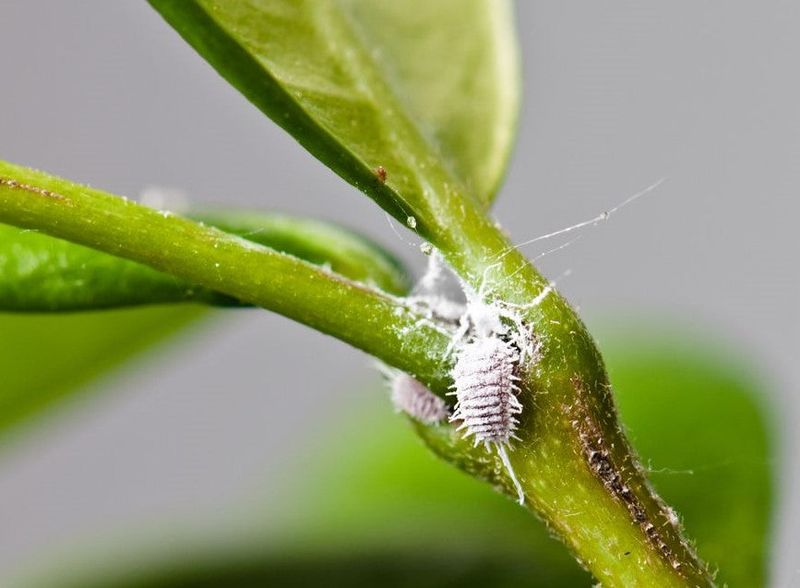
Spotting a fuzzy white cluster tucked into a stem joint or leaf fold on your citrus tree is a sure sign of mealybugs.
These soft-bodied insects cover themselves in a waxy, white powder that protects them from moisture loss and makes them harder for predators to attack.
They look almost harmless, but they can cause serious damage when populations grow large.
Mealybugs feed on plant sap and produce honeydew in large quantities. The sticky residue they leave behind is often the first thing gardeners notice before they even find the bugs themselves.
They tend to cluster where stems meet leaves, at branch junctions, and near the base of fruit. Their feeding causes yellowing leaves, fruit drop, and stunted growth.
Getting rid of mealybugs takes patience. A cotton swab dipped in rubbing alcohol can remove small clusters by hand.
For larger infestations, a strong spray of water helps dislodge them, followed by an application of neem oil or insecticidal soap. Make sure to treat the whole tree, not just the visible clusters.
Natural predators like mealybug destroyers, a type of ladybug, are very effective at keeping populations under control.
Avoid over-fertilizing with nitrogen because lush, soft growth attracts mealybugs. Keeping the tree healthy and stress-free is the best long-term defense against these pests.
6. Asian Citrus Psyllid Is The Pest To Take Seriously
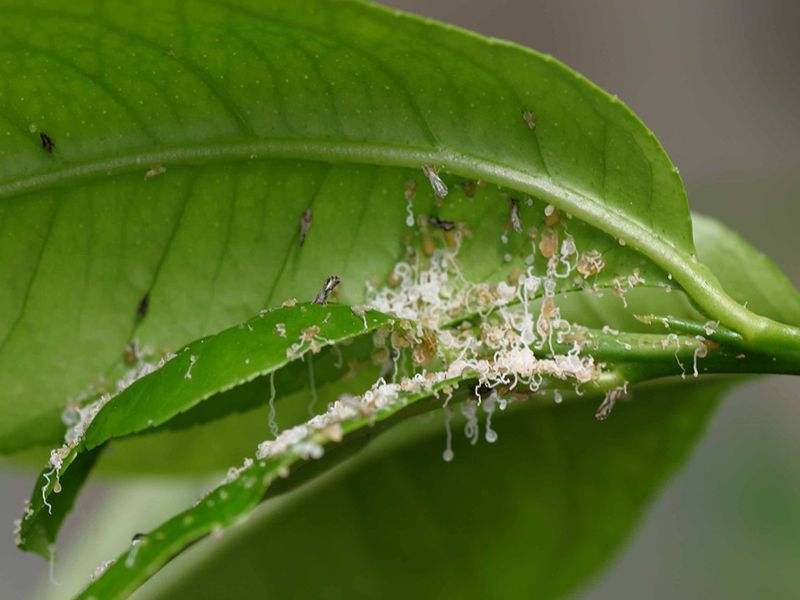
Out of all the pests that can show up on a citrus tree, the Asian citrus psyllid is the one that demands the most attention.
Not because it produces the most honeydew, but because it can carry a disease called Huanglongbing, also known as citrus greening.
This bacterial disease has no cure and has devastated citrus industries across the country.
The psyllid itself is a tiny, brownish insect about the size of a sesame seed. When feeding, it tilts its body at a 45-degree angle, which is a unique and identifying behavior.
Nymphs, the young stage of the insect, leave behind distinctive white, waxy tubular secretions that look like tiny curly threads on new growth.
Unlike other pests, the concern with this insect goes beyond the tree in your yard. If citrus greening spreads to commercial groves in this state, it could impact the entire citrus industry.
Reporting a suspected sighting to the California Department of Food and Agriculture is strongly encouraged and in some areas required.
Do not try to handle a suspected Asian citrus psyllid infestation on your own. Contact your local agricultural commissioner for guidance.
Early detection is critical. The psyllid spreads quickly, and infected trees show symptoms like yellowing leaves, lopsided bitter fruit, and twig decline that gets worse over time.
7. Ants Often Point To The Real Problem
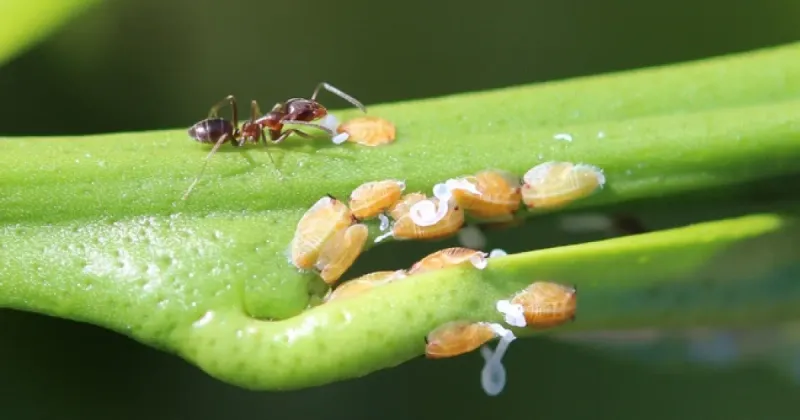
Ants and honeydew go together like peanut butter and jelly. If you see a steady trail of ants marching up and down your citrus tree, they are almost certainly heading up to harvest honeydew from sap-sucking pests above.
Ants actually protect aphids, scale, and mealybugs from predators so the honeydew supply keeps flowing.
This relationship between ants and soft-bodied pests is called tending. Ants will chase away ladybugs and other beneficial insects that would otherwise reduce the pest population naturally.
So even though ants do not directly harm the tree, their presence allows pest populations to grow much larger than they otherwise would.
Controlling ants is a smart first step in managing honeydew-producing pests. Sticky barrier products like Tanglefoot can be wrapped around the trunk to prevent ants from climbing up.
These products create a physical barrier that ants cannot cross. Reapply as needed and check that no branches are touching fences or walls that ants could use as a bypass route.
Once ants are blocked from the tree, natural predators like ladybugs and parasitic wasps can do their job. You may notice pest populations dropping on their own within a few weeks.
Managing ants is one of the most underrated and effective strategies for keeping citrus trees healthy and pest-free throughout the growing season.
8. Black Sooty Mold Grows On The Sticky Residue
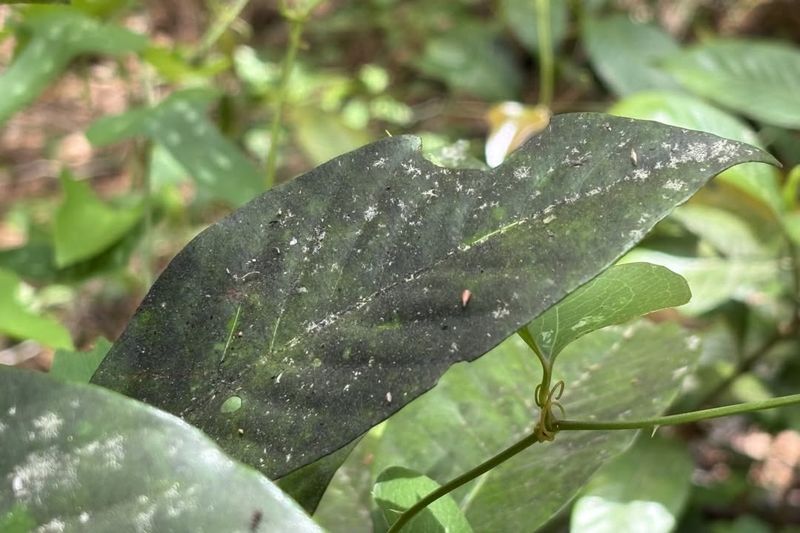
Black sooty mold is not a pest, but it is one of the most visible signs that pests have been active on your tree.
The mold grows on honeydew left behind by sap-sucking insects and forms a dark, powdery coating on leaves, stems, and sometimes fruit.
It looks alarming, but the mold itself does not infect plant tissue directly.
The real problem is what the mold does to the leaves. By covering the leaf surface, sooty mold blocks sunlight from reaching the cells that perform photosynthesis.
Less sunlight means less energy for the tree. Over time, heavily affected trees may show slower growth, fewer flowers, and smaller fruit.
Getting rid of sooty mold starts with getting rid of the pests producing the honeydew. Once the honeydew source is removed, the mold gradually weathers away on its own.
You can speed up the process by wiping leaves with a damp cloth or spraying the tree with a mild soap-and-water solution.
Badly coated leaves may not fully recover, but new growth should come in clean once pests are under control. Pruning heavily affected branches can also help the tree redirect energy to healthier parts.
Consistent monitoring after treatment is key. If sooty mold returns, it means the pest problem was not fully resolved and another round of treatment is needed.
9. Check Leaf Undersides And New Growth First
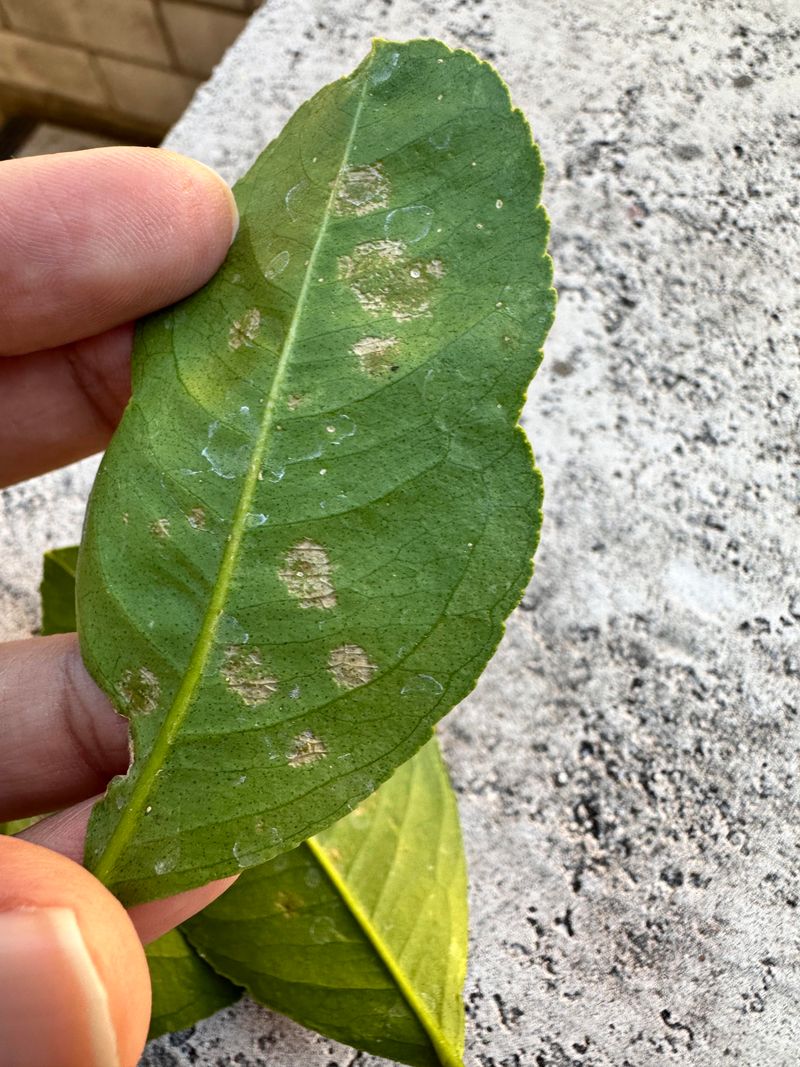
Most citrus pests are masters of hiding in plain sight. They tend to cluster where they are hardest to spot: on the underside of leaves, in tight stem joints, and on the newest, softest growth at the tips of branches.
If you only look at the top of leaves, you will almost always miss what is actually going on.
Making it a habit to flip leaves over during your regular garden walks can save you a lot of trouble.
Look for clusters of tiny insects, white waxy threads, cottony masses, or brown bumps that do not belong.
Check the newest leaves and shoot tips first because that is where most pests prefer to feed. Tender tissue is easier to pierce and richer in nutrients.
Early detection makes treatment much simpler. A small colony of aphids caught in week one is far easier to manage than a full infestation discovered a month later.
You do not need any special tools. Just your eyes, a little patience, and a consistent routine once or twice a week during the growing season.
Keep a simple garden journal to track what you find and when. Note which pests appear, how many, and where on the tree.
This helps you spot patterns and respond faster the next time. Healthy trees are more resilient, so also pay attention to watering, fertilizing, and overall tree care as part of your pest prevention plan.