Native Perennials That Actually Grow Well Under Georgia Shade Trees
Shady areas under large trees can be some of the hardest spots to landscape. Grass often struggles, flowers may not get enough sunlight, and bare patches can slowly take over.
Many gardeners end up wondering what they can plant in those spaces without constantly fighting the conditions.
Tree-covered areas have their own unique growing environment. The soil, moisture levels, and amount of filtered light all affect which plants will truly thrive.
Choosing varieties suited for shade can make the difference between a struggling garden bed and one that looks natural and full.
Georgia landscapes offer excellent opportunities for using native perennials beneath mature trees.
These plants are already adapted to local conditions and can bring texture, color, and seasonal interest to shaded spaces.
With the right selections, the areas beneath your trees can become some of the most beautiful parts of your yard.
1. Foamflower Spreads Through Woodland Shade
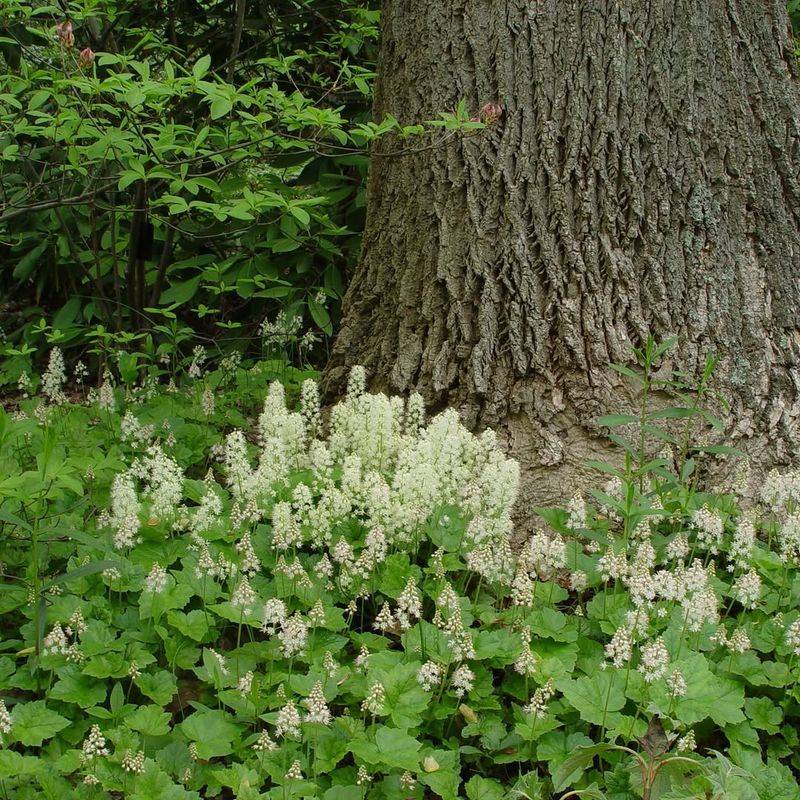
Foamflower earns its name fast. Watch those white, feathery flower spikes rise above the foliage in spring, and you will instantly understand why gardeners love it.
Tiarella cordifolia is a low-growing native that spreads by runners. Over time, it forms a thick, weed-suppressing mat under trees.
Leaves are lobed, slightly fuzzy, and often show attractive reddish veining.
Foamflower handles moderate to deep shade without complaint. It prefers moist, well-drained soil with organic matter, but it adapts reasonably well once established.
Avoid planting in spots that stay waterlogged after rain.
Spring blooms last several weeks, usually from March through May in the Southeast. After flowering, the foliage stays attractive through the growing season.
Some varieties hold their leaves through winter in milder years.
Spacing plants about 12 inches apart gives them room to spread naturally. Within two to three seasons, a small planting can fill in a large area under a canopy.
That spreading habit makes it one of the most practical ground covers available for shady spots.
Pollinators visit the flowers regularly, especially native bees. Deer tend to leave it alone, which is a genuine bonus in suburban yards.
Foamflower is widely available at native plant nurseries and is easy to establish from container plants.
2. American Alumroot Handles Dry Shade Well
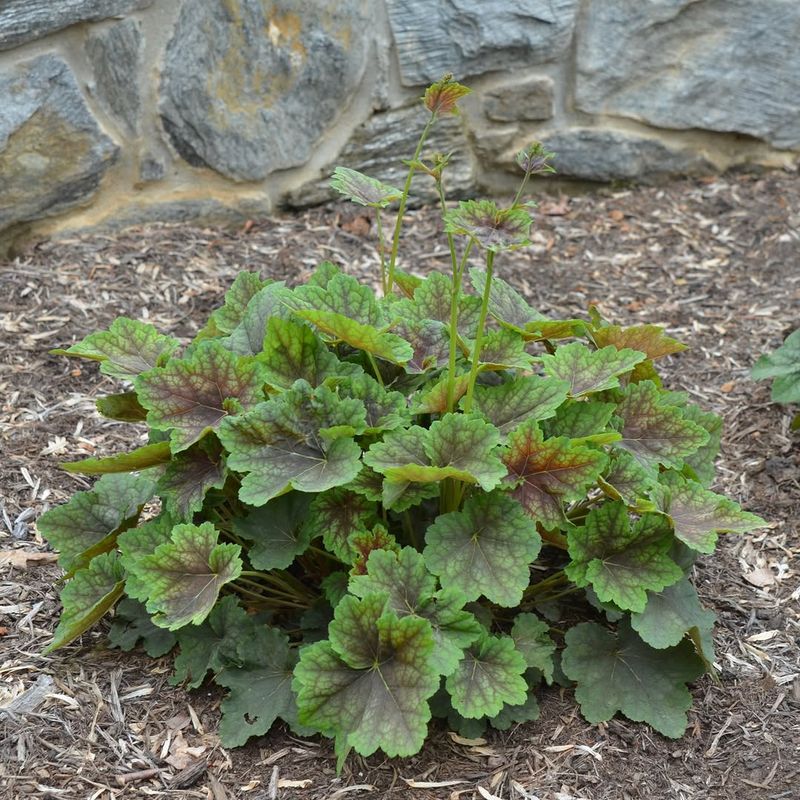
Dry shade is one of the hardest conditions to plant. Most plants need moisture, and under a dense canopy, rain barely hits the ground.
American Alumroot is one of the few natives that genuinely tolerates it.
Heuchera americana grows in rocky outcrops and dry woodland edges across the Southeast. That background makes it unusually tough.
Once established, it rarely needs supplemental watering except during extended drought.
Leaves are broad, scalloped, and often show beautiful silver or bronze mottling. Flower stalks rise two to three feet tall in late spring, carrying tiny, airy blooms that hummingbirds and small pollinators visit regularly.
Plant it in well-drained soil with some organic matter mixed in. Heavy clay that stays wet will cause problems over time.
A raised spot or a sloped bed under a tree works well.
Spacing about 18 inches apart gives each plant room to develop a full rosette. Alumroot does not spread aggressively, so it works well alongside other shade perennials without crowding them out.
Your Georgia Garden Changes Every Week. Your Plan Should Too.
Gardening in Georgia changes quickly throughout the season. Every Friday you’ll receive a simple weekly plan showing exactly what to plant, prune, fertilize, harvest, and protect so you never miss the right timing.
Older clumps can be divided every few years to refresh the plant and create new starts. Lift the crown in early fall, split it into sections, and replant immediately.
It is a straightforward plant that rewards minimal attention with consistent, reliable performance in tough spots.
3. Wild Ginger Forms A Dense Ground Cover
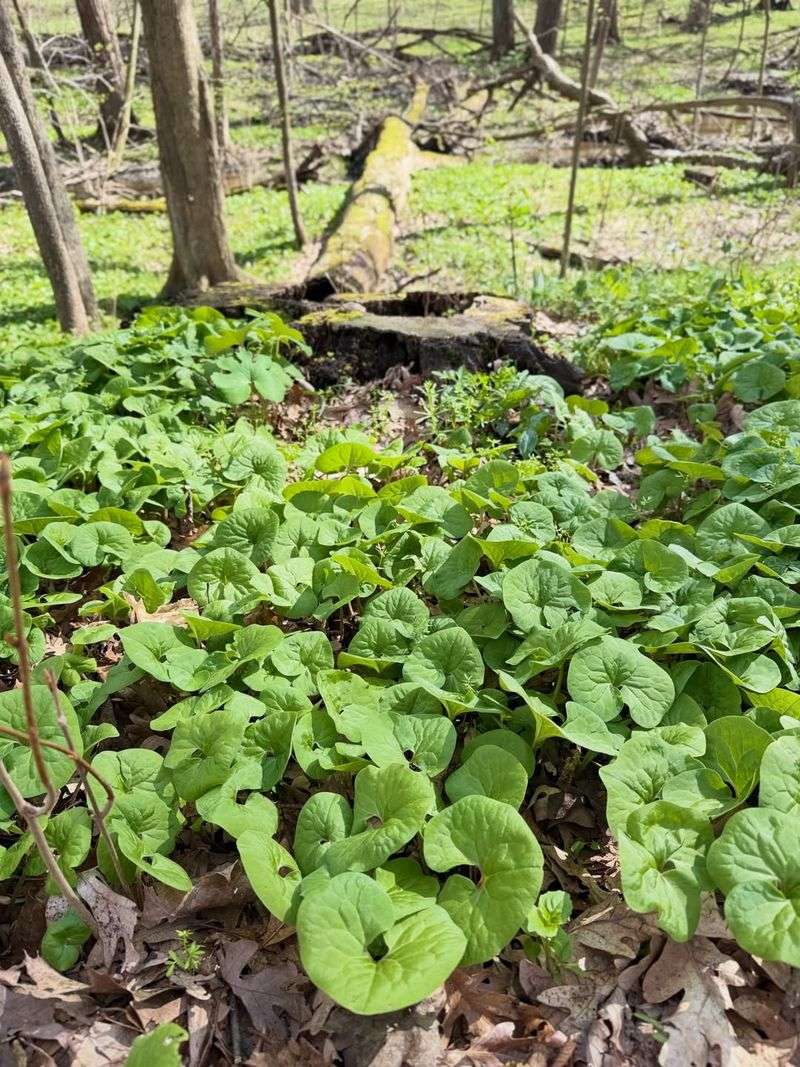
Nothing covers bare ground under a tree quite like wild ginger. Its broad, overlapping leaves form a canopy of their own just a few inches off the soil.
Asarum canadense is a slow spreader, but patience pays off. After two or three seasons, a small patch becomes a solid, weed-suppressing carpet.
Leaves are heart-shaped, soft, and a rich medium green through the growing season.
Flowers appear in early spring, but they hide beneath the leaves near the soil. They are small, brownish-red, and easy to miss unless you look closely.
Certain fly species pollinate them, making this plant a quiet but useful part of a woodland ecosystem.
Wild ginger prefers consistently moist, humus-rich soil. Under shallow-rooted trees like maples, adding a layer of leaf compost at planting time helps.
It will not thrive in dry, compacted soil without some soil improvement first.
Plant divisions or container-grown starts about 10 inches apart. Growth is steady once plants settle in.
Avoid disturbing established colonies, since wild ginger dislikes being moved frequently.
Deer rarely browse it, and pest pressure is generally low. It pairs well with ferns, foamflower, and Solomon’s seal in a layered shade planting.
Wild ginger is not related to culinary ginger, but roots do carry a mild ginger scent when crushed.
4. Woodland Phlox Brings Early Spring Color
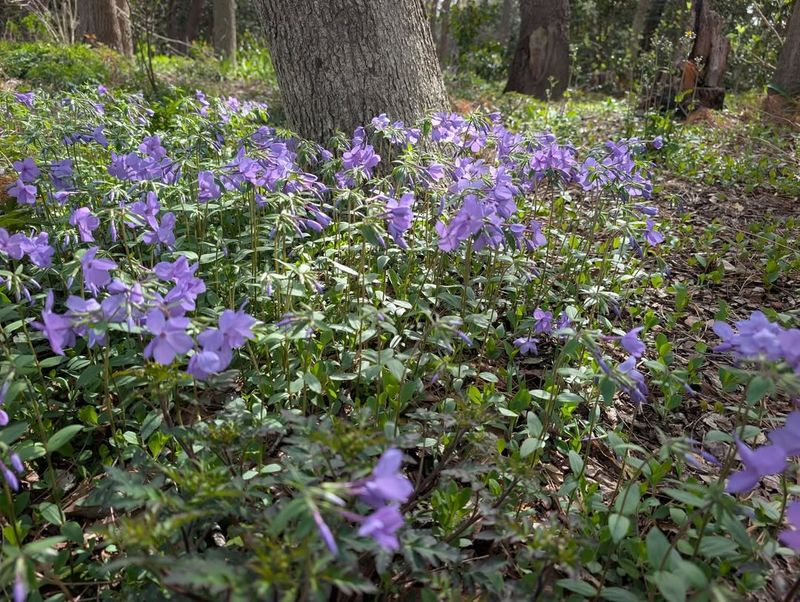
Color under a shade tree is hard to come by in early spring. Woodland phlox solves that problem with a generous flush of soft blue, lavender, or white blooms right when the garden needs it most.
Phlox divaricata blooms from March into May across the Southeast. Flowers appear in loose clusters on stems about 12 inches tall.
Fragrance is light and pleasant, especially in the early morning.
Semi-evergreen foliage stays low to the ground after blooming, forming a modest mat through summer and fall. It is not as aggressive a spreader as some ground covers, but colonies gradually expand over time through self-seeding and stem rooting.
Moist, humus-rich soil with good drainage suits it best. Avoid heavy clay that holds standing water.
A shaded spot that gets some morning light or bright filtered light encourages better blooming than deep, dense shade.
Space plants about 12 to 15 inches apart. After the first season, they fill in steadily without becoming invasive.
Cutting stems back lightly after bloom can encourage a second flush of growth and keep plants tidy.
Native bees and butterflies visit woodland phlox regularly during its bloom window. It combines beautifully with wild ginger and foamflower for a layered, low-maintenance woodland planting.
Container plants establish quickly and are widely available at native nurseries each spring.
5. Christmas Fern Stays Green All Year
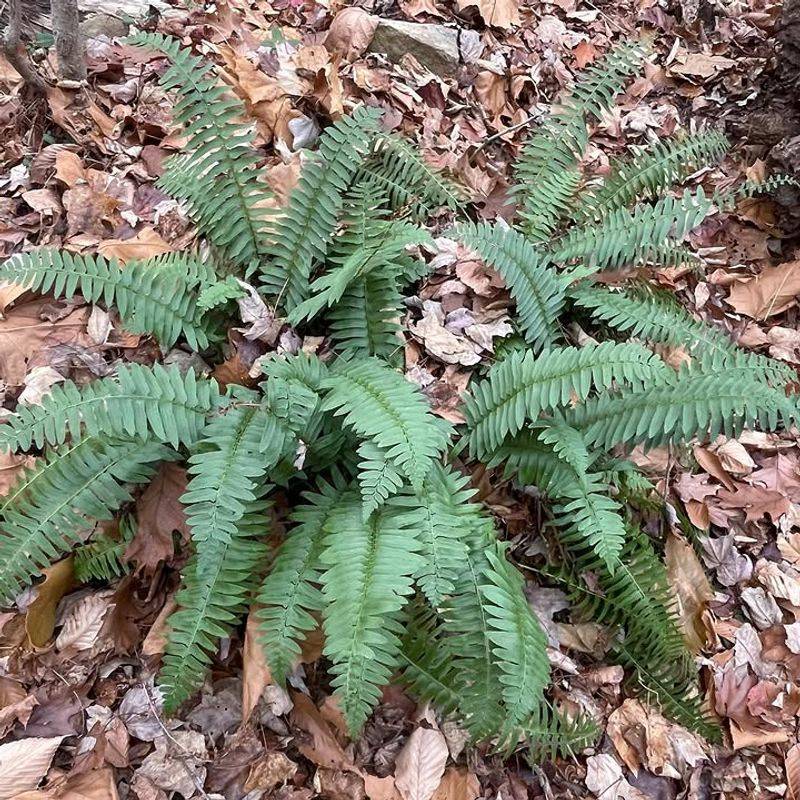
Most ferns go brown and disappear by late fall. Christmas fern stays green straight through winter, which is exactly why it earned that festive name.
Polystichum acrostichoides is one of the most reliable native ferns for the Southeast. It handles deep shade, dry spells, and poor rocky soil better than most ferns will.
Fronds are leathery, dark green, and arranged in a neat, arching vase shape.
Mature plants reach about 18 to 24 inches tall. They do not spread by runners, so each crown stays in a defined clump.
That tidy growth habit makes it easy to place precisely in a garden bed without worrying about it taking over.
Well-drained soil with organic matter gives it the best start. Under large oaks or pines where soil tends to be acidic and dry, Christmas fern adapts well once established.
Mulching with shredded leaves at planting helps retain moisture during the first season.
Space crowns about 18 inches apart to allow each plant to reach full size. Older clumps can be divided in early spring before new fronds emerge.
Division refreshes the plant and gives you extra starts for other shady spots.
Wildlife value is real here. Small birds use the fronds for cover, and some moth caterpillars feed on the foliage.
For year-round structure in a shady bed, Christmas fern is hard to beat in Georgia gardens.
6. Solomon’s Seal Thrives Beneath Mature Trees
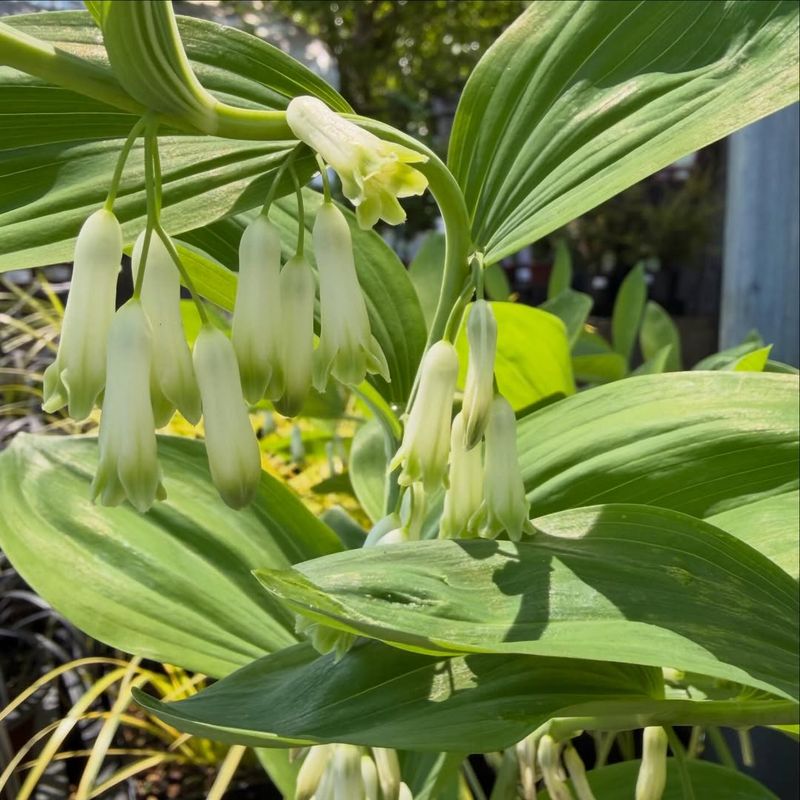
Arching stems, paired leaves, and dangling white bell flowers give Solomon’s seal an elegant look that few shade plants can match. It feels like something out of an old-growth forest.
Polygonatum biflorum grows naturally under mature hardwoods across much of the eastern United States. It thrives in the same conditions found beneath large oaks or hickories.
Deep shade, dry periods, and root competition do not slow it down much.
Stems reach 18 to 36 inches tall depending on soil richness. Flowers appear in late spring, hanging in pairs beneath the leaves.
By fall, small blue-black berries replace the flowers and attract birds.
Plant rhizomes horizontally about two inches deep in moist, well-drained soil. Spacing them 18 to 24 inches apart allows colonies to fill in gradually over several seasons.
Once established, Solomon’s seal spreads steadily by underground rhizomes without becoming invasive.
Fall foliage turns a warm golden yellow before the stems fade back. Even the dormant stems have a quiet architectural quality in the winter garden.
Cut them back once fully dried if you prefer a cleaner look.
Deer occasionally browse new growth in early spring when other food is scarce, so some protection may be needed in heavily browsed areas.
Overall, it is a low-maintenance, high-impact plant that rewards patience and looks genuinely at home under a mature tree canopy.
7. Golden Ragwort Brightens Moist Shade
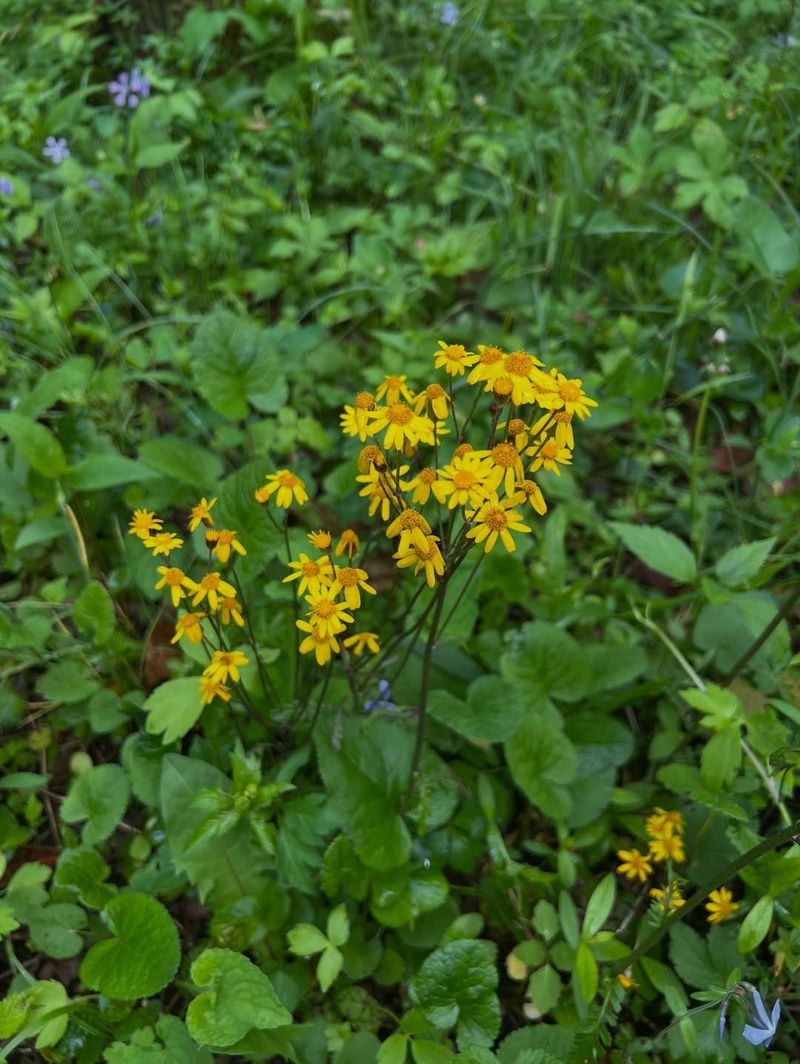
Bright yellow flowers under a shade tree sound impossible, but golden ragwort pulls it off every spring without fail. Few natives deliver that kind of color in low-light conditions.
Packera aurea blooms from March through May with cheerful clusters of small, daisy-like yellow flowers on stems 12 to 18 inches tall. Basal leaves are rounded and deep green, staying attractive well after bloom ends.
Moist soil is important for this plant. It naturally grows along stream banks, wet meadow edges, and moist woodland floors.
Under shade trees near a low spot or a downspout, it often thrives with little extra care once established.
Avoid planting it in dry, well-drained spots where moisture disappears quickly after rain. In those conditions, plants will struggle through summer heat.
Consistent moisture, even in shade, makes a real difference for long-term performance.
Golden ragwort spreads by both seed and rhizome. Give it room to naturalize, and it will fill a moist shaded area steadily over several seasons.
Spacing transplants about 12 inches apart gets the process started faster.
Early pollinators, including native bees and small butterflies, visit the flowers heavily during the spring bloom window. It combines well with ferns and wild ginger in a moist woodland planting.
Despite its name, ragwort has no serious pest or disease issues in typical Southeast garden conditions.
8. Partridgeberry Creates An Evergreen Carpet
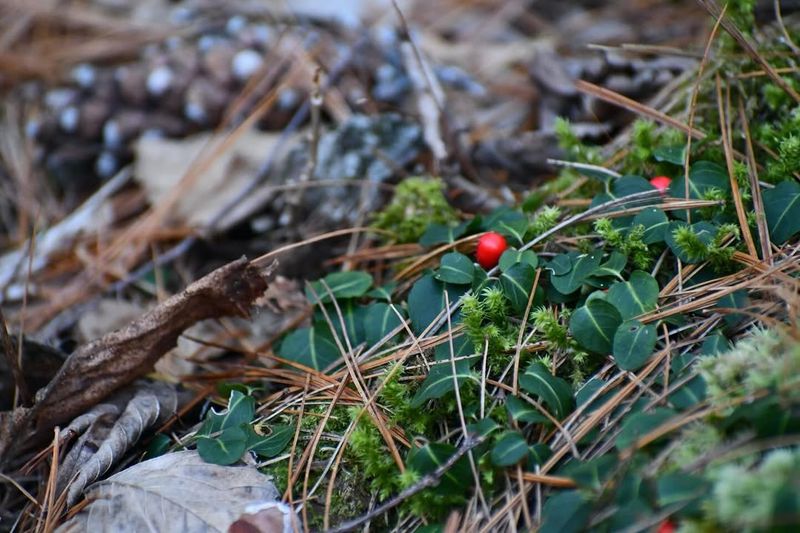
Partridgeberry is small, but it punches above its weight. Tiny paired white flowers, glossy evergreen leaves, and bright red winter berries make it one of the most visually interesting ground covers for deep shade.
Mitchella repens stays just two to four inches tall and spreads slowly by creeping stems. It is a true evergreen, holding its small, rounded leaves through the coldest winters without browning.
That consistent color is valuable in a shaded bed from November through March.
Deep shade suits it well. Under dense tree canopies where little else will grow, partridgeberry holds its own.
It prefers acidic, moist, well-drained soil with plenty of organic matter, conditions common under oaks and pines across the region.
Establishment takes patience. Growth is slow during the first season as roots get settled.
Watering regularly through the first summer helps tremendously. After that, plants become more self-sufficient and need minimal intervention.
Space transplants about eight to ten inches apart. Stems will root where they contact the soil, gradually filling in gaps.
Within three to four seasons, a small planting can cover a surprising amount of ground.
Red berries persist through winter and are eaten by birds, including wild turkeys and thrushes. That wildlife connection makes it more than just a pretty ground cover.
Partridgeberry is widely available through native plant sales and specialty nurseries in Georgia and surrounding states.