The Best Georgia Plants To Pair With Crape Myrtles
Finding the right look for a yard usually takes more than adding another colorful plant. You can spend weeks watching everything grow and still feel like one part of the landscape does not quite fit.
The biggest improvement sometimes comes from choosing plants that naturally complement each other instead of trying to make every flower stand out on its own.
That subtle change can make a familiar space feel more balanced without making it look crowded.
It is often the kind of difference you notice every time you pull into the driveway because the whole landscape suddenly feels more complete.
If crape myrtles already have a place in your yard, the plants growing around them matter just as much. In Georgia, thoughtful pairings help these popular trees stand out while keeping garden beds colorful long after the main blooms begin to fade.
The right combination creates a landscape that feels full, balanced, and naturally inviting without adding unnecessary maintenance.
1. Oakleaf Hydrangea Adds Long Lasting Seasonal Interest
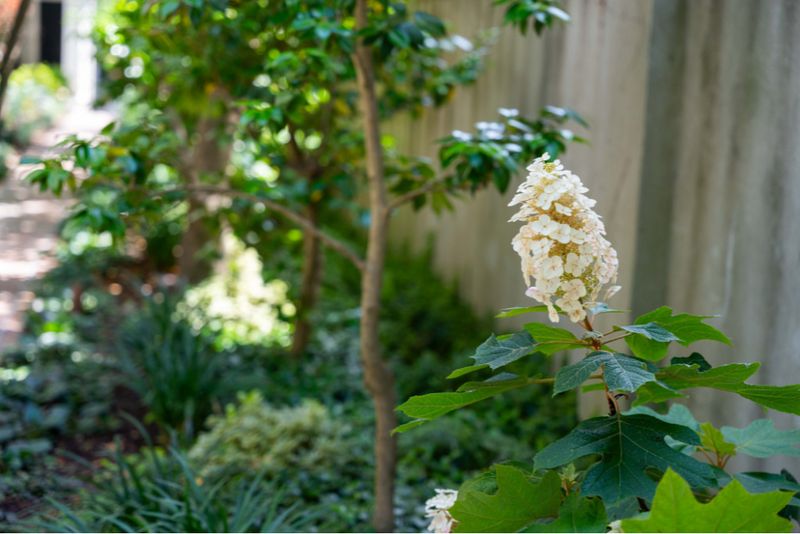
Few shrubs can match what oakleaf hydrangea brings to a planting bed across four seasons. Spring kicks off with large, cone-shaped white flower clusters that gradually turn pink as summer moves along.
By fall, those blooms dry to a warm parchment color that holds on through winter.
Oakleaf hydrangea grows well in partial shade, which makes it a natural fit under or beside a crape myrtle canopy.
It handles the heat and humidity of Southern summers without much fuss, though young plants appreciate consistent moisture during dry stretches.
The foliage is just as interesting as the blooms. Bold, deeply lobed leaves turn rich shades of red, orange, and burgundy in autumn.
That fall color pairs beautifully with the warm tones of crape myrtle bark as it begins to show more clearly.
Mature plants can reach six to eight feet tall and wide, so give them enough room to spread without crowding nearby plants. Pruning right after bloom keeps the shape manageable without cutting off next year’s flower buds.
Native to the southeastern United States, oakleaf hydrangea is well adapted to the region’s clay-heavy soils when amended with organic matter. It tends to attract pollinators during bloom and provides bird cover through the colder months.
As a low-maintenance shrub with multi-season appeal, it earns its space in almost any mixed planting alongside crape myrtles.
2. Autumn Fern Brings Soft Texture Below The Canopy
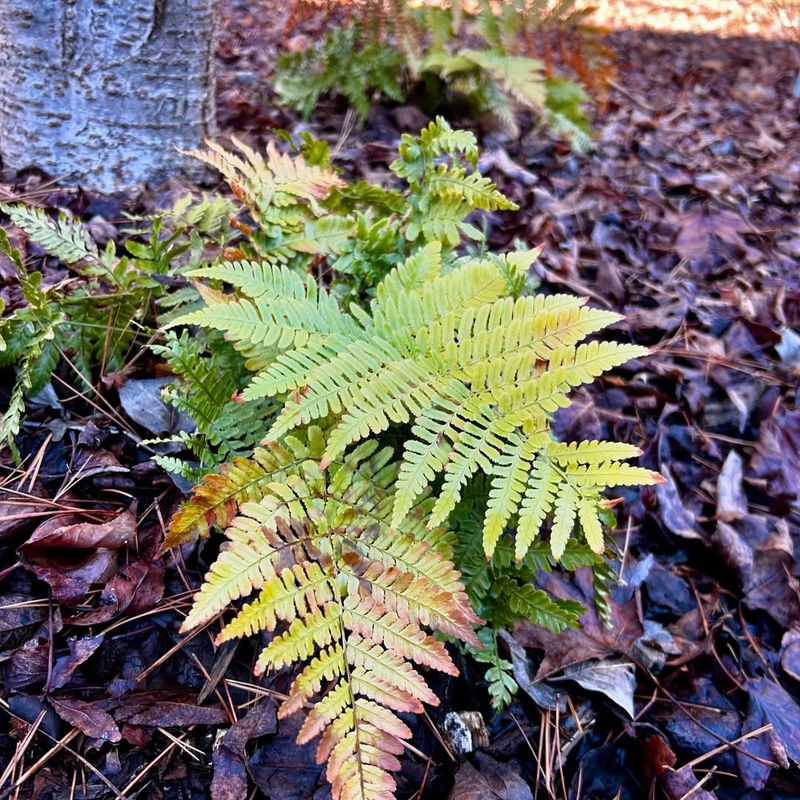
Autumn fern earns attention the moment new growth appears. Fresh fronds emerge in shades of copper and bronze, then mature into a deep, glossy green.
That color shift happens more than once a season, which keeps the plant looking dynamic even when nothing else is blooming nearby.
Under the canopy of a crape myrtle, autumn fern fills in beautifully. It prefers partial to full shade and moist, well-drained soil.
Once established, it handles summer heat reasonably well, though it benefits from mulch around the base to retain soil moisture during dry periods.
Reaching about two feet tall and wide, autumn fern works well as a border plant or a mass planting along a bed edge. Its soft, arching texture contrasts nicely with the upright structure of crape myrtle trunks.
Your Georgia Garden Changes Every Week. Your Plan Should Too.
Gardening in Georgia changes quickly throughout the season. Every Friday you’ll receive a simple weekly plan showing exactly what to plant, prune, fertilize, harvest, and protect so you never miss the right timing.
That combination of bold tree and delicate fern creates a layered look that feels intentional.
Autumn fern is semi-evergreen in milder winters, meaning it may hold its foliage through cold months in many parts of the region. In harsher winters, fronds may brown out, but new growth returns in spring with that signature bronze flush.
Pairing autumn fern with crape myrtles works especially well in shaded corners of the yard where other plants struggle.
It fills space without competing aggressively, stays relatively tidy, and adds year-round texture that keeps the bed looking full even outside of peak bloom season.
3. Muhly Grass Creates A Striking Contrast In Fall
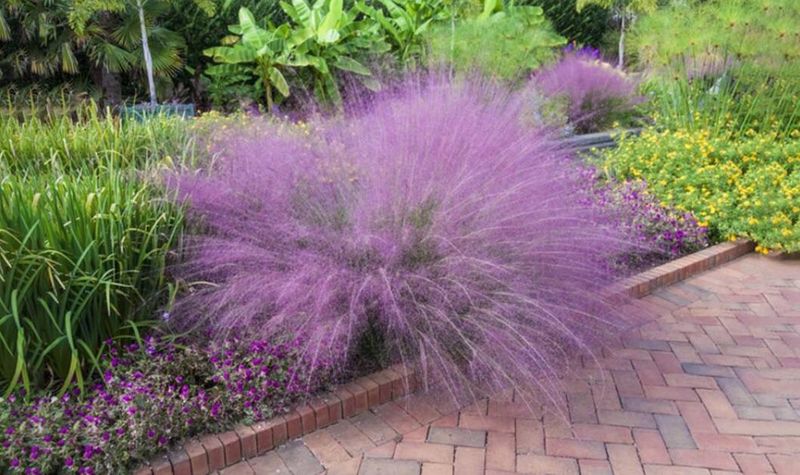
Pink muhly grass puts on one of the most dramatic fall shows of any ornamental grass in the South. When September and October arrive, the plant erupts in a cloud of soft, rosy-pink plumes that seem to glow in afternoon light.
Next to the fading blooms and warm bark tones of crape myrtles, the contrast is hard to beat.
Muhly grass thrives in full sun and well-drained soil, which are the same conditions crape myrtles prefer. It handles drought and heat without complaint once established, making it a low-demand companion in summer beds.
Irrigation needs drop significantly after the first growing season.
Clumps grow to about three feet tall and wide. The fine-textured foliage stays neat and green through spring and summer, then the fall bloom arrives almost like a reward for patience.
After the plumes fade, the dried seed heads still add subtle texture through winter.
Cut the grass back hard in late winter before new growth begins. Fresh green blades emerge quickly in spring and the plant fills back in without much effort.
Division every few years helps maintain vigor, though established clumps can go longer without intervention.
Planted in groups of three or more, muhly grass creates a soft, flowing contrast to the upright structure of crape myrtles.
Mixing both plants in a sunny border gives the bed a bold seasonal punch that peaks right when many other plants are winding down for the year.
4. Dwarf Yaupon Holly Provides Year Round Structure
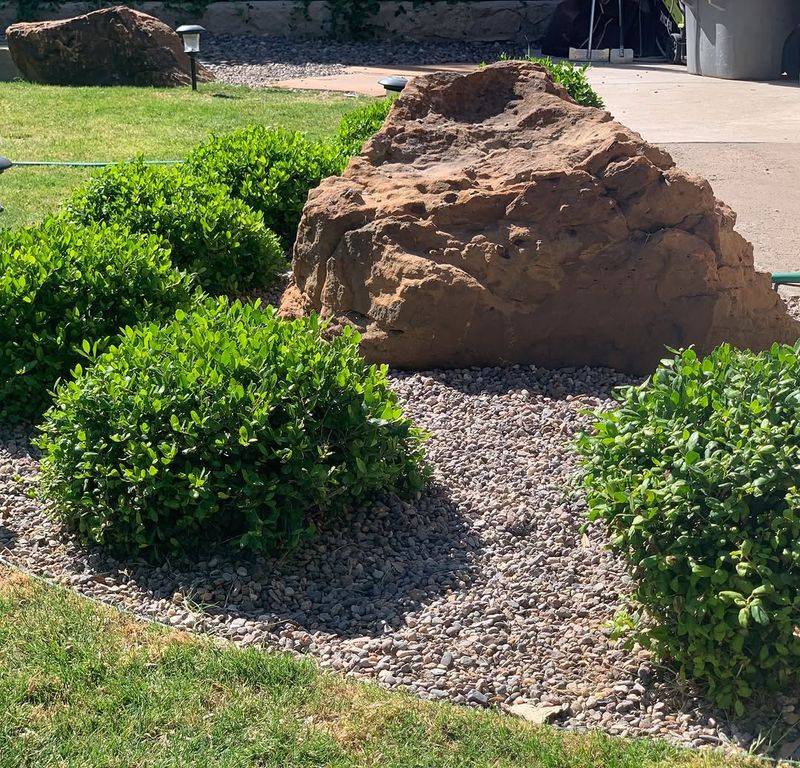
Structure matters in a mixed planting, and dwarf yaupon holly delivers it without requiring much effort. Small, glossy leaves stay green year-round, giving the bed a reliable anchor even when seasonal plants go dormant or look tired between bloom cycles.
Yaupon holly is native to the southeastern United States and handles the region’s conditions with ease. It tolerates heat, humidity, drought once established, and even occasional wet soil better than many other evergreen shrubs.
Planting it near crape myrtles makes practical sense because both plants share similar sun and soil preferences.
Dwarf varieties typically reach two to three feet tall and can spread a bit wider over time. That compact size makes them useful as edging plants along a crape myrtle bed or as low-growing anchors at the base of the tree.
Female plants produce small red berries in fall and winter that attract birds to the garden.
Pruning needs are minimal. Light shaping once or twice a year keeps the form tidy without stressing the plant.
Avoid heavy shearing if possible, as a natural, slightly rounded shape looks more relaxed and fits better in informal garden settings.
Pairing dwarf yaupon holly with crape myrtles creates a layered effect that works across every season. When the crape myrtle blooms in summer, the dark holly foliage makes the flowers pop.
When the crape myrtle goes bare in winter, the holly keeps the bed from looking empty.
5. Coral Bells Stand Out With Colorful Foliage
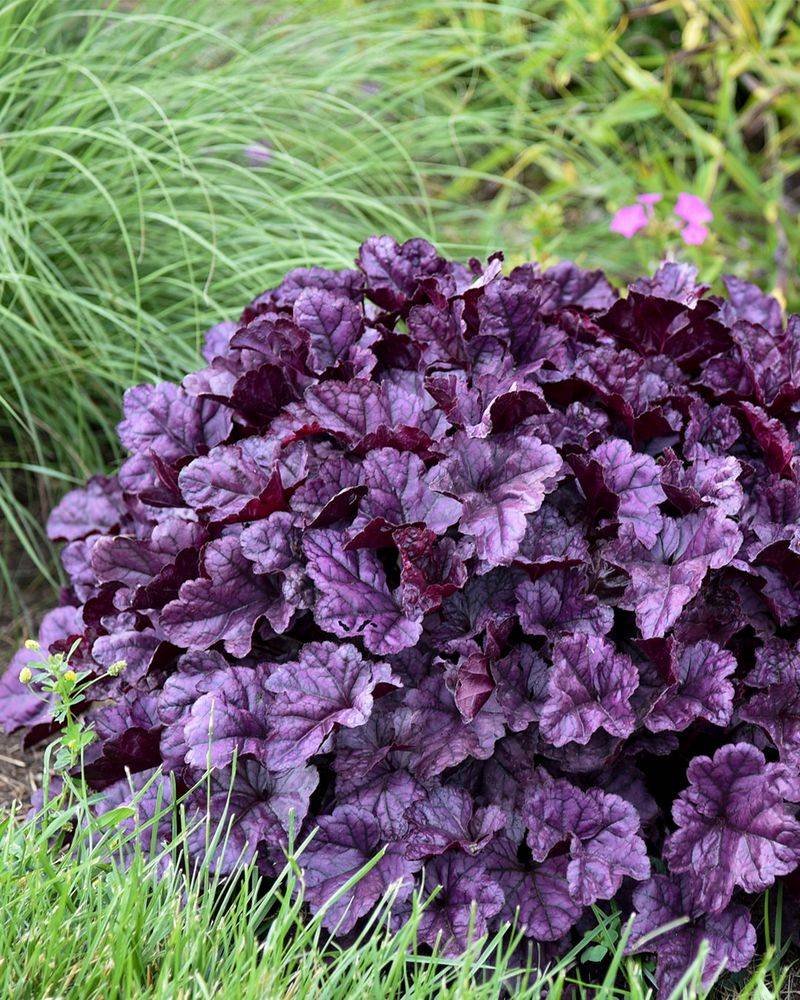
Coral bells bring foliage color that holds up through most of the growing season, which is something not every perennial can claim. Leaf colors range from deep burgundy and chocolate to lime green, silver, and amber depending on the variety.
Planted near crape myrtles, that foliage contrast adds visual punch even before any flowers appear.
In Georgia, coral bells perform best with some afternoon shade, especially during the hottest summer months. Morning sun with filtered afternoon light suits them well.
Planting them on the east or north side of a crape myrtle canopy often provides exactly that kind of light balance.
Delicate flower stalks rise above the foliage in late spring and early summer, topped with tiny bell-shaped blooms in shades of pink, red, or white. Hummingbirds visit these flowers regularly, adding extra life to the planting bed.
After bloom, cutting back the spent stalks keeps the plant looking neat.
Coral bells prefer well-drained soil and do not like sitting in wet conditions for extended periods. Raised beds or sloped areas with good drainage tend to produce the healthiest plants.
Mulching around the base helps moderate soil temperature and retain moisture without creating soggy conditions.
Clumps may need dividing every three to four years to stay vigorous. Replant divisions in fall or early spring when temperatures are cooler.
With a little attention to placement and drainage, coral bells reward gardeners with season-long color that complements crape myrtles beautifully.
6. Blue Star Amsonia Delivers Interest Across Multiple Seasons
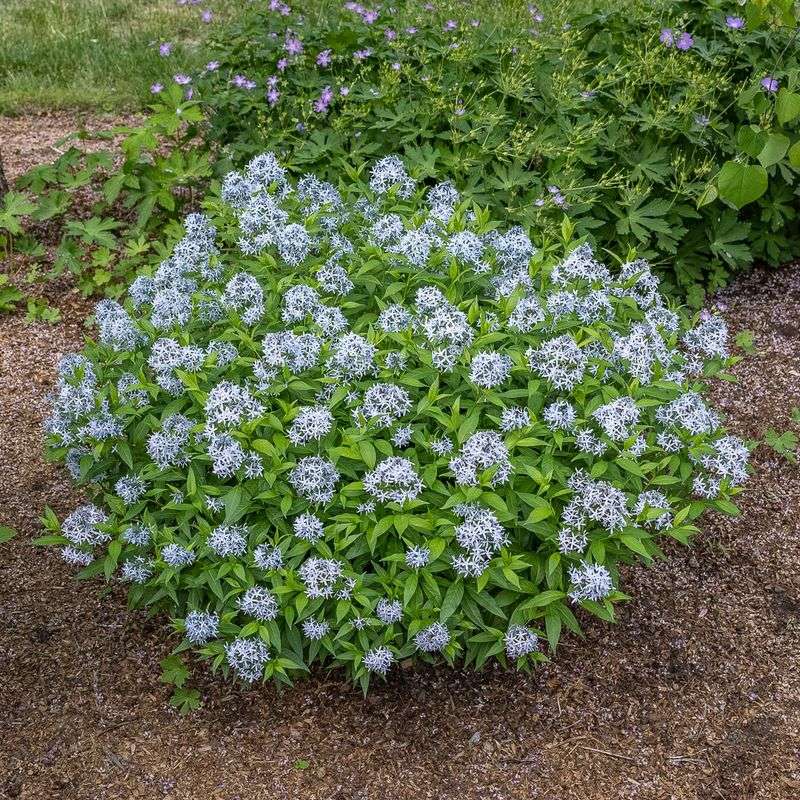
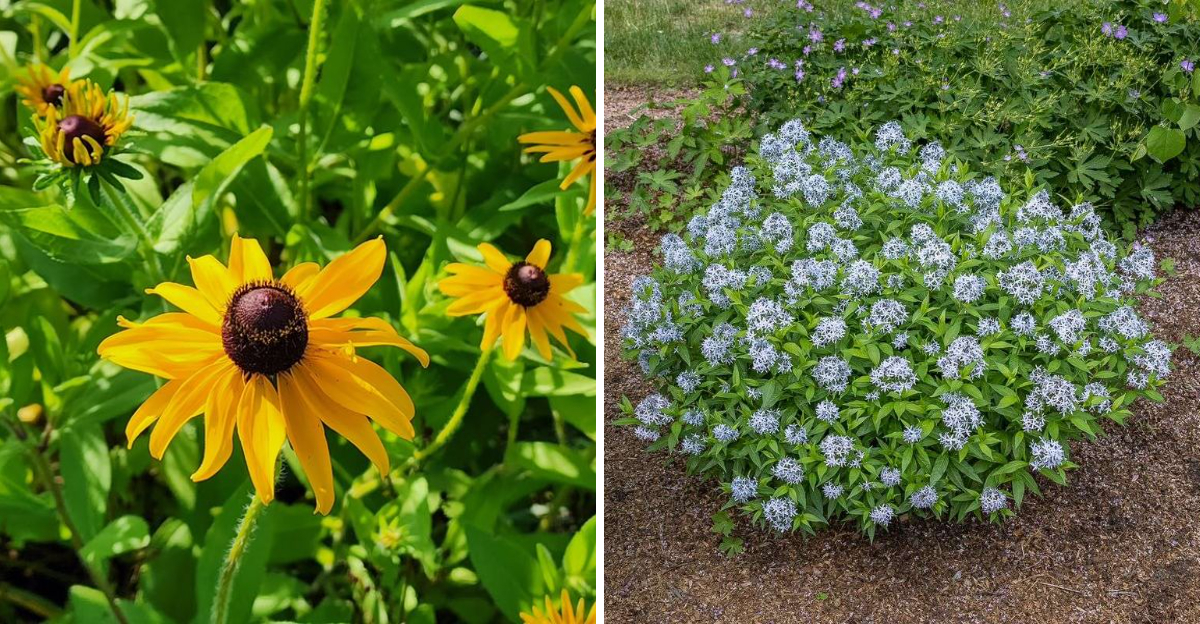
Blue star amsonia is one of those plants that earns its spot in the garden three times over. Pale, steel-blue flowers appear in spring just as crape myrtles are leafing out.
Summer brings fine, willow-like foliage that fills the bed with soft green texture. Then fall delivers a golden-yellow color change that rivals most ornamental grasses.
Amsonia hubrectii, the threadleaf variety, handles full sun and tolerates moderate drought once roots are established. It grows in average, well-drained soil without needing heavy fertilization or frequent amendments.
Planting it alongside crape myrtles in a sunny border keeps both plants happy with minimal extra input.
Clumps reach about two to three feet tall and wide. Cutting the plant back by one third after spring bloom encourages a tighter, more compact mound of foliage through summer.
Skipping that trim results in a slightly looser form, which still looks attractive in informal settings.
Blue star amsonia is long-lived and slow to establish but tends to be low maintenance once settled in. It does not spread aggressively, which makes it easy to manage in a mixed border without constant editing.
Deer tend to avoid it, which is a practical advantage in suburban and semi-rural areas where browsing pressure is common.
Planted in groups of three or more, blue star amsonia creates a flowing, layered look beneath crape myrtles that reads as intentional and well-designed rather than accidental or random.
7. Black Eyed Susan Keeps Sunny Beds Blooming

Bold yellow blooms and dark centers make black-eyed Susan one of the easiest perennials to spot from across the yard. It blooms heavily from midsummer into fall, which overlaps with peak crape myrtle season.
Planted together in a sunny bed, the two create a warm, high-contrast combination that draws the eye immediately.
Black-eyed Susan grows well in full sun and tolerates poor, dry soil once established. It actually performs better in lean conditions than in rich, heavily amended beds, where plants can grow floppy and require staking.
Pairing it with crape myrtles in a well-drained, sunny border suits both plants well without extra soil work.
Height varies by variety, with most reaching two to three feet tall. Shorter cultivars work better toward the front of a bed, while taller types can fill in mid-border gaps.
Deadheading spent blooms encourages more flowers, though leaving some seed heads in place feeds goldfinches and other birds through fall.
Black-eyed Susan tends to self-seed, so expect new plants to pop up nearby over time. Thin seedlings in spring if the bed starts to feel crowded.
Dividing established clumps every two to three years keeps the plants vigorous and the planting looking intentional.
Native to much of North America and widely adapted to Southern conditions, black-eyed Susan handles summer heat without stress. It adds reliable color to mixed beds at exactly the time of year when crape myrtles are putting on their biggest show.
8. Creeping Phlox Forms A Dense Flowering Ground Cover
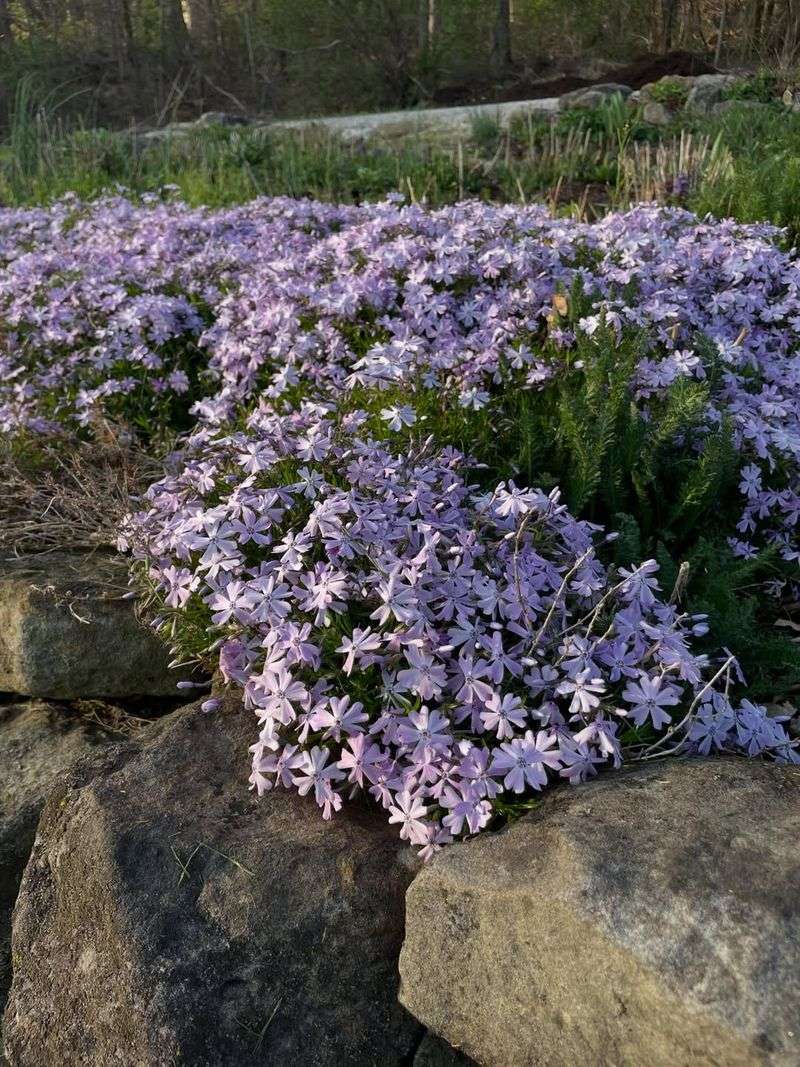
Creeping phlox covers ground fast and blooms hard in early spring before most other plants have fully woken up.
A carpet of pink, purple, lavender, or white flowers spreads across the soil surface, creating a low, dense mat that looks almost like a floral blanket.
Planted at the base of crape myrtles, it fills the bed before summer heat arrives.
Once bloom fades, the foliage stays semi-evergreen through much of the year in warmer climates. Needle-like leaves form a tight, weed-suppressing mat that keeps the soil covered and reduces maintenance needs.
That ground-covering habit is especially useful in sloped areas or along bed edges where bare soil tends to wash or erode.
Creeping phlox prefers full sun to light shade and well-drained soil. It does not handle wet, heavy clay well, so planting in raised beds or amended areas improves performance.
A light trim after bloom helps keep the mat tidy and encourages denser growth through the rest of the season.
Established plants are fairly drought tolerant and do not need frequent feeding.
Too much fertilizer can actually reduce bloom production, so a light application in early spring is usually enough to support healthy growth without overfeeding.
Pairing creeping phlox with crape myrtles creates a spring-into-summer sequence where the ground cover blooms first, then the crape myrtle takes over with its midsummer display.
That relay of color keeps the bed interesting across a long growing season without requiring constant replanting or heavy upkeep.