What Texas Gardeners Are Doing To Keep Fire Ants Out Of Vegetable Beds All Summer
Fire ants and Texas vegetable gardens have an unfortunate amount in common.
They both love warm weather, moist soil, and rich organic matter, which means your carefully tended raised bed full of tomatoes, peppers, and herbs is basically advertising itself as prime real estate.
A mound can appear overnight, seemingly out of nowhere, turning what should be a relaxing morning harvest into a very uncomfortable situation. Ask anyone who has reached into a bed without looking first.
The frustrating truth is that no single method can promise fire ants will stay out of your garden all summer long, but that does not mean you are powerless.
Understanding how to identify them correctly, choose labeled products safe for edible crops, treat mounds early, and manage the broader yard can make a genuinely significant difference in keeping your vegetable garden productive and safe to work in.
1. Identify Fire Ants Before Treating A Bed
Spotting a mound beside your tomatoes does not automatically mean fire ants are the culprit.
Texas vegetable beds can attract several ant species, and misidentifying them can lead to using the wrong product or treating a problem that does not actually need aggressive intervention.
Before reaching for any treatment, take a close look at the ants themselves.
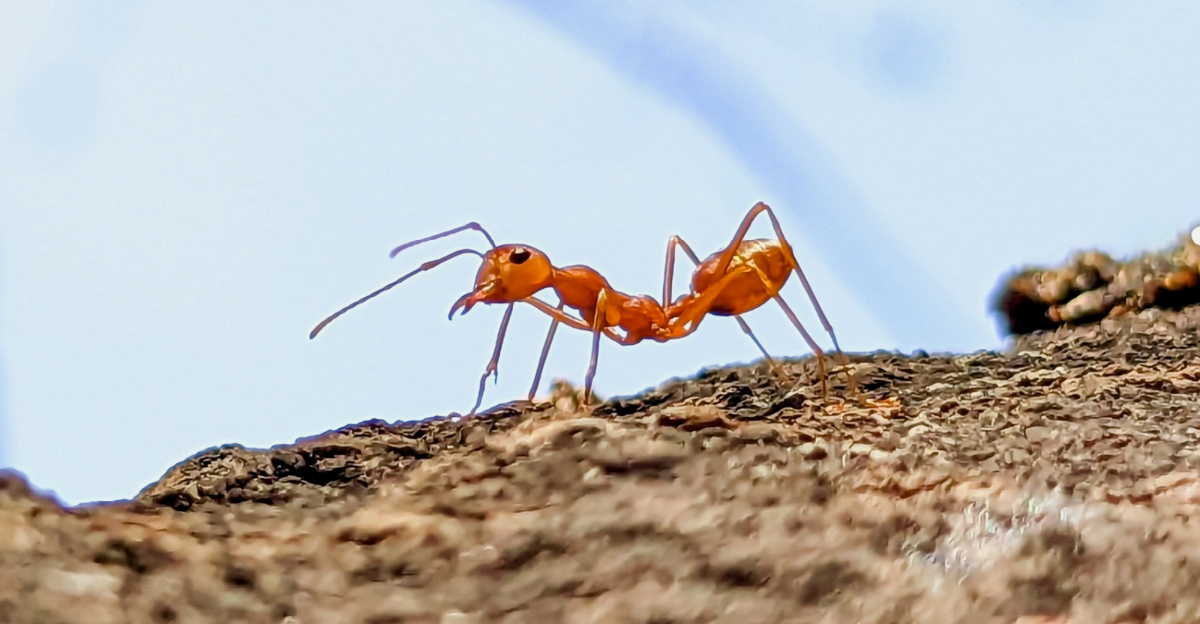
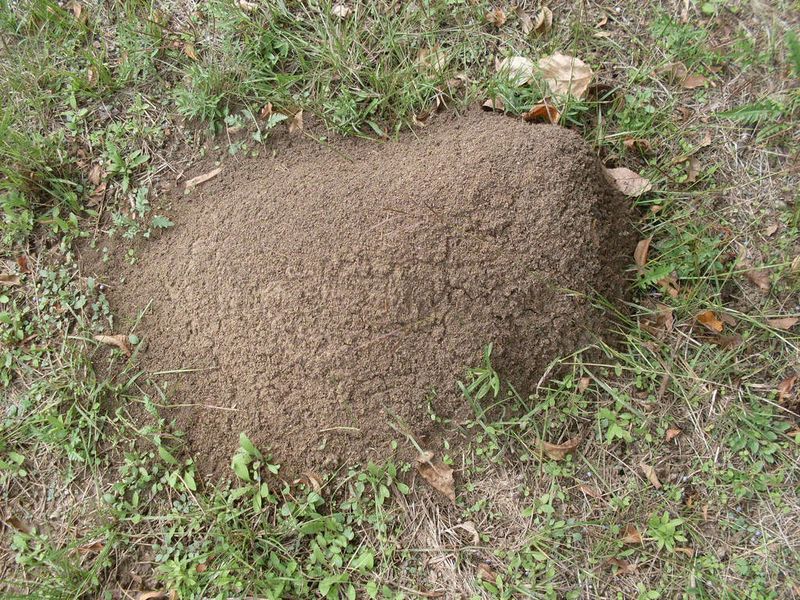
Fire ants in Texas are reddish-brown and range from small to medium in size within the same colony. Their mounds tend to be fluffy, dome-shaped piles of loose soil with no visible entry hole on top.
When disturbed, fire ants swarm aggressively and sting repeatedly, which makes careful observation important without getting too close.
Harvester ants and other common Texas species build differently shaped mounds and behave more calmly when a nest is approached.
Getting the identification right matters because some treatments are species-specific and may not work on fire ants at all.
County extension offices can sometimes help with identification if you are unsure. Correct identification is the starting point for any safe, effective fire ant management plan in a Texas edible garden.
2. Use Only Products Labeled For Vegetable Gardens
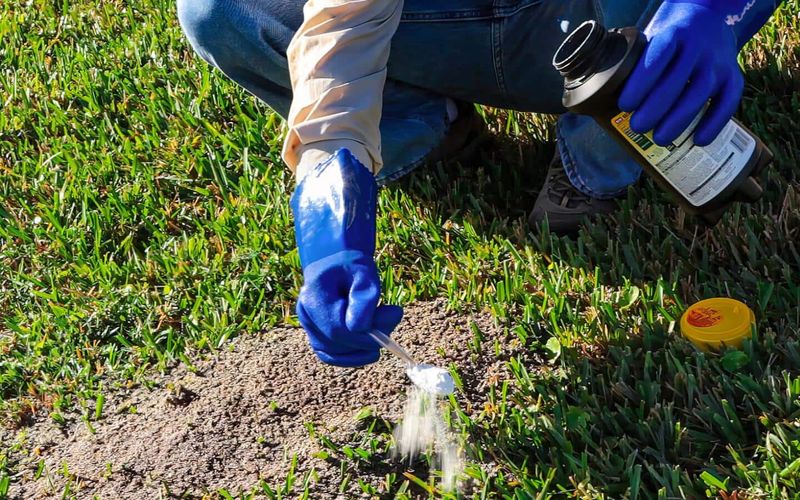
Reading a pesticide label carefully before opening the container is one of the most important habits a Texas vegetable gardener can build.
Not every fire ant product sold at a garden center is appropriate for use in or around edible crops, and using the wrong product can create food safety concerns and potential legal issues, since the label is a legal document.
Products labeled for use in vegetable gardens will specifically state that on the label, often listing acceptable crops, application rates, and how close to harvest the product can be used.
Some granular products are labeled for broadcast use in home vegetable gardens, while others are restricted to ornamental beds or turf.
Liquid drenches approved for fire ant mound treatment may or may not be cleared for use near edibles, depending on the active ingredient.
Organic options such as spinosad-based products may be labeled for vegetable garden use, but even those require careful label reading for specific crops and timing.
Your Texas Garden Changes Every Week. Your Plan Should Too.
Gardening in Texas changes quickly throughout the season. Every Friday you’ll receive a simple weekly plan showing exactly what to plant, prune, fertilize, harvest, and protect so you never miss the right timing.
Texas gardeners who take the time to read and follow product labels protect their harvests, their families, and their soil.
When in doubt, contact your local extension office before applying anything near harvestable plant parts.
3. Treat Mounds Directly When They Appear In Beds
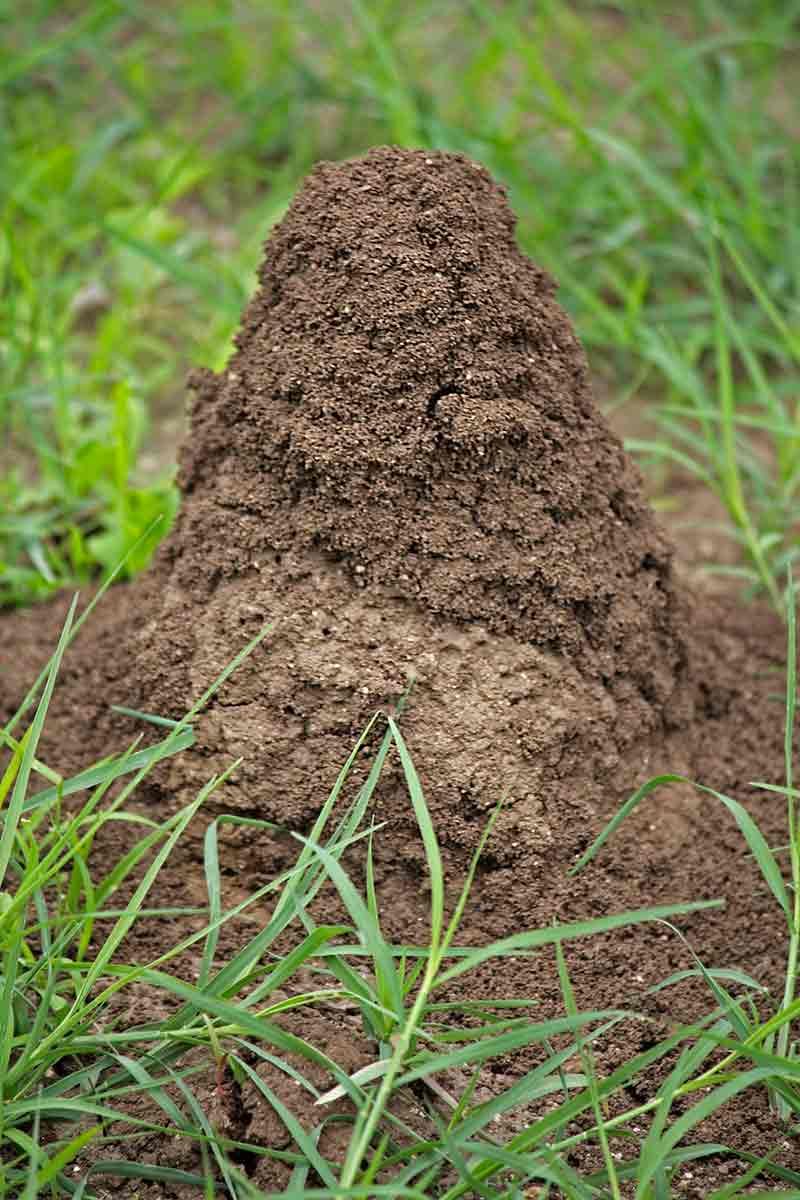
A mound appearing right next to a pepper plant calls for quick, targeted action rather than a wait-and-see approach.
Direct mound treatments are often the most practical option for Texas vegetable beds because they focus on the specific colony causing the problem rather than spreading product across an entire growing area.
Several products labeled for use in vegetable gardens can be applied directly to individual mounds. Liquid drenches, when labeled for edible garden use, are poured around and into the mound to reach the colony below.
Some granular products can be applied to the mound itself and then watered in lightly. Always confirm the product is labeled for vegetable gardens before use.
Timing matters with direct treatments. Applying them during cooler parts of the day, such as early morning or late afternoon, can improve contact with the colony since ants tend to be closer to the surface when temperatures are moderate.
Treating a mound right after rain, when soil is moist and ants are active, can also improve results. In Texas summer heat, midday treatments are less likely to be effective because colonies move deep into the soil to stay cool.
Patience and timing together improve outcomes.
4. Avoid Broadcasting Unlabeled Baits Over Edibles
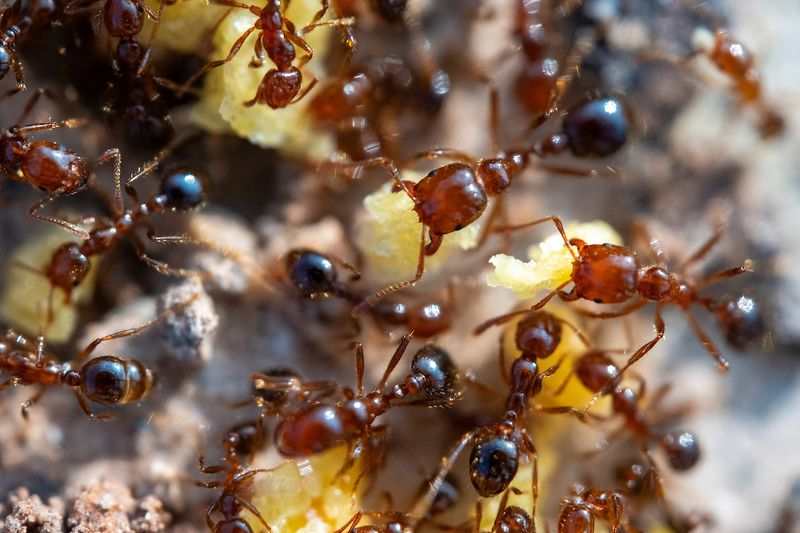
Broadcasting bait products across a vegetable bed without checking the label first is a mistake that many well-meaning gardeners make.
Fire ant baits work by attracting ants with an oil-based food source mixed with a slow-acting active ingredient, but not all baits are cleared for use over or around edible crops.
Some fire ant baits are labeled only for turf, ornamental beds, or perimeter use around structures. Scattering those products over tomatoes, lettuce, or herbs can contaminate the soil and potentially affect food safety.
Even baits that contain naturally derived active ingredients need to be checked against the label before any vegetable garden application.
When a bait product is labeled for use in vegetable gardens, it should be applied according to the directions, which often specify how far from plant stems or harvestable parts the product should be placed.
Baits generally work best when broadcast around the perimeter of a bed or in areas where ants are actively foraging rather than directly on mounds.
Fresh bait is more effective because the oil carrier can go stale. Texas gardeners who keep bait containers sealed and stored in a cool location tend to get better results than those who use old or improperly stored product.
5. Keep Beds Mulched But Not Constantly Soggy
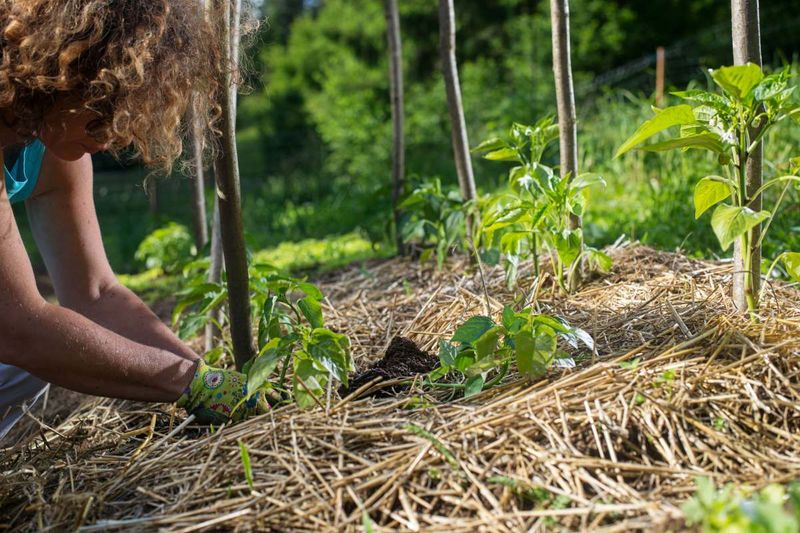
Mulch does a lot of good in a Texas vegetable garden – it holds moisture, moderates soil temperature, and helps suppress weeds.
However, mulch that stays wet for extended periods can create exactly the kind of environment that attracts fire ants looking for a moist, sheltered nesting spot.
Keeping a reasonable mulch depth of two to three inches is generally enough to retain moisture without creating overly saturated conditions.
Thick layers of mulch piled against plant stems or left dripping wet after irrigation can become prime real estate for a new fire ant colony.
Pulling mulch slightly away from the base of plants and allowing the top layer to dry between waterings can reduce that appeal.
Drip irrigation systems are popular in Texas because they deliver water directly to the root zone rather than wetting mulch and soil surfaces broadly.
Using drip lines instead of overhead sprinklers can help keep the upper soil and mulch layer drier, which makes beds slightly less attractive to fire ants.
Mulch choice also matters – finer materials like shredded wood tend to hold more moisture than coarser materials like straw. Checking mulch condition regularly during summer helps catch soggy spots before they become nesting opportunities.
6. Reduce Disturbance That Opens New Nesting Spots
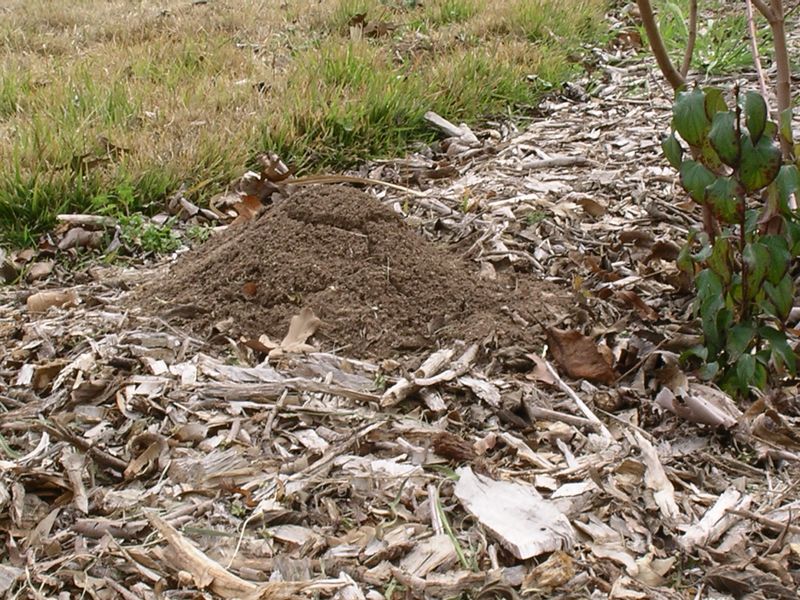
Freshly turned soil after transplanting or cultivating a vegetable bed can look like an open invitation to fire ants.
Disturbed soil creates loose, aerated conditions that fire ant colonies find easy to move into, especially when the bed also has moisture and organic matter nearby.
Minimizing unnecessary soil disturbance is a simple way to make a bed slightly less attractive as a nesting site.
Rather than deep tilling between rows or around plants, many Texas gardeners use shallow cultivation tools to control weeds without breaking up large sections of soil at once.
Transplanting in the early morning and firming the soil around new plants quickly can help close up loose areas before ants scout them out.
Raised beds that have been in use for several seasons with established soil structure tend to hold together better than freshly built beds with loose, amended fill. Adding compost or other amendments gradually rather than all at once keeps disruption to a minimum.
Covering bare soil between plants with mulch or a cover crop also reduces the number of open, loose soil patches that fire ant scouts might find appealing.
Small habits around soil management can add up to fewer opportunities for new colonies to get established in a Texas vegetable bed over the course of a summer.
7. Watch Moist Soil, Compost, And Irrigated Edges
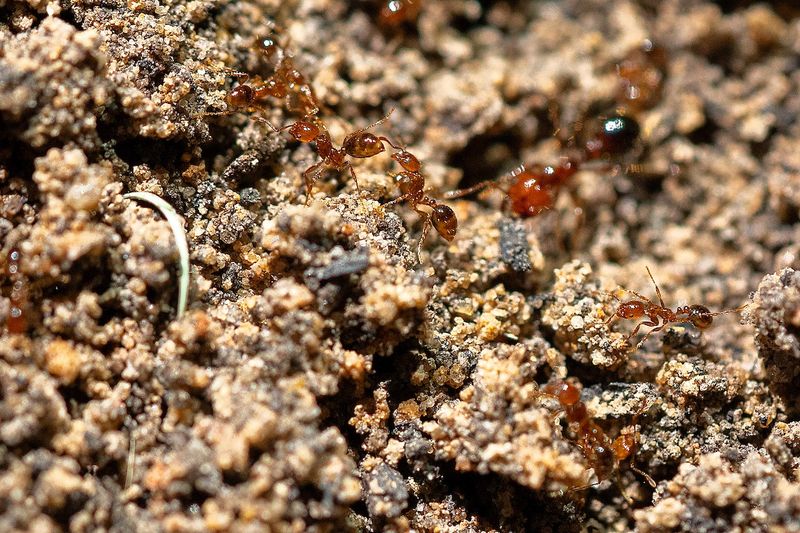
Compost-rich beds that stay irrigated through a Texas summer are productive and wonderful for growing vegetables, but they also check several boxes on the list of what fire ants prefer in a nesting site.
Moist soil, organic material, and consistent moisture along irrigated edges create conditions worth monitoring regularly.
Bed edges near drip emitters or soaker hoses tend to stay wet longer than the center of the bed. Those edges are often the first place a new fire ant mound shows up, especially during hot stretches when ants seek out moisture.
Checking the perimeter of beds after irrigation cycles can help catch new mounds early, before a colony becomes well established and harder to manage.
Compost bins or piles located near vegetable beds can also attract fire ants, and colonies that establish in compost can easily spread into adjacent growing areas. Turning compost regularly and keeping it covered can reduce that appeal.
In Texas, summer heat accelerates compost activity and moisture use, so compost piles near beds may need more frequent attention during peak heat months.
Staying observant about where moisture accumulates in and around a vegetable garden is one of the most practical habits a Texas gardener can develop for staying ahead of fire ant pressure all summer long.
8. Keep Fire Ant Baits Away From Harvestable Plant Parts
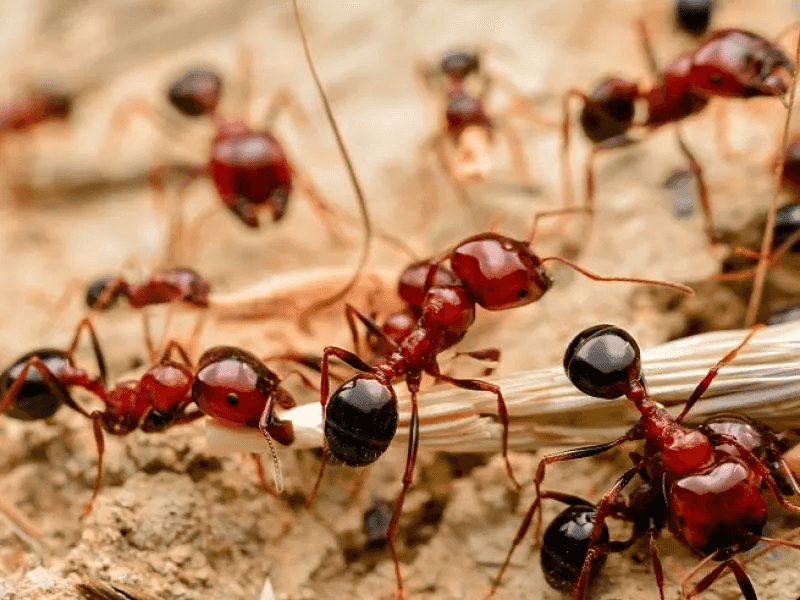
Baits placed too close to lettuce leaves, strawberry runners, or low-hanging tomatoes can raise real concerns about food safety and label compliance.
Even when a bait product is cleared for vegetable garden use, the label directions typically specify keeping the bait away from direct contact with edible plant parts.
Placing bait along the outer perimeter of a bed rather than between plants is a common approach Texas gardeners use to stay within label guidelines while still targeting foraging ants.
Fire ants forage outward from their colony, so bait placed along travel paths near the bed edge can still be picked up and carried back to the colony effectively.
Timing bait applications thoughtfully also helps. Applying bait when rain is not expected for at least a day or two allows ants time to find and carry it before it breaks down.
Bait should not be applied when temperatures are extremely high, as heat can cause the oil carrier to go rancid quickly, making the bait unattractive to ants. Storing unused bait properly between applications keeps it fresh and effective.
In a Texas summer vegetable garden, careful bait placement combined with attention to label directions gives gardeners the best chance of reducing fire ant pressure without compromising the safety of their harvest.
9. Combine Bed Care With Wider Yard Management
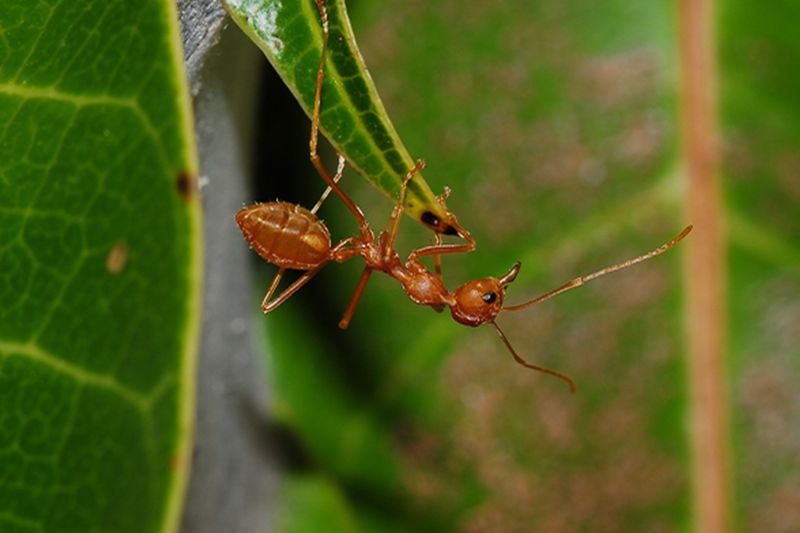
Managing fire ants only inside a vegetable bed while leaving the surrounding lawn and landscape untreated is a bit like patching one hole in a screen – pressure keeps coming from everywhere else.
Fire ant colonies in nearby turf, flower beds, or along fence lines can send out new queens that establish fresh mounds in a vegetable garden even after a bed has been treated.
A whole-yard approach to fire ant management tends to work better over a full Texas summer than treating individual mounds in isolation.
Broadcast bait applications across the lawn using products labeled for turf can reduce overall colony pressure in the yard, making it less likely that new colonies will migrate into vegetable beds.
Many Texas extension resources recommend a two-step approach that combines broadcast bait treatment with individual mound treatment for active colonies.
Community gardeners in Texas face an added challenge because neighboring plots may not be managed with the same level of attention, allowing colonies to move freely between spaces.
Communicating with neighbors or fellow gardeners about consistent yard-wide management can make individual bed treatments more effective over time.
Thinking about fire ant management as an ongoing seasonal effort rather than a one-time fix is the mindset that tends to keep Texas vegetable gardens more comfortable and productive from the first summer planting through the final fall harvest.