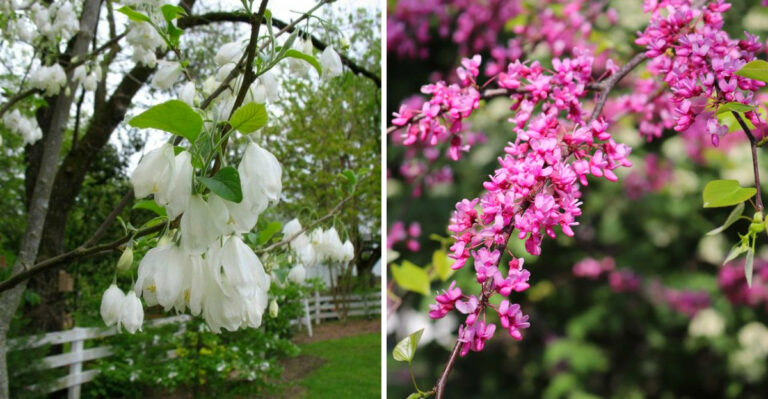
How Georgia Gardeners Bring In The Good Bugs That Protect Their Plants
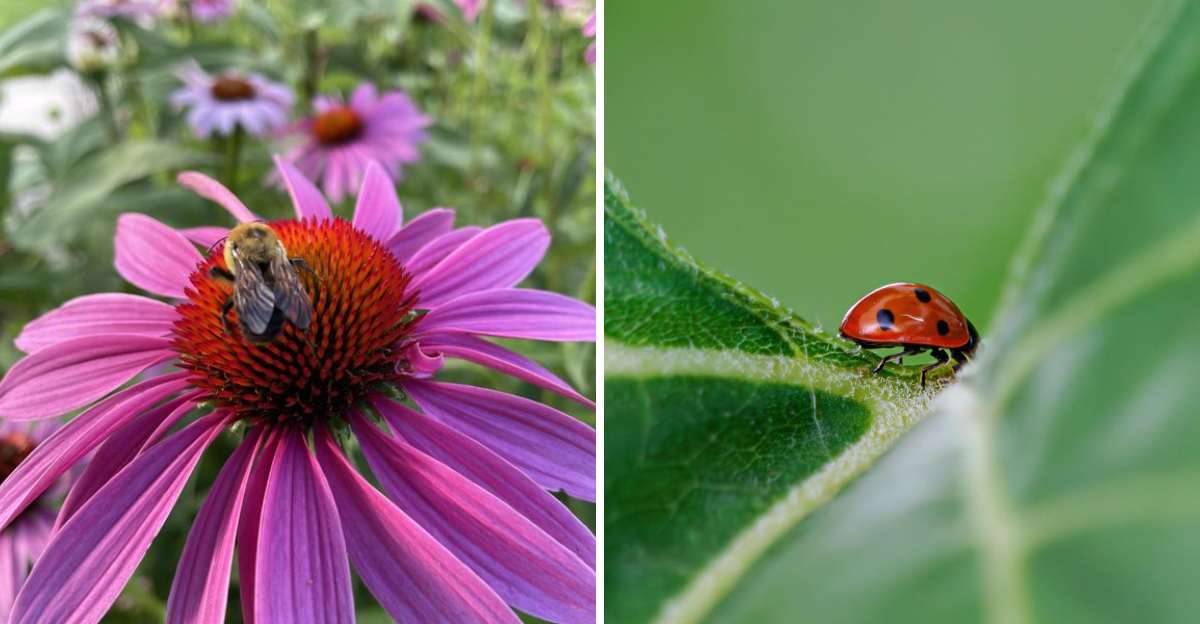
Georgia gardens come with their own tiny security team.
You may notice the clues before the heroes appear. A curled bean leaf. A cluster of aphids on new tomato growth. A few chewed edges near the squash.
Then a lady beetle strolls across the stem like she pays rent.
That little patrol matters. The best Georgia gardens are not sterile, silent spaces. They are busy little food webs, full of insects that hunt pests, pollinate flowers, and keep problems from exploding overnight.
The trick is giving those helpers a reason to stay.
Beneficial insects need blooms, shelter, water, safe resting places, and fewer surprise spray attacks. Give them that, and your garden starts to feel less like a battlefield and more like a balanced neighborhood.
So how do Georgia gardeners bring in the good bugs before pests take over?
Start with plants that feed them, habits that protect them, and a yard that says, “Welcome, tiny workers. The aphids are over there.” They need the right invitation before trouble starts.
1. Plant Flowers In Every Season
A garden that blooms only in May is like a diner that closes at noon.
Beneficial insects need food from early spring all the way through late fall, and a gap in bloom time means a gap in the helpers patrolling your vegetable rows.
Georgia gardeners can stretch bloom time by layering plants with different flowering schedules.
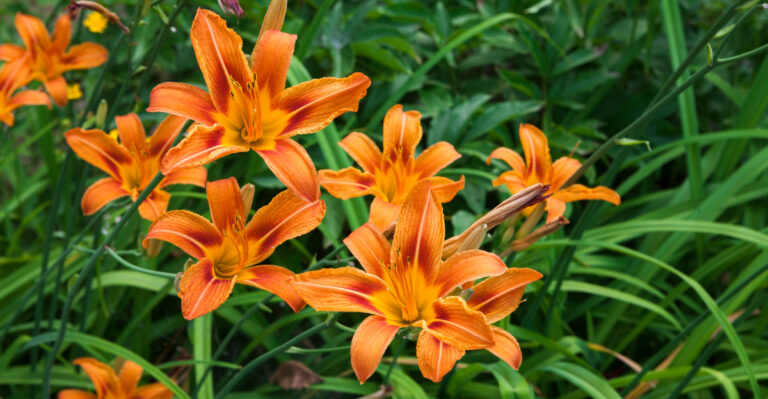
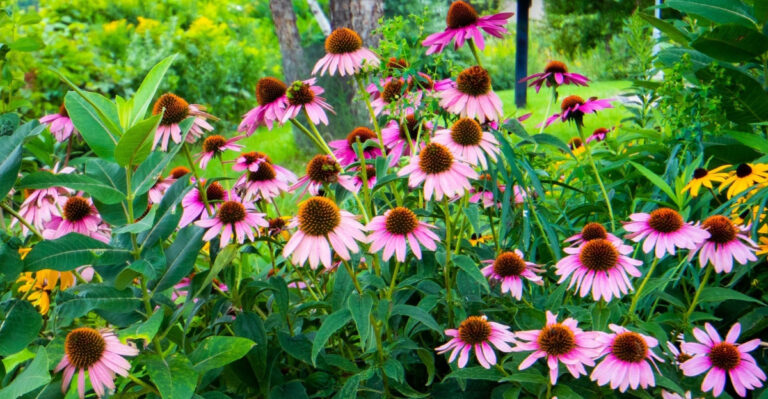
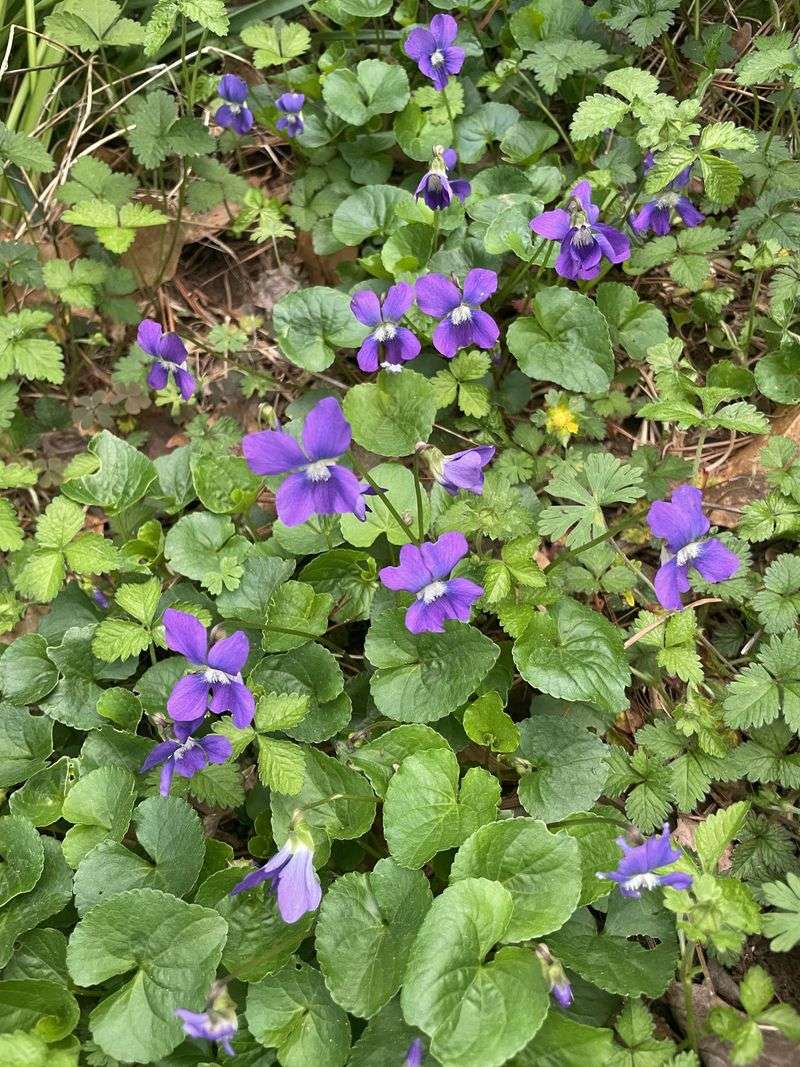
Start spring with native violets and redbud. Move into summer with zinnias, coneflowers, and black-eyed Susans.
Carry fall with asters, goldenrod, and Mexican sunflower. Each of these plants offers nectar and pollen that feed adult lacewings, hoverflies, and parasitoid wasps before those insects go hunting for pests.
UGA Extension recommends continuous bloom as a cornerstone of supporting beneficial insects in Georgia gardens.
Adult beneficial insects often need nectar and pollen to survive and reproduce, even though their larvae are the pest-munching machines. No flowers means no fuel, and no fuel means your helpers move on to someone else’s yard.
Planting in drifts rather than single specimens makes a bigger visual target for insects flying overhead.
A patch of ten zinnias is far more attractive than one lonely plant tucked in a corner. Place flowering plants at the edges of vegetable beds where they can act as a living welcome mat.
Keep trimming spent blooms to encourage fresh flowers and keep the buffet open as long as Georgia’s long growing season allows.
2. Let Herbs Bloom For Tiny Wasps
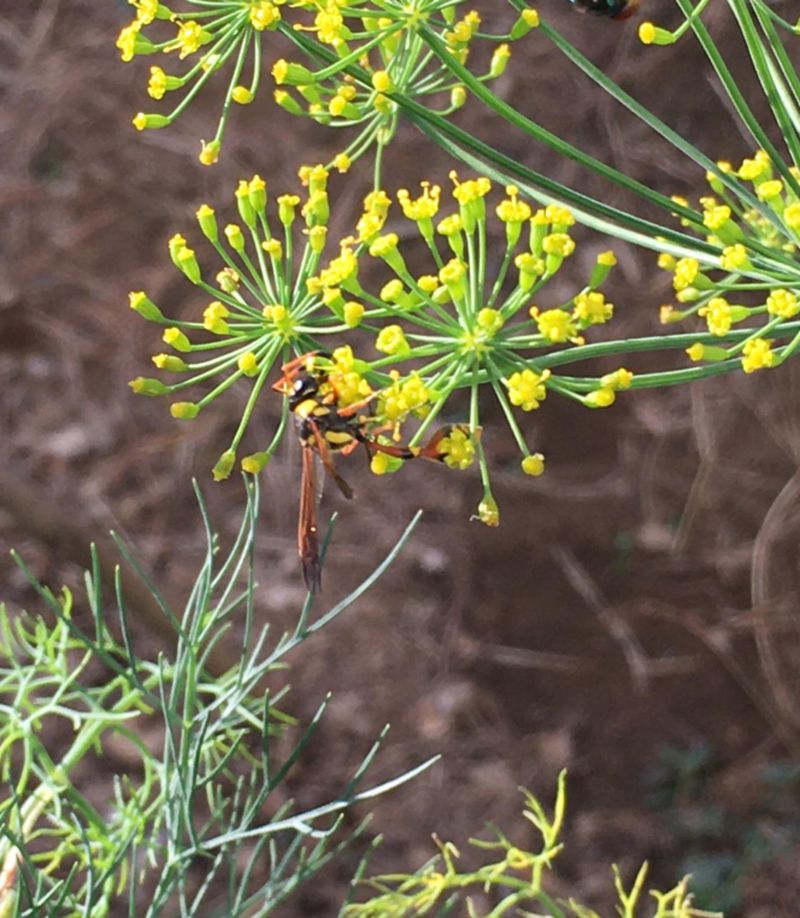
Dill going to seed might look like a gardening mistake, but it is actually one of the smartest moves you can make for your vegetable patch.
Those flat-topped yellow flower clusters are landing pads for tiny parasitoid wasps, and those wasps are some of the most effective pest managers in any Georgia garden.
Parasitoid wasps are small enough that most gardeners never notice them. They do not sting people.
What they do is lay their eggs inside or on top of caterpillars, aphids, and other soft-bodied pests.
Your Georgia Garden Changes Every Week. Your Plan Should Too.
Gardening in Georgia changes quickly throughout the season. Every Friday you’ll receive a simple weekly plan showing exactly what to plant, prune, fertilize, harvest, and protect so you never miss the right timing.
The wasp larvae then develop inside the host, eventually stopping the pest from reproducing or feeding. It sounds like science fiction, but it is just biology doing its job.
The flowers these wasps prefer are small and shallow, with easy access to nectar.
Dill, fennel, cilantro, and parsley all fit that description perfectly. Let at least a few of each bolt and bloom rather than pulling them the moment they start to flower.
Interplanting these herbs directly among tomatoes, peppers, and beans puts the wasps right where the pest pressure tends to build.
According to UGA Extension, supporting parasitoid wasps is a highly effective and underused strategy in Georgia integrated pest management programs for home gardeners.
3. Add Native Plants Near Vegetables
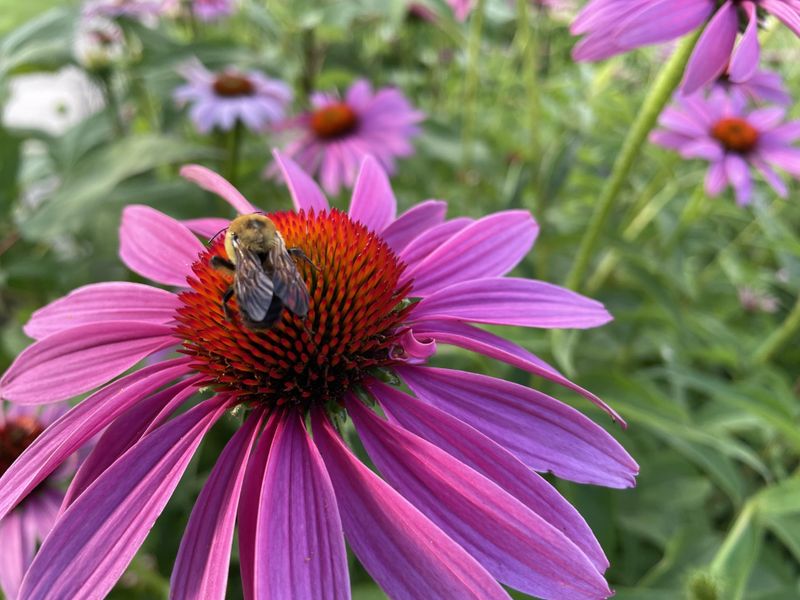
Native plants are not just pretty additions to the landscape. They are deeply connected to the local insect community in ways that non-native ornamentals simply cannot match.
Georgia native plants evolved alongside Georgia insects, and that relationship runs deep.
Planting natives near your vegetable garden creates a support system for the full cast of beneficial insects.
Coneflowers attract bees that also pollinate squash and cucumbers. Goldenrod feeds dozens of beneficial insect species in fall when other flowers are fading.
Native asters bridge the gap between summer and the first frost, keeping the food web active right up until cold weather arrives.
Native shrubs matter too.
Buttonbush, beautyberry, and native viburnums offer structure, shelter, and bloom that support beneficial insects at multiple life stages.
A shrub near the garden edge gives lacewings and lady beetles a place to rest and reproduce beyond just the vegetable rows.
UGA Extension and the Georgia Native Plant Society both highlight the role of native plants in supporting local food webs, including the predatory and parasitoid insects that protect crops.
You do not need to convert your entire yard. Even a narrow border of native flowers along one side of the vegetable patch makes a noticeable difference. Start small, watch what visits, and expand the planting as you see results.
4. Skip Broad Sprays During Patrol Hours
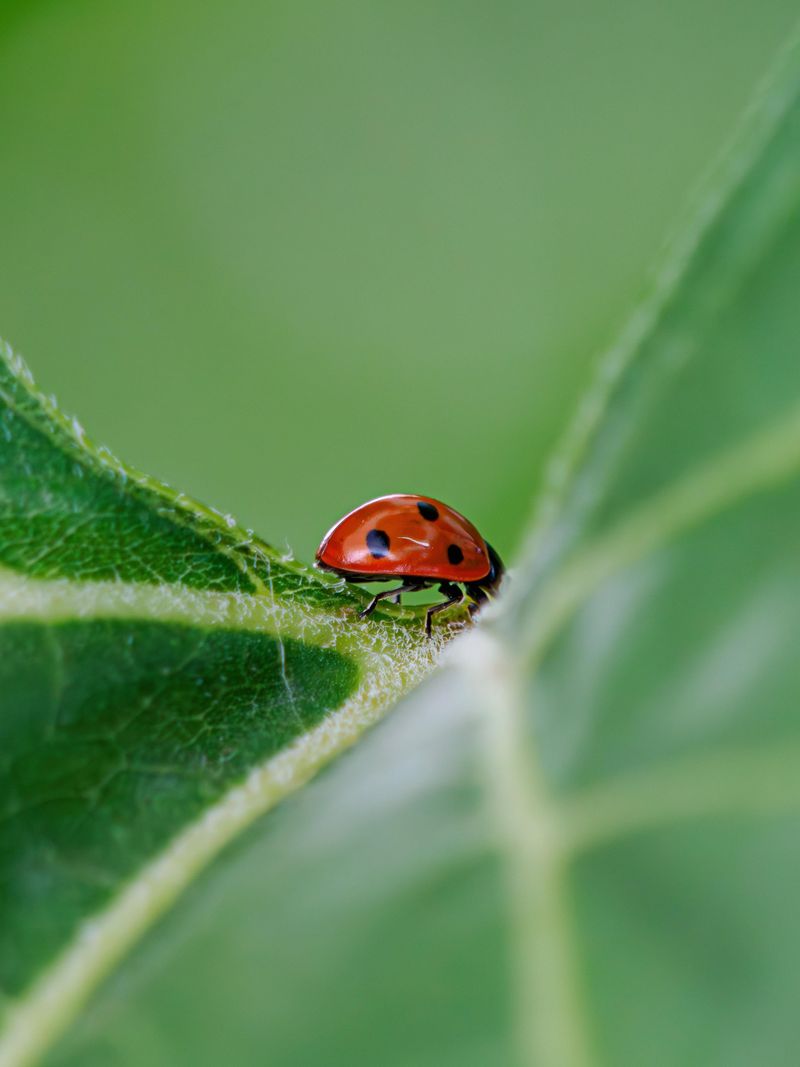
That spray bottle feels satisfying in the hand. One quick mist and the problem seems handled.
But broad-spectrum sprays, even organic ones like pyrethrin or neem oil, do not read labels before they land.
They hit whatever insect is in the way, and during peak patrol hours, that often means lady beetles, lacewings, bees, and predatory ground beetles working your garden rows.
Lady beetles are some of Georgia’s most recognizable pest managers.
A single adult can consume dozens of aphids in a day. Lacewing larvae, sometimes called aphid lions, are equally voracious.
Bees are critical pollinators for squash, melons, cucumbers, and peppers. Spraying during the morning and early afternoon hours, when these insects are most active, puts all of them at risk.
UGA Extension integrated pest management guidance recommends scouting before spraying.
Check the actual pest population. Look for beneficial insects already working the problem.
If natural predators are present and the pest pressure is moderate, giving the system a few days to respond is often more effective than spraying immediately.
When treatment is truly needed, choose targeted products applied in the early evening when beneficial insects are less active.
Spot treatments on heavily infested areas are far less disruptive than blanket applications across the whole garden.
Protecting the patrol crew means they will be back the next morning, doing the work you would otherwise have to do yourself.
5. Leave Small Refuge Areas For Winter
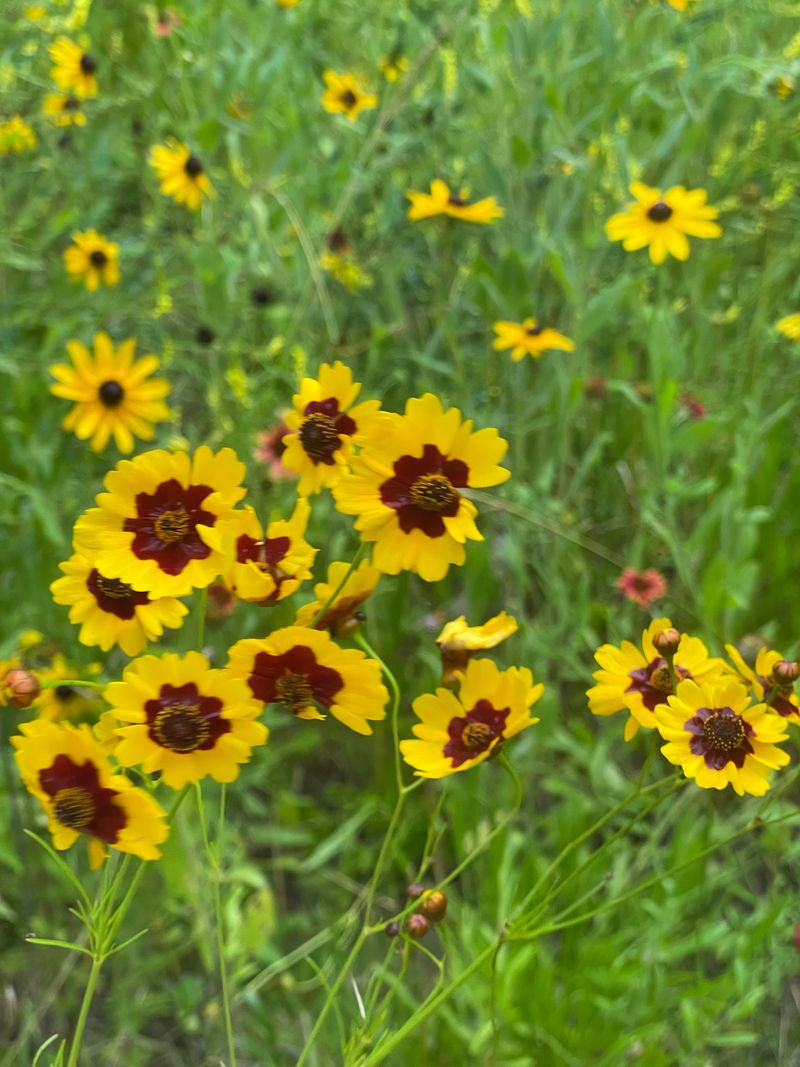
Come November, the urge to tidy everything up is real.
Pulling spent plants, raking every leaf, and cutting stems to the ground feels productive. But for many beneficial insects, those stems and leaf piles are not garden debris. They are winter housing.
Lady beetles cluster in leaf litter and under bark during cold months.
Lacewing adults overwinter in sheltered spots like dried hollow stems and dense brush piles. Ground beetles tuck into the soil and leaf layers at the garden edge.
Parasitoid wasp pupae wait inside the mummified bodies of their hosts, attached to plant stems that are still standing. Cutting everything down in fall removes an entire generation of next year’s helpers.
Georgia winters are mild enough that many beneficial insects can survive if given even a small refuge.
A corner of the garden left intentionally undisturbed, a bundle of hollow stems tied together and hung from a fence post, or a modest pile of leaves near a shrub base can all serve as winter quarters.
These do not need to be large or elaborate to be effective.
UGA Extension encourages gardeners to delay major garden cleanup until late winter or early spring, when temperatures are consistently warming.
By then, most overwintering insects will have already become active and moved out on their own.
Leaving the refuge areas through winter means your beneficial insect population enters spring already established and ready to work before the pest pressure even begins to build.
6. Mix Flower Shapes For More Helpers
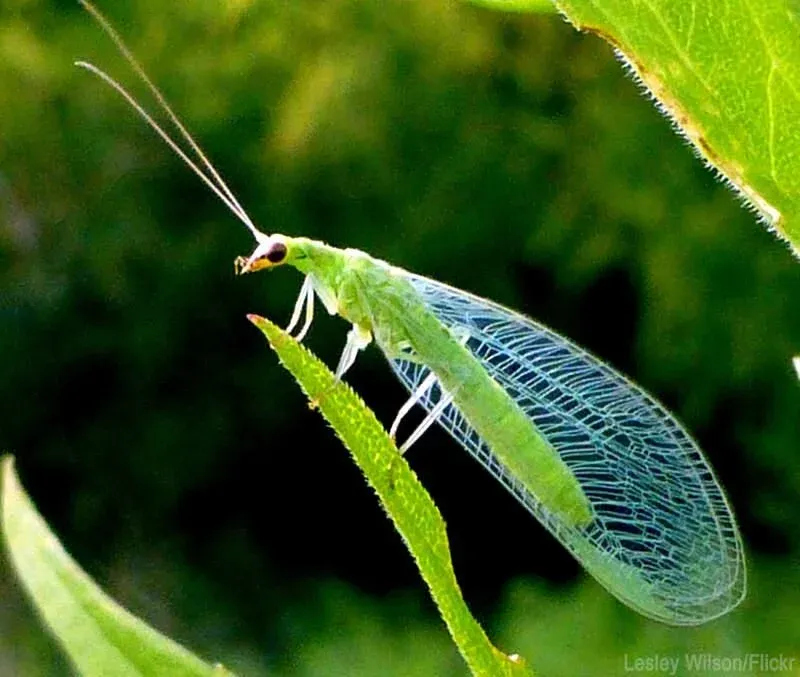
Not every beneficial insect shops at the same flower. Mouth parts, tongue length, and body size all determine which flower shape an insect can actually access.
A garden planted with only one flower form is like a restaurant with a single menu item. It feeds some guests and turns the rest away.
Short-tongued insects like hoverflies and small native bees need shallow, open flowers where nectar is easy to reach.
Yarrow, sweet alyssum, and Queen Anne’s lace fit this category perfectly. Longer-tongued bees and some parasitoid wasps can access tubular flowers like salvia and native bee balm.
Large daisy-form flowers such as coneflowers and black-eyed Susans attract a wide range of visitors because their flat centers offer a generous landing platform and accessible nectar.
Mixing these forms throughout the garden means something is always useful to something.
Hoverfly adults feed on pollen and nectar while their larvae hunt aphids. Ground beetle adults benefit from the diverse insect community a varied garden supports.
Lacewings use a range of flower types for nectar when larvae are not actively hunting.
Think of flower shape variety as casting a wider net. The more forms you include, the more species you can support, and the more complete your garden’s beneficial insect crew becomes.
Even a small raised bed can hold three or four different flower forms around its edges without crowding the vegetables. Variety here is not just aesthetic. It is functional.
7. Grow Trap Plants With A Plan
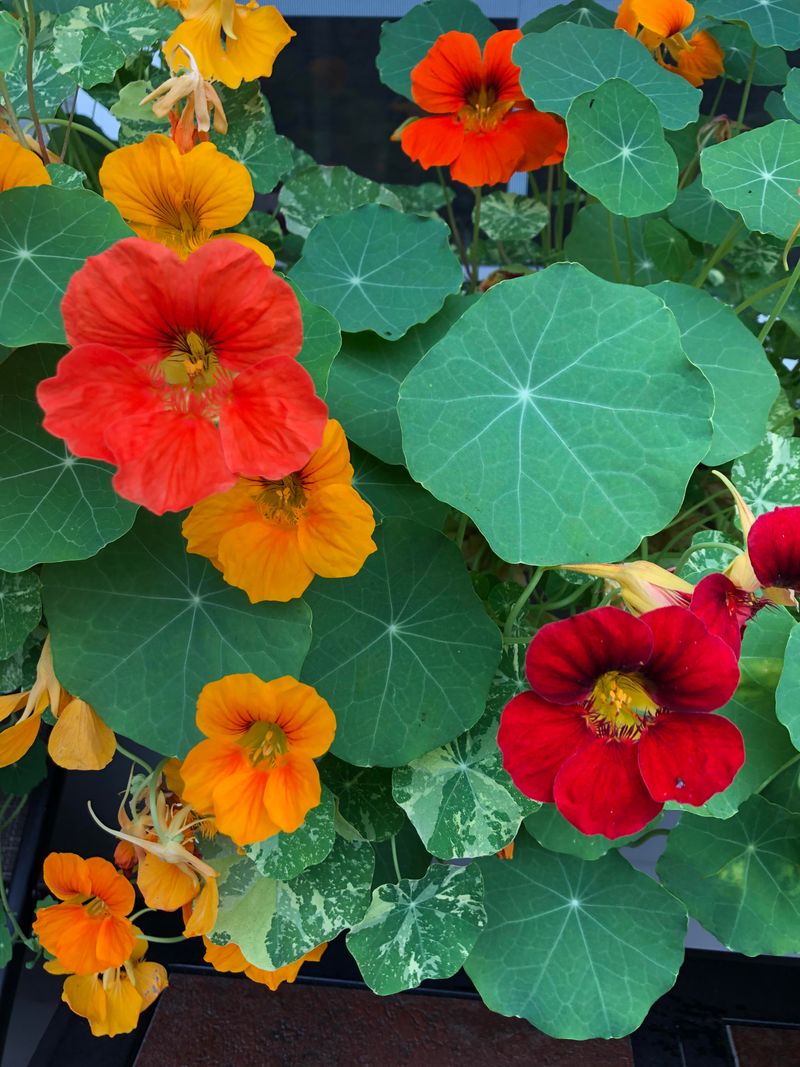
Nasturtiums are cheerful, fast-growing, and absolutely irresistible to aphids. That is not a flaw. That is the whole point.
Trap cropping means intentionally planting something that pests love even more than your main vegetables, then using that plant as a monitoring station and a gathering point for beneficial predators.
The strategy works because it concentrates pest pressure in a predictable location.
Instead of aphids spreading across the entire tomato patch, they cluster on the nasturtiums at the garden edge.
Lady beetles and lacewings find them there. You can monitor the situation, decide whether natural predation is keeping up, and act only if the pest population jumps beyond what the beneficial insects can handle.
Blue Hubbard squash is a well-known trap crop for squash vine borers and cucumber beetles in Georgia.
Planted at the perimeter of the squash and cucumber bed, it draws the pests away from the main crop. UGA Extension recommends careful monitoring of trap plants rather than simply planting them and walking away.
If the pest population on the trap crop grows beyond what natural predators can handle, targeted removal or treatment of just the trap plant can prevent a larger outbreak.
Trap cropping is a tool, not a guarantee. It works best as part of a broader integrated pest management plan that includes beneficial insect support, regular scouting, and thoughtful intervention.
8. Water Sources Bring Helpers Back Daily
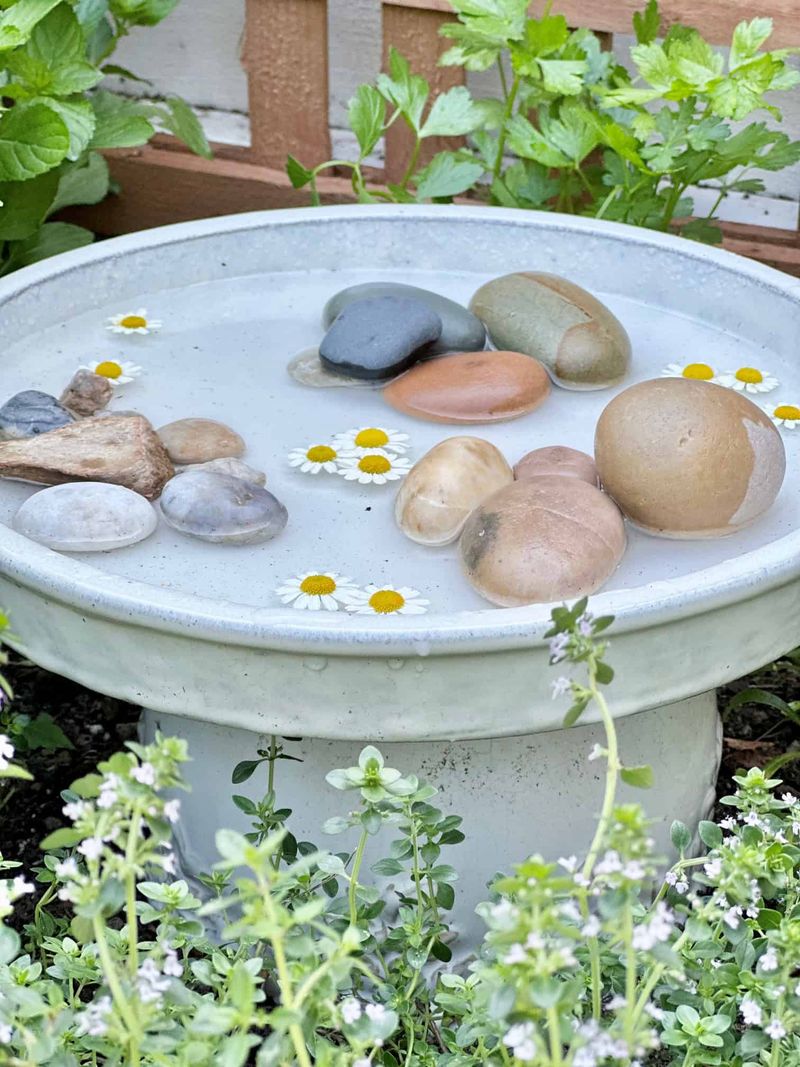
Beneficial insects need water just like every other living creature, and most Georgia gardens give them almost none.
A garden that offers food, shelter, and a reliable water source becomes significantly more attractive to lady beetles, lacewings, ground beetles, and native bees than one that offers only plants.
The difference shows up in how consistently those insects stick around rather than moving on after a single visit.
The setup does not need to be elaborate.
A shallow dish or saucer filled with clean water and a handful of pebbles or marbles gives insects a place to land and drink without drowning.
The pebbles are the key detail. Beneficial insects are small and cannot safely drink from open water with no foothold. They need something solid to stand on while they reach the surface.
Place the water source near your vegetable beds or flowering border rather than across the yard.
Proximity matters because insects forage in relatively small territories, and a water source that is far from the food source simply gets ignored.
Tuck the dish near a patch of zinnias, at the base of a tomato cage, or along the edge of a raised bed where beneficial insects are already spending time.
Change the water every two to three days during Georgia summers.
Stagnant water in a shallow dish can become a mosquito breeding site in the heat, which is the opposite of what any gardener wants. A quick rinse and refill takes less than a minute and keeps the station fresh and safe.
UGA Extension integrated pest management resources note that providing basic habitat needs, including water, shelter, and food, is the foundation of supporting a stable beneficial insect population in home gardens.
A reliable water source rounds out that foundation in a way that flowers and refuges alone cannot.