Georgia Squash Plants Are Wilting Overnight And This Pest Could Be Why
Every gardener has that one moment when something in the yard suddenly looks different, even though nothing seemed unusual the day before.
It is the kind of change that makes you stop what you are doing and take another look. A healthy plant can lose its good appearance so quickly that it hardly feels possible.
That is why unexpected problems always seem more confusing than the ones that develop little by little.
Many people in Georgia have that experience with squash plants during the growing season. They can look strong and full of life, then suddenly begin to wilt without much warning.
It is easy to assume the weather is responsible because summer brings plenty of heat. Sometimes the real cause is much harder to notice.
A hidden pest can be responsible, and the damage often starts before the plant shows obvious signs.
1. Squash Vine Borers Feed Hidden Inside The Stems
Most pests eat leaves or flowers where you can spot them easily. Squash vine borers are different.
They feed from inside the stem, completely out of sight, which is exactly why they catch so many gardeners off guard.
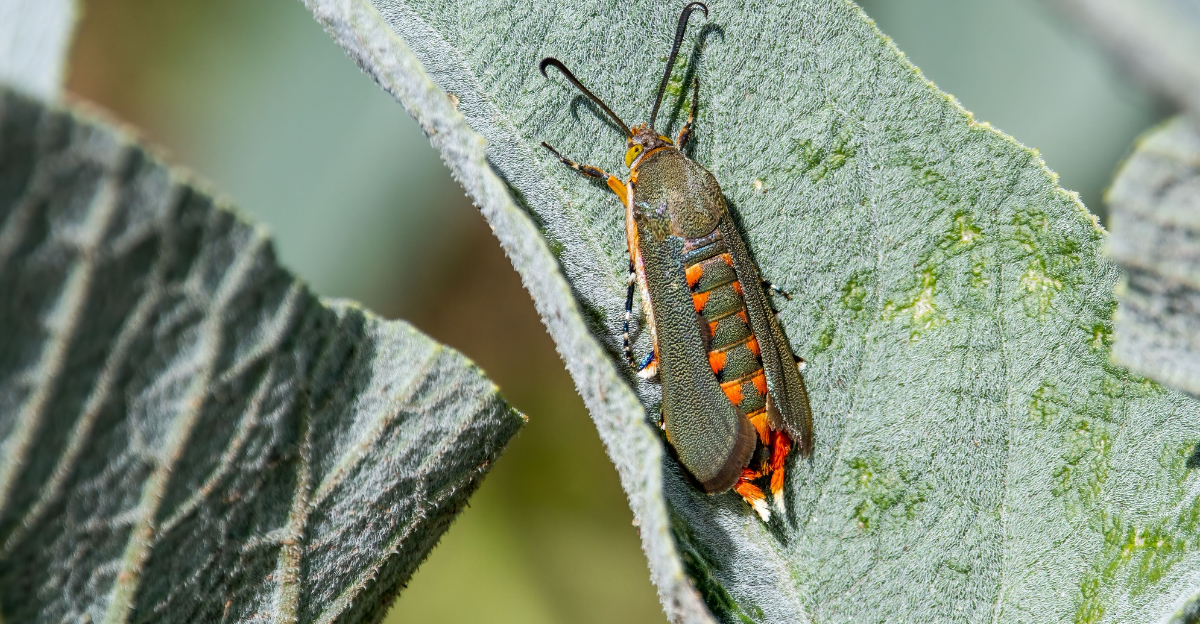
Adult squash vine borers are moths that look a bit like wasps. They have orange and black markings and fly during the day.
Females lay tiny, flat, reddish-brown eggs on stems near the base of the plant. Once those eggs hatch, the larvae burrow straight into the stem and start feeding.
Inside the stem, a larva chews through the soft tissue that carries water and nutrients up to the leaves. As it feeds, it blocks the flow.
Leaves start wilting even when the soil is moist, because water simply cannot reach them anymore.
A single larva can do serious damage on its own. Multiple larvae feeding in the same stem can weaken a plant quickly.
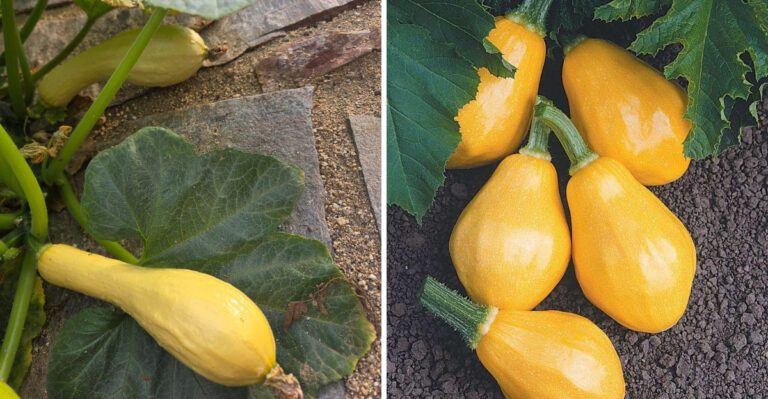
Zucchini, yellow squash, and most summer squash varieties tend to be more vulnerable than butternut squash or other hard-shelled types.
Warm summers in the Southeast create ideal conditions for squash vine borer activity, typically peaking between late spring and midsummer.
2. Sudden Wilting Often Starts With A Single Runner
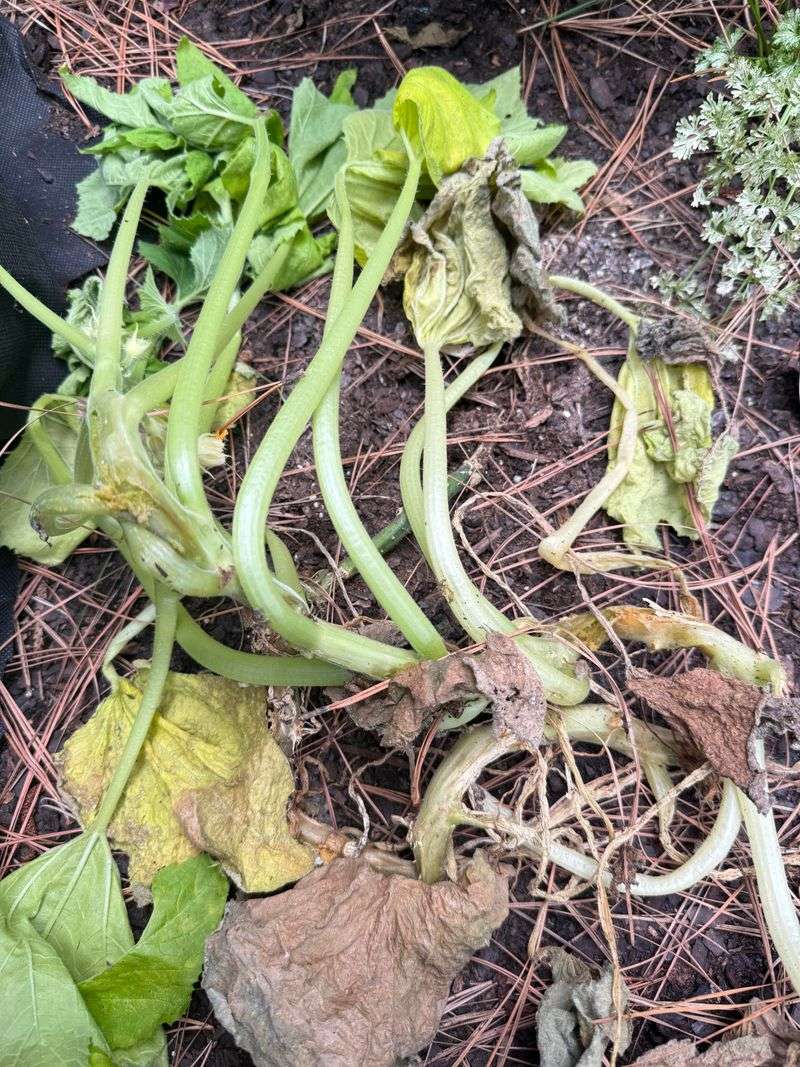
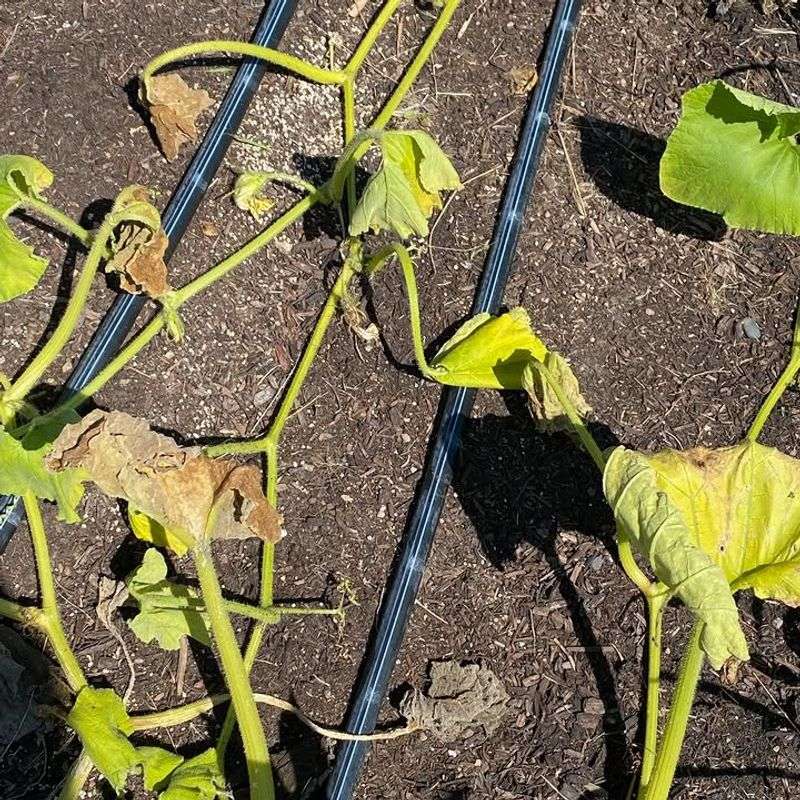
One runner collapses. The rest of the plant still looks fine.
That pattern is one of the earliest and most reliable clues that squash vine borers are at work.
Wilting caused by heat or drought tends to affect the whole plant at once. Vine borer damage is more localized at first, because the larva is only blocking one section of stem.
Watching for that single drooping runner can save you time and help you catch the problem before it spreads further.
Check the base of the wilting runner first. Look closely at the main stem near the soil line.
Damage almost always starts there, where the larva entered the plant. If the rest of the plant still looks healthy, the borer may not have moved far yet.
Early afternoon is a good time to check, because healthy plants may wilt slightly in peak heat but recover by evening.
Your Georgia Garden Changes Every Week. Your Plan Should Too.
Gardening in Georgia changes quickly throughout the season. Every Friday you’ll receive a simple weekly plan showing exactly what to plant, prune, fertilize, harvest, and protect so you never miss the right timing.
If a runner stays collapsed even after temperatures drop, that is a stronger sign something is wrong inside the stem rather than just heat stress.
Catching the problem at this stage matters. A plant with one affected runner still has time to recover if you act.
3. Small Holes Near The Base Reveal The Real Problem
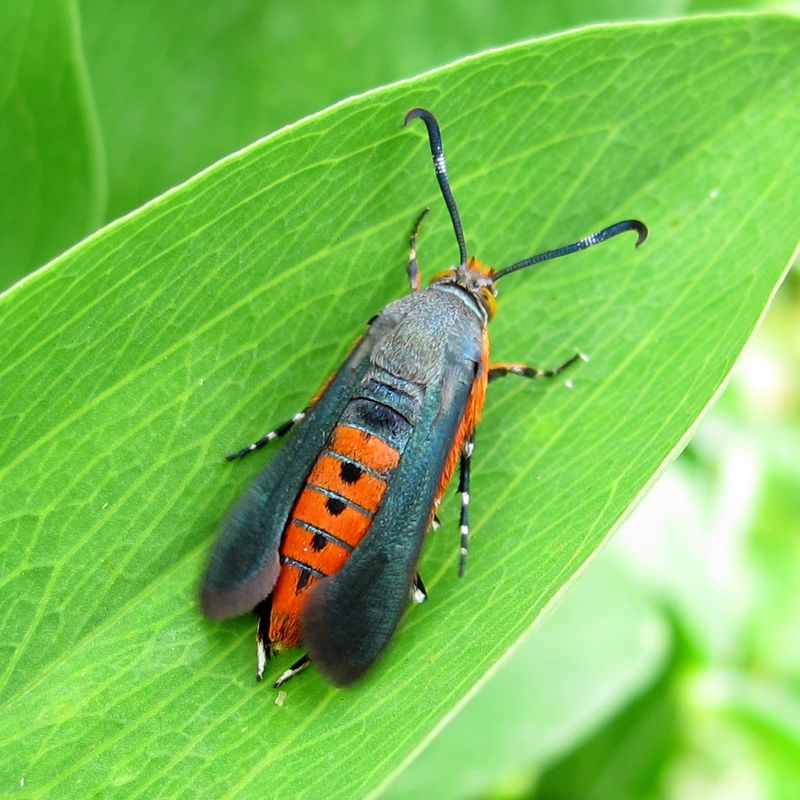
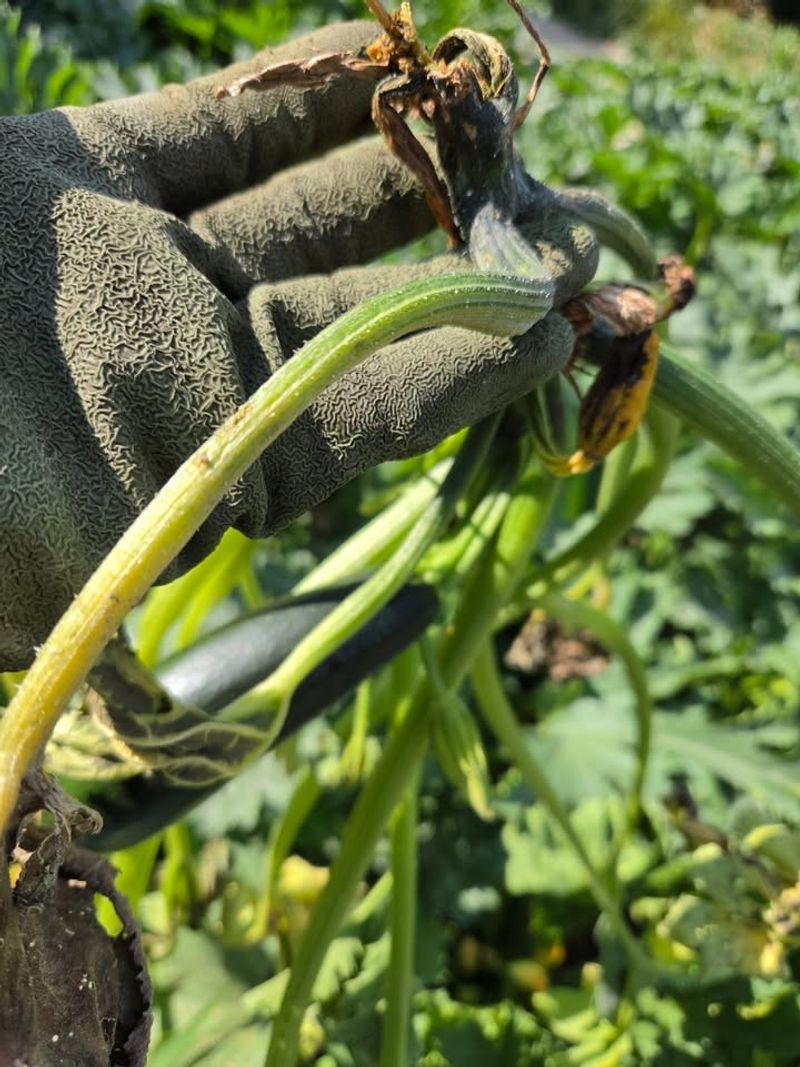
Spotting a hole near the base of your squash stem is a clear sign a borer has already entered the plant. It is not subtle once you know what you are looking for.
Entry holes are small, usually about the size of a pencil tip. They appear on the lower part of the main stem, often right at or just above the soil line.
The surrounding stem may look slightly discolored or soft to the touch. Sometimes the stem feels hollow when you press it gently.
One hole does not always mean one larva. Females can lay multiple eggs on the same plant, and more than one larva may enter at different points along the stem.
Checking the full length of the lower stem, not just one spot, gives you a better picture of how much damage has occurred.
Look carefully in the morning when the light is low and shadows are sharp. Entry holes can be easy to miss in bright midday sun.
Running your fingers slowly along the stem helps you feel soft or sunken areas that your eyes might skip over.
Finding an entry hole early is actually useful information. It tells you exactly where the larva is working and gives you a target for intervention.
4. Sawdust Like Frass Is A Key Sign Of Active Feeding
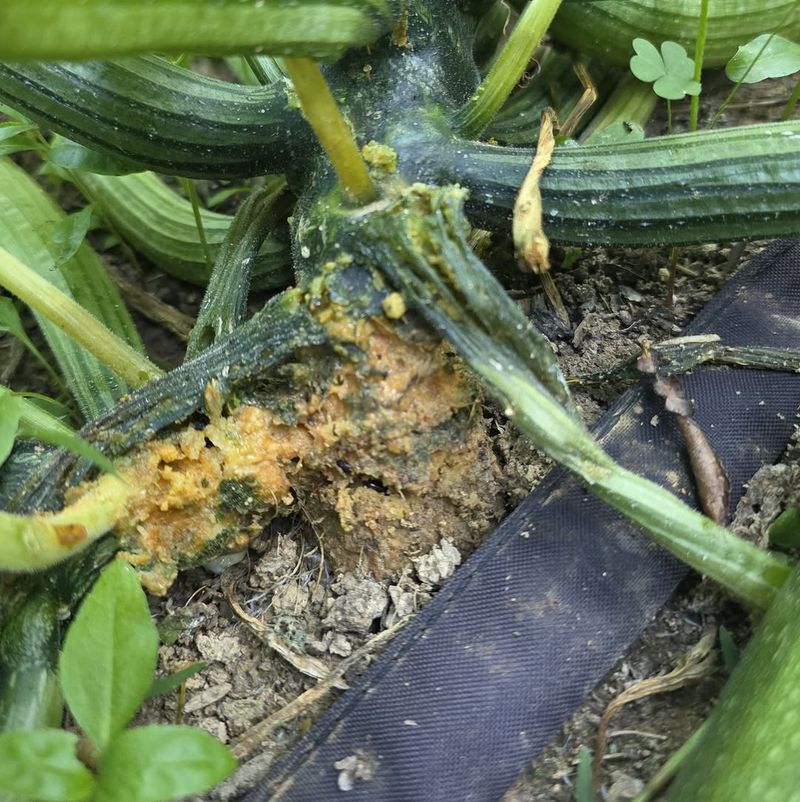
Frass looks like wet sawdust or chewed green pulp. Seeing it pushed out near the base of a squash stem means a larva is actively feeding inside right now.
As vine borer larvae chew through stem tissue, they push waste material back out through the entry hole. It piles up on the outside of the stem or falls to the soil below.
Fresh frass is moist and greenish. Older frass dries out and turns more yellow or tan.
Finding fresh frass is one of the strongest indicators that feeding is still ongoing. Dry frass suggests the larva may have finished feeding and moved on, but that does not mean the plant has recovered.
Damage to the vascular tissue remains even after the larva is gone.
Check for frass every few days during peak season. Push aside any soil at the base of the stem to get a clearer look.
Frass can sometimes be hidden under loose dirt or mulch, so a quick brush with your fingers helps uncover it.
Comparing frass amounts over several days can give you a rough sense of how active the feeding is. A growing pile suggests the larva is still working and intervention may still be worthwhile.
5. Finding The Damage Early Makes Treatment More Effective
Catching vine borer damage early genuinely changes what you can do about it. A plant found in the first day or two after entry has a much better chance of surviving than one found after a week of feeding.
One method gardeners use is carefully slicing the stem lengthwise along the entry hole. Using a sharp, clean blade, you can cut just enough to expose the larva and remove it by hand.
After removal, pack the wound with moist soil and water the plant well. The vine may still recover if damage to the surrounding tissue is limited.
Burying sections of vine under soil also encourages new root growth. Healthy roots forming above the damaged area can help support the plant even if the original entry point is compromised.
This works best when the plant is caught early and the damage has not spread far up the stem.
Beneficial nematodes may help reduce larvae, but results depend on soil conditions and timing.
Spinosad-based sprays applied to the stem base during the egg-laying period can also reduce the number of larvae that successfully enter.
No single method works perfectly in every situation. Combining early detection with prompt action tends to give the best results.
6. Removing Infested Plants Helps Limit Future Damage
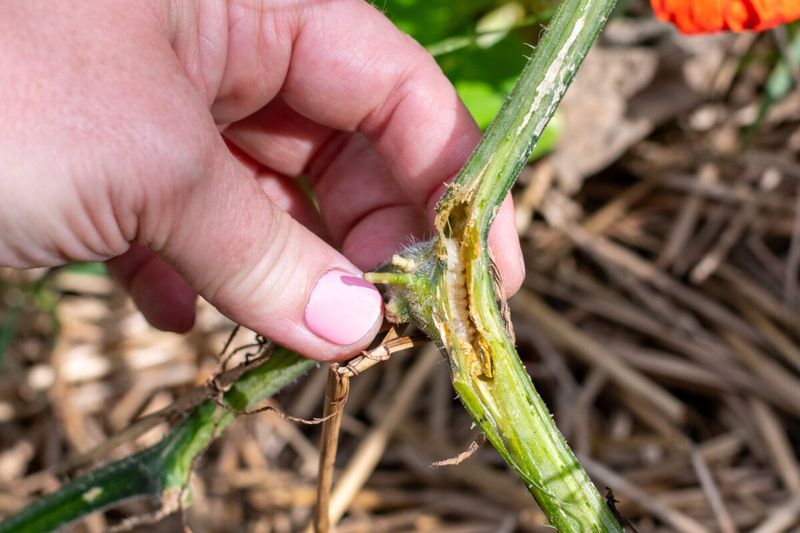
Pulling an infested plant feels discouraging, but leaving it in the ground can make next season harder. Larvae that finish feeding will pupate in the soil and emerge as adults the following year.
When a plant is too far gone to recover, removing it promptly is the practical move. Do not leave wilted, hollowed-out vines sitting on the soil surface.
Larvae still inside the stem can complete their development and burrow into the ground nearby. Bagging the plant and putting it in the trash, rather than composting it, reduces that risk.
Check the surrounding soil after removal. Larvae that have already exited the stem may be pupating just below the surface near the base of the plant.
Turning the soil over and exposing pupae can reduce the number that survive to adulthood, though this is not a complete fix on its own.
Rotating where you plant squash each year also helps. Moving your squash to a different bed or area of the garden means emerging adults may not immediately find their preferred host plants.
Rotation does not eliminate the pest, but it can reduce pressure on your plants.
Replacing a removed plant mid-season is sometimes possible if you have seedlings ready.
7. Row Covers And Proper Timing Help Prevent Future Damage
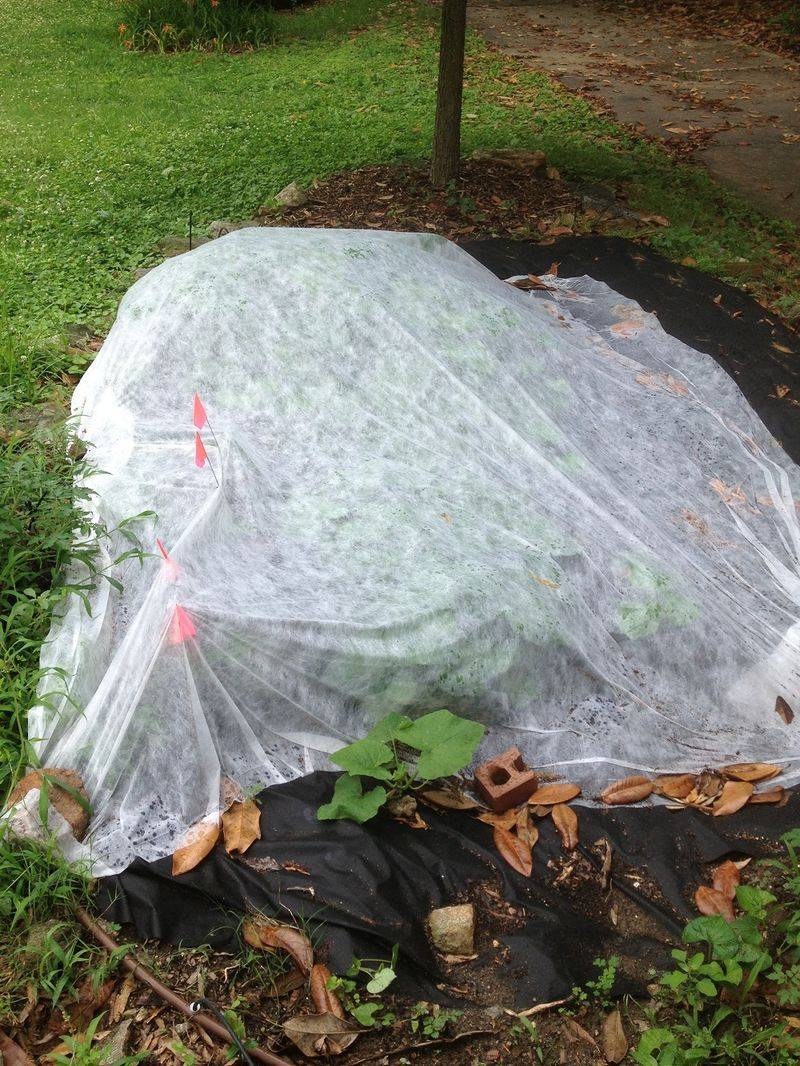
Blocking access before the pest arrives is more reliable than reacting after damage appears. Row covers are one of the most practical tools available to home gardeners dealing with squash vine borers.
Lightweight floating row covers placed over young plants create a physical barrier that prevents adult moths from laying eggs on the stems. Covers need to be secured at the edges so moths cannot slip underneath.
Remove them when plants begin to flower so pollinators can reach the blooms, or hand-pollinate if you prefer to keep covers on longer.
Timing your planting also plays a role. Squash vine borer adults in Georgia and surrounding states are most active from late spring through midsummer.
Planting early in spring, before peak adult activity, gives plants time to grow larger and more resilient before moths begin laying eggs.
Some gardeners also try a late summer planting after adult activity has decreased, though results depend on your specific location and season length.
Yellow sticky traps placed near the garden can help you monitor adult moth activity. Seeing adults on traps tells you egg-laying may be starting, which is a signal to increase your monitoring of stem bases.
Traps alone do not control the pest, but they are a useful early warning tool.